


Sperm Agglutination Market Overview
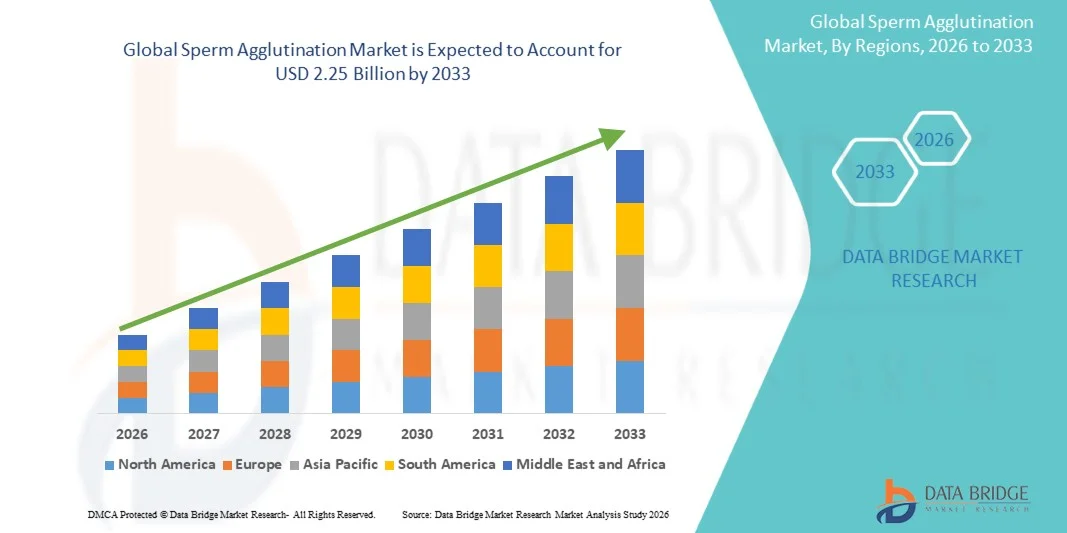
The Sperm Agglutination Market was valued at USD 1.65 billion in 2025 and is projected to reach USD 2.25 billion by 2033, growing at a CAGR of 4.0% from 2026 to 2033. The Sperm Agglutination Market is experiencing steady growth driven by the rising prevalence of male infertility, increasing awareness regarding reproductive health, and growing demand for advanced fertility diagnostics. Expanding utilization of semen analysis tests, technological advancements in andrology laboratories, and increasing adoption of assisted reproductive technologies (ART) are further contributing to market expansion. The market is also benefiting from rising healthcare expenditure, growing infertility screening programs, and increasing availability of specialized fertility clinics across both developed and emerging economies.
The increasing incidence of male infertility worldwide, coupled with growing awareness regarding early fertility assessment and reproductive planning, is encouraging healthcare providers, fertility centers, and diagnostic laboratories to adopt advanced sperm analysis solutions. Sperm agglutination testing is becoming an important component of comprehensive semen evaluation as it helps identify immunological and pathological factors affecting sperm motility and fertilization potential. In addition, advancements in automated semen analyzers, computer-assisted sperm analysis (CASA) systems, and laboratory diagnostic technologies are improving testing accuracy, efficiency, and clinical decision-making. These developments are supporting broader adoption of sperm agglutination testing in fertility assessment and assisted reproduction programs globally.
Key Market Trends & Insights
- North America dominated the Sperm Agglutination Market with the largest revenue share of 38.76% in 2025, supported by increasing prevalence of male infertility, advanced reproductive healthcare infrastructure, high adoption of fertility diagnostics, and strong availability of assisted reproductive technology (ART) services. The region also benefits from growing awareness regarding male reproductive health, favorable reimbursement for fertility treatments in selected markets, and the presence of leading fertility clinics and diagnostic laboratories.
- The Assisted Reproductive Technology (ART) segment dominated the market with a 47% share in 2025 due to its high success rates in overcoming sperm agglutination-associated infertility and its widespread adoption across fertility clinics and assisted conception centers worldwide.
- Asia-Pacific is expected to be the fastest-growing region at a CAGR of 8.2% from 2026 to 2033, fueled by increasing infertility rates, expanding access to fertility treatment services, improving healthcare infrastructure, and growing awareness regarding reproductive health across China, India, Japan, and Southeast Asian countries.
- The Medication segment is projected to be the fastest-growing treatment category, registering a CAGR of 7.8% from 2026 to 2033, reflecting increasing adoption of anti-inflammatory therapies, immunomodulatory treatments, and hormone-based interventions aimed at addressing underlying causes of sperm agglutination and improving fertility outcomes.
- The Clinics segment dominated the end-use category with a 34.58% revenue share in 2025, led by the growing number of specialized fertility clinics, increasing patient preference for dedicated reproductive healthcare facilities, and rising utilization of comprehensive fertility diagnostic and treatment services.
- Hospitals are anticipated to be the fastest-growing end-use segment, expanding at a CAGR of 7.6% from 2026 to 2033, driven by increasing integration of fertility services within multidisciplinary healthcare systems, expanding investments in reproductive medicine departments, and growing demand for advanced infertility management solutions.
- Research Institutes represent a rapidly expanding end-user category, supported by increasing investments in reproductive biology research, male infertility studies, and the development of innovative diagnostic and therapeutic approaches for sperm agglutination-related conditions.
- Private and Commercial Laboratories continue to play a critical role in market growth, driven by rising demand for specialized semen analysis, immunological fertility testing, and advanced diagnostic services that support accurate identification and management of sperm agglutination disorder.
Market Size & Forecast
- Global Market Value (2025): USD 1.65 Billion
- Expected Market Value (2033): USD 2.25 Billion
- Forecast CAGR (2026–2033): 4.0%
- Leading Region in 2025: North America
- Fastest Growing Region: Asia-Pacific
Report Scope and Sperm Agglutination Market Segmentation
|
Attributes |
Sperm Agglutination Key Market Insights |
|
Segments Covered |
· By Treatment: Assisted Reproductive Technology (ART), Medication · By End Use: Hospitals, Clinics, Public Health Labs, Private or Commercial Labs, Physician Labs, Research Institutes, and Others |
|
Countries Covered |
North America · U.S. · Canada · Mexico Europe · Germany · France · U.K. · Netherlands · Switzerland · Belgium · Russia · Italy · Spain · Turkey · Rest of Europe Asia-Pacific · China · Japan · India · South Korea · Singapore · Malaysia · Australia · Thailand · Indonesia · Philippines · Rest of Asia-Pacific Middle East and Africa · Saudi Arabia · U.A.E. · South Africa · Egypt · Israel · Rest of Middle East and Africa South America · Brazil · Argentina · Rest of South America |
|
Key Market Players |
· CooperSurgical, Inc. (U.S.) · Vitrolife AB (Sweden) · Cook Medical LLC (U.S.) · FUJIFILM Irvine Scientific (U.S.) · Hamilton Thorne Ltd. (U.S.) · Genea Biomedx Pty Ltd. (Australia) · Nidacon International AB (Sweden) · Microptic S.L. (Spain) · Sperm Processor Pvt. Ltd. (India) · Bioline Technologies (India) · IVFtech ApS (Denmark) · Baker Company, Inc. (U.S.) · Esco Medical (Denmark) · Rocket Medical plc (U.K.) · LabIVF Asia Pte Ltd. (Singapore) · Shenzhen Vitaimed Biomedical Co., Ltd. (China) · Biobase Group (China) · Kitazato Corporation (Japan) · Origio A/S (Denmark) · DxNow Inc. (South Korea) · Fertipro NV (Belgium) · MediCult a/s (Denmark) · Andrology Solutions LLC (U.S.) · Cryos International (Denmark) · Reprocell Inc. (Japan) · Invo Bioscience, Inc. (U.S.) · MIM Fertility (Poland) · Zeiss Medical Technology (Germany) · Leica Microsystems (Germany) |
|
Market Opportunities |
· Expansion of Assisted Reproductive Technology (ART) Services in Emerging Markets · Development of Advanced Automated Semen Analysis and AI-Based Diagnostic Solutions · Increasing Focus on Male Fertility Screening and Preventive Reproductive Healthcare |
|
Value Added Data Infosets |
In addition to the insights on market scenarios such as market value, growth rate, segmentation, geographical coverage, and major players, the market reports curated by the Data Bridge Market Research also include in-depth expert analysis, geographically represented company-wise production and capacity, network layouts of distributors and partners, detailed and updated price trend analysis and deficit analysis of supply chain and demand. |
Sperm Agglutination Market Trends
Trend: Rising Adoption of Assisted Reproductive Technologies (ART) for Male Infertility Management
The Sperm Agglutination Market is witnessing increasing adoption of advanced fertility diagnostics and assisted reproductive technologies (ART) due to the growing prevalence of male infertility worldwide. Sperm agglutination, often associated with antisperm antibodies and impaired sperm motility, is increasingly being identified during routine semen analysis conducted at fertility clinics and andrology laboratories. According to the World Health Organization (WHO), infertility affects approximately 17.5% of the global adult population, highlighting the growing need for effective fertility assessment and treatment solutions. Fertility specialists are increasingly utilizing advanced semen analysis systems, immunobead tests, and sperm antibody detection assays to diagnose sperm agglutination-related infertility. In addition, the growing use of Intracytoplasmic Sperm Injection (ICSI) and In Vitro Fertilization (IVF) procedures is improving pregnancy outcomes among patients affected by severe sperm agglutination. Continuous advancements in reproductive medicine, laboratory automation, and fertility preservation technologies are further supporting market expansion globally.
Sperm Agglutination Market Dynamics
Key Market Driver: Rising Global Prevalence of Male Infertility and Increasing Demand for Fertility Treatments
The increasing burden of male infertility is a major factor driving growth of the Sperm Agglutination Market. Studies published by organizations such as the WHO indicate that male factors contribute to nearly 40–50% of infertility cases worldwide. Sperm agglutination is recognized as one of the significant causes of reduced sperm motility, limiting natural fertilization potential and increasing demand for specialized fertility treatments. Growing awareness regarding reproductive health, delayed parenthood trends, lifestyle-related fertility disorders, obesity, smoking, and environmental toxin exposure are contributing to a higher incidence of male reproductive dysfunction. Fertility clinics and hospitals are increasingly investing in advanced diagnostic platforms to identify sperm abnormalities and guide treatment decisions. Furthermore, expanding access to ART procedures such as IVF and ICSI, coupled with supportive government initiatives for infertility treatment in several developed countries, is accelerating market growth. Rising healthcare expenditure and growing acceptance of fertility treatments among couples continue to strengthen demand for sperm agglutination diagnosis and management solutions worldwide.
Key Restraint/Challenge: High Cost of Fertility Treatments and Limited Access in Developing Regions A significant challenge in the Sperm Agglutination Market is the high cost associated with infertility diagnosis and assisted reproductive treatments. Advanced fertility evaluations, antisperm antibody testing, IVF cycles, ICSI procedures, and laboratory-based reproductive technologies often require substantial financial investment, limiting accessibility for many patients. In several low- and middle-income countries, fertility services remain concentrated in urban centers, restricting access in rural and underserved regions. In addition, limited reimbursement coverage for infertility treatments across many healthcare systems creates financial barriers for patients seeking care. Social stigma surrounding male infertility and lack of awareness regarding reproductive health further contribute to delayed diagnosis and treatment. Variability in clinical practices, laboratory standards, and fertility treatment regulations across countries also creates challenges for broader market expansion. These factors continue to limit adoption of advanced sperm agglutination diagnostics and treatment solutions in numerous emerging markets.
Key Market Opportunity: Expansion of Advanced ART Procedures and Personalized Fertility Medicine
The growing adoption of personalized reproductive medicine presents a significant opportunity for the sperm agglutination market. Fertility centers are increasingly integrating advanced diagnostic tools, sperm function testing, genetic screening, and AI-assisted embryo selection technologies to improve treatment success rates. The widespread use of ICSI has significantly improved outcomes for patients with severe sperm agglutination and antisperm antibody-related infertility, creating strong demand for specialized fertility services. Companies and research institutions are investing in innovative reproductive technologies, including sperm selection platforms, microfluidic fertility devices, and advanced semen analysis systems. In addition, expanding fertility tourism markets across countries such as India, Spain, Greece, and Thailand are increasing access to cost-effective reproductive treatments. The continued growth of fertility clinics, rising awareness regarding male reproductive health, and increasing investments in reproductive biotechnology are expected to generate substantial growth opportunities for market participants during the forecast period.
Sperm Agglutination Market Scope
The Sperm Agglutination market is segmented on the basis of treatment and enduser.
- By Treatment
On the basis of treatment, the Sperm Agglutination Market is segmented into Assisted Reproductive Technology (ART) and Medication. The Assisted Reproductive Technology (ART) segment dominated the market with a 68.47% share in 2025 due to its high success rates in overcoming sperm agglutination-associated infertility and its widespread adoption across fertility clinics and assisted conception centers worldwide. ART procedures such as Intracytoplasmic Sperm Injection (ICSI), In Vitro Fertilization (IVF), and Intrauterine Insemination (IUI) are increasingly recommended for patients with severe sperm agglutination because they bypass natural fertilization barriers and significantly improve conception outcomes. Growing infertility rates, delayed parenthood trends, rising awareness regarding male reproductive health, and increasing acceptance of fertility treatments are further strengthening segment growth. In addition, advancements in embryo selection technologies, sperm preparation techniques, and laboratory automation have improved treatment efficiency and clinical outcomes. The expansion of fertility clinics, favorable reimbursement support in selected countries, and increasing medical tourism for reproductive treatments are also contributing to market dominance. Furthermore, rising investments in reproductive medicine and continuous technological innovations in assisted reproduction continue to reinforce the leadership position of the ART segment globally.
The Medication segment is anticipated to witness the fastest growth at a CAGR of 7.4% from 2026 to 2033 due to increasing efforts to address underlying causes of sperm agglutination before proceeding to advanced fertility procedures. Medications including corticosteroids, antibiotics, anti-inflammatory agents, antioxidants, and immunomodulatory therapies are increasingly being prescribed to reduce antisperm antibody activity and improve sperm quality. Growing research focused on male infertility therapeutics and the development of targeted treatment approaches is supporting market expansion. In addition, rising preference for less invasive and lower-cost treatment alternatives before ART intervention is encouraging adoption. Healthcare providers are increasingly combining pharmacological therapies with lifestyle modifications and fertility counseling to improve reproductive outcomes. Expanding awareness programs related to male infertility diagnosis and treatment are further supporting segment growth. Increasing accessibility of fertility medications in emerging economies and ongoing clinical research into novel therapeutic agents are expected to create substantial opportunities for this segment throughout the forecast period.
- By End Use
On the basis of end use, the Sperm Agglutination Market is segmented into Hospitals, Clinics, Public Health Labs, Private or Commercial Labs, Physician Labs, Research Institutes, and Others. The Clinics segment dominated the market with a 34.92% share in 2025 owing to the growing concentration of fertility diagnosis and treatment services within specialized reproductive health centers. Fertility clinics are the primary point of care for patients seeking evaluation and treatment for sperm agglutination-related infertility. These facilities offer comprehensive reproductive services including semen analysis, antisperm antibody testing, fertility counseling, ART procedures, and long-term fertility management. Increasing global infertility prevalence, rising demand for personalized fertility treatments, and growing awareness regarding male reproductive health are supporting the segment’s leading position. In addition, fertility clinics continue to invest in advanced laboratory technologies, automated semen analyzers, and assisted reproduction platforms to improve patient outcomes. Expanding private fertility networks, increasing fertility tourism, and higher success rates associated with specialized reproductive centers further strengthen segment dominance. Growing collaborations between fertility clinics and diagnostic laboratories are also enhancing service accessibility and treatment efficiency across major healthcare markets worldwide.
The Research Institutes segment is projected to register the fastest growth at a CAGR of 7.8% from 2026 to 2033 due to increasing scientific research focused on male infertility, reproductive immunology, and advanced fertility treatments. Research organizations are actively investigating the mechanisms responsible for sperm agglutination, antisperm antibody formation, and impaired sperm function. Growing investments from governments, academic institutions, and biotechnology companies are accelerating fertility-related research activities globally. In addition, expanding studies involving molecular diagnostics, genomics, proteomics, and biomarker discovery are driving demand for specialized fertility testing services. Research institutes are increasingly collaborating with fertility clinics, pharmaceutical companies, and reproductive medicine organizations to develop innovative diagnostic and therapeutic solutions. The growing emphasis on precision medicine and personalized reproductive healthcare is further supporting market growth. Rising funding for infertility research and continuous technological advancements in reproductive science are expected to significantly accelerate expansion of this segment during the forecast period.
Sperm Agglutination Market Regional Analysis
North America dominated the Sperm Agglutination Market and accounted for the largest revenue share of 38.76% in 2025, supported by the rising prevalence of male infertility, advanced reproductive healthcare infrastructure, and widespread adoption of fertility diagnostic testing. The region benefits from a strong network of fertility clinics, andrology laboratories, and assisted reproductive technology (ART) centers that routinely perform sperm analysis and antisperm antibody testing. Growing awareness regarding male reproductive health, increasing utilization of IVF and ICSI procedures, and favorable reimbursement coverage for selected fertility services are further supporting market growth. In addition, continuous advancements in semen analysis technologies, laboratory automation, and reproductive diagnostics continue to strengthen North America’s leadership position in the Sperm Agglutination Market.
U.S. Sperm Agglutination Market Insight
The U.S. Sperm Agglutination market is witnessing strong growth due to increasing infertility rates, growing awareness regarding male-factor infertility, and rising utilization of advanced fertility treatment services. The country has one of the world's most developed fertility care ecosystems, supported by a large number of specialized fertility clinics, reproductive endocrinology centers, and diagnostic laboratories. Increasing adoption of advanced semen analysis techniques, antisperm antibody testing, and assisted reproductive procedures such as IVF and ICSI is driving demand across the market. In addition, ongoing investments in reproductive health research, fertility preservation services, and personalized fertility treatment approaches are further accelerating market expansion throughout the United States.
Europe Sperm Agglutination Market Insight
The Europe Sperm Agglutination market remains a major contributor to global revenue, driven by increasing awareness of infertility disorders, strong healthcare systems, and widespread availability of fertility treatment services. The region benefits from growing government support for reproductive healthcare programs and increasing adoption of advanced fertility diagnostics. Fertility clinics and reproductive medicine centers across Europe are increasingly utilizing comprehensive semen analysis and immunological testing to identify sperm agglutination-related infertility. In addition, rising maternal age, declining fertility rates in several countries, and expanding access to ART services continue to support market growth. Continuous advancements in reproductive medicine technologies further enhance the adoption of sperm agglutination diagnostics and treatment solutions throughout Europe.
U.K. Sperm Agglutination Market Insight
The U.K. Sperm Agglutination market is experiencing steady growth, supported by increasing awareness regarding male infertility and expanding access to fertility care services. Fertility clinics, NHS-supported reproductive health programs, and private fertility providers are increasingly offering advanced diagnostic evaluations for male reproductive disorders. Growing demand for assisted reproductive technologies, coupled with increasing public awareness campaigns related to infertility, is contributing to market expansion. Furthermore, ongoing advancements in laboratory diagnostics, reproductive immunology testing, and fertility treatment protocols are improving patient outcomes and strengthening the adoption of sperm agglutination diagnostic services across the country.
Germany Sperm Agglutination Market Insight
The Germany Sperm Agglutination market is expanding steadily due to the country’s advanced healthcare infrastructure, strong reproductive medicine sector, and growing demand for infertility treatments. Fertility specialists and diagnostic laboratories are increasingly adopting advanced semen testing technologies to improve diagnosis and treatment planning for male infertility conditions. Rising awareness regarding reproductive health, delayed parenthood trends, and increasing utilization of ART procedures are supporting market growth. In addition, continuous investments in fertility research, laboratory modernization, and precision reproductive medicine are further contributing to the expansion of the sperm agglutination market in Germany.
Asia-Pacific Sperm Agglutination Market Insight
The Asia-Pacific Sperm Agglutination market is expected to witness the fastest growth and is projected to register a CAGR of 8.2% from 2026 to 2033, driven by rising infertility prevalence, expanding healthcare infrastructure, and growing access to fertility treatment services across China, India, Japan, South Korea, and Southeast Asia. Increasing awareness regarding male reproductive health and growing acceptance of fertility treatments are supporting market expansion throughout the region. Governments and private healthcare providers are investing significantly in reproductive medicine facilities, fertility clinics, and advanced diagnostic laboratories. In addition, increasing medical tourism and improving affordability of fertility treatments are accelerating adoption of sperm agglutination diagnosis and management solutions across Asia-Pacific.
Japan Sperm Agglutination Market Insight
The Japan Sperm Agglutination market is witnessing consistent growth due to rising infertility concerns, declining birth rates, and increasing demand for advanced fertility care services. Fertility clinics and research institutions are increasingly adopting sophisticated semen analysis technologies and reproductive diagnostic tools to improve infertility assessment and treatment outcomes. Growing utilization of ART procedures, favorable technological advancements in reproductive medicine, and increasing investments in fertility research are contributing to market growth. Moreover, rising awareness regarding male infertility and supportive healthcare initiatives are further strengthening demand for sperm agglutination diagnostic services in Japan.
China Sperm Agglutination Market Insight
The China Sperm Agglutination market is growing rapidly, driven by increasing infertility rates, expanding fertility treatment infrastructure, and rising awareness regarding reproductive health. The country is witnessing substantial growth in fertility clinics, assisted reproductive technology centers, and specialized diagnostic laboratories. Growing urbanization, changing lifestyles, environmental factors, and delayed family planning are contributing to increased demand for infertility diagnosis and treatment services. In addition, government initiatives supporting reproductive healthcare, expanding healthcare investments, and rising adoption of advanced fertility diagnostic technologies are positioning China as one of the fastest-growing markets for sperm agglutination diagnosis and treatment globally.
Sperm Agglutination Market Share
The Sperm Agglutination industry is primarily led by well-established companies, including:
- CooperSurgical, Inc. (U.S.)
- Vitrolife AB (Sweden)
- Cook Medical LLC (U.S.)
- FUJIFILM Irvine Scientific (U.S.)
- Hamilton Thorne Ltd. (U.S.)
- Genea Biomedx Pty Ltd. (Australia)
- Nidacon International AB (Sweden)
- Microptic S.L. (Spain)
- Sperm Processor Pvt. Ltd. (India)
- Bioline Technologies (India)
- IVFtech ApS (Denmark)
- Baker Company, Inc. (U.S.)
- Esco Medical (Denmark)
- Rocket Medical plc (U.K.)
- LabIVF Asia Pte Ltd. (Singapore)
- Shenzhen Vitaimed Biomedical Co., Ltd. (China)
- Biobase Group (China)
- Kitazato Corporation (Japan)
- Origio A/S (Denmark)
- DxNow Inc. (South Korea)
- Fertipro NV (Belgium)
- MediCult a/s (Denmark)
- Andrology Solutions LLC (U.S.)
- Cryos International (Denmark)
- Reprocell Inc. (Japan)
- Invo Bioscience, Inc. (U.S.)
- MIM Fertility (Poland)
- Zeiss Medical Technology (Germany)
- Leica Microsystems (Germany)
Latest Developments in Sperm Agglutination Market
- In June 2021, Janani, an India-based reproductive health company, launched India’s first at-home semen sample collection and testing kit. The solution was developed to improve male fertility testing accessibility and encourage early diagnosis of sperm abnormalities, including motility disorders and sperm agglutination, by enabling private sample collection with laboratory-grade analysis. This development represented a significant step toward expanding male infertility screening and diagnostic services
- In July 2021, Oasis Fertility launched “Androlife,” a dedicated male fertility clinic network focused exclusively on male reproductive health and infertility management. The initiative expanded access to specialized diagnostics and treatment services for conditions affecting sperm quality, including sperm agglutination, antisperm antibodies, and other male-factor infertility disorders. The launch highlighted growing industry focus on male infertility evaluation and treatment
- In July 2025, Ferty9 Fertility Centre introduced the AI-powered LensHooke X12 PRO semen analyzer across its fertility network. The platform can analyze more than 3,000 sperm cells within minutes and provides automated assessment of sperm count, motility, morphology, and DNA integrity. The launch reflects increasing adoption of AI-enabled semen analysis technologies that improve detection of male infertility factors and support more accurate fertility treatment planning
- In June 2025, researchers at the Columbia University Fertility Center reported successful use of an AI-enabled sperm detection platform for severe male infertility cases. The system analyzed millions of microscopic images in real time and identified viable sperm cells within an hour, significantly reducing the time required for sperm detection. The breakthrough demonstrated the growing role of artificial intelligence in advanced sperm diagnostics and fertility treatment optimization

- Interactive Data Analysis Dashboard
- Company Analysis Dashboard for high growth potential opportunities
- Research Analyst Access for customization & queries
- Competitor Analysis with Interactive dashboard
- Latest News, Updates & Trend analysis
- Harness the Power of Benchmark Analysis for Comprehensive Competitor Tracking
Data collection and base year analysis are done using data collection modules with large sample sizes. The stage includes obtaining market information or related data through various sources and strategies. It includes examining and planning all the data acquired from the past in advance. It likewise envelops the examination of information inconsistencies seen across different information sources. The market data is analysed and estimated using market statistical and coherent models. Also, market share analysis and key trend analysis are the major success factors in the market report. To know more, please request an analyst call or drop down your inquiry.
The key research methodology used by DBMR research team is data triangulation which involves data mining, analysis of the impact of data variables on the market and primary (industry expert) validation. Data models include Vendor Positioning Grid, Market Time Line Analysis, Market Overview and Guide, Company Positioning Grid, Patent Analysis, Pricing Analysis, Company Market Share Analysis, Standards of Measurement, Global versus Regional and Vendor Share Analysis. To know more about the research methodology, drop in an inquiry to speak to our industry experts.
Data Bridge Market Research is a leader in advanced formative research. We take pride in servicing our existing and new customers with data and analysis that match and suits their goal. The report can be customized to include price trend analysis of target brands understanding the market for additional countries (ask for the list of countries), clinical trial results data, literature review, refurbished market and product base analysis. Market analysis of target competitors can be analyzed from technology-based analysis to market portfolio strategies. We can add as many competitors that you require data about in the format and data style you are looking for. Our team of analysts can also provide you data in crude raw excel files pivot tables (Fact book) or can assist you in creating presentations from the data sets available in the report.













