


What is the Spinal Pumps Market Size and Overview ?
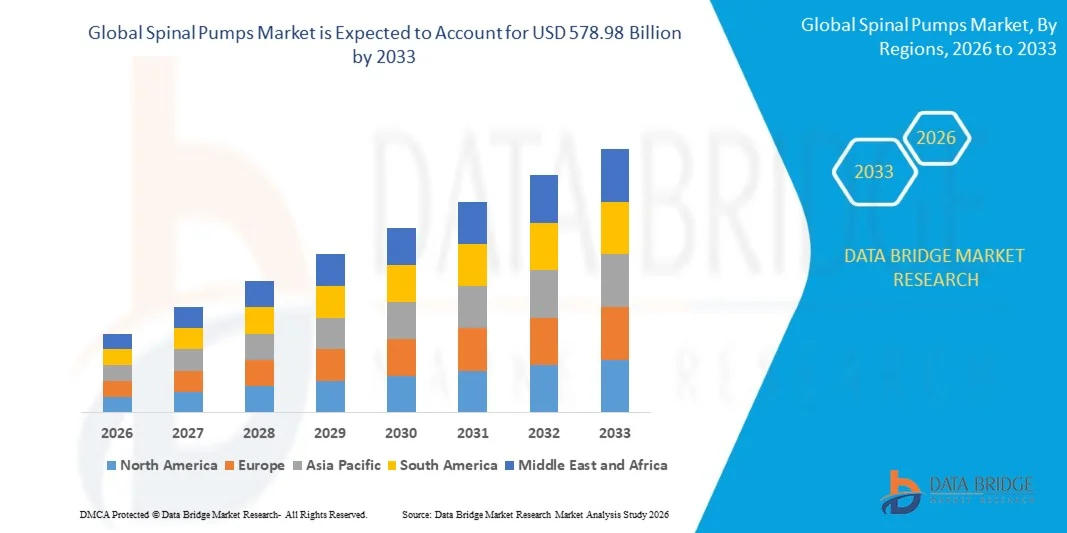
As per Data Bridge Market Research Analysis the Spinal Pumps Market was valued at USD 360.53 billion in 2025 and is projected to reach USD 578.98 billion by 2033, growing at a CAGR of 6.10% from 2026 to 2033. The market is experiencing consistent growth driven by rising prevalence of chronic pain conditions, increasing demand for targeted drug delivery therapies, advancements in implantable medical device technologies, and expanding applications in pain management and neurological disorders.
The growing burden of conditions such as cancer-related pain, spasticity, and chronic neurological disorders, combined with increasing preference for minimally invasive and long-term pain management solutions, is encouraging healthcare providers to adopt advanced spinal pump systems. Implantable drug delivery pumps are improving patient outcomes by enabling precise administration of medications directly into the spinal fluid, reducing systemic side effects and improving therapeutic effectiveness. Continuous advancements in programmable infusion pumps, drug delivery technologies, and remote monitoring capabilities are further accelerating adoption across hospitals, pain management centers, and specialty clinics.
Market Size & Forecast
- Global Market Value (2025): USD 360.53 Billion
- Expected Market Value (2033): USD 578.98 Billion
- Forecast CAGR (2026–2033): 6.10%
- Leading Region in 2025: North America
- Fastest Growing Region: Asia-Pacific
What are the Major Takeaways of Spinal Pumps Market ?
- North America dominated the Spinal Pumps Market with the largest revenue share of 42.1% in 2025, supported by advanced healthcare infrastructure, high prevalence of chronic pain and neurological disorders, strong adoption of implantable drug delivery systems, and the presence of leading medical device manufacturers. The region benefits from favorable reimbursement policies, increasing utilization of intrathecal drug delivery therapies, growing geriatric population, and rising demand for targeted pain management solutions. Expanding investments in minimally invasive neuromodulation technologies and advanced pain management centers further strengthen North America’s leading position in the global market.
- The Implantable Pump with Continuous Flow segment dominated the market with a 63.8% share in 2025, owing to its widespread adoption for long-term intrathecal drug delivery in patients suffering from chronic pain, spasticity, and neurological disorders.
- Asia-Pacific is expected to be the fastest-growing region at a CAGR of 8.9% from 2026 to 2033, fueled by increasing prevalence of chronic pain disorders, improving access to advanced healthcare services, rising healthcare expenditure, and growing adoption of implantable medical devices in countries such as China, India, Japan, and South Korea. Expansion of specialty pain management clinics, increasing awareness regarding neuromodulation therapies, and improving availability of trained healthcare professionals are accelerating regional market growth.
- The Intrathecal Drug Delivery segment is the fastest-growing application segment, projected to register a CAGR of 9.2% from 2026 to 2033, reflecting increasing demand for targeted medication delivery in patients suffering from cancer pain, chronic neuropathic pain, and severe spasticity. The growing preference for localized drug administration, reduced opioid exposure, and improved therapeutic outcomes is driving adoption of spinal pump-based treatment approaches. Advancements in programmable pump technologies and personalized dosing strategies are further supporting segment expansion.
- The Chronic Pain Management segment dominated the application category with a 52.7% revenue share in 2025, led by the rising global burden of chronic pain conditions, including failed back surgery syndrome, neuropathic pain, and cancer-related pain. Increasing aging population, higher diagnosis rates of pain disorders, and growing demand for alternative therapies beyond systemic medications are driving adoption of spinal pumps. Healthcare providers are increasingly utilizing these systems to improve pain control and enhance patient quality of life.
Report Scope and Spinal Pumps Market Segmentation
|
Attributes |
Spinal Pumps Key Market Insights |
|
Segments Covered |
|
|
Countries Covered |
North America · U.S. · Canada · Mexico Europe · Germany · France · U.K. · Netherlands · Switzerland · Belgium · Russia · Italy · Spain · Turkey · Rest of Europe Asia-Pacific · China · Japan · India · South Korea · Singapore · Malaysia · Australia · Thailand · Indonesia · Philippines · Rest of Asia-Pacific Middle East and Africa · Saudi Arabia · U.A.E. · South Africa · Egypt · Israel · Rest of Middle East and Africa South America · Brazil · Argentina · Rest of South America |
|
Key Market Players |
· Medtronic plc (Ireland) · B. Braun Melsungen AG (Germany) · Flowonix Medical Inc. (U.S.) · Teleflex Incorporated (U.S.) · Codman Neuro (U.S.) · Johnson & Johnson MedTech (U.S.) · Smiths Medical (U.S.) · Tricumed Medizintechnik GmbH (Germany) · Halyard Health (U.S.) · Avanos Medical (U.S.) · Nuvectra Corporation (U.S.) · Boston Scientific Corporation (U.S.) · Abbott Laboratories (U.S.) · Stryker Corporation (U.S.) · Zyno Medical (U.S.) · Medallion Therapeutics (U.S.) · PolyMed Medical Devices (U.S.) · Terumo Corporation (Japan) · Nipro Corporation (Japan) · Fresenius Kabi AG (Germany) · ICU Medical Inc. (U.S.) · Vygon (France) · Baxter International Inc. (U.S.) · LivaNova PLC (United Kingdom) · Nalu Medical (U.S.) · Stimwave Technologies (U.S.) |
|
Market Opportunities |
· Rising Adoption of Advanced Implantable Drug Delivery Systems · Integration of Smart Technologies and Remote Monitoring Capabilities · Expanding Applications in Pain Management and Neurological Disorders |
|
Value Added Data Infosets |
In addition to the insights on market scenarios such as market value, growth rate, segmentation, geographical coverage, and major players, the market reports curated by the Data Bridge Market Research also include in-depth expert analysis, geographically represented company-wise production and capacity, network layouts of distributors and partners, detailed and updated price trend analysis and deficit analysis of supply chain and demand. |
What is the Key Trend in the Spinal Pumps Market ?
Trend: Rising Adoption of Advanced Implantable Drug Delivery Systems for Chronic Pain Management
Healthcare providers are increasingly adopting advanced Spinal Pumps (intrathecal drug delivery systems) to provide targeted and continuous medication delivery for patients suffering from chronic pain, cancer-related pain, spasticity, and neurological disorders. Unlike conventional systemic drug administration, spinal pumps deliver medication directly into the cerebrospinal fluid, enabling improved pain control, reduced drug dosage requirements, and minimized systemic side effects. The growing prevalence of chronic pain conditions, coupled with an aging global population, is accelerating demand for long-term implantable pain management solutions. According to global pain management trends, chronic pain affects a significant proportion of adults worldwide, creating a strong need for advanced therapeutic approaches. Recent advancements in programmable pump technologies, improved catheter systems, and personalized dosing strategies are enhancing treatment outcomes. For instance, the increasing adoption of implantable intrathecal pumps in specialized pain management centers highlights the shift toward individualized and minimally invasive treatment pathways.
Spinal Pumps Market Dynamics
Key Market Driver: Increasing Prevalence of Chronic Pain Disorders and Growing Demand for Targeted Drug Delivery Therapies
The rising burden of chronic pain disorders, neurological conditions, and movement-related disorders is creating significant demand for Spinal Pumps globally. Conditions such as failed back surgery syndrome, severe neuropathic pain, cancer pain, and spasticity require advanced treatment options when conventional therapies become insufficient. Healthcare systems across North America, Europe, and Asia-Pacific are increasingly expanding access to specialized pain management services and implantable drug delivery technologies. The growing preference for localized medication delivery is a major factor supporting market growth, as spinal pumps allow clinicians to provide controlled doses of medications directly to the spinal cord region. For example, intrathecal baclofen therapy has become an established treatment approach for managing severe spasticity associated with neurological disorders such as spinal cord injuries and cerebral palsy. In addition, advancements in programmable pump systems, remote monitoring capabilities, and improved implant designs are increasing treatment reliability and supporting wider adoption among patients requiring long-term therapy.
Key Restraint/Challenge: High Cost of Implantable Spinal Pumps and Limited Accessibility in Emerging Markets
A major challenge in the Spinal Pumps Market is the high cost associated with implantable devices, surgical implantation procedures, and long-term maintenance requirements. Advanced spinal pump systems require specialized manufacturing, precision engineering, clinical expertise, and continuous follow-up care, increasing the overall treatment burden for patients and healthcare providers. In addition, implantation procedures require trained neurosurgeons, pain specialists, and advanced hospital infrastructure, which may limit availability in low- and middle-income countries. Limited reimbursement coverage for chronic pain management procedures and unequal access to specialized pain centers remain key barriers to widespread adoption. The requirement for regular pump refilling, programming adjustments, and monitoring further contributes to overall healthcare costs, restricting adoption among cost-sensitive patient populations.
Key Market Opportunity: Integration of Smart Technologies, Personalized Medicine, and Minimally Invasive Pain Management Solutions
The integration of digital health technologies, smart implant systems, and personalized treatment approaches presents a significant growth opportunity for the Spinal Pumps market. Manufacturers are increasingly focusing on developing next-generation pumps with enhanced programmability, improved drug delivery accuracy, and remote monitoring capabilities to optimize patient outcomes.
The adoption of artificial intelligence, connected healthcare platforms, and data analytics is expected to improve treatment personalization by enabling clinicians to monitor patient response and adjust therapy parameters more effectively. For instance, emerging smart drug delivery systems are being explored to support real-time treatment optimization and improve long-term management of chronic conditions. In addition, increasing healthcare investments, expansion of specialty pain clinics, and growing adoption of minimally invasive therapies across Asia-Pacific, Latin America, and the Middle East are expected to create new market opportunities for advanced spinal pump technologies.
How is the Spinal Pumps Market Segmented ?
The Spinal Pumps market is segmented on the basis of product, application, end-user, and distribution channel.
- By Product
On the basis of product, the Spinal Pumps Market is segmented into implantable pump with continuous flow and implantable pump with bolus-variable flow. The Implantable Pump with Continuous Flow segment dominated the market with a 63.8% share in 2025, owing to its widespread adoption for long-term intrathecal drug delivery in patients suffering from chronic pain, spasticity, and neurological disorders. These systems provide consistent medication delivery, improved therapeutic control, and reduced dependence on frequent oral medications. Continuous-flow pumps are extensively used in pain management centers, hospitals, and specialty clinics due to their reliability, programmable dosing capabilities, and suitability for patients requiring stable drug administration. Increasing prevalence of chronic pain conditions, growing adoption of intrathecal baclofen therapy, and rising preference for targeted drug delivery approaches are supporting segment dominance. In addition, advancements in pump miniaturization, improved battery life, and enhanced safety mechanisms are further increasing adoption across developed healthcare markets.
The Implantable Pump with Bolus-Variable Flow segment is projected to register the fastest growth at a CAGR of 9.4% from 2026 to 2033, driven by increasing demand for personalized medication delivery and flexible dosing options. These systems allow clinicians to adjust drug release patterns according to patient requirements, making them suitable for complex pain conditions and variable symptom patterns. Growing adoption among patients requiring customized pain control strategies, advancements in programmable pump technology, and increasing focus on patient-specific treatment approaches are accelerating segment expansion. Furthermore, integration of digital monitoring capabilities and improved control mechanisms is expected to enhance the adoption of variable-flow implantable pumps.
- By Application
On the basis of application, the Spinal Pumps Market is segmented into spasticity management, pain management, non-malignant pain, and malignant pain. The Pain Management segment dominated the market with a 57.6% share in 2025, supported by the increasing prevalence of chronic pain disorders, neuropathic pain conditions, and failed back surgery syndrome worldwide. Spinal pumps are increasingly preferred for patients who do not achieve adequate relief from conventional medications, providing targeted drug delivery with lower systemic exposure. The rising burden of chronic pain among aging populations, growing adoption of minimally invasive therapies, and increasing availability of specialized pain management centers are driving segment growth. Healthcare providers are increasingly utilizing intrathecal drug delivery systems to improve pain control, enhance patient quality of life, and reduce opioid dependency. Continuous advancements in pump technology and improved clinical outcomes are further strengthening the adoption of spinal pumps in pain management applications.
The Spasticity Management segment is expected to witness the fastest growth at a CAGR of 9.1% from 2026 to 2033, driven by increasing cases of neurological disorders such as spinal cord injuries, multiple sclerosis, cerebral palsy, and stroke-related spasticity. Intrathecal baclofen therapy delivered through spinal pumps has become an important treatment option for patients with severe muscle stiffness and movement disorders. Growing awareness among healthcare providers regarding advanced spasticity management approaches, increasing access to rehabilitation services, and improvements in neurological care infrastructure are supporting segment expansion. In addition, rising adoption of programmable pump systems for individualized therapy adjustment is further accelerating growth in this application segment.
- By End-User
On the basis of end-user, the Spinal Pumps Market is segmented into hospitals, ambulatory surgical centers (ASCs), clinics, long-term care centers, and alternate care centers. The Hospitals segment dominated the market with a 52.9% share in 2025, owing to the availability of advanced surgical infrastructure, specialized pain management departments, and trained healthcare professionals capable of performing implantation procedures. Hospitals remain the primary setting for spinal pump implantation, patient evaluation, therapy initiation, and long-term monitoring. The increasing number of chronic pain patients, expansion of multidisciplinary pain management programs, and growing adoption of advanced implantable drug delivery systems are supporting hospital dominance. Furthermore, collaborations between hospitals and medical device manufacturers for training and clinical adoption are improving accessibility to spinal pump therapies.
The Ambulatory Surgical Centers (ASCs) segment is anticipated to witness the fastest CAGR of 9.6% from 2026 to 2033, driven by the increasing shift toward outpatient and minimally invasive procedures. ASCs offer cost-effective treatment environments, shorter patient recovery times, and improved procedural efficiency, making them increasingly attractive for spinal pump implantation procedures. Growing adoption of outpatient pain management models, advancements in surgical techniques, and rising healthcare cost optimization initiatives are accelerating ASC adoption. In addition, increasing availability of specialized equipment and trained specialists in ambulatory settings is expected to further support segment growth during the forecast period.
Which Region Holds the Largest Share of the Spinal Pumps Market ?
North America dominated the Spinal Pumps Market and accounted for the largest revenue share of 42.1% in 2025, supported by advanced healthcare infrastructure, high prevalence of chronic pain and neurological disorders, strong adoption of implantable drug delivery systems, and the presence of leading medical device manufacturers. The region benefits from favorable reimbursement policies, increasing utilization of intrathecal drug delivery therapies, growing geriatric population, and rising demand for targeted pain management solutions. Expanding investments in minimally invasive neuromodulation technologies, advanced pain management centers, and innovative implantable pump systems are further strengthening North America’s leading position in the global market.
U.S. Spinal Pumps Market Insight
The U.S. Spinal Pumps market is witnessing strong growth due to increasing prevalence of chronic pain conditions, cancer-related pain, and spasticity disorders, along with rising adoption of advanced intrathecal drug delivery therapies. The country’s mature healthcare ecosystem, strong presence of medical device companies, and availability of specialized pain management centers are driving demand for implantable spinal pump systems. In addition, growing preference for targeted drug delivery approaches, advancements in programmable pump technologies, and increasing focus on reducing opioid dependency are accelerating adoption of spinal pumps across hospitals and specialty clinics.
Europe Spinal Pumps Market Insight
The Europe Spinal Pumps market remains a significant contributor to global revenue, driven by increasing demand for advanced pain management solutions, expanding neurological care infrastructure, and growing adoption of implantable drug delivery technologies. Countries across the region are investing in modern healthcare facilities and minimally invasive treatment approaches to improve management of chronic pain and spasticity conditions. Furthermore, rising geriatric population, increasing prevalence of neurological disorders, and continuous innovation in programmable implantable pumps are supporting market expansion throughout Europe.
U.K. Spinal Pumps Market Insight
The U.K. Spinal Pumps market is experiencing steady growth, supported by increasing demand for advanced chronic pain management therapies and rising adoption of intrathecal drug delivery systems in specialized healthcare settings. Growing investments in pain clinics, neurological care facilities, and minimally invasive treatment options are contributing to market development. In addition, increasing awareness among healthcare professionals regarding targeted medication delivery and advancements in implantable pump technology are improving patient access to spinal pump therapies across the U.K.
Germany Spinal Pumps Market Insight
The Germany Spinal Pumps market is expanding steadily due to the country’s advanced healthcare infrastructure, strong medical device industry, and increasing focus on innovative pain management solutions. Hospitals and specialized pain treatment centers are increasingly adopting implantable spinal pumps for managing severe chronic pain and spasticity disorders. Continuous advancements in drug delivery technologies, increasing healthcare expenditure, and strong emphasis on minimally invasive procedures are further driving market growth in Germany.
Asia-Pacific Spinal Pumps Market Insight
The Asia-Pacific Spinal Pumps market is expected to witness rapid growth at a CAGR of 8.9% from 2026 to 2033, fueled by increasing prevalence of chronic pain disorders, improving access to advanced healthcare services, rising healthcare expenditure, and growing adoption of implantable medical devices in countries such as China, India, Japan, and South Korea. Expansion of specialty pain management clinics, increasing awareness regarding neuromodulation therapies, and improving availability of trained healthcare professionals are accelerating regional market growth. In addition, growing healthcare modernization initiatives and increasing adoption of minimally invasive therapies are creating new opportunities for spinal pump manufacturers across the region.
Japan Spinal Pumps Market Insight
The Japan Spinal Pumps market is witnessing consistent growth due to rising demand for advanced pain management therapies, aging population, and increasing prevalence of neurological and chronic pain conditions. Healthcare providers are increasingly adopting implantable drug delivery systems to improve treatment outcomes and enhance patient quality of life. Moreover, Japan’s strong medical technology ecosystem, focus on minimally invasive procedures, and continuous development of advanced healthcare solutions are supporting the adoption of spinal pumps across hospitals and specialty care facilities.
China Spinal Pumps Market Insight
The China Spinal Pumps market is growing rapidly, driven by increasing burden of chronic pain disorders, expanding healthcare infrastructure, and rising investments in advanced medical technologies. Growing awareness regarding implantable drug delivery systems, increasing number of specialty pain management centers, and improving access to neurological care are boosting market demand. In addition, government initiatives focused on healthcare modernization, increasing adoption of minimally invasive therapies, and rising availability of advanced medical devices are positioning China as one of the fastest-growing markets for Spinal Pumps globally.
Which are the Top Companies in Spinal Pumps Market ?
The Spinal Pumps industry is primarily led by well-established companies, including:
- Medtronic plc (Ireland)
- B. Braun Melsungen AG (Germany)
- Flowonix Medical Inc. (U.S.)
- Teleflex Incorporated (U.S.)
- Codman Neuro (U.S.)
- Johnson & Johnson MedTech (U.S.)
- Smiths Medical (U.S.)
- Tricumed Medizintechnik GmbH (Germany)
- Halyard Health (U.S.)
- Avanos Medical (U.S.)
- Nuvectra Corporation (U.S.)
- Boston Scientific Corporation (U.S.)
- Abbott Laboratories (U.S.)
- Stryker Corporation (U.S.)
- Zyno Medical (U.S.)
- Medallion Therapeutics (U.S.)
- PolyMed Medical Devices (U.S.)
- Terumo Corporation (Japan)
- Nipro Corporation (Japan)
- Fresenius Kabi AG (Germany)
- ICU Medical Inc. (U.S.)
- Vygon (France)
- Baxter International Inc. (U.S.)
- LivaNova PLC (United Kingdom)
- Nalu Medical (U.S.)
- Stimwave Technologies (U.S.)
What are Latest Developments in Spinal Pumps Market ?
- In March 2021, Medtronic, a leading medical technology company, announced the expansion of its SynchroMed II Intrathecal Drug Delivery System capabilities through continued clinical adoption and technology advancements for chronic pain and spasticity management. The SynchroMed II system is designed to deliver targeted intrathecal therapy for patients requiring long-term medication delivery, reducing systemic drug exposure compared with traditional treatment approaches. The continued development and adoption of implantable drug delivery systems supported the growth of the spinal pumps market by improving treatment options for patients with severe pain and neurological disorders
- In September 2021, Flowonix Medical Inc., a specialist in implantable drug delivery systems, announced continued global adoption of its Prometra® II Intrathecal Infusion System for targeted drug delivery applications. The Prometra® II system utilizes a programmable implantable pump technology designed for precise medication delivery in conditions such as chronic pain and spasticity. The advancement highlighted increasing demand for programmable spinal pump technologies that provide controlled dosing, improved patient management, and reduced reliance on oral medications
- In January 2022, Medtronic announced updates related to its SynchroMed™ II drug infusion system portfolio, focusing on improving patient monitoring, therapy management, and long-term treatment outcomes for intrathecal therapy patients. The company continued integrating advanced programming capabilities and clinical support solutions to enhance the effectiveness of implantable pumps used in pain management and spasticity treatment. These developments supported market growth by encouraging adoption of advanced implantable infusion systems among healthcare providers
- In June 2022, Flowonix Medical Inc. announced advancements in its Prometra programmable intrathecal infusion technology aimed at improving precision drug delivery for chronic pain and spasticity patients. The company’s pump systems are designed to provide controlled medication administration directly into the intrathecal space, helping clinicians optimize therapy management. Such innovations contributed to increasing adoption of implantable pumps as healthcare systems shifted toward targeted and personalized treatment approaches
- In February 2023, Medtronic highlighted continued advancements in neuromodulation and drug delivery technologies, including its SynchroMed™ II intrathecal pump platform, to address complex neurological conditions and chronic pain management. The company focused on improving treatment personalization through programmable systems and enhanced therapy monitoring capabilities. These developments reflected the broader industry trend toward minimally invasive, long-term implantable solutions for patients requiring continuous medication delivery
- In May 2023, Flowonix Medical Inc. expanded awareness and clinical utilization of its Prometra® II Intrathecal Infusion System, supporting physicians in managing severe chronic pain and spasticity through targeted drug delivery. The system’s programmable infusion technology enables clinicians to adjust therapy parameters based on patient response, supporting improved treatment flexibility. Increasing adoption of such systems strengthened demand for advanced spinal pump solutions across pain management and rehabilitation applications
- In October 2023, Medtronic announced continued innovation in implantable drug delivery and neuromodulation solutions, reinforcing its focus on improving outcomes for patients suffering from chronic pain and movement-related disorders. The company’s spinal pump technologies continued to be used for intrathecal baclofen therapy and pain management, supporting the expansion of implantable infusion therapies globally. These advancements contributed to market growth by increasing awareness among healthcare professionals regarding targeted drug delivery approaches
- In April 2024, Flowonix Medical Inc. announced continued development and commercialization activities around its Prometra® II Intrathecal Infusion System, emphasizing its role in delivering programmable intrathecal therapies for chronic pain and spasticity management. The system provides controlled medication delivery through implanted pump technology, enabling personalized treatment adjustments. The advancement supported the growing preference for implantable pumps that improve therapeutic precision and patient quality of life
- In August 2024, Medtronic announced updates in its pain management and drug delivery technology portfolio, including continued support for SynchroMed™ II intrathecal pump systems used in chronic pain and spasticity treatment. The company focused on improving clinical workflows, therapy management, and patient outcomes through advanced implantable technologies. These initiatives aligned with the increasing demand for long-term, targeted treatment solutions for neurological and pain-related disorders
- In January 2025, Medtronic continued strengthening its neuromodulation and implantable drug delivery portfolio by supporting advanced intrathecal therapy solutions for patients with chronic pain and severe spasticity. The company’s SynchroMed™ technology remained an important platform for continuous medication delivery, enabling healthcare providers to manage complex conditions through programmable implantable systems. This development reflected ongoing innovation in spinal pump technologies focused on improved safety, precision, and patient-centered care
- In March 2025, Flowonix Medical Inc. continued promoting adoption of its Prometra II Intrathecal Infusion System, supporting the use of programmable spinal pumps for targeted therapy delivery in chronic pain and spasticity management. The technology advancement emphasized the importance of customizable infusion rates, reduced systemic medication exposure, and improved therapy control. The continued expansion of implantable pump technologies supported market growth across hospitals, pain clinics, and specialty care centers

- Interactive Data Analysis Dashboard
- Company Analysis Dashboard for high growth potential opportunities
- Research Analyst Access for customization & queries
- Competitor Analysis with Interactive dashboard
- Latest News, Updates & Trend analysis
- Harness the Power of Benchmark Analysis for Comprehensive Competitor Tracking
Data collection and base year analysis are done using data collection modules with large sample sizes. The stage includes obtaining market information or related data through various sources and strategies. It includes examining and planning all the data acquired from the past in advance. It likewise envelops the examination of information inconsistencies seen across different information sources. The market data is analysed and estimated using market statistical and coherent models. Also, market share analysis and key trend analysis are the major success factors in the market report. To know more, please request an analyst call or drop down your inquiry.
The key research methodology used by DBMR research team is data triangulation which involves data mining, analysis of the impact of data variables on the market and primary (industry expert) validation. Data models include Vendor Positioning Grid, Market Time Line Analysis, Market Overview and Guide, Company Positioning Grid, Patent Analysis, Pricing Analysis, Company Market Share Analysis, Standards of Measurement, Global versus Regional and Vendor Share Analysis. To know more about the research methodology, drop in an inquiry to speak to our industry experts.
Data Bridge Market Research is a leader in advanced formative research. We take pride in servicing our existing and new customers with data and analysis that match and suits their goal. The report can be customized to include price trend analysis of target brands understanding the market for additional countries (ask for the list of countries), clinical trial results data, literature review, refurbished market and product base analysis. Market analysis of target competitors can be analyzed from technology-based analysis to market portfolio strategies. We can add as many competitors that you require data about in the format and data style you are looking for. Our team of analysts can also provide you data in crude raw excel files pivot tables (Fact book) or can assist you in creating presentations from the data sets available in the report.













