


Spondyloepiphyseal Dysplasia Tarda X-linked Market Overview
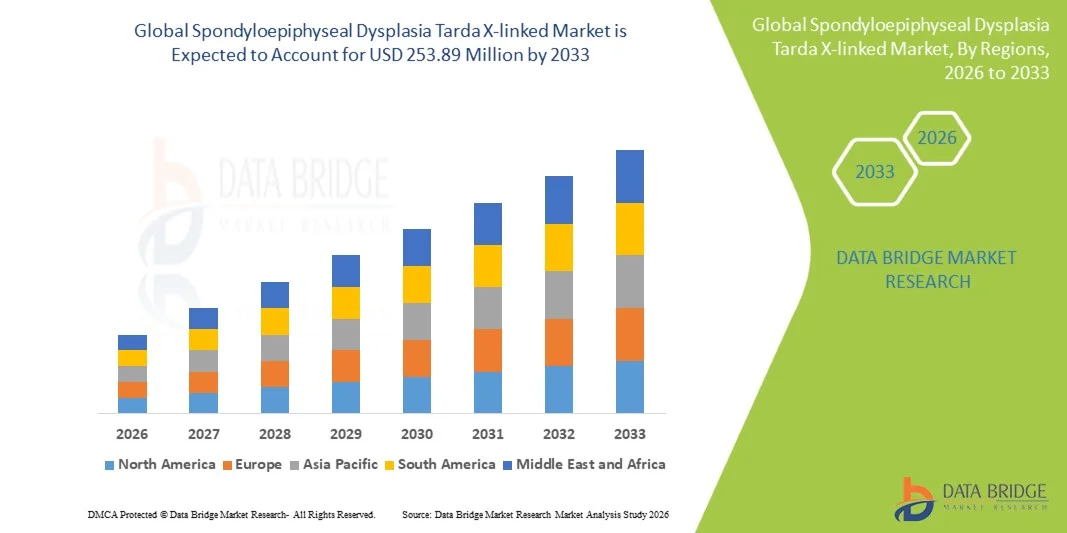
The Spondyloepiphyseal Dysplasia Tarda X-linked Market was valued at USD 150.00 million in 2025 and is projected to reach USD 253.89 million by 2033, growing at a CAGR of 6.8% from 2026 to 2033. The market is witnessing steady growth driven by increasing diagnosis of rare skeletal dysplasias, improved access to genetic testing, and growing awareness of X-linked connective tissue disorders among clinicians and patients.
The rising emphasis on early and accurate genetic diagnosis, along with advancements in radiographic imaging and molecular testing, is significantly improving detection rates of Spondyloepiphyseal Dysplasia Tarda X-linked cases. In addition, the growing availability of specialized orthopedic interventions, rehabilitation therapies, and multidisciplinary rare disease care centers is supporting long-term patient management and improving quality of life.
Key Market Trends & Insights
- North America dominated the Spondyloepiphyseal Dysplasia Tarda X-linked Market with the largest revenue share of 38.6% in 2025, supported by strong rare disease diagnostic infrastructure, advanced genetic testing penetration, and higher access to specialist orthopedic care.
- The Genetic Testing segment led the market with a 46.3% share in 2025, driven by its high diagnostic accuracy in identifying TRAPPC2 gene mutations responsible for X-linked skeletal dysplasia.
- Asia-Pacific is expected to be the fastest-growing region at a CAGR of 7.4% from 2026 to 2033, fueled by improving healthcare access, expanding genetic diagnostics availability, and rising awareness of rare skeletal disorders in emerging economies such as India and China.
- Radiographic Imaging are the fastest-growing diagnosis type, projected to register a CAGR of 6.8%, reflecting the surge in widespread availability and critical role in initial diagnosis of skeletal abnormalities.
- The Hip Replacement segment dominated the treatment type category with a 42.8% revenue share in 2025, led by high prevalence of progressive hip joint degeneration in patients with SEDT-XL. This condition commonly leads to early-onset osteoarthritis.
- Hospital Pharmacy accounted for 51.6% of the market, preferred by most diagnosis, treatment, and surgical management of SEDT-XL are conducted in hospital settings.
- The Genetic Counselling segment is the fastest-growing treatment type category, with a CAGR of 7.2%, driven by increasing emphasis on early diagnosis, family risk assessment, and reproductive planning.
Market Size & Forecast
- Global Market Value (2025): USD 150.00 Million
- Expected Market Value (2033): USD 253.89 Million
- Forecast CAGR (2026–2033): 6.8%
- Leading Region in 2025: North America
- Fastest Growing Region: Asia Pacific
Report Scope and Spondyloepiphyseal Dysplasia Tarda X-linked Market Segmentation
|
Attributes |
Spondyloepiphyseal Dysplasia Tarda X-linked Key Market Insights |
|
Segments Covered |
|
|
Countries Covered |
North America · U.S. · Canada · Mexico Europe · Germany · France · U.K. · Netherlands · Switzerland · Belgium · Russia · Italy · Spain · Turkey · Rest of Europe Asia-Pacific · China · Japan · India · South Korea · Singapore · Malaysia · Australia · Thailand · Indonesia · Philippines · Rest of Asia-Pacific Middle East and Africa · Saudi Arabia · U.A.E. · South Africa · Egypt · Israel · Rest of Middle East and Africa South America · Brazil · Argentina · Rest of South America |
|
Key Market Players |
· Illumina, Inc. (U.S.) · Thermo Fisher Scientific Inc. (U.S.) · Quest Diagnostics Incorporated (U.S.) · Invitae Corporation (U.S.) · Centogene N.V. (Germany) · Fulgent Genetics, Inc. (U.S.) · Eurofins Scientific SE (Luxembourg) · PerkinElmer Inc. (U.S.) · Agilent Technologies, Inc. (U.S.) · Bio-Rad Laboratories, Inc. (U.S.) · Oxford Nanopore Technologies plc (U.K.) · BGI Genomics Co., Ltd. (China) · Myriad Genetics, Inc. (U.S.) · Natera, Inc. (U.S.) · Stryker (U.S.) · Zimmer Biomet (U.S.) · Smith & Nephew (U.K.) · Johnson & Johnson Services, Inc. (U.S.) · Roche Holding AG (Switzerland) · Novartis AG (Switzerland) |
|
Market Opportunities |
· Expansion of next-generation sequencing (NGS) and whole-exome testing · Growing development of gene therapy and RNA-based rare disease pipelines · Increasing establishment of rare disease reference centers |
|
Value Added Data Infosets |
In addition to the insights on market scenarios such as market value, growth rate, segmentation, geographical coverage, and major players, the market reports curated by the Data Bridge Market Research also include in-depth expert analysis, patient epidemiology, pipeline analysis, pricing analysis, and regulatory framework. |
Spondyloepiphyseal Dysplasia Tarda X-linked Market Trends
Trend: Expansion of Molecular Diagnostics in Rare Skeletal Disorders
Genetic testing is becoming a central component in the diagnosis of Spondyloepiphyseal Dysplasia Tarda X-linked, as healthcare systems increasingly move toward precision medicine for rare diseases. The use of next-generation sequencing (NGS), whole-exome sequencing, and targeted gene panels is enabling clinicians to identify TRAPPC2 gene mutations more accurately and at earlier stages of disease progression. This shift is reducing diagnostic delays, which have historically been a major challenge in rare skeletal dysplasias, and is improving patient stratification for long-term orthopedic and rehabilitative care. Hospitals and diagnostic laboratories are increasingly integrating molecular testing into routine rare disease workflows, supported by growing reimbursement coverage in developed markets. This has led to higher detection rates of previously underdiagnosed cases, especially in pediatric and adolescent populations where early skeletal abnormalities first appear.
Spondyloepiphyseal Dysplasia Tarda X-linked Market Dynamics
Key Market Driver: Rising Adoption of Precision Genetic Screening
The increasing adoption of advanced genetic screening technologies is one of the strongest drivers of this market, as it directly improves the identification of X-linked skeletal disorders such as SEDT-XL. Improved accessibility to molecular diagnostic tools, coupled with declining sequencing costs, has allowed broader integration of genetic testing into routine orthopedic and endocrinology evaluations. This is particularly important because early-stage symptoms often overlap with other skeletal conditions, making genetic confirmation essential for accurate diagnosis. In addition, growing physician awareness and expanded rare disease programs are supporting earlier referrals for genetic testing, which is accelerating diagnosis timelines and improving patient management outcomes. Healthcare institutions are also increasingly adopting standardized diagnostic pathways for skeletal dysplasias, ensuring that suspected cases undergo confirmatory TRAPPC2 mutation analysis
Key Restraint/Challenge: Limited Curative Treatment Availability and High Care Dependency
A major limitation in the SEDT-XL market is the absence of disease-modifying or curative therapies, which results in lifelong dependence on symptomatic management strategies. Treatment primarily focuses on managing complications such as joint degeneration, pain, and mobility restrictions through orthopedic surgery, physiotherapy, and supportive care rather than addressing the underlying genetic cause. This significantly limits therapeutic advancement and reduces the potential for pharmaceutical-driven market expansion. Patients often require repeated surgical interventions over their lifetime, particularly for hip and spine complications, which increases the long-term healthcare burden on both families and medical systems. The chronic nature of the condition also necessitates continuous rehabilitation and assistive device usage, making care highly resource-intensive.
For instance, most confirmed cases continue to rely on periodic joint replacement procedures and ongoing physiotherapy programs to maintain mobility, rather than any targeted molecular or gene-based treatment options currently available in clinical practice.
Key Market Opportunity: Advancements in Gene-Based and Precision Rare Disease Therapies
The growing progress in gene therapy, RNA-based therapeutics, and precision medicine platforms presents a significant long-term opportunity for the Spondyloepiphyseal Dysplasia Tarda X-linked market. As research into TRAPPC2 gene function and X-linked skeletal dysplasia mechanisms expands, there is increasing potential for the development of targeted disease-modifying treatments rather than purely symptomatic care. This shift could fundamentally transform the treatment landscape by addressing the root genetic cause of the disorder. Pharmaceutical companies and rare disease biotech firms are increasingly investing in ultra-orphan indications, supported by regulatory incentives such as orphan drug designation and fast-track approvals. In parallel, expanding gene-editing technologies such as CRISPR-based platforms and RNA modulation strategies are opening pathways for early-stage therapeutic exploration in skeletal dysplasias.
Spondyloepiphyseal Dysplasia Tarda X-linked Market Scope
The Spondyloepiphyseal Dysplasia Tarda X-linked market is segmented on the basis of diagnosis type, treatment type, and distribution channel.
- By Diagnosis Type
On the basis of diagnosis type, the Spondyloepiphyseal Dysplasia Tarda X-linked Market is segmented into genetic testing, radiographic imaging, clinical evaluation, and prenatal screening. The Genetic Testing segment dominated the market with a share of 46.3% in 2025, owing to its high diagnostic accuracy in identifying TRAPPC2 gene mutations responsible for X-linked skeletal dysplasia. This method has become the gold standard in confirming suspected cases, especially when clinical symptoms overlap with other skeletal disorders. Increasing adoption of next-generation sequencing and rare disease gene panels in tertiary hospitals is further strengthening its dominance. Genetic testing also enables early diagnosis before severe joint degeneration occurs, improving long-term patient management outcomes. Expanding reimbursement coverage in developed regions is supporting higher adoption rates. Continuous technological improvements are reducing turnaround time and cost of testing, making it more accessible globally.
The Radiographic Imaging segment is expected to witness the fastest growth at a CAGR of 6.8% from 2026 to 2033, driven by its widespread availability and critical role in initial diagnosis of skeletal abnormalities. X-rays and MRI scans help identify characteristic epiphyseal and spinal changes associated with SEDT-XL, prompting further genetic confirmation. Increasing use of advanced imaging systems in orthopedic and pediatric care centers is supporting segment growth. Integration of AI-based imaging analysis is improving diagnostic precision and reducing interpretation errors. Growing awareness among clinicians about early skeletal deformity patterns is further increasing imaging demand. In many regions, radiographic evaluation remains the first step in rare skeletal disorder detection, driving consistent usage growth.
- By Treatment Type
On the basis of treatment, the Spondyloepiphyseal Dysplasia Tarda X-linked Market is segmented into surgery, genetic counselling, cervical fusion, and hip replacement. The Hip Replacement segment dominated the market in 2025, with a share of 42.8%, driven by the high prevalence of progressive hip joint degeneration in patients with SEDT-XL. This condition commonly leads to early-onset osteoarthritis, requiring surgical intervention to restore mobility and reduce chronic pain. Advancements in orthopedic implant technology and surgical techniques have improved outcomes and recovery times, increasing procedure adoption. Hospitals and specialty orthopedic centers are increasingly performing hip arthroplasty as a long-term management solution. Rising availability of minimally invasive surgical options is further supporting segment growth. The chronic and progressive nature of the disease ensures sustained demand for hip replacement procedures throughout patient lifespans.
The Genetic Counselling segment is projected to grow at the fastest CAGR of 7.2% from 2026 to 2033, supported by increasing emphasis on early diagnosis, family risk assessment, and reproductive planning. Genetic counselling plays a critical role in educating families about inheritance patterns and disease progression. Growing awareness of rare genetic disorders is encouraging more patients to seek counselling services after diagnosis. Expansion of clinical genetics departments in hospitals and rare disease centers is further driving adoption. Integration of counselling with molecular diagnostic workflows is improving patient engagement and care continuity. Increasing focus on personalized medicine and preventive healthcare strategies is also strengthening this segment’s growth.
- By Distribution Channel
On the basis of distribution channel, the Spondyloepiphyseal Dysplasia Tarda X-linked Market is segmented into hospital pharmacies, retail pharmacies, online pharmacies, and others. The Hospital Pharmacy segment dominated the market in 2025, holding a share of 51.6%, as most diagnosis, treatment, and surgical management of SEDT-XL are conducted in hospital settings. Patients typically receive orthopedic procedures, diagnostic testing, and rehabilitation services through specialized hospitals and tertiary care centers. Hospital pharmacies ensure availability of pain management drugs, post-surgical medications, and supportive therapies. Strong integration with multidisciplinary care teams enhances treatment continuity. High patient dependency on inpatient and outpatient hospital services further strengthens this segment’s dominance. Limited use of outpatient-only treatment models in rare skeletal disorders also contributes to sustained hospital-based care.
The Online Pharmacies segment is expected to grow at the fastest CAGR of 7.0% from 2026 to 2033, driven by increasing digitalization of healthcare services and rising demand for convenient medication access. Patients requiring long-term pain management and supportive medications are increasingly using online platforms for repeat prescriptions. Growth in telemedicine and digital prescription services is further supporting this shift. Improved logistics and cold-chain delivery systems are enhancing accessibility even in remote regions. Rising patient preference for home-based care and reduced hospital visits is accelerating adoption. Expanding e-pharmacy regulations in several countries are also supporting structured growth in this channel.
Spondyloepiphyseal Dysplasia Tarda X-linked Market Regional Analysis
North America dominated the Spondyloepiphyseal Dysplasia Tarda X-linked Market with the largest revenue share of 38.6% in 2025, supported by strong rare disease diagnostic infrastructure, advanced genetic testing penetration, and higher access to specialist orthopedic care. The region benefits from well-established healthcare reimbursement systems, extensive adoption of next-generation sequencing for TRAPPC2 mutation detection, and strong presence of rare disease research initiatives. Increasing awareness among clinicians regarding X-linked skeletal dysplasias and early diagnostic screening is further strengthening market growth. Expanding multidisciplinary rare disease centers and improved access to orthopedic surgical interventions continue to reinforce North America’s leadership position in the global market.
U.S. Spondyloepiphyseal Dysplasia Tarda X-linked Market Insight
The U.S. Spondyloepiphyseal Dysplasia Tarda X-linked market is witnessing steady growth due to strong rare disease diagnostic infrastructure, high penetration of genetic testing, and advanced orthopedic care systems. The country’s well-established healthcare ecosystem, along with widespread adoption of next-generation sequencing and TRAPPC2 mutation analysis, is driving early and accurate diagnosis. In addition, increasing availability of specialized rare disease centers and multidisciplinary treatment programs is supporting long-term patient management. Strong research funding for genetic disorders and growing awareness among clinicians continue to accelerate market expansion across the region.
Europe Spondyloepiphyseal Dysplasia Tarda X-linked Market Insight
The Europe Spondyloepiphyseal Dysplasia Tarda X-linked market remains a major contributor to global revenue, driven by strong healthcare systems, advanced genetic diagnostics, and structured rare disease policies. The region benefits from high adoption of molecular testing, established orthopedic treatment pathways, and strong government support for rare disease research. Increasing use of precision medicine and expansion of national rare disease registries are improving patient identification and care coordination. Growing collaboration between research institutes and hospitals continues to enhance diagnostic and treatment capabilities across Europe.
U.K. Spondyloepiphyseal Dysplasia Tarda X-linked Market Insight
The U.K. Spondyloepiphyseal Dysplasia Tarda X-linked market is experiencing steady growth, supported by strong NHS-based rare disease programs and increasing adoption of genetic testing technologies. Rising focus on early diagnosis through genomic screening initiatives is improving detection of TRAPPC2-related skeletal disorders. Integration of rare disease pathways within national healthcare frameworks is enhancing treatment access and patient management efficiency. In addition, growing research activity in genetic disorders and expanding clinical genetics services are strengthening the U.K.’s position in the European rare disease landscape.
Germany Spondyloepiphyseal Dysplasia Tarda X-linked Market Insight
The Germany Spondyloepiphyseal Dysplasia Tarda X-linked market is expanding steadily due to advanced diagnostic capabilities, strong orthopedic care infrastructure, and high adoption of genetic testing. The country’s focus on precision medicine and rare disease research is supporting improved identification and management of skeletal dysplasias. Increasing use of advanced imaging technologies and molecular diagnostics in hospitals is further strengthening clinical workflows. In addition, strong collaboration between academic research centers and healthcare providers is enhancing treatment innovation and patient care outcomes.
Asia-Pacific Spondyloepiphyseal Dysplasia Tarda X-linked Market Insight
The Asia-Pacific Spondyloepiphyseal Dysplasia Tarda X-linked market is expected to witness rapid growth, driven by improving healthcare infrastructure, increasing availability of genetic testing, and rising awareness of rare skeletal disorders. Growing investments in advanced diagnostic facilities across China, India, and Japan are supporting early disease detection. Expanding access to orthopedic care and rehabilitation services is further contributing to market development. In addition, increasing focus on rare disease research and growing patient access to specialized healthcare centers are accelerating regional market expansion.
Japan Spondyloepiphyseal Dysplasia Tarda X-linked Market Insight
The Japan Spondyloepiphyseal Dysplasia Tarda X-linked market is witnessing consistent growth due to strong healthcare infrastructure, advanced genetic testing capabilities, and increasing focus on rare disease management. The country’s high adoption of molecular diagnostics and imaging technologies is improving early detection rates. Hospitals and research institutes are actively involved in skeletal dysplasia studies, supporting better clinical understanding of TRAPPC2-related conditions. In addition, integration of precision medicine approaches is enhancing long-term patient care outcomes.
China Spondyloepiphyseal Dysplasia Tarda X-linked Market Insight
The China Spondyloepiphyseal Dysplasia Tarda X-linked market is growing rapidly, driven by expanding healthcare access, increasing genetic testing adoption, and rising awareness of rare diseases. Government initiatives supporting precision medicine and rare disease diagnosis are significantly improving early detection capabilities. Growing investments in hospital infrastructure and molecular diagnostic laboratories are strengthening clinical capacity. In addition, rising collaboration between academic institutions and healthcare providers is accelerating research and improving management of skeletal dysplasia cases across the country.
Spondyloepiphyseal Dysplasia Tarda X-linked Market Share
The Spondyloepiphyseal Dysplasia Tarda X-linked industry is primarily led by well-established companies, including:
- Illumina, Inc. (U.S.)
- Thermo Fisher Scientific Inc. (U.S.)
- Quest Diagnostics Incorporated (U.S.)
- Invitae Corporation (U.S.)
- Centogene N.V. (Germany)
- Fulgent Genetics, Inc. (U.S.)
- Eurofins Scientific SE (Luxembourg)
- PerkinElmer Inc. (U.S.)
- Agilent Technologies, Inc. (U.S.)
- Bio-Rad Laboratories, Inc. (U.S.)
- Oxford Nanopore Technologies plc (U.K.)
- BGI Genomics Co., Ltd. (China)
- Myriad Genetics, Inc. (U.S.)
- Natera, Inc. (U.S.)
- Stryker (U.S.)
- Zimmer Biomet (U.S.)
- Smith & Nephew (U.K.)
- Johnson & Johnson Services, Inc. (U.S.)
- Roche Holding AG (Switzerland)
- Novartis AG (Switzerland)
Latest Developments in Spondyloepiphyseal Dysplasia Tarda X-linked Market
- In March 2025, a clinical genetics study expanded the mutation spectrum of the TRAPPC2 gene associated with X-linked Spondyloepiphyseal Dysplasia Tarda, identifying novel pathogenic variants and improving molecular diagnostic accuracy in rare skeletal dysplasias. The findings emphasized the importance of next-generation sequencing panels in early diagnosis and differentiation from other short-stature disorders. This development supports improved genetic confirmation rates and earlier clinical intervention strategies
- In July 2024, researchers published a case study reporting a newly identified TRAPPC2 gene mutation in a multi-generational family, contributing to better understanding of genotype-phenotype correlations in X-linked skeletal dysplasia. The study highlighted variability in disease severity even within the same family line, reinforcing the role of personalized genetic counseling. This advancement is strengthening diagnostic precision in rare orthopedic genetic disorders
- In November 2023, molecular genetics review detailed improvements in diagnostic workflows for skeletal dysplasias using whole-exome sequencing and targeted gene panels, including TRAPPC2 screening. The study demonstrated reduced diagnostic delay and improved detection rates in pediatric patients with unexplained short stature and joint abnormalities. This supports wider adoption of genomic diagnostics in clinical orthopedics
- In May 2022, an orthopedic outcomes study evaluated long-term hip replacement results in patients with rare skeletal dysplasias, including SEDT-XL, showing significant improvement in mobility and pain reduction post-surgery. The research highlighted the importance of early surgical intervention to prevent severe degenerative joint complications. This has strengthened the role of hip arthroplasty as a key management strategy in advanced disease stages
- In February 2021, a comprehensive review of X-linked Spondyloepiphyseal Dysplasia Tarda summarized clinical, radiographic, and genetic findings associated with TRAPPC2 mutations. The publication emphasized challenges in early diagnosis due to phenotypic overlap with other skeletal disorders and highlighted the growing importance of molecular confirmation. This review laid foundational guidance for modern diagnostic approaches in rare skeletal dysplasia management

- Interactive Data Analysis Dashboard
- Company Analysis Dashboard for high growth potential opportunities
- Research Analyst Access for customization & queries
- Competitor Analysis with Interactive dashboard
- Latest News, Updates & Trend analysis
- Harness the Power of Benchmark Analysis for Comprehensive Competitor Tracking
Data collection and base year analysis are done using data collection modules with large sample sizes. The stage includes obtaining market information or related data through various sources and strategies. It includes examining and planning all the data acquired from the past in advance. It likewise envelops the examination of information inconsistencies seen across different information sources. The market data is analysed and estimated using market statistical and coherent models. Also, market share analysis and key trend analysis are the major success factors in the market report. To know more, please request an analyst call or drop down your inquiry.
The key research methodology used by DBMR research team is data triangulation which involves data mining, analysis of the impact of data variables on the market and primary (industry expert) validation. Data models include Vendor Positioning Grid, Market Time Line Analysis, Market Overview and Guide, Company Positioning Grid, Patent Analysis, Pricing Analysis, Company Market Share Analysis, Standards of Measurement, Global versus Regional and Vendor Share Analysis. To know more about the research methodology, drop in an inquiry to speak to our industry experts.
Data Bridge Market Research is a leader in advanced formative research. We take pride in servicing our existing and new customers with data and analysis that match and suits their goal. The report can be customized to include price trend analysis of target brands understanding the market for additional countries (ask for the list of countries), clinical trial results data, literature review, refurbished market and product base analysis. Market analysis of target competitors can be analyzed from technology-based analysis to market portfolio strategies. We can add as many competitors that you require data about in the format and data style you are looking for. Our team of analysts can also provide you data in crude raw excel files pivot tables (Fact book) or can assist you in creating presentations from the data sets available in the report.












