


Spondylosis Treatment Market Size
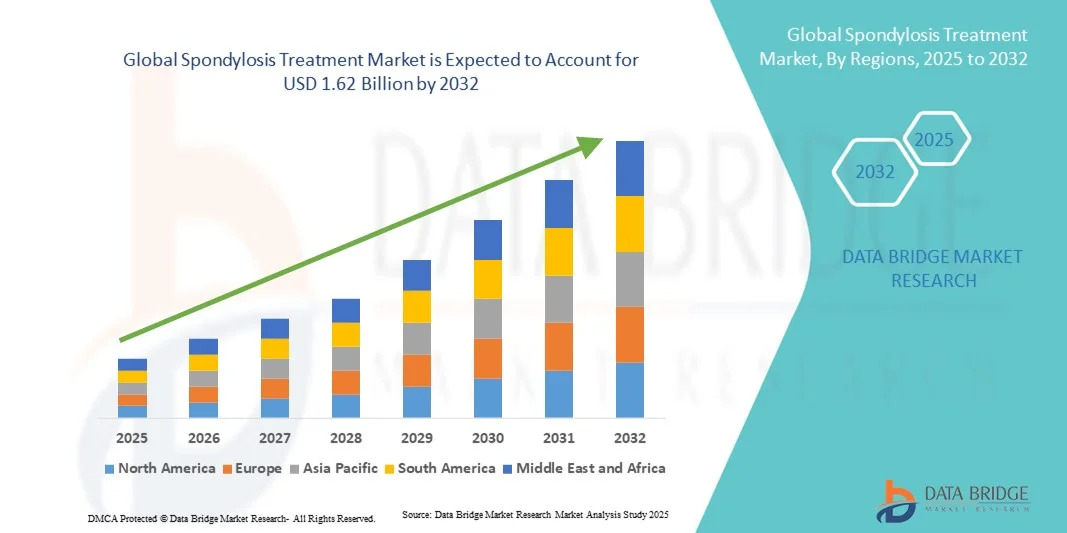
- The global spondylosis treatment market size was valued at USD 1.04 billion in 2024 and is expected to reach USD 1.62 billion by 2032, at a CAGR of 5.70% during the forecast period
- The market growth is largely fueled by the increasing prevalence of spinal disorders and age-related degenerative conditions, driving demand for effective spondylosis treatment therapies
- Furthermore, advancements in pharmaceutical treatments, physiotherapy techniques, and minimally invasive surgical procedures, along with growing awareness among patients and healthcare providers, are accelerating the uptake of spondylosis treatment solutions, thereby significantly boosting the industry's growth
Spondylosis Treatment Market Analysis
- The Spondylosis Treatment market is witnessing steady global growth, driven by the rising prevalence of spinal disorders, increasing geriatric population, and growing awareness about advanced treatment options
- Improvements in diagnostic technologies, minimally invasive procedures, and patient-centric healthcare programs are further supporting market expansion
- North America dominated the spondylosis treatment market with the largest revenue share of 41.5% in 2024, fueled by well-established healthcare infrastructure, high adoption of advanced spinal therapies, and substantial R&D investments by leading pharmaceutical and medical device companies. The U.S. accounts for a major portion of regional growth, driven by early adoption of novel treatments, well-organized clinical networks, and initiatives to enhance spinal disorder management. Awareness campaigns, patient education programs, and favorable insurance coverage for therapies also contribute to the market dominance in the region
- Asia Pacific is expected to be the fastest growing region in the spondylosis treatment market during the forecast period, with a CAGR of 9.8%, supported by increasing urbanization, growing geriatric population, and rising healthcare spending
- The NSAID segment dominated the largest market revenue share of 42.7% in 2024, driven by widespread physician preference due to their rapid symptom-relief properties, ease of administration, and proven efficacy in managing pain and inflammation associated with spondylosis
Report Scope and Spondylosis Treatment Market Segmentation
|
Attributes |
Spondylosis Treatment Key Market Insights |
|
Segments Covered |
|
|
Countries Covered |
North America
Europe
Asia-Pacific
Middle East and Africa
South America
|
|
Key Market Players |
|
|
Market Opportunities |
|
|
Value Added Data Infosets |
In addition to the insights on market scenarios such as market value, growth rate, segmentation, geographical coverage, and major players, the market reports curated by the Data Bridge Market Research also include in-depth expert analysis, pricing analysis, brand share analysis, consumer survey, demography analysis, supply chain analysis, value chain analysis, raw material/consumables overview, vendor selection criteria, PESTLE Analysis, Porter Analysis, and regulatory framework. |
Spondylosis Treatment Market Trends
Rising Adoption of Minimally Invasive and Combination Therapies
- A significant trend in the global spondylosis treatment market is the growing adoption of minimally invasive surgical procedures and combination therapy approaches that integrate pharmacological treatment, physiotherapy, and rehabilitation
- Healthcare providers are increasingly focusing on early intervention strategies, such as targeted drug therapies combined with structured exercise programs, to reduce long-term complications and improve patient quality of life
- For instance, recent clinical initiatives in 2023 and 2024 highlighted the effectiveness of combining biologic agents with non-surgical interventions for patients with advanced spinal degeneration
- The trend toward patient-specific treatment plans, aided by advancements in diagnostic imaging and biomarker-based therapies, is shaping clinical practices and enhancing treatment outcomes
- This movement toward more personalized and holistic care is driving demand for both innovative therapeutics and supportive rehabilitation programs across hospitals, specialty clinics, and outpatient facilities
- The integration of evidence-based combination therapies is expected to continue reshaping patient management in spondylosis, providing safer and more effective treatment alternatives globally
Spondylosis Treatment Market Dynamics
Driver
Growing Need Due to Rising Prevalence and Aging Population
- The increasing prevalence of spondylosis among aging populations and the rising incidence of spinal disorders are significant drivers for the heightened demand for effective treatment solutions
- For instance, in April 2024, Medtronic announced the launch of its advanced spinal implant system, designed to improve patient outcomes in degenerative spine conditions. Such strategies by key companies are expected to drive the Spondylosis Treatment industry growth in the forecast period
- As patients and healthcare providers become more aware of the long-term impact of untreated spinal conditions, the demand for innovative therapeutics, minimally invasive procedures, and supportive care solutions is increasing
- Furthermore, the growing emphasis on early diagnosis, preventive care, and rehabilitation therapies is boosting the adoption of spondylosis treatment solutions in hospitals, specialty clinics, and outpatient centers
- The convenience of home-based physiotherapy programs, rehabilitation devices, and advanced drug therapies, along with growing awareness about ergonomic practices and lifestyle modifications, are key factors propelling the adoption of spondylosis treatment solutions across patient populations
- The trend towards personalized treatment plans, combined with increasing availability of effective pharmacological and non-pharmacological interventions, further contributes to market growth
Restraint/Challenge
High Treatment Costs and Limited Awareness in Developing Regions
- The relatively high cost of advanced spondylosis treatment options, including surgical interventions, specialized implants, and biologics, poses a significant barrier to widespread adoption, particularly in developing regions
- In addition, limited awareness about early diagnosis, preventive care, and available treatment modalities restricts patient access to effective therapies in certain countries
- Healthcare infrastructure limitations, shortage of trained specialists, and insufficient rehabilitation facilities further challenge the market growth in emerging economies
- While generic medications and physiotherapy programs are available at lower costs, premium interventions and state-of-the-art procedures often come with a substantial financial burden for patients
- Overcoming these challenges through government initiatives, patient education programs, improved insurance coverage, and expansion of healthcare infrastructure will be crucial for sustained market growth
- Continuous innovation, clinical trials for novel therapeutics, and collaborations between medical institutions and industry players will further strengthen adoption and accessibility of spondylosis treatment globally
Spondylosis Treatment Market Scope
The market is segmented on the basis of drug, product, and end user.
- By Drug
On the basis of drug, the Spondylosis Treatment market is segmented into Non-Steroidal Anti-Inflammatory Drugs (NSAID), TNF Alpha Inhibitors, Conventional Disease Modifying Anti-Rheumatic Drugs (cDMARDs), and Glucocorticoids. The NSAID segment dominated the largest market revenue share of 42.7% in 2024, driven by widespread physician preference due to their rapid symptom-relief properties, ease of administration, and proven efficacy in managing pain and inflammation associated with spondylosis. High adoption in hospitals and outpatient clinics, cost-effectiveness, and inclusion in treatment guidelines contribute to the dominance. Strong patient familiarity, availability in generic formulations, and consistent insurance coverage further support market leadership. Hospitals and specialty clinics rely heavily on NSAIDs for initial management of spondylosis. Continuous innovations in sustained-release and topical NSAID formulations enhance patient compliance and outcomes. The segment also benefits from integration with physiotherapy and multimodal treatment plans.
The TNF Alpha Inhibitors segment is expected to witness the fastest CAGR of 11.2% from 2025 to 2032, fueled by growing adoption in patients with severe or refractory spondylosis, advancements in biologic therapies, and increasing awareness of targeted immunomodulatory treatments. Rising physician preference for personalized therapy, strong clinical trial evidence supporting efficacy, and growing insurance reimbursements are key drivers. Expansion of specialty clinics and access in emerging markets enhance adoption. Regulatory approvals for new TNF alpha inhibitors stimulate market penetration. Biologics education programs and patient support initiatives boost confidence. Increasing collaboration between hospitals and pharmaceutical companies ensures availability. Telemedicine and online prescription services provide faster access. Urbanization, rising disposable incomes, and higher patient awareness accelerate growth. Combination therapy approaches with NSAIDs also encourage adoption.
- By Product
On the basis of product, the Spondylosis Treatment market is segmented into COX-2 Antagonists, COX Inhibitors, and Others. The COX Inhibitors segment dominated the largest market revenue share of 41.8% in 2024, driven by extensive clinical use, availability in various formulations, and proven efficacy in managing pain and inflammation. Hospitals and clinics prefer COX inhibitors due to their predictable pharmacokinetics and established safety profiles. Their inclusion in treatment protocols and availability as generics enhance accessibility and adoption. The segment benefits from patient familiarity, physician confidence, and widespread distribution in hospital and retail pharmacies. Innovations in slow-release and combination products improve compliance. Continuous research and clinical studies reinforce efficacy. COX inhibitors are widely used across mild to moderate spondylosis cases. High patient adherence and physician trust solidify dominance.
The COX-2 Antagonists segment is anticipated to witness the fastest CAGR of 10.7% from 2025 to 2032, driven by the increasing need for therapies with reduced gastrointestinal side effects, patient preference for targeted treatment, and rising adoption in geriatric populations. Awareness campaigns highlighting safer alternatives to conventional NSAIDs encourage uptake. Hospitals and specialty clinics are expanding COX-2 use for long-term management. Integration with multimodal pain management strategies enhances adoption. Product innovation, including extended-release formulations, improves convenience. Regulatory approvals in new regions stimulate growth. Expansion in emerging markets further accelerates penetration. Patient education on safer alternatives promotes uptake. Increasing combination therapy approaches boost market growth.
- By End User
On the basis of end user, the Spondylosis Treatment market is segmented into Hospitals, Clinics, Rehabilitation Centers, Academic Research Institutes, and Others. The hospital segment dominated the largest market revenue share of 44.1% in 2024, owing to direct access to advanced diagnostics, availability of multidisciplinary treatment options, and high patient inflow. Hospitals provide comprehensive management including drug therapy, minimally invasive procedures, and rehabilitation services. Strong insurance coverage, well-trained medical staff, and structured patient follow-up programs enhance adoption. Hospital pharmacies ensure consistent drug availability. Clinical trials and R&D initiatives conducted at hospitals further reinforce preference. Multidisciplinary care pathways integrate surgical and pharmacological management. Patient support programs enhance compliance and outcomes.
The Rehabilitation Centers segment is expected to witness the fastest CAGR of 11.5% from 2025 to 2032, driven by growing awareness of non-surgical interventions, increasing demand for physiotherapy and occupational therapy, and rising adoption of outpatient care models. Rehabilitation centers provide targeted exercises, pain management programs, and holistic care. Expansion in urban and semi-urban regions boosts access. Integration with hospitals and specialty clinics supports referrals. Patient education, tele-rehabilitation, and mobile health initiatives promote engagement. Insurance coverage for rehabilitation services further drives growth. Advanced therapeutic devices and personalized care plans improve treatment effectiveness. Increased focus on post-surgical recovery enhances adoption. Collaboration with academic institutes fosters evidence-based practices.
Spondylosis Treatment Market Regional Analysis
- North America dominated the spondylosis treatment market with the largest revenue share of 41.5% in 2024, fueled by well-established healthcare infrastructure, high adoption of advanced spinal therapies, and substantial R&D investments by leading pharmaceutical and medical device companies
- The region’s growth is further supported by favorable reimbursement policies, increased awareness of spinal disorders, and the presence of specialized healthcare facilities dedicated to spine care
- Awareness campaigns, patient education programs, and strong insurance coverage for spinal treatments have contributed significantly to maintaining the region’s dominance
U.S. Spondylosis Treatment Market Insight
The U.S. spondylosis treatment market captured the largest revenue share within North America in 2024, driven by early adoption of innovative treatment methods, expanding access to advanced diagnostic imaging, and the availability of specialized spine centers. The increasing prevalence of chronic back pain and degenerative spine conditions, coupled with initiatives promoting patient education and preventive healthcare, are accelerating the demand for spinal therapies. The presence of key market players investing in R&D for novel drug formulations and minimally invasive surgical solutions further supports the country’s leading position in the global Spondylosis Treatment market.
Europe Spondylosis Treatment Market Insight
The Europe spondylosis treatment market is expected to expand at a substantial CAGR throughout the forecast period, supported by growing geriatric populations, higher healthcare spending, and government initiatives to improve spinal disorder management. The region’s healthcare systems are increasingly emphasizing early diagnosis and rehabilitation-focused treatment approaches to reduce long-term complications associated with degenerative spine diseases. Moreover, collaborations between medical institutions and research organizations are advancing the availability of new treatment methods across the continent.
U.K. Spondylosis Treatment Market Insight
The U.K. spondylosis treatment market is projected to grow steadily during the forecast period, driven by expanding hospital networks, advanced diagnostic capabilities, and public awareness campaigns about musculoskeletal health. The growing prevalence of sedentary lifestyles and aging-related spinal conditions has increased demand for both surgical and non-surgical therapies. In addition, the National Health Service (NHS) initiatives focusing on reducing waiting times for orthopedic and neurological treatments are expected to further boost market growth in the country.
Germany Spondylosis Treatment Market Insight
The Germany spondylosis treatment market is expected to expand at a notable CAGR during the forecast period, driven by advanced healthcare infrastructure, continuous technological innovation, and increased investments in research and clinical development. The presence of major pharmaceutical and medical device manufacturers, coupled with the country’s focus on high-quality rehabilitation services, strengthens its position within the European market. Germany’s emphasis on preventive healthcare and patient rehabilitation programs also supports long-term management of spinal conditions.
Asia-Pacific Spondylosis Treatment Market Insight
The Asia-Pacific spondylosis treatment market is anticipated to grow at the fastest CAGR of 9.8% during the forecast period of 2025 to 2032, supported by rising healthcare investments, increasing awareness of spinal health, and a growing geriatric population. Countries such as India, China, and Japan are leading regional growth due to advancements in diagnostic imaging technologies and expansion of hospital and specialty clinic networks. The rising incidence of lifestyle-related spine disorders and government initiatives aimed at enhancing healthcare infrastructure are further propelling market expansion.
Japan Spondylosis Treatment Market Insight
The Japan spondylosis treatment market is experiencing steady growth, driven by a rapidly aging population, well-established healthcare infrastructure, and strong emphasis on early diagnosis and preventive care. The adoption of minimally invasive surgical techniques and the integration of rehabilitation therapies into standard care practices are contributing to improved treatment outcomes. In addition, ongoing clinical research focused on innovative therapeutic approaches is reinforcing Japan’s position as a key contributor to the regional market.
China Spondylosis Treatment Market Insight
The China spondylosis treatment market accounted for the largest market revenue share in the Asia-Pacific region in 2024, attributed to the country’s expanding healthcare infrastructure, growing middle-class population, and increasing government focus on spinal health. The introduction of advanced treatment options and enhanced accessibility to specialty care centers are driving adoption rates. Furthermore, collaborations between domestic and international healthcare companies are facilitating faster technology transfer and broader availability of effective treatment options for spinal disorders across China.
Spondylosis Treatment Market Share
The Spondylosis Treatment industry is primarily led by well-established companies, including:
- Pfizer Inc. (U.S.)
- AbbVie Inc. (U.S.)
- Johnson & Johnson and its affiliates (U.S.)
- Novartis AG (Switzerland)
- Merck & Co., Inc. (U.S.)
- Bayer AG (Germany)
- Lilly (U.S.)
- GSK plc (U.K.)
- Roche Holding AG (Switzerland)
- Takeda Pharmaceutical Company Limited (Japan)
- Amgen Inc. (U.S.)
- Teva Pharmaceutical Industries Ltd. (Israel)
- Sanofi (France)
- Cipla Limited (India)
- Dr. Reddy’s Laboratories Ltd. (India)
Latest Developments in Global Spondylosis Treatment Market
- In June 2023, the U.S. Food and Drug Administration granted premarket approval (PMA) to the TOPS Total Posterior Spine System (Premia Spine), a motion-preserving posterior spinal implant intended to stabilize the lumbar spine following decompression and offer an alternative to fusion for select patients with degenerative spondylolisthesis and lumbar stenosis — a notable regulatory milestone for surgical management of degenerative spinal conditions
- In November 2024, Li et al. published a multicenter, randomized controlled trial showing that focused extracorporeal shock-wave therapy (fESWT) significantly reduced pain and improved function and quality-of-life vs sham in patients with cervical spondylosis, strengthening evidence for a non-invasive physiotherapy option in symptomatic degenerative cervical disease
- In April 2024, Paradigm Spine (Coflex) published an expanded reimbursement and technical resource guide to support clinicians and hospitals in adopting interlaminar stabilization (Coflex) procedures for lumbar spinal stenosis—an industry move that improved payer/clinic readiness and can accelerate use of motion-preserving surgical options for degenerative lumbar spondylosis

- Interactive Data Analysis Dashboard
- Company Analysis Dashboard for high growth potential opportunities
- Research Analyst Access for customization & queries
- Competitor Analysis with Interactive dashboard
- Latest News, Updates & Trend analysis
- Harness the Power of Benchmark Analysis for Comprehensive Competitor Tracking
Data collection and base year analysis are done using data collection modules with large sample sizes. The stage includes obtaining market information or related data through various sources and strategies. It includes examining and planning all the data acquired from the past in advance. It likewise envelops the examination of information inconsistencies seen across different information sources. The market data is analysed and estimated using market statistical and coherent models. Also, market share analysis and key trend analysis are the major success factors in the market report. To know more, please request an analyst call or drop down your inquiry.
The key research methodology used by DBMR research team is data triangulation which involves data mining, analysis of the impact of data variables on the market and primary (industry expert) validation. Data models include Vendor Positioning Grid, Market Time Line Analysis, Market Overview and Guide, Company Positioning Grid, Patent Analysis, Pricing Analysis, Company Market Share Analysis, Standards of Measurement, Global versus Regional and Vendor Share Analysis. To know more about the research methodology, drop in an inquiry to speak to our industry experts.
Data Bridge Market Research is a leader in advanced formative research. We take pride in servicing our existing and new customers with data and analysis that match and suits their goal. The report can be customized to include price trend analysis of target brands understanding the market for additional countries (ask for the list of countries), clinical trial results data, literature review, refurbished market and product base analysis. Market analysis of target competitors can be analyzed from technology-based analysis to market portfolio strategies. We can add as many competitors that you require data about in the format and data style you are looking for. Our team of analysts can also provide you data in crude raw excel files pivot tables (Fact book) or can assist you in creating presentations from the data sets available in the report.












