


Sputum Test Market Overview
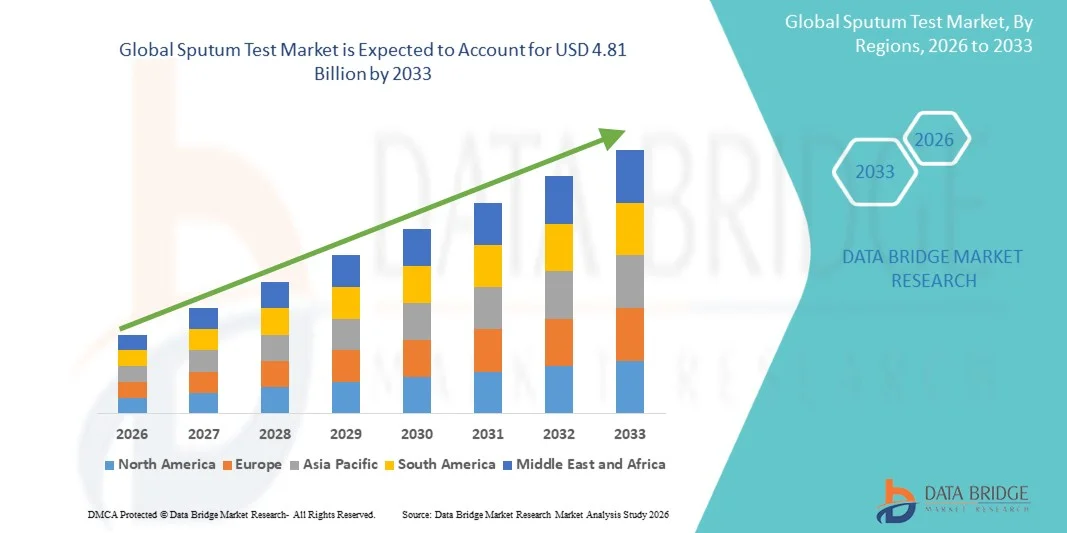
The Sputum Test Market was valued at USD 3.07 Billion in 2025 and is projected to reach USD 4.81 Billion by 2033, growing at a CAGR of 5.8% from 2026 to 2033. The market is experiencing consistent growth driven by the rising prevalence of respiratory diseases such as tuberculosis, asthma, and chronic obstructive pulmonary disease, along with increasing adoption of molecular diagnostic technologies for accurate and early disease detection. Expanding use of RT-PCR based sputum testing and growing investments in advanced laboratory infrastructure are further supporting market expansion across both developed and emerging healthcare systems.
The increasing global focus on early disease diagnosis and infectious disease surveillance, combined with government-led tuberculosis elimination programs and rising healthcare expenditure, is significantly driving the adoption of sputum-based diagnostic solutions. Growing integration of automated molecular diagnostic platforms and point-of-care testing technologies is improving testing efficiency and turnaround time, thereby strengthening the role of sputum testing in clinical decision making and public health management.
Key Market Trends & Insights
- North America dominated the Sputum Test Market with the largest revenue share of 41% in 2025, supported by strong adoption of advanced molecular diagnostics, high prevalence of respiratory diseases, and well established laboratory infrastructure
- The disposable segment led the market with a 68.4% share in 2025, driven by strong infection control requirements and strict biosafety regulations in clinical diagnostics
- Asia-Pacific is expected to be the fastest-growing region at a CAGR of 7.1% from 2026 to 2033, fueled by rising infectious disease burden, expanding healthcare infrastructure, and increasing adoption of molecular diagnostics
- 5- 15 Minutes is the fastest-growing simulation type, projected to register a CAGR of 14.2% from 2026 to 2033, supported by increasing demand for rapid point-of-care diagnostics
- The RT-PCR segment dominated the technology category with a 64.1% revenue share in 2025, led by its high sensitivity and specificity in detecting respiratory pathogens from sputum samples
- Molecular accounted for 62.8% of the market in 2025, preferred by high diagnostic accuracy and strong adoption in detecting infectious respiratory diseases such as tuberculosis and COVID-19
- The portable segment is the fastest-growing mobility category, with a CAGR of 13.8% from 2026 to 2033, driven by increasing demand for point-of-care respiratory diagnostics. Rising need for decentralized testing in rural and remote regions is accelerating adoption
Market Size & Forecast
- Global Market Value (2025): USD 3.07 Billion
- Expected Market Value (2033): USD 4.81 Billion
- Forecast CAGR (2026–2033): 5.8%
- Leading Region in 2025: North America
- Fastest Growing Region: Asia-Pacific
Report Scope and Sputum Test Market Segmentation
|
Attributes |
Sputum Test Key Market Insights |
|
Segments Covered |
|
|
Countries Covered |
North America · U.S. · Canada · Mexico Europe · Germany · France · U.K. · Netherlands · Switzerland · Belgium · Russia · Italy · Spain · Turkey · Rest of Europe Asia-Pacific · China · Japan · India · South Korea · Singapore · Malaysia · Australia · Thailand · Indonesia · Philippines · Rest of Asia-Pacific Middle East and Africa · Saudi Arabia · U.A.E. · South Africa · Egypt · Israel · Rest of Middle East and Africa South America · Brazil · Argentina · Rest of South America |
|
Key Market Players |
· Thermo Fisher Scientific Inc. (U.S.) · Siemens (Germany) · Seegene Inc (South Korea) · Curetis (Germany) · SolGent Co., Ltd (South Korea) · Mologic Ltd. (U.K.) · Abbott (U.S.) · altona Diagnostics GmbH (Germany) · F. Hoffmann-La Roche Ltd (Switzerland) · QIAGEN (Germany) · BioMaxima SA (Poland) · CTK Biotech, Inc (U.S.) · VivaChek Biotech (Hangzhou) Co., Ltd. (U.S.) · Sensing Self PTE. Ltd (India) · Hangzhou Biotest Biotech Co., LTD. (China) |
|
Market Opportunities |
· Expansion of Point-Of-Care Sputum Testing in Decentralized Healthcare Settings · Integration of AI Enabled Molecular Diagnostic Platforms for Faster and Accurate Results · Growing Use in Precision Respiratory Medicine and Biomarker Based Disease Monitoring |
|
Value Added Data Infosets |
In addition to the insights on market scenarios such as market value, growth rate, segmentation, geographical coverage, and major players, the market reports curated by the Data Bridge Market Research also include depth expert analysis, patient epidemiology, pipeline analysis, pricing analysis, and regulatory framework. |
Sputum Test Market Trends
Trend: Rising Adoption of Molecular Diagnostic Techniques
The sputum test market is witnessing strong adoption of molecular diagnostic techniques such as RT-PCR and nucleic acid amplification methods for early and accurate detection of respiratory infections. These technologies are increasingly replacing conventional microscopy due to higher sensitivity, faster turnaround time, and improved diagnostic reliability. Growing integration of automated molecular platforms in hospital and reference laboratories is further strengthening this trend across both developed and emerging healthcare systems.
For instance, Cepheid (Danaher) has widely deployed its Xpert MTB/RIF Ultra system for rapid tuberculosis detection using sputum samples, significantly improving diagnostic speed and accuracy in national TB programs across multiple high burden countries.
Sputum Test Market Dynamics
Key Market Driver: Increasing Prevalence of Respiratory Infections
The rising global burden of tuberculosis, chronic obstructive pulmonary disease, and other respiratory infections is significantly driving demand for sputum-based diagnostic testing. Increasing need for early disease detection and accurate pathogen identification is pushing healthcare systems toward molecular and automated testing solutions. Government-led TB elimination programs and expanding screening initiatives are further accelerating adoption across public health laboratories.
For instance, the World Health Organization (WHO) has reported millions of new tuberculosis cases annually, driving large-scale adoption of sputum-based molecular diagnostics supported by platforms such as Molbio Diagnostics Truenat in high burden regions.
Key Restraint/Challenge: Limited Access to Advanced Diagnostic Infrastructure
Limited availability of advanced molecular diagnostic infrastructure in low and middle income countries continues to restrict widespread adoption of sputum testing technologies. Many regions still rely on conventional microscopy due to high costs, lack of skilled professionals, and inadequate laboratory facilities. This creates delays in diagnosis and limits early detection of respiratory infections.
For instance, several rural healthcare systems across Sub-Saharan Africa and parts of South Asia continue to depend on basic sputum smear microscopy due to limited access to RT-PCR based platforms such as those developed by Roche and Abbott, slowing diagnostic modernization.
Key Market Opportunity: Expansion of Point-Of-Care Sputum Testing in Decentralized Healthcare Settings
The growing shift toward decentralized healthcare delivery is creating strong opportunities for point-of-care sputum testing solutions. Portable molecular diagnostic devices are enabling rapid testing in primary healthcare centers, rural clinics, and emergency care settings. This expansion is improving early detection rates and reducing dependency on centralized laboratories.
For instance, Molbio Diagnostics’ Truenat platform has been widely adopted in India’s National Tuberculosis Elimination Program, enabling near-patient sputum testing at district and primary healthcare levels, significantly improving diagnostic reach and turnaround times.
Sputum Test Market Scope
The sputum test market is segmented on the basis of type of test, full test time, use, mobility, technology, and end use.
- By Type of Test
On the basis of type of test, the Sputum Test Market is segmented into molecular and serology testing. The Molecular segment dominated the market with a share of 62.8% in 2025, driven by high diagnostic accuracy and strong adoption in detecting infectious respiratory diseases such as tuberculosis and COVID-19. Increasing reliance on nucleic acid amplification techniques such as RT-PCR has strengthened its clinical preference. Growing demand for rapid and precise pathogen identification across hospitals and diagnostic laboratories further supports its leadership position. Expansion of molecular diagnostic infrastructure in emerging economies continues to reinforce segment dominance. Continuous technological improvements in automated molecular platforms also enhance workflow efficiency and scalability.
The Serology segment is projected to register the fastest growth at a CAGR of 11.6% from 2026 to 2033, supported by increasing use in large-scale screening and epidemiological studies. Rising demand for antibody detection in post-infection surveillance is accelerating adoption across public health systems. Cost-effectiveness compared to molecular testing is further improving its utilization in resource-limited settings. Expanding application in immunity assessment and outbreak monitoring is strengthening its growth trajectory. Increasing integration of serological assays in decentralized testing programs is further supporting segment expansion.
- By Full Test Time
On the basis of full test time, the market is segmented into 5 minutes, 5–15 minutes, 15–60 minutes, 1–5 hours, 5–12 hours, 12–24 hours, and more than 1 day. The 15–60 hours segment dominated the market with a share of 34.5% in 2025, driven by its balance between diagnostic accuracy and operational efficiency in clinical laboratories. This time range is widely associated with standard molecular testing workflows such as RT-PCR-based sputum analysis. Strong adoption in hospitals and diagnostic centers supports consistent demand for this testing window. Reliable turnaround time for detecting respiratory pathogens reinforces its clinical preference. High compatibility with automated laboratory systems further strengthens its market position.
The 5–15 minutes segment is projected to register the fastest growth at a CAGR of 14.2% from 2026 to 2033, driven by increasing demand for rapid point-of-care diagnostics. Growing need for immediate clinical decision-making in emergency and outpatient settings is accelerating adoption. Technological advancements in rapid molecular and antigen-based platforms are enabling faster sputum analysis. Rising deployment of portable diagnostic devices in remote and primary care settings is further supporting growth. Increasing focus on reducing hospital burden and improving patient turnaround time is significantly driving segment expansion.
- By Use
On the basis of use, the market is segmented into disposable and reusable formats. The Disposable segment dominated the market with a share of 68.4% in 2025, driven by strong infection control requirements and strict biosafety regulations in clinical diagnostics. Rising concerns over cross-contamination in respiratory disease testing has increased preference for single-use testing kits. Hospitals and laboratories increasingly adopt disposable consumables to ensure diagnostic accuracy and patient safety. Growing volume of sputum-based infectious disease testing further supports demand. Expanding healthcare infrastructure in developing regions continues to reinforce segment dominance.
The Reusable segment is projected to register the fastest growth at a CAGR of 10.9% from 2026 to 2033, driven by increasing demand for cost-efficient diagnostic workflows. Advancements in sterilizable diagnostic equipment and sustainable laboratory practices are supporting adoption. Rising focus on reducing medical waste in healthcare systems is further encouraging reusable solutions. Growing investments in durable diagnostic instruments for long-term laboratory use are strengthening segment growth. Increasing adoption in research institutions and specialized diagnostic centers is further accelerating expansion.
- By Mobility
On the basis of mobility, the market is segmented into portable and stationary systems. The Stationary segment dominated the market with a share of 59.7% in 2025, driven by its extensive use in hospitals and centralized diagnostic laboratories. High throughput capacity and advanced testing capabilities make stationary systems suitable for large-scale sputum analysis. Strong integration with automated laboratory infrastructure enhances operational efficiency. Continuous demand for high-accuracy respiratory disease testing supports segment leadership. Established diagnostic workflows in urban healthcare facilities further reinforce dominance.
The Portable segment is projected to register the fastest growth at a CAGR of 13.8% from 2026 to 2033, driven by increasing demand for point-of-care respiratory diagnostics. Rising need for decentralized testing in rural and remote regions is accelerating adoption. Advancements in compact molecular diagnostic devices are enabling accurate sputum testing outside traditional laboratories. Growing focus on early disease detection in outbreak scenarios is further supporting expansion. Increasing deployment in emergency care and field diagnostics is significantly boosting segment growth.
- By Technology
On the basis of technology, the market is segmented into RT-PCR, IgG, IgM ELISA test, and microneutralization assays. The RT-PCR segment dominated the market with a share of 64.1% in 2025, driven by its high sensitivity and specificity in detecting respiratory pathogens from sputum samples. Widespread clinical adoption for tuberculosis and viral infection diagnosis supports strong demand. Increasing use in hospital laboratories and reference testing centers strengthens its leadership position. Continuous advancements in real-time amplification systems improve accuracy and turnaround efficiency. Expanding molecular diagnostic networks globally further reinforces segment dominance.
The IgG and IgM ELISA segment is projected to register the fastest growth at a CAGR of 12.4% from 2026 to 2033, driven by increasing demand for antibody-based respiratory disease surveillance. Growing application in population-level screening programs is supporting adoption. Cost efficiency and ease of large-scale deployment enhance its utilization in public health systems. Rising focus on post-infection immunity tracking is further accelerating growth. Expanding use in emerging economies for infectious disease monitoring is strengthening segment expansion.
- By End Use
On the basis of end use, the market is segmented into hospitals, clinics, public health labs, private or commercial labs, physician labs, research institutes, and others. The Hospitals segment dominated the market with a share of 41.9% in 2025, driven by high patient inflow and strong diagnostic infrastructure for respiratory disease testing. Increasing prevalence of tuberculosis and other pulmonary infections supports consistent sputum testing demand. Integration of advanced molecular diagnostic systems enhances hospital-based testing capabilities. Strong availability of skilled healthcare professionals further reinforces segment leadership. Continuous expansion of hospital networks in urban and semi-urban regions supports sustained dominance.
The Public Health Labs segment is projected to register the fastest growth at a CAGR of 13.1% from 2026 to 2033, driven by increasing government focus on infectious disease surveillance programs. Rising investments in outbreak monitoring and population-level screening initiatives are accelerating adoption. Expanding role in tuberculosis control programs and respiratory disease tracking strengthens growth potential. Enhanced laboratory capacity in developing regions supports large-scale testing deployment. Increasing collaboration with global health organizations further drives segment expansion.
Sputum Test Market Regional Analysis
North America dominated the sputum test market and accounted for the largest revenue share of 41% in 2025, driven by strong adoption of advanced molecular diagnostics, high prevalence of respiratory diseases, and well established laboratory infrastructure. The region benefits from widespread use of RT-PCR based sputum testing for tuberculosis, influenza, and other pulmonary infections. Strong healthcare expenditure, early adoption of automated diagnostic platforms, and rapid integration of AI enabled laboratory systems further strengthen regional leadership. In addition, the presence of major diagnostic companies and highly developed hospital networks continues to reinforce North America’s dominant position in the global market.
U.S. Sputum Test Market Insight
The U.S. sputum test market is experiencing robust growth driven by increasing demand for rapid and accurate respiratory disease diagnostics and strong implementation of infectious disease surveillance programs. Hospitals and diagnostic laboratories are heavily investing in molecular testing platforms to improve early detection of tuberculosis and other lung infections. The country’s advanced healthcare infrastructure and strong presence of leading diagnostic technology providers are enabling high adoption of RT-PCR and automated testing systems. In addition, rising focus on precision diagnostics and real time disease monitoring is further accelerating market expansion across the U.S.
Canada Sputum Test Market Insight
The Canada sputum test market is witnessing steady growth supported by increasing government initiatives for respiratory disease control and expanding access to advanced diagnostic services. Public health programs focused on tuberculosis screening and outbreak monitoring are driving demand for sputum based molecular testing. The country’s well structured healthcare system and growing adoption of centralized laboratory networks are improving diagnostic efficiency. In addition, rising investment in digital health infrastructure and automated laboratory systems is further contributing to market growth in Canada.
Japan Sputum Test Market Insight
Europe sputum test market is expanding steadily due to strong healthcare systems, rising prevalence of chronic respiratory diseases, and increasing adoption of molecular diagnostic technologies. The region benefits from structured public health screening programs and strong regulatory frameworks supporting accurate and standardized testing practices. Hospitals and diagnostic laboratories across key economies are increasingly integrating RT-PCR and ELISA based sputum testing for early disease detection. In addition, growing investment in laboratory automation and infectious disease surveillance continues to support regional market expansion.
U.K. Sputum Test Market Insight
The U.K. sputum test market is growing steadily driven by high awareness of respiratory health, strong NHS driven screening programs, and increasing use of molecular diagnostic platforms. Rising tuberculosis monitoring and broader respiratory infection surveillance are supporting consistent demand for sputum testing. The country’s advanced laboratory infrastructure and strong focus on early disease diagnosis are enabling rapid adoption of automated RT-PCR systems. In addition, increasing digitalization of healthcare services is strengthening diagnostic efficiency across the U.K.
Germany Sputum Test Market Insight
The Germany sputum test market is expanding due to strong healthcare infrastructure, rising burden of respiratory diseases, and increasing adoption of advanced diagnostic technologies. Hospitals and research institutes are widely implementing molecular sputum testing for accurate pathogen identification. The country’s emphasis on precision medicine and laboratory standardization is supporting demand for high sensitivity diagnostic systems. In addition, strong investment in healthcare innovation and automated laboratory workflows is further accelerating market growth in Germany.
Asia-Pacific Sputum Test Market Insight
Asia-Pacific sputum test market is expected to register the fastest growth with a CAGR of 7.1% from 2026 to 2033, driven by rising infectious disease burden, expanding healthcare infrastructure, and increasing adoption of molecular diagnostics. Rapid urbanization and improving access to diagnostic services are significantly boosting sputum test utilization across emerging economies. Countries such as China, India, Japan, and South Korea are witnessing strong investments in RT-PCR laboratories and public health screening programs. In addition, growing government initiatives for tuberculosis elimination and rising awareness of early disease detection are further accelerating regional market expansion.
Japan Sputum Test Market Insight
The Japan sputum test market is witnessing steady growth supported by advanced healthcare systems, strong focus on early disease diagnosis, and high adoption of automated molecular diagnostic platforms. Hospitals are increasingly using RT-PCR based sputum testing for accurate detection of respiratory infections. The country’s aging population and rising prevalence of chronic respiratory conditions are further driving demand. In addition, strong integration of digital health technologies in laboratory workflows is enhancing diagnostic efficiency in Japan.
China Sputum Test Market Insight
The China sputum test market is growing rapidly due to large patient population, high burden of respiratory diseases, and strong expansion of diagnostic laboratory networks. Increasing adoption of molecular testing technologies such as RT-PCR is improving early detection of tuberculosis and other infections. Government supported public health initiatives and investments in laboratory infrastructure are significantly strengthening testing capacity. In addition, rising focus on epidemic preparedness and rapid diagnostic deployment is further driving market growth in China.
Sputum Test Market Share
The sputum test industry is primarily led by well-established companies, including:
- Thermo Fisher Scientific Inc. (U.S.)
- Siemens (Germany)
- Seegene Inc (South Korea)
- Curetis (Germany)
- SolGent Co., Ltd (South Korea)
- Mologic Ltd. (U.K.)
- Abbott (U.S.)
- altona Diagnostics GmbH (Germany)
- Hoffmann-La Roche Ltd (Switzerland)
- QIAGEN (Germany)
- BioMaxima SA (Poland)
- CTK Biotech, Inc (U.S.)
- VivaChek Biotech (Hangzhou) Co., Ltd. (U.S.)
- Sensing Self PTE. Ltd (India)
- Hangzhou Biotest Biotech Co., LTD. (China)
Latest Developments in Sputum Test Market
- In June 2026, Cipla Limited launched a first-of-its-kind Sputum Inflammometry Lab at its Breathefree Lung Wellness Center in Mumbai, advancing precision respiratory diagnostics in India. This development strengthens the shift toward integrated sputum-based inflammatory profiling, improving personalized asthma and chronic respiratory disease management. It also enhances demand for advanced sputum biomarker testing beyond infectious disease applications, expanding the market scope into precision pulmonology and specialty respiratory care
- In May 2024, Roche expanded the clinical utilization of its cobas molecular diagnostic platforms for respiratory pathogen testing using sputum samples across hospital and reference laboratories. This development improved high-throughput diagnostic efficiency and strengthened automation in respiratory disease workflows. It also reinforced adoption of integrated molecular systems, increasing demand for centralized laboratory infrastructure capable of handling large-scale tuberculosis and respiratory infection testing
- In March 2023, Molbio Diagnostics expanded the deployment of its Truenat platform for sputum-based tuberculosis testing across government-led screening programs in high burden regions. This advancement significantly enhanced decentralized molecular diagnostic access, enabling near-patient testing in primary healthcare centers. It also reduced dependency on centralized laboratories, accelerating early detection rates and strengthening point-of-care sputum testing adoption in emerging healthcare markets
- In July 2023, FIND (Foundation for Innovative New Diagnostics) strengthened its global partnerships with public health agencies to scale up sputum-based molecular tuberculosis testing programs. This initiative improved diagnostic accessibility in low and middle income countries by accelerating deployment of rapid RT-PCR and cartridge-based testing systems. It also increased funding and infrastructure support for TB elimination programs, driving wider adoption of advanced sputum diagnostic technologies in resource-constrained settings
- In July 2022, Apollo Multispecialty Hospitals in Kolkata launched an Induced Sputum Lab, becoming the first private hospital in Eastern India to introduce induced sputum cell count diagnostics for lung diseases. This development improved clinical capability for advanced asthma and respiratory disorder assessment through detailed inflammatory analysis. It also expanded the role of sputum testing beyond infectious disease detection into specialized respiratory care, strengthening demand for advanced pulmonary diagnostic services in clinical settings

- Interactive Data Analysis Dashboard
- Company Analysis Dashboard for high growth potential opportunities
- Research Analyst Access for customization & queries
- Competitor Analysis with Interactive dashboard
- Latest News, Updates & Trend analysis
- Harness the Power of Benchmark Analysis for Comprehensive Competitor Tracking
Data collection and base year analysis are done using data collection modules with large sample sizes. The stage includes obtaining market information or related data through various sources and strategies. It includes examining and planning all the data acquired from the past in advance. It likewise envelops the examination of information inconsistencies seen across different information sources. The market data is analysed and estimated using market statistical and coherent models. Also, market share analysis and key trend analysis are the major success factors in the market report. To know more, please request an analyst call or drop down your inquiry.
The key research methodology used by DBMR research team is data triangulation which involves data mining, analysis of the impact of data variables on the market and primary (industry expert) validation. Data models include Vendor Positioning Grid, Market Time Line Analysis, Market Overview and Guide, Company Positioning Grid, Patent Analysis, Pricing Analysis, Company Market Share Analysis, Standards of Measurement, Global versus Regional and Vendor Share Analysis. To know more about the research methodology, drop in an inquiry to speak to our industry experts.
Data Bridge Market Research is a leader in advanced formative research. We take pride in servicing our existing and new customers with data and analysis that match and suits their goal. The report can be customized to include price trend analysis of target brands understanding the market for additional countries (ask for the list of countries), clinical trial results data, literature review, refurbished market and product base analysis. Market analysis of target competitors can be analyzed from technology-based analysis to market portfolio strategies. We can add as many competitors that you require data about in the format and data style you are looking for. Our team of analysts can also provide you data in crude raw excel files pivot tables (Fact book) or can assist you in creating presentations from the data sets available in the report.













