


What is the Stimulant Laxatives Market Size and Growth Rate?
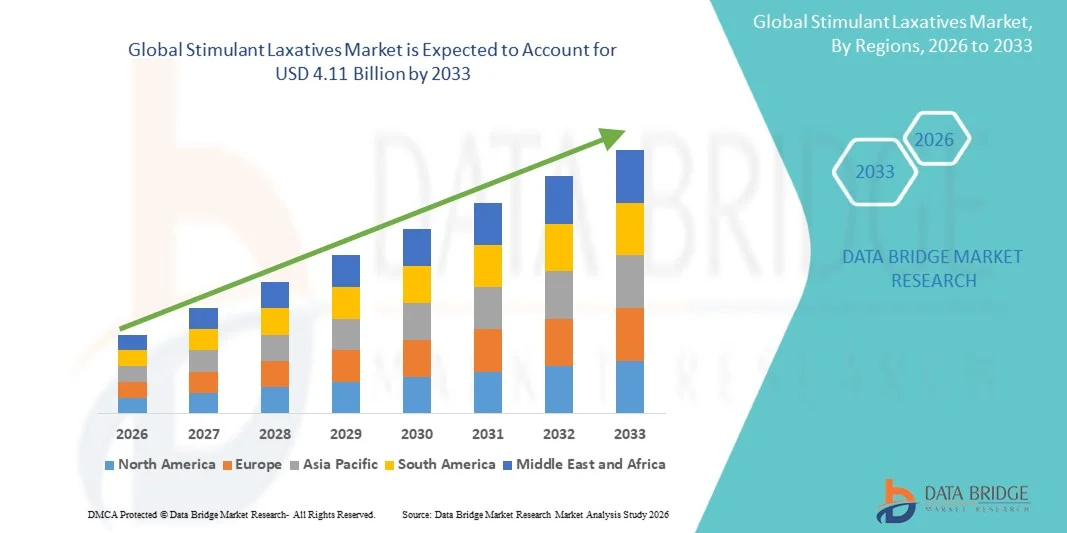
As per Data Bridge Market Research analysis, the stimulant laxatives market was valued at USD 2.68 billion in 2025 and is projected to reach USD 4.11 billion by 2033, growing at a CAGR of 5.50% from 2026 to 2033. The market is experiencing consistent growth driven by the rising prevalence of constipation, increasing geriatric population, and growing demand for over-the-counter gastrointestinal therapeutics.
The increasing incidence of chronic digestive disorders, sedentary lifestyles, and poor dietary habits, combined with greater awareness of bowel health, is encouraging consumers and healthcare providers to adopt stimulant laxatives for effective constipation management. In addition, expanding retail and online pharmacy networks, improved accessibility to oral formulations, and continued product innovation are supporting sustained market growth across both developed and emerging economies.
Market Size & Forecast
- Global Market Value (2025): USD 2.68 Billion
- Expected Market Value (2033): USD 4.11 Billion
- Forecast CAGR (2026–2033): 5.50%
- Leading Region in 2025: North America
- Fastest Growing Region: Asia Pacific
What are the Major Takeaways of Stimulant Laxatives Market?
- North America dominated the constipation laxative market with a 40.28% revenue share in 2025, supported by high over-the-counter laxative usage, established healthcare infrastructure, and widespread availability of branded gastrointestinal products
- The oral stimulant laxatives segment led the market with a 80.2% share in 2025, driven by superior patient convenience, broad over-the-counter availability, and strong physician preference for first-line constipation management
- Asia-Pacific is expected to be the fastest-growing regional market, projected to expand at a CAGR of 6.5% from 2026 to 2033, fueled by rising healthcare expenditure, increasing awareness of digestive health, expanding retail pharmacy networks, and growing demand for self-medication products
- Rectal stimulant laxatives are the fastest-growing type, projected to register a CAGR of 6.1%, reflecting the surge in use in bowel preparation procedures and situations requiring rapid constipation relief.
- The senna-based stimulant laxatives segment dominated the ingredient type category with a 39.8% revenue share in 2025, led by strong consumer preference for plant-derived products and extensive availability across OTC channels
- Tablet accounted for 47.6% of the market, preferred by ease of administration, convenient dosing, portability, and widespread consumer familiarity
- The bowel preparation for surgery segment is the fastest-growing application category, with a CAGR of 6.5%, driven by rising volumes of surgical procedures, colonoscopies, and diagnostic gastrointestinal interventions
Report Scope and Stimulant Laxatives Market Segmentation
|
Attributes |
Stimulant Laxatives Key Market Insights |
|
Segments Covered |
|
|
Countries Covered |
North America
Europe
Asia-Pacific
Middle East and Africa
South America
|
|
Key Market Players |
|
|
Market Opportunities |
|
|
Value Added Data Infosets |
In addition to the insights on market scenarios such as market value, growth rate, segmentation, geographical coverage, and major players, the market reports curated by the Data Bridge Market Research also include in-depth expert analysis, patient epidemiology, pipeline analysis, pricing analysis, and regulatory framework. |
What is the Key Trend in the Stimulant Laxatives Market?
Trend: Rising Preference for Plant-Based and OTC Digestive Health Solutions
Consumers are increasingly shifting toward plant-based stimulant laxatives, particularly senna-based formulations, as demand grows for natural, over-the-counter products that provide effective short-term constipation relief with convenient oral administration. Manufacturers are expanding herbal portfolios and improving dosage formats to align with self-medication trends, while retail and online pharmacy availability is strengthening product accessibility across developed and emerging markets. Growing consumer awareness of digestive wellness and preventive gastrointestinal care continues to reinforce adoption of stimulant laxatives within the broader OTC gastrointestinal therapeutics market. For instance, in October 2024, Ito Kampo Pharmaceutical Co., Ltd. launched Senna Tablets I, a plant-derived OTC stimulant laxative formulated for first-time users with constipation, reflecting manufacturers' growing focus on natural, herbal-based digestive health products.
The growing consumer preference for natural, OTC digestive health products is accelerating demand for plant-based stimulant laxatives.
Stimulant Laxatives Market Dynamics
Key Market Driver: Increasing Burden of Chronic and Opioid-Induced Constipation
The rising prevalence of chronic constipation and opioid-induced constipation is driving demand for stimulant laxatives across hospital and outpatient settings. Aging populations, sedentary lifestyles, and increasing opioid prescriptions are expanding the patient pool requiring rapid bowel management, while clinical guidelines continue to recommend stimulant laxatives as part of first-line pharmacological management. Growing awareness among healthcare professionals and patients is further supporting market expansion through higher diagnosis and treatment rates. For instance, in November 2024, Researchers at Memorial Sloan Kettering Cancer Center reported that replacing docusate sodium with senna and polyethylene glycol (PEG 3350) in the hospital admission order set significantly reduced opioid-induced constipation (OIC) diagnoses while aligning prescribing practices with oncology guidelines recommending osmotic and stimulant laxatives for OIC management.
The expanding prevalence of chronic and opioid-induced constipation continues to strengthen long-term demand for stimulant laxatives.
Key Restraint/Challenge: Safety Concerns Associated with Long-Term Stimulant Laxative Use
A significant challenge for the stimulant laxatives market is concern regarding prolonged or inappropriate use, which may lead to dependence, electrolyte imbalance, abdominal cramping, and reduced normal bowel function. Clinical recommendations continue to emphasize short-term use and physician supervision for persistent constipation, limiting long-term consumption and encouraging clinicians to investigate underlying gastrointestinal disorders before recommending repeated stimulant laxative therapy. For instance, in September 2023, The American Gastroenterological Association (AGA) and the American College of Gastroenterology (ACG) jointly recommended that bisacodyl and sodium picosulfate be used only for short-term (≤4 weeks) or rescue therapy in chronic idiopathic constipation, noting that additional long-term safety data are still needed, highlighting a key limitation to prolonged stimulant laxative use.
Safety considerations surrounding long-term use remain a key factor limiting broader adoption of stimulant laxatives.
Key Market Opportunity: Expansion of Plant-Based and Consumer-Centric Digestive Health Products
The growing consumer preference for natural, plant-based healthcare products presents a significant opportunity for the stimulant laxatives market. Manufacturers are increasingly investing in senna-based formulations, innovative dosage formats, and consumer-friendly products that align with broader digestive wellness trends. Rising demand for self-care solutions, expanding OTC accessibility, and growing penetration of e-commerce and online pharmacy channels are further creating opportunities to reach new patient populations across both developed and emerging markets. Product innovation focused on improved tolerability, convenience, and natural ingredients is expected to support long-term market expansion. For instance, in May 2026, Researchers published a study in the Arab Journal of Gastroenterology evaluating senna-based laxative candies as a novel herbal dosage form for constipation management, demonstrating ongoing innovation in plant-based stimulant laxative products and expanding opportunities for consumer-friendly delivery formats.
Increasing demand for plant-based, OTC digestive health products is creating substantial growth opportunities for stimulant laxative manufacturers.
How is the Stimulant Laxatives Market Segmented?
The stimulant laxatives market is segmented on the basis of type, ingredient type, formulation, application, and end user.
- By Type
On the basis of type, the stimulant laxatives market is segmented into oral stimulant laxatives and rectal stimulant laxatives. The oral stimulant laxatives segment dominated the market with an estimated 80.2% share in 2025, owing to superior patient convenience, broad over-the-counter availability, and strong physician preference for first-line constipation management. Oral formulations, including tablets, capsules, and liquids, are widely used across both acute and chronic constipation indications due to their ease of administration and patient acceptance. The segment benefits from extensive retail pharmacy distribution and growing self-medication trends globally. Manufacturers continue to expand oral product portfolios with improved formulations and dosage strengths. Increasing awareness of digestive health and accessibility through e-commerce platforms further support market leadership. Their established clinical efficacy and affordability continue to strengthen dominance across developed and emerging markets.
The rectal stimulant laxatives segment is expected to witness the fastest growth at an estimated CAGR of 6.1% from 2026 to 2033, driven by increasing use in bowel preparation procedures and situations requiring rapid constipation relief. Suppositories and enemas offer faster onset of action compared to many oral alternatives, making them suitable for hospital and clinical settings. Growing adoption among elderly and hospitalized patients who experience swallowing difficulties is supporting segment expansion. Healthcare providers increasingly utilize rectal formulations in preoperative bowel management and emergency care settings. Product innovations focused on patient comfort and ease of administration are further enhancing adoption. Rising healthcare utilization and procedural volumes worldwide are expected to accelerate segment growth.
- By Ingredient Type
On the basis of ingredient type, the stimulant laxatives market is segmented into caffeine-based stimulant laxatives, senna-based stimulant laxatives, bisacodyl-based stimulant laxatives, and other herbal-based stimulant laxatives. The senna-based stimulant laxatives segment dominated the market with an estimated 39.8% share in 2025, driven by strong consumer preference for plant-derived products and extensive availability across OTC channels. Senna has a long history of use in constipation management and is widely recognized for its effectiveness in promoting bowel movements. Increasing demand for natural and herbal digestive health products continues to support segment growth. Manufacturers are expanding senna-based product offerings across tablets, capsules, teas, and liquid formulations. Strong adoption among consumers seeking non-prescription treatment options further reinforces market leadership. Growing awareness of digestive wellness is also contributing to sustained demand.
The other herbal-based stimulant laxatives segment is projected to register the fastest growth at an estimated CAGR of 6.7% from 2026 to 2033, fueled by increasing consumer interest in natural healthcare products and clean-label formulations. Rising preference for botanical ingredients and alternative therapies is encouraging manufacturers to introduce innovative herbal laxative products. Consumers are increasingly seeking products perceived as gentler and more aligned with wellness-focused lifestyles. Expanding research into herbal gastrointestinal therapies is supporting product development activities. Growth of e-commerce platforms is improving market visibility for specialized herbal formulations. Increasing demand for preventive digestive health solutions is expected to further accelerate adoption.
- By Formulation
On the basis of formulation, the stimulant laxatives market is segmented into tablet, liquid, suppository, and enema. The tablet segment dominated the market with an estimated 47.6% share in 2025, owing to ease of administration, convenient dosing, portability, and widespread consumer familiarity. Tablets remain the preferred dosage form across both prescription and OTC stimulant laxative products due to their long shelf life and cost-effective manufacturing. Retail pharmacies and online channels offer extensive availability of tablet-based products. Patients generally prefer tablets because they are simple to store, transport, and consume. Manufacturers continue to invest in formulation improvements to enhance efficacy and patient compliance. Their broad accessibility and affordability maintain strong market leadership.
The suppository segment is expected to experience the fastest growth at an estimated CAGR of 6.3% from 2026 to 2033, driven by increasing demand for rapid-onset constipation relief and growing utilization in hospital settings. Suppositories provide localized action and are particularly beneficial for patients who cannot tolerate oral medications. Healthcare professionals frequently recommend these formulations for acute constipation and bowel evacuation procedures. Rising geriatric populations and increasing hospitalization rates are contributing to greater adoption. Improvements in formulation design are enhancing patient comfort and acceptance. Growing demand for effective and fast-acting gastrointestinal therapies is expected to support continued growth.
- By Application
On the basis of application, the stimulant laxatives market is segmented into chronic constipation, occasional constipation, and bowel preparation for surgery. The chronic constipation segment dominated the market with an estimated 53.4% share in 2025, driven by the increasing prevalence of gastrointestinal disorders, aging populations, sedentary lifestyles, and poor dietary habits. Chronic constipation remains one of the most common digestive conditions requiring pharmacological intervention. Growing healthcare awareness and improved diagnosis rates are expanding treatment uptake globally. Stimulant laxatives are frequently utilized when lifestyle modifications and other therapies fail to provide adequate relief. Increasing healthcare expenditure and access to treatment options are further supporting demand. The persistent burden of chronic constipation continues to reinforce segment dominance.
The bowel preparation for surgery segment is projected to witness the fastest growth at an estimated CAGR of 6.5% from 2026 to 2033, supported by rising volumes of surgical procedures, colonoscopies, and diagnostic gastrointestinal interventions. Effective bowel cleansing remains essential for procedural success and patient safety. Hospitals and clinics increasingly utilize stimulant laxatives as part of bowel preparation protocols. Expanding healthcare infrastructure and growing access to elective procedures are driving segment expansion. Increasing prevalence of colorectal diseases is also contributing to higher procedural demand. Continued emphasis on procedural efficiency and clinical outcomes is expected to accelerate growth.
- By End User
On the basis of end user, the stimulant laxatives market is segmented into hospitals, clinics, and home care settings. The home care settings segment dominated the market with an estimated 62.1% share in 2025, owing to the widespread availability of OTC stimulant laxatives and growing consumer preference for self-management of constipation. Patients increasingly seek convenient treatment options that can be administered without direct medical supervision. Expansion of retail pharmacies, online pharmacies, and digital health platforms has significantly improved product accessibility. Rising awareness regarding digestive health and preventive care is further supporting home-based treatment adoption. The segment also benefits from lower treatment costs compared to institutional healthcare settings. Increasing self-care trends continue to strengthen market leadership.
The hospitals segment is expected to register the fastest growth at an estimated CAGR of 5.9% from 2026 to 2033, driven by rising admissions related to gastrointestinal disorders, increasing surgical volumes, and greater utilization of bowel preparation protocols. Hospitals play a critical role in managing severe constipation cases and treating patients with complex medical conditions. Growing geriatric populations and increasing prevalence of opioid-induced constipation are contributing to higher demand within institutional settings. Healthcare providers continue to rely on stimulant laxatives for effective bowel management and procedural preparation. Expanding healthcare infrastructure and improved access to hospital services are supporting growth. Increasing focus on patient outcomes and treatment efficiency is expected to accelerate adoption.
Which Region Holds the Largest Share of the Stimulant Laxatives Market?
North America dominated the constipation laxative market with a 40.28% revenue share in 2025, supported by high over-the-counter laxative usage, established healthcare infrastructure, and widespread availability of branded gastrointestinal products. The region also benefits from strong consumer awareness regarding digestive health, extensive retail and online pharmacy networks, and the presence of leading pharmaceutical manufacturers offering diverse stimulant laxative formulations. Rising geriatric populations, increasing incidence of opioid-induced constipation, and growing adoption of self-medication practices continue to support product demand. Ongoing product innovation, favorable reimbursement for gastrointestinal care, and increasing preference for plant-based laxatives are further strengthening regional market expansion. These factors collectively continue to reinforce North America's leadership position in the global stimulant laxatives market
U.S. Stimulant Laxatives Market Insight
The U.S. stimulant laxatives market is witnessing strong growth due to the increasing prevalence of chronic constipation, rising geriatric population, and widespread availability of over-the-counter gastrointestinal products. The country’s well-established healthcare infrastructure, strong retail pharmacy presence, and growing consumer awareness regarding digestive health are driving demand across both prescription and non-prescription channels. In addition, increasing incidence of opioid-induced constipation and growing preference for self-medication solutions are accelerating stimulant laxative adoption. The American Gastroenterological Association (AGA) reported that constipation affects approximately 16% of U.S. adults and nearly 33% of adults aged 60 years and older, highlighting the substantial patient population requiring constipation management therapies and supporting long-term demand for stimulant laxatives.
Europe Stimulant Laxatives Market Insight
The Europe stimulant laxatives market remains a major contributor to global revenue, driven by increasing awareness of gastrointestinal health, expanding elderly population, and strong accessibility to OTC digestive care products. The widespread use of stimulant laxatives in chronic constipation management and bowel preparation procedures is supporting market expansion across the region. Increasing demand for plant-based formulations, coupled with favorable healthcare access and well-developed pharmacy networks, continues to enhance market adoption throughout Europe. According to the European Commission, individuals aged 65 years and over accounted for 21.6% of the EU population in 2024, significantly increasing the population at risk of chronic constipation and digestive disorders.
U.K. Stimulant Laxatives Market Insight
The U.K. stimulant laxatives market is experiencing steady growth, supported by increasing prevalence of constipation-related disorders, rising consumer expenditure on self-care products, and strong availability of OTC treatments. Growing awareness of digestive wellness and increasing utilization of pharmacy-led healthcare services are contributing to market growth. Furthermore, the growing preference for natural and herbal stimulant laxatives is improving product penetration across the country. In England, community pharmacies dispense millions of laxative prescriptions annually, with senna and bisacodyl remaining among the most frequently prescribed stimulant laxatives according to NHS prescribing data
Germany Stimulant Laxatives Market Insight
The Germany stimulant laxatives market is expanding steadily due to the country’s aging population, strong healthcare system, and increasing diagnosis of gastrointestinal disorders. Healthcare providers and consumers are increasingly utilizing stimulant laxatives for chronic constipation management and bowel preparation applications. Continuous growth in self-medication trends, coupled with rising demand for plant-based healthcare products, is further supporting market expansion. According to the Federal Statistical Office of Germany (Destatis), 23% of Germany's population (19.0 million people) was aged 65 years and older in 2024, creating a substantial patient population susceptible to chronic constipation and other age-related gastrointestinal disorders, thereby supporting demand for stimulant laxatives.
Asia-Pacific Stimulant Laxatives Market Insight
The Asia-Pacific stimulant laxatives market is expected to witness rapid growth, driven by increasing urbanization, changing dietary habits, expanding healthcare access, and rising awareness regarding digestive health across countries such as China, India, and Japan. Growing prevalence of constipation associated with sedentary lifestyles and processed food consumption is supporting regional market expansion. In addition, increasing availability of OTC gastrointestinal products and rising healthcare expenditure are accelerating stimulant laxative adoption. The United Nations projects that Asia-Pacific will experience one of the fastest-growing elderly populations globally, substantially increasing the burden of age-related gastrointestinal disorders and constipation.
Japan Stimulant Laxatives Market Insight
The Japan stimulant laxatives market is witnessing consistent growth due to rising healthcare expenditure, increasing prevalence of chronic constipation among elderly individuals, and strong consumer awareness regarding digestive health. Pharmaceutical companies and healthcare providers are increasingly promoting effective constipation management through OTC and prescription products. Moreover, growing demand for convenient oral formulations and herbal laxative products is further contributing to market growth. According to the Statistics Bureau of Japan, Ministry of Internal Affairs and Communications, the population aged 65 years and over reached 36.243 million, accounting for 29.3% of Japan's total population as of October 1, 2024, creating a substantial patient population susceptible to chronic constipation and other age-related gastrointestinal disorders, thereby supporting demand for stimulant laxatives.
China Stimulant Laxatives Market Insight
The China stimulant laxatives market is growing rapidly, driven by increasing urbanization, changing dietary patterns, expanding healthcare infrastructure, and rising awareness regarding digestive wellness. Growing adoption of OTC gastrointestinal products and increasing access to healthcare services are significantly boosting market demand. In addition, rising prevalence of constipation associated with sedentary lifestyles and aging demographics is positioning China as one of the fastest-growing stimulant laxatives markets globally. According to the National Bureau of Statistics of China, the population aged 60 years and above reached 310.31 million by the end of 2024, accounting for 22.0% of the total population, creating a substantial patient base vulnerable to chronic constipation and other age-related digestive disorders, thereby supporting demand for stimulant laxatives.
Which are the Top Companies in Stimulant Laxatives Market?
The stimulant laxatives industry is primarily led by well-established companies, including:
- Opella Healthcare Group S.A.S. (France)
- Perrigo Company plc (Ireland)
- Bayer AG (Germany)
- Haleon plc (U.K.)
- Prestige Consumer Healthcare Inc. (U.S.)
- Pharmascience Inc. (Canada)
- Hikma Pharmaceuticals PLC (U.K.)
- Viatris Inc. (U.S.)
- Teva Pharmaceutical Industries Ltd. (Israel)
- Aurobindo Pharma Limited (India)
- Lupin (India)
- Sun Pharmaceutical Industries Ltd. (India)
- Dr. Reddy's Laboratories Ltd. (India)
- Cipla (India)
- Glenmark Pharmaceuticals Limited (India)
- Amneal Pharmaceuticals LLC (U.S.)
- Taro Pharmaceutical Industries Ltd. (Israel)
- LNK International, Inc. (U.S.)
- Genexa Inc. (U.S.)
What are Latest Developments in Stimulant Laxatives Market?
- In January 2025, researchers from Memorial Sloan Kettering Cancer Center published a research study demonstrating that replacing docusate sodium with senna and polyethylene glycol (PEG 3350) in hospital admission order sets significantly reduced opioid-induced constipation diagnoses while improving adherence to evidence-based bowel management practices. The findings support the expanding clinical role of stimulant laxatives in oncology and hospital-based constipation management
- In October 2024, Ito Kampo Pharmaceutical Co., Ltd. announced the launch of Senna Tablets I, a new plant-derived OTC stimulant laxative developed for first-time users experiencing constipation. The product features adjustable dosing, senna-derived active ingredients, and is intended to improve accessibility to natural constipation management, reflecting growing consumer demand for herbal digestive health products
- In September 2024, European Federation of Smooth Muscle Research (EFSM) compared bisacodyl, sodium picosulfate, and senna. The study highlighted differences in mechanisms of action, efficacy, and safety while emphasizing that bisacodyl and sodium picosulfate received the highest level of recommendation in the latest AGA/ACG clinical guideline. The publication supports evidence-based selection of stimulant laxatives for chronic constipation management
- In June 2024, Therapeutic Advances in Gastroenterology evaluating the long-term safety of bisacodyl, sodium picosulfate, and senna. The study concluded that current clinical evidence does not support concerns that stimulant laxatives cause structural damage to the colon or increase colorectal cancer risk when used appropriately, reinforcing confidence in their evidence-based clinical use
- In May 2023, the American Gastroenterological Association (AGA) and the American College of Gastroenterology (ACG) jointly released the first evidence-based clinical guideline recommending bisacodyl and sodium picosulfate as strong treatment options and senna as an evidence-based therapy for chronic idiopathic constipation. The guideline established updated recommendations supporting the clinical use of stimulant laxatives in adult constipation management

- Interactive Data Analysis Dashboard
- Company Analysis Dashboard for high growth potential opportunities
- Research Analyst Access for customization & queries
- Competitor Analysis with Interactive dashboard
- Latest News, Updates & Trend analysis
- Harness the Power of Benchmark Analysis for Comprehensive Competitor Tracking
Data collection and base year analysis are done using data collection modules with large sample sizes. The stage includes obtaining market information or related data through various sources and strategies. It includes examining and planning all the data acquired from the past in advance. It likewise envelops the examination of information inconsistencies seen across different information sources. The market data is analysed and estimated using market statistical and coherent models. Also, market share analysis and key trend analysis are the major success factors in the market report. To know more, please request an analyst call or drop down your inquiry.
The key research methodology used by DBMR research team is data triangulation which involves data mining, analysis of the impact of data variables on the market and primary (industry expert) validation. Data models include Vendor Positioning Grid, Market Time Line Analysis, Market Overview and Guide, Company Positioning Grid, Patent Analysis, Pricing Analysis, Company Market Share Analysis, Standards of Measurement, Global versus Regional and Vendor Share Analysis. To know more about the research methodology, drop in an inquiry to speak to our industry experts.
Data Bridge Market Research is a leader in advanced formative research. We take pride in servicing our existing and new customers with data and analysis that match and suits their goal. The report can be customized to include price trend analysis of target brands understanding the market for additional countries (ask for the list of countries), clinical trial results data, literature review, refurbished market and product base analysis. Market analysis of target competitors can be analyzed from technology-based analysis to market portfolio strategies. We can add as many competitors that you require data about in the format and data style you are looking for. Our team of analysts can also provide you data in crude raw excel files pivot tables (Fact book) or can assist you in creating presentations from the data sets available in the report.












