What is the Studio Lighting Equipments Market Size and Growth Rate?
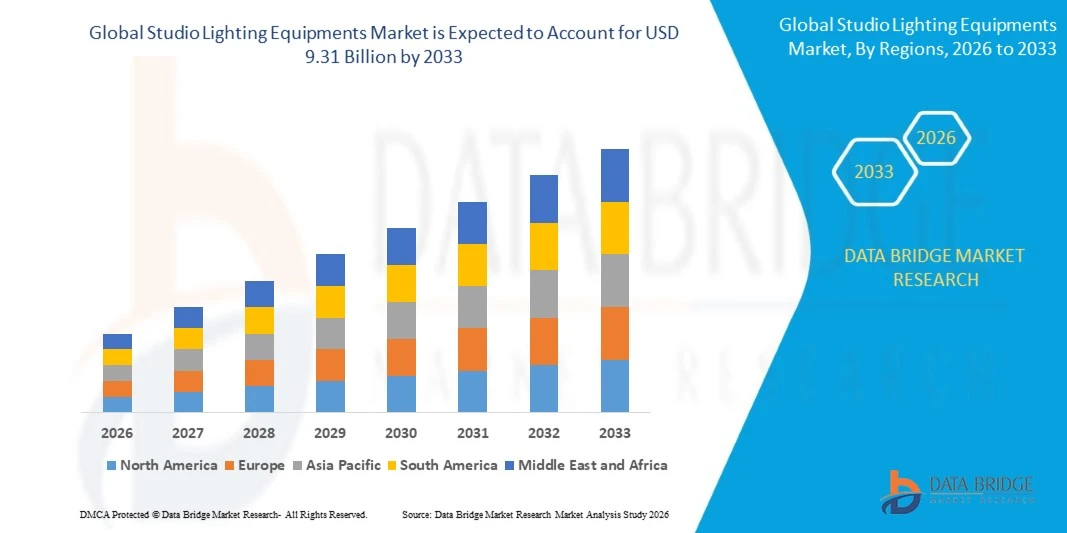
- As per Data Bridge Market Research analysis, the studio lighting equipments market was valued at USD 5.11 billion in 2025 and is projected to reach USD 9.31 billion by 2033, growing at a CAGR of 7.8% from 2026 to 2033.
- The market is experiencing consistent growth driven by rising demand for professional photography and videography equipment, rapid advancements in LED lighting technologies, and expanding applications across film production, television broadcasting, digital content creation, and commercial photography.
- The increasing popularity of social media content creation, combined with growing investments in film production, entertainment infrastructure, and professional broadcasting, is compelling studios, production houses, photographers, and content creators to adopt advanced lighting solutions. LED-based and energy-efficient studio lighting systems are replacing traditional lighting equipment in many applications, offering improved illumination, lower energy consumption, flexible brightness control, and enhanced color accuracy.
Market Size & Forecast
- Global Market Value (2025): USD 5.11 Billion
- Expected Market Value (2033): USD 9.31 Billion
- Forecast CAGR (2026–2033): 7.8%
- Leading Region in 2025: North America
- Fastest Growing Region: Asia Pacific
What are the Major Takeaways of the Studio Lighting Equipments Market?
- North America dominated the studio lighting equipments market with the largest revenue share of 35% in 2025, supported by a well-established film and television production industry, advanced broadcasting infrastructure, and strong demand for professional photography equipment.
- Asia-Pacific is expected to be the fastest-growing region at a CAGR of 8.6% from 2026 to 2033, fueled by expanding entertainment industries, increasing investments in film production infrastructure, and rising demand for digital content creation in China, India, and Japan.
- The LED lighting segment led the market with a 48.2% share in 2025, driven by its energy efficiency, longer operational lifespan, low heat generation, and superior color accuracy.
- Continuous lighting is the fastest-growing type of lightning, projected to register a CAGR of 8.5%, reflecting the surge in demand for real-time illumination in video production, live streaming, and hybrid photography applications
- The photography segment dominated the application category with a 35.8% revenue share in 2025, led by increasing demand for professional portrait photography, fashion photography, product imaging, and commercial photography services.
- Light sources accounted for 42% of the market share in 2025, preferred by the essential role of lighting fixtures in photography, cinematography, broadcasting, and commercial production environments.
- The softboxes segment is the fastest-growing equipment type category, with a CAGR of 8.7%, driven by increasing demand for controlled, diffused, and uniform illumination across professional photography and video production applications
Report Scope and Studio Lighting Equipments Market Segmentation
|
Attributes |
Studio Lighting Equipments Key Market Insights |
|
Segments Covered |
|
|
Countries Covered |
North America
Europe
Asia-Pacific
Middle East and Africa
South America
|
|
Key Market Players |
|
|
Market Opportunities |
|
|
Value Added Data Infosets |
In addition to the insights on market scenarios such as market value, growth rate, segmentation, geographical coverage, and major players, the market reports curated by the Data Bridge Market Research also include in-depth expert analysis, geographically represented company-wise production and capacity, network layouts of distributors and partners, detailed and updated price trend analysis and deficit analysis of supply chain and demand. |
What is the Key Trend in the Studio Lighting Equipments Market?
- Professional film studios and content production companies are increasingly adopting advanced LED studio lighting systems to improve illumination quality, enhance creative flexibility, and reduce energy consumption while supporting demanding production requirements.
- For instance, in June 2025, Profoto launched three advanced cinema LED lighting products, including the LP2000C full-color soft light panel, L600C, and L600D, expanding its professional lighting portfolio for high-end film production.
- Advanced lighting technologies enable cinematographers to achieve precise color reproduction, adjustable color temperatures, and consistent illumination across different production environments.
- Broadcasting studios and content creators are increasingly leveraging RGBWW and wireless-controlled lighting systems to provide flexible, programmable, and professional-quality lighting experiences.
- For instance, in April 2024, Atomos announced Sun Dragon, a five-color HDR LED production lighting system offering 99% sun-spectrum accuracy, wireless connectivity, and flexible lighting configurations for film and live production.
- As film production companies and digital content creators continue to prioritize energy efficiency, lighting precision, and creative flexibility, the adoption of advanced LED studio lighting equipment is expected to accelerate, reinforcing intelligent lighting as a core component of modern production environments.
What are the Key Drivers of the Studio Lighting Equipments Market?
- The rapid expansion of digital content creation, professional photography, and video production has significantly increased demand for advanced studio lighting equipment capable of delivering high-quality illumination and consistent color accuracy across diverse production environments.
- For instance, in February 2025, Elinchrom launched its LED 100 C continuous lighting system, featuring 100W output, bi-color and RGB capabilities, and a portable battery-powered design to support photographers, videographers, and content creators.
- Film production houses, broadcasting studios, and commercial photography businesses are integrating advanced lighting technologies into their production workflows to improve visual quality, reduce energy consumption, and enhance operational flexibility.
- For instance, in September 2024, ARRI introduced the SkyPanel S60 Pro with digital twin technology, wireless connectivity, and improved dimming capabilities, enabling production crews to streamline lighting workflows and improve operational efficiency.
- With the entertainment and digital media industries increasingly relying on professional visual production, studio lighting equipment will remain indispensable for enhancing production quality and supporting next-generation content creation technologies.
What Factors are Challenging the Growth of the Studio Lighting Equipments Market?
- Advanced studio lighting equipment requires significant upfront investment due to the integration of high-output LED systems, precision optical components, wireless controls, and sophisticated color-management technologies.
- For instance, in May 2026, Crestmont Capital highlighted that professional studio lighting investments can range from USD 500–2,000 for basic continuous LED panel systems to USD 15,000–60,000 or more for high-end broadcast lighting setups, creating affordability challenges for independent photographers and smaller production studios.
- These high costs limit adoption among smaller photography studios, independent filmmakers, content creators, and production organizations in emerging economies.
- The high capital investment and recurring upgrade costs associated with advanced studio lighting equipment continue to restrict adoption, particularly among small and medium-sized production organizations, independent photographers, and emerging content creators. This cost barrier slows market penetration in price-sensitive regions, limiting the widespread deployment of premium lighting technologies despite growing demand.
- For instance, in July 2026, Celluloid Pact reported that professional film production lighting equipment rentals in India can cost USD 84–157 per day for HMI 4K and 6K units and USD 157–262 per day for LED panel banks, increasing production expenses for independent filmmakers and smaller production companies.
- In addition, increasing competition, aggressive pricing strategies, and rapid product development are creating additional commercial pressures for professional lighting manufacturers.
How is the Studio Lighting Equipments Market Segmented?
The studio lighting equipments market is segmented on the basis of type of lighting, application, equipment type, end-user, and distribution channel.
- By Type of Lighting
On the basis of type of lighting, the studio lighting equipments market is segmented into continuous lighting, flash/strobe lighting, LED lighting, fluorescent lighting, and HMI lighting. The LED lighting segment dominated the market with an estimated 48.2% share in 2025, owing to its energy efficiency, longer operational lifespan, low heat generation, and superior color accuracy. LED lighting systems are widely used across professional photography studios, film production houses, broadcasting facilities, and digital content creation environments. Their adjustable brightness and color temperature capabilities provide greater flexibility for different production requirements. Increasing demand for sustainable lighting solutions and advancements in RGB and RGBWW technologies are further strengthening adoption. Moreover, declining LED manufacturing costs are making professional lighting equipment more accessible to small and medium-sized production businesses.
The continuous lighting segment is projected to register the fastest growth at an estimated CAGR of 8.5% from 2026 to 2033, driven by increasing demand for real-time illumination in video production, live streaming, and hybrid photography applications. These systems provide consistent illumination, allowing photographers and cinematographers to observe lighting effects before capturing images or recording videos. Increasing adoption of LED-based continuous lighting fixtures is improving energy efficiency and reducing operating expenses. Growing demand for online video content, product demonstrations, and professional broadcasting is further accelerating adoption. Advancements in portable lighting panels, adjustable color temperatures, and wireless brightness controls are enhancing their usability.
- By Application
On the basis of application, the studio lighting equipments market is segmented into photography, video production, broadcasting, theatrical productions, and commercial use. The photography segment dominated the market with an estimated 35.8% share in 2025, driven by increasing demand for professional portrait photography, fashion photography, product imaging, and commercial photography services. Professional photographers rely on specialized lighting equipment to achieve consistent illumination, accurate color reproduction, and controlled shadows. The expansion of e-commerce platforms has increased demand for high-quality product photography across retail and consumer goods industries. Growing investments in photography studios and commercial imaging facilities are further supporting equipment adoption. In addition, increasing demand for professional wedding, advertising, and fashion photography is strengthening the segment's position.
The video production segment is projected to register the fastest growth at an estimated CAGR of 9.1% from 2026 to 2033, driven by the rapid expansion of digital media, online entertainment, and professional video content creation. Production companies increasingly require continuous lighting systems to maintain consistent illumination during recording and filming activities. The growing popularity of streaming platforms, social media videos, and independent filmmaking is expanding demand for versatile studio lighting solutions. Technological advancements in RGB LED panels, portable lighting fixtures, and wireless control systems are improving production flexibility. Increasing investments in virtual production studios and high-definition video broadcasting are further accelerating adoption.
- By Equipment Type
On the basis of equipment type, the studio lighting equipments market is segmented into light sources, light modifiers, light stands, softboxes, and reflectors. The light sources segment dominated the market with an estimated 42% share in 2025, driven by the essential role of lighting fixtures in photography, cinematography, broadcasting, and commercial production environments. Light sources, including LED panels, flash units, fluorescent fixtures, and HMI lights, form the primary component of professional studio lighting arrangements. Increasing investments in advanced LED fixtures and high-output lighting systems are supporting segment growth. Professional studios require reliable light sources to maintain consistent brightness, color temperature, and illumination quality. Continuous technological improvements in dimming capabilities, wireless connectivity, and color management are further strengthening demand.
The softboxes segment is projected to register the fastest growth at an estimated CAGR of 8.7% from 2026 to 2033, driven by increasing demand for controlled, diffused, and uniform illumination across professional photography and video production applications. Softboxes are widely used to minimize harsh shadows and produce natural-looking lighting effects in portrait, fashion, and product photography. Their ability to provide consistent light diffusion makes them essential accessories for professional photographers and commercial production studios. Growing adoption among social media influencers, independent filmmakers, and online content creators is further accelerating demand. Advancements in lightweight, foldable, and quick-assembly softbox designs are improving portability and operational convenience.
- By End-User
On the basis of end-user, the studio lighting equipments market is segmented into professional photographers, videographers, film studios, advertising agencies, and content creators. The film studios segment dominated the market with an estimated 39% share in 2025, supported by increasing investments in cinematic production, television entertainment, and professional filmmaking infrastructure. Film studios require advanced lighting equipment to achieve consistent illumination across complex indoor and outdoor production environments. High-output LED fixtures, HMI lights, softboxes, and specialized lighting modifiers are extensively used to meet cinematographic requirements. Growing production of films, television series, and streaming content is further increasing demand for professional lighting systems. In addition, investments in virtual production facilities and advanced filmmaking technologies are encouraging studios to upgrade their lighting infrastructure.
The content creators segment is projected to register the fastest growth at an estimated CAGR of 9.5% from 2026 to 2033, driven by the increasing popularity of social media platforms, influencer marketing, podcasting, and independent digital content production. Content creators are increasingly investing in professional lighting equipment to improve video quality and audience engagement. Compact LED panels, ring lights, RGB lighting systems, and portable softboxes are gaining popularity due to their affordability and ease of installation. The expansion of video-sharing platforms and live-streaming applications is further increasing demand for accessible studio lighting solutions. Growing monetization opportunities through brand partnerships, online advertising, and subscription-based content are encouraging creators to upgrade their production equipment
- By Distribution Channel
On the basis of distribution channel, the studio lighting equipments market is segmented into online retailers and specialty stores. The specialty stores segment dominated the market with an estimated 55% share in 2025, driven by the availability of professional lighting products, technical consultation, product demonstrations, and specialized after-sales services. Professional photographers, film production companies, and broadcasting organizations often prefer specialty retailers to evaluate lighting performance and compatibility before purchasing equipment. These stores provide access to established lighting brands, professional accessories, and application-specific solutions. The availability of expert guidance helps customers select suitable lighting fixtures, modifiers, and control systems according to their production requirements. Specialty retailers also offer product servicing, warranties, and technical support, strengthening customer confidence.
The online retailers segment is projected to register the fastest growth at an estimated CAGR of 9.2% from 2026 to 2033, driven by increasing preference for convenient purchasing, wider product availability, and competitive pricing across digital commerce platforms. Online channels provide access to diverse lighting brands, product specifications, customer reviews, and comparative pricing. The expansion of e-commerce marketplaces is making professional and entry-level lighting equipment more accessible to independent photographers and content creators. Manufacturers are increasingly strengthening their direct-to-consumer platforms to improve product visibility and expand customer reach. Availability of promotional offers, flexible payment options, and home delivery services is further encouraging online purchases.
Which Region Holds the Largest Share of the Studio Lighting Equipments Market?
- North America dominated the studio lighting equipments market with the largest revenue share of 35% in 2025, supported by a well-established film and television production industry, advanced broadcasting infrastructure, and strong demand for professional photography equipment.
- The region also benefits from the presence of major entertainment production facilities, high investments in digital content creation, and widespread adoption of advanced LED lighting technologies across professional studios. Increasing demand for high-quality video production, virtual production environments, and energy-efficient lighting systems continues to strengthen North America's leadership position in the global market.
U.S. Studio Lighting Equipments Market Insight
The U.S. studio lighting equipments market is witnessing strong growth due to rising investments in film production, professional photography, broadcasting, and digital content creation. The country’s well-established entertainment industry, along with increasing adoption of advanced LED lighting systems, smart lighting controls, and energy-efficient studio equipment, is driving demand across commercial, media, and creative applications. In addition, the growing popularity of social media platforms, live streaming, and high-quality video production is accelerating the adoption of professional lighting solutions across studios and independent content creators.
Asia-Pacific Studio Lighting Equipments Market Insight
The Asia-Pacific studio lighting equipments market is expected to witness rapid growth, driven by expanding film and television production, increasing digital content creation, and rising investments in media and entertainment infrastructure across countries such as China, India, and Japan. Growing demand for professional photography, affordable LED lighting solutions, and advanced video production technologies is supporting regional market expansion. In addition, the increasing presence of content creators, advertising agencies, and commercial photography studios is accelerating the adoption of modern studio lighting equipment across the region.
Japan Studio Lighting Equipments Market Insight
The Japan studio lighting equipments market is witnessing consistent growth due to rising investments in professional photography, film production, broadcasting, and advanced visual content technologies. Photography studios, production companies, and media organizations are increasingly adopting high-performance LED panels, continuous lighting systems, and precision lighting accessories to improve illumination quality and production efficiency. Moreover, increasing integration of wireless lighting controls, energy-efficient technologies, and advanced color management systems is further contributing to market growth in Japan.
China Studio Lighting Equipments Market Insight
The China studio lighting equipments market is growing rapidly, driven by expanding film and television production, rising demand for digital content, and increasing investments in professional photography and broadcasting infrastructure. Growing adoption of LED-based, RGB, and smart-controlled lighting systems across commercial studios, entertainment production, and online content creation is significantly boosting market demand. In addition, the rapid expansion of e-commerce, social media platforms, and live-streaming activities, along with advancements in energy-efficient lighting technologies, is positioning China as one of the fastest-growing markets for studio lighting equipment globally.
U.K. Studio Lighting Equipments Market Insight
The U.K. studio lighting equipments market is experiencing steady growth, supported by rising adoption of advanced lighting technologies in film production, professional photography, broadcasting, and digital media applications. Increasing investments in creative production infrastructure and growing demand for energy-efficient, high-quality lighting solutions are contributing to market growth. Furthermore, integration of LED, RGB, wireless control, and tunable color temperature technologies is improving lighting flexibility and production efficiency, positioning the U.K. as an important market for innovation in the studio lighting equipment industry.
Germany Studio Lighting Equipments Market Insight
The Germany studio lighting equipments market is expanding steadily due to the country’s strong media production capabilities, advanced photography industry, and increasing adoption of energy-efficient lighting technologies. Film studios, broadcasting organizations, commercial photographers, and content production companies are increasingly utilizing advanced LED panels, continuous lighting systems, and professional lighting accessories to enhance production quality. Continuous advancements in color accuracy, wireless lighting controls, and smart illumination technologies, along with growing demand for sustainable and high-performance studio equipment, are further driving market growth in Germany.
Which are the Top Companies in Studio Lighting Equipments Market?
The studio lighting equipments industry is primarily led by well-established companies, including:
- Profoto AB (Sweden)
- Aputure Imaging Industries Co., Ltd (China)
- GODOX Photo Equipment Co.,Ltd. (China)
- Elinca SA (Switzerland)
- Arnold & Richter Cine Technik GmbH & Co. Betriebs KG (Germany)
- bron Elektronik AG (Switzerland)
- F.J. Westcott Co. (U.S.)
- Rosco Laboratories, Inc. (U.S.)
- Chauvet & Sons, LLC (U.S.)
- Dedolight GmbH (Germany)
- Rotolight Limited (U.K.)
- Astera LED Technology GmbH (Germany)
- DoPchoice GmbH (Germany)
- Airstar SAS (France)
- Manfrotto srl (Italy)
- Electronic Theatre Controls, Inc. (U.S.)
- Nanguang Photo & Video Systems Co., Ltd. (China)
- LiteGear Inc. (U.S.)
- Savage Universal Corporation (U.S.)
What are Latest Developments in Studio Lighting Equipments Market?
- In June 2025, Profoto announced the launch of three professional LED cinema lighting products: the LP2000C full-color soft light panel, L600C full-color point-source light, and L600D daylight-balanced point-source light. Designed for high-end film production, the new products combine powerful illumination, lightweight construction, and advanced cooling technology to improve lighting efficiency and flexibility on production sets. The launch highlights Profoto’s expansion into the cinema lighting segment and its focus on providing advanced lighting solutions for filmmakers and cinematographers.
- In February 2025, Elinchrom introduced the LED 100 C, its first continuous lighting product, designed for photographers, videographers, and digital content creators. The compact lighting system combines bi-color and RGB capabilities with a portable, battery-powered design, providing flexibility for studio and location-based production. The launch marks Elinchrom’s expansion beyond its established flash lighting portfolio and reflects the growing demand for versatile continuous lighting solutions across photography and video production.
- In September 2024, ARRI introduced the SkyPanel S60 Pro, an upgraded professional soft-light fixture designed for film, television, photography, and live production applications. The new system features an RGBW LED light engine, improved dimming performance, wireless connectivity, and digital twin technology to support more efficient lighting workflows. Its enhanced color accuracy, flexible control options, and integration with virtual production environments strengthen ARRI’s professional lighting portfolio and address the evolving requirements of modern production studios.
- In September 2023, ARRI announced the launch of SkyPanel X, a modular, all-weather LED lighting system developed for professional film production, studios, and rental applications. The system supports soft, hard, and open-face lighting configurations, offering improved dimming, color rendition, light output, and beam quality. Its modular design and advanced connectivity features provide production teams with greater flexibility in configuring lighting setups for different filming environments, reinforcing the adoption of versatile LED-based studio lighting equipment.
- In July 2021, Rollei introduced the Lumen Studio 150, the first product in its new series of continuous LED studio lights designed for photography and videography applications. The daylight-balanced lighting system delivers flicker-free illumination and supports studio setups through compatible lighting accessories. The launch addressed the demand for accessible and versatile continuous lighting solutions among professional photographers, video creators, and beginners, while expanding the availability of LED-based equipment for studio and content production environments.
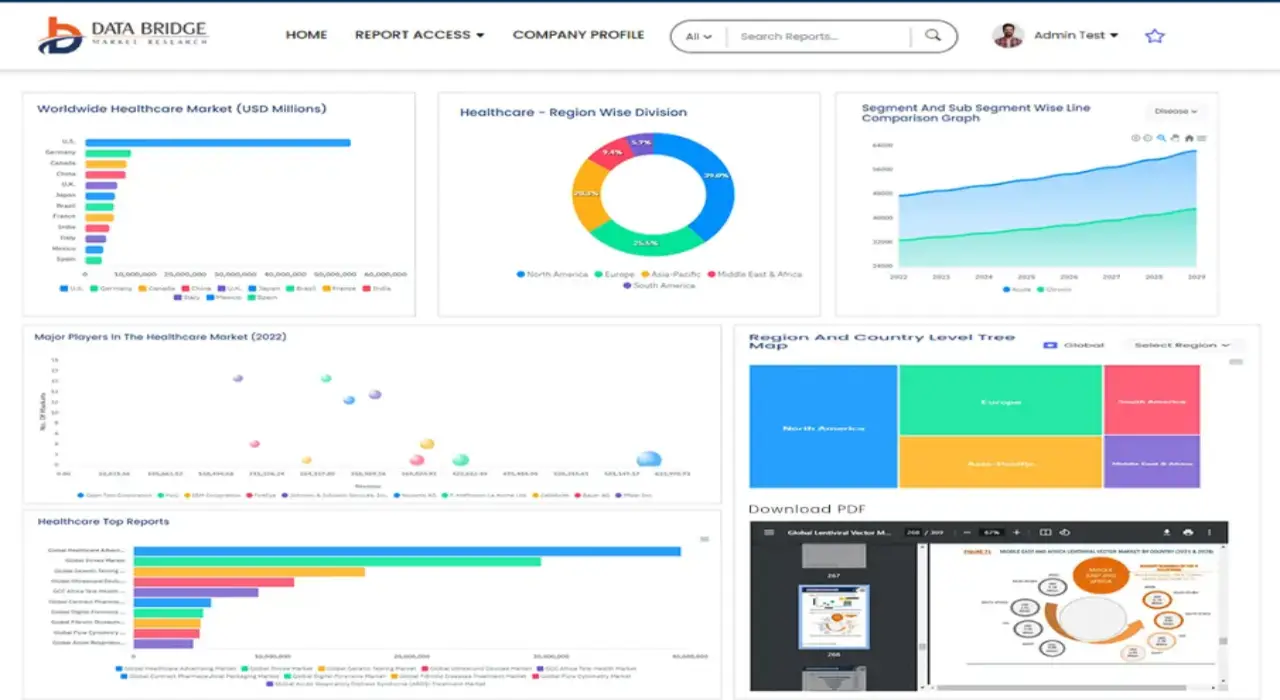
- Interactive Data Analysis Dashboard
- Company Analysis Dashboard for high growth potential opportunities
- Research Analyst Access for customization & queries
- Competitor Analysis with Interactive dashboard
- Latest News, Updates & Trend analysis
- Harness the Power of Benchmark Analysis for Comprehensive Competitor Tracking
Global Studio Lighting Equipments Market, Supply Chain Analysis and Ecosystem Framework
To support market growth and help clients navigate the impact of geopolitical shifts, DBMR has integrated in-depth supply chain analysis into its Global Studio Lighting Equipments Market research reports. This addition empowers clients to respond effectively to global changes affecting their industries. The supply chain analysis section includes detailed insights such as Global Studio Lighting Equipments Market consumption and production by country, price trend analysis, the impact of tariffs and geopolitical developments, and import and export trends by country and HSN code. It also highlights major suppliers with data on production capacity and company profiles, as well as key importers and exporters. In addition to research, DBMR offers specialized supply chain consulting services backed by over a decade of experience, providing solutions like supplier discovery, supplier risk assessment, price trend analysis, impact evaluation of inflation and trade route changes, and comprehensive market trend analysis.
Data collection and base year analysis are done using data collection modules with large sample sizes. The stage includes obtaining market information or related data through various sources and strategies. It includes examining and planning all the data acquired from the past in advance. It likewise envelops the examination of information inconsistencies seen across different information sources. The market data is analysed and estimated using market statistical and coherent models. Also, market share analysis and key trend analysis are the major success factors in the market report. To know more, please request an analyst call or drop down your inquiry.
The key research methodology used by DBMR research team is data triangulation which involves data mining, analysis of the impact of data variables on the market and primary (industry expert) validation. Data models include Vendor Positioning Grid, Market Time Line Analysis, Market Overview and Guide, Company Positioning Grid, Patent Analysis, Pricing Analysis, Company Market Share Analysis, Standards of Measurement, Global versus Regional and Vendor Share Analysis. To know more about the research methodology, drop in an inquiry to speak to our industry experts.
Data Bridge Market Research is a leader in advanced formative research. We take pride in servicing our existing and new customers with data and analysis that match and suits their goal. The report can be customized to include price trend analysis of target brands understanding the market for additional countries (ask for the list of countries), clinical trial results data, literature review, refurbished market and product base analysis. Market analysis of target competitors can be analyzed from technology-based analysis to market portfolio strategies. We can add as many competitors that you require data about in the format and data style you are looking for. Our team of analysts can also provide you data in crude raw excel files pivot tables (Fact book) or can assist you in creating presentations from the data sets available in the report.