


What is the Super Generics Market Size and Overview?
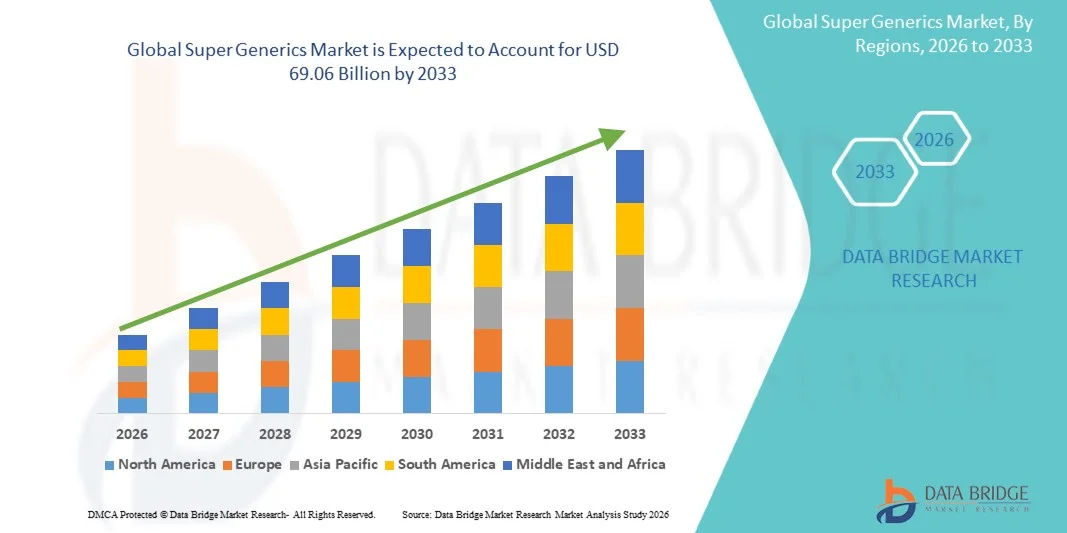
As per Data Bridge Market Research analysis, the global super generics market was valued at USD 42.68 billion in 2025 and is projected to reach USD 69.06 billion by 2033, growing at a CAGR of 6.20% from 2026 to 2033. Growth is being driven by a steady wave of patent expirations on branded drugs, rising payer pressure to reduce specialty drug costs, and continued advances in drug delivery technologies that allow manufacturers to reformulate off-patent molecules into differentiated, higher-value products.
Market Size & Forecast
- Global Market Value (2025): USD 42.68 Billion
- Expected Market Value (2033): USD 69.06 Billion
- Forecast CAGR (2026–2033): 6.20%
Super generics, also referred to as value-added generics, are enhanced versions of existing off-patent drugs that incorporate improved formulations, novel delivery systems, or therapeutic modifications to boost efficacy, safety, bioavailability, and patient compliance. Because they qualify for a limited period of additional marketing exclusivity in many jurisdictions, super generics allow manufacturers to capture stronger margins than conventional generics while extending the commercial lifecycle of established molecules, making them an increasingly central strategy for both generic-focused and specialty pharmaceutical companies.
Key Market Trends & Insights
- North America dominated the global super generics market with the largest revenue share of 44.20% in 2025, supported by a well-established regulatory framework for value-added generics and strong payer incentives to adopt cost-effective reformulated therapies.
- The cardiovascular disorders segment led the market with a 28.60% share in 2025, driven by extensive reformulation of established cardiovascular molecules into extended-release and combination formulations to improve patient adherence.
- Asia-Pacific is expected to be the fastest-growing region at a CAGR of 7.30% from 2026 to 2033, fueled by expanding generic manufacturing capacity, rising chronic disease burden, and growing regulatory support for reformulated drug products in China and India.
- The oncology segment is the fastest-growing therapeutic area, projected to register a CAGR of 7.60%, reflecting rising demand for improved-bioavailability and targeted-delivery reformulations of established chemotherapy and supportive-care agents.
- The tablets segment dominates the formulation type category with a 33.80% revenue share in 2025, owing to their established manufacturing infrastructure and continued reformulation into extended-release and abuse-deterrent variants.
- Novel drug delivery systems are the fastest-growing reformulation technology, with a CAGR of 7.40%, driven by increasing adoption of long-acting injectables, transdermal patches, and inhalation-based delivery platforms.
- Growing payer emphasis on cost-effective specialty therapies is accelerating the development of super generics for chronic disease management across cardiovascular, metabolic, and CNS indications.
Report Scope and Super Generics Market Segmentation
|
Attributes |
Super Generics Key Market Insights |
|
Segments Covered |
|
|
Countries Covered |
North America
Europe
Asia-Pacific
Middle East and Africa
South America
|
|
Key Market Players |
|
|
Market Opportunities |
|
|
Value Added Data Infosets |
In addition to the insights on market scenarios such as market value, growth rate, segmentation, geographical coverage, and major players, the market reports curated by the Data Bridge Market Research also include in-depth expert analysis, geographically represented company-wise production and capacity, network layouts of distributors and partners, detailed and updated price trend analysis and deficit analysis of supply chain and demand. |
What is the Key Trend in the Super Generics Market?
Trend: Expansion of Advanced Drug Delivery and Patient-Friendly Dosage Forms
Manufacturers are increasingly reformulating off-patent molecules using advanced technologies such as nanoparticle-based delivery systems, lipid-based carriers, extended-release matrices, osmotic drug delivery platforms, and long-acting injectables to improve bioavailability, reduce dosing frequency, and enhance patient compliance.
The growing adoption of abuse-deterrent formulations for controlled substances and differentiated delivery formats, including metered-dose inhalers, transdermal patches, sustained-release implants, and orally disintegrating tablets, is broadening the therapeutic applications of super generic products across cardiovascular, central nervous system (CNS), oncology, respiratory, and pain management indications.
For instance, the FDA continues to approve complex generic and value-added formulations, including extended-release tablets, inhalation products, and injectable therapies, reflecting increasing industry investment in differentiated reformulation strategies. Additionally, the U.S. FDA's 505(b)(2) regulatory pathway continues to encourage manufacturers to develop reformulated medicines with improved safety, efficacy, and patient convenience while extending product lifecycle value.
These advancements are positioning reformulation as a core lifecycle-extension strategy and a key competitive differentiator across the global pharmaceutical industry.
Super Generics Market Dynamics
Key Market Driver: Continuous Wave of Patent Expirations and Payer Pressure to Reduce Costs
A steady stream of patent expirations on branded drugs continues to create opportunities for manufacturers to develop enhanced, value-added versions of established molecules with improved efficacy, safety, and patient convenience. At the same time, increasing pressure from government healthcare systems, insurers, and pharmacy benefit managers to reduce specialty drug spending is encouraging the adoption of cost-effective super generics that provide comparable or superior therapeutic outcomes to branded originator products.
The growing prevalence of chronic diseases such as cardiovascular disorders, diabetes, neurological diseases, and oncology conditions further supports demand for differentiated generic medicines that improve long-term treatment adherence.
For instance, the FDA continues to prioritize the approval of first generic and complex generic products to increase competition and improve patient access to affordable medicines. According to FDA analyses, greater generic competition consistently reduces drug prices while improving healthcare affordability, reinforcing long-term demand for value-added generic products across global healthcare systems.
Key Restraint/Challenge: Regulatory Ambiguity and High Reformulation Investment
The regulatory classification of super generics differs considerably across jurisdictions, creating challenges for manufacturers seeking global commercialization. Demonstrating meaningful clinical differentiation, improved therapeutic performance, or enhanced patient outcomes compared with reference products frequently requires extensive formulation optimization, bioequivalence studies, pharmacokinetic evaluations, and, in many cases, additional clinical trials.
The development of advanced drug delivery technologies such as long-acting injectables, inhalation systems, transdermal platforms, and abuse-deterrent formulations further increases research, manufacturing, and regulatory costs. In addition, differing regulatory requirements between agencies such as the U.S. FDA, European Medicines Agency (EMA), Japan's Pharmaceuticals and Medical Devices Agency (PMDA), and China's National Medical Products Administration (NMPA) often prolong approval timelines and increase compliance costs. Although initiatives such as the FDA-EMA parallel scientific advice program for complex generics are improving regulatory harmonization, substantial development investment and scientific complexity continue to limit market participation primarily to large, well-capitalized pharmaceutical companies, slowing innovation among smaller generic manufacturers.
Key Market Opportunity: Growth in Specialty Generic Pipelines and Emerging Markets
The continued expansion of specialty generic pipelines across oncology, CNS disorders, cardiovascular diseases, diabetes, autoimmune diseases, and respiratory disorders presents significant opportunities for manufacturers to differentiate products through advanced formulations and innovative drug delivery technologies. Increasing adoption of long-acting injectables, fixed-dose combination therapies, extended-release formulations, and targeted drug delivery systems is enabling pharmaceutical companies to generate higher-value generic portfolios while improving patient adherence and therapeutic outcomes.
Emerging markets including India, China, Brazil, and Southeast Asian countries are creating additional growth opportunities through expanding healthcare expenditure, increasing access to medicines, supportive government policies promoting generic substitution, and growing pharmaceutical manufacturing capabilities. Furthermore, rising investments in advanced formulation research, contract development and manufacturing organizations (CDMOs), and specialty pharmaceutical production facilities are accelerating the commercialization of differentiated generic products. As healthcare systems worldwide continue prioritizing affordable therapies that deliver improved clinical outcomes, manufacturers with strong reformulation capabilities and advanced drug delivery expertise are expected to benefit from substantial long-term growth opportunities in the global super generics market.
How is the Super Generics Market Segmented?
The super generics market is segmented on the basis of formulation type, reformulation technology, therapeutic area, route of administration, distribution channel, and end user.
- By Formulation Type
On the basis of formulation type, the global super generics market is segmented into tablets, capsules, injectables, topical/transdermal, and syrups & oral liquids.
The tablets segment dominated the market with a 33.80% share in 2025, owing to their well-established manufacturing infrastructure, cost-effective production, excellent stability, and broad patient acceptance. Tablets remain the preferred dosage form for reformulation because they can be readily adapted into extended-release, delayed-release, fixed-dose combination, multilayer, and abuse-deterrent formulations. Their compatibility with therapies for cardiovascular diseases, diabetes, neurological disorders, and pain management further strengthens market demand. In addition, simplified transportation, longer shelf life, and widespread availability through retail and hospital pharmacies continue to support the segment's leading position.
The injectables segment is expected to witness the fastest growth at a CAGR of 7.20% from 2026 to 2033, driven by increasing adoption of long-acting injectable formulations that improve treatment adherence by reducing dosing frequency. Pharmaceutical companies are investing in depot injections, sustained-release injectable technologies, liposomal drug delivery systems, and microsphere-based formulations for oncology, schizophrenia, autoimmune diseases, diabetes, and hormonal therapies. Growing demand for specialty pharmaceuticals and biologic-supportive reformulations is further accelerating segment growth.
- By Reformulation Technology
On the basis of reformulation technology, the market is segmented into extended-release formulations, novel drug delivery systems, abuse-deterrent formulations, combination drug formulations, and improved bioavailability formulations.
The extended-release formulations segment accounted for the largest market share of 31.40% in 2025, supported by widespread reformulation of established cardiovascular, CNS, metabolic, and pain management drugs to improve medication adherence and maintain consistent therapeutic drug levels. Extended-release technologies reduce dosing frequency, minimize peak-to-trough plasma concentration fluctuations, and improve patient convenience, making them one of the most commercially successful reformulation approaches. Continuous innovation in polymer matrices, osmotic delivery systems, and controlled-release coatings further supports segment expansion.
The novel drug delivery systems segment is projected to register the fastest CAGR of 7.40% from 2026 to 2033, driven by increasing adoption of transdermal patches, inhalation therapies, nanoparticle-based delivery systems, liposomal formulations, oral thin films, and long-acting injectable platforms. Pharmaceutical manufacturers are increasingly investing in advanced delivery technologies that improve drug targeting, enhance bioavailability, reduce adverse effects, and optimize therapeutic outcomes, particularly across specialty therapeutic areas.
- By Therapeutic Area
On the basis of therapeutic area, the market is segmented into cardiovascular disorders, oncology, neurological/CNS disorders, diabetes & metabolic disorders, respiratory disorders, anti-infective, and others.
The cardiovascular disorders segment dominated the market with a 28.60% share in 2025, driven by the extensive use of reformulated antihypertensive agents, lipid-lowering therapies, anticoagulants, and heart failure medications. The high global prevalence of cardiovascular diseases, combined with long-term medication requirements and increasing demand for improved adherence through extended-release and fixed-dose combination therapies, continues to create favorable opportunities for super generic manufacturers. Continuous patent expirations of major cardiovascular drugs further support product development activities.
The oncology segment is anticipated to witness the fastest CAGR of 7.60% from 2026 to 2033, supported by rising investment in reformulated chemotherapy agents, targeted drug delivery technologies, liposomal formulations, and supportive-care medications. Growing global cancer incidence, increasing demand for improved safety profiles, and the need to minimize treatment-related toxicity are encouraging pharmaceutical companies to develop differentiated oncology formulations with enhanced bioavailability and patient outcomes.
- By Route of Administration
On the basis of route of administration, the market is segmented into oral, injectable/parenteral, transdermal, inhalation, and others.
The oral segment dominated the market with a 52.70% share in 2025, owing to its cost-effectiveness, ease of administration, high patient acceptance, and well-established manufacturing capabilities. Oral dosage forms continue to dominate reformulation strategies because they support multiple advanced technologies, including extended-release tablets, delayed-release capsules, orally disintegrating tablets, and fixed-dose combinations. Their suitability for long-term treatment of chronic diseases such as hypertension, diabetes, and neurological disorders further reinforces market leadership.
The transdermal segment is expected to register the fastest CAGR of 7.10% from 2026 to 2033, driven by increasing demand for non-invasive drug delivery systems that improve medication adherence while bypassing first-pass hepatic metabolism. Continuous innovation in patch technologies for pain management, hormonal therapy, cardiovascular disorders, and neurological diseases is expanding therapeutic applications and creating new commercial opportunities for reformulated medicines.
- By Distribution Channel
On the basis of distribution channel, the market is segmented into hospital pharmacies, retail pharmacies, and online pharmacies.
The retail pharmacies segment dominated the market with a 45.90% share in 2025, supported by their extensive geographic presence, established reimbursement networks, and strong accessibility for patients receiving long-term treatment for chronic diseases. Retail pharmacies continue to serve as the primary dispensing channel for oral and maintenance medications, while pharmacist-led substitution programs and increasing generic adoption initiatives further strengthen demand for super generic products.
The online pharmacies segment is projected to witness the fastest CAGR of 7.50% from 2026 to 2033, driven by growing digital healthcare adoption, increasing internet penetration, and rising consumer preference for convenient home delivery services. The expansion of telemedicine, electronic prescribing, digital payment platforms, and subscription-based medication refill programs is further accelerating online pharmaceutical sales, particularly for maintenance therapies requiring continuous medication access.
- By End User
On the basis of end user, the market is segmented into hospitals & specialty clinics, retail/homecare patients, On the basis of end user, the market is segmented into hospitals & specialty clinics, retail/homecare patients, and long-term care facilities.
The hospitals & specialty clinics segment dominated the market with a 41.30% share in 2025, owing to their central role in initiating treatment with complex, specialty, and injectable reformulated medicines. These healthcare settings manage patients requiring oncology therapies, cardiovascular interventions, neurological treatments, and other specialized care, where advanced formulations and differentiated drug delivery systems provide significant clinical benefits. Increasing hospital adoption of value-added generics to optimize treatment outcomes while controlling healthcare expenditure continues to support segment growth.
The retail/homecare patients segment is expected to register the fastest CAGR of 6.90% from 2026 to 2033, reflecting the growing shift toward outpatient care, home-based disease management, and patient-centered healthcare delivery. Rising adoption of long-acting formulations, transdermal patches, oral extended-release medicines, and self-administered therapies is improving medication adherence while reducing hospital visits. Increasing availability of digital health platforms, remote patient monitoring, and home healthcare services is further supporting the expansion of this segment.
North America Super Generics Market Insight
The North America super generics market accounted for the largest revenue share in 2025 and is expected to maintain its leading position throughout the forecast period. Market growth is supported by a well-established regulatory framework for value-added generic medicines, strong healthcare expenditure, and increasing adoption of advanced drug delivery technologies. The region benefits from the presence of leading pharmaceutical manufacturers and contract development and manufacturing organizations (CDMOs) that continue to invest in reformulated products with improved efficacy, safety, and patient compliance. Rising patent expirations of branded drugs, coupled with increasing payer pressure to reduce specialty pharmaceutical costs, are encouraging the development and commercialization of differentiated generic medicines. The U.S. dominates the regional market owing to its large pharmaceutical industry, favorable reimbursement landscape, and the U.S. FDA's continued support for complex generics and products developed through the 505(b)(2) regulatory pathway. In addition, the high prevalence of chronic diseases, including cardiovascular disorders, diabetes, cancer, and neurological conditions, continues to drive demand for extended-release formulations, long-acting injectables, combination therapies, and other value-added generic products. Canada is also witnessing steady growth due to increasing generic substitution policies, expanding healthcare access, and greater utilization of cost-effective reformulated medicines.
Europe Super Generics Market Insight
The Europe super generics market is supported by structured reimbursement systems, mature healthcare infrastructure, and regulatory pathways that encourage the development of value-added medicinal products. The European Medicines Agency (EMA) continues to facilitate the approval of hybrid medicines and differentiated generic formulations, encouraging pharmaceutical manufacturers to invest in advanced reformulation technologies. Increasing healthcare cost-containment initiatives across European countries are driving the adoption of affordable medicines that provide improved therapeutic outcomes while reducing overall treatment costs. Germany, France, the U.K., Italy, and Spain represent the largest regional markets owing to their well-established pharmaceutical manufacturing capabilities, strong research infrastructure, and high prevalence of chronic diseases associated with aging populations. The region is also witnessing increasing investment in modified-release formulations, transdermal delivery systems, and specialty injectables for oncology, cardiovascular, and neurological disorders. Furthermore, supportive government policies promoting generic utilization and sustainable healthcare spending continue to strengthen long-term market growth across Europe.
Asia-Pacific Super Generics Market Insight
The Asia-Pacific super generics market is expected to witness the fastest growth during the forecast period, driven by expanding pharmaceutical manufacturing capacity, increasing healthcare expenditure, and rising demand for affordable medicines across developing economies. The region has become a global hub for generic pharmaceutical production, supported by cost-efficient manufacturing, skilled scientific talent, and increasing investments in research and development for advanced drug delivery technologies. Rapid urbanization, improving healthcare infrastructure, and the growing prevalence of chronic diseases such as cardiovascular disorders, diabetes, cancer, and respiratory diseases are further accelerating demand for differentiated generic products. Government initiatives promoting domestic pharmaceutical manufacturing and greater access to essential medicines are encouraging manufacturers to expand production of extended-release formulations, long-acting injectables, and improved bioavailability products. India and China continue to lead regional production, while Japan, South Korea, and Australia contribute through technological innovation and high-value pharmaceutical research. Growing investments in contract development and manufacturing services (CDMOs) and increasing pharmaceutical exports are expected to further strengthen the region's position in the global super generics market.
Japan Super Generics Market Insight
The Japan super generics market is experiencing steady growth, supported by one of the world's fastest-aging populations, increasing healthcare expenditure, and government initiatives aimed at expanding the utilization of high-quality generic medicines. Rising demand for chronic disease management has increased the adoption of reformulated cardiovascular, neurological, oncology, and diabetes therapies that improve treatment adherence and patient convenience. Domestic pharmaceutical companies continue to invest in advanced formulation technologies, including sustained-release systems, orally disintegrating tablets, and long-acting injectable products, to differentiate mature pharmaceutical products. The Japanese government's continued efforts to increase generic medicine utilization while controlling national healthcare expenditure are creating favorable opportunities for value-added generic manufacturers. In addition, strong regulatory standards, advanced pharmaceutical research capabilities, and collaboration between academia and industry continue to support innovation in reformulated drug products across the country.
China Super Generics Market Insight
The China super generics market is expected to register robust growth throughout the forecast period, supported by expanding domestic pharmaceutical manufacturing capabilities, increasing healthcare investment, and government initiatives promoting high-quality generic medicines. The country's Generic Consistency Evaluation policy has encouraged manufacturers to improve formulation quality and therapeutic equivalence, accelerating the transition toward higher-value generic products. Rising incidences of cardiovascular diseases, diabetes, cancer, and other chronic conditions continue to increase demand for affordable medicines with enhanced efficacy and improved patient adherence. Chinese pharmaceutical companies are significantly increasing investments in advanced formulation technologies, novel drug delivery systems, and specialty generic research to strengthen their competitiveness in both domestic and international markets. Furthermore, expanding pharmaceutical exports, increasing regulatory modernization, and growing collaboration between domestic manufacturers and global pharmaceutical companies are supporting continuous innovation in reformulated medicines. China's expanding healthcare infrastructure and large patient population are expected to make it one of the most attractive markets for super generic manufacturers during the forecast period.
Super Generics Market Share
The super generics industry is primarily led by well-established companies, including:
- Teva Pharmaceutical Industries Ltd. (Israel)
- Sun Pharmaceutical Industries Ltd. (India)
- Sandoz Group AG (Switzerland)
- Viatris Inc. (U.S.)
- Cipla Ltd. (India)
- Dr. Reddy’s Laboratories Ltd. (India)
- Lupin Limited (India)
- Zydus Lifesciences Ltd. (India)
- Aurobindo Pharma Limited (India)
- Novartis AG (Switzerland)
- Pfizer Inc. (U.S.)
- Baxter International Inc. (U.S.)
- Endo International plc (Ireland)
- Amneal Pharmaceuticals, Inc. (U.S.)
- Hikma Pharmaceuticals PLC (U.K.)
- Fresenius Kabi AG (Germany)
- Alkem Laboratories Ltd. (India)
- Torrent Pharmaceuticals Ltd. (India)
- Mallinckrodt Pharmaceuticals (Ireland)
- Apotex Inc. (Canada)
What are Latest Developments in Super Generics Market?
- In June 2024, Baxter International introduced a reformulated version of an established cardiovascular drug as a super generic, aimed at improving drug delivery efficiency and patient outcomes, reinforcing the growing role of reformulation strategies among specialty generic manufacturers.
- In April 2025, Sun Pharmaceutical Industries Ltd. completed the acquisition of Checkpoint Therapeutics, Inc., strengthening its innovative and specialty pharmaceutical portfolio, particularly in oncology. The acquisition expands Sun Pharma's capabilities in differentiated therapies and complements its long-term strategy of developing high-value specialty and reformulated pharmaceutical products.
- In January 2025, Teva Pharmaceuticals USA received U.S. FDA approval for the first generic version of regorafenib tablets, the generic equivalent of Stivarga, expanding its portfolio of complex generic medicines for oncology indications and reinforcing its strategy of strengthening high-value generic and specialty medicine offerings.
- In January 2025, Cipla Limited received U.S. FDA approval for the first generic esomeprazole magnesium for suspension and phytonadione injection, expanding its differentiated generic portfolio for gastrointestinal and hospital care applications while strengthening its presence in complex and specialty generic medicines.
- In January 2025, Samsung Bioepis and Teva Pharmaceutical Industries entered a strategic commercialization partnership for EPYSQLI (eculizumab-aagh), a biosimilar to Soliris, in the U.S. market. The collaboration strengthens Teva's biosimilar and specialty generics portfolio while expanding patient access to cost-effective biologic therapies.

- Interactive Data Analysis Dashboard
- Company Analysis Dashboard for high growth potential opportunities
- Research Analyst Access for customization & queries
- Competitor Analysis with Interactive dashboard
- Latest News, Updates & Trend analysis
- Harness the Power of Benchmark Analysis for Comprehensive Competitor Tracking
Data collection and base year analysis are done using data collection modules with large sample sizes. The stage includes obtaining market information or related data through various sources and strategies. It includes examining and planning all the data acquired from the past in advance. It likewise envelops the examination of information inconsistencies seen across different information sources. The market data is analysed and estimated using market statistical and coherent models. Also, market share analysis and key trend analysis are the major success factors in the market report. To know more, please request an analyst call or drop down your inquiry.
The key research methodology used by DBMR research team is data triangulation which involves data mining, analysis of the impact of data variables on the market and primary (industry expert) validation. Data models include Vendor Positioning Grid, Market Time Line Analysis, Market Overview and Guide, Company Positioning Grid, Patent Analysis, Pricing Analysis, Company Market Share Analysis, Standards of Measurement, Global versus Regional and Vendor Share Analysis. To know more about the research methodology, drop in an inquiry to speak to our industry experts.
Data Bridge Market Research is a leader in advanced formative research. We take pride in servicing our existing and new customers with data and analysis that match and suits their goal. The report can be customized to include price trend analysis of target brands understanding the market for additional countries (ask for the list of countries), clinical trial results data, literature review, refurbished market and product base analysis. Market analysis of target competitors can be analyzed from technology-based analysis to market portfolio strategies. We can add as many competitors that you require data about in the format and data style you are looking for. Our team of analysts can also provide you data in crude raw excel files pivot tables (Fact book) or can assist you in creating presentations from the data sets available in the report.












