


Sustainable and Refillable Personal Care Products Market Size
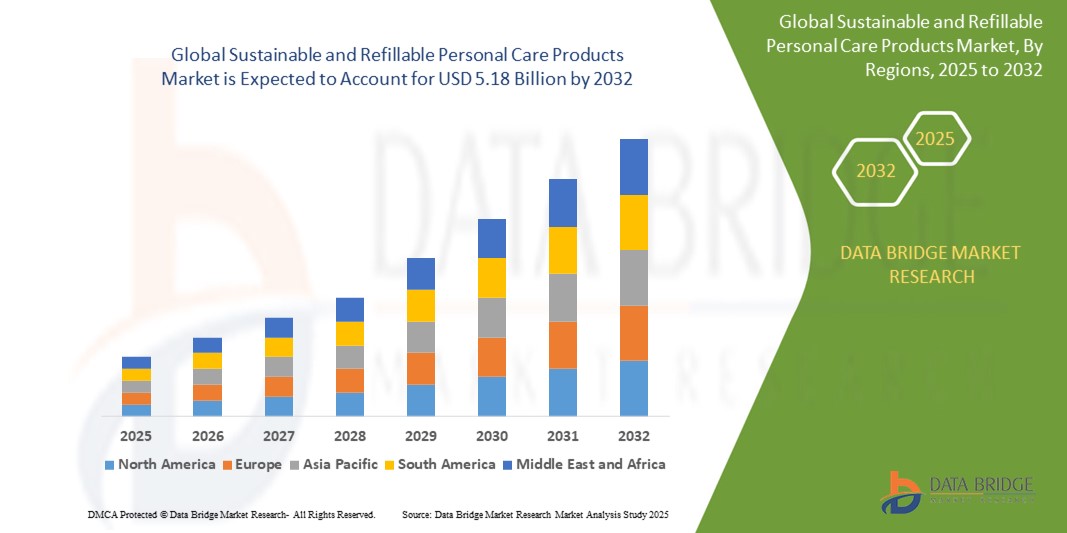
- The global sustainable and refillable personal care products market size was valued at USD 1.92 billion in 2024 and is expected to reach USD 5.18 billion by 2032, at a CAGR of 13.21% during the forecast period
- The market growth is primarily driven by increasing consumer awareness of environmental sustainability, demand for eco-friendly packaging, and the shift toward circular economy practices in personal care product consumption
- Rising consumer preference for sustainable, refillable, and low-waste solutions for personal care routines is positioning these products as a preferred choice in both residential and commercial markets, significantly boosting industry growth
Sustainable and Refillable Personal Care Products Market Analysis
- Sustainable and refillable personal care products, designed to reduce waste through eco-friendly packaging and refill systems, are becoming integral to modern consumer preferences in personal care, driven by environmental concerns and the convenience of reusable packaging
- The growing demand for these products is fueled by heightened awareness of plastic pollution, increasing adoption of green beauty trends, and a preference for cost-effective, long-term solutions through refillable systems
- North America dominated the sustainable and refillable personal care products market with the largest revenue share of 42.5% in 2024, driven by early adoption of sustainable practices, high consumer purchasing power, and the presence of key industry players
- Asia-Pacific is expected to be the fastest-growing region during the forecast period, propelled by rising urbanization, growing environmental consciousness, and increasing disposable incomes
- The skincare segment dominated the largest market revenue share of 38.5% in 2024, driven by growing consumer preference for sustainable and natural ingredients in products such as moisturizers, serums, and cleansers
Report Scope and Sustainable and Refillable Personal Care Products Market Segmentation
|
Attributes |
Sustainable and Refillable Personal Care Products Key Market Insights |
|
Segments Covered |
|
|
Countries Covered |
North America
Europe
Asia-Pacific
Middle East and Africa
South America
|
|
Key Market Players |
|
|
Market Opportunities |
|
|
Value Added Data Infosets |
In addition to the insights on market scenarios such as market value, growth rate, segmentation, geographical coverage, and major players, the market reports curated by the Data Bridge Market Research also include in-depth expert analysis, pricing analysis, brand share analysis, consumer survey, demography analysis, supply chain analysis, value chain analysis, raw material/consumables overview, vendor selection criteria, PESTLE Analysis, Porter Analysis, and regulatory framework. |
Sustainable and Refillable Personal Care Products Market Trends
“Increasing Adoption of Eco-Friendly Packaging and Refill Systems”
- The global sustainable and refillable personal care products market is experiencing a notable trend toward eco-friendly packaging and refillable systems
- These solutions leverage biodegradable materials, recyclable packaging, and innovative refill stations to reduce plastic waste and environmental impact
- Advanced technologies, such as smart dispensers and subscription-based refill models, enable brands to offer personalized product solutions while minimizing packaging waste
- For instance, several companies are developing refillable skincare and haircare systems that allow consumers to replenish products at home or through in-store refill stations, reducing single-use plastic consumption
- This trend enhances the appeal of sustainable personal care products, making them more attractive to environmentally conscious consumers and retailers
- Sustainable packaging innovations also include tracking consumer usage patterns to optimize product formulations and reduce overproduction
Sustainable and Refillable Personal Care Products Market Dynamics
Driver
“Rising Consumer Demand for Sustainable and Ethical Products”
- Increasing consumer awareness of environmental issues, such as plastic pollution and carbon footprints, is a major driver for the global sustainable and refillable personal care products market
- Sustainable personal care products, including skincare, haircare, bath & shower products, and oral care, align with consumer preferences for eco-friendly and ethically sourced options
- Government regulations, particularly in North America, which dominates the market, are promoting the adoption of sustainable packaging and production practices through incentives and mandates
- The rise of e-commerce and social media has amplified consumer access to sustainable brands, with online retail emerging as a key distribution channel
- Brands are increasingly offering refillable and sustainable products as standard or premium options to meet consumer expectations and enhance brand loyalty
- The proliferation of green certifications and eco-labels further supports market growth by providing transparency and building consumer trust
Restraint/Challenge
“High Production Costs and Supply Chain Complexities”
- The significant initial investment required for developing sustainable materials, refillable systems, and eco-friendly manufacturing processes can be a barrier to adoption, particularly for smaller brands in emerging markets such as Asia-Pacific, the fastest-growing region
- Sourcing sustainable raw materials and integrating refillable systems into existing supply chains can be complex and costly
- In addition, ensuring product safety and quality in refillable systems poses challenges, as improper handling or contamination risks can undermine consumer trust
- Regulatory variations across countries regarding sustainable packaging standards and recycling infrastructure create operational challenges for global manufacturers and retailers
- These factors can deter potential market entrants and limit expansion, especially in regions with high cost sensitivity or limited recycling infrastructure
Sustainable and Refillable Personal Care Products market Scope
The market is segmented on the basis of product and distribution channel.
- By Product
On the basis of product, the market is segmented into skincare, haircare, bath & shower products, oral care, and others. The skincare segment dominated the largest market revenue share of 38.5% in 2024, driven by growing consumer preference for sustainable and natural ingredients in products such as moisturizers, serums, and cleansers. The demand for refillable packaging in skincare, aimed at reducing plastic waste, further boosts this segment’s dominance.
The haircare segment is anticipated to experience the fastest growth rate from 2025 to 2032, with a projected CAGR of 18.2%. This growth is propelled by increasing adoption of eco-friendly shampoos, conditioners, and styling products in refillable formats, supported by innovations in biodegradable packaging and rising consumer demand for sustainable haircare solutions.
- By Distribution Channel
On the basis of distribution channel, the market is segmented into hypermarkets/supermarkets, specialty stores, online retail, and others. The hypermarkets/supermarkets segment accounted for the largest market revenue share of 42.5% in 2024, owing to their widespread presence, extensive product offerings, and consumer trust in purchasing sustainable personal care products from established retail chains. These stores often feature dedicated sections for eco-friendly and refillable products, enhancing accessibility.
The online retail segment is expected to witness the fastest growth rate of 20.1% from 2025 to 2032. This is driven by the convenience of e-commerce platforms, increasing availability of sustainable and refillable personal care brands online, and growing consumer preference for direct-to-consumer models that offer subscription-based refill programs. Enhanced digital marketing and eco-conscious campaigns further accelerate adoption in this channel.
Sustainable and Refillable Personal Care Products Market Regional Analysis
- North America dominated the sustainable and refillable personal care products market with the largest revenue share of 42.5% in 2024, driven by early adoption of sustainable practices, high consumer purchasing power, and the presence of key industry players
- Consumers prioritize sustainable and refillable products for reducing environmental impact, enhancing convenience, and aligning with eco-conscious lifestyles, particularly in regions with strong sustainability trends
- Growth is supported by advancements in eco-friendly packaging, biodegradable formulations, and rising adoption across both mass-market and premium segments, with distribution channels such as online retail and specialty stores playing a key role
U.S. Sustainable and Refillable Personal Care Products Market Insight
The U.S. sustainable and refillable personal care products market captured the largest revenue share of 85.4% in 2024 within North America, fueled by strong consumer awareness of environmental sustainability and demand for refillable skincare, haircare, and bath & shower products. The trend towards eco-conscious purchasing and increasing regulations promoting sustainable packaging further boost market expansion. Major brands’ adoption of refillable systems in both retail and e-commerce channels complements specialty store sales, creating a robust product ecosystem.
Europe Sustainable and Refillable Personal Care Products Market Insight
The Europe sustainable and refillable personal care products market is expected to witness significant growth, supported by regulatory emphasis on reducing plastic waste and promoting sustainable consumption. Consumers seek products that combine environmental benefits with performance, particularly in skincare and haircare. Growth is prominent in both mass-market and premium segments, with countries such as Germany and France showing notable adoption due to rising environmental concerns and urban consumer trends.
U.K. Sustainable and Refillable Personal Care Products Market Insight
The U.K. market for sustainable and refillable personal care products is expected to witness rapid growth, driven by demand for eco-friendly skincare, bath & shower, and oral care products in urban and suburban settings. Increased interest in sustainable aesthetics and growing awareness of reducing waste encourage adoption. Evolving regulations on single-use plastics influence consumer choices, balancing performance with environmental compliance.
Germany Sustainable and Refillable Personal Care Products Market Insight
Germany is expected to witness rapid growth in the sustainable and refillable personal care products market, attributed to its advanced personal care industry and high consumer focus on sustainability and eco-efficiency. German consumers prefer technologically advanced, refillable products that reduce environmental impact and support circular economy principles. The integration of these products in premium brands and online retail platforms supports sustained market growth.
Asia-Pacific Sustainable and Refillable Personal Care Products Market Insight
The Asia-Pacific region is expected to witness the fastest growth rate, driven by expanding personal care markets and rising disposable incomes in countries such as China, India, and Japan. Increasing awareness of sustainability, waste reduction, and eco-friendly product benefits is boosting demand. Government initiatives promoting sustainable practices and green packaging further encourage the adoption of advanced refillable personal care products.
Japan Sustainable and Refillable Personal Care Products Market Insight
Japan’s sustainable and refillable personal care products market is expected to witness rapid growth due to strong consumer preference for high-quality, eco-friendly products that enhance convenience and sustainability. The presence of major personal care brands and the integration of refillable systems in skincare and haircare products accelerate market penetration. Rising interest in online retail and specialty store channels also contributes to growth.
China Sustainable and Refillable Personal Care Products Market Insight
China holds the largest share of the Asia-Pacific sustainable and refillable personal care products market, propelled by rapid urbanization, rising consumer spending, and increasing demand for sustainable skincare, bath & shower, and oral care solutions. The country’s growing middle class and focus on green consumerism support the adoption of refillable products. Strong domestic manufacturing capabilities and competitive pricing enhance market accessibility.
Sustainable and Refillable Personal Care Products Market Share
The sustainable and refillable personal care products industry is primarily led by well-established companies, including:
- Unilever (U.K.)
- The Procter & Gamble Company (U.S.)
- L'Oréal (France)
- The Body Shop (U.K.)
- Natura &Co (Brazil)
- Estée Lauder Companies (U.S.)
- Beiersdorf AG (Germany)
- Burt’s Bees (U.S.)
- Lush (U.K.)
- Grove Collaborative (U.S.)
- Rituals (Netherlands)
- Aesop (Australia)
- Kjaer Weis (Denmark)
- Weleda (Switzerland)
- EcoRoots (U.S.)
- Ethique (New Zealand)
- Plaine Products (U.S.)
- Package Free (U.S.)
- By Humankind (U.S.)
- Alaffia (U.S.)
What are the Recent Developments in Global Sustainable and Refillable Personal Care Products Market?
- In May 2025, industry leaders such as PepsiCo, Amcor, and Procter & Gamble were reported to be making substantial investments in refillable packaging solutions across sectors such as personal care, food and beverage, and home care. This momentum reflects a growing response to government regulations, consumer demand for sustainability, and corporate environmental goals. Refillable systems—such as returnable containers, refill pouches, and retail refill stations—are gaining traction as viable alternatives to single-use plastics, helping reduce waste and promote circularity. The trend signals a broader industry shift toward eco-friendly packaging models that prioritize reuse, resource conservation, and long-term brand loyalty
- In April 2025, Unilever acquired Wild, a UK-based personal care brand celebrated for its plastic-free, refillable packaging and plant-based formulations. Wild’s product range—including deodorants, body washes, and handwashes—aligns with Unilever’s commitment to sustainability and premium innovation. The acquisition supports Unilever’s Growth Action Plan 2030, which focuses on expanding access to eco-friendly personal care through its global distribution network. Wild’s direct-to-consumer model and social-first marketing have made it the UK’s No. 1 refillable deodorant brand, making it a strategic addition to Unilever’s portfolio
- In February 2025, L'Oréal joined forces with the University of Cambridge Institute for Sustainability Leadership (CISL) to launch the Sustainable Innovation Accelerator, a nitiative aimed at advancing eco-friendly technologies in the beauty industry. The program scouts, pilots, and scales breakthrough solutions in areas such as low-carbon processes, alternative ingredients, plastic waste reduction, and water resilience. Startups, SMEs, and established innovators are invited to apply for a tailored 12-month acceleration program that includes mentorship, pilot opportunities, and potential investment—supporting L'Oréal’s 2030 sustainability goals and driving systemic change across the sector
- In July 2024, a comprehensive study explored the use of nanotechnology to create sustainable cosmetics from plant and animal byproducts, marking a significant step toward a circular economy in the beauty industry. The research highlights how natural-source nanocarriers—such as liposomes and nanostructured lipid carriers—can improve the bioavailability, stability, and efficacy of bioactive compounds such as antioxidants, collagen, and vitamins. These compounds, often discarded as waste, are repurposed to deliver potent skincare benefits while minimizing environmental impact. The study also emphasizes the importance of green extraction methods, low-toxicity materials, and regulatory transparency to ensure safety and scalability
- In November 2024, L'Oréal and Unilever—two of the biggest names in personal care—publicly acknowledged difficulties in meeting their 2025 green packaging goals, despite years of investment and rising consumer demand for sustainability. L'Oréal revealed that only 49% of its packaging was reusable, refillable, recyclable, or compostable, falling short of its 100% target, while just 37% was made from recycled or biobased materials. Unilever, meanwhile, revised its virgin plastic reduction goal from 50% by 2025 to 30% by 2026, citing infrastructure gaps and technical challenges. These admissions underscore the complexity of scaling refillable and circular packaging systems globally

- Interactive Data Analysis Dashboard
- Company Analysis Dashboard for high growth potential opportunities
- Research Analyst Access for customization & queries
- Competitor Analysis with Interactive dashboard
- Latest News, Updates & Trend analysis
- Harness the Power of Benchmark Analysis for Comprehensive Competitor Tracking
Global Sustainable And Refillable Personal Care Products Market, Supply Chain Analysis and Ecosystem Framework
To support market growth and help clients navigate the impact of geopolitical shifts, DBMR has integrated in-depth supply chain analysis into its Global Sustainable And Refillable Personal Care Products Market research reports. This addition empowers clients to respond effectively to global changes affecting their industries. The supply chain analysis section includes detailed insights such as Global Sustainable And Refillable Personal Care Products Market consumption and production by country, price trend analysis, the impact of tariffs and geopolitical developments, and import and export trends by country and HSN code. It also highlights major suppliers with data on production capacity and company profiles, as well as key importers and exporters. In addition to research, DBMR offers specialized supply chain consulting services backed by over a decade of experience, providing solutions like supplier discovery, supplier risk assessment, price trend analysis, impact evaluation of inflation and trade route changes, and comprehensive market trend analysis.
Data collection and base year analysis are done using data collection modules with large sample sizes. The stage includes obtaining market information or related data through various sources and strategies. It includes examining and planning all the data acquired from the past in advance. It likewise envelops the examination of information inconsistencies seen across different information sources. The market data is analysed and estimated using market statistical and coherent models. Also, market share analysis and key trend analysis are the major success factors in the market report. To know more, please request an analyst call or drop down your inquiry.
The key research methodology used by DBMR research team is data triangulation which involves data mining, analysis of the impact of data variables on the market and primary (industry expert) validation. Data models include Vendor Positioning Grid, Market Time Line Analysis, Market Overview and Guide, Company Positioning Grid, Patent Analysis, Pricing Analysis, Company Market Share Analysis, Standards of Measurement, Global versus Regional and Vendor Share Analysis. To know more about the research methodology, drop in an inquiry to speak to our industry experts.
Data Bridge Market Research is a leader in advanced formative research. We take pride in servicing our existing and new customers with data and analysis that match and suits their goal. The report can be customized to include price trend analysis of target brands understanding the market for additional countries (ask for the list of countries), clinical trial results data, literature review, refurbished market and product base analysis. Market analysis of target competitors can be analyzed from technology-based analysis to market portfolio strategies. We can add as many competitors that you require data about in the format and data style you are looking for. Our team of analysts can also provide you data in crude raw excel files pivot tables (Fact book) or can assist you in creating presentations from the data sets available in the report.













