


What is the Global Sustainable Beverage Ingredients Market Size and Growth Rate?
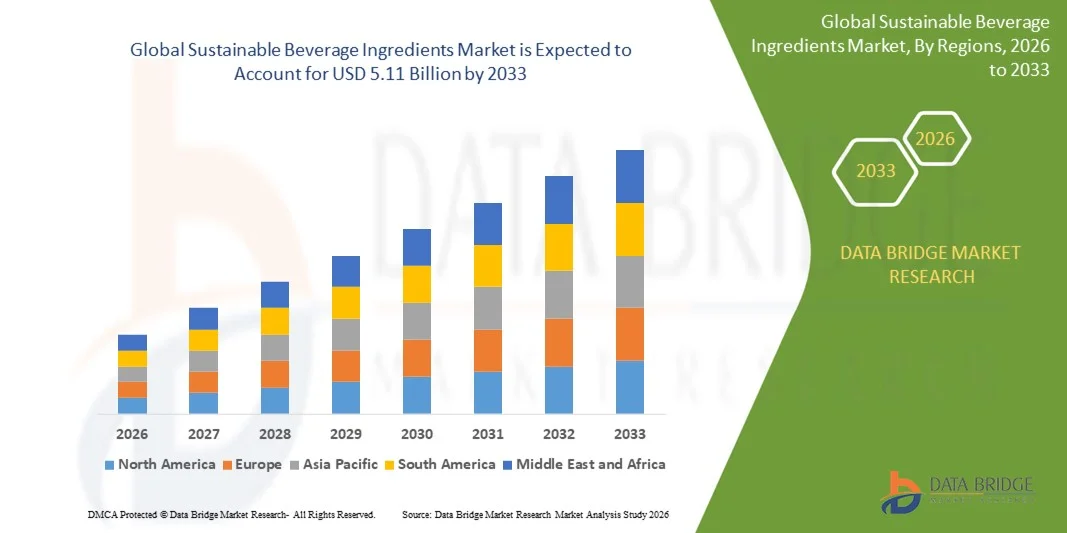
- The global sustainable beverage ingredients market size was valued at USD 2.64 billion in 2025 and is expected to reach USD 5.11 billion by 2033, at a CAGR of 7.60% during the forecast period
- Rising adoption of natural, plant-based, and eco-friendly beverage formulations is one of the primary factors driving market growth. Increasing consumer preference for low-calorie, clean-label, and sustainably sourced ingredients, along with heightened awareness of environmental impact, is accelerating market expansion across functional drinks, juices, RTD beverages, and fortified water
- Growing popularity of sustainably sourced antioxidants, natural flavors, botanical extracts, and organic sweeteners, coupled with concerns over artificial additives and synthetic chemicals, further strengthens demand. Rising focus on ethical sourcing, carbon-neutral production, and circular ingredient systems continues to support the market’s overall growth trajectory
What are the Major Takeaways of Sustainable Beverage Ingredients Market?
- Increasing awareness regarding the health benefits of natural and responsibly sourced ingredients, shifting consumer preferences toward wellness beverages, and rising disposable incomes globally are positively influencing the Sustainable Beverage Ingredients market. Moreover, ongoing product innovations, new plant-derived formulations, and clean-label solutions offer lucrative opportunities for market players
- High production costs associated with sustainable and organic beverage ingredients, along with the availability of lower-priced synthetic alternatives, are key factors restraining market growth. Limited consumer awareness in emerging regions and the complexity of achieving verified sustainability certifications are further expected to challenge the market expansion
- Asia-Pacific dominated the sustainable beverage ingredients market with a 43.6% revenue share in 2025, driven by strong demand for natural, plant-based, and clean-label beverage ingredients across China, Japan, India, and South Korea
- North America is projected to register the fastest CAGR of 9.4% from 2026 to 2033, driven by increasing demand for clean-label, low-calorie, and plant-based beverage ingredients across the U.S. and Canada
- The Soft Drinks segment dominated the market with a revenue share of 41.8% in 2025, driven by high consumption of carbonated beverages, flavored waters, functional sodas, RTD teas, and natural electrolyte drinks
Report Scope and Sustainable Beverage Ingredients Market Segmentation
|
Attributes |
Sustainable Beverage Ingredients Key Market Insights |
|
Segments Covered |
|
|
Countries Covered |
North America
Europe
Asia-Pacific
Middle East and Africa
South America
|
|
Key Market Players |
|
|
Market Opportunities |
|
|
Value Added Data Infosets |
In addition to the insights on market scenarios such as market value, growth rate, segmentation, geographical coverage, and major players, the market reports curated by the Data Bridge Market Research also include in-depth expert analysis, pricing analysis, brand share analysis, consumer survey, demography analysis, supply chain analysis, value chain analysis, raw material/consumables overview, vendor selection criteria, PESTLE Analysis, Porter Analysis, and regulatory framework. |
What is the Key Trend in the Sustainable Beverage Ingredients Market?
Rising Demand for Nutrient-Enriched and Multi-Sustainable Beverage Ingredients
- The sustainable beverage ingredients market is experiencing a strong shift toward nutrient-enriched, multifunctional, and clean-label formulations, integrating prebiotics, plant fibers, and botanical extracts to enhance product value
- Manufacturers are developing multi-purpose ingredient systems that support sugar reduction, calorie control, digestive wellness, and broader functional usage in beverages, dairy, and nutraceuticals
- Consumers are increasingly choosing natural, low-calorie, and chemical-free ingredients as replacements for artificial additives, boosting adoption across food and wellness categories
- For instance, companies such as ADM, Tate & Lyle, Layn Corp, and NOW Foods have expanded fortified ingredient blends designed for functional drinks, sports nutrition, and low-sugar snacks
- Rising interest in health maintenance, weight management, and clean-label nutrition continues to drive global demand
- As consumers prioritize natural, multifunctional, and health-oriented solutions, Sustainable Beverage Ingredients will remain central to innovation in the healthy beverage ecosystem
What are the Key Drivers of Sustainable Beverage Ingredients Market?
- Rising demand for low-calorie, natural, plant-based, and functionally enhanced ingredients is accelerating global adoption across beverage and nutrition categories
- For instance, in 2025, ADM, Tate & Lyle, and Layn Corp broadened their ingredient portfolios for use in functional beverages, fortified juices, and diabetic-friendly snacks
- Increasing awareness of sugar reduction, obesity control, and low-glycemic diets is driving consumption across the U.S., Europe, and Asia-Pacific
- Technological advancements in extraction, flavor optimization, and blending methods have significantly improved ingredient quality, stability, and application versatility
- Rising preference for organic, vegan, non-GMO, and sustainably sourced ingredients is further supporting market expansion
- With continued investments in R&D, new formulations, strategic collaborations, and global distribution, the Sustainable Beverage Ingredients market is expected to maintain robust long-term growth
Which Factor is Challenging the Growth of the Sustainable Beverage Ingredients Market?
- High production, purification, and processing costs associated with premium natural ingredient extracts limit affordability in several cost-sensitive regions
- For instance, during 2024–2025, fluctuations in fruit supply, agricultural output, and extraction material costs impacted production efficiency for key manufacturers
- Stringent regulations regarding food safety, labeling accuracy, and clean-label certification add complexity to product development
- Limited consumer awareness in emerging regions regarding natural ingredient benefits and glycemic advantages restricts broader penetration
- Intense competition from lower-cost alternatives such as stevia, erythritol, and allulose creates pricing challenges and affects product differentiation
- To address these barriers, companies are focusing on efficient sourcing, scalable extraction technologies, regulatory standardization, and consumer education to expand global acceptance of premium Sustainable Beverage Ingredients
How is the Sustainable Beverage Ingredients Market Segmented?
The market is segmented on the basis of application, source, and functionality.
- By Application
On the basis of application, the sustainable beverage ingredients market is segmented into Soft Drinks, Alcoholic Beverages, Fruit Juices, Dairy Drinks, and Energy Drinks. The Soft Drinks segment dominated the market with a revenue share of 41.8% in 2025, driven by high consumption of carbonated beverages, flavored waters, functional sodas, RTD teas, and natural electrolyte drinks. Rising demand for low-sugar and clean-label soft drink formulations using plant-based sweeteners, botanical extracts, and natural enhancers continues to support large-scale adoption. Manufacturers are increasingly reformulating carbonated beverages with sustainable, low-calorie components to meet regulatory sugar-reduction guidelines and health-conscious consumer expectations.
The Energy Drinks segment is projected to grow at the fastest CAGR from 2026 to 2033, fueled by rising interest in performance beverages, natural caffeine alternatives, metabolic boosters, and low-sugar formulations among fitness-conscious consumers. Expansion of premium functional drinks and nutraceutical beverages further strengthens segment growth.
- By Source
On the basis of source, the sustainable beverage ingredients market is segmented into Natural, Synthetic, and Organic. The Natural segment dominated the market with a revenue share of 57.6% in 2025, supported by increasing preference for plant-derived sweeteners, botanical extracts, fruit concentrates, natural flavors, and functional enhancers used across RTD beverages and health drinks. Consumers are actively shifting away from artificial additives, boosting demand for natural ingredients known for better nutritional credibility and sustainable sourcing. Strong adoption in soft drinks, juices, protein beverages, and flavored waters further reinforces market leadership.
The Organic segment is projected to grow at the fastest CAGR from 2026 to 2033, driven by rising global interest in clean-label, non-GMO, chemical-free, and environment-friendly beverages. Increasing penetration of organic drink categories—including cold-pressed juices, kombucha, plant-based dairy alternatives, and premium wellness beverages—is contributing significantly to segment acceleration.
- By Functionality
On the basis of functionality, the sustainable beverage ingredients market is segmented into Sweetening, Flavoring, Acidulating, and Preserving. The Sweetening segment dominated the market with a revenue share of 46.3% in 2025, owing to rising global demand for low-calorie, natural, and plant-based sweetening agents used across soft drinks, sports beverages, energy drinks, dairy alternatives, flavored waters, and functional drinks. The shift toward sugar reduction, clean-label claims, and metabolic health management is driving widespread replacement of refined sugar with sustainable sweetening solutions such as monk fruit, stevia, and fruit-derived concentrates.
The Flavoring segment is projected to grow at the fastest CAGR from 2026 to 2033, supported by innovations in natural flavors, botanical infusions, citrus extracts, and tropical fruit essences used in premium beverages. Growing consumer interest in refreshing, unique, and health-forward flavor profiles continues to unlock strong growth opportunities in global beverage formulation.
Which Region Holds the Largest Share of the Sustainable Beverage Ingredients Market?
- Asia-Pacific dominated the sustainable beverage ingredients market with a 43.6% revenue share in 2025, driven by strong demand for natural, plant-based, and clean-label beverage ingredients across China, Japan, India, and South Korea. Rising consumer focus on sugar reduction, digestive wellness, weight management, and low-calorie food habits is fueling widespread product adoption. Large-scale monk fruit cultivation, advanced extraction technologies, and strong export capabilities give the region a manufacturing advantage
- Leading players are expanding monk fruit-, stevia-, and botanical extract–based formulations through innovations in purification, flavor modulation, and sustainable farming. Regulatory support for clean-label compliance, organic certifications, and non-GMO ingredients further strengthens Asia-Pacific’s leadership
- Rapid urbanization, rising disposable incomes, and increasing preference for natural sweeteners over artificial alternatives drive strong regional growth
China Sustainable Beverage Ingredients Market Insight
China is the largest contributor to Asia-Pacific, supported by its extensive monk fruit cultivation base and advanced processing infrastructure. Demand is rising in beverages, bakery items, sports nutrition, and functional foods due to growing awareness of the benefits of natural sweeteners. Manufacturers are increasing investments in R&D, organic farming systems, and eco-friendly extraction methods, which enhances domestic consumption and export capability. High availability of raw materials and strong distribution networks further strengthen China’s position.
Japan Sustainable Beverage Ingredients Market Insight
Japan shows consistent growth driven by high consumer preference for low-calorie, natural sweeteners in functional beverages, traditional foods, and premium health-focused products. Continuous innovations in taste enhancement, purity levels, and blending with stevia and erythritol are encouraging broader adoption. Strong regulatory support, organized retail infrastructure, and increasing demand for clean-label beverages reinforce growth momentum across the country.
India Sustainable Beverage Ingredients Market Insight
India is emerging as a significant growth market, fueled by rising awareness around diabetes management, obesity control, and natural food ingredients. Demand for monk fruit and other plant-derived sweeteners is increasing across beverages, packaged foods, and home cooking. Expanding e-commerce platforms, growing adoption of clean-label products, and government-driven health and wellness initiatives are supporting rapid penetration of sustainable beverage ingredients.
South Korea Sustainable Beverage Ingredients Market Insight
South Korea contributes strongly to regional growth due to rising interest in natural sweeteners within diet foods, functional beverages, and bakery categories. Influences from K-food exports, wellness trends, and social media health content are shaping consumer preferences for plant-based, zero-calorie ingredients. Premium packaging, product innovation, and expanding retail channels are further enhancing market uptake.
North America Sustainable Beverage Ingredients Market Insight (Fastest Growing Region)
North America is projected to register the fastest CAGR of 9.4% from 2026 to 2033, driven by increasing demand for clean-label, low-calorie, and plant-based beverage ingredients across the U.S. and Canada. Rising awareness of sugar reduction, diabetic-friendly diets, and functional beverage trends accelerates product adoption across flavored water, protein drinks, dairy alternatives, and ready-to-drink (RTD) beverages. Leading companies are focusing on innovation in monk fruit, stevia, and botanical blend formulations, improving taste, stability, and natural flavor profiles. Strong regulatory support for non-GMO, organic, and natural ingredient claims further drives momentum. Growth in e-commerce, subscription-based wellness beverages, and digital marketing significantly boosts accessibility.
Which are the Top Companies in Sustainable Beverage Ingredients Market?
The sustainable beverage ingredients industry is primarily led by well-established companies, including:
- Cargill, Incorporated (U.S.)
- Archer-Daniels Midland Company (U.S.)
- Kerry Group plc (Ireland)
- DuPont (U.S.)
- Tate & Lyle (U.K.)
- Ingredion (U.S.)
- Novozymes A/S (Denmark)
- Mevive International (India)
- Novasol Ingredients Pvt. Ltd. (India)
- Symega Food Ingredients (India)
What are the Recent Developments in Global Sustainable Beverage Ingredients Market?
- In September 2025, Lifeway Foods, Inc., an American producer of fermented dairy products, introduced its new Muscle Mates functional drink featuring 20 grams of protein and active probiotic cultures, further strengthening its position in the high-protein functional beverage segment
- In June 2025, Amul, the dairy brand under the Gujarat Cooperative Milk Marketing Federation, launched its Amul protein water containing 10 grams of whey protein isolate, enhancing its presence among fitness-focused consumers in the Indian beverage market
- In April 2025, Nestlé S.A., the Swiss-based multinational food and beverage company, rolled out its latest protein-based drink range designed specifically for individuals pursuing weight-loss goals, reinforcing its commitment to health-centered beverage innovations
- In February 2025, Fermenthe, a Thailand-based health beverage company, debuted its ready-to-drink kombucha made from a blend of green and black tea, offering Thai consumers a refreshing and probiotic-rich beverage option
- In September 2024, Nura, a California-headquartered enterprise, released its Madblend stevia extract blend, a low-calorie sugar alternative that mirrors the taste of sucrose, expanding its footprint in the U.S. clean-label sweetener category

- Interactive Data Analysis Dashboard
- Company Analysis Dashboard for high growth potential opportunities
- Research Analyst Access for customization & queries
- Competitor Analysis with Interactive dashboard
- Latest News, Updates & Trend analysis
- Harness the Power of Benchmark Analysis for Comprehensive Competitor Tracking
Global Sustainable Beverage Ingredients Market, Supply Chain Analysis and Ecosystem Framework
To support market growth and help clients navigate the impact of geopolitical shifts, DBMR has integrated in-depth supply chain analysis into its Global Sustainable Beverage Ingredients Market research reports. This addition empowers clients to respond effectively to global changes affecting their industries. The supply chain analysis section includes detailed insights such as Global Sustainable Beverage Ingredients Market consumption and production by country, price trend analysis, the impact of tariffs and geopolitical developments, and import and export trends by country and HSN code. It also highlights major suppliers with data on production capacity and company profiles, as well as key importers and exporters. In addition to research, DBMR offers specialized supply chain consulting services backed by over a decade of experience, providing solutions like supplier discovery, supplier risk assessment, price trend analysis, impact evaluation of inflation and trade route changes, and comprehensive market trend analysis.
Data collection and base year analysis are done using data collection modules with large sample sizes. The stage includes obtaining market information or related data through various sources and strategies. It includes examining and planning all the data acquired from the past in advance. It likewise envelops the examination of information inconsistencies seen across different information sources. The market data is analysed and estimated using market statistical and coherent models. Also, market share analysis and key trend analysis are the major success factors in the market report. To know more, please request an analyst call or drop down your inquiry.
The key research methodology used by DBMR research team is data triangulation which involves data mining, analysis of the impact of data variables on the market and primary (industry expert) validation. Data models include Vendor Positioning Grid, Market Time Line Analysis, Market Overview and Guide, Company Positioning Grid, Patent Analysis, Pricing Analysis, Company Market Share Analysis, Standards of Measurement, Global versus Regional and Vendor Share Analysis. To know more about the research methodology, drop in an inquiry to speak to our industry experts.
Data Bridge Market Research is a leader in advanced formative research. We take pride in servicing our existing and new customers with data and analysis that match and suits their goal. The report can be customized to include price trend analysis of target brands understanding the market for additional countries (ask for the list of countries), clinical trial results data, literature review, refurbished market and product base analysis. Market analysis of target competitors can be analyzed from technology-based analysis to market portfolio strategies. We can add as many competitors that you require data about in the format and data style you are looking for. Our team of analysts can also provide you data in crude raw excel files pivot tables (Fact book) or can assist you in creating presentations from the data sets available in the report.













