What is the Sustainable Sportswear Market Size and Growth Rate?
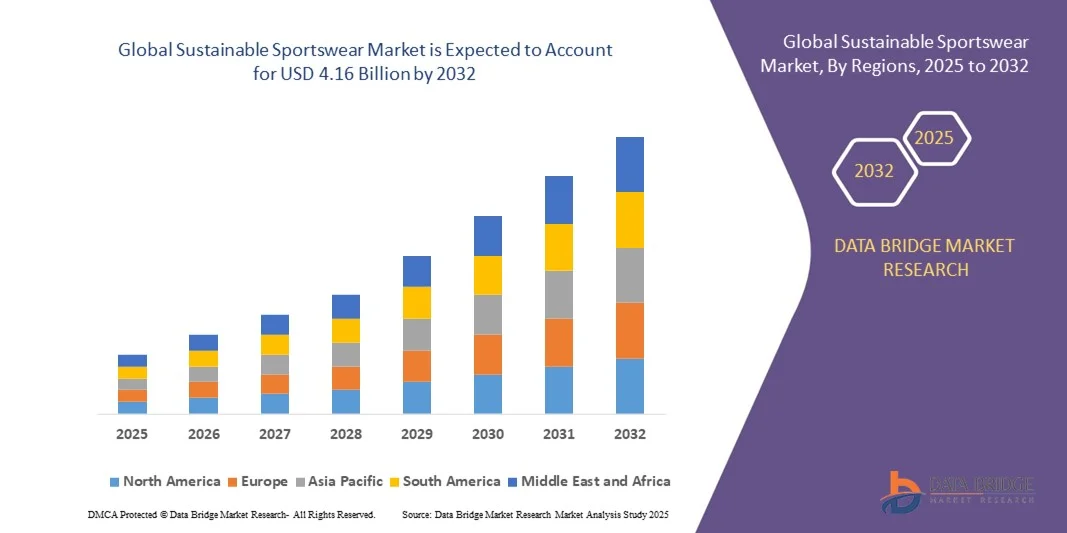
- As per Data Bridge Market Research Analysis the global sustainable sportswear market size was valued at USD 2.77 billion in 2024 and is expected to reach USD 4.16 billion by 2032, at a CAGR of 5.2% during the forecast period
- The market growth is largely fueled by increasing consumer awareness of environmental sustainability and the rising demand for eco-friendly, ethically produced sportswear. Consumers are prioritizing apparel and footwear made from organic, recycled, and biodegradable materials, driving brands to innovate and expand their sustainable product lines
- Furthermore, the growing emphasis on health, fitness, and active lifestyles is boosting the adoption of high-performance sustainable sportswear. These converging trends are accelerating the uptake of eco-conscious activewear, footwear, and accessories, thereby significantly enhancing the market's growth
Market Size & Forecast
- Global Market Value (2024): USD 2.77 Billion
- Expected Market Value (2032): USD 4.16 Billion
- Forecast CAGR (2024–2032): 5.2%
Sustainable Sportswear Market Analysis
- Sustainable sportswear encompasses apparel, footwear, and accessories designed using environmentally responsible materials such as organic cotton, recycled polyester, bamboo, Tencel, and hemp. These products combine performance, comfort, and style while minimizing the ecological footprint, catering to the needs of fitness enthusiasts, professional athletes, and environmentally conscious consumers
- The escalating demand for sustainable sportswear is primarily driven by consumers’ preference for products that align with eco-friendly values, the increasing penetration of sustainable brands in both online and offline channels, and rising collaborations between technology, textile innovation, and fashion brands to enhance performance while maintaining sustainability
- North America dominated sustainable sportswear market with a share of 33.8% in 2024, due to growing consumer awareness regarding eco-friendly and ethical fashion. Health and fitness trends, coupled with increased interest in sustainability, are fueling the adoption of activewear and sport-specific apparel made from recycled or organic materials
- Europe is expected to be the fastest growing region in the sustainable sportswear market during the forecast period due to stringent environmental regulations, rising eco-conscious consumer behavior, and strong government initiatives promoting sustainable fashion
- Footwear segment dominated the market with a market share of 65.3% in 2024, due to rising demand for eco-conscious running and training shoes that use recycled and plant-based materials. Innovative designs incorporating biodegradable soles, recycled textiles, and low-emission manufacturing processes are attracting environmentally aware consumers. Growing collaborations between sustainable footwear brands and major sports retailers are also enhancing product accessibility, while social media campaigns emphasizing sustainability and performance further drive adoption
Report Scope and Sustainable Sportswear Market Segmentation
|
Attributes |
Sustainable Sportswear Key Market Insights |
|
Segments Covered |
|
|
Countries Covered |
North America
Europe
Asia-Pacific
Middle East and Africa
South America
|
|
Key Market Players |
|
|
Market Opportunities |
|
|
Value Added Data Infosets |
In addition to the insights on market scenarios such as market value, growth rate, segmentation, geographical coverage, and major players, the market reports curated by the Data Bridge Market Research also include in-depth expert analysis, pricing analysis, brand share analysis, consumer survey, demography analysis, supply chain analysis, value chain analysis, raw material/consumables overview, vendor selection criteria, PESTLE Analysis, Porter Analysis, and regulatory framework. |
What is the Key Trend in the Sustainable Sportswear Market?
Growing Demand for High-Performance Sustainable Fabrics
- The sustainable sportswear market is expanding rapidly as consumers increasingly prioritize eco-friendly apparel that does not compromise on performance. Innovations in recycled polyester, organic cotton, and biodegradable fibers are enabling brands to deliver moisture-wicking, breathable, and durable fabrics that meet the rigorous demands of athletes and fitness enthusiasts
- For instance, Adidas and Patagonia have introduced lines incorporating recycled ocean plastics and organic materials, respectively, demonstrating the commercial viability of sustainable high-performance fabrics. Nike has invested heavily in sustainable fabric technologies, integrating recycled content while enhancing elasticity and durability in their sportswear collections
- Consumer awareness of environmental impact and social responsibility drives demand for sustainably sourced materials, compelling brands to develop closed-loop production processes and circular product lifecycles. These efforts align with global sustainability initiatives and increasingly stringent regulatory frameworks aimed at reducing textile waste and carbon footprints
- Advances in fabric treatments and manufacturing processes are improving the performance attributes of sustainable materials, such as UV protection, anti-microbial properties, and odor control, narrowing the gap with traditional fabrics. This enhances product appeal across various sports, outdoor activities, and athleisure markets
- Collaborations between textile manufacturers, sports brands, and environmental organizations are fostering innovation and transparency, allowing consumers to make informed choices. The integration of smart textile technologies further enriches the consumer experience by combining sustainability with enhanced functionality
- The focus on high-performance sustainable fabrics is set to remain a pivotal trend, driving product development and market growth while reinforcing the sportswear industry’s shift toward responsible, eco-conscious production
Sustainable Sportswear Market Dynamics
Driver
Increasing Adoption of Wellness and Fitness Trends
- The global surge in wellness culture and fitness activities is a key driver for the sustainable sportswear market. Consumers increasingly invest in apparel that supports active lifestyles while aligning with values of health, sustainability, and ethical production
- For instance, the rise of yoga, running, and gym memberships worldwide has prompted brands such as Lululemon and Under Armour to prioritize sustainable fabric innovations in their product lines. Wellness-focused consumers seek apparel that offers comfort, durability, and environmental responsibility, expanding market opportunities for sustainable sportswear
- Government initiatives promoting physical activity and health awareness are boosting sports participation rates, which in turn fuels demand for functional and sustainable apparel. The integration of fitness tracking and wearable technologies complements sustainable fabric features, enhancing consumer engagement
- The blending of athleisure fashion with fitness culture encourages continuous purchases, sustaining market momentum. Brands leveraging storytelling centered on health and sustainability appeal strongly to millennial and Gen Z consumers who lead wellness trends globally
- The wellness and fitness movement's growth supports ongoing demand for sustainable sportswear, establishing it as an essential segment that combines lifestyle choices with environmental consciousness
Restraint/Challenge
Prevalence of Duplicate and Counterfeit Products
- The sustainable sportswear market faces significant challenges from counterfeit and duplicate products that undermine brand integrity and consumer trust. High demand for premium sustainable apparel has led to increased circulation of fake goods, affecting market growth and profitability
- For instance, major brands such as Nike and Adidas report losses due to counterfeit markets, particularly in Asia-Pacific and emerging markets where enforcement of intellectual property rights may be inconsistent. These counterfeit products often fail to meet sustainability standards, damaging industry credibility
- Consumers exposed to low-quality fakes may become skeptical of sustainability claims, hindering widespread acceptance of genuine eco-friendly sportswear. Retailers also face challenges ensuring authenticity across online platforms and distribution channels
- Efforts to combat counterfeiting through blockchain authentication, product serialization, and consumer education are gaining traction but require broad industry collaboration. Enhanced regulatory frameworks and technology adoption are critical to protecting brand value and ensuring market confidence
- In conclusion, addressing the prevalence of counterfeit products is essential to sustaining sustainable sportswear market growth. Concerted industry actions, legal enforcement, and transparent supply chains will be vital in overcoming this challenge and reinforcing consumer trust in sustainable brands
Sustainable Sportswear Market Scope
The market is segmented on the basis of product type, type, gender, material, and distribution channel.
- By Product Type
On the basis of product type, the sustainable sportswear market is segmented into activewear, sport-specific apparel, footwear, accessories, and others. The footwear segment dominated the largest market revenue share of 65.3% in 2024, driven by rising demand for eco-conscious running and training shoes that use recycled and plant-based materials. Innovative designs incorporating biodegradable soles, recycled textiles, and low-emission manufacturing processes are attracting environmentally aware consumers. Growing collaborations between sustainable footwear brands and major sports retailers are also enhancing product accessibility, while social media campaigns emphasizing sustainability and performance further drive adoption.
The activewear segment is expected to witness the fastest growth from 2025 to 2032, fueled by the increasing consumer focus on health and fitness combined with the growing preference for eco-friendly fabrics. Activewear made from sustainable materials offers comfort, durability, and moisture-wicking properties, making it highly attractive to both casual fitness enthusiasts and professional athletes. Its widespread adoption is also supported by collaborations between sustainable brands and lifestyle influencers, boosting visibility and consumer trust. The availability of versatile designs suitable for gym, outdoor, and home workouts further strengthens its market dominance.
- By Type
On the basis of type, the market is segmented into mass and premium. The mass segment dominated the largest market share in 2024, driven by the increasing availability of affordable sustainable sportswear options catering to a broad consumer base. Mass-market sustainable apparel often balances eco-friendliness with price sensitivity, enabling brands to reach fitness enthusiasts, casual wearers, and students. Brands are leveraging cost-efficient recycled materials and scalable manufacturing techniques, making sustainability more accessible without compromising quality.
The premium segment is expected to witness the fastest growth from 2025 to 2032, fueled by demand from high-income consumers seeking exclusive, high-performance sustainable sportswear. Premium products often integrate advanced materials such as organic cotton blends, bamboo fabrics, or recycled performance textiles, offering superior comfort, durability, and eco-friendly credentials. Designer collaborations, limited editions, and brand positioning emphasizing sustainability and luxury drive consumer interest in this segment.
- By Gender
On the basis of gender, the market is segmented into men, women, and kids. The women’s segment dominated the largest market share in 2024, driven by growing awareness of fitness and wellness among women, combined with a preference for sustainable activewear that aligns with lifestyle values. Women increasingly prioritize multifunctional apparel suitable for gym, home, and outdoor use, with eco-friendly fabrics and stylish designs enhancing market appeal. Social media influence and fitness-focused online communities further accelerate adoption in this segment.
The men’s segment is expected to witness the fastest growth from 2025 to 2032, fueled by rising fitness trends, the increasing adoption of gym memberships, and greater awareness of sustainable fashion among male consumers. Sportswear brands targeting men are expanding sustainable options in gym apparel, running shoes, and outdoor gear, emphasizing durability and eco-conscious innovation. Marketing campaigns highlighting performance, comfort, and environmental impact also contribute to the rapid growth of this segment.
- By Material
On the basis of material, the market is segmented into organic cotton, recycled polyester, bamboo fabric, Tencel (Lyocell), hemp fabric, and others. The recycled polyester segment dominated the largest market share in 2024, driven by its versatility, durability, and cost-effectiveness in producing sustainable sportswear. Recycled polyester offers moisture-wicking and lightweight properties, making it highly suitable for activewear and footwear. The availability of large-scale recycling technologies and consumer demand for eco-conscious fabrics has reinforced its adoption across brands and geographies.
The organic cotton segment is expected to witness the fastest growth from 2025 to 2032, fueled by increasing consumer preference for natural, biodegradable fibers with low environmental impact. Organic cotton sportswear provides breathability, softness, and hypoallergenic properties, appealing to environmentally conscious consumers and those with sensitive skin. Collaborations between organic cotton suppliers and leading sustainable sportswear brands are driving innovation, while certifications and eco-labeling enhance consumer trust and adoption.
- By Distribution Channel
On the basis of distribution channel, the market is segmented into online retail, specialty stores, sportswear chains, department stores, fitness centers and gyms, and others. The online retail segment dominated the largest market share in 2024, driven by the convenience, wide product variety, and increasing popularity of e-commerce platforms among eco-conscious consumers. Online channels allow brands to reach global audiences, offer detailed product sustainability information, and integrate virtual fitting tools to enhance consumer experience.
The sportswear chains segment is expected to witness the fastest growth from 2025 to 2032, fueled by strategic expansions of eco-friendly product lines and increased in-store visibility of sustainable sportswear. Chains are leveraging loyalty programs, sustainability-focused campaigns, and partnerships with eco-conscious brands to attract fitness enthusiasts. Consumer preference for trying products in-store before purchase, combined with guidance from sales associates on sustainable options, is also driving the growth of this channel.
Sustainable Sportswear Market Regional Analysis
- North America dominated the sustainable sportswear market with the largest revenue share of 33.8% in 2024, driven by growing consumer awareness regarding eco-friendly and ethical fashion. Health and fitness trends, coupled with increased interest in sustainability, are fueling the adoption of activewear and sport-specific apparel made from recycled or organic materials
- Consumers in the region highly value durability, comfort, and performance alongside environmentally responsible production
- This widespread adoption is further supported by high disposable incomes, a well-established e-commerce ecosystem, and growing collaborations between sustainable brands and fitness influencers, positioning sustainable sportswear as a preferred choice among North American consumers
U.S. Sustainable Sportswear Market Insight
The U.S. market captured the largest share within North America in 2024, fueled by the integration of sustainability into mainstream sportswear offerings. Consumers are increasingly prioritizing apparel and footwear made from organic cotton, recycled polyester, and other eco-conscious materials. Rising demand for active lifestyles, coupled with the influence of social media campaigns emphasizing sustainability and performance, is further driving growth. Moreover, the expansion of online retail channels, loyalty programs, and sustainability-focused product launches by leading sportswear brands is accelerating market adoption across both casual and professional fitness segments.
Asia-Pacific Sustainable Sportswear Market Insight
The Asia-Pacific market is experiencing robust growth, driven by rising fitness awareness, urbanization, and increasing disposable incomes in countries such as China, Japan, and India. The demand for eco-friendly, functional sportswear is expanding as consumers seek products that offer both performance and sustainability. Government initiatives promoting environmentally responsible manufacturing and the emergence of domestic sustainable sportswear brands are supporting market adoption. Rising online sales channels and social media influence are further facilitating accessibility and awareness of sustainable sportswear.
Japan Sustainable Sportswear Market Insight
The Japanese market is gaining momentum due to increasing fitness trends, urban lifestyles, and consumer preference for high-quality, eco-conscious products. Consumers value sustainable activewear that is both functional and stylish, suitable for gym, outdoor, and home workouts. Adoption is also driven by collaborations between local and international sustainable brands and the country’s strong online retail infrastructure, enabling efficient distribution and marketing of eco-friendly products.
China Sustainable Sportswear Market Insight
China accounted for the largest market revenue share in Asia-Pacific in 2024, fueled by rapid urbanization, increasing disposable incomes, and growing awareness of sustainability among consumers. The expanding middle class is driving demand for eco-friendly activewear, footwear, and accessories. Domestic brands emphasizing sustainable production practices, coupled with the rise of e-commerce platforms, are facilitating wider adoption. The country’s emphasis on green manufacturing and government support for environmentally responsible businesses further contributes to market growth.
Europe Sustainable Sportswear Market Insight
The Europe sustainable sportswear market is projected to expand at the fastest CAGR during the forecast period, driven by stringent environmental regulations, rising eco-conscious consumer behavior, and strong government initiatives promoting sustainable fashion. Urban populations are increasingly seeking products that combine style, performance, and sustainability. European consumers are drawn to premium activewear and footwear incorporating recycled, organic, or biodegradable materials. The market growth is also supported by collaborations between sustainable sportswear brands, retailers, and fitness organizations, fostering widespread adoption in both urban and suburban areas.
U.K. Sustainable Sportswear Market Insight
The U.K. market is expected to grow at a significant rate during the forecast period, fueled by increasing interest in ethical fashion and eco-friendly fitness apparel. Rising awareness of environmental issues, coupled with a growing fitness-conscious population, is encouraging consumers to adopt sustainable options in activewear, footwear, and accessories. The presence of established sustainable brands, combined with strong online retail penetration and promotional campaigns emphasizing sustainability, is further driving market growth across both mass and premium segments.
Germany Sustainable Sportswear Market Insight
The Germany market is poised to expand steadily, driven by consumers’ preference for high-quality, eco-friendly fabrics and innovative sportswear designs. Germany’s well-developed retail infrastructure, coupled with environmental consciousness and government support for sustainable production, is fostering market growth. Adoption of sustainable materials such as organic cotton, recycled polyester, and bamboo fabric is increasing across activewear and footwear. The market also benefits from a strong culture of fitness, wellness, and outdoor activities, which enhances the demand for sustainable sportswear products.
Sustainable Sportswear Market Share
The sustainable sportswear industry is primarily led by well-established companies, including:
- Patagonia, Inc. (U.S.)
- Adidas AG (Germany)
- Nike, Inc. (U.S.)
- PUMA SE (Germany)
- VF Corporation (U.S.)
- Columbia Sportswear Company (U.S.)
- prAna (U.S.)
- Outerknown (U.S.)
- EILEEN FISHER (U.S.)
- Toad&Co (U.S.)
- Veja (France)
- Allbirds (U.S.)
- Icebreaker (New Zealand)
- REI Co-op (U.S.)
- Arc'teryx Equipment Inc. (Canada)
- United By Blue (U.S.)
- Tentree International Inc. (Canada)
- Nau International, Inc. (U.S.)
- Thought Clothing Ltd. (U.K.)
- Under Armour Inc. (U.S.)
- PANGAIA (U.K.)
- HanesBrands Inc. (U.S.)
- Decathlon (France)
- Wear Pact (U.S.)
Latest Developments in Global Sustainable Sportswear Market
- In March 2024, Hologenix partnered with Decathlon to introduce a groundbreaking activewear set that integrates infrared technology to enhance athletic performance and recovery. This collaboration marks the first fully commercialized combination of Hologenix's CELLIANT® technology and REPREVE® Recycled Polyester, creating a sustainable performance fabric that converts body heat into infrared energy, promoting increased local circulation and cellular oxygenation. The partnership underscores both companies’ commitment to enhancing athletic performance and accelerating recovery time, offering athletes a high-performance activewear solution that supports their performance goals
- In January 2025, The Royal Group, an Abu Dhabi-based investment holding company, acquired a controlling stake in PANGAIA, a London and New York-based apparel and materials science company. This strategic acquisition is expected to bolster PANGAIA's operational and financial aspects, accelerating its sustainable fashion development. The move highlights the growing investment in eco-conscious brands and signals a shift towards sustainability in the global fashion industry
- In November 2024, Vuori, a performance lifestyle brand, announced an $825 million investment led by General Atlantic and Stripes. This funding aims to support Vuori's global omnichannel expansion strategy, including plans to establish 100 stores by 2026, focusing on European and Asian markets. The investment reflects the increasing demand for sustainable activewear and the brand's commitment to expanding its eco-friendly product offerings
- In March 2024, PANGAIA launched its Activewear 3.0 collection, utilizing EVO bio-based yarn by Fulgar. This collaboration resulted in a new generation of sustainable yet high-performance sportswear, aligning with PANGAIA's commitment to high-tech naturalism and the use of abundant natural resources augmented by high-tech processes. The collection includes four models—bra, cropped top, shorts, and leggings—in various color variants, offering consumers eco-friendly options without compromising on performance
- In June 2022, Life Wear Technologies introduced CleanPrene, the first-ever sustainable sports brace made from USDA BioPreferred Bio II™ foam and predominantly recycled components. This innovation offers consumers eco-friendly support without compromising on performance, marking a significant step towards sustainability in sports medicine products

- Interactive Data Analysis Dashboard
- Company Analysis Dashboard for high growth potential opportunities
- Research Analyst Access for customization & queries
- Competitor Analysis with Interactive dashboard
- Latest News, Updates & Trend analysis
- Harness the Power of Benchmark Analysis for Comprehensive Competitor Tracking
Data collection and base year analysis are done using data collection modules with large sample sizes. The stage includes obtaining market information or related data through various sources and strategies. It includes examining and planning all the data acquired from the past in advance. It likewise envelops the examination of information inconsistencies seen across different information sources. The market data is analysed and estimated using market statistical and coherent models. Also, market share analysis and key trend analysis are the major success factors in the market report. To know more, please request an analyst call or drop down your inquiry.
The key research methodology used by DBMR research team is data triangulation which involves data mining, analysis of the impact of data variables on the market and primary (industry expert) validation. Data models include Vendor Positioning Grid, Market Time Line Analysis, Market Overview and Guide, Company Positioning Grid, Patent Analysis, Pricing Analysis, Company Market Share Analysis, Standards of Measurement, Global versus Regional and Vendor Share Analysis. To know more about the research methodology, drop in an inquiry to speak to our industry experts.
Data Bridge Market Research is a leader in advanced formative research. We take pride in servicing our existing and new customers with data and analysis that match and suits their goal. The report can be customized to include price trend analysis of target brands understanding the market for additional countries (ask for the list of countries), clinical trial results data, literature review, refurbished market and product base analysis. Market analysis of target competitors can be analyzed from technology-based analysis to market portfolio strategies. We can add as many competitors that you require data about in the format and data style you are looking for. Our team of analysts can also provide you data in crude raw excel files pivot tables (Fact book) or can assist you in creating presentations from the data sets available in the report.