Global Systemic Antibiotics Market
Market Size in USD Billion
CAGR :
% 
 USD
45.80 Billion
USD
63.65 Billion
2025
2033
USD
45.80 Billion
USD
63.65 Billion
2025
2033
 Forecast Period Forecast Period |
2026 –2033 |
 Market Size (Base Year) Market Size (Base Year) |
USD 45.80 Billion |
 Market Size (Forecast Year) Market Size (Forecast Year) |
USD 63.65 Billion |
 CAGR CAGR |
% |
| Major Markets Players |
|
Systemic Antibiotics Market Size
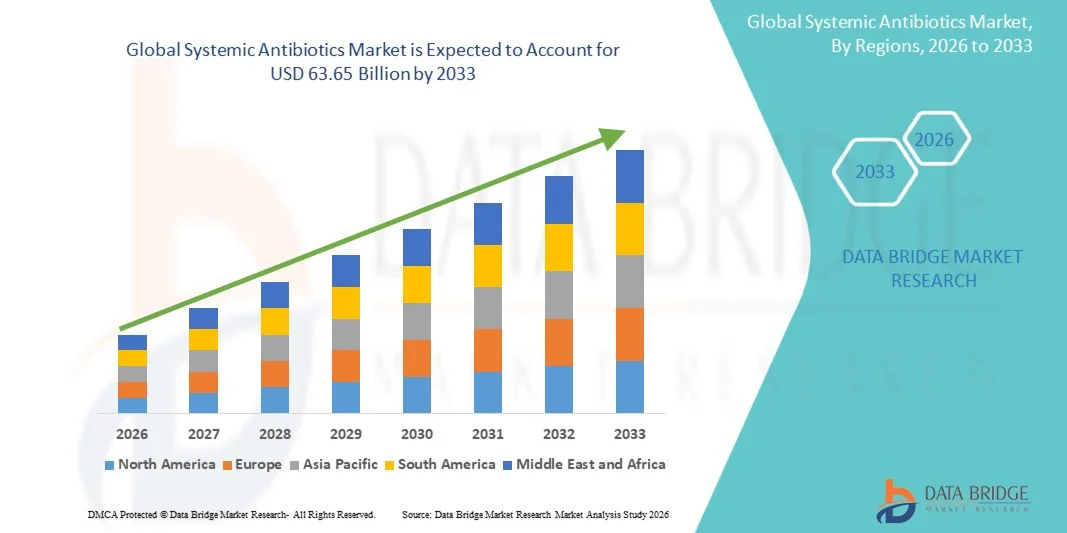
- The global systemic antibiotics market size was valued at USD 45.80 billion in 2025and is expected to reach USD 63.65 billion by 2033, at a CAGR of 4.2% during the forecast period
- The market growth is largely fueled by the increasing prevalence of infectious diseases and the continuous need for effective antibacterial therapies, leading to sustained demand across both hospital and outpatient settings
- Furthermore, rising concerns over antimicrobial resistance and the growing emphasis on the development of novel and combination antibiotic therapies are establishing systemic antibiotics as a critical component of modern healthcare. These converging factors are accelerating the adoption of advanced antibiotic solutions, thereby significantly boosting the industry's growth
Systemic Antibiotics Market Analysis
- Systemic antibiotics, used to treat bacterial infections throughout the body via oral or injectable administration, remain essential components of modern healthcare across hospital, outpatient, and community settings due to their broad therapeutic applicability and life-saving potential in managing infectious diseases
- The escalating demand for systemic antibiotics is primarily fueled by the rising global burden of infectious diseases, increasing incidence of hospital-acquired infections, and growing need for effective treatment options amid the spread of antimicrobial resistance
- North America dominated the systemic antibiotics market with the largest revenue share of 38.6% in 2025, characterized by advanced healthcare infrastructure, high antibiotic consumption, and strong presence of major pharmaceutical companies, with the U.S. witnessing sustained demand driven by ongoing infection control measures and development of novel antibiotic therapies
- Asia-Pacific is expected to be the fastest growing region in the systemic antibiotics market during the forecast period due to improving healthcare access, increasing population base, and rising awareness regarding infectious disease treatment
- Beta Lactam & Beta Lactamase Inhibitors segment dominated the systemic antibiotics market with a market share of 46.8% in 2025, driven by their broad-spectrum efficacy, established clinical use, and widespread availability as first-line treatment options
Report Scope and Systemic Antibiotics Market Segmentation
|
Attributes |
Systemic Antibiotics Key Market Insights |
|
Segments Covered |
|
|
Countries Covered |
North America · U.S. · Canada · Mexico Europe · Germany · France · U.K. · Netherlands · Switzerland · Belgium · Russia · Italy · Spain · Turkey · Rest of Europe Asia-Pacific · China · Japan · India · South Korea · Singapore · Malaysia · Australia · Thailand · Indonesia · Philippines · Rest of Asia-Pacific Middle East and Africa · Saudi Arabia · U.A.E. · South Africa · Egypt · Israel · Rest of Middle East and Africa South America · Brazil · Argentina · Rest of South America |
|
Key Market Players |
|
|
Market Opportunities |
· Development of novel antibiotics and combination therapies targeting multidrug-resistant pathogens · Expansion in emerging markets through improved healthcare infrastructure and increased access to affordable generic antibiotics |
|
Value Added Data Infosets |
In addition to the insights on market scenarios such as market value, growth rate, segmentation, geographical coverage, and major players, the market reports curated by the Data Bridge Market Research also include in-depth expert analysis, patient epidemiology, pipeline analysis, pricing analysis, and regulatory framework |
Systemic Antibiotics Market Trends
“Rising Focus on Novel Antibiotics and Antimicrobial Resistance (AMR) Mitigation”
- A significant and accelerating trend in the global systemic antibiotics market is the increasing focus on the development of novel antibiotics and combination therapies to combat antimicrobial resistance (AMR), which is significantly enhancing treatment effectiveness and clinical outcomes across healthcare settings
- For instance, newer antibiotic combinations such as ceftazidime-avibactam and meropenem-vaborbactam are being adopted to treat resistant bacterial infections, improving therapeutic success rates in critical care environments
- The integration of advanced drug discovery technologies, including AI-driven research and genomic analysis, enables the identification of new antibacterial targets and enhances the efficiency of antibiotic development pipelines. For instance, some pharmaceutical companies are leveraging AI platforms to predict bacterial resistance patterns and optimize drug formulations. Furthermore, combination therapies offer improved efficacy by targeting multiple bacterial mechanisms simultaneously, reducing the likelihood of resistance development
- The growing emphasis on antimicrobial stewardship programs and surveillance systems facilitates optimized antibiotic usage and supports the development of targeted therapies. Through coordinated healthcare policies, institutions can monitor antibiotic consumption and resistance trends, creating a more controlled and effective treatment environment
- This trend towards more targeted, effective, and resistance-aware antibiotic therapies is fundamentally reshaping treatment protocols for infectious diseases. Consequently, companies such as Pfizer Inc. and Merck & Co., Inc. are developing advanced systemic antibiotics with enhanced efficacy against resistant pathogens and improved safety profiles
- The demand for systemic antibiotics with improved resistance profiles and broader efficacy is growing rapidly across both hospital and community settings, as healthcare providers increasingly prioritize effective infection management and patient safety
- The rising adoption of rapid diagnostic technologies is enabling more precise and timely antibiotic selection, supporting personalized treatment approaches and reducing unnecessary antibiotic usage
Systemic Antibiotics Market Dynamics
Driver
“Growing Need Due to Rising Infectious Disease Burden and Hospital-Acquired Infections”
- The increasing prevalence of infectious diseases worldwide, coupled with the rising incidence of hospital-acquired infections (HAIs), is a significant driver for the heightened demand for systemic antibiotics
- For instance, in March 2025, GSK plc announced advancements in its antibiotic pipeline targeting drug-resistant pathogens, aiming to address critical gaps in infectious disease treatment. Such strategies by key companies are expected to drive the systemic antibiotics market growth in the forecast period
- As healthcare systems face growing challenges from bacterial infections and resistance patterns, systemic antibiotics offer essential treatment options with broad-spectrum coverage and proven clinical efficacy, making them indispensable in modern medicine
- Furthermore, the increasing number of surgical procedures and immunocompromised patient populations are driving the demand for effective antibiotic therapies, ensuring infection prevention and management across healthcare facilities
- The availability of both branded and generic antibiotic options, along with their widespread use in primary and tertiary care settings, are key factors propelling the adoption of systemic antibiotics globally. The expansion of healthcare infrastructure and improved access to medicines further contribute to market growth
- The growing aging population, which is more susceptible to infections due to weakened immune systems, is further increasing the demand for systemic antibiotic treatments worldwide
- Increasing government initiatives and funding programs aimed at combating infectious diseases are supporting the availability and accessibility of antibiotics, thereby driving market expansion
Restraint/Challenge
“Antimicrobial Resistance and Stringent Regulatory Requirements”
- Concerns surrounding the rapid emergence of antimicrobial resistance (AMR), along with stringent regulatory requirements for antibiotic approval, pose a significant challenge to broader market growth. As bacteria evolve resistance mechanisms, the effectiveness of existing antibiotics is reduced, raising concerns among healthcare providers regarding long-term treatment efficacy
- For instance, global health authorities have reported increasing resistance to commonly used antibiotics, leading to limited treatment options for certain infections and complicating clinical decision-making
- Addressing these challenges through the development of novel antibiotics, improved diagnostic tools, and stronger regulatory incentives is crucial for sustaining market growth. Companies such as Novartis AG and Johnson & Johnson emphasize research into innovative therapies and resistance mitigation strategies. In addition, the high cost and lengthy timelines associated with antibiotic development can act as a barrier for pharmaceutical companies, discouraging investment in this segment
- While regulatory frameworks aim to ensure safety and efficacy, the complexity of approval processes and lower return on investment compared to chronic disease drugs can hinder innovation in the antibiotics space
- Overcoming these challenges through global collaboration, financial incentives for antibiotic R&D, and enhanced stewardship programs will be vital for ensuring the continued effectiveness and availability of systemic antibiotics
- The widespread misuse and overuse of antibiotics in both human healthcare and agriculture further accelerate resistance development, limiting the long-term effectiveness of existing therapies
- Limited profitability and lower commercial incentives compared to other therapeutic areas discourage pharmaceutical companies from investing heavily in antibiotic research and development
Systemic Antibiotics Market Scope
The market is segmented on the basis of drug class, indication, end-users, and distribution channel.
- By Drug Class
On the basis of drug class, the systemic antibiotics market is segmented into beta lactam & beta lactamase inhibitors, quinolone, macrolide, and others. The beta lactam & beta lactamase inhibitors segment dominated the market with the largest market revenue share of 46.8% in 2025, driven by their broad-spectrum efficacy and widespread use as first-line therapies for a variety of bacterial infections. These antibiotics are extensively prescribed in both hospital and outpatient settings due to their proven safety profiles and effectiveness against gram-positive and gram-negative bacteria. Their continued dominance is supported by the availability of numerous generic formulations, ensuring affordability and accessibility across developed and developing regions. In addition, the development of combination drugs to overcome resistance has strengthened their clinical relevance. Physicians often prefer these antibiotics due to their established treatment guidelines and high success rates in managing infections. The strong presence of this class in essential medicines lists globally further reinforces its leading market position.
The quinolone segment is anticipated to witness the fastest growth rate from 2026 to 2033, fueled by their high potency, excellent tissue penetration, and effectiveness in treating a wide range of infections. Quinolones are increasingly being adopted for respiratory, urinary tract, and gastrointestinal infections due to their convenient dosing and broad-spectrum coverage. Their growing use in outpatient settings supports faster recovery and reduced hospital stays. Advancements in formulation and improved safety profiles are also contributing to their rising adoption. Furthermore, increasing resistance to traditional antibiotics is encouraging the shift toward quinolone-based therapies. The demand is particularly strong in emerging markets where infectious disease burden remains high. These factors collectively position quinolones as a rapidly expanding segment in the systemic antibiotics market.
- By Indication
On the basis of indication, the systemic antibiotics market is segmented into urinary tract infection, intra-abdominal infections, blood stream infections, Clostridium difficile infections, and others. The urinary tract infection segment dominated the market with the largest revenue share in 2025, driven by the high global prevalence of UTIs and the frequent need for antibiotic treatment. UTIs are among the most common bacterial infections, particularly affecting women and elderly populations, leading to consistent demand for systemic antibiotics. The availability of well-established treatment protocols and a wide range of effective antibiotic options further supports this segment’s dominance. Increasing recurrence rates of UTIs also contribute to repeated antibiotic usage. In addition, rising awareness and improved diagnostic capabilities are leading to early detection and treatment. The growing aging population further amplifies the demand for UTI-related treatments. These factors ensure the continued leadership of this segment in the market.
The blood stream infections segment is expected to witness the fastest growth rate from 2026 to 2033, driven by the increasing incidence of sepsis and severe infections requiring immediate antibiotic intervention. Bloodstream infections demand rapid and effective systemic antibiotic treatment, often in hospital and intensive care settings. The rising number of surgical procedures and immunocompromised patients is contributing to the growing prevalence of such infections. Advances in diagnostic technologies are enabling quicker identification, thereby increasing timely antibiotic usage. In addition, the development of advanced broad-spectrum antibiotics is supporting better clinical outcomes. Healthcare systems are increasingly prioritizing early treatment of bloodstream infections to reduce mortality rates. This growing clinical focus is expected to drive significant growth in this segment.
- By End-Users
On the basis of end-users, the systemic antibiotics market is segmented into hospitals, homecare, specialty clinics, and others. The hospitals segment dominated the market with the largest revenue share in 2025, driven by the high volume of inpatient treatments and critical care cases requiring systemic antibiotic administration. Hospitals serve as primary centers for managing severe infections, surgical procedures, and emergency care, all of which necessitate antibiotic use. The presence of advanced diagnostic and treatment facilities further supports accurate and timely antibiotic administration. In addition, the increasing incidence of hospital-acquired infections contributes significantly to antibiotic demand in this setting. Hospitals also play a key role in administering intravenous antibiotics for complex cases. The availability of skilled healthcare professionals ensures appropriate antibiotic usage. These factors collectively reinforce the dominance of hospitals in the market.
The homecare segment is anticipated to witness the fastest growth rate from 2026 to 2033, fueled by the increasing preference for outpatient treatment and cost-effective healthcare solutions. Home-based antibiotic therapy is gaining popularity, particularly for chronic infections and post-hospitalization care. Technological advancements such as portable infusion devices are enabling safe and convenient antibiotic administration at home. This shift reduces hospital stays and lowers healthcare costs for patients. The growing aging population and rising incidence of chronic diseases further support this trend. In addition, increased patient awareness and acceptance of homecare services are contributing to segment growth. These factors position homecare as a rapidly expanding end-user segment.
- By Distribution Channel
On the basis of distribution channel, the systemic antibiotics market is segmented into hospital pharmacy, online pharmacy, and retail pharmacy. The hospital pharmacy segment dominated the market with the largest revenue share in 2025, driven by the high demand for antibiotics in inpatient and emergency care settings. Hospital pharmacies ensure the availability of a wide range of antibiotics required for critical and acute treatments. They play a crucial role in managing drug inventory and ensuring timely access to essential medications. The administration of intravenous antibiotics further supports the dominance of this channel. In addition, hospital pharmacies are integral to antimicrobial stewardship programs, ensuring appropriate usage. The presence of trained pharmacists enhances treatment accuracy and patient safety. These factors collectively strengthen the position of hospital pharmacies in the market.
The online pharmacy segment is expected to witness the fastest growth rate from 2026 to 2033, driven by the increasing adoption of digital healthcare platforms and e-commerce solutions. Online pharmacies offer convenience, easy accessibility, and home delivery services, making them an attractive option for patients. The growing penetration of smartphones and internet connectivity is further supporting this trend. In addition, competitive pricing and availability of discounts are encouraging consumers to shift toward online purchasing. Regulatory improvements in digital healthcare are also facilitating the growth of this segment. The COVID-19 pandemic accelerated the adoption of online pharmacies, a trend that continues to persist. These factors are expected to drive strong growth in the online pharmacy segment.
Systemic Antibiotics Market Regional Analysis
- North America dominated the systemic antibiotics market with the largest revenue share of 38.6% in 2025, characterized by advanced healthcare infrastructure, high antibiotic consumption, and strong presence of major pharmaceutical companies
- Healthcare providers in the region highly prioritize effective infection management, access to advanced antibiotic therapies, and adherence to antimicrobial stewardship programs to ensure optimal treatment outcomes
- This widespread utilization is further supported by high healthcare expenditure, a well-established regulatory framework, and increasing investment in research and development for novel antibiotics, establishing systemic antibiotics as a critical component in both hospital and outpatient care settings
U.S. Systemic Antibiotics Market Insight
The U.S. systemic antibiotics market captured the largest revenue share of 80% in 2025 within North America, fueled by the high burden of infectious diseases and the presence of advanced healthcare infrastructure. Healthcare providers are increasingly prioritizing effective infection management through the use of broad-spectrum and targeted antibiotic therapies. The growing incidence of hospital-acquired infections, combined with strong demand for novel antibiotics and combination therapies, further propels the market. Moreover, the increasing focus on antimicrobial stewardship programs and regulatory support for new drug development is significantly contributing to the market's expansion.
Europe Systemic Antibiotics Market Insight
The Europe systemic antibiotics market is projected to expand at a substantial CAGR throughout the forecast period, primarily driven by stringent regulatory frameworks and the rising need to combat antimicrobial resistance. The increase in aging population, coupled with the demand for effective infection control, is fostering the adoption of systemic antibiotics. European healthcare systems are also focused on optimizing antibiotic usage through stewardship initiatives. The region is experiencing steady growth across hospital and outpatient settings, with antibiotics being widely utilized in both acute and chronic infection management scenarios.
U.K. Systemic Antibiotics Market Insight
The U.K. systemic antibiotics market is anticipated to grow at a noteworthy CAGR during the forecast period, driven by the increasing prevalence of bacterial infections and a strong emphasis on public health safety. In addition, concerns regarding antimicrobial resistance are encouraging healthcare providers to adopt targeted and appropriate antibiotic therapies. The UK’s well-established healthcare system, alongside its strong regulatory and research environment, is expected to continue to stimulate market growth.
Germany Systemic Antibiotics Market Insight
The Germany systemic antibiotics market is expected to expand at a considerable CAGR during the forecast period, fueled by increasing awareness of infection control and the demand for advanced therapeutic solutions. Germany’s well-developed healthcare infrastructure, combined with its emphasis on pharmaceutical innovation and quality standards, promotes the adoption of systemic antibiotics. The integration of advanced diagnostics with antibiotic therapies is also becoming increasingly prevalent, with a strong preference for effective and resistance-aware treatment approaches aligning with local healthcare priorities.
Asia-Pacific Systemic Antibiotics Market Insight
The Asia-Pacific systemic antibiotics market is poised to grow at the fastest CAGR of 5.1% during the forecast period of 2026 to 2033, driven by increasing population, rising healthcare expenditure, and growing prevalence of infectious diseases in countries such as China, Japan, and India. The region's improving healthcare infrastructure, supported by government initiatives to expand access to essential medicines, is driving the adoption of systemic antibiotics. Furthermore, as APAC emerges as a major producer of generic antibiotics, the affordability and accessibility of treatments are expanding to a wider patient base.
Japan Systemic Antibiotics Market Insight
The Japan systemic antibiotics market is gaining momentum due to the country’s advanced healthcare system, aging population, and demand for effective infection management. The Japanese market places a significant emphasis on safety and quality, and the adoption of systemic antibiotics is driven by the increasing need for treating age-related and hospital-acquired infections. The integration of advanced diagnostic tools with antibiotic therapies is fueling growth. Moreover, Japan's aging population is likely to spur demand for reliable and efficient infection treatment solutions in both hospital and community settings.
India Systemic Antibiotics Market Insight
The India systemic antibiotics market accounted for the largest market revenue share in Asia Pacific in 2025, attributed to the country's large population base, high burden of infectious diseases, and expanding healthcare access. India stands as one of the largest markets for generic antibiotics, and systemic antibiotics are widely used in hospitals, clinics, and rural healthcare settings. The push towards improving healthcare infrastructure and government initiatives to ensure medicine availability, alongside strong domestic pharmaceutical manufacturing, are key factors propelling the market in India.
Systemic Antibiotics Market Share
The Systemic Antibiotics industry is primarily led by well-established companies, including:
- Pfizer Inc. (U.S.)
- Merck & Co., Inc. (U.S.)
- GSK plc (U.K.)
- Sanofi (France)
- Bayer AG (Germany)
- Johnson & Johnson Services, Inc. (U.S.)
- Abbott (U.S.)
- Novartis AG (Switzerland)
- Bristol-Myers Squibb Company (U.S.)
- Eli Lilly and Company (U.S.)
- Astellas Pharma Inc. (Japan)
- F. Hoffmann-La Roche Ltd (Switzerland)
- Teva Pharmaceutical Industries Ltd. (Israel)
- Sun Pharmaceutical Industries Ltd. (India)
- Dr. Reddy’s Laboratories Ltd. (India)
- Aurobindo Pharma Limited (India)
- Hikma Pharmaceuticals PLC (U.K.)
- Cipla Limited (India)
- Lupin Limited (India)
- AbbVie Inc. (U.S.)
What are the Recent Developments in Global Systemic Antibiotics Market?
- In December 2025, new antibiotics such as zoliflodacin and gepotidacin gained regulatory attention and approvals for treating drug-resistant gonorrhoea, representing the first new treatments for the disease in decades. These therapies demonstrated high cure rates and effectiveness against resistant strains, marking a significant breakthrough in infectious disease management. This development signals a turning point in global efforts to combat antimicrobial resistance
- In December 2025, the U.S. FDA approved a domestically manufactured version of Augmentin XR under a new fast-track priority review program aimed at strengthening antibiotic supply chains. The approval was completed significantly faster than traditional timelines, supporting efforts to address antibiotic shortages and enhance national manufacturing capabilities. This initiative underscores increasing regulatory support for critical antibiotic availability
- In March 2025, GSK plc announced that the U.S. FDA approved its first-in-class antibiotic Blujepa (gepotidacin) for treating uncomplicated urinary tract infections. The drug introduces a novel mechanism targeting bacterial DNA replication and has shown effectiveness against antibiotic-resistant strains, marking a major advancement in combating antimicrobial resistance. This approval highlights the industry's focus on innovative therapies to address rising resistance challenges
- In February 2025, AbbVie and Pfizer Inc. received U.S. FDA approval for Emblaveo (aztreonam-avibactam) to treat complicated intra-abdominal infections, including those caused by drug-resistant bacteria. The therapy demonstrated strong clinical efficacy in late-stage trials and provides a new option for patients with limited treatment alternatives. This development reflects the growing need for advanced antibiotics targeting multidrug-resistant pathogens
- In April 2024, Basilea Pharmaceutica received U.S. FDA approval for its antibiotic Zevtera (ceftobiprole) for treating serious bacterial infections, including bloodstream infections and pneumonia. The drug is particularly effective against multidrug-resistant pathogens and expands treatment options in a market facing limited innovation. This approval highlights ongoing efforts to introduce advanced antibiotics addressing resistant infections
SKU-
Get online access to the report on the World's First Market Intelligence Cloud

- Interactive Data Analysis Dashboard
- Company Analysis Dashboard for high growth potential opportunities
- Research Analyst Access for customization & queries
- Competitor Analysis with Interactive dashboard
- Latest News, Updates & Trend analysis
- Harness the Power of Benchmark Analysis for Comprehensive Competitor Tracking
Research Methodology
Data collection and base year analysis are done using data collection modules with large sample sizes. The stage includes obtaining market information or related data through various sources and strategies. It includes examining and planning all the data acquired from the past in advance. It likewise envelops the examination of information inconsistencies seen across different information sources. The market data is analysed and estimated using market statistical and coherent models. Also, market share analysis and key trend analysis are the major success factors in the market report. To know more, please request an analyst call or drop down your inquiry.
The key research methodology used by DBMR research team is data triangulation which involves data mining, analysis of the impact of data variables on the market and primary (industry expert) validation. Data models include Vendor Positioning Grid, Market Time Line Analysis, Market Overview and Guide, Company Positioning Grid, Patent Analysis, Pricing Analysis, Company Market Share Analysis, Standards of Measurement, Global versus Regional and Vendor Share Analysis. To know more about the research methodology, drop in an inquiry to speak to our industry experts.
Customization Available
Data Bridge Market Research is a leader in advanced formative research. We take pride in servicing our existing and new customers with data and analysis that match and suits their goal. The report can be customized to include price trend analysis of target brands understanding the market for additional countries (ask for the list of countries), clinical trial results data, literature review, refurbished market and product base analysis. Market analysis of target competitors can be analyzed from technology-based analysis to market portfolio strategies. We can add as many competitors that you require data about in the format and data style you are looking for. Our team of analysts can also provide you data in crude raw excel files pivot tables (Fact book) or can assist you in creating presentations from the data sets available in the report.