Global Systemic Lupus Erythematosus Treatment Market
Market Size in USD Million
CAGR :
% 
 USD
949.20 Million
USD
1,699.18 Million
2025
2033
USD
949.20 Million
USD
1,699.18 Million
2025
2033
 Forecast Period Forecast Period |
2026 –2033 |
 Market Size (Base Year) Market Size (Base Year) |
USD 949.20 Million |
 Market Size (Forecast Year) Market Size (Forecast Year) |
USD 1,699.18 Million |
 CAGR CAGR |
% |
| Major Markets Players |
|
Systemic Lupus Erythematosus Market Size
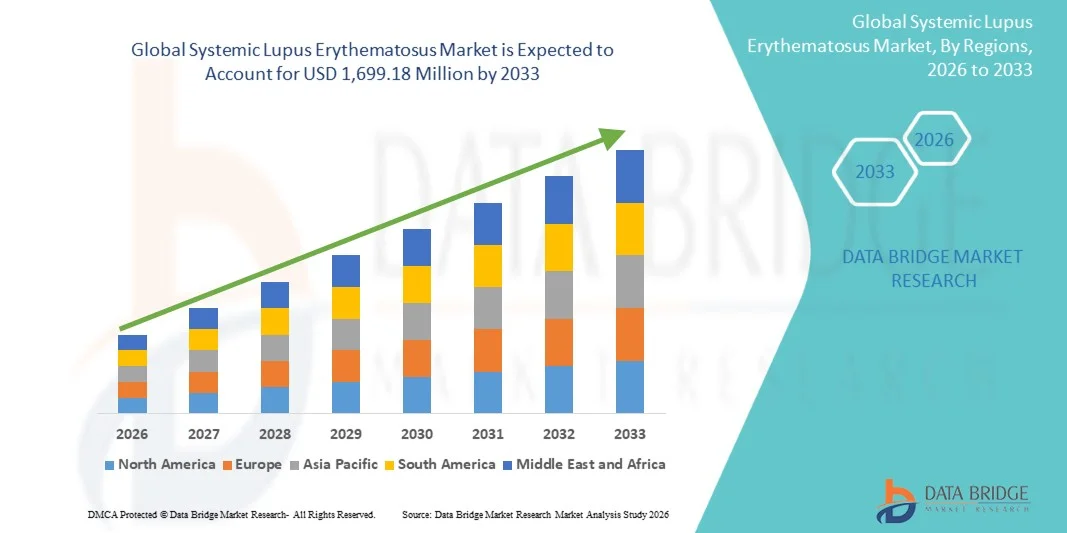
- The global systemic lupus erythematosus market size was valued at USD 949.20 million in 2025 and is expected to reach USD 1,699.18 million by 2033, at a CAGR of 7.55% during the forecast period
- The market growth is largely fueled by increasing awareness, early diagnosis, and advancements in targeted therapies and biologics, driving improved disease management and patient outcomes
- Furthermore, rising prevalence of autoimmune disorders, coupled with growing patient demand for effective and personalized treatment options, is positioning novel therapies as the preferred choice in clinical practice. These converging factors are accelerating the adoption of systemic lupus erythematosus treatments, thereby significantly boosting the industry's growth
Systemic Lupus Erythematosus Market Analysis
- Systemic lupus erythematosus treatments, encompassing biologics, immunosuppressants, and corticosteroids, are increasingly vital components of autoimmune disease management in both clinical and hospital settings due to their ability to control inflammation, prevent organ damage, and improve patient quality of life
- The escalating demand for systemic lupus erythematosus therapies is primarily fueled by rising disease prevalence, growing awareness among patients and healthcare providers, and an increasing preference for targeted and personalized treatment options that offer better efficacy with fewer side effects
- North America dominated the systemic lupus erythematosus market with the largest revenue share of 39.8% in 2025, characterized by advanced healthcare infrastructure, high healthcare expenditure, early adoption of biologics, and a strong presence of key pharmaceutical players, with the U.S. experiencing substantial growth in therapy uptake, particularly in newly diagnosed and refractory cases, driven by innovations from both established pharma companies and biotech startups focusing on monoclonal antibodies and targeted immunotherapies
- Asia-Pacific is expected to be the fastest growing region in the systemic lupus erythematosus market during the forecast period due to increasing disease awareness, expanding healthcare access, and rising disposable incomes enabling better treatment affordability
- Biologics segment dominated the systemic lupus erythematosus market with a market share of 41.8% in 2025, driven by their high efficacy, specificity, and growing preference as first- or second-line therapy in moderate to severe cases
Report Scope and Systemic Lupus Erythematosus Market Segmentation
|
Attributes |
Systemic Lupus Erythematosus Key Market Insights |
|
Segments Covered |
|
|
Countries Covered |
North America
Europe
Asia-Pacific
Middle East and Africa
South America
|
|
Key Market Players |
|
|
Market Opportunities |
|
|
Value Added Data Infosets |
In addition to the insights on market scenarios such as market value, growth rate, segmentation, geographical coverage, and major players, the market reports curated by the Data Bridge Market Research also include in-depth expert analysis, patient epidemiology, pipeline analysis, pricing analysis, and regulatory framework |
Systemic Lupus Erythematosus Market Trends
“Advancements Through Biologics and Targeted Therapies”
- A significant and accelerating trend in the global systemic lupus erythematosus market is the growing adoption of biologics and targeted therapies, which are improving disease management and reducing flares compared to conventional treatments
- For instance, belimumab and anifrolumab are increasingly prescribed to moderate-to-severe SLE patients, offering improved efficacy and safety profiles over traditional immunosuppressants
- Targeted therapies enable personalized treatment approaches by modulating specific immune pathways, reducing systemic side effects, and improving patient adherence. For instance, some emerging monoclonal antibodies focus on B-cell modulation to minimize organ damage and disease progression
- The integration of novel therapies with patient monitoring systems allows clinicians to track disease activity, medication response, and flare prediction, enhancing clinical decision-making and patient outcomes
- This trend towards more effective, tailored, and patient-centric therapies is fundamentally reshaping treatment expectations in SLE management. Consequently, pharmaceutical companies are developing next-generation biologics and combination therapies with improved safety, efficacy, and administration convenience
- The demand for innovative systemic lupus erythematosus therapies is growing rapidly across both developed and emerging markets, as patients and healthcare providers increasingly prioritize efficacy, safety, and personalized care
- Collaboration between pharmaceutical companies and research institutions is fostering the development of novel biomarkers and companion diagnostics, supporting more precise and individualized therapy selection
Systemic Lupus Erythematosus Market Dynamics
Driver
“Increasing Prevalence and Awareness of Autoimmune Disorders”
- The rising prevalence of systemic lupus erythematosus worldwide, coupled with growing awareness among healthcare providers and patients, is a significant driver for the heightened demand for advanced therapies
- For instance, in March 2025, GlaxoSmithKline announced initiatives to expand belimumab access programs targeting newly diagnosed and high-risk SLE patients in North America and Europe. Such strategies by key companies are expected to drive systemic lupus erythematosus market growth in the forecast period
- As more patients receive early diagnosis and timely treatment, therapies that reduce flares, prevent organ damage, and improve quality of life are increasingly preferred, boosting adoption
- Furthermore, rising investments in research and development of novel therapies, along with patient education programs, are making systemic lupus erythematosus treatment more effective and accessible
- The availability of patient support programs, reimbursement coverage, and telemedicine consultations further facilitates the adoption of advanced therapies, contributing to sustained market growth
- Increasing collaborations between pharmaceutical companies, healthcare providers, and patient advocacy groups are enhancing awareness campaigns and improving early diagnosis rates
- Expansion of healthcare infrastructure in emerging regions is enabling better access to systemic lupus erythematosus therapies, driving adoption in previously underserved markets
Restraint/Challenge
“High Treatment Costs and Regulatory Hurdles”
- Concerns surrounding the high cost of biologics and targeted therapies pose a significant challenge to broader market penetration, particularly in price-sensitive and emerging regions. As these therapies often require long-term administration, affordability remains a barrier for many patients
- For instance, high out-of-pocket expenses for monoclonal antibody treatments have limited access in regions with low healthcare coverage, making some patients rely on conventional immunosuppressants instead
- Regulatory hurdles and long approval timelines for novel therapies also slow market expansion, as companies must demonstrate rigorous safety and efficacy to secure global approvals. For instance, regulatory authorities in Asia-Pacific often require extensive local clinical data before approving biologics
- While biosimilars are gradually becoming available and reducing costs, the perception of higher prices for innovative therapies can still hinder adoption, especially among newly diagnosed or mild cases
- Overcoming these challenges through patient assistance programs, biosimilar adoption, and streamlined regulatory processes will be vital for sustained growth in the systemic lupus erythematosus market
- Limited awareness and education among patients in certain regions regarding advanced therapies can delay treatment initiation, reducing overall market uptake
- Variability in reimbursement policies and healthcare coverage across regions may restrict access to high-cost therapies, posing a continuous challenge to market expansion
Systemic Lupus Erythematosus Market Scope
The market is segmented on the basis of treatment type, diagnosis, dosage form, route of administration, symptoms, end-users, and distribution channel.
- By Treatment Type
On the basis of treatment type, the systemic lupus erythematosus market is segmented into antimalarial drugs, NSAIDs, cytotoxic and immunosuppressive drugs, DMARDs, monoclonal antibodies, anticoagulants, biologics, and others. The biologics segment dominated the market with the largest revenue share of 41.8% in 2025, driven by their high efficacy in controlling moderate-to-severe SLE symptoms and preventing organ damage. Biologics such as belimumab and anifrolumab are increasingly preferred for targeted immune modulation with reduced systemic toxicity. Strong adoption in developed regions and high patient awareness further support market dominance. Insurance coverage and reimbursement policies facilitate accessibility, reinforcing market share. The integration of biologics with digital patient monitoring systems also improves adherence and long-term outcomes. Ongoing clinical trials and new approvals for biologics continue to expand their patient base globally.
The monoclonal antibodies segment is expected to witness the fastest growth rate from 2026 to 2033, driven by increasing R&D activities and clinical acceptance. These therapies target specific immune pathways, offering improved efficacy for refractory or severe SLE cases. Personalized medicine and favorable reimbursement strategies are accelerating adoption. Monoclonal antibodies also reduce side effects compared to conventional immunosuppressants, improving patient adherence. The growth is fueled by rising patient awareness and expanding access in emerging markets. Biopharmaceutical companies are actively developing next-generation antibodies with better safety and administration convenience.
- By Diagnosis
On the basis of diagnosis, the market is segmented into blood tests, urinalysis, and chest X-ray. The blood tests segment dominated the market with the largest revenue share in 2025, as these tests are essential for detecting autoantibodies and monitoring disease activity. Blood tests such as ANA, anti-dsDNA, and complement levels guide therapy selection and early flare detection. Blood testing is minimally invasive, cost-effective, and widely adopted in hospitals and specialized clinics. Advanced multiplex testing enhances diagnostic accuracy and improves treatment planning. High adoption is observed in North America and Europe due to established healthcare infrastructure. Continuous innovations in biomarker testing further reinforce dominance.
The urinalysis segment is expected to witness the fastest growth rate from 2026 to 2033, driven by the rising prevalence of lupus nephritis. Early detection of kidney involvement is critical to prevent permanent damage and adjust immunosuppressive therapy. Technological advancements such as automated urinalysis and point-of-care devices are accelerating adoption. Growing awareness of renal complications among patients and clinicians supports market growth. Urinalysis is increasingly integrated into routine monitoring protocols, especially in emerging regions.
- By Dosage Form
On the basis of dosage form, the market is segmented into tablet, capsule, injection, and others. The injection segment dominated the market in 2025, primarily due to the growing use of biologics and monoclonal antibodies requiring parenteral administration. Injectable therapies provide precise dosing, improved bioavailability, and rapid therapeutic effect, especially in severe or refractory SLE. Hospitals and specialty clinics ensure safe administration and monitoring of infusion reactions. Patient-friendly devices such as auto-injectors enhance adherence and convenience. Strong physician preference for injectable therapies in hospital settings reinforces market leadership. The segment also benefits from new formulations that reduce injection frequency.
The tablet segment is expected to witness the fastest growth rate from 2026 to 2033, driven by continued demand for oral antimalarial, NSAID, and DMARD therapies. Oral forms offer convenience, ease of self-administration, and long-term adherence for mild-to-moderate SLE. Tablets are cost-effective and widely accessible, especially in outpatient and clinic settings. Growth is supported by increasing awareness and patient preference for non-invasive therapies. Pharmaceutical companies continue to innovate combination oral formulations for better efficacy. Expansion in emerging markets also supports faster growth for oral dosage forms.
- By Route of Administration
On the basis of route of administration, the market is segmented into oral, intravenous (IV), and subcutaneous. The intravenous segment dominated the market with the largest revenue share in 2025 due to the administration of biologics and monoclonal antibodies in controlled hospital settings. IV therapy ensures precise dosing, predictable pharmacokinetics, and close monitoring of adverse effects. It is particularly preferred for severe or organ-threatening SLE cases. Hospitals and specialized clinics provide the necessary infrastructure for safe IV administration. IV therapy also supports integration with treatment protocols and monitoring systems. The high adoption in North America and Europe further reinforces dominance.
The subcutaneous segment is expected to witness the fastest growth rate from 2026 to 2033, driven by the availability of self-administered biologics and monoclonal antibodies. Subcutaneous therapy allows home administration, reducing hospital visits and improving convenience. This route enhances patient adherence and satisfaction. Growing awareness about at-home care and telemedicine support contributes to rapid adoption. Pharmaceutical companies are developing auto-injectors and prefilled pens for safer subcutaneous delivery. Expansion in emerging markets with limited hospital access also supports subcutaneous growth.
- By Symptoms
On the basis of symptoms, the market is segmented into chest pain, fatigue, swollen lymph nodes, fever, general discomfort, uneasiness, hair loss, weight loss, mouth sores, sensitivity to sunlight, skin rash, and others. The fatigue segment dominated the market in 2025, as fatigue is one of the most common and persistent symptoms affecting quality of life. Fatigue drives patient demand for effective therapies to manage inflammation and autoimmune activity. Clinicians prioritize treatments that reduce fatigue along with other SLE manifestations. Awareness programs and patient support initiatives emphasize fatigue management. High adoption is observed in developed regions with better access to advanced therapies. Fatigue-focused treatment strategies continue to grow with new therapy launches.
The skin rash segment is expected to witness the fastest growth rate from 2026 to 2033 due to the increasing prevalence of cutaneous lupus manifestations. Early treatment of skin symptoms is critical to prevent disease progression and improve patient confidence. Topical and systemic therapies targeting skin involvement are gaining rapid adoption. Rising awareness among patients and dermatologists accelerates demand. Technological innovations in dermatology diagnostics enhance early identification and treatment of cutaneous lupus. Emerging markets with increasing SLE awareness also contribute to faster growth.
- By End-Users
On the basis of end-users, the market is segmented into clinics, hospitals, and others. The hospital segment dominated the market with the largest revenue share in 2025 due to the administration of complex therapies such as biologics, monoclonal antibodies, and IV treatments. Hospitals offer comprehensive facilities, patient monitoring, and management of severe SLE cases. High adoption is observed in tertiary care centers and specialized autoimmune clinics. Hospitals also provide controlled storage, dosing, and administration for expensive therapies. The segment benefits from strong infrastructure and trained staff. Integration with digital patient monitoring systems further supports dominance.
The clinics segment is expected to witness the fastest growth rate from 2026 to 2033, driven by increasing outpatient diagnosis, early intervention, and availability of oral and subcutaneous therapies. Clinics are expanding their capacity for comprehensive SLE care, particularly in urban and semi-urban regions. Convenient access, lower costs, and reduced hospital dependence accelerate clinic adoption. Telemedicine and remote patient monitoring further enhance clinic-based therapy. Patient education programs and community outreach strengthen growth in clinic settings. Emerging regions with limited hospital access see faster uptake in clinics.
- By Distribution Channel
On the basis of distribution channel, the market is segmented into hospital pharmacy, retail pharmacy, and online pharmacy. The hospital pharmacy segment dominated the market with the largest revenue share in 2025, as high-cost biologics and monoclonal antibodies are typically dispensed directly under clinical supervision. Hospitals ensure proper storage, dosing accuracy, and patient monitoring, which is critical for advanced therapies. Strong integration with treatment protocols supports hospital pharmacy dominance. Adoption is highest in developed regions with established healthcare infrastructure. Hospitals provide patient counseling and adherence support for complex treatments. Partnerships between pharma companies and hospital pharmacies further reinforce market share.
The online pharmacy segment is expected to witness the fastest growth rate from 2026 to 2033, driven by increasing digitalization, e-commerce penetration, and patient preference for home delivery of oral and subcutaneous therapies. Online platforms enhance accessibility in remote and underserved regions. Convenience, subscription models, and teleconsultation support contribute to rapid adoption. Growing awareness of online pharmacy reliability and safety is accelerating uptake. Integration with digital health records and home monitoring devices boosts patient adherence. Emerging markets with high internet penetration are key contributors to online pharmacy growth.
Systemic Lupus Erythematosus Market Regional Analysis
- North America dominated the systemic lupus erythematosus market with the largest revenue share of 39.8% in 2025, characterized by advanced healthcare infrastructure, high healthcare expenditure, early adoption of biologics, and a strong presence of key pharmaceutical players
- Patients and healthcare providers in the region highly value the efficacy, safety, and personalized treatment options offered by modern SLE therapies, along with the availability of comprehensive monitoring and support programs
- This widespread adoption is further supported by well-established healthcare infrastructure, high healthcare expenditure, strong insurance coverage, and significant investment in research and development, establishing North America as the leading market for systemic lupus erythematosus treatment
U.S. Systemic Lupus Erythematosus Market Insight
The U.S. systemic lupus erythematosus market captured the largest revenue share in 2025 within North America, fueled by early diagnosis, high awareness, and widespread adoption of advanced therapies such as biologics and monoclonal antibodies. Patients and healthcare providers increasingly prioritize effective, targeted, and personalized treatment options to manage moderate-to-severe SLE and prevent organ damage. The growing availability of patient support programs, insurance coverage, and specialized autoimmune clinics further propels market growth. Moreover, the integration of digital health tools, telemedicine, and remote disease monitoring is enhancing treatment adherence and improving outcomes. Continuous R&D investment by key pharmaceutical companies is expanding therapy options and driving market expansion.
Europe Systemic Lupus Erythematosus Market Insight
The Europe systemic lupus erythematosus market is projected to expand at a substantial CAGR throughout the forecast period, driven by increasing awareness of autoimmune diseases and rising adoption of advanced therapies. Stringent healthcare standards and reimbursement policies support the uptake of biologics and monoclonal antibodies. The increase in urbanization, coupled with the rising prevalence of SLE, is fostering market growth. European patients also value improved quality of life through early intervention and effective disease management. The market is witnessing significant growth across hospitals and specialty clinics, with therapies being integrated into both established and new healthcare programs. Expansion in telemedicine and digital monitoring is further enhancing accessibility and adherence.
U.K. Systemic Lupus Erythematosus Market Insight
The U.K. systemic lupus erythematosus market is anticipated to grow at a noteworthy CAGR during the forecast period, driven by increasing disease awareness and demand for advanced treatment options. Rising concerns about long-term organ damage and chronic symptoms are encouraging patients and clinicians to adopt biologics and monoclonal antibodies. In addition, the U.K.’s strong healthcare infrastructure, widespread insurance coverage, and access to specialist clinics support market expansion. Digital patient monitoring, telehealth consultations, and home-based therapy options are contributing to convenience and adherence. Robust pharmaceutical R&D and clinical trial activity in the region are also driving therapy innovation.
Germany Systemic Lupus Erythematosus Market Insight
The Germany systemic lupus erythematosus market is expected to expand at a considerable CAGR during the forecast period, fueled by increasing awareness of autoimmune diseases and the growing adoption of advanced therapies. Germany’s well-developed healthcare infrastructure, emphasis on clinical research, and patient-centric care promote the adoption of biologics and monoclonal antibodies. Hospitals and specialty clinics provide comprehensive monitoring for severe and refractory cases. The integration of digital tools for disease management is gaining traction. Growing patient awareness of early diagnosis and treatment benefits is boosting market penetration. Sustainability and precision medicine initiatives are further strengthening therapy adoption in the country.
Asia-Pacific Systemic Lupus Erythematosus Market Insight
The Asia-Pacific systemic lupus erythematosus market is poised to grow at the fastest CAGR during the forecast period, driven by rising disease awareness, expanding healthcare infrastructure, and increasing adoption of biologics and monoclonal antibodies. Countries such as China, Japan, and India are witnessing growth in specialized autoimmune clinics and hospital-based treatment programs. Government initiatives promoting digital health and patient monitoring support therapy uptake. The growing middle class and rising disposable incomes are improving access to advanced therapies. Increasing R&D collaborations and clinical trials in the region are accelerating the introduction of new therapies. Telemedicine and e-health platforms further enhance patient adherence and accessibility.
Japan Systemic Lupus Erythematosus Market Insight
The Japan systemic lupus erythematosus market is gaining momentum due to high disease awareness, advanced healthcare infrastructure, and patient preference for effective and convenient treatment options. Adoption of biologics and monoclonal antibodies is increasing, particularly in hospital and outpatient settings. The integration of telemedicine and remote patient monitoring supports adherence and long-term disease management. An aging population is driving demand for easy-to-use and safe therapies. Strong clinical research activity and government support for autoimmune disease management further accelerate growth. The emphasis on early diagnosis and targeted therapy adoption is shaping the market landscape.
India Systemic Lupus Erythematosus Market Insight
The India systemic lupus erythematosus market accounted for the largest revenue share in Asia-Pacific in 2025, attributed to increasing awareness of autoimmune disorders, rapid urbanization, and improving healthcare access. Rising middle-class population and disposable incomes are enabling better access to advanced therapies such as biologics and monoclonal antibodies. Hospitals and specialty clinics are expanding SLE care services. The push towards digital health platforms and telemedicine facilitates patient monitoring and therapy adherence. Availability of affordable treatment options and domestic pharmaceutical development support market growth. Increasing initiatives for early diagnosis and disease management programs are further driving adoption across the country.
Systemic Lupus Erythematosus Market Share
The Systemic Lupus Erythematosus industry is primarily led by well-established companies, including:
- GSK plc (U.K.)
- AstraZeneca (U.K.)
- Pfizer Inc. (U.S.)
- F. Hoffmann‑La Roche Ltd (Switzerland)
- Bristol‑Myers Squibb Company (U.S.)
- Eli Lilly and Company (U.S.)
- Novartis AG (Switzerland)
- Merck & Co., Inc. (U.S.)
- Sanofi (France)
- AbbVie Inc. (U.S.)
- Johnson & Johnson Services, Inc. (U.S.)
- UCB S.A. (Belgium)
- Amgen Inc. (U.S.)
- Biogen Inc. (U.S.)
- ImmuPharma PLC (U.K.)
- Horizon Therapeutics plc (Ireland)
- Anthera Pharmaceuticals, Inc. (U.S.)
- Xencor, Inc. (U.S.)
- RemeGen Co., Ltd. (China)
- I‑Mab Biopharma (China)
What are the Recent Developments in Global Systemic Lupus Erythematosus Market?
- In December 2025, researchers reported that telitacicept demonstrated promising results in a Phase 3 clinical trial for systemic lupus erythematosus, showing statistically significant reductions in disease activity compared with placebo and offering hope for a new biologic treatment that targets both BLyS and APRIL immune pathways a strategy that could expand effective therapy choices for SLE patients
- In October 2025, the U.S. Food and Drug Administration (FDA) approved Genentech’s Gazyva® (obinutuzumab) for the treatment of active lupus nephritis in adult patients, marking the first anti‑CD20 monoclonal antibody approved for this serious SLE complication and expanding treatment options for patients at risk of kidney damage
- In October 2025, results from a Phase 3 telitacicept study for systemic lupus erythematosus were published in The New England Journal of Medicine, showing statistically significant improvement in disease activity versus placebo and validating its dual BAFF/APRIL inhibitory mechanism as a promising SLE treatment strategy
- In March 2025, the FDA accepted Roche’s supplemental Biologics License Application (sBLA) for Gazyva/Gazyvaro® (obinutuzumab) for lupus nephritis, based on positive Phase III REGENCY results demonstrating improved renal outcomes, with regulatory decisions
- In April 2023, a Phase 1/2 clinical trial of CAR‑T cell therapy for people with moderate to severe or treatment‑resistant SLE was launched in China, representing a novel cell‑based immunotherapy approach aimed at refractory lupus patients
SKU-
Get online access to the report on the World's First Market Intelligence Cloud

- Interactive Data Analysis Dashboard
- Company Analysis Dashboard for high growth potential opportunities
- Research Analyst Access for customization & queries
- Competitor Analysis with Interactive dashboard
- Latest News, Updates & Trend analysis
- Harness the Power of Benchmark Analysis for Comprehensive Competitor Tracking
Research Methodology
Data collection and base year analysis are done using data collection modules with large sample sizes. The stage includes obtaining market information or related data through various sources and strategies. It includes examining and planning all the data acquired from the past in advance. It likewise envelops the examination of information inconsistencies seen across different information sources. The market data is analysed and estimated using market statistical and coherent models. Also, market share analysis and key trend analysis are the major success factors in the market report. To know more, please request an analyst call or drop down your inquiry.
The key research methodology used by DBMR research team is data triangulation which involves data mining, analysis of the impact of data variables on the market and primary (industry expert) validation. Data models include Vendor Positioning Grid, Market Time Line Analysis, Market Overview and Guide, Company Positioning Grid, Patent Analysis, Pricing Analysis, Company Market Share Analysis, Standards of Measurement, Global versus Regional and Vendor Share Analysis. To know more about the research methodology, drop in an inquiry to speak to our industry experts.
Customization Available
Data Bridge Market Research is a leader in advanced formative research. We take pride in servicing our existing and new customers with data and analysis that match and suits their goal. The report can be customized to include price trend analysis of target brands understanding the market for additional countries (ask for the list of countries), clinical trial results data, literature review, refurbished market and product base analysis. Market analysis of target competitors can be analyzed from technology-based analysis to market portfolio strategies. We can add as many competitors that you require data about in the format and data style you are looking for. Our team of analysts can also provide you data in crude raw excel files pivot tables (Fact book) or can assist you in creating presentations from the data sets available in the report.