


Tea Bags Market Size
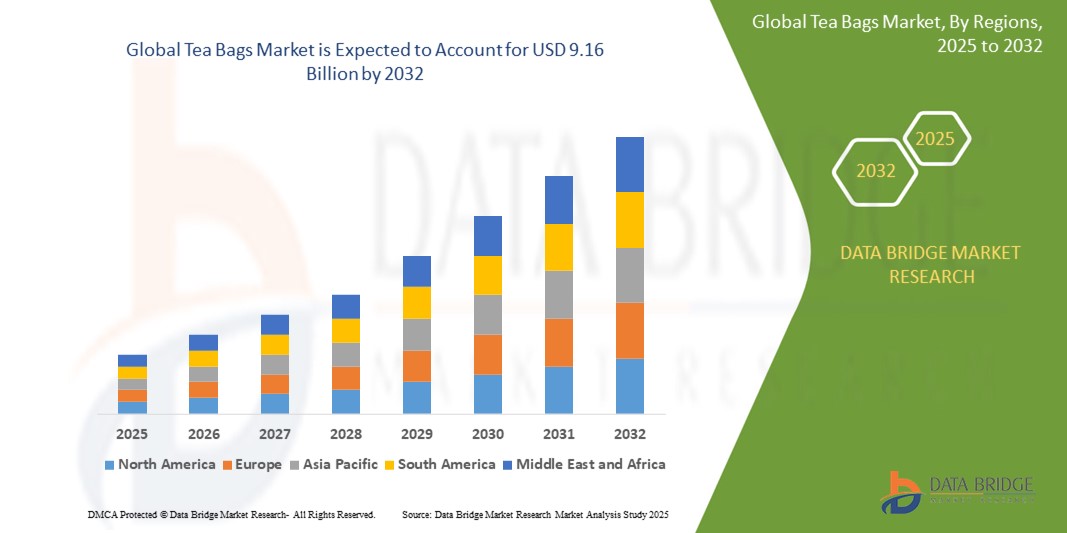
- The global tea bags market size was valued at USD 5.29 billion in 2024 and is expected to reach USD 9.16 billion by 2032, at a CAGR of 7.1% during the forecast period
- The market growth is largely driven by increasing consumer preference for convenient and ready-to-use tea products, alongside growing awareness about the health benefits of tea consumption globally
- Furthermore, rising disposable incomes, expanding retail channels, and innovations in packaging technology are enhancing product appeal and availability, thereby fueling market expansion. The increasing adoption of flavored and specialty tea bags is also contributing to the diversification and growth of the market
Tea Bags Market Analysis
- Tea bags are a widely preferred method of tea consumption worldwide, valued for their convenience, quick brewing time, and consistent flavor, making them popular in both residential and commercial settings
- The growing demand for tea bags is driven by increasing consumer awareness of the health benefits of tea, rising preference for natural and organic beverages, and expanding retail availability across various regions
- Asia-Pacific dominates the global tea bags market with the largest revenue share, estimated around 45% in 2024, supported by a strong tea culture, large population base, and increasing disposable incomes, with China and India as key contributors
- North America is witnessing notable growth in specialty and flavored tea bags, driven by innovations in packaging that enhance freshness, convenience, and eco-friendliness, alongside increasing health consciousness among consumers
- The Black Tea Bags segment dominates the global tea bags market with approximately 50% market share, driven by its widespread popularity and strong consumer preference across major regions such as Asia-Pacific, Europe, and North America
Report Scope and Tea Bags Market Segmentation
|
Attributes |
Tea Bags Key Market Insights |
|
Segments Covered |
|
|
Countries Covered |
North America
Europe
Asia-Pacific
Middle East and Africa
South America
|
|
Key Market Players |
|
|
Market Opportunities |
|
|
Value Added Data Infosets |
In addition to the insights on market scenarios such as market value, growth rate, segmentation, geographical coverage, and major players, the market reports curated by the Data Bridge Market Research also include in-depth expert analysis, pricing analysis, brand share analysis, consumer survey, demography analysis, supply chain analysis, value chain analysis, raw material/consumables overview, vendor selection criteria, PESTLE Analysis, Porter Analysis, and regulatory framework. |
Tea Bags Market Trends
“Enhanced Convenience Through Sustainable and Smart Packaging”
- A significant and accelerating trend in the global tea bags market is the adoption of sustainable packaging materials combined with smart packaging technologies, enhancing convenience and environmental friendliness
- For instances, brands are increasingly using biodegradable tea bags made from plant-based fibers, which reduce environmental impact while maintaining product quality and freshness. In addition, some companies are introducing QR codes and NFC tags on packaging to provide consumers with detailed product information, brewing instructions, and origin stories
- Smart packaging innovations enable consumers to monitor freshness and shelf life, ensuring optimal flavor and quality. For instance, some advanced packaging incorporates freshness indicators that change color based on the tea’s exposure to air or moisture
- Integration of digital platforms with tea products facilitates personalized consumer experiences, allowing customers to reorder their favorite teas via apps or access wellness tips related to different tea varieties
- This trend towards sustainable, informative, and tech-enhanced packaging is reshaping consumer expectations, pushing companies such as Lipton and Tetley to innovate with eco-friendly materials and smart packaging features that increase user engagement
- The demand for tea bags that combine convenience, sustainability, and smart technology is rapidly growing as consumers become more environmentally conscious and seek seamless, interactive product experiences in both residential and hospitality sectors
Tea Bags Market Dynamics
Driver
“Growing Demand Due to Health Awareness and Convenience”
- The increasing consumer focus on health and wellness, combined with a rising preference for convenient beverage options, is a major driver for the expanding global tea bags market.
- For instance, growing awareness of the antioxidant properties and health benefits of tea is encouraging more consumers to incorporate tea bags into their daily routines as a quick and easy way to enjoy quality tea
- As consumers seek natural and organic products, tea bags offer a practical solution, providing portion-controlled servings that maintain flavor and freshness, which appeals to busy lifestyles
- Furthermore, the expansion of retail channels such as supermarkets, online platforms, and specialty stores is making tea bags more accessible globally, driving higher adoption rates across both residential and commercial sectors
- The convenience of quick brewing, portability, and variety in flavors, including herbal and specialty teas, are key factors propelling tea bag demand. Innovations in packaging that improve shelf life and sustainability also boost market growth
- The trend towards premiumization and specialty tea blends, along with growing popularity in emerging markets, further supports sustained growth in the global tea bags market
Restraint/Challenge
“Concerns Over Artificial Ingredients and Environmental Impact”
- Increasing consumer awareness about artificial additives, preservatives, and non-organic farming practices poses a significant challenge to the tea bags market, as some tea bags may contain synthetic components or plastic-based filters that raise health and environmental concerns
- For instance, reports highlighting microplastic contamination from conventional tea bags have made some consumers wary of using them, driving demand for natural and plastic-free alternatives
- Addressing these concerns by adopting biodegradable, compostable materials, and transparent labeling is crucial for maintaining consumer trust. Companies such as Tetley and Lipton are focusing on eco-friendly packaging and natural ingredients in their marketing to reassure customers
- In addition, the environmental impact of tea cultivation, processing, and packaging can deter environmentally conscious consumers, especially as sustainability becomes a critical purchasing factor globally
- While premium and organic tea bags are gaining popularity, their higher price points compared to conventional options can limit accessibility for budget-conscious consumers in developing regions
- Overcoming these challenges through sustainable sourcing, eco-friendly packaging innovations, and consumer education about product benefits will be essential for the continued growth of the global tea bags market
Tea Bags Market Scope
The market is segmented on the basis of tea type, distribution channel, end use, and shape.
By Tea Type
On the basis of tea type, the tea bags market is segmented into herbal teabags, green teabags, black teabags, oolong tea, and others. The black teabags segment dominates the largest market revenue share in 2025, driven by its widespread popularity and strong consumer preference. Black tea’s robust flavor and traditional appeal make it a staple choice among households and commercial users alike
The market also sees strong demand for green and herbal teabags due to rising health consciousness and increasing adoption of wellness beverages
• By Distribution Channel
On the basis of distribution channel, the tea bags market is segmented into hypermarket & supermarket, convenience stores, and online. The hypermarket & supermarket segment held the largest market revenue share in 2025, supported by widespread availability and consumer preference for bulk purchases
The online segment is expected to witness the fastest growth, driven by increasing e-commerce penetration and consumers’ convenience in exploring diverse tea options from various brands
• By End Use
On the basis of end use, the tea bags market is segmented into household, commercial hotels & restaurants, workplaces, and others. The household segment accounted for the largest market revenue share in 2024, fueled by rising tea consumption at home and the preference for convenient, ready-to-brew tea options
The commercial hotels & restaurants segment is anticipated to witness significant growth due to increasing hospitality industry expansion and the demand for premium tea experiences
• By Shape
On the basis of shape, the tea bags market is segmented into pillow shaped, round shaped, square shaped, pyramid shaped, and others. The pillow-shaped segment dominates the market, favored for its traditional design and ease of use
The pyramid-shaped segment is expected to grow rapidly due to its ability to enhance tea infusion and appeal to premium tea consumers
Tea Bags Market Regional Analysis
- Asia-Pacific dominates the global tea bags market with the largest revenue share of approximately 45% in 2024, driven by strong tea consumption habits, cultural significance, and the presence of major tea-producing countries such as China and India
- Consumers in the region prefer convenient tea formats such as tea bags due to their fast-paced lifestyles, and the rising popularity of flavored and herbal teas is further fueling market expansion
- This robust growth is supported by increasing disposable incomes, rapid urbanization, and the growing availability of both mass-market and premium tea bag options, making tea bags a preferred choice across diverse consumer segments
Japan Tea Bags Market Insight
The Japan tea bags market is experiencing steady growth, supported by the nation’s deep-rooted tea culture and increasing demand for convenience in beverage consumption. Japanese consumers are showing a growing preference for premium and health-oriented tea varieties, such as green tea and matcha, in tea bag format. The market is further driven by innovations in eco-friendly packaging and the integration of traditional flavors with modern convenience. Additionally, Japan’s aging population is influencing demand for easy-to-use, single-serve tea solutions that align with wellness and simplicity
China Tea Bags Market Insight
The China tea bags market captured the largest revenue share within Asia-Pacific in 2024, propelled by the country’s long-standing tea heritage and increasing urbanization. As younger, urban consumers seek convenience without compromising on quality, the popularity of tea bags continues to rise. The availability of a wide variety of flavors, along with growth in e-commerce platforms, is accelerating market expansion. Furthermore, domestic brands are innovating with functional and herbal teas, tapping into the health and wellness trend that is reshaping consumer behavior in China
North America Tea Bags Market Insight
The North America tea bags market is growing steadily, driven by increasing health consciousness and a shift towards natural, non-carbonated beverages. Consumers in the region favor herbal, green, and specialty tea bags for their convenience and perceived wellness benefits. The U.S. leads the market, with a strong trend toward premium and organic products, often supported by eco-friendly packaging. The growth of online grocery and retail platforms is also expanding accessibility and driving sales across both mainstream and niche tea segments
U.S. Tea Bags Market Insight
The U.S. tea bags market holds a dominant position in North America, fueled by consumer demand for healthy and functional beverages. The popularity of herbal blends and decaffeinated options is rising, especially among health-conscious and aging populations. Additionally, increased availability of organic and specialty tea bags across supermarkets and online platforms is broadening consumer choice. Brands that emphasize sustainability and offer plant-based, biodegradable packaging are gaining significant traction as environmental awareness grows among American consumers
Europe Tea Bags Market Insight
The Europe tea bags market continues to expand, supported by a strong tradition of tea consumption, particularly in countries such as U.K. and Germany. European consumers increasingly prefer high-quality, ethically sourced, and organic tea bags, often featuring unique blends and wellness benefits. Environmental concerns are also driving demand for plastic-free and biodegradable packaging. The region's sophisticated retail infrastructure and increasing popularity of health and wellness trends are encouraging both legacy and emerging brands to innovate and diversify their tea bag offerings
U.K. Tea Bags Market Insight
The U.K. tea bags market remains one of the most mature and established globally, with black tea bags dominating household consumption. However, evolving consumer preferences are shifting toward herbal, green, and specialty tea blends. The growth of premium, ethically sourced tea and plastic-free packaging options reflects the country’s increasing focus on health and sustainability. Additionally, on-the-go and convenience packaging innovations are gaining traction, especially among younger demographics and working professionals
Germany Tea Bags Market Insight
The Germany tea bags market is expanding steadily, driven by growing consumer interest in organic and functional beverages. Herbal and wellness teas in bag format are increasingly popular, reflecting a shift toward health-oriented lifestyles. Germany’s strong regulatory environment and consumer preference for environmentally responsible products are encouraging tea brands to adopt sustainable sourcing and eco-friendly packaging. As demand rises across both traditional and online retail channels, the market continues to diversify with innovative flavors and functional blends
Tea Bags Market Share
The tea bags industry is primarily led by well-established companies, including:
- Koehler Paper (Germany)
- Parkside (U.K.)
- Elevate Packaging, Inc (U.S.)
- Dongguan Yupu Packaging Products Co., Ltd. (China)
- Sikri Packaging Corporation LLP (India)
- TONCHANT (China)
- Greenshield Nutricare (India)
- YITING NON-WOVEN CO., LTD (Taiwan)
- Macrokun (China)
- Custom Co-Pak (U.S.)
- HNCO INFUSIONS (U.S.)
- VEDIKA PACKAGING (India)
- BS Food & Beverage (India)
Latest Developments in Global Tea Bags Market
- In November 2024, Parkside introduced a compostable packaging solution for Bird & Blend’s loose tea bags. Made from bio-based paper and metallized NatureFlex™ cellulose films, sourced from sustainably managed wood pulp, this packaging enhances barrier properties, ensuring freshness and extended shelf life. Designed for eco-conscious consumers, it fully decomposes within 26 weeks under proper composting conditions, leaving no environmental harm. This innovation aligns with growing sustainability trends in the packaging industry
- In September 2024, Koehler Paper launched a flexible paper packaging range tailored for tea products, meeting the rising demand for organic and sustainable packaging. These papers are recyclable, adhere to food safety standards, and seamlessly integrate with standard tea packaging machines, ensuring efficiency comparable to plastic films. The lineup includes heat-sealable options with aroma barriers, enhancing freshness while maintaining eco-friendliness. Koehler Paper showcased this innovation at Fachpack 2024, reinforcing its commitment to sustainable packaging solution
- In July 2024, Esah Tea, a direct-to-consumer brand from Assam, India, introduced the world’s first microplastic-free cotton tea bags. These 100% chemical-free, biodegradable, and handmade tea bags provide a sustainable alternative to conventional plastic tea bags, which release billions of harmful microplastic particles per cup. Crafted from organic cotton, they ensure a pure, toxin-free tea experience, aligning with Esah Tea’s commitment to health and environmental sustainability. This innovation marks a significant step toward eco-friendly tea consumption
- In January 2023, Seven Spring, a premium tea brand from Gujarat, India, introduced 100% compostable tea bag sachets, eliminating plastic and aluminum foils. Designed to combat plastic pollution, these sachets are plant-based and can dissolve in water or soil, ensuring an eco-friendly tea experience. The innovation aligns with the brand’s commitment to sustainability, reducing waste and carbon emissions. Available on Amazon, Big Basket, and hotel partnerships, this packaging marks a significant step toward green consumer choices
- In January 2021, Sainsbury’s announced the launch of its first plant-based own-label tea bags, made from polylactic acid (PLA), a biodegradable material derived from cornstarch or sugarcane. Unlike conventional tea bags, which contain oil-based plastic, these new bags are industrially compostable, aligning with Sainsbury’s commitment to reducing plastic waste. The rollout, scheduled for June 2021, was part of the retailer’s broader sustainability initiative to halve plastic packaging by 2025 and achieve net-zero operations by 2040

- Interactive Data Analysis Dashboard
- Company Analysis Dashboard for high growth potential opportunities
- Research Analyst Access for customization & queries
- Competitor Analysis with Interactive dashboard
- Latest News, Updates & Trend analysis
- Harness the Power of Benchmark Analysis for Comprehensive Competitor Tracking
Global Tea Bags Market, Supply Chain Analysis and Ecosystem Framework
To support market growth and help clients navigate the impact of geopolitical shifts, DBMR has integrated in-depth supply chain analysis into its Global Tea Bags Market research reports. This addition empowers clients to respond effectively to global changes affecting their industries. The supply chain analysis section includes detailed insights such as Global Tea Bags Market consumption and production by country, price trend analysis, the impact of tariffs and geopolitical developments, and import and export trends by country and HSN code. It also highlights major suppliers with data on production capacity and company profiles, as well as key importers and exporters. In addition to research, DBMR offers specialized supply chain consulting services backed by over a decade of experience, providing solutions like supplier discovery, supplier risk assessment, price trend analysis, impact evaluation of inflation and trade route changes, and comprehensive market trend analysis.
Data collection and base year analysis are done using data collection modules with large sample sizes. The stage includes obtaining market information or related data through various sources and strategies. It includes examining and planning all the data acquired from the past in advance. It likewise envelops the examination of information inconsistencies seen across different information sources. The market data is analysed and estimated using market statistical and coherent models. Also, market share analysis and key trend analysis are the major success factors in the market report. To know more, please request an analyst call or drop down your inquiry.
The key research methodology used by DBMR research team is data triangulation which involves data mining, analysis of the impact of data variables on the market and primary (industry expert) validation. Data models include Vendor Positioning Grid, Market Time Line Analysis, Market Overview and Guide, Company Positioning Grid, Patent Analysis, Pricing Analysis, Company Market Share Analysis, Standards of Measurement, Global versus Regional and Vendor Share Analysis. To know more about the research methodology, drop in an inquiry to speak to our industry experts.
Data Bridge Market Research is a leader in advanced formative research. We take pride in servicing our existing and new customers with data and analysis that match and suits their goal. The report can be customized to include price trend analysis of target brands understanding the market for additional countries (ask for the list of countries), clinical trial results data, literature review, refurbished market and product base analysis. Market analysis of target competitors can be analyzed from technology-based analysis to market portfolio strategies. We can add as many competitors that you require data about in the format and data style you are looking for. Our team of analysts can also provide you data in crude raw excel files pivot tables (Fact book) or can assist you in creating presentations from the data sets available in the report.













