Global Tea-Based Skin Care Market Size
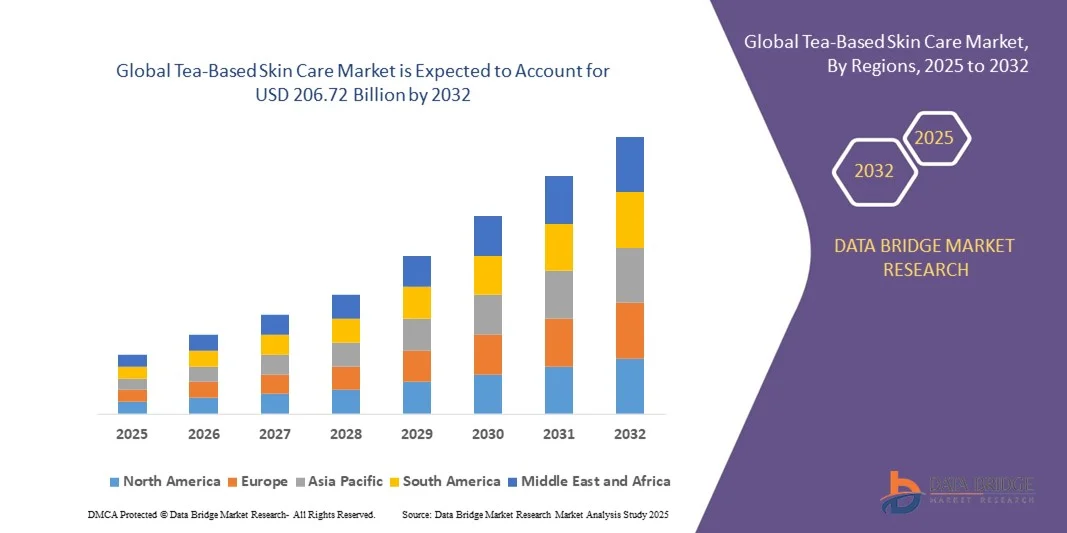
- The global Tea-Based Skin Care Market size was valued at USD 115.65 billion in 2024 and is projected to reach USD 206.72 billion by 2032, growing at a CAGR of 7.53% during the forecast period
- The market expansion is primarily driven by increasing consumer preference for natural, antioxidant-rich ingredients and the rising awareness of tea's anti-aging and anti-inflammatory benefits in skincare
- Moreover, the surge in demand for clean beauty, combined with growing investments in R&D and product innovation by major cosmetic brands, is accelerating the adoption of tea-based skincare, thereby propelling substantial market growth
Global Tea-Based Skin Care Market Analysis
- Tea-based skin care products, which incorporate natural extracts from green, black, white, or oolong tea, are becoming essential components of modern beauty and wellness routines in both personal and professional settings due to their antioxidant properties, skin-soothing benefits, and alignment with clean beauty trends
- The growing demand for tea-based skin care is primarily fueled by rising consumer awareness of natural and organic ingredients, increasing concerns over skin health, and a shift towards sustainable and plant-based cosmetic solutions
- Asia-Pacific dominated the Global Tea-Based Skin Care Market with the largest revenue share of 34.9% in 2024, driven by high consumer spending on premium skincare, strong brand presence, and early adoption of wellness-focused beauty products, with the U.S. leading in innovation and product diversification in the natural skincare segment
- North America is expected to be the fastest growing region in the Global Tea-Based Skin Care Market during the forecast period due to increasing urbanization, rising disposable incomes, and a strong cultural preference for herbal and tea-based remedies in skincare
- The facial care segment dominated the market with the largest revenue share of 48.5% in 2024, driven by the widespread consumer preference for tea-based ingredients in products such as cleansers, moisturizers, serums, and face masks
Report Scope and Global Tea-Based Skin Care Market Segmentation
|
Attributes |
Tea-Based Skin Care Key Market Insights |
|
Segments Covered |
|
|
Countries Covered |
North America
Europe
Asia-Pacific
Middle East and Africa
South America
|
|
Key Market Players |
|
|
Market Opportunities |
|
|
Value Added Data Infosets |
In addition to the insights on market scenarios such as market value, growth rate, segmentation, geographical coverage, and major players, the market reports curated by the Data Bridge Market Research also include in-depth expert analysis, pricing analysis, brand share analysis, consumer survey, demography analysis, supply chain analysis, value chain analysis, raw material/consumables overview, vendor selection criteria, PESTLE Analysis, Porter Analysis, and regulatory framework. |
Global Tea-Based Skin Care Market Trends
Enhanced Convenience Through AI and Voice Integration
- A significant and accelerating trend in the global Tea-Based Skin Care Market is the incorporation of artificial intelligence (AI) and voice-controlled technologies such as Amazon Alexa, Google Assistant, and Apple HomeKit into skincare devices and personalized beauty routines. This fusion of technologies is enhancing user convenience, customization, and product efficacy.
- For instance, smart skincare devices such as Foreo’s UFO use app-based AI to tailor treatments based on skin type and environmental factors, while voice assistants enable users to control devices, receive skincare tips, and schedule routines via simple voice commands.
- AI integration in tea-based skincare products enables personalized recommendations by analyzing user data, skin conditions, and preferences to optimize ingredient delivery and routine adjustments. Brands like Neutrogena’s Skin360 use AI-powered diagnostics to improve product effectiveness over time and offer intelligent skincare insights. Furthermore, voice control provides a hands-free experience, allowing users to manage their skincare routines easily and efficiently.
- The seamless integration of tea-based skincare products with digital assistants and smart home ecosystems facilitates centralized management of beauty and wellness routines. Through a single interface, users can coordinate skincare treatments alongside other health and lifestyle devices, creating a unified and personalized self-care experience.
- This trend towards more intelligent, intuitive, and connected skincare solutions is fundamentally reshaping consumer expectations for beauty products. Consequently, companies such as Olay and L’Oréal are developing AI-enabled skincare devices and voice-interactive platforms that offer personalized care and real-time feedback.
- The demand for tea-based skincare products with AI and voice control integration is growing rapidly across global markets, as consumers increasingly prioritize convenience, customization, and holistic wellness in their beauty regimens.
Global Tea-Based Skin Care Market Dynamics
Driver
Growing Need Due to Rising Consumer Awareness and Demand for Natural Products
-
The increasing consumer focus on health, wellness, and sustainability, combined with growing awareness of the benefits of natural ingredients, is a significant driver for the heightened demand for tea-based skin care products
- For instance, in 2024, major brands such as L’Oréal and Amorepacific expanded their natural and tea-infused product lines, leveraging scientific research on tea antioxidants to meet evolving consumer preferences. Such initiatives by key companies are expected to drive the tea-based skin care market growth during the forecast period
- As consumers become more conscious of harmful chemicals and seek safer, eco-friendly skincare alternatives, tea-based products offer antioxidant, anti-inflammatory, and soothing properties that appeal as effective, natural solutions
- Furthermore, the rising trend of clean beauty and the desire for transparent, sustainable formulations are making tea-based skin care an integral part of many personal care routines, often marketed alongside organic and cruelty-free claims
- The convenience of multi-benefit products, such as moisturizers and serums infused with tea extracts, along with increasing online availability and influencer endorsements, are key factors propelling the adoption of tea-based skin care across diverse demographics and regions
Restraint/Challenge
Concerns Regarding Product Efficacy and Premium Pricing
- Skepticism about the efficacy of natural and tea-based skin care products compared to conventional chemical formulations poses a challenge to broader market adoption. Some consumers remain unsure if tea extracts deliver noticeable results, slowing purchasing decisions
- For instance, mixed reviews and limited clinical trials for certain tea-based products have made some consumers hesitant to fully switch from trusted mainstream brands
- Addressing these concerns through rigorous scientific validation, transparent ingredient sourcing, and clear communication of benefits is crucial for building consumer trust. Brands such as DERMA E and The Body Shop emphasize their clinical testing and natural certifications in marketing to reassure potential buyers. Additionally, the relatively high price point of premium tea-based skin care products compared to conventional alternatives can be a barrier to adoption for budget-conscious consumers, especially in developing markets
- While prices are gradually becoming more competitive, the perceived premium for natural and specialty ingredients can still hinder widespread adoption, particularly among price-sensitive segments
- Overcoming these challenges through enhanced research, consumer education on ingredient benefits, and the development of affordable, effective tea-based products will be vital for sustained market growth
Global Tea-Based Skin Care Market Scope
The tea-based skin care market is segmented on the basis of product and distribution channel.
- By Product
On the basis of product, the Global Tea-Based Skin Care Market is segmented into facial care, body care, and others. The facial care segment dominated the market with the largest revenue share of 48.5% in 2024, driven by the widespread consumer preference for tea-based ingredients in products such as cleansers, moisturizers, serums, and face masks. Tea extracts, especially green and white tea, are highly valued for their antioxidant, anti-inflammatory, and anti-aging benefits, making them a popular choice in facial care routines. Additionally, increasing consumer focus on preventing skin damage and improving complexion supports the growth of this segment.
The body care segment is expected to witness the fastest CAGR of 22.3% from 2025 to 2032, fueled by rising demand for tea-infused lotions, body washes, and scrubs that offer soothing and rejuvenating effects for sensitive and dry skin. Expanding wellness trends and growing interest in natural full-body skincare solutions are further accelerating the uptake in this category.
- By Distribution Channel
On the basis of distribution channel, the Global Tea-Based Skin Care Market is segmented into supermarkets/hypermarkets, specialty stores, convenience stores, online stores, and others. The online stores segment held the largest market revenue share of 39.7% in 2024, driven by growing e-commerce penetration, increasing consumer comfort with online shopping, and a wider availability of niche and premium tea-based skincare products through digital platforms. The convenience of home delivery, extensive product reviews, and targeted digital marketing also contribute significantly to this segment’s dominance.
The specialty stores segment is expected to register the fastest CAGR of 20.8% from 2025 to 2032, supported by the increasing number of branded stores, beauty boutiques, and wellness centers focusing on natural and organic products. These stores provide consumers with expert guidance and exclusive product lines, enhancing the overall shopping experience and driving demand for tea-based skin care products.
Global Tea-Based Skin Care Market Regional Analysis
- Asia-Pacific dominated the Global Tea-Based Skin Care Market with the largest revenue share of 34.9% in 2024, driven by increasing consumer awareness of natural and organic beauty products and a strong preference for clean, sustainable skincare solutions
- Consumers in the region highly value the antioxidant and anti-aging benefits of tea-based ingredients, along with the rising trend of wellness-focused self-care routines that emphasize natural formulations
- This widespread adoption is further supported by high disposable incomes, well-established retail and e-commerce channels, and the presence of key industry players investing heavily in product innovation and marketing, establishing tea-based skin care as a preferred choice among health-conscious consumers across both personal and professional segments
U.S. Tea-Based Skin Care Market Insight
The U.S. tea-based skin care market captured the largest revenue share of 81% in North America in 2024, driven by increasing consumer awareness of natural and organic skincare products. Rising demand for clean beauty and wellness-focused self-care routines is fueling market growth. The expansion of e-commerce platforms and influencer-driven marketing further supports adoption. Consumers value the antioxidant, anti-inflammatory, and anti-aging benefits of tea extracts, with growing preference for products that combine tradition with innovative formulations.
Europe Tea-Based Skin Care Market Insight
The Europe tea-based skin care market is projected to grow at a substantial CAGR throughout the forecast period, driven by increasing demand for natural and sustainable beauty products. Stricter regulations on cosmetic ingredients and rising consumer preference for environmentally friendly and cruelty-free products encourage adoption. The market benefits from growing urbanization, high disposable incomes, and the presence of well-established specialty retail stores offering premium tea-based skincare brands. The region also shows strong growth in anti-aging and sensitive skin care segments.
U.K. Tea-Based Skin Care Market Insight
The U.K. tea-based skin care market is expected to expand significantly during the forecast period, supported by the rising trend toward organic and natural beauty solutions. Increased awareness about skin health and a growing focus on sustainable sourcing and packaging drive demand. The country’s robust retail and online distribution networks, coupled with consumer interest in herbal and botanical ingredients, are key growth enablers. Concerns about chemical exposure and environmental impact continue to motivate consumers toward tea-based skincare options.
Germany Tea-Based Skin Care Market Insight
The Germany tea-based skin care market is anticipated to grow steadily, driven by strong consumer preference for high-quality, eco-friendly skincare products. The country’s emphasis on sustainability, product transparency, and rigorous safety standards influences market dynamics. Germany’s mature cosmetics industry and increasing interest in anti-aging and sensitive skin formulations boost demand for tea-based products. Growing online retail penetration and specialty beauty stores also support the distribution of tea-infused skincare solutions.
Asia-Pacific Tea-Based Skin Care Market Insight
The Asia-Pacific tea-based skin care market is poised to grow at the fastest CAGR of 24% during the forecast period from 2025 to 2032. This growth is driven by rising disposable incomes, increasing urbanization, and a strong cultural affinity for tea and herbal remedies in countries such as China, Japan, India, and South Korea. The region’s expanding middle class and growing awareness of natural skincare benefits fuel demand. Additionally, advancements in product innovation and strong presence of both domestic and international brands contribute to market expansion.
Japan Tea-Based Skin Care Market Insight
The Japan tea-based skin care market is gaining traction due to the country’s deep-rooted tea culture and growing consumer interest in natural, gentle skincare products. The emphasis on skin health and anti-aging solutions supports adoption. Integration of advanced technologies with traditional ingredients enables innovative product launches. Japan’s aging population also drives demand for effective yet mild skincare, making tea-based products particularly appealing for sensitive and mature skin segments.
China Tea-Based Skin Care Market Insight
The China tea-based skin care market accounted for the largest revenue share in Asia-Pacific in 2024, attributed to rapid urbanization, a growing middle class, and increasing demand for natural and effective skincare solutions. Tea-based products are highly favored for their antioxidant and soothing properties. The expansion of e-commerce and social media marketing platforms boosts product visibility and consumer access. Strong domestic manufacturers and government initiatives promoting traditional herbal products further propel the market forward.
Global Tea-Based Skin Care Market Share
The Tea-Based Skin Care industry is primarily led by well-established companies, including:
• AMOREPACIFIC US, INC. (South Korea)
• Hangzhou Pa Yi Luo Ya Cosmetics Co., Ltd. (China)
• Pureplay Skin Sciences (I) Pvt Ltd (India)
• L'Oréal S.A. (France)
• THE AVON COMPANY (U.S.)
• Unilever (U.K./Netherlands)
• 100% PURE (U.S.)
• KOTOSHINA (Japan)
• Nutriglow Cosmetics (India)
• Bo International (India)
• DERMA E (U.S.)
• Neo Australia (Australia)
• Delon Laboratories Inc. (Canada)
• KYPWELL (Cyprus)
• Gaia Organics (South Africa)
• THE BODY SHOP INTERNATIONAL LIMITED (U.K.)
• ARCONA, Inc (U.S.)
• Innisfree (South Korea)
What are the Recent Developments in Global Tea-Based Skin Care Market?
- In April 2023, MOREPACIFIC US, Inc., a global leader in natural beauty products, launched a strategic initiative in South Africa aimed at expanding the availability of its tea-based skin care range to meet growing consumer demand for clean and effective skincare. This move highlights the company’s dedication to delivering innovative, eco-friendly products tailored to local skin concerns. By leveraging its global expertise and botanical formulations, MOREPACIFIC is addressing regional preferences while strengthening its position in the rapidly growing global Tea-Based Skin Care Market.
- In March 2023, Pureplay Skin Sciences (I) Pvt Ltd, an India-based skincare innovator, introduced a new advanced green tea extract serum specifically designed for sensitive and acne-prone skin. This launch reflects the company’s focus on combining traditional tea-based ingredients with cutting-edge science to provide gentle yet effective skincare solutions that enhance skin health and radiance.
- In March 2023, L’Oréal S.A. expanded its tea-infused skincare portfolio in the Asian market by integrating antioxidant-rich tea extracts with advanced delivery systems. This initiative reinforces L’Oréal’s commitment to blending nature and technology, offering consumers scientifically backed products that address diverse skincare needs across different climates and skin types.
- In February 2023, THE BODY SHOP INTERNATIONAL LIMITED partnered with sustainable tea growers to source ethically harvested tea leaves for its signature tea-based skin care products. This collaboration promotes fair trade and environmental responsibility, aligning with increasing consumer demand for transparency and sustainability in beauty products.
- In January 2023, Innisfree unveiled its latest tea-based skincare collection featuring Jeju Island green tea extracts at the annual Beauty Expo. The new line focuses on providing enhanced hydration and antioxidant protection, demonstrating Innisfree’s commitment to natural ingredients and environmentally friendly practices, further solidifying its leadership in the global tea-based skin care market.

- Interactive Data Analysis Dashboard
- Company Analysis Dashboard for high growth potential opportunities
- Research Analyst Access for customization & queries
- Competitor Analysis with Interactive dashboard
- Latest News, Updates & Trend analysis
- Harness the Power of Benchmark Analysis for Comprehensive Competitor Tracking
Data collection and base year analysis are done using data collection modules with large sample sizes. The stage includes obtaining market information or related data through various sources and strategies. It includes examining and planning all the data acquired from the past in advance. It likewise envelops the examination of information inconsistencies seen across different information sources. The market data is analysed and estimated using market statistical and coherent models. Also, market share analysis and key trend analysis are the major success factors in the market report. To know more, please request an analyst call or drop down your inquiry.
The key research methodology used by DBMR research team is data triangulation which involves data mining, analysis of the impact of data variables on the market and primary (industry expert) validation. Data models include Vendor Positioning Grid, Market Time Line Analysis, Market Overview and Guide, Company Positioning Grid, Patent Analysis, Pricing Analysis, Company Market Share Analysis, Standards of Measurement, Global versus Regional and Vendor Share Analysis. To know more about the research methodology, drop in an inquiry to speak to our industry experts.
Data Bridge Market Research is a leader in advanced formative research. We take pride in servicing our existing and new customers with data and analysis that match and suits their goal. The report can be customized to include price trend analysis of target brands understanding the market for additional countries (ask for the list of countries), clinical trial results data, literature review, refurbished market and product base analysis. Market analysis of target competitors can be analyzed from technology-based analysis to market portfolio strategies. We can add as many competitors that you require data about in the format and data style you are looking for. Our team of analysts can also provide you data in crude raw excel files pivot tables (Fact book) or can assist you in creating presentations from the data sets available in the report.