


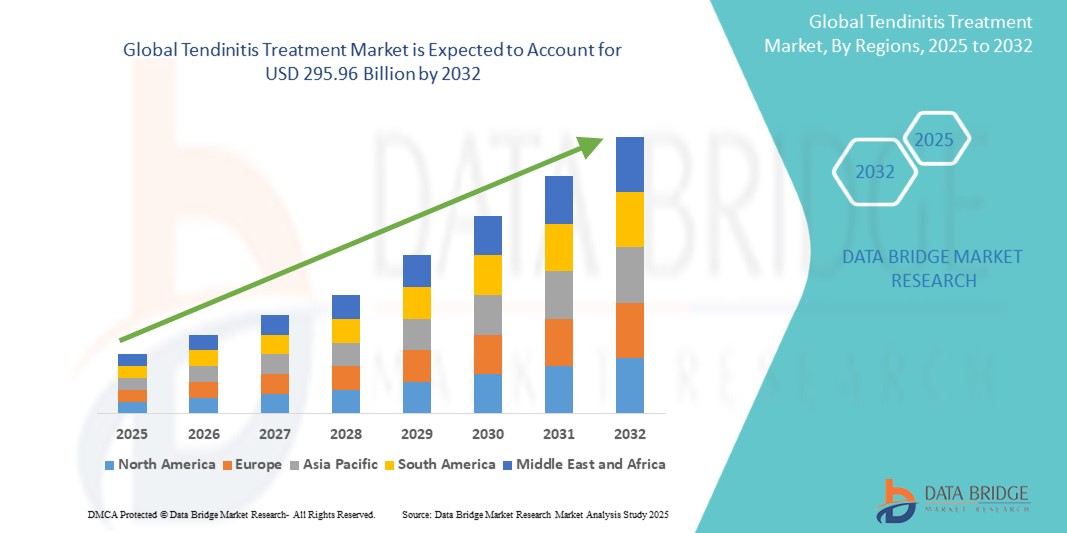
Tendinitis Treatment Market Size
- The Global Tendinitis Treatment Market size was valued at USD 214.6 Billion in 2024 and is expected to reach USD 295.96 Billion by 2032, at a CAGR of 4.10% during the forecast period
- The market growth is primarily driven by an aging population, the increasing prevalence of sports-related and occupational injuries, and rising incidences of tendinitis due to repetitive motion and poor posture associated with electronic device usage
- Moreover, advancements in diagnostic technologies, the rising popularity of non-invasive therapies like physical therapy and regenerative medicine, and improved access to healthcare are further contributing to market expansion. As awareness grows and early intervention becomes more widespread, the demand for effective and personalized tendinitis treatment solutions continues to strengthen globally
Tendinitis Treatment Market Analysis
- Tendinitis treatments encompass a broad range of medical interventions, including medications, physical therapy, and diagnostic procedures, aimed at relieving inflammation and pain in affected tendons, improving mobility, and preventing chronic disability. These treatments are critical in addressing musculoskeletal disorders among both aging populations and physically active individuals.
- The growing incidence of tendinitis is primarily driven by the aging global population, a surge in sports-related injuries, repetitive strain from occupational activities, and lifestyle factors such as prolonged use of smartphones and computers. These drivers are increasing the demand for timely diagnosis and personalized treatment plans.
- North America leads the global tendinitis treatment market with the largest revenue share of 38.5% in 2025, attributed to its advanced healthcare infrastructure, higher awareness about musculoskeletal health, and significant investments in physical therapy and regenerative medicine. The U.S. in particular shows notable growth due to the rising elderly population, high rate of orthopedic consultations, and increasing sports and fitness participation.
- Asia-Pacific is projected to be the fastest-growing region in the tendinitis treatment market during the forecast period, owing to rapidly improving healthcare access, a growing middle-class population, and heightened awareness regarding early intervention for tendon-related disorders.
- The Achilles Tendinitis segment is expected to dominate the market by type, accounting for a market share of 27.3% in 2025, due to its high prevalence among athletes and older adults, along with the availability of effective conservative and surgical treatment options.
Report Scope and Tendinitis Treatment Market Segmentation
|
Attributes |
Tendinitis Treatment Key Market Insights |
|
Segments Covered |
|
|
Countries Covered |
North America
Europe
Asia-Pacific
Middle East and Africa
South America
|
|
Key Market Players |
|
|
Market Opportunities |
|
|
Value Added Data Infosets |
In addition to the insights on market scenarios such as market value, growth rate, segmentation, geographical coverage, and major players, the market reports curated by the Data Bridge Market Research also include in-depth expert analysis, pricing analysis, brand share analysis, consumer survey, demography analysis, supply chain analysis, value chain analysis, raw material/consumables overview, vendor selection criteria, PESTLE Analysis, Porter Analysis, and regulatory framework. |
Tendinitis Treatment Market Trends
“Rising Preference for Non-Invasive and Regenerative Therapies”
- A significant trend shaping the global tendinitis treatment market is the increased adoption of non-invasive, regenerative, and biologic-based therapies as alternatives to long-term use of corticosteroids or surgical intervention. These newer treatment modalities focus on healing damaged tendons at the cellular level, reducing pain and inflammation while improving long-term outcomes.
- For instance, Platelet-Rich Plasma (PRP) therapy and stem cell-based treatments are gaining popularity among orthopedic clinics and sports medicine specialists due to their ability to promote tendon regeneration. Studies have shown PRP injections to be effective in chronic cases like tennis elbow and Achilles tendinitis, particularly in patients unresponsive to traditional therapies.
- Additionally, shockwave therapy (ESWT) and low-level laser therapy (LLLT) are emerging as preferred choices for patients seeking drug-free solutions with minimal side effects. These modalities stimulate blood flow and cellular repair in inflamed tendon areas, accelerating recovery in both acute and chronic tendinitis cases.
- The trend is especially strong in sports injury rehabilitation, where athletes and active individuals seek faster recovery and return-to-play timelines without surgery. This is prompting global healthcare providers to integrate regenerative therapy into their service offerings and is encouraging biotech firms to invest in next-generation biologic treatments for tendinopathies.
- As awareness of tendon health and early intervention grows, demand is rising for personalized, non-invasive treatment plans that combine diagnostics, targeted physical therapy, and regenerative solutions. These developments are transforming tendinitis management from pain suppression to long-term tendon repair and functional restoration.
Tendinitis Treatment Market Dynamics
Driver
“Increasing Prevalence of Sports Injuries and Aging Population”
- The rising prevalence of tendinitis cases globally is strongly linked to two major demographic and lifestyle shifts: the growing elderly population and the surge in sports and occupational injuries.
- Tendinitis is especially common among individuals over 40 due to natural wear and tear of tendons, reduced flexibility, and declining collagen production. This age group is more prone to chronic forms such as rotator cuff tendinitis and Achilles tendinitis, creating sustained demand for diagnosis and treatment services.
- Simultaneously, increased participation in recreational and competitive sports is contributing to a surge in acute tendinitis, particularly among younger populations. For example, tennis elbow, golfer’s elbow, and supraspinatus tendinitis are frequently reported among athletes and fitness enthusiasts, necessitating immediate medical attention and rehab protocols.
- Additionally, repetitive strain injuries (RSIs) due to sedentary lifestyles, poor posture, and prolonged screen usage are becoming more common across global workforces, especially in urban and desk-based professions. These factors are accelerating the need for early diagnosis, outpatient therapies, and follow-up care, thereby expanding the market.
- Governments and private healthcare providers are also investing in sports injury clinics, physiotherapy centers, and mobile health platforms, further boosting accessibility and patient outreach.
Restraint/Challenge
“High Treatment Costs and Limited Access to Advanced Therapies in Developing Regions”
- Despite the growing demand, high treatment costs—especially for advanced regenerative procedures and long-term physical therapy—remain a major barrier to widespread adoption of tendinitis treatments, particularly in low- and middle-income countries.
- For instance, PRP injections, shockwave therapy, and stem cell treatments often require out-of-pocket expenses, which can be prohibitive for uninsured or underinsured patients. In regions where universal healthcare coverage is limited, this creates unequal access to effective treatments and leads to reliance on over-the-counter painkillers or delayed care.
- Moreover, shortage of trained specialists, such as sports medicine physicians and physiotherapists, further limits the availability of quality tendinitis care in rural or semi-urban settings.
- Lack of awareness among patients also plays a role. Many individuals delay treatment or misinterpret symptoms as general fatigue, resulting in worsening of conditions that could have been managed with early intervention.
- In addition, standardization of treatment protocols remains a challenge, as the choice between conservative, regenerative, or surgical treatment often varies by region, physician experience, and healthcare infrastructure.
- Overcoming these challenges will require public-private partnerships, insurance support, training programs for rehabilitation professionals, and investments in telehealth and home-based physical therapy solutions to enhance accessibility and affordability across all regions.
Tendinitis Treatment Market Scope
The market is segmented on the basis of type, treatment, end users, and distribution channel.
• By Type
On the basis of type, the tendinitis treatment market is segmented into Achilles tendinitis, Supraspinatus tendinitis, Tennis or Golfer’s elbow, De Quervain’s stenosing tenosynovitis, Trigger finger or thumb, Tendinitis of the wrist, and Others.
The Achilles tendinitis segment dominates the market with the largest revenue share of 27.3% in 2025, driven by its high prevalence among athletes, older adults, and individuals engaged in physically intensive activities. This condition is commonly seen due to overuse and poor biomechanics, especially in sports and physically demanding occupations. Widespread availability of effective treatments—ranging from NSAIDs and physical therapy to regenerative therapies like PRP—fuels its dominance. The Achilles tendinitis segment is projected to grow at a CAGR of 4.4% from 2025 to 2032, supported by increasing awareness and advancements in tendon repair therapies.
• By Treatment
On the basis of treatment, the tendinitis treatment market is segmented into Diagnosis, Medication, Physical Therapy, and Others. The Medication segment held the largest market revenue share in 2025, driven by the widespread use of NSAIDs, corticosteroids, and analgesics for managing inflammation and pain associated with both acute and chronic tendinitis. The easy availability of over-the-counter medications and prescription drugs contributes to the dominance of this segment.
The Physical Therapy segment is expected to witness the fastest CAGR from 2025 to 2032, supported by the growing demand for non-invasive, long-term recovery approaches. Physical therapy not only addresses immediate pain but also strengthens the tendons, reduces recurrence, and is increasingly integrated with regenerative techniques, such as shockwave and ultrasound-guided exercises. Its adoption in sports medicine and rehabilitation clinics is accelerating global growth.
• By End Users
On the basis of end users, the market is segmented into Hospitals, Specialty Clinics, Home Healthcare, and Others. The Hospitals segment accounted for the largest market revenue share in 2025, owing to their ability to offer integrated treatment services including diagnostics, medication, physiotherapy, and surgery when required. Patients with severe or chronic tendinitis often seek hospital-based care for comprehensive treatment, making hospitals a key revenue contributor.
The Home Healthcare segment is expected to witness the fastest CAGR during the forecast period, driven by increasing demand for personalized and convenient treatment options. The rise of telehealth platforms, mobile physiotherapy units, and self-administered therapies is supporting the shift toward home-based care, especially among the elderly and those in remote locations.
• By Distribution Channel
On the basis of distribution channel, the market is segmented into Direct Tender, Hospital Pharmacy, Retail Pharmacy, Online Pharmacy, and Others. The Hospital Pharmacy segment dominated the market in 2025, primarily due to the structured purchase of prescribed medications and treatments during inpatient and outpatient visits. Hospital pharmacies serve as primary dispensing centers for corticosteroids, NSAIDs, and biologics used in tendinitis care.
The Online Pharmacy segment is expected to exhibit the fastest growth from 2025 to 2032, driven by the convenience of home delivery, growing internet penetration, and the expansion of digital health ecosystems. Online platforms are increasingly offering both OTC and prescription drugs, along with value-added services such as virtual consultations and therapy subscriptions, further boosting their appeal.
Tendinitis Treatment Market Regional Analysis
- North America dominates the tendinitis treatment market with the largest revenue share of 38.5% in 2024, driven by a high prevalence of musculoskeletal disorders, increased awareness of tendon health, and robust healthcare infrastructure supporting early diagnosis and advanced treatment options.
- Consumers and patients in the region actively seek comprehensive solutions, including medications, physical therapy, and regenerative therapies, contributing to strong market growth. The presence of leading pharmaceutical companies, orthopedic specialists, and physiotherapy centers enhances accessibility and treatment quality.
- The region’s aging population, combined with rising participation in recreational sports and fitness activities, has led to a growing demand for effective tendinitis treatment options. Additionally, widespread health insurance coverage and supportive reimbursement policies encourage patients to pursue timely and complete treatment, making North America a key market for innovation and service expansion in tendinitis care.
U.S. Tendinitis Treatment Market Insight
The U.S. tendinitis treatment market captured the largest revenue share of 83% within North America in 2025, fueled by the country’s well-established healthcare system, high awareness of musculoskeletal health, and increasing prevalence of tendon-related injuries across all age groups. The surge in sports participation, fitness routines, and physically demanding occupations has resulted in a growing number of acute and chronic tendinitis cases. In addition, the widespread adoption of regenerative therapies like PRP and stem cell treatments is reshaping tendon care. Government and private insurers continue to support early diagnosis and physiotherapy, further solidifying the U.S. as a key contributor to market growth.
Europe Tendinitis Treatment Market Insight
The European tendinitis treatment market is projected to grow at a significant CAGR throughout the forecast period, driven by the rising geriatric population, sedentary lifestyle habits, and the expansion of rehabilitation services across both urban and rural regions. Strict clinical practice guidelines and growing demand for non-invasive therapies such as physiotherapy and laser treatment are contributing to market expansion. The integration of advanced diagnostics and tele-rehabilitation platforms is also supporting recovery management. Increasing investments in sports medicine infrastructure across the region further boost demand for tendinitis-related treatments.
U.K. Tendinitis Treatment Market Insight
The U.K. tendinitis treatment market is expected to grow at a noteworthy CAGR during the forecast period, driven by the rising incidence of work-related repetitive strain injuries and greater emphasis on preventive healthcare. The National Health Service (NHS) is increasingly prioritizing early intervention through physiotherapy referrals and outpatient rehabilitation programs. In addition, the growing popularity of wellness and fitness trends among the U.K. population has amplified awareness of musculoskeletal injuries and the importance of timely treatment, enhancing the market’s potential.
Germany Tendinitis Treatment Market Insight
The German tendinitis treatment market is expected to expand at a considerable CAGR, propelled by high healthcare spending, strong orthopaedic infrastructure, and the country’s focus on integrative medicine approaches. Germany's emphasis on combining traditional therapies with physical rehabilitation, regenerative medicine, and biomechanical assessments ensures a multi-modal approach to tendon care. An aging population and a health-conscious society are increasingly seeking specialized clinics and advanced physiotherapy services for both chronic and acute tendinitis conditions.
Asia-Pacific Tendinitis Treatment Market Insight
The Asia-Pacific tendinitis treatment market is projected to grow at the fastest CAGR of over 6.5% in 2025, driven by the expanding middle-class population, improving access to healthcare, and increasing awareness of musculoskeletal health. Countries such as China, India, and Japan are witnessing a surge in sports injuries, occupational strain cases, and age-related tendon degeneration. The rising prevalence of affordable physical therapy centers and the introduction of mobile healthcare services across urban and semi-urban areas are propelling market growth. Government initiatives promoting elderly care and digital health in the region further enhance accessibility and early treatment.
Japan Tendinitis Treatment Market Insight
The Japan tendinitis treatment market is gaining momentum, driven by the country’s aging demographic and high demand for mobility-preserving solutions. Japan’s advanced medical infrastructure and technological innovations in physical therapy and regenerative treatments are key contributors to growth. Tendinitis management in elderly care settings is becoming increasingly important, and the availability of robotic-assisted physiotherapy and home-based rehab programs supports the country’s goal of aging in place. Moreover, sports participation among youth and middle-aged populations continues to fuel demand for outpatient tendon care services.
China Tendinitis Treatment Market Insight
The China tendinitis treatment market accounted for the largest revenue share in Asia-Pacific in 2025, owing to the country’s large population, rapid urbanization, and increasing cases of tendon-related disorders. With a growing number of orthopedic centers and rehabilitation clinics, China is expanding access to both traditional Chinese medicine (TCM) and modern therapies for tendinitis. Government investments in community-based health centers and a shift toward non-surgical interventions have made treatments more accessible. Additionally, the increase in e-health platforms and telemedicine services is driving remote diagnosis and treatment adoption in underserved areas.
Tendinitis Treatment Market Share
The Tendinitis Treatment industry is primarily led by well-established companies, including:
- Almatica Pharma, Inc. (U.S.)
- Pfizer Inc. (U.S.)
- Merck & Co., Inc. (U.S.)
- AstraZeneca (UK)
- Bayer AG (Germany)
- Boehringer Ingelheim Pharmaceuticals, Inc. (Germany)
- Teva Pharmaceutical Industries Ltd. (Israel)
- LUPIN (India)
- Hikma Pharmaceuticals PLC (UK)
- Alkem Labs Ltd. (India)
- Sandoz AG (Switzerland)
- GlaxoSmithKline Plc. (UK)
- Par Pharmaceutical Ltd. (U.S.)
- Amneal Pharmaceutical Inc. (U.S.)
- Mylan N.V. (U.S.)
- Sun Pharmaceutical Industries Ltd. (India)
- Dr. Reddy's Laboratories (India)
- Aurobindo Pharma Limited (India)
- Perrigo Company plc (Ireland)
- Akorn Inc. (U.S.)
- Cosette Pharmaceuticals (U.S.)

- Interactive Data Analysis Dashboard
- Company Analysis Dashboard for high growth potential opportunities
- Research Analyst Access for customization & queries
- Competitor Analysis with Interactive dashboard
- Latest News, Updates & Trend analysis
- Harness the Power of Benchmark Analysis for Comprehensive Competitor Tracking
Data collection and base year analysis are done using data collection modules with large sample sizes. The stage includes obtaining market information or related data through various sources and strategies. It includes examining and planning all the data acquired from the past in advance. It likewise envelops the examination of information inconsistencies seen across different information sources. The market data is analysed and estimated using market statistical and coherent models. Also, market share analysis and key trend analysis are the major success factors in the market report. To know more, please request an analyst call or drop down your inquiry.
The key research methodology used by DBMR research team is data triangulation which involves data mining, analysis of the impact of data variables on the market and primary (industry expert) validation. Data models include Vendor Positioning Grid, Market Time Line Analysis, Market Overview and Guide, Company Positioning Grid, Patent Analysis, Pricing Analysis, Company Market Share Analysis, Standards of Measurement, Global versus Regional and Vendor Share Analysis. To know more about the research methodology, drop in an inquiry to speak to our industry experts.
Data Bridge Market Research is a leader in advanced formative research. We take pride in servicing our existing and new customers with data and analysis that match and suits their goal. The report can be customized to include price trend analysis of target brands understanding the market for additional countries (ask for the list of countries), clinical trial results data, literature review, refurbished market and product base analysis. Market analysis of target competitors can be analyzed from technology-based analysis to market portfolio strategies. We can add as many competitors that you require data about in the format and data style you are looking for. Our team of analysts can also provide you data in crude raw excel files pivot tables (Fact book) or can assist you in creating presentations from the data sets available in the report.












