


TGF-β Signal Modulator Drug Market Overview
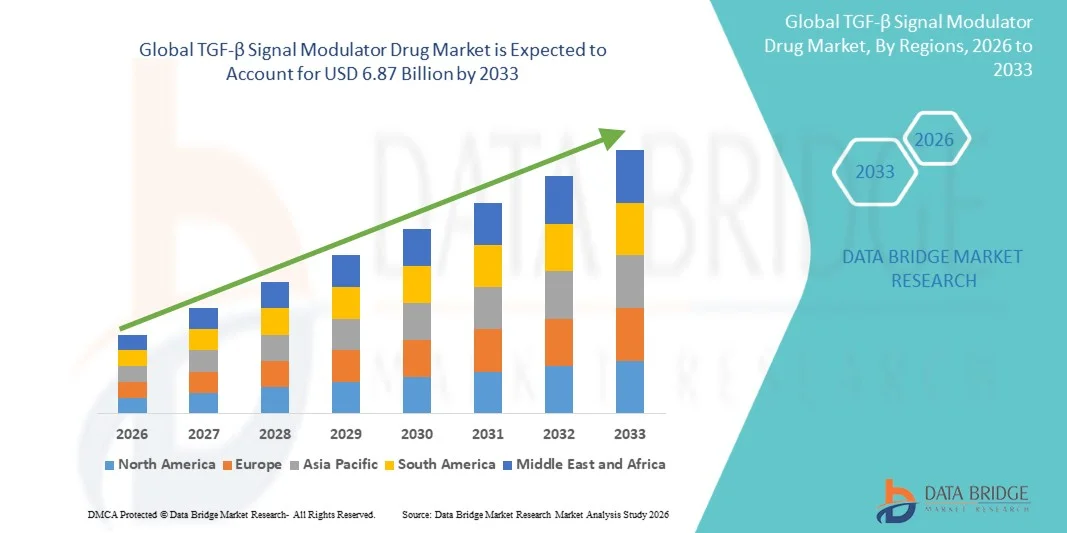
The TGF-β Signal Modulator Drug Market was valued at USD 1.93 billion in 2025 and is projected to reach USD 6.87 billion by 2033, growing at a CAGR of 17.20% from 2026 to 2033. The market is experiencing steady growth driven by increasing research into targeted therapies, rising prevalence of cancer and fibrotic disorders, and growing investments in precision medicine and immuno-oncology drug development.
The critical role of TGF-β signaling in tumor progression, immune regulation, tissue fibrosis, and cellular differentiation has positioned it as a promising therapeutic target across multiple disease areas. Pharmaceutical and biotechnology companies are actively advancing TGF-β inhibitors, receptor antagonists, and pathway modulators through clinical development pipelines. Furthermore, the expanding adoption of combination therapies, particularly in oncology and chronic fibrotic diseases, is accelerating demand for innovative TGF-β signal modulator drugs, supporting market growth worldwide.
Key Market Trends & Insights
- North America dominated the TGF-β Signal Modulator Drug Market with the largest revenue share of 38.62% in 2025, supported by a strong biopharmaceutical industry, extensive clinical research activities, and significant investments in oncology and immunotherapy development.
- The Small Molecule Inhibitors segment led the market with a 43.28% share in 2025, driven by their ability to selectively target TGF-β signaling pathways while offering favorable pharmacokinetic properties and oral administration options.
- Asia-Pacific is expected to be the fastest-growing region at a CAGR of 8.1% from 2026 to 2033, fueled by expanding biotechnology capabilities, increasing healthcare expenditures, and growing participation in global clinical trials across China, Japan, and India.
- Monoclonal Antibodies are the fastest-growing drug type, projected to register a CAGR of 8.4%, reflecting the surge in demand for highly specific therapies capable of targeting TGF-β ligands and receptors with enhanced precision.
- The TGF-β Receptor Inhibitors segment dominated the mechanism of action category with a 39.84% revenue share in 2025, led by extensive research efforts focused on blocking receptor-mediated signaling involved in tumor progression, fibrosis, and immune suppression.
- Oncology accounted for 47.36% of the market, preferred by the central role of TGF-β signaling in cancer progression, metastasis, immune evasion, and tumor microenvironment regulation.
- The Fibrotic Diseases segment is the fastest-growing indication category, with a CAGR of 8.9%, driven by increasing recognition of TGF-β as a key mediator of tissue fibrosis and organ dysfunction.
Market Size & Forecast
- Global Market Value (2025): USD 1.93 Billion
- Expected Market Value (2033): USD 6.87 Billion
- Forecast CAGR (2026–2033): 17.20%
- Leading Region in 2025: North America
- Fastest Growing Region: Asia Pacific
Report Scope and TGF-β Signal Modulator Drug Market Segmentation
|
Attributes |
TGF-β Signal Modulator Drug Key Market Insights |
|
Segments Covered |
|
|
Countries Covered |
North America · U.S. · Canada · Mexico Europe · Germany · France · U.K. · Netherlands · Switzerland · Belgium · Russia · Italy · Spain · Turkey · Rest of Europe Asia-Pacific · China · Japan · India · South Korea · Singapore · Malaysia · Australia · Thailand · Indonesia · Philippines · Rest of Asia-Pacific Middle East and Africa · Saudi Arabia · U.A.E. · South Africa · Egypt · Israel · Rest of Middle East and Africa South America · Brazil · Argentina · Rest of South America |
|
Key Market Players |
· Merck & Co., Inc. (U.S.) · Bristol Myers Squibb (U.S.) · AstraZeneca (U.K.) · F. Hoffmann-La Roche Ltd (Switzerland) · Novartis AG (Switzerland) · Eli Lilly and Company (U.S.) · Pfizer Inc. (U.S.) · GSK plc (U.K.) · Sanofi (France) · Amgen Inc. (U.S.) · Boehringer Ingelheim International GmbH (Germany) · AbbVie Inc. (U.S.) · Bayer AG (Germany) · Regeneron Pharmaceuticals, Inc. (U.S.) · Scholar Rock, Inc. (U.S.) · Bicara Therapeutics Inc. (U.S.) · Genentech, Inc. (U.S.) · Bio-Techne Corporation (U.S.) · Corbus Pharmaceuticals Holdings, Inc. (U.S.) · MediWound Ltd. (Israel) |
|
Market Opportunities |
· Expanding use of TGF-β modulators in combination with immune checkpoint inhibitors · Growing clinical focus on fibrotic diseases, including idiopathic pulmonary fibrosis and liver fibrosis · Increasing development of biomarker-driven precision medicine approaches |
|
Value Added Data Infosets |
In addition to the insights on market scenarios such as market value, growth rate, segmentation, geographical coverage, and major players, the market reports curated by the Data Bridge Market Research also include in-depth expert analysis, patient epidemiology, pipeline analysis, pricing analysis, and regulatory framework. |
TGF-β Signal Modulator Drug Market Trends
Trend: Rising Adoption of Combination Immunotherapy Strategies
Pharmaceutical companies are increasingly incorporating TGF-β signal modulators into combination treatment regimens to improve therapeutic outcomes in oncology and chronic fibrotic diseases. The ability of TGF-β pathway inhibition to overcome immune suppression within the tumor microenvironment has attracted significant interest from drug developers seeking to enhance the effectiveness of immune checkpoint inhibitors. Researchers are also evaluating combination approaches with targeted therapies and anti-fibrotic agents, while advances in biomarker identification are enabling more precise patient selection and optimized treatment responses.
For instance, in June 2024, Merck & Co. and GSK continued advancing bintrafusp alfa-related and TGF-β pathway-focused combination research programs aimed at improving outcomes in multiple solid tumor indications.
TGF-β Signal Modulator Drug Market Dynamics
Key Market Driver: Increasing Demand for Targeted Therapies in Oncology and Fibrotic Diseases
The growing prevalence of cancer, pulmonary fibrosis, liver fibrosis, and other chronic disorders has created substantial demand for therapies that address underlying disease mechanisms rather than symptoms alone. TGF-β signaling plays a central role in tumor progression, immune evasion, tissue remodeling, and fibrosis development, making it an attractive therapeutic target. Pharmaceutical and biotechnology companies are expanding investments in TGF-β pathway research to develop innovative treatments that improve clinical outcomes, support personalized medicine approaches, and address significant unmet medical needs across multiple therapeutic areas.
For instance, in September 2024, Bristol Myers Squibb continued clinical development activities involving TGF-β pathway-targeted candidates as part of its broader strategy to strengthen precision oncology and immunotherapy portfolios.
Key Restraint/Challenge: Complex Biology and Safety Concerns Associated with TGF-β Modulation
A significant restraint in the TGF-β Signal Modulator Drug Market is the complex biological role of TGF-β across multiple physiological processes. The pathway regulates immune function, tissue repair, cell growth, and inflammatory responses, making therapeutic intervention challenging due to potential off-target effects and safety concerns. Clinical development programs often require extensive biomarker validation, patient stratification, and long-term safety monitoring, increasing development costs and regulatory complexity. These factors can slow commercialization timelines and limit broader adoption despite strong therapeutic potential.
For instance, several clinical-stage TGF-β inhibitors have experienced development delays or modified trial designs due to safety evaluation requirements and challenges in balancing efficacy with acceptable tolerability profiles.
Key Market Opportunity: Expansion of Precision Medicine and Biomarker-Driven Therapeutics
The expansion of precision medicine presents a significant market opportunity for TGF-β signal modulator drugs. Biomarker-based patient selection can improve treatment effectiveness by identifying individuals most likely to benefit from pathway-targeted therapies. Advances in genomic profiling, molecular diagnostics, and companion diagnostic technologies are supporting the development of personalized treatment strategies across oncology and fibrosis indications. Growing collaboration between pharmaceutical companies and diagnostic developers is further accelerating the commercialization potential of next-generation TGF-β modulators in both established and emerging healthcare markets.
For instance, in 2024, multiple biotechnology companies expanded biomarker-driven clinical studies designed to identify patient populations with elevated TGF-β pathway activity, supporting more targeted therapeutic development and regulatory advancement.
TGF-β Signal Modulator Drug Market Scope
The TGF-β signal modulator drug market is segmented on the basis of drug type, mechanism of action, indication, and end user.
- By Drug Type
On the basis of drug type, the TGF-β Signal Modulator Drug Market is segmented into small molecule inhibitors, monoclonal antibodies, fusion proteins, recombinant proteins, peptide-based therapeutics, Antisense Oligonucleotides (ASOs), and others. The Small Molecule Inhibitors segment dominated the market with a 43.28% share in 2025, owing to their ability to selectively target TGF-β signaling pathways while offering favorable pharmacokinetic properties and oral administration options. These therapies are widely investigated across oncology and fibrotic disease indications due to their potential to penetrate tissues effectively and modulate intracellular signaling mechanisms. Pharmaceutical companies continue to prioritize small molecule development because of scalable manufacturing processes and comparatively lower production costs than biologics. Their suitability for combination therapy with immunotherapies and targeted treatments further strengthens market demand. Ongoing clinical advancements and expanding therapeutic applications continue to support the segment’s leadership position. Their established presence in clinical pipelines makes them the most commercially advanced category within the market.
The Monoclonal Antibodies segment is projected to register the fastest growth at a CAGR of 8.4% from 2026 to 2033, driven by increasing demand for highly specific therapies capable of targeting TGF-β ligands and receptors with enhanced precision. These biologics offer improved selectivity and reduced off-target activity, making them attractive candidates for cancer immunotherapy and fibrosis treatment. Growing investment in antibody engineering technologies is accelerating the development of next-generation therapeutic candidates. Expanding clinical evidence supporting antibody-based combination therapies is also contributing to adoption. Regulatory support for innovative biologic treatments and rising biopharmaceutical research spending are further enhancing growth prospects. The segment is expected to benefit significantly from the increasing shift toward precision medicine approaches worldwide.
- By Mechanism of Action
On the basis of mechanism of action, the TGF-β Signal Modulator Drug Market is segmented into TGF-β Receptor Inhibitors, TGF-β Ligand Inhibitors, SMAD Pathway Modulators, TGF-β Signaling Activators, and Combination Modulators. The TGF-β Receptor Inhibitors segment accounted for the largest market share of 39.84% in 2025, driven by extensive research efforts focused on blocking receptor-mediated signaling involved in tumor progression, fibrosis, and immune suppression. These inhibitors directly target critical signaling pathways and are being actively evaluated across multiple clinical-stage programs. Their ability to interfere with disease-driving biological mechanisms has attracted substantial investment from pharmaceutical developers. Growing utilization in oncology combination regimens further supports segment expansion. Continuous advancements in receptor-selective compounds are improving efficacy and safety profiles. Strong clinical development activity ensures sustained dominance of this segment within the overall market.
The Combination Modulators segment is anticipated to witness the fastest growth at a CAGR of 8.7% from 2026 to 2033, supported by increasing adoption of multi-target therapeutic strategies designed to enhance treatment effectiveness. These therapies combine TGF-β modulation with complementary mechanisms such as immune checkpoint inhibition or anti-fibrotic activity. Researchers are increasingly recognizing the benefits of addressing multiple disease pathways simultaneously to improve patient outcomes. Expanding clinical trials evaluating combination approaches are generating encouraging results across cancer and chronic disease indications. Growing interest in personalized treatment regimens is further accelerating segment growth. The ability to overcome therapeutic resistance and enhance response rates positions this category for rapid expansion.
- By Indication
On the basis of indication, the TGF-β Signal Modulator Drug Market is segmented into oncology, fibrotic diseases, autoimmune diseases, respiratory diseases, gastrointestinal disorders, dermatological disorders, and other indications. The Oncology segment dominated the market with a 47.36% revenue share in 2025, driven by the central role of TGF-β signaling in cancer progression, metastasis, immune evasion, and tumor microenvironment regulation. Drug developers are increasingly targeting this pathway to enhance the effectiveness of immunotherapies and targeted cancer treatments. Rising global cancer incidence continues to create significant demand for innovative therapeutic approaches. Numerous clinical programs are focused on treating solid tumors through TGF-β pathway modulation. Strong funding support and extensive oncology research activities further strengthen segment growth. The segment remains the primary area of commercial and clinical focus for TGF-β-targeted therapies.
The Fibrotic Diseases segment is expected to record the fastest growth at a CAGR of 8.9% from 2026 to 2033, fueled by increasing recognition of TGF-β as a key mediator of tissue fibrosis and organ dysfunction. Conditions such as idiopathic pulmonary fibrosis, liver fibrosis, and kidney fibrosis represent significant unmet medical needs with limited treatment options. Pharmaceutical companies are actively advancing novel therapies aimed at slowing or reversing fibrotic progression. Rising prevalence of chronic diseases associated with fibrosis is creating substantial market opportunities. Improvements in disease diagnosis and patient identification are also supporting treatment adoption. Growing clinical success in anti-fibrotic drug development is expected to drive rapid segment expansion.
- By End User
On the basis of end user, the TGF-β Signal Modulator Drug Market is segmented into hospitals, specialty clinics, cancer treatment centers, research institutes, and others. The Hospitals segment led the market with a 45.91% share in 2025, owing to their central role in administering advanced biologics, targeted therapies, and complex oncology treatments. Hospitals possess the infrastructure required for infusion-based therapies, patient monitoring, and multidisciplinary treatment management. The majority of clinical-stage and commercially available TGF-β-targeted therapies are administered within hospital settings. Increasing patient volumes for cancer and chronic disease treatment further contribute to segment dominance. Access to specialized healthcare professionals and diagnostic services enhances treatment outcomes. Strong reimbursement support in developed healthcare systems also sustains market leadership.
The Cancer Treatment Centers segment is projected to witness the fastest growth at a CAGR of 8.5% from 2026 to 2033, driven by rising demand for specialized oncology care and precision medicine solutions. These centers are increasingly adopting innovative targeted therapies and participating in advanced clinical research programs. Growing availability of biomarker-guided treatment strategies is supporting the use of TGF-β modulators within dedicated oncology facilities. Increasing investments in cancer infrastructure and research capabilities are further accelerating growth. Patients are increasingly seeking specialized treatment environments that provide access to novel therapies and clinical trials. The expanding role of comprehensive cancer centers in personalized oncology care is expected to drive substantial market growth.
TGF-β Signal Modulator Drug Market Regional Analysis
North America dominated the TGF-β Signal Modulator Drug Market with the largest revenue share of 38.62% in 2025, supported by a strong biopharmaceutical industry, extensive clinical research activities, and significant investments in oncology and immunotherapy development. The region also benefits from advanced clinical trial infrastructure, favorable regulatory pathways for innovative therapeutics, and increasing adoption of precision medicine approaches. Growing research activity targeting cancer, fibrosis, and immune-related disorders continues to accelerate demand for TGF-β pathway-modulating therapies. Increasing focus on biomarker-driven drug development and combination treatment strategies further strengthens North America's leadership position in the global market.
U.S. TGF-β Signal Modulator Drug Market Insight
The U.S. TGF-β Signal Modulator Drug market is witnessing strong growth due to rising investments in oncology research, immunotherapy development, and precision medicine initiatives. The country’s mature biopharmaceutical ecosystem, along with increasing adoption of targeted therapies and biomarker-driven treatment approaches, is driving demand across cancer and fibrotic disease applications. In addition, growing clinical trial activity and increasing focus on addressing unmet medical needs in oncology and chronic diseases are accelerating the development and adoption of TGF-β signal modulator drugs across healthcare institutions and research organizations.
Europe TGF-β Signal Modulator Drug Market Insight
The Europe TGF-β Signal Modulator Drug market remains a major contributor to global revenue, driven by strong healthcare infrastructure, extensive clinical research activities, and high demand for innovative targeted therapies. The widespread use of advanced therapeutics in oncology and fibrosis management is supporting market expansion across the region. Increasing investments in precision medicine technologies, coupled with favorable regulatory frameworks and a highly developed pharmaceutical sector, continue to enhance the adoption of TGF-β signal modulator drugs throughout Europe.
U.K. TGF-β Signal Modulator Drug Market Insight
The U.K. TGF-β Signal Modulator Drug market is experiencing steady growth, supported by rising adoption of precision oncology approaches, expanding clinical research programs, and increasing demand for innovative biologic therapies. Growing investments in drug discovery infrastructure and strong collaboration between academic institutions and biopharmaceutical companies are contributing to market growth. Furthermore, integration of genomic medicine and biomarker-based treatment strategies is improving therapeutic outcomes, positioning the U.K. as a key innovation hub in the TGF-β signal modulator drug industry.
Germany TGF-β Signal Modulator Drug Market Insight
The Germany TGF-β Signal Modulator Drug market is expanding steadily due to the country’s strong pharmaceutical manufacturing base, advanced biomedical research capabilities, and increasing adoption of next-generation targeted therapies. Pharmaceutical companies, research institutes, and healthcare providers are increasingly utilizing TGF-β pathway-targeted drugs for oncology and fibrosis-related applications. Continuous advancements in molecular diagnostics, immunotherapy research, and precision medicine technologies, along with strong government support for healthcare innovation, are further driving market growth in Germany.
Asia-Pacific TGF-β Signal Modulator Drug Market Insight
The Asia-Pacific TGF-β Signal Modulator Drug market is expected to witness rapid growth, driven by increasing healthcare expenditure, expanding biotechnology capabilities, and rising investments in clinical research across countries such as China, India, and Japan. Growing awareness regarding targeted therapies, rising adoption of precision medicine technologies, and increasing demand for effective treatments for cancer and fibrotic diseases are supporting regional market expansion. In addition, the growing presence of pharmaceutical R&D centers and expanding access to advanced healthcare services are accelerating adoption across the region.
Japan TGF-β Signal Modulator Drug Market Insight
The Japan TGF-β Signal Modulator Drug market is witnessing consistent growth due to rising investments in oncology innovation, regenerative medicine research, and advanced therapeutic development. Pharmaceutical manufacturers, academic institutions, and research organizations are increasingly adopting TGF-β-targeted approaches for cancer treatment, fibrosis management, and drug discovery activities. Moreover, increasing integration of genomic technologies and the country’s focus on precision healthcare solutions are further contributing to market growth.
China TGF-β Signal Modulator Drug Market Insight
The China TGF-β Signal Modulator Drug market is growing rapidly, driven by increasing healthcare investments, expanding biotechnology infrastructure, and rising government support for innovative drug development. Growing adoption of targeted therapies and precision medicine platforms across hospitals, research institutes, and pharmaceutical companies is significantly boosting market demand. In addition, rising investments in oncology research, increasing awareness regarding advanced treatment options, and rapid biopharmaceutical innovation are positioning China as one of the fastest-growing markets for TGF-β signal modulator drugs globally.
TGF-β Signal Modulator Drug Market Share
The TGF-β signal modulator drug industry is primarily led by well-established companies, including:
- Merck & Co., Inc. (U.S.)
- Bristol Myers Squibb (U.S.)
- AstraZeneca (U.K.)
- Hoffmann-La Roche Ltd (Switzerland)
- Novartis AG (Switzerland)
- Eli Lilly and Company (U.S.)
- Pfizer Inc. (U.S.)
- GSK plc (U.K.)
- Sanofi (France)
- Amgen Inc. (U.S.)
- Boehringer Ingelheim International GmbH (Germany)
- AbbVie Inc. (U.S.)
- Bayer AG (Germany)
- Regeneron Pharmaceuticals, Inc. (U.S.)
- Scholar Rock, Inc. (U.S.)
- Bicara Therapeutics Inc. (U.S.)
- Genentech, Inc. (U.S.)
- Bio-Techne Corporation (U.S.)
- Corbus Pharmaceuticals Holdings, Inc. (U.S.)
- MediWound Ltd. (Israel)
Latest Developments in TGF-β Signal Modulator Drug Market
- In January 2025, Bicara Therapeutics announced the presentation of Phase 1/1b dose-expansion results for ficerafusp alfa, its bifunctional antibody targeting EGFR and TGF-β, in combination with pembrolizumab for advanced squamous cancer of the anal canal at the 2025 ASCO Gastrointestinal Cancers Symposium. The data demonstrated encouraging anti-tumor activity and reinforced the potential of TGF-β-targeted combination therapies in difficult-to-treat solid tumors. This development highlighted growing industry focus on integrating TGF-β modulation with immunotherapy strategies to improve clinical outcomes
- In October 2024, researchers reported efficacy and safety findings for bintrafusp alfa, a bifunctional fusion protein targeting TGF-β and PD-L1, when combined with chemotherapy in patients with Stage IV non-small cell lung cancer (NSCLC). The study provided additional clinical evidence supporting the role of TGF-β blockade in enhancing anti-cancer immune responses and improving therapeutic performance in advanced malignancies. The results further strengthened interest in dual-target TGF-β immuno-oncology approaches
- In April 2024, investigators published results from the first-in-human clinical study of GFH018, a selective TGF-β receptor I (TGFBR1) inhibitor, in patients with advanced solid tumors. The study evaluated safety, tolerability, pharmacokinetics, and preliminary anti-tumor activity, demonstrating continued progress in the development of small-molecule TGF-β pathway inhibitors. The advancement underscored the growing pipeline of next-generation targeted therapies focused on TGF-β signaling
- In April 2024, a study published in the British Journal of Cancer demonstrated that bintrafusp alfa significantly enhanced T-cell and natural killer (NK) cell responses in preclinical ovarian cancer models by simultaneously blocking TGF-β and PD-L1 signaling. The findings provided important translational evidence supporting the therapeutic potential of dual-pathway inhibition and reinforced the rationale for ongoing clinical development programs involving TGF-β modulators in oncology
- In March 2024, clinical results published in the Journal for ImmunoTherapy of Cancer reported efficacy, safety, and biomarker analyses of bintrafusp alfa in patients with advanced non-small cell lung cancer. The study identified clinically meaningful anti-tumor activity and provided valuable biomarker insights that may help optimize patient selection for future TGF-β-targeted therapies. The development reflected the industry's increasing emphasis on precision medicine and biomarker-driven treatment strategies

- Interactive Data Analysis Dashboard
- Company Analysis Dashboard for high growth potential opportunities
- Research Analyst Access for customization & queries
- Competitor Analysis with Interactive dashboard
- Latest News, Updates & Trend analysis
- Harness the Power of Benchmark Analysis for Comprehensive Competitor Tracking
Data collection and base year analysis are done using data collection modules with large sample sizes. The stage includes obtaining market information or related data through various sources and strategies. It includes examining and planning all the data acquired from the past in advance. It likewise envelops the examination of information inconsistencies seen across different information sources. The market data is analysed and estimated using market statistical and coherent models. Also, market share analysis and key trend analysis are the major success factors in the market report. To know more, please request an analyst call or drop down your inquiry.
The key research methodology used by DBMR research team is data triangulation which involves data mining, analysis of the impact of data variables on the market and primary (industry expert) validation. Data models include Vendor Positioning Grid, Market Time Line Analysis, Market Overview and Guide, Company Positioning Grid, Patent Analysis, Pricing Analysis, Company Market Share Analysis, Standards of Measurement, Global versus Regional and Vendor Share Analysis. To know more about the research methodology, drop in an inquiry to speak to our industry experts.
Data Bridge Market Research is a leader in advanced formative research. We take pride in servicing our existing and new customers with data and analysis that match and suits their goal. The report can be customized to include price trend analysis of target brands understanding the market for additional countries (ask for the list of countries), clinical trial results data, literature review, refurbished market and product base analysis. Market analysis of target competitors can be analyzed from technology-based analysis to market portfolio strategies. We can add as many competitors that you require data about in the format and data style you are looking for. Our team of analysts can also provide you data in crude raw excel files pivot tables (Fact book) or can assist you in creating presentations from the data sets available in the report.












