Thunnus Market Size
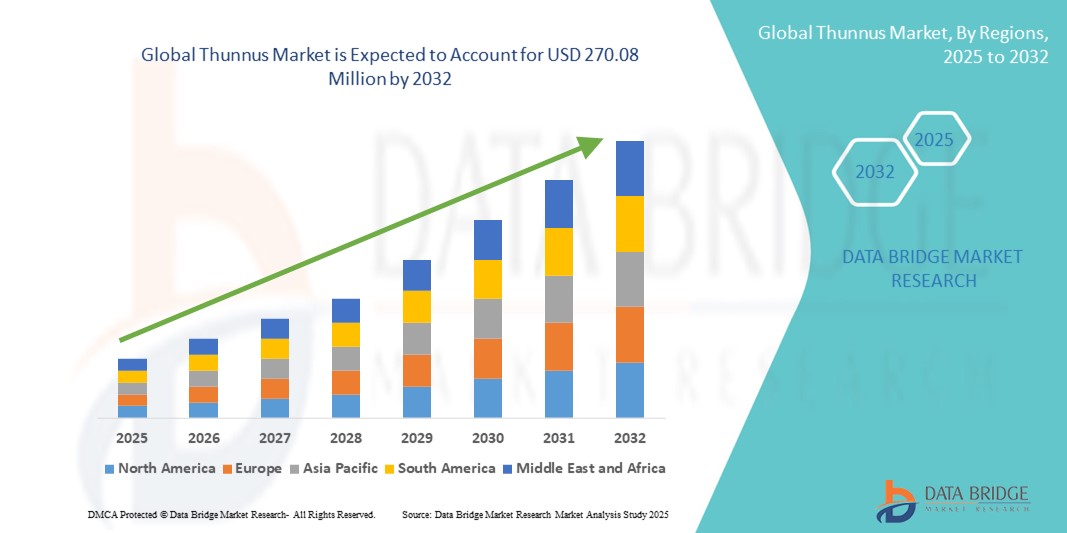
- The global thunnus market size was valued at USD 148.09 million in 2024 and is expected to reach USD 270.08 million by 2032, at a CAGR of 7.8% during the forecast period
- The market growth is largely fueled by increasing global seafood consumption, rising awareness of tuna's health benefits, and expanding demand across both retail and foodservice sectors, especially in urban regions where high-protein, low-fat diets are gaining popularity
- Furthermore, the growing presence of value-added products such as flavored tuna, ready-to-eat meals, and sashimi-grade offerings is widening consumer appeal and boosting sales across emerging and developed economies. These converging factors are accelerating the adoption of Thunnus products, thereby significantly boosting the industry's growth
Thunnus Market Analysis
- Thunnus refers to a genus of tuna species including yellowfin, bluefin, albacore, and skipjack, widely consumed globally in formats such as canned, frozen, fillet, and sashimi. Its versatility, long shelf life, and rich protein content make it a staple in household meals, restaurant menus, and processed food industries
- The rising demand for Thunnus is primarily driven by increasing health-conscious consumer behavior, diversification of tuna-based offerings, expanding cold chain logistics, and growing penetration of sustainable, certified products in international markets
- Europe dominated the thunnus market with a share of 42.15% in 2024, due to the region’s long-standing seafood consumption culture, robust cold-chain infrastructure, and high demand for premium-grade tuna for culinary applications such as sashimi, sushi, and gourmet dishes
- Asia-Pacific is expected to be the fastest growing region in the thunnus market during the forecast period due to rapid urbanization, rising disposable incomes, and the region’s strong cultural preference for seafood
- Canned tunas segment dominated the market with a market share of 39.6% in 2024, due to its long shelf life, affordability, and convenience, making it a staple in household pantries and institutional food programs. Growing consumer preference for protein-rich, ready-to-eat meals and rising sales through mass retail chains are also fueling the expansion of canned tuna consumption globally
Report Scope and Thunnus Market Segmentation
|
Attributes |
Thunnus Key Market Insights |
|
Segments Covered |
|
|
Countries Covered |
North America
Europe
Asia-Pacific
Middle East and Africa
South America
|
|
Key Market Players |
|
|
Market Opportunities |
|
|
Value Added Data Infosets |
In addition to the insights on market scenarios such as market value, growth rate, segmentation, geographical coverage, and major players, the market reports curated by the Data Bridge Market Research also include import export analysis, production capacity overview, production consumption analysis, price trend analysis, climate change scenario, supply chain analysis, value chain analysis, raw material/consumables overview, vendor selection criteria, PESTLE Analysis, Porter Analysis, and regulatory framework. |
Thunnus Market Trends
“Increasing Global Demand for Seafood”
- The Thunnus market is expanding due to heightened global demand for seafood driven by population growth, urbanization, and rising middle-class incomes that favor protein-rich diets incorporating fish such as tuna
- For instance, the Vietnam Association of Seafood Exporters and Producers (VASEP) highlights that major consumer regions such as the U.S., EU, and Japan are increasing imports of high-value tuna products, driving the market’s growth in 2025
- Increasing consumer preference for nutritious seafood rich in omega-3 fatty acids and protein supports steady demand for Thunnus species in fresh, canned, and processed forms
- Advances in processing and packaging technologies have enabled convenient formats such as vacuum-sealed tuna loins and ready-to-eat meals, responding to changing consumer lifestyles and expanding retail channels
- Sustainability and traceability certifications are becoming central trends, with emphasis on responsibly sourced tuna to meet stringent regulatory and consumer standards globally
- Emerging markets including countries in the Middle East and Africa are rapidly increasing their consumption of tuna products, contributing to the geographic diversification of demand
Thunnus Market Dynamics
Driver
“Increasing Demand for Healthy Protein Sources”
- Growing health awareness worldwide is driving consumers to seek out seafood such as tuna for their diets, valuing its high-quality protein and essential nutrients as a healthier alternative to red meat
- For instance, global companies such as Thai Union Group have expanded their product portfolios to include premium and value-added tuna products that appeal especially to health-conscious demographics across multiple regions
- Public health campaigns and nutritional guidelines recommending increased omega-3 intake promote tuna consumption among wider population segments, including aging and fitness-oriented consumers
- Demand for protein sources sustainable in terms of environmental impact and resource use encourages consumers and foodservice industries to opt for well-managed tuna stocks certified by MSC and other bodies
- Convenience and ready availability of various tuna formats provide flexible, nutritious options that fit diverse dietary routines from quick meals to gourmet cooking
Restraint/Challenge
“Overfishing and Depleting Fish Stocks”
- Unsustainable fishing practices and overexploitation of Thunnus species have led to significant concerns about stock depletion, resulting in regulatory restrictions that can disrupt supply chains and increase costs
- For instance, markets importing from Southeast Asia face stricter import regulations requiring comprehensive sustainability certifications such as Dolphin Safe and MSC compliance, limiting market access for some producers
- Environmental changes and climate variability affect tuna migration and breeding patterns, adding uncertainty to catch volumes and impacting supply consistency
- Illegal, unreported, and unregulated (IUU) fishing continues to pose challenges to sustainability efforts, undermining industry progress and potentially damaging consumer trust in tuna products
- The need for costly innovation in fisheries management, traceability technology, and sustainable aquaculture investments is pressing but raises production expenses, which may hinder adoption among smaller producers and markets
Thunnus Market Scope
The market is segmented on the basis of type, application, end-use, and distribution channel.
- By Type
On the basis of type, the Thunnus market is segmented into Bluefin, Yellowfin, Bigeye, Albacore, Skipjack, and Longtail. The Yellowfin segment dominated the largest market revenue share in 2024 due to its widespread availability, relatively lower cost, and high global demand across foodservice and retail sectors. Its lean meat, mild flavor, and adaptability to multiple preparation styles—grilling, searing, or raw consumption—make it a preferred option among consumers and chefs alike. In addition, sustainability certifications and improved traceability practices surrounding Yellowfin are enhancing its market presence across North America and Europe.
The Bluefin segment is anticipated to witness the fastest growth rate from 2025 to 2032, driven by surging demand in high-end sashimi and sushi applications across luxury dining establishments and Japanese cuisine markets. Bluefin’s premium texture and high fat content position it as a delicacy, especially in Japan, South Korea, and expanding urban centers in the U.S. and China. Increasing aquaculture investments and regulatory efforts to rebuild Bluefin stocks are also helping reduce reliance on wild catch, making supply more predictable and scalable over time.
- By Application
On the basis of application, the Thunnus market is segmented into Whole Tunas, Tuna Fillet, Tuna Steaks, Canned Tunas, Sashimi & Sushi, and Others. The Canned Tunas segment held the largest market revenue share of 39.6% in 2024, attributed to its long shelf life, affordability, and convenience, making it a staple in household pantries and institutional food programs. Growing consumer preference for protein-rich, ready-to-eat meals and rising sales through mass retail chains are also fueling the expansion of canned tuna consumption globally.
The Sashimi & Sushi segment is projected to register the fastest CAGR from 2025 to 2032, fueled by a rising global affinity for Japanese cuisine and the growing proliferation of sushi chains and upscale dining. Health-conscious consumers increasingly value raw tuna for its omega-3 content, freshness, and clean-label appeal. This segment’s growth is further propelled by demand for premium tuna cuts such as Bluefin otoro and akami, often served in sushi-grade form.
- By End-Use
On the basis of end-use, the Thunnus market is segmented into Household, Foodservice, and Food Processing. The Household segment accounted for the largest revenue share in 2024, driven by increased retail purchases of both canned and frozen tuna products for home consumption. Rising disposable incomes, nutritional awareness, and the influence of online recipes and culinary influencers are encouraging home cooks to include tuna in daily meals, driving steady demand in this segment.
The Foodservice segment is expected to experience the fastest growth rate from 2025 to 2032, owing to the growing penetration of seafood-focused restaurants, sushi bars, and fast-casual dining formats. Tuna’s adaptability across cuisines and its high protein-to-calorie ratio make it a strategic menu item for establishments targeting health-conscious and premium consumers. Evolving culinary trends, including poke bowls and gourmet tuna steaks, are further boosting foodservice procurement.
- By Distribution Channel
On the basis of distribution channel, the Thunnus market is segmented into Supermarkets/Hypermarkets, Retail Stores, Online Stores, and Fisherman's Wharfs. The Supermarkets/Hypermarkets segment held the largest revenue share in 2024, bolstered by the wide accessibility of tuna products across fresh, frozen, and canned categories in high-footfall retail formats. These outlets offer bulk purchase options, competitive pricing, and branded promotions, driving high-volume sales.
The Online Stores segment is projected to register the fastest CAGR from 2025 to 2032, driven by the rise of direct-to-consumer seafood platforms and the expanding availability of temperature-controlled logistics. Consumers are increasingly turning to e-commerce for purchasing premium tuna cuts, subscription seafood boxes, and sashimi-grade selections, motivated by convenience, quality assurances, and the ability to trace sourcing through digital transparency features.
Thunnus Market Regional Analysis
- Europe dominated the thunnus market with the largest revenue share of 42.15% in 2024, driven by the region’s long-standing seafood consumption culture, robust cold-chain infrastructure, and high demand for premium-grade tuna for culinary applications such as sashimi, sushi, and gourmet dishes
- The market benefits from stringent quality standards, sustainability certifications, and consumer preference for traceable and ethically sourced seafood
- Widespread distribution through both modern retail chains and specialty seafood markets, coupled with increasing consumer inclination toward high-protein, health-conscious diets, has solidified Europe’s leading position in the Thunnus industry
U.K. Thunnus Market Insight
The U.K. Thunnus market held the largest share revenue share in 2024, driven by growing demand for ready-to-cook and value-added tuna products. Consumers are increasingly favoring healthy, protein-rich diets and convenient seafood options, contributing to the growth of canned and frozen tuna sales. The country’s strong presence of supermarket chains and expanding e-commerce seafood offerings are further boosting market accessibility and volume.
Germany Thunnus Market Insight
The Germany Thunnus market is expected to grow at a steady CAGR over the forecast period, supported by rising health awareness and the popularity of Mediterranean and Asian cuisines that prominently feature tuna. Germany’s well-regulated food industry and consumer preference for sustainably sourced products are enhancing the market for MSC-certified and premium frozen tuna formats.
North America Thunnus Market Insight
The North America Thunnus market accounted for a substantial revenue share in 2024, with growth propelled by increasing consumption of tuna in household meals and foodservice establishments. Convenience-driven formats such as canned and vacuum-packed tuna are widely popular. Moreover, the rising popularity of poke bowls and sushi in the U.S. is stimulating demand for high-quality raw tuna.
U.S. Thunnus Market Insight
The U.S. Thunnus market captured the highest share within North America, driven by strong consumer interest in lean protein sources and the growing influence of seafood in American cuisine. Retail availability of multiple tuna varieties, coupled with increased imports of sashimi-grade cuts, is expanding product penetration across both grocery retail and specialty stores.
Asia-Pacific Thunnus Market Insight
The Asia-Pacific Thunnus market is projected to register the fastest CAGR from 2025 to 2032, owing to rapid urbanization, rising disposable incomes, and the region’s strong cultural preference for seafood. Countries such as Japan and China continue to lead consumption, supported by robust domestic processing industries and growing demand for both traditional and western-style tuna dishes.
Japan Thunnus Market Insight
The Japan Thunnus market remains a global hub for premium tuna demand, particularly bluefin and bigeye, driven by high consumption in sushi and sashimi. Japan’s auction-based tuna trade system, technological advancements in refrigeration and transportation, and strong domestic supply chains support consistent market performance.
China Thunnus Market Insight
The China Thunnus market accounted for the largest share in Asia-Pacific in 2024, fueled by growing seafood consumption across urban areas and expanding domestic aquaculture capacity. The demand for canned and frozen tuna is rising sharply, supported by retail expansion, rising middle-class incomes, and a shift toward protein-rich diets.
Thunnus Market Share
The thunnus industry is primarily led by well-established companies, including:
- Thai Union Group PCL (Taiwan)
- Seafood Media Group Ltd. (Vietnam)
- Sapmer Premium Sea Products (France)
- Sispro (Indonesia)
- Thai Union Group PCL (Taiwan)
- GRUPO PINSA (Mexico)
- Tecnica Y Comercio De La Pesca C.A. Tecopesca (Venezuela)
- PT. Awindo International (Indonesia)
- HAI VUONG CO., LTD (Thailand)
- Truong Phu Xanh Co. Ltd. (Vietnam)
- Tonnino (Costa Rica)
Latest Developments in Global Thunnus Market
- In December 2023, Tonnino, a brand cherished by seafood enthusiasts for its premium yellowfin tuna in cans and jars, introduced a new range of six exquisitely prepared yellowfin tins with exceptional flavors. This launch at Walmart will simplify meal preparation for any occasion. As the top gourmet tuna brand in the US, Tonnino is renowned for its commitment to sustainable fishing practices, ensuring the preservation of quality and flavor
- In May 2023, Thai Union Group launched its plant-based tuna alternative under the “OMG Meat” brand, aimed at health-conscious and environmentally aware consumers in both Asia and Europe. This launch marked a significant diversification from traditional tuna products, introducing soy-based and wheat-protein-based tuna alternatives that mimic the texture and taste of real tuna. Thai Union positioned this innovation in response to the global rise in flexitarian diets and increasing scrutiny on overfishing. The OMG Meat line was introduced in various formats such as flakes and ready-to-eat pouches, targeting retail and foodservice sectors alike. The move also supports Thai Union’s commitment to its SeaChange® sustainability strategy
- In September 2022, Bolton Group, the Italian food giant and owner of leading tuna brand Rio Mare, entered into a multi-year strategic partnership with WWF. The partnership aims to improve the sustainability and transparency of Bolton’s global tuna supply chain by scaling up the use of MSC-certified tuna and expanding the implementation of Fishery Improvement Projects (FIPs). The initiative also focuses on reducing bycatch and promoting the use of selective fishing methods such as pole-and-line. This collaboration reflects the increasing pressure on major seafood companies to support ocean biodiversity and ensure ethical sourcing in line with EU green policies and consumer expectations
- In January 2021, Bumble Bee Foods, one of the largest canned tuna producers in North America, entered into a strategic distribution partnership with Gathered Foods, the parent company of Good Catch, a leader in plant-based seafood. This collaboration enabled Bumble Bee to distribute Good Catch’s tuna-style plant-based pouches across major retail chains in the U.S. The partnership was groundbreaking in that it combined a traditional tuna powerhouse with a sustainability-driven startup, allowing Bumble Bee to diversify its portfolio and align with shifting consumer preferences toward clean-label and animal-free alternatives
- In March 2021, FCF Co., Ltd., a Taiwan-based seafood trading company and long-time partner of Bumble Bee, officially completed its $928 million acquisition of Bumble Bee Foods, which had previously filed for bankruptcy. This acquisition gave FCF greater vertical integration over the tuna supply chain—from fishing vessels to shelf-ready branded products—and solidified its footprint in North America. It also enabled Bumble Bee to emerge with a stronger balance sheet, renewed operational capacity, and an accelerated focus on sustainability and innovation, including traceability through blockchain and digital labeling.

- Interactive Data Analysis Dashboard
- Company Analysis Dashboard for high growth potential opportunities
- Research Analyst Access for customization & queries
- Competitor Analysis with Interactive dashboard
- Latest News, Updates & Trend analysis
- Harness the Power of Benchmark Analysis for Comprehensive Competitor Tracking
Data collection and base year analysis are done using data collection modules with large sample sizes. The stage includes obtaining market information or related data through various sources and strategies. It includes examining and planning all the data acquired from the past in advance. It likewise envelops the examination of information inconsistencies seen across different information sources. The market data is analysed and estimated using market statistical and coherent models. Also, market share analysis and key trend analysis are the major success factors in the market report. To know more, please request an analyst call or drop down your inquiry.
The key research methodology used by DBMR research team is data triangulation which involves data mining, analysis of the impact of data variables on the market and primary (industry expert) validation. Data models include Vendor Positioning Grid, Market Time Line Analysis, Market Overview and Guide, Company Positioning Grid, Patent Analysis, Pricing Analysis, Company Market Share Analysis, Standards of Measurement, Global versus Regional and Vendor Share Analysis. To know more about the research methodology, drop in an inquiry to speak to our industry experts.
Data Bridge Market Research is a leader in advanced formative research. We take pride in servicing our existing and new customers with data and analysis that match and suits their goal. The report can be customized to include price trend analysis of target brands understanding the market for additional countries (ask for the list of countries), clinical trial results data, literature review, refurbished market and product base analysis. Market analysis of target competitors can be analyzed from technology-based analysis to market portfolio strategies. We can add as many competitors that you require data about in the format and data style you are looking for. Our team of analysts can also provide you data in crude raw excel files pivot tables (Fact book) or can assist you in creating presentations from the data sets available in the report.