


Thyroid Disorder Treatment Market Overview
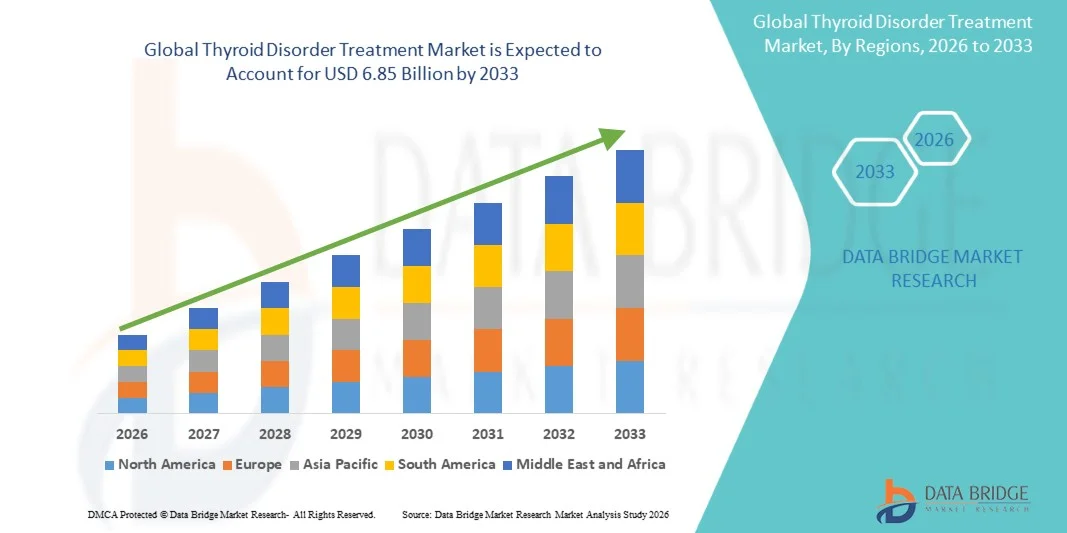
As per Data Bridge Market Research analysis the thyroid disorder treatment market was valued at USD 3.96 billion in 2025 and is projected to reach USD 6.85 billion by 2033, growing at a CAGR of 7.10 from 2026 to 2033. The market is experiencing consistent growth driven by the increasing prevalence of hypothyroidism, hyperthyroidism, and autoimmune thyroid diseases, rising demand for effective thyroid therapies, and advancements in patient-centric treatment solutions.
The growing burden of thyroid disorders globally, combined with increasing awareness regarding diagnosis and long-term disease management, is encouraging the adoption of thyroid replacement therapies, antithyroid medications, and advanced treatment options. Levothyroxine-based therapies remain a major component of thyroid disorder management, while innovations such as liquid levothyroxine formulations, excipient-free tablets, and personalized treatment approaches are improving treatment efficacy and patient adherence.
Market Size & Forecast
- Global Market Value (2025): USD 3.96 Billion
- Expected Market Value (2033): USD 6.85 Billion
- Forecast CAGR (2026–2033): 7.10%
- Leading Region in 2025: North America
- Fastest Growing Region: Asia Pacific
Key Market Trends & Insights
- North America dominated the thyroid disorder treatment market with the largest revenue share of 44.89% in 2025 supported by the high prevalence of thyroid disorders, advanced healthcare infrastructure, increased adoption of thyroid hormone replacement therapies, and strong presence of established pharmaceutical companies.
- The levothyroxine segment led the market with a 70.50% share in 2025, driven by its widespread use as the standard treatment for hypothyroidism and thyroid hormone replacement therapy.
- Asia-Pacific is expected to be the fastest-growing region at a CAGR of 5.68% during the forecast period, fueled by increasing awareness regarding thyroid disorders, improving healthcare access, rising healthcare expenditure, and growing demand for thyroid treatment solutions across emerging economies.
- Imidazole-based compounds are the fastest-growing drug type, projected to register a CAGR of 4.35%, reflecting the surge in increasing demand for antithyroid medications used in hyperthyroidism treatment.
- The hypothyroidism segment dominated the disease type category with a 80.15% revenue share in 2025, led by the increasing global prevalence of thyroid hormone deficiency disorders.
- Oral accounted for 94.89% of the market, preferred by the widespread adoption of oral thyroid medications, particularly levothyroxine tablets, for long-term thyroid hormone replacement therapy.
- The hyperthyroidism segment is the fastest-growing disease type category, with a CAGR of 5.11%, driven by the increasing prevalence of thyroid hormone overproduction disorders and autoimmune conditions such as Graves’ disease.
Report Scope and Thyroid Disorder Treatment Market Segmentation
|
Attributes |
Thyroid Disorder Treatment Key Market Insights |
|
Segments Covered |
|
|
Countries Covered |
North America
Europe
Asia-Pacific
Middle East and Africa
South America
|
|
Key Market Players |
|
|
Market Opportunities |
|
|
Value Added Data Infosets |
In addition to the insights on market scenarios such as market value, growth rate, segmentation, geographical coverage, and major players, the market reports curated by the Data Bridge Market Research also include in-depth expert analysis, patient epidemiology, pipeline analysis, pricing analysis, and regulatory framework. |
Thyroid Disorder Treatment Market Trends
Trend: Growing Adoption of Advanced Levothyroxine Formulations
Pharmaceutical companies are increasingly developing advanced levothyroxine formulations to improve treatment convenience, absorption, and patient adherence in long-term hypothyroidism management. The introduction of liquid formulations, soft gel capsules, and excipient-free tablets is addressing challenges associated with conventional therapies, including absorption variability, drug-food interactions, and gastrointestinal-related treatment limitations. These patient-focused formulations are supporting improved therapeutic outcomes while expanding treatment options for individuals requiring lifelong thyroid hormone replacement therapy. The increasing preference for alternative levothyroxine formulations is also encouraging manufacturers to focus on improving bioavailability, dosing flexibility, and treatment compliance among patients with difficult-to-control thyroid hormone levels. For instance, a clinical study published in the Journal of Clinical & Translational Endocrinology demonstrated that liquid and soft gel levothyroxine formulations achieved improved thyroid-stimulating hormone (TSH) control compared with traditional tablet formulations in hypothyroid patients, supporting the adoption of advanced formulations and their role in improving treatment effectiveness.
The growing adoption of advanced levothyroxine formulations is enhancing treatment outcomes, improving patient adherence, and creating new opportunities for innovation and product differentiation within the global thyroid disorder treatment market.
Thyroid Disorder Treatment Market Dynamics
Key Market Driver: Increasing Prevalence of Thyroid Disorders and Rising Disease Awareness
The increasing global prevalence of hypothyroidism, hyperthyroidism, and autoimmune thyroid disorders is creating substantial demand for effective thyroid disorder treatment solutions. Rising awareness regarding thyroid disease symptoms, improved diagnostic capabilities, and expanding screening programs are encouraging early disease detection and treatment initiation. The growing burden of thyroid-related conditions, particularly autoimmune thyroid diseases such as Hashimoto’s thyroiditis and Graves’ disease, is increasing the need for continuous thyroid hormone replacement therapies and long-term disease management solutions. Pharmaceutical companies are focusing on improving access to thyroid medications and developing patient-friendly treatment options to address the expanding global patient population. For instance, the National Institute of Diabetes and Digestive and Kidney Diseases (NIDDK) identifies hypothyroidism and Hashimoto’s disease as major thyroid conditions requiring diagnosis and lifelong management, increasing the demand for thyroid hormone replacement therapies such as levothyroxine for maintaining normal hormone levels.
The rising prevalence of thyroid disorders, coupled with growing disease awareness and improvements in diagnostic capabilities, is expanding the patient pool requiring long-term treatment, thereby driving sustained demand for thyroid disorder therapies and supporting overall market growth.
Key Restraint/Challenge: Limited Access to Affordable Thyroid Disorder Treatment
A significant challenge in the thyroid disorder treatment market is limited access to affordable medicines and healthcare services, particularly across low- and middle-income countries. High out-of-pocket healthcare expenditure, inadequate availability of essential medicines, and uneven healthcare infrastructure continue to affect timely diagnosis and long-term treatment adherence. Since many thyroid disorders require lifelong medication, affordability challenges can directly impact patient compliance, resulting in inconsistent hormone control and increased risk of disease complications. These barriers remain a major concern for healthcare systems aiming to improve thyroid disorder management among underserved populations requiring continuous therapy. For instance, In 2025, the World Health Organization reports that affordability and availability of essential medicines remain major challenges in many low- and middle-income countries, where patients often face difficulties accessing required long-term therapies due to financial and healthcare system limitations.
Persistent barriers to medicine affordability and healthcare access can delay diagnosis, reduce treatment adherence, and limit effective disease management, thereby restraining the growth potential of the global thyroid disorder treatment market, particularly in emerging and underserved regions.
Key Market Opportunity: Rising Demand for Affordable Levothyroxine Therapies to Improve Global Treatment Accessibility
The growing availability of low-cost levothyroxine formulations, along with the increasing presence of generic and regional manufacturers, has significantly improved the accessibility of thyroid hormone replacement therapies. In developing regions such as Asia, Africa, Latin America, and Eastern Europe, where hypothyroidism often remains underdiagnosed and undertreated due to medication costs and limited healthcare coverage, affordable levothyroxine products are helping bridge treatment gaps by supporting therapy initiation and long-term adherence. For instance, in countries including India, Indonesia, and Nigeria, the introduction of locally manufactured generic levothyroxine tablets has contributed to a substantial reduction in treatment costs compared with branded imported products. Improved affordability encourages consistent medication use and enables healthcare systems to manage thyroid disorders more effectively at a larger scale. In addition, lower-cost levothyroxine options are supporting the inclusion of thyroid medications in essential drug lists, helping maintain availability across government hospitals and rural healthcare facilities.
Pharmaceutical companies are increasingly focusing on affordability-driven growth opportunities by optimizing manufacturing processes and leveraging economies of scale to provide bioequivalent levothyroxine products at competitive prices while maintaining quality and therapeutic effectiveness
Thyroid Disorder Treatment Market Scope
The thyroid disorder treatment market is segmented on the basis of drug type, disease type, and route of administration.
- By Drug Type
On the basis of drug type, the thyroid disorder treatment market is segmented into levothyroxine and imidazole-based compounds. The levothyroxine segment dominated the market with a 70.50% share in 2025, owing to its widespread use as the standard treatment for hypothyroidism and thyroid hormone replacement therapy. Levothyroxine is a synthetic form of thyroxine (T4) that helps restore normal thyroid hormone levels in patients with thyroid hormone deficiency. The segment benefits from the increasing prevalence of hypothyroidism, rising diagnosis rates, and the requirement for lifelong hormone replacement therapy. Growing availability of generic levothyroxine formulations and increasing awareness regarding thyroid disorder management are further supporting segment growth. Advancements in formulations, including liquid and soft gel versions, are improving treatment adherence and expanding patient treatment options
The imidazole-based compounds segment is projected to register the fastest growth at a CAGR of 4.35% during the forecast period, driven by increasing demand for antithyroid medications used in hyperthyroidism treatment. These compounds, including methimazole and carbimazole, are widely used to reduce excessive thyroid hormone production in patients with conditions such as Graves’ disease. Rising prevalence of hyperthyroidism, increasing disease awareness, and improved access to endocrine healthcare are contributing to segment expansion. Continuous advancements in antithyroid drug therapies are improving treatment effectiveness and patient outcomes. Increasing healthcare investments in emerging economies are further supporting the adoption of these medications. Growing diagnosis rates of thyroid hormone imbalance are expected to accelerate demand for imidazole-based therapies.
- By Disease Type
On the basis of disease type, the thyroid disorder treatment market is segmented into hypothyroidism and hyperthyroidism. The hypothyroidism segment dominated the market with an 80.15% share in 2025, driven by the increasing global prevalence of thyroid hormone deficiency disorders. Hypothyroidism is one of the most common thyroid conditions and requires continuous treatment, primarily through levothyroxine-based hormone replacement therapy. The segment benefits from increasing screening programs, improved diagnostic capabilities, and growing awareness regarding thyroid disease management. The rising incidence of autoimmune thyroid disorders, particularly Hashimoto’s thyroiditis, is further increasing demand for hypothyroidism treatment solutions. “For instance, according to a study published in the Journal of the Endocrine Society in 2023, previous estimates based on the National Health and Nutrition Examination Survey (NHANES) reported hypothyroidism prevalence of approximately 4.6% among the U.S. population.
The hyperthyroidism segment is expected to witness the fastest growth at a CAGR of 5.11% during the forecast period, driven by the increasing prevalence of thyroid hormone overproduction disorders and autoimmune conditions such as Graves’ disease. Hyperthyroidism treatment includes antithyroid medications, radioactive iodine therapy, and surgical interventions depending on disease severity. Increasing awareness regarding hyperthyroidism symptoms and complications is improving diagnosis rates globally. Advancements in thyroid function testing and endocrine care are enabling earlier detection and treatment initiation. For instance, according to a report published by the National Center for Biotechnology Information (NCBI) in StatPearls, the overall prevalence of hyperthyroidism in the United States is approximately 1.2%, while Graves’ disease, the most common cause of hyperthyroidism, has an incidence of 20/100,000 to 50/100,000 individuals.
- By Route of Administration
On the basis of route of administration, the thyroid disorder treatment market is segmented into oral and intravenous. The oral segment dominated the market with a 94.89% share in 2025, supported by the widespread adoption of oral thyroid medications, particularly levothyroxine tablets, for long-term thyroid hormone replacement therapy. Oral administration is preferred due to its convenience, cost-effectiveness, and suitability for lifelong disease management. The segment benefits from the availability of multiple dosage strengths, generic formulations, and patient-friendly treatment options. Increasing patient preference for home-based medication management is further strengthening demand for oral therapies. For instance, in December 2023, the U.S. Food and Drug Administration (FDA) approved updated labeling changes for TIROSINT-SOL (levothyroxine sodium) oral solution, a thyroid hormone replacement therapy indicated for the treatment of primary, secondary, and tertiary hypothyroidism.
The intravenous segment is expected to witness steady growth during the forecast period, driven by its application in emergency care and specialized clinical conditions requiring rapid thyroid hormone administration. Intravenous therapy is primarily used in hospital settings for patients unable to tolerate oral medications or requiring immediate treatment intervention. Increasing improvements in hospital infrastructure, critical care facilities, and endocrine management capabilities are supporting segment adoption. Although intravenous administration represents a smaller share compared with oral therapy, it remains important for severe thyroid-related conditions and acute medical situations. For instance, Levothyroxine injection is used to treat severe hypothyroidism/myxedema coma and is used as a substitute for the oral dose usage.
Thyroid Disorder Treatment Market Regional Analysis
North America dominated the thyroid disorder treatment market with the largest revenue share of 44.89% in 2025 supported by the high prevalence of thyroid disorders, advanced healthcare infrastructure, increased adoption of thyroid hormone replacement therapies, and strong presence of established pharmaceutical companies. The region also benefits from improved diagnostic capabilities, widespread availability of levothyroxine-based treatments, and increasing awareness regarding thyroid disease management. Growing healthcare expenditure, expanding screening programs, and continuous advancements in thyroid disorder treatment approaches are accelerating market development. Increasing focus on early diagnosis, personalized treatment strategies, and improved access to affordable thyroid medications continues to strengthen North America's leadership position in the global market.
U.S. Thyroid Disorder Treatment Market Insight
The U.S. thyroid disorder treatment market is witnessing strong growth due to the high prevalence of thyroid disorders, increasing diagnosis rates, and advanced healthcare infrastructure supporting thyroid disease management. The country’s mature pharmaceutical ecosystem, along with widespread adoption of levothyroxine-based hormone replacement therapies and advanced thyroid treatment solutions, is driving demand across hospitals, clinics, and retail pharmacies. In addition, growing awareness regarding thyroid disorders, improved screening programs, and increasing focus on early diagnosis and long-term disease management are accelerating treatment adoption across the country. For instance, according to the National Health and Nutrition Examination Survey (NHANES), previous estimates reported that hypothyroidism affected approximately 4.6% of the U.S. population, including overt and subclinical hypothyroidism, highlighting the significant demand for thyroid hormone replacement therapies.
Europe Thyroid Disorder Treatment Market Insight
The Europe thyroid disorder treatment market remains a major contributor to global revenue, driven by advanced healthcare systems, increasing prevalence of thyroid disorders, and strong availability of thyroid hormone replacement therapies. The widespread adoption of levothyroxine-based treatments, increasing healthcare expenditure, and improved diagnostic capabilities are supporting market expansion across the region. Increasing focus on evidence-based treatment guidelines, early diagnosis, and standardized thyroid disease management continues to enhance the adoption of thyroid disorder treatments throughout Europe. For instance, according to an article published in Dtsch Arztebl Int in 2023, decreased thyroid-stimulating hormone (TSH) levels were observed in approximately 8–10% of women aged 40–59 years living in an iodine-deficient area of Germany. The increasing prevalence of thyroid dysfunction associated with age and iodine deficiency highlights the need for effective diagnosis and treatment options, thereby supporting the growth of the thyroid disorder treatment market.
U.K. Thyroid Disorder Treatment Market Insight
The U.K. thyroid disorder treatment market is experiencing steady growth, supported by increasing prevalence of thyroid conditions, expanding healthcare awareness, and rising adoption of effective thyroid hormone replacement therapies. Increasing investments in healthcare infrastructure and growing demand for accessible thyroid diagnosis and treatment solutions are contributing to market growth. Furthermore, the availability of national healthcare services, standardized treatment pathways, and widespread use of levothyroxine therapy are strengthening the U.K. position in the thyroid disorder treatment industry. For instance, the National Health Service (NHS) states that underactive thyroid (hypothyroidism) is commonly treated with daily levothyroxine tablets, demonstrating the continued dependence on thyroid hormone replacement therapy for long-term disease management.
Asia-Pacific Thyroid Disorder Treatment Market Insight
The Asia-Pacific thyroid disorder treatment market is expected to witness rapid growth, driven by increasing prevalence of thyroid disorders, expanding healthcare infrastructure, and rising awareness regarding thyroid disease diagnosis and treatment across countries such as China, India, and Japan. Growing healthcare expenditure, increasing availability of generic thyroid medications, and rising demand for affordable treatment solutions are supporting regional market expansion. In addition, improving access to diagnostic facilities and increasing focus on early detection and long-term thyroid disease management are accelerating treatment adoption across emerging economies. For instance, a nationwide cross-sectional study conducted among 78,470 adults across 31 provinces in China reported a hypothyroidism prevalence of 13.95%, demonstrating the significant patient population requiring thyroid disorder diagnosis and treatment.
Japan Thyroid Disorder Treatment Market Insight
The Japan thyroid disorder treatment market is witnessing consistent growth due to rising awareness regarding thyroid health, advanced healthcare systems, and increasing adoption of thyroid hormone replacement therapies. Healthcare providers and pharmaceutical companies are focusing on improving thyroid disorder diagnosis, treatment accessibility, and patient management approaches. Moreover, increasing emphasis on clinical guidelines, thyroid monitoring, and management of subclinical thyroid disorders is further contributing to market growth. For instance, the Japan Thyroid Association highlights that subclinical hypothyroidism prevalence has been reported between 4% and 10% in general populations, supporting the need for continued thyroid monitoring and treatment strategies.
China Thyroid Disorder Treatment Market Insight
The China thyroid disorder treatment market is growing rapidly, driven by increasing prevalence of thyroid disorders, expanding healthcare infrastructure, and rising government focus on improving disease diagnosis and treatment accessibility. Growing adoption of thyroid hormone replacement therapies, increasing availability of generic medications, and rising awareness regarding thyroid disease management are significantly boosting market demand. In addition, increasing healthcare investments, improved diagnostic facilities, and expanding pharmaceutical manufacturing capabilities are positioning China as one of the fastest-growing markets for thyroid disorder treatment globally. For instance, the Thyroid Disorders, Iodine Status and Diabetes Epidemiological Study conducted across 31 provinces in China reported hypothyroidism prevalence of 13.95% among 78,470 adults, indicating a substantial disease burden and growing requirement for thyroid disorder treatments.
Thyroid Disorder Treatment Market Share
The thyroid disorder treatment industry is primarily led by well-established companies, including:
- AbbVie Inc. (U.S.)
- AstraZeneca (U.K.)
- Merck KGaA (Germany)
- Sanofi (France)
- Pfizer Inc. (U.S.)
- Novartis AG (Switzerland)
- Hoffmann-La Roche Ltd (Switzerland)
- Teva Pharmaceutical Industries Ltd. (Israel)
- Viatris Inc. (U.S.)
- Sun Pharmaceutical Industries Ltd. (India)
- Intas Pharmaceuticals Ltd. (India)
- Cipla (India)
- Lupin (India)
- Reddy's Laboratories Ltd. (India)
- AMNEAL PHARMACEUTICALS LLC (U.S.)
- IBSA Institut Biochimique SA (Switzerland)
- Hikma Pharmaceuticals PLC (U.K.)
- Aurobindo Pharma Limited (India)
- Alvogen (U.S.)
Latest Developments in Thyroid Disorder Treatment Market
- In February 2025, the U.S. Food and Drug Administration (FDA) approved updates to levothyroxine sodium oral solution labeling, providing additional guidance on dosing and administration for hypothyroidism treatment. The FDA review highlighted that levothyroxine remains the standard-of-care therapy for hypothyroidism and that oral solution formulations provide an additional option for patients who have difficulty swallowing tablets, including pediatric and elderly populations
- In May 2024, Ascendis Pharma announced that the U.S. FDA extended the review period for TransCon™ PTH (palopegteriparatide), an investigational hormone therapy for adults with hypoparathyroidism. The development highlighted continued innovation in hormone replacement approaches for endocrine disorders and the advancement of long-acting therapies
- In June 2023, Ascendis Pharma presented one-year Phase 3 PaTHway trial data for TransCon PTH in adults with hypoparathyroidism. The study evaluated sustained improvements in clinical outcomes and patient-reported quality of life measures, demonstrating continued innovation in endocrine hormone replacement therapies
- In May 2023, Ascendis Pharma announced that the U.S. FDA issued a Complete Response Letter for TransCon PTH, requesting additional information related to manufacturing controls. The company continued working with regulators to advance development of the therapy for adults with hypoparathyroidism
- In May 2022, the U.S. Food and Drug Administration (FDA) published a real-world study evaluating the interchangeability of generic levothyroxine products, confirming that patients switching between FDA-approved generic levothyroxine products maintained similar thyroid health outcomes compared with patients using a consistent product

- Interactive Data Analysis Dashboard
- Company Analysis Dashboard for high growth potential opportunities
- Research Analyst Access for customization & queries
- Competitor Analysis with Interactive dashboard
- Latest News, Updates & Trend analysis
- Harness the Power of Benchmark Analysis for Comprehensive Competitor Tracking
Data collection and base year analysis are done using data collection modules with large sample sizes. The stage includes obtaining market information or related data through various sources and strategies. It includes examining and planning all the data acquired from the past in advance. It likewise envelops the examination of information inconsistencies seen across different information sources. The market data is analysed and estimated using market statistical and coherent models. Also, market share analysis and key trend analysis are the major success factors in the market report. To know more, please request an analyst call or drop down your inquiry.
The key research methodology used by DBMR research team is data triangulation which involves data mining, analysis of the impact of data variables on the market and primary (industry expert) validation. Data models include Vendor Positioning Grid, Market Time Line Analysis, Market Overview and Guide, Company Positioning Grid, Patent Analysis, Pricing Analysis, Company Market Share Analysis, Standards of Measurement, Global versus Regional and Vendor Share Analysis. To know more about the research methodology, drop in an inquiry to speak to our industry experts.
Data Bridge Market Research is a leader in advanced formative research. We take pride in servicing our existing and new customers with data and analysis that match and suits their goal. The report can be customized to include price trend analysis of target brands understanding the market for additional countries (ask for the list of countries), clinical trial results data, literature review, refurbished market and product base analysis. Market analysis of target competitors can be analyzed from technology-based analysis to market portfolio strategies. We can add as many competitors that you require data about in the format and data style you are looking for. Our team of analysts can also provide you data in crude raw excel files pivot tables (Fact book) or can assist you in creating presentations from the data sets available in the report.












