


What is the Tietze Syndrome Market Size and Growth Rate?
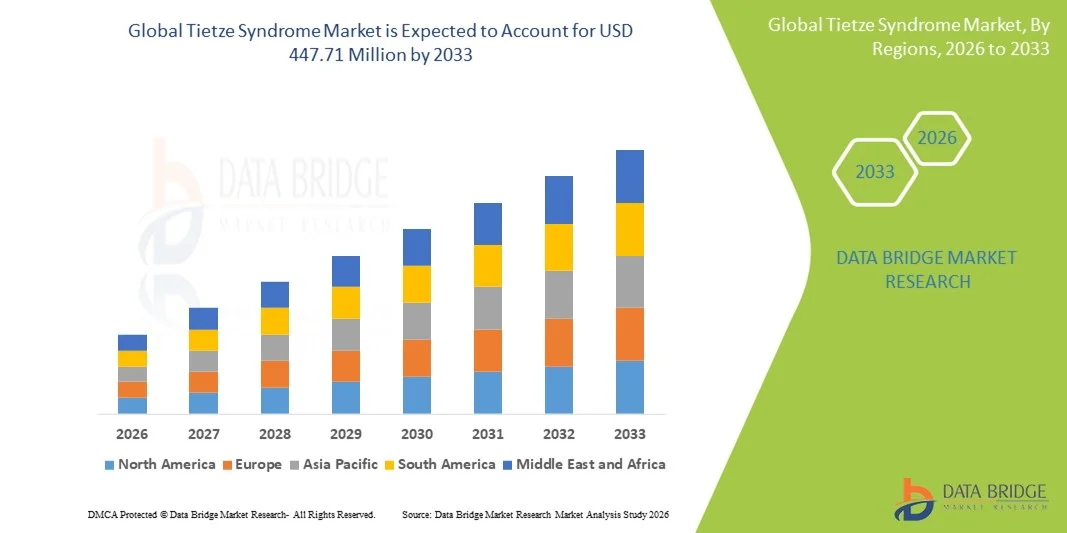
- The global Tietze Syndrome market size was valued at USD 340.00 million in 2025 and is expected to reach USD 447.71 million by 2033, at a CAGR of 3.50% during the forecast period
- The market growth is largely fueled by the increasing awareness, improved diagnostic techniques, and rising prevalence of musculoskeletal and chest-wall disorders, leading to better identification and treatment of Tietze Syndrome cases
- Furthermore, growing demand for effective management and symptomatic relief options, including pain relief therapies, physiotherapy, and minimally invasive procedures, is establishing structured treatment pathways as the standard of care. These converging factors are accelerating the adoption of treatment solutions, thereby significantly boosting the industry's growth
Market Size & Forecast
- Global Market Value (2025): USD 340.00 million
- Expected Market Value (2033): USD 447.71 million
- Forecast CAGR (2026-2033): 3.50%
What are the Major Takeaways of Tietze Syndrome Market?
- Tietze Syndrome, a rare musculoskeletal disorder characterized by painful swelling of the costal cartilage, is increasingly recognized by healthcare providers due to advancements in diagnostic imaging and growing awareness among patients, making timely diagnosis and effective management critical in both outpatient and hospital settings
- The escalating demand for treatment solutions is primarily fueled by rising awareness of chest-wall disorders, improved diagnostic capabilities, and the increasing focus on patient-centric care for pain relief and functional recovery
- North America dominated the Tietze Syndrome market with the largest revenue share of 43% in 2025, driven by high healthcare expenditure, advanced diagnostic infrastructure, and strong adoption of both conservative and interventional treatment options, particularly in the U.S., where increased awareness campaigns and clinical guidelines have improved diagnosis rates
- Asia-Pacific is expected to be the fastest growing regions in the Tietze Syndrome market during the forecast period, owing to increasing healthcare access, growing physician awareness, and improved availability of minimally invasive and supportive therapies
- Nonsteroidal Anti-inflammatory Drugs (NSAIDs) segment dominated the Tietze Syndrome market with a market share of 45.6% in 2025, driven by its widespread use for symptomatic relief, established effectiveness, and ease of administration in both outpatient and clinical care settings
Report Scope and Tietze Syndrome Market Segmentation
|
Attributes |
Tietze Syndrome Key Market Insights |
|
Segments Covered |
|
|
Countries Covered |
North America
Europe
Asia-Pacific
Middle East and Africa
South America
|
|
Key Market Players |
|
|
Market Opportunities |
|
|
Value Added Data Infosets |
In addition to the insights on market scenarios such as market value, growth rate, segmentation, geographical coverage, and major players, the market reports curated by the Data Bridge Market Research also include in-depth expert analysis, patient epidemiology, pipeline analysis, pricing analysis, and regulatory framework |
What is the Key Trend in the Tietze Syndrome Market?
Advancements in Diagnostic Imaging and Early Detection
- A significant and accelerating trend in the global Tietze Syndrome market is the increasing use of advanced diagnostic techniques such as MRI, ultrasound, and CT scans, enabling earlier and more accurate identification of costal cartilage inflammation
- For instance, hospitals increasingly utilize high-resolution MRI imaging to differentiate Tietze Syndrome from other chest-wall disorders, reducing misdiagnosis and unnecessary treatments
- Integration of diagnostic imaging with electronic health records (EHRs) allows clinicians to track patient progress, monitor treatment outcomes, and optimize care plans, enhancing overall patient management
- Enhanced awareness campaigns among physicians and patients are facilitating early consultations, ensuring timely initiation of therapy and reducing the risk of chronic pain or complications
- Adoption of AI-assisted imaging and machine learning algorithms for pattern recognition in chest-wall abnormalities is improving diagnostic precision and workflow efficiency
- Growing collaboration between diagnostic centers and pharmaceutical companies is promoting integrated care solutions, combining early detection with effective therapeutic interventions
- This trend towards more precise, data-driven diagnostics is reshaping clinician and patient expectations for care quality. Consequently, diagnostic centers and hospitals are investing in AI-assisted imaging and training to improve accuracy and efficiency
- The demand for advanced, minimally invasive diagnostic solutions is growing rapidly across both outpatient and hospital settings, as healthcare providers aim to improve patient outcomes and reduce long-term management costs
Tietze Syndrome Market Dynamics
Driver
Increasing Awareness and Rising Demand for Effective Management
- The growing awareness of Tietze Syndrome among healthcare professionals and patients, coupled with the increasing prevalence of musculoskeletal chest-wall disorders, is a significant driver of market growth
- For instance, in March 2025, leading hospitals in North America launched awareness programs targeting early diagnosis of chest-wall pain syndromes to reduce misdiagnosis rates
- As patients and physicians seek effective symptom relief and functional recovery, demand for NSAIDs, corticosteroids, physiotherapy, and minimally invasive interventions continues to rise
- Furthermore, increasing adoption of structured treatment protocols and guidelines by clinics and hospitals is making comprehensive care more standardized and accessible
- The convenience of outpatient management, combined with the availability of user-friendly treatment options and telemedicine follow-ups, is driving the adoption of Tietze Syndrome therapies across both clinical and hospital settings
- Expanding healthcare insurance coverage for diagnostic procedures and treatment therapies is enhancing patient access to care, further fueling market demand
- Rising investment in research and development for novel therapeutics and supportive care solutions is enabling better patient outcomes and stimulating market expansion
- Growing collaborations between hospitals, research centers, and physiotherapy clinics are facilitating integrated patient management programs, boosting adoption of treatment solutions globally
Restraint/Challenge
Limited Epidemiological Data and Treatment Standardization Issues
- The rarity of Tietze Syndrome and limited population-based prevalence data pose a significant challenge for accurate market sizing and treatment planning
- For instance, misdiagnosis as costochondritis or other chest-wall disorders can delay therapy initiation, affecting patient outcomes and clinician confidence in treatment protocols
- Addressing these knowledge gaps through physician education, clinical studies, and improved reporting systems is essential for market growth and patient trust
- In addition, variability in treatment approaches across regions, including inconsistent use of NSAIDs, corticosteroids, and physiotherapy, limits the establishment of standardized care pathways
- Lack of awareness among general practitioners and limited patient education can lead to underdiagnosis and delayed intervention, hampering market growth
- Regulatory hurdles and varying healthcare reimbursement policies across regions restrict widespread adoption of advanced diagnostic tools and therapies
- Overcoming these challenges through awareness campaigns, standardized treatment guidelines, and better epidemiological research will be crucial for sustained growth and adoption of effective therapies
- Integration of telemedicine and remote monitoring solutions faces operational and compliance barriers, limiting the scalability of modern patient management approaches
How is the Tietze Syndrome Market Segmented?
The market is segmented on the basis of treatment, diagnosis, symptoms, dosage, route of administration, end-users, and distribution channel.
- By Treatment
On the basis of treatment, the Tietze Syndrome market is segmented into Nonsteroidal Anti-inflammatory Drugs (NSAIDs), corticosteroid, analgesics, physiotherapy, and others. The NSAIDs segment dominated the market with the largest revenue share of 45.6% in 2025, driven by its effectiveness in reducing inflammation and alleviating chest-wall pain. NSAIDs are widely prescribed due to rapid symptomatic relief and availability in oral and injectable forms. Physicians prefer NSAIDs for initial treatment because of established safety profiles and ease of administration in outpatient settings. High patient adherence and cost-effectiveness reinforce their dominance. NSAIDs are frequently combined with physiotherapy to improve recovery outcomes. Their widespread acceptance across hospitals, clinics, and pharmacies strengthens market stability.
The Physiotherapy segment is expected to witness the fastest growth rate of 18.5% from 2026 to 2033, fueled by rising awareness of non-pharmacological treatment approaches. Physiotherapy helps reduce recurrence, improve mobility, and complement medical management, especially for patients seeking holistic care. Hospitals and clinics are increasingly adopting structured rehabilitation programs. Tele-physiotherapy services in developed regions are expanding access and convenience for patients. Growing research highlighting long-term benefits of physiotherapy contributes to adoption. Patient preference for drug-free interventions is driving rapid growth.
- By Diagnosis
On the basis of diagnosis, the market is segmented into Electrocardiogram, MRI, biopsy, ultrasound, chest X-ray, CT scan, and others. The MRI segment dominated the market with a share of 38.7% in 2025, due to high accuracy in detecting costal cartilage inflammation and differentiating Tietze Syndrome from other chest-wall disorders. MRI is widely preferred in hospitals and diagnostic centers because it is non-invasive. It enables precise treatment planning and reduces the need for exploratory procedures. MRI supports longitudinal patient monitoring. Investment in advanced imaging facilities reinforces its dominance. MRI adoption is driven by physician preference for reliable diagnostic results.
The Ultrasound segment is expected to witness the fastest growth rate of 20.2% from 2026 to 2033, owing to its cost-effectiveness, portability, and real-time imaging capabilities. Ultrasound is increasingly adopted in outpatient and clinic settings. Clinicians recognize its utility for early detection and monitoring of inflammation. Portable ultrasound devices allow point-of-care diagnostics. Training programs are increasing adoption among healthcare professionals. Rising patient awareness of non-invasive diagnostics further fuels growth.
- By Symptoms
On the basis of symptoms, the market is segmented into stiffness, coughing, sneezing, weakness, numbness, spasm, and others. The Stiffness segment dominated the market with a share of 41.3% in 2025, as chest-wall stiffness is the most common symptom prompting patients to seek consultation. Early identification enables timely NSAID or physiotherapy treatment. Awareness programs highlight stiffness as a key symptom. Clinics and hospitals use stiffness as an early diagnostic indicator. Recognition of stiffness improves patient outcomes. Physician guidelines recommend monitoring stiffness during follow-ups.
The Spasm segment is expected to witness the fastest growth rate of 19.0% from 2026 to 2033, due to increasing recognition of muscle spasms as a complication requiring targeted management. Hospitals are adopting combination therapy approaches to manage spasms effectively. Physiotherapy is integrated to prevent recurrence. Patient education emphasizes reporting spasm episodes. Rising research highlights spasm impact on quality of life. Spasm-focused therapies are gaining clinical and market traction.
- By Dosage
On the basis of dosage, the market is segmented into tablet, injection, and others. The Tablet segment dominated the market with a share of 52.5% in 2025, as oral medication remains convenient and widely prescribed for NSAIDs and analgesics. Tablets allow self-administration at home and support long-term symptom management. They are cost-effective and improve patient compliance. Physicians favor tablets for early-stage treatment. Hospital pharmacies widely dispense tablets. Patient familiarity and convenience sustain their market leadership.
The Injection segment is expected to witness the fastest growth rate of 17.8% from 2026 to 2033, driven by corticosteroids and other injectable therapies in hospital settings. Injectable treatment provides rapid relief for severe cases. Minimally invasive injection techniques improve patient acceptance. Hospitals prefer injections for acute pain management. Growth is supported by targeted delivery methods. Patient education enhances adherence to injection therapy. Increased adoption in clinics complements hospital use.
- By Route of Administration
On the basis of route of administration, the market is segmented into oral and intravenous. The Oral segment dominated the market with a share of 55.0% in 2025, due to convenience, patient adherence, and outpatient compatibility. Oral NSAIDs and analgesics are widely adopted for both acute and chronic management. Physicians prescribe oral medications for early-stage patients. Hospital pharmacies ensure availability. Oral therapy reduces frequent hospital visits. High patient compliance reinforces dominance. Patient preference for self-administered treatment supports market stability.
The Intravenous segment is expected to witness the fastest growth rate of 16.5% from 2026 to 2033, due to increased use of IV corticosteroids and analgesics in hospitals. IV therapy provides rapid symptom relief for severe cases. Improved IV administration techniques enhance safety and efficacy. Hospitals adopt IV therapy for inpatient care. Patient monitoring ensures better outcomes. Physician preference for quick-acting interventions supports growth. Hospitals invest in IV infrastructure to meet increasing demand.
- By End-Users
On the basis of end-users, the market is segmented into clinic, hospital, and others. The Hospital segment dominated the market with a share of 48.2% in 2025, due to availability of advanced diagnostics, multidisciplinary teams, and inpatient facilities. Hospitals provide comprehensive management including imaging, therapy, and follow-ups. Specialized chest-wall disorder clinics support hospital dominance. Physicians prefer hospitals for complex cases. Hospitals integrate diagnosis and treatment in a single setting. Insurance coverage enhances hospital utilization. Hospital investments in training and equipment reinforce market leadership.
The Clinic segment is expected to witness the fastest growth rate of 20.0% from 2026 to 2033, fueled by rising outpatient consultations and telemedicine adoption. Clinics provide convenient access to NSAIDs, physiotherapy, and follow-ups. Early-stage diagnosis drives patient visits. Telehealth programs expand reach. Clinics focus on cost-effective care. Patient preference for local clinics boosts adoption. Increasing clinic infrastructure supports higher patient throughput. Growing infrastructure and awareness initiatives are supporting higher patient throughput and adoption of clinic-based management.
- By Distribution Channel
On the basis of distribution channel, the market is segmented into hospital pharmacy, retail pharmacy, and online pharmacy. The Hospital Pharmacy segment dominated the market with a share of 50.5% in 2025, as prescriptions are often dispensed directly in hospitals. Hospital pharmacies provide integrated care, ensuring treatment alongside diagnosis. They improve adherence by aligning medication with follow-ups. Hospitals maintain consistent stock of NSAIDs, corticosteroids, and other therapies. Physicians rely on hospital pharmacies for timely access. Patient convenience and trust reinforce dominance. Hospital pharmacy networks expand reach into multiple regions.
The Online Pharmacy segment is expected to witness the fastest growth rate of 22.3% from 2026 to 2033, driven by rising e-pharmacy adoption and home delivery convenience. Online platforms provide dosage guidance and subscription-based refills. Awareness of chronic pain management supports online purchases. Telemedicine integration encourages e-pharmacy use. Patients save time and improve adherence. Growth is strongest in developed regions with high digital literacy. Increasing regulatory support and app-based ordering boost adoption further.
Tietze Syndrome Market Regional Analysis
- North America dominated the Tietze Syndrome market with the largest revenue share of 43% in 2025, driven by high healthcare expenditure, advanced diagnostic infrastructure, and strong adoption of both conservative and interventional treatment options
- Patients and healthcare providers in the region prioritize early diagnosis and effective management, leveraging advanced imaging technologies such as MRI, CT scans, and ultrasound for accurate detection and monitoring
- This widespread adoption is further supported by a technologically advanced healthcare ecosystem, availability of specialized clinics, and growing investment in patient education programs, establishing North America as a key market for Tietze Syndrome diagnosis and treatment
U.S. Tietze Syndrome Market Insight
The U.S. Tietze Syndrome market captured the largest revenue share of 79% in 2025 within North America, fueled by rising awareness of chest-wall disorders and advanced healthcare infrastructure. Patients and clinicians are increasingly prioritizing early diagnosis through MRI, CT scans, and ultrasound imaging. The growing preference for outpatient and clinic-based management, combined with rising adoption of physiotherapy and minimally invasive treatments, further propels the market. Moreover, increased insurance coverage and reimbursement for diagnostics and therapies significantly support patient access. Telemedicine initiatives and patient education programs are also contributing to market expansion. The U.S. continues to lead the region due to high healthcare spending and technological advancement in clinical practice.
Europe Tietze Syndrome Market Insight
The Europe Tietze Syndrome market is projected to expand at a substantial CAGR throughout the forecast period, primarily driven by advanced diagnostic capabilities and increasing awareness of musculoskeletal disorders. Growing urbanization and rising disposable incomes are fostering the adoption of hospital and clinic-based treatment solutions. European patients and physicians are drawn to the convenience and efficacy of integrated management approaches, including NSAIDs, corticosteroids, and physiotherapy. The market is witnessing growth across both outpatient clinics and hospitals, with emphasis on early-stage diagnosis. Government-led health initiatives promoting awareness and training for chest-wall conditions are supporting adoption. The region is also seeing a rise in specialized rehabilitation programs that complement pharmacological treatment.
U.K. Tietze Syndrome Market Insight
The U.K. Tietze Syndrome market is anticipated to grow at a noteworthy CAGR during the forecast period, driven by increasing recognition of chest-wall disorders and demand for effective management. Concerns regarding misdiagnosis and chronic pain are motivating patients to seek early intervention in clinics and hospitals. The country’s robust healthcare infrastructure and telemedicine initiatives enhance patient access to diagnostics and treatment. Increasing use of MRI and ultrasound in routine assessments further supports market growth. The U.K.’s emphasis on patient education and awareness campaigns is expected to continue stimulating market expansion. Integration of non-pharmacological therapies, such as physiotherapy, is also driving adoption.
Germany Tietze Syndrome Market Insight
The Germany Tietze Syndrome market is expected to expand at a considerable CAGR during the forecast period, fueled by the country’s well-developed healthcare system and advanced diagnostic facilities. Growing awareness of chest-wall disorders and early treatment options is driving adoption in hospitals and clinics. Germany emphasizes innovation in medical imaging, enabling accurate differentiation from other musculoskeletal conditions. Patients increasingly prefer minimally invasive treatments combined with physiotherapy for long-term recovery. Government programs supporting patient education and preventive care are enhancing market penetration. Integration of comprehensive management protocols ensures better outcomes, further promoting adoption across both residential and clinical settings.
Asia-Pacific Tietze Syndrome Market Insight
The Asia-Pacific Tietze Syndrome market is poised to grow at the fastest CAGR of 23% during the forecast period of 2026 to 2033, driven by rising healthcare awareness, urbanization, and expanding hospital infrastructure in countries such as China, Japan, and India. The region’s growing inclination towards early diagnosis and timely treatment is increasing adoption of advanced imaging and therapy options. Government initiatives promoting healthcare access and telemedicine support market expansion. The increasing number of outpatient clinics and physiotherapy centers improves treatment availability. Affordability and rising awareness of non-invasive management methods are encouraging adoption. APAC’s growing healthcare investment and modernization of facilities are further fueling market growth.
Japan Tietze Syndrome Market Insight
The Japan Tietze Syndrome market is gaining momentum due to high awareness of musculoskeletal health and demand for convenient treatment solutions. Rapid urbanization and aging population are increasing the need for early diagnosis and effective symptom management. Integration of MRI, ultrasound, and telemedicine in clinical practice is enhancing patient monitoring. Hospitals and clinics are increasingly providing combined therapy options, including NSAIDs, corticosteroids, and physiotherapy. Patient education campaigns and preventive care initiatives are further driving adoption. The demand for user-friendly, accessible treatment methods is expected to continue fueling market growth across residential and clinical settings.
India Tietze Syndrome Market Insight
The India Tietze Syndrome market accounted for the largest market revenue share in Asia-Pacific in 2025, attributed to rising healthcare awareness, rapid urbanization, and expanding hospital and clinic infrastructure. India’s growing middle class and increasing access to diagnostic technologies, such as MRI and ultrasound, are driving early diagnosis. The push towards outpatient management, telemedicine adoption, and affordable treatment options supports market growth. Physiotherapy and supportive care programs are becoming widely available, improving patient outcomes. Domestic healthcare providers and government initiatives promoting awareness are key factors propelling the market. Increasing accessibility of medications and diagnostic services is further enhancing patient adoption rates.
Which are the Top Companies in Tietze Syndrome Market?
The Tietze Syndrome industry is primarily led by well-established companies, including:
- Pfizer Inc. (U.S.)
- Merck & Co., Inc., (U.S.)
- GSK plc (U.K.)
- Abbott (U.S.)
- F. Hoffmann La Roche Ltd (Switzerland)
- Bayer AG (Germany)
- Novartis AG (Switzerland)
- Sanofi (France)
- AstraZeneca (U.K.)
- Eli Lilly and Company, (U.S.)
- Johnson & Johnson Services, Inc. (U.S.)
- Teva Pharmaceutical Industries Ltd., (Israel)
- AbbVie Inc., (U.S.)
- Amgen Inc., (U.S.)
- Boehringer Ingelheim International GmbH. (Germany)
- Biogen (U.S.)
- UCB S.A., (Belgium)
- Lupin (India)
What are the Recent Developments in Global Tietze Syndrome Market?
- In April 2025, a case report “Little‑Known Cause of Chest Pain: Tietze Syndrome Case Report” presented a 38‑year-old female patient with chest pain and anterior chest swelling, despite normal lab values and after excluding other causes. The authors emphasized that Tietze Syndrome remains a relevant diagnosis even when standard tests are normal, highlighting the need for clinical vigilance and awareness among physicians to avoid misdiagnosis
- In August 2023, a study titled “Post‑traumatic Tietze syndrome as an occupational accident: A case report study” described a 35‑year-old worker who developed Tietze Syndrome after two episodes of occupational chest trauma. Chest‑CT revealed osteolysis at the affected cartilage junction. This report challenges the assumption that Tietze is always idiopathic it shows that repeated trauma can trigger costochondral inflammation, expanding etiological understanding of the disease
- In April 2023, another report “Post‑COVID‑19 Infection Tietze’s Syndrome in a Young Adult Patient” documented a 35‑year-old previously healthy male who developed Tietze Syndrome weeks after recovering from COVID‑19. His case underscores that even mild or asymptomatic COVID‑19 infections may precipitate Tietze, suggesting a possible link between viral infection and onset of costal cartilage inflammation
- In July 2022, a published case report “Tietze’s Syndrome Post‑COVID‑19 Infection in an Adult Patient” identified a patient developing Tietze’s syndrome shortly after an asymptomatic SARS‑CoV‑2 infection. The patient presented with chest and sternoclavicular pain; diagnosis was confirmed by imaging and anti‑inflammatory treatment led to recovery. This flagged post‑COVID syndrome as a potential trigger for Tietze, highlighting the need for clinicians to include Tietze in differential diagnoses for post‑COVID chest pain
- In March 2022, a case report titled “Tietze’s syndrome presenting as enthesitis diagnosed by ultrasound” described a 42‑year-old man whose syndrome manifested as enthesitis of a sternocostal joint diagnosed via ultrasound and MRI. This broadens understanding of Tietze Syndrome’s possible tissue involvement, showing it may not be limited to cartilage swelling but also involve ligament/joint‑insertion inflammation

- Interactive Data Analysis Dashboard
- Company Analysis Dashboard for high growth potential opportunities
- Research Analyst Access for customization & queries
- Competitor Analysis with Interactive dashboard
- Latest News, Updates & Trend analysis
- Harness the Power of Benchmark Analysis for Comprehensive Competitor Tracking
Data collection and base year analysis are done using data collection modules with large sample sizes. The stage includes obtaining market information or related data through various sources and strategies. It includes examining and planning all the data acquired from the past in advance. It likewise envelops the examination of information inconsistencies seen across different information sources. The market data is analysed and estimated using market statistical and coherent models. Also, market share analysis and key trend analysis are the major success factors in the market report. To know more, please request an analyst call or drop down your inquiry.
The key research methodology used by DBMR research team is data triangulation which involves data mining, analysis of the impact of data variables on the market and primary (industry expert) validation. Data models include Vendor Positioning Grid, Market Time Line Analysis, Market Overview and Guide, Company Positioning Grid, Patent Analysis, Pricing Analysis, Company Market Share Analysis, Standards of Measurement, Global versus Regional and Vendor Share Analysis. To know more about the research methodology, drop in an inquiry to speak to our industry experts.
Data Bridge Market Research is a leader in advanced formative research. We take pride in servicing our existing and new customers with data and analysis that match and suits their goal. The report can be customized to include price trend analysis of target brands understanding the market for additional countries (ask for the list of countries), clinical trial results data, literature review, refurbished market and product base analysis. Market analysis of target competitors can be analyzed from technology-based analysis to market portfolio strategies. We can add as many competitors that you require data about in the format and data style you are looking for. Our team of analysts can also provide you data in crude raw excel files pivot tables (Fact book) or can assist you in creating presentations from the data sets available in the report.












