


Tissue Stabilization Market Overview
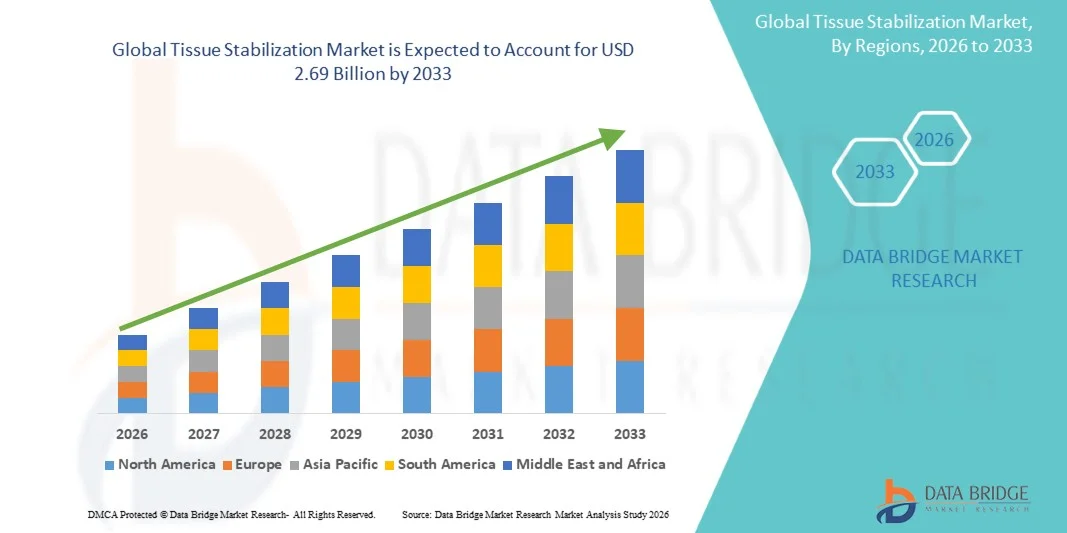
The Tissue Stabilization Market was valued at USD 1.19 billion in 2025 and is projected to reach USD 2.69 billion by 2033, growing at a CAGR of 10.80% from 2026 to 2033. Market growth is supported by rising prevalence of cardiovascular diseases, increasing adoption of off-pump coronary artery bypass grafting (OPCAB) procedures, and technological advancements in minimally invasive cardiac surgery. Expanding geriatric populations globally, coupled with greater emphasis on reducing cardiopulmonary bypass-related complications, is driving demand for tissue stabilization devices across cardiac surgical centers and hospitals.
Ongoing innovation in robotic-assisted surgical systems and advanced visualization technologies is creating new opportunities for stakeholders. In addition, growing healthcare infrastructure investments in emerging economies and increasing procedural volumes in ambulatory surgical centers are further driving market expansion over the forecast period.
Key Market Trends & Insights
- North America dominated the Tissue Stabilization Market with the largest revenue share of 41.2% in 2025, supported by high cardiovascular disease burden, advanced cardiac surgery infrastructure, and strong adoption of minimally invasive surgical techniques.
- Asia-Pacific is expected to be the fastest-growing region at a CAGR of 12.85% from 2026 to 2033, driven by expanding healthcare infrastructure, rising cardiovascular disease prevalence, increasing surgical volumes, and growing adoption of advanced cardiac surgical technologies.
- The Mechanical Tissue Stabilizers segment led the market with a 38.5% market share in 2025, reflecting established clinical utility, surgeon familiarity, and broad procedural applicability across cardiac surgery settings.
- The Robotic-Assisted Tissue Stabilization Systems segment is anticipated to be the fastest-growing technology category, driven by increasing adoption of robotic cardiac surgery platforms and demand for enhanced surgical precision.
- The Hospitals segment dominated the end-user category with a 52.8% market share in 2025, supported by comprehensive cardiac surgery capabilities, access to advanced surgical equipment, and management of complex cardiovascular cases.
- The Direct Tender segment accounted for the largest share of the distribution channel with a market share of 45.3% in 2025, reflecting concentration of high-value medical device procurement through institutional purchasing agreements and government tenders.
Market Size & Forecast
- Global Market Value (2025): USD 1.19 Billion
- Expected Market Value (2033): USD 2.69 Billion
- Forecast CAGR (2026–2033): 10.80%
- Leading Region in 2025: North America
- Fastest Growing Region: Asia-Pacific
Report Scope and Tissue Stabilization Market Segmentation
|
Attributes |
Tissue Stabilization Key Market Insights |
|
Segments Covered |
|
|
Countries Covered |
North America · U.S. · Canada · Mexico Europe · Germany · France · U.K. · Netherlands · Switzerland · Belgium · Russia · Italy · Spain · Turkey · Rest of Europe Asia-Pacific · China · Japan · India · South Korea · Singapore · Malaysia · Australia · Thailand · Indonesia · Philippines · Rest of Asia-Pacific Middle East and Africa · Saudi Arabia · U.A.E. · South Africa · Egypt · Israel · Rest of Middle East and Africa South America · Brazil · Argentina · Rest of South America |
|
Key Market Players |
|
|
Market Opportunities |
· Expansion of robotic-assisted cardiac surgery programs and integration with advanced visualization systems across major cardiac centers · Growth in off-pump coronary artery bypass procedures supported by improved patient outcomes and reduced cardiopulmonary bypass complications |
|
Value Added Data Infosets |
In addition to the insights on market scenarios such as market value, growth rate, segmentation, geographical coverage, and major players, the market reports curated by the Data Bridge Market Research also include depth expert analysis, patient epidemiology, pipeline analysis, pricing analysis, and regulatory framework. |
Tissue Stabilization Market Trends
Trend: Increasing Adoption of Minimally Invasive and Robotic-Assisted Cardiac Surgery
Clinical practice is increasingly shifting toward minimally invasive cardiac surgical approaches that reduce patient trauma, shorten recovery times, and minimize complications associated with traditional open-heart procedures. Tissue stabilization devices play a critical role in enabling surgeons to perform precise anastomosis on a beating heart during off-pump coronary artery bypass grafting (OPCAB) procedures. The integration of robotic-assisted surgical platforms with advanced tissue stabilization systems is enhancing surgical precision and expanding procedural capabilities. Educational initiatives and training programs across cardiac surgery centers are accelerating surgeon adoption of these advanced technologies.
For instance,
Leading cardiac surgery centers in North America and Europe have reported increased utilization of robotic-assisted OPCAB procedures, supported by improved tissue stabilization devices that provide enhanced cardiac surface immobilization and visualization.
In addition, clinical literature demonstrates that off-pump techniques using advanced stabilization systems result in reduced inflammatory responses, shorter intensive care unit stays, and improved neurological outcomes compared to conventional on-pump procedures.
Tissue Stabilization Market Dynamics
KeyMarket Driver: Rising Cardiovascular Disease Burden and Surgical Volumes
The increasing global prevalence of coronary artery disease, heart failure, and other cardiovascular conditions is driving demand for cardiac surgical interventions, including coronary artery bypass grafting. Tissue stabilization devices are essential components of OPCAB procedures, which are increasingly preferred due to their potential to reduce cardiopulmonary bypass-related complications. Expanding geriatric populations and lifestyle-related risk factors are contributing to higher cardiovascular disease incidence worldwide.
For instance,
The World Health Organization reports that cardiovascular diseases remain the leading cause of death globally, accounting for approximately 17.9 million deaths annually, driving sustained demand for cardiac surgical interventions and associated medical devices. The growing burden of cardiovascular diseases and increasing preference for advanced cardiac procedures are expected to sustain strong demand for tissue stabilization devices across global healthcare systems.
Key Restraint/Challenge: High Equipment Costs and Training Requirements
The adoption of advanced tissue stabilization systems, particularly robotic-assisted platforms, requires significant capital investment and specialized surgical training. Smaller healthcare facilities and institutions in resource-constrained settings may face challenges in acquiring and maintaining sophisticated stabilization equipment. Additionally, the learning curve associated with new technologies can impact initial adoption rates.
Key Market Opportunity: Expansion in Emerging Markets and Ambulatory Surgical Centers
Growing healthcare infrastructure investments in Asia-Pacific, Latin America, and the Middle East are creating significant opportunities for tissue stabilization device manufacturers. The expansion of ambulatory surgical centers performing cardiac procedures and increasing procedural volumes in these regions are driving market growth.
For instance,
Several countries in Asia-Pacific have reported substantial increases in cardiac surgery capacity, with new cardiac centers adopting advanced tissue stabilization technologies to support off-pump and minimally invasive procedures. Expanding healthcare infrastructure and rising cardiac procedure volumes in emerging markets are expected to accelerate adoption of tissue stabilization devices, creating substantial growth opportunities for manufacturers worldwide.
Tissue Stabilization Market Scope
The Tissue Stabilization market is segmented on the basis of product type, application, end user, technology, and distribution channel.
- By Product Type
On the basis of product type, the Tissue Stabilization Market is segmented into mechanical tissue stabilizers, vacuum-assisted tissue stabilizers, octopus tissue stabilizers, and accessories & consumables. The mechanical tissue stabilizers segment dominated the market with a 38.5% market share in 2025, supported by established clinical efficacy, surgeon familiarity, cost-effectiveness, and broad applicability across various cardiac surgical procedures. These devices provide reliable cardiac surface immobilization through mechanical pressure application, enabling precise coronary anastomosis during beating-heart surgery.
The vacuum-assisted tissue stabilizers segment is expected to witness strong growth from 2026 to 2033, driven by superior immobilization capabilities, reduced tissue trauma, enhanced surgical visualization, and increasing adoption in complex multi-vessel coronary bypass procedures.
- By Application
On the basis of application, the Tissue Stabilization Market is segmented into cardiac surgery, coronary artery bypass grafting, thoracic surgery, and minimally invasive surgery. The coronary artery bypass grafting segment dominated the market with a market share of 42.3% in 2025, reflecting the high volume of CABG procedures performed globally and the essential role of tissue stabilization devices in enabling off-pump surgical techniques. Strong clinical evidence supporting improved patient outcomes with OPCAB procedures continues to drive segment growth.
The minimally invasive surgery segment is expected to witness the fastest growth from 2026 to 2033, driven by increasing patient preference for less invasive procedures, shorter recovery times, reduced surgical complications, and expanding adoption of minimally invasive cardiac surgical techniques across major cardiac centers.
- By End User
On the basis of end user, the Tissue Stabilization Market is segmented into hospitals, cardiac centers, ambulatory surgical centers, and specialty clinics. The hospitals segment dominated the market with a market share of 52.8% in 2025, driven by comprehensive cardiac surgery capabilities, advanced surgical equipment availability, multidisciplinary care teams, and management of complex cardiovascular cases requiring tissue stabilization devices.
The ambulatory surgical centers segment is expected to witness the fastest growth from 2026 to 2033, driven by increasing procedural volumes in outpatient settings, cost advantages, shorter patient recovery times, and expanding capabilities for performing select cardiac and thoracic procedures.
- By Technology
On the basis of technology, the Tissue Stabilization Market is segmented into manual stabilization systems, robotic-assisted tissue stabilization systems, and advanced surgical visualization systems. The manual stabilization systems segment dominated the market with a market share of 48.6% in 2025, reflecting widespread adoption across cardiac surgery centers, established clinical protocols, lower capital requirements, and surgeon familiarity with manual stabilization techniques.
The robotic-assisted tissue stabilization systems segment is expected to witness the fastest growth from 2026 to 2033, driven by increasing adoption of robotic cardiac surgery platforms, enhanced surgical precision, improved patient outcomes, and expanding robotic surgery programs across major cardiac centers globally.
- By Distribution Channel
On the basis of distribution channel, the Tissue Stabilization Market is segmented into direct tender, medical device distributors, and online procurement platforms. The direct tender segment dominated the market with a market share of 45.3% in 2025, primarily due to the concentration of high-value medical device procurement through institutional purchasing agreements, government tenders, and group purchasing organization contracts across major hospital systems and cardiac centers.
The online procurement platforms segment is expected to record the fastest growth during 2026–2033, driven by increasing digitalization of healthcare procurement, growing adoption of e-procurement solutions, enhanced price transparency, streamlined ordering processes, and expanding online marketplace presence of medical device manufacturers.
Tissue Stabilization Market Regional Analysis
North America dominated the tissue stabilization market with a revenue share of 41.2% in 2025, supported by high cardiovascular disease burden, advanced cardiac surgery infrastructure, strong adoption of minimally invasive surgical techniques, and well-established reimbursement frameworks. Presence of leading medical device manufacturers and extensive robotic surgery programs contribute to regional market leadership.
U.S. Tissue Stabilization Market Insight
The U.S. tissue stabilization market benefits from extensive cardiac surgery capacity, high OPCAB procedure volumes, and rapid adoption of robotic-assisted surgical technologies. Major cardiac centers and academic medical institutions are driving innovation in minimally invasive cardiac surgery techniques, supported by favorable reimbursement policies and strong clinical research infrastructure.
Europe Tissue Stabilization Market Insight
The Europe tissue stabilization market remains a major contributor, with strong hospital-based cardiac surgery infrastructure and growing adoption of off-pump coronary bypass techniques across public and private healthcare systems. Germany, France, and the United Kingdom represent key markets, with increasing emphasis on minimally invasive approaches and enhanced surgical outcomes.
U.K. Tissue Stabilization Market Insight
The U.K. tissue stabilization market benefits from established National Health Service cardiac surgery networks and growing adoption of advanced stabilization technologies. Pathway-based cardiac surgery protocols and emphasis on reducing cardiopulmonary bypass complications are driving utilization of tissue stabilization devices across major cardiac centers.
Germany Tissue Stabilization Market Insight
The Germany tissue stabilization market's robust cardiac surgery infrastructure and strong medical technology sector support widespread adoption of advanced stabilization systems. German cardiac centers are increasingly integrating robotic-assisted surgical platforms with tissue stabilization technologies to enhance procedural outcomes.
Asia-Pacific Tissue Stabilization Market Insight
The Asia-Pacific tissue stabilization market is poised for rapid growth with a CAGR of 12.85% during the forecast period, driven by expanding cardiac surgery capacity, rising cardiovascular disease prevalence, increasing healthcare investments, and growing adoption of advanced surgical technologies. China, Japan, India, and South Korea represent key growth markets.
Japan Tissue Stabilization Market Insight
The Japan tissue stabilization market benefits from advanced healthcare infrastructure, high cardiovascular disease burden, and strong adoption of minimally invasive cardiac surgical techniques. Japanese cardiac centers are increasingly utilizing advanced tissue stabilization systems to support off-pump procedures and improve patient outcomes.
China Tissue Stabilization Market Insight
The China tissue stabilization market is experiencing rapid growth driven by substantial healthcare infrastructure investments, expanding cardiac surgery capacity, rising procedural volumes, and increasing adoption of international cardiac surgery best practices. Government initiatives to improve cardiovascular care are supporting market expansion.
Tissue Stabilization Market Share
The tissue stabilization industry is primarily led by well-established companies, including:
- Medtronic plc (Ireland)
- Getinge AB (Sweden)
- Terumo Corporation (Japan)
- Maquet Holding B.V. & Co. KG (Germany)
- Estech (United States)
- CardioMed Supplies Inc. (Canada)
- USSC (United States)
- Boston Scientific Corporation (U.S.)
- Abbott Laboratories (U.S.)
- Edwards Lifesciences Corporation (U.S.)
- LivaNova PLC (U.K.)
- Zimmer Biomet Holdings, Inc. (U.S.)
- Smith & Nephew plc (U.K.)
- Teleflex Incorporated (U.S.)
- Stryker Corporation (U.S.)
Latest Developments in Tissue Stabilization Market
- In February 2026, Getinge announced expanded clinical adoption of its cardiac surgery portfolio, including the Acrobat-i Stabilizer and Xpose Access Devices used in off-pump coronary artery bypass (OPCAB) procedures. The company highlighted growing demand for tissue stabilization technologies that support minimally invasive and beating-heart cardiac surgery, improving surgical precision and patient outcomes.
- In September 2025, Medtronic reported continued utilization growth of its Octopus Tissue Stabilization System and Starfish Heart Positioner across major cardiac centers worldwide. The development reflects increasing surgeon preference for off-pump coronary artery bypass procedures aimed at reducing complications associated with cardiopulmonary bypass.
- In May 2025, several leading cardiac surgery centers in Asia-Pacific announced investments in advanced OPCAB surgical programs incorporating modern tissue stabilization devices. The expansion was driven by rising cardiovascular disease prevalence and increasing adoption of minimally invasive cardiac surgery techniques throughout the region.
- In October 2024, Getinge showcased its latest cardiac surgery solutions at the European Association for Cardio-Thoracic Surgery (EACTS) Annual Meeting, highlighting innovations in tissue stabilization and heart positioning technologies designed to improve access and visualization during beating-heart procedures.
- In June 2024, clinical studies presented at international cardiothoracic surgery conferences reported favorable outcomes associated with contemporary tissue stabilization systems in OPCAB procedures, including reduced intraoperative trauma and improved procedural efficiency compared with conventional approaches.

- Interactive Data Analysis Dashboard
- Company Analysis Dashboard for high growth potential opportunities
- Research Analyst Access for customization & queries
- Competitor Analysis with Interactive dashboard
- Latest News, Updates & Trend analysis
- Harness the Power of Benchmark Analysis for Comprehensive Competitor Tracking
Data collection and base year analysis are done using data collection modules with large sample sizes. The stage includes obtaining market information or related data through various sources and strategies. It includes examining and planning all the data acquired from the past in advance. It likewise envelops the examination of information inconsistencies seen across different information sources. The market data is analysed and estimated using market statistical and coherent models. Also, market share analysis and key trend analysis are the major success factors in the market report. To know more, please request an analyst call or drop down your inquiry.
The key research methodology used by DBMR research team is data triangulation which involves data mining, analysis of the impact of data variables on the market and primary (industry expert) validation. Data models include Vendor Positioning Grid, Market Time Line Analysis, Market Overview and Guide, Company Positioning Grid, Patent Analysis, Pricing Analysis, Company Market Share Analysis, Standards of Measurement, Global versus Regional and Vendor Share Analysis. To know more about the research methodology, drop in an inquiry to speak to our industry experts.
Data Bridge Market Research is a leader in advanced formative research. We take pride in servicing our existing and new customers with data and analysis that match and suits their goal. The report can be customized to include price trend analysis of target brands understanding the market for additional countries (ask for the list of countries), clinical trial results data, literature review, refurbished market and product base analysis. Market analysis of target competitors can be analyzed from technology-based analysis to market portfolio strategies. We can add as many competitors that you require data about in the format and data style you are looking for. Our team of analysts can also provide you data in crude raw excel files pivot tables (Fact book) or can assist you in creating presentations from the data sets available in the report.













