Toddler Wear Market Size
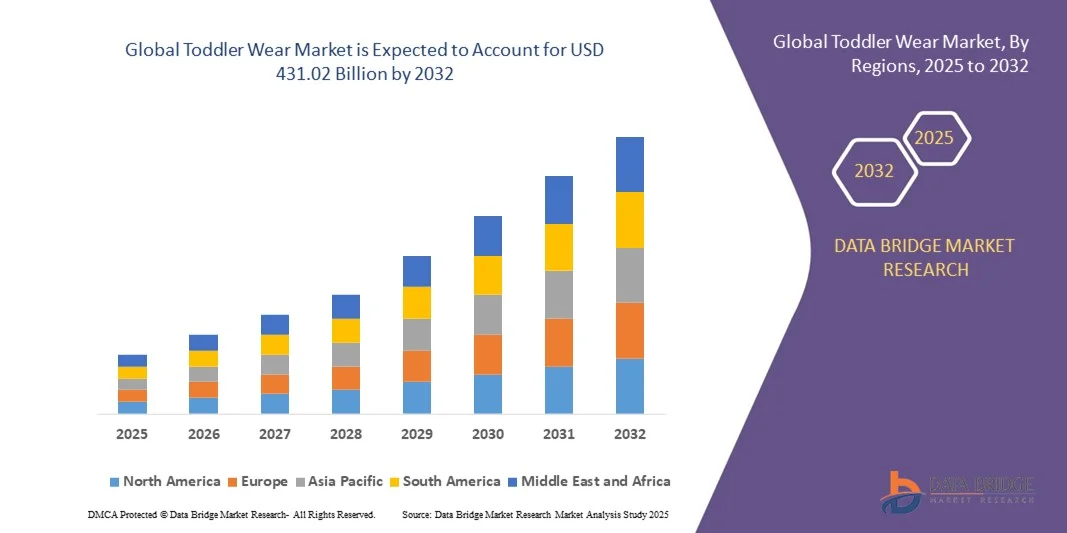
- The global toddler wear market size was valued at USD 266.38 billion in 2024 and is expected to reach USD 431.02 billion by 2032, at a CAGR of 6.20% during the forecast period
- The market growth is largely fuelled by the rising demand for fashionable, comfortable, and sustainable clothing options for toddlers
- Increasing disposable incomes, expanding urbanization, and the growing influence of social media and e-commerce platforms are further accelerating product adoption
Toddler Wear Market Analysis
- The toddler wear market is witnessing significant growth, supported by shifting consumer lifestyles and heightened awareness regarding child comfort and safety in clothing
- The rapid expansion of online retail channels is enabling broader product availability, with parents increasingly seeking convenience through e-commerce and omnichannel platforms
- North America dominated the toddler wear market with the largest revenue share of 38.50% in 2024, driven by rising demand for branded apparel and the growing influence of fashion-conscious millennial parents
- Asia-Pacific region is expected to witness the highest growth rate in the global toddler wear market, driven by urbanization, increasing birth rates in developing economies, and strong growth of online retail channels offering affordable and diverse product ranges
- The apparel segment held the largest market revenue share in 2024, driven by rising demand for stylish and comfortable clothing designed for toddlers. Parents are increasingly spending on branded and fashionable outfits for both daily wear and special occasions, making apparel the most dominant category in the global market
Report Scope and Toddler Wear Market Segmentation
|
Attributes |
Toddler Wear Key Market Insights |
|
Segments Covered |
|
|
Countries Covered |
North America
Europe
Asia-Pacific
Middle East and Africa
South America
|
|
Key Market Players |
|
|
Market Opportunities |
|
|
Value Added Data Infosets |
In addition to the insights on market scenarios such as market value, growth rate, segmentation, geographical coverage, and major players, the market reports curated by the Data Bridge Market Research also include in-depth expert analysis, pricing analysis, brand share analysis, consumer survey, demography analysis, supply chain analysis, value chain analysis, raw material/consumables overview, vendor selection criteria, PESTLE Analysis, Porter Analysis, and regulatory framework. |
Toddler Wear Market Trends
Growing Popularity of Sustainable and Organic Toddler Clothing
- The increasing demand for sustainable and organic toddler wear is reshaping the market, as parents prioritize eco-friendly and non-toxic fabrics for their children. This trend is particularly strong among urban consumers who are highly conscious of environmental and health concerns, driving steady adoption and influencing global retail strategies
- Rising awareness regarding skin sensitivities and allergies has accelerated the use of natural fibers such as organic cotton and bamboo. Brands focusing on chemical-free dyes and hypoallergenic materials are gaining traction, creating a new premium segment within toddler wear that also strengthens consumer trust in health-focused products
- Affordability and accessibility of eco-friendly toddler wear are improving as major retailers expand sustainable product lines. The rising availability across both offline and online channels is encouraging adoption among middle-income families, bridging the gap between premium offerings and mass-market affordability
- For instance, in 2023, several global retail brands introduced organic cotton toddler collections at competitive price points. These initiatives not only helped parents access sustainable fashion without significant cost increases but also boosted brand loyalty and widened consumer reach
- While sustainable toddler wear is driving consumer preference, continued market growth depends on scaling production, expanding distribution, and balancing affordability with premium positioning. Ensuring supply chain transparency and educating consumers will further strengthen long-term adoption
Toddler Wear Market Dynamics
Driver
Rising Disposable Income and Parental Focus on Premium Quality Clothing
- Increasing disposable incomes worldwide are enabling parents to invest more in stylish, premium-quality toddler wear. With fashion-conscious millennial parents, spending on branded and designer toddler apparel is growing rapidly, boosting revenues across both developed and emerging markets
- Parents are becoming more aware of the importance of high-quality fabrics that ensure comfort, durability, and safety for toddlers. This awareness is leading to higher demand for apparel with superior design, stitching, and safety standards, reinforcing the importance of brand credibility
- The growth of dual-income households and rising consumer aspirations are driving frequent purchases of toddler wear, even outside essential needs. Seasonal launches, festive collections, and fashion-driven marketing campaigns are further fueling consumption patterns
- For instance, in 2022, European retail surveys reported that premium toddler clothing sales rose significantly. The increase was supported by rising online promotions, social media marketing, and gift purchases for occasions such as birthdays, holidays, and baby showers
- While rising incomes are fueling growth, market players must continue to innovate in terms of designs, functionality, and affordability. Diversifying product ranges to appeal to different income groups will help retain consumer loyalty and sustain long-term expansion
Restraint/Challenge
High Price of Premium Apparel and Limited Affordability in Emerging Markets
- The premium pricing of branded toddler wear limits affordability, especially in low and middle-income regions. Many parents in these markets still prioritize functionality and cost over fashion and sustainability, slowing widespread adoption of premium or organic alternatives
- Limited awareness about sustainable and organic toddler clothing in rural and semi-urban areas further restricts penetration. The lack of strong retail presence in such regions exacerbates the challenge, reducing brand visibility and restricting consumer access to quality products
- Supply chain challenges, including higher production costs of organic fabrics and eco-friendly materials, also contribute to elevated retail prices. This makes it difficult for brands to compete with low-cost local alternatives, especially in highly price-sensitive economies
- For instance, in 2023, surveys in Southeast Asia highlighted that over 60% of parents opted for local, affordable toddler wear brands. Cost was cited as the key decision-making factor, with premium or imported alternatives considered beyond the reach of average households
- While demand is steadily growing in urban markets, addressing price sensitivity and expanding distribution in emerging economies remain essential. Industry players must focus on localized production, partnerships with regional retailers, and cost-efficient supply chains to unlock broader growth
Toddler Wear Market Scope
The market is segmented on the basis of product type, gender, material, and distribution channel.
- By Product Type
On the basis of product type, the toddler wear market is segmented into apparel, footwear, and others. The apparel segment held the largest market revenue share in 2024, driven by rising demand for stylish and comfortable clothing designed for toddlers. Parents are increasingly spending on branded and fashionable outfits for both daily wear and special occasions, making apparel the most dominant category in the global market.
The footwear segment is expected to witness the fastest growth rate from 2025 to 2032, fuelled by rising parental awareness regarding foot health and the growing availability of ergonomically designed toddler shoes. With increasing emphasis on safety, durability, and design, toddler footwear is gaining popularity across both premium and mass-market brands, particularly in urban markets.
- By Gender
On the basis of gender, the toddler wear market is segmented into boys, girls, and unisex. The boys segment held the largest market revenue share in 2024, supported by strong demand for casual and sports-inspired apparel. Parents are increasingly opting for durable and versatile designs that combine comfort with style, which has led to consistent growth in this segment.
The unisex segment is expected to witness the fastest growth rate from 2025 to 2032, driven by the rising popularity of gender-neutral fashion and sustainable purchasing choices among millennial and Gen Z parents. Brands offering versatile collections that cater to both boys and girls are gaining traction, particularly in urban and developed regions where inclusivity trends are more prominent.
- By Material
On the basis of material, the toddler wear market is segmented into cotton, wool, and others. The cotton segment held the largest market revenue share in 2024 due to its softness, breathability, and hypoallergenic properties, making it the most preferred choice for toddler apparel globally. Cotton’s versatility and affordability further enhance its dominance in both premium and mass-market categories.
The wool segment is expected to witness the fastest growth rate from 2025 to 2032, fuelled by rising demand for warm, comfortable, and premium-quality clothing in colder regions. Parents are increasingly choosing wool blends for winter wear and premium outfits, and innovations in lightweight, skin-friendly wool fabrics are further boosting adoption in toddler fashion.
- By Distribution Channel
On the basis of distribution channel, the toddler wear market is segmented into online distribution channel and offline distribution channel. The offline distribution channel held the largest market revenue share in 2024, supported by the dominance of retail stores, specialty outlets, and supermarkets that allow parents to physically assess quality, fit, and fabric before purchasing. Established brand stores also contribute significantly to this segment’s strength.
The online distribution channel is expected to witness the fastest growth rate from 2025 to 2032, driven by the rapid expansion of e-commerce platforms and rising smartphone penetration worldwide. Parents are increasingly attracted to the convenience of home delivery, broader product choices, and frequent discounts, which are boosting online sales across both developed and emerging economies.
Toddler Wear Market Regional Analysis
- North America dominated the toddler wear market with the largest revenue share of 38.50% in 2024, driven by rising demand for branded apparel and the growing influence of fashion-conscious millennial parents
- Parents in the region place high value on premium-quality fabrics, sustainable clothing, and stylish designs, which are further boosted by strong retail networks and e-commerce penetration
- This widespread adoption is supported by higher disposable incomes, a preference for premium and organic clothing, and the growing trend of gifting apparel for toddlers, making the region a leader in global sales
U.S. Toddler Wear Market Insight
The U.S. toddler wear market captured the largest revenue share in 2024 within North America, supported by the popularity of branded and designer kidswear. Rising awareness of sustainable and organic fabrics is further propelling demand. The growing role of e-commerce platforms, coupled with consumer preference for fashionable yet functional clothing, continues to drive expansion. Seasonal and festive collections also contribute to consistent growth across the country.
Europe Toddler Wear Market Insight
The Europe toddler wear market is expected to witness the fastest growth rate from 2025 to 2032, driven by stringent product safety standards and strong demand for sustainable apparel. The rise of urban lifestyles, premium fashion brands, and eco-conscious parents is shaping consumer preferences. The market is witnessing increased demand across retail chains, boutique stores, and online platforms, with both mass and luxury toddler clothing gaining traction.
U.K. Toddler Wear Market Insight
The U.K. toddler wear market is expected to witness the fastest growth rate from 2025 to 2032, supported by increasing awareness of sustainability and fashion-forward kidswear. Parents in the country prefer eco-friendly and durable clothing, while gifting culture and festive apparel sales are key contributors. The rise of online retail and collaborations between global and local brands are further strengthening the market presence across the U.K.
Germany Toddler Wear Market Insight
The Germany toddler wear market is expected to witness the fastest growth rate from 2025 to 2032, fuelled by the country’s strong emphasis on product quality, sustainability, and safety. German consumers increasingly prefer organic fabrics and environmentally friendly clothing options. The well-developed retail and e-commerce infrastructure further supports market penetration, while rising awareness about toddler health and comfort continues to drive premium apparel sales.
Asia-Pacific Toddler Wear Market Insight
The Asia-Pacific toddler wear market is expected to witness the fastest growth rate from 2025 to 2032, driven by rapid urbanization, rising disposable incomes, and a growing middle-class population. Countries such as China, India, and Japan are major contributors, supported by expanding e-commerce penetration and increasing parental focus on branded and stylish toddler wear. The affordability of local brands, along with the influence of global players, is further enhancing market growth.
Japan Toddler Wear Market Insight
The Japan toddler wear market is expected to witness the fastest growth rate from 2025 to 2032 due to the country’s focus on premium fabrics, innovative designs, and child comfort. The rising number of dual-income households is boosting spending on branded toddler apparel. In addition, Japan’s fashion-forward culture and emphasis on high-quality, safe materials are driving adoption, particularly across urban regions.
China Toddler Wear Market Insight
The China toddler wear market accounted for the largest revenue share in Asia-Pacific in 2024, fuelled by its growing middle-class population, rapid urbanization, and booming e-commerce sector. Parents are increasingly inclined toward premium and branded toddler clothing, while local manufacturers provide affordable alternatives. The government’s support for domestic textile production and the popularity of online retail festivals are also contributing significantly to market expansion in China.
Toddler Wear Market Share
The Toddler Wear industry is primarily led by well-established companies, including:
- Benetton Group (Italy)
- Carter’s, Inc. (U.S.)
- adidas AG (Germany)
- Nike, Inc. (U.S.)
- FARFETCH UK Limited (U.K.)
- The Trendy Toddlers (U.S.)
- Gap Inc. (U.S.)
- Mothercare plc (U.K.)
- H & M Hennes & Mauritz AB (Sweden)
- Gildan Activewear S.R.L. (Canada)
- Cotton On Group (Australia)
- Diesel SpA (Italy)
- Dolce & Gabbana S.R.L. (Italy)
- Hanesbrands Inc. (U.S.)
- Ralph Lauren Media LLC (U.S.)
- OKAIDI SAS (France)
- The Children's Place, Inc. (U.S.)
- Catimini USA (U.S.)
- INDITEX (Spain)
- Rock Your Baby Pty Ltd (Australia)
Latest Developments in Global Toddler Wear Market
- In July 2024, Kizik announced the expansion of its footwear portfolio with the launch of hands-free sneakers for young children. The development introduces three new styles—Orlando, Phoenix, and Truckee—designed in playful color options. This move aims to simplify the shoe-wearing process for kids while providing convenience for parents by delaying the shoe-tying stage. The innovation not only enhances brand visibility in the children’s footwear category but also strengthens Kizik’s competitive positioning in the growing kids’ lifestyle segment
- In November 2023, MiniKlub unveiled a new occasion wear collection for boys and girls as part of its seasonal product expansion. The line was developed to cater to the increasing consumer demand for festive attire in the children’s apparel market. By broadening its offerings with occasion-focused products, MiniKlub is expected to capture a larger share of holiday spending. This strategic move is set to boost the brand’s presence and influence in the baby and children’s clothing market

- Interactive Data Analysis Dashboard
- Company Analysis Dashboard for high growth potential opportunities
- Research Analyst Access for customization & queries
- Competitor Analysis with Interactive dashboard
- Latest News, Updates & Trend analysis
- Harness the Power of Benchmark Analysis for Comprehensive Competitor Tracking
Data collection and base year analysis are done using data collection modules with large sample sizes. The stage includes obtaining market information or related data through various sources and strategies. It includes examining and planning all the data acquired from the past in advance. It likewise envelops the examination of information inconsistencies seen across different information sources. The market data is analysed and estimated using market statistical and coherent models. Also, market share analysis and key trend analysis are the major success factors in the market report. To know more, please request an analyst call or drop down your inquiry.
The key research methodology used by DBMR research team is data triangulation which involves data mining, analysis of the impact of data variables on the market and primary (industry expert) validation. Data models include Vendor Positioning Grid, Market Time Line Analysis, Market Overview and Guide, Company Positioning Grid, Patent Analysis, Pricing Analysis, Company Market Share Analysis, Standards of Measurement, Global versus Regional and Vendor Share Analysis. To know more about the research methodology, drop in an inquiry to speak to our industry experts.
Data Bridge Market Research is a leader in advanced formative research. We take pride in servicing our existing and new customers with data and analysis that match and suits their goal. The report can be customized to include price trend analysis of target brands understanding the market for additional countries (ask for the list of countries), clinical trial results data, literature review, refurbished market and product base analysis. Market analysis of target competitors can be analyzed from technology-based analysis to market portfolio strategies. We can add as many competitors that you require data about in the format and data style you are looking for. Our team of analysts can also provide you data in crude raw excel files pivot tables (Fact book) or can assist you in creating presentations from the data sets available in the report.