Global Topical Antibiotics Market
Market Size in USD Billion
CAGR :
% 
 USD
8.36 Billion
USD
13.62 Billion
2025
2033
USD
8.36 Billion
USD
13.62 Billion
2025
2033
 Forecast Period Forecast Period |
2026 –2033 |
 Market Size (Base Year) Market Size (Base Year) |
USD 8.36 Billion |
 Market Size (Forecast Year) Market Size (Forecast Year) |
USD 13.62 Billion |
 CAGR CAGR |
% |
| Major Markets Players |
|
Topical Antibiotics Market Size
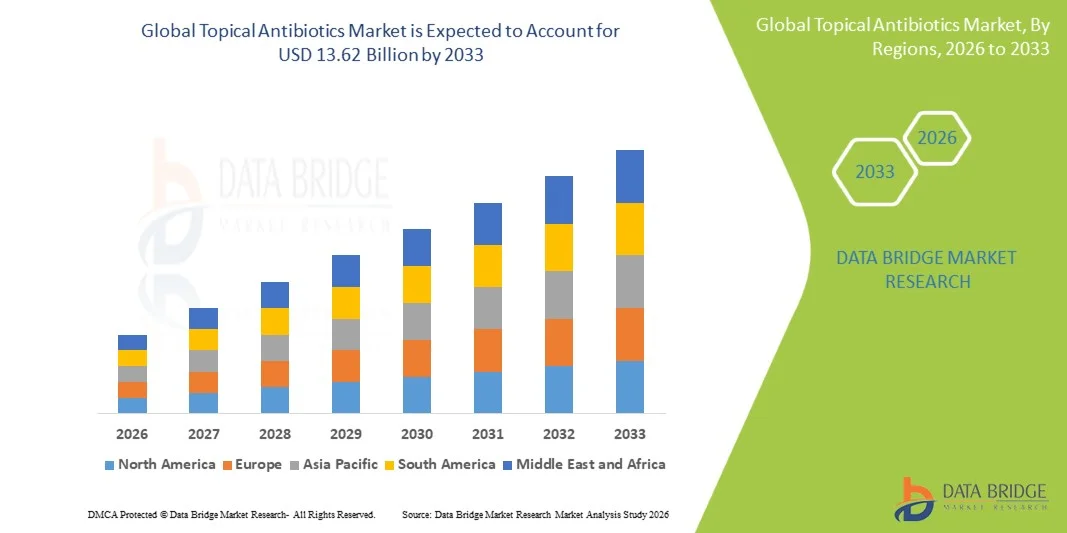
- The global topical antibiotics market size was valued at USD 8.36 billion in 2025 and is expected to reach USD 13.62 billion by 2033, at a CAGR of 6.30% during the forecast period
- The market growth is primarily driven by the rising prevalence of skin and soft tissue infections, increasing incidence of minor wounds, burns, and dermatological conditions, along with growing awareness regarding early-stage infection management
- Furthermore, expanding access to over-the-counter and prescription topical formulations, coupled with increasing preference for localized treatment with minimal systemic side effects, is supporting wider adoption of topical antibiotics, thereby significantly boosting market growth
Topical Antibiotics Market Analysis
- Topical antibiotics, used for localized treatment of bacterial skin infections and wound management, are essential in modern dermatology and primary healthcare due to their targeted antimicrobial action, reduced systemic side effects, and effectiveness in treating mild to moderate infections in both hospital and homecare settings
- The rising demand for topical antibiotics is primarily driven by the increasing prevalence of skin and soft tissue infections, growing incidence of minor injuries, burns, and post-surgical wounds, along with rising preference for early infection control and easy-to-use over-the-counter formulations
- North America dominated the topical antibiotics market with the largest revenue share of 42.6% in 2025, supported by strong healthcare infrastructure, high treatment adoption rates, and widespread availability of advanced dermatological products, with the U.S. witnessing significant usage in outpatient care and hospital wound management driven by established clinical guidelines
- Asia-Pacific is expected to be the fastest growing region in the topical antibiotics market during the forecast period due to rising population, improving healthcare access, increasing awareness of infection prevention, and expanding availability of affordable generic antibiotic formulations
- Ointment segment dominated the topical antibiotics market with the largest market share of 50.2% in 2025, driven by strong clinical preference for its superior skin adherence, prolonged therapeutic effect, and widespread use in treating infected wounds, cuts, and abrasions
Report Scope and Topical Antibiotics Market Segmentation
|
Attributes |
Topical Antibiotics Key Market Insights |
|
Segments Covered |
|
|
Countries Covered |
North America
Europe
Asia-Pacific
Middle East and Africa
South America
|
|
Key Market Players |
|
|
Market Opportunities |
|
|
Value Added Data Infosets |
In addition to the insights on market scenarios such as market value, growth rate, segmentation, geographical coverage, and major players, the market reports curated by the Data Bridge Market Research also include in-depth expert analysis, patient epidemiology, pipeline analysis, pricing analysis, and regulatory framework |
Topical Antibiotics Market Trends
“Rising Shift Toward Advanced Formulations and Combination Therapies”
- A significant and accelerating trend in the global topical antibiotics market is the growing development and adoption of advanced formulations and combination therapies with antifungal or anti-inflammatory agents, improving treatment outcomes and patient compliance in dermatological infections
- For instance, products such as mupirocin-based combinations are increasingly used in clinical practice to manage mixed bacterial skin infections more effectively across hospital and outpatient settings
- Enhanced formulation technologies in topical antibiotics are improving skin penetration, prolonging drug action, and reducing dosing frequency, thereby increasing patient adherence and overall therapeutic effectiveness in minor infection management
- The integration of dermatology-focused R&D with novel drug delivery systems such as nano-emulsions and liposomal gels is enabling more targeted and efficient treatment of localized infections while minimizing resistance risk
- Growing preference for antibiotic stewardship-driven topical solutions is encouraging the development of narrow-spectrum antibiotics to reduce resistance pressure while maintaining high clinical efficacy in targeted skin infections
- This trend toward more effective, multi-functional, and patient-friendly topical antibiotic products is reshaping prescribing patterns, as physicians increasingly prefer therapies that offer broader coverage and faster healing outcomes
- The demand for innovative topical antibiotic formulations is growing rapidly across both developed and emerging markets, as patients and healthcare providers prioritize convenience, efficacy, and reduced treatment duration
Topical Antibiotics Market Dynamics
Driver
“Rising Burden of Skin Infections and Expanding Outpatient Care Demand”
- The increasing prevalence of bacterial skin infections, minor wounds, burns, and post-surgical complications, coupled with the expansion of outpatient and homecare treatment settings, is a key driver fueling demand for topical antibiotics globally
- For instance, growing cases of impetigo, folliculitis, and infected abrasions in both pediatric and adult populations are significantly increasing prescription rates for topical antibiotic therapies in primary care settings
- Rising patient preference for fast-acting, localized treatments with minimal systemic side effects is further boosting adoption of topical antibiotics as a first-line therapy for mild to moderate skin infections
- Furthermore, increasing accessibility to over-the-counter topical antibiotic formulations in pharmacies is supporting self-care treatment trends, particularly in urban and semi-urban populations
- Expansion of ambulatory surgical procedures is further increasing demand for post-operative infection prevention using topical antibiotic applications in wound care management
- Rising healthcare expenditure and improving diagnostic awareness in emerging economies are accelerating early-stage infection treatment adoption, supporting overall market expansion
- The convenience of easy application, reduced hospital dependency, and lower risk of systemic toxicity are key factors propelling the widespread use of topical antibiotics in both developed and emerging healthcare systems
- Expanding healthcare awareness and early infection management practices are further strengthening market growth across dermatology and wound care applications
Restraint/Challenge
“Antibiotic Resistance Concerns and Regulatory Compliance Hurdles”
- Concerns regarding the growing risk of antibiotic resistance associated with prolonged and inappropriate use of topical antibiotics pose a significant challenge to market expansion globally
- For instance, increasing reports of resistant strains of Staphylococcus aureus have led to stricter prescribing guidelines and reduced over-the-counter availability of certain topical antibiotic formulations in several regions
- Stringent regulatory requirements for antibiotic approval, labeling, and usage restrictions are further limiting rapid product commercialization and increasing compliance burdens for manufacturers
- In addition, the risk of skin sensitivity reactions, allergic responses, and overuse in minor conditions can lead to reduced physician preference for certain topical antibiotics in routine practice
- Rising scrutiny from healthcare authorities on antimicrobial stewardship is further restricting promotional activities and limiting long-term broad-spectrum antibiotic use in dermatology applications
- High development costs associated with new antibiotic molecules and slow pipeline innovation are also constraining market expansion and limiting availability of next-generation therapies
- While awareness campaigns and antimicrobial stewardship programs are being implemented, balancing effective treatment with resistance prevention remains a critical industry challenge
- Overcoming these challenges through responsible prescribing practices, development of novel non-resistant formulations, and regulatory alignment will be essential for sustainable market growth
Topical Antibiotics Market Scope
The market is segmented on the basis of drug class, product type, application, and distribution channel.
- By Drug Class
On the basis of drug class, the topical antibiotics market is segmented into bacitracin, mupirocin, neomycin, fusidic acid, polymyxin B, and combination antibiotics. The mupirocin segment dominated the market with the largest revenue share of 34.6% in 2025, driven by its strong efficacy against Gram-positive bacteria, particularly Staphylococcus aureus, including MRSA strains. It is widely prescribed for skin infections, nasal decolonization, and wound-related bacterial management. High clinical trust, strong guideline inclusion, and broad hospital usage further strengthen its dominance. In addition, its availability in multiple formulations such as ointments enhances ease of use across outpatient and inpatient settings.
The combination antibiotics segment is expected to witness the fastest growth rate of 10.8% from 2026 to 2033, driven by increasing demand for broader-spectrum coverage in mixed bacterial infections. These formulations combine multiple active agents to improve efficacy and reduce resistance risk. Rising prevalence of polymicrobial skin infections is significantly supporting adoption of combination therapies. Physicians increasingly prefer these products in wound care and post-surgical infection management for improved clinical outcomes. Moreover, pharmaceutical innovation in fixed-dose combinations is accelerating market expansion.
- By Product Type
On the basis of product type, the market is segmented into ointments, creams, powders, gels, and solutions & sprays. The ointment segment dominated the market with the largest revenue share of 50.2% in 2025, due to its superior skin adherence, prolonged drug release, and strong effectiveness in treating infected wounds and abrasions. Ointments are widely preferred in hospital and homecare settings for their ability to maintain moisture and enhance healing. They are particularly effective in dry and crusted lesions, improving therapeutic outcomes. Strong availability of key antibiotics such as mupirocin in ointment form further supports dominance. In addition, physician preference and established clinical usage reinforce its leading position.
The gels segment is expected to witness the fastest growth rate of 9.6% from 2026 to 2033, driven by increasing demand for non-greasy, cosmetically acceptable formulations. Gels offer better patient comfort, faster absorption, and ease of application, making them suitable for younger and urban populations. Rising dermatology awareness and cosmetic-conscious treatment preferences are boosting adoption. Pharmaceutical companies are increasingly launching gel-based antibiotic products for improved user experience. Furthermore, suitability for moist lesions and inflamed skin conditions is enhancing segment growth.
- By Application
On the basis of application, the market is segmented into skin infections, wound care, post-surgical infection management, burns, minor cuts & abrasions, and others. The skin infections segment dominated the market with the largest revenue share of 44.1% in 2025, driven by the high global incidence of bacterial infections such as impetigo, cellulitis, and folliculitis. These conditions are commonly treated with topical antibiotics as first-line therapy due to their localized action and rapid symptom relief. High outpatient consultation rates further support dominance. Strong prescription patterns in both developed and emerging markets reinforce segment leadership. In addition, increasing awareness of early infection treatment contributes to sustained demand.
The wound care and post-surgical infection management segment is expected to witness the fastest growth rate of 10.3% from 2026 to 2033, driven by rising surgical procedures and increasing trauma-related injuries globally. Hospitals are increasingly using topical antibiotics to prevent surgical site infections and improve recovery outcomes. Growth in diabetic wound cases and chronic ulcer prevalence is further accelerating demand. Expansion of ambulatory surgery centers and home-based wound care is also supporting adoption. Moreover, advancements in wound dressing technologies combined with antibiotics are boosting clinical effectiveness.
- By Distribution Channel
On the basis of distribution channel, the market is segmented into hospital pharmacy, online pharmacy, and retail pharmacy. The hospital pharmacy segment dominated the market with the largest revenue share of 40.8% in 2025, due to high prescription volumes in inpatient and outpatient hospital settings. Hospitals remain the primary point of diagnosis and treatment initiation for moderate to severe skin infections. Strong procurement systems ensure consistent availability of topical antibiotics in clinical settings. Post-surgical and emergency care cases further contribute to high usage. In addition, physician-driven prescribing patterns reinforce hospital pharmacy dominance.
The online pharmacy segment is expected to witness the fastest growth rate of 12.7% from 2026 to 2033, driven by rapid digital healthcare adoption and increasing preference for home delivery of medicines. Telemedicine consultations are directly enabling digital prescriptions for topical antibiotics. Convenience, discounts, and doorstep delivery are encouraging patient adoption. Rising smartphone penetration and improved internet access are further accelerating growth. Moreover, expansion of e-pharmacy platforms in emerging markets is significantly supporting this segment’s rapid expansion.
Topical Antibiotics Market Regional Analysis
- North America dominated the topical antibiotics market with the largest revenue share of 42.6% in 2025, supported by strong healthcare infrastructure, high treatment adoption rates, and widespread availability of advanced dermatological products
- Patients and healthcare providers in the region highly prefer topical antibiotics due to their effectiveness in wound care, post-surgical infection prevention, and easy availability across hospital and retail pharmacies
- This widespread adoption is further supported by strong healthcare infrastructure, high healthcare spending, well-established clinical guidelines, and increasing use of outpatient dermatology services, establishing topical antibiotics as a standard first-line treatment in the region
U.S. Topical Antibiotics Market Insight
The U.S. accounted for the largest share within North America in 2025, driven by high incidence of bacterial skin infections, strong outpatient care utilization, and widespread availability of prescription and OTC topical antibiotic products. The country benefits from advanced healthcare infrastructure and strong dermatology service penetration, supporting early diagnosis and treatment of skin conditions. Increasing surgical procedures and wound care management in hospitals further boost demand for topical antibiotics. In addition, strong awareness of infection prevention and high adoption of branded dermatological products are key factors supporting market leadership.
Europe Topical Antibiotics Market Insight
The Europe topical antibiotics market is projected to expand at a substantial CAGR throughout the forecast period, primarily driven by rising awareness of infection control and the increasing burden of skin and soft tissue infections. The region benefits from strong regulatory healthcare systems and high adoption of prescription-based dermatological treatments across hospitals and clinics. Growing preference for advanced wound care management, along with increasing surgical procedures, is further supporting market expansion. In addition, an aging population and increasing healthcare accessibility are strengthening demand across both urban and semi-urban healthcare settings.
U.K. Topical Antibiotics Market Insight
The U.K. topical antibiotics market is anticipated to grow at a noteworthy CAGR during the forecast period, driven by increasing dermatology consultations and rising awareness of early-stage infection treatment. Concerns regarding bacterial resistance and recurrence of skin infections are encouraging physicians to prescribe more targeted topical antibiotic therapies. The country’s strong NHS framework and widespread availability of prescription and OTC dermatology products are further supporting market growth. In addition, growing adoption of outpatient care and home-based treatment practices is contributing to increasing market penetration.
Germany Topical Antibiotics Market Insight
The Germany topical antibiotics market is expected to expand at a considerable CAGR during the forecast period, fueled by strong healthcare infrastructure and a high emphasis on infection prevention and dermatological care. Increasing adoption of prescription-based topical treatments in hospitals and outpatient clinics is supporting consistent demand. The country’s focus on high-quality, regulated pharmaceutical products ensures strong physician trust and patient compliance. In addition, a growing elderly population with higher incidence of chronic wounds and skin infections is further driving market growth.
Asia-Pacific Topical Antibiotics Market Insight
The Asia-Pacific topical antibiotics market is poised to grow at the fastest CAGR of 9.8% during the forecast period of 2026 to 2033, driven by rising population, increasing infection burden, and improving healthcare access across emerging economies. The region’s growing awareness of skin health and expanding availability of affordable generic antibiotic formulations are significantly boosting adoption. Rapid urbanization and expansion of hospital infrastructure are further supporting increased usage of topical antibiotics across both rural and urban populations. In addition, rising healthcare expenditure and government initiatives to strengthen primary care systems are accelerating market growth.
Japan Topical Antibiotics Market Insight
The Japan topical antibiotics market is gaining momentum due to advanced healthcare infrastructure, high hygiene standards, and strong focus on infection prevention in clinical practice. The aging population is significantly increasing demand for wound care and chronic skin infection management using topical antibiotic therapies. Integration of advanced dermatology treatments with precision medicine approaches is further enhancing treatment effectiveness. Moreover, high patient awareness and preference for effective, low-side-effect treatments are supporting steady market growth.
India Topical Antibiotics Market Insight
The India topical antibiotics market accounted for the largest revenue share in Asia-Pacific in 2025, attributed to rapid urbanization, high infection prevalence, and increasing access to affordable healthcare services. Growing awareness of self-medication and widespread availability of OTC antibiotic ointments and creams are strongly supporting market penetration. Government initiatives aimed at expanding healthcare access and strengthening primary care infrastructure are further driving demand. In addition, expansion of retail pharmacy networks and rising adoption of generic medicines are accelerating market growth across both urban and rural regions.
Topical Antibiotics Market Share
The Topical Antibiotics industry is primarily led by well-established companies, including:
- GSK plc (U.K.)
- Pfizer Inc. (U.S.)
- Bayer AG (Germany)
- Novartis AG (Switzerland)
- Sanofi (France)
- AbbVie Inc. (U.S.)
- Sun Pharmaceutical Industries Ltd. (India)
- Cipla Limited (India)
- Glenmark Pharmaceuticals Ltd. (India)
- Teva Pharmaceutical Industries Ltd. (Israel)
- Dr. Reddy’s Laboratories Ltd. (India)
- Aurobindo Pharma Limited (India)
- Hikma Pharmaceuticals PLC (U.K.)
- Almirall S.A. (Spain)
- LEO Pharma A/S (Denmark)
- Bausch Health (Canada)
- Viatris Inc. (U.S.)
- AdvaCare Pharma LLC (U.S.)
- Zydus Lifesciences Ltd. (India)
What are the Recent Developments in Global Topical Antibiotics Market?
- In December 2025, the U.S. FDA expanded dermatology treatment approvals including new topical indications for existing drugs such as ruxolitinib cream (Opzelura) and roflumilast foam (Zoryve), strengthening the dermatological treatment ecosystem that supports adjunct use of topical antibiotics in skin infection management
- In November 2025, research published in Springer journals highlighted advancement in topical nano-formulations for bacterial skin infections, improving drug delivery efficiency of antibiotics such as fusidic acid and mupirocin
- In October 2025, Medscape updated clinical guidelines confirming topical mupirocin and retapamulin as first-line therapy for localized impetigo and mild skin infections, reinforcing their continued clinical dominance
- In October 2025, the U.S. FDA approved expanded indications for Opzelura (ruxolitinib cream) for pediatric atopic dermatitis, increasing topical treatment penetration in skin barrier disorders where secondary bacterial infections often require topical antibiotics
- In January 2025, Medroots Biopharma launched its advanced mupirocin ointment (MUPZUP) in India, featuring improved skin penetration and enhanced antibacterial performance for the treatment of bacterial skin infections
SKU-
Get online access to the report on the World's First Market Intelligence Cloud

- Interactive Data Analysis Dashboard
- Company Analysis Dashboard for high growth potential opportunities
- Research Analyst Access for customization & queries
- Competitor Analysis with Interactive dashboard
- Latest News, Updates & Trend analysis
- Harness the Power of Benchmark Analysis for Comprehensive Competitor Tracking
Research Methodology
Data collection and base year analysis are done using data collection modules with large sample sizes. The stage includes obtaining market information or related data through various sources and strategies. It includes examining and planning all the data acquired from the past in advance. It likewise envelops the examination of information inconsistencies seen across different information sources. The market data is analysed and estimated using market statistical and coherent models. Also, market share analysis and key trend analysis are the major success factors in the market report. To know more, please request an analyst call or drop down your inquiry.
The key research methodology used by DBMR research team is data triangulation which involves data mining, analysis of the impact of data variables on the market and primary (industry expert) validation. Data models include Vendor Positioning Grid, Market Time Line Analysis, Market Overview and Guide, Company Positioning Grid, Patent Analysis, Pricing Analysis, Company Market Share Analysis, Standards of Measurement, Global versus Regional and Vendor Share Analysis. To know more about the research methodology, drop in an inquiry to speak to our industry experts.
Customization Available
Data Bridge Market Research is a leader in advanced formative research. We take pride in servicing our existing and new customers with data and analysis that match and suits their goal. The report can be customized to include price trend analysis of target brands understanding the market for additional countries (ask for the list of countries), clinical trial results data, literature review, refurbished market and product base analysis. Market analysis of target competitors can be analyzed from technology-based analysis to market portfolio strategies. We can add as many competitors that you require data about in the format and data style you are looking for. Our team of analysts can also provide you data in crude raw excel files pivot tables (Fact book) or can assist you in creating presentations from the data sets available in the report.