


What is the Torticollis Treatment Market Size and Overview?
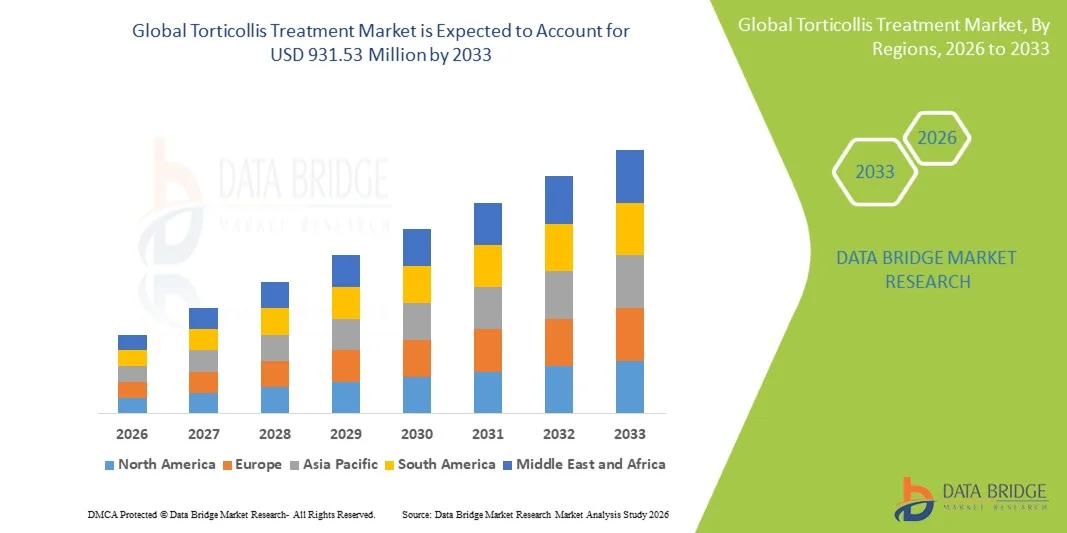
The Torticollis Treatment Market was valued at USD 602.40 million in 2025 and is projected to reach USD 931.53 million by 2033, growing at a CAGR of 5.60% from 2026 to 2033. Market growth is supported by rising prevalence of cervical dystonia and congenital muscular torticollis among pediatric and adult populations, alongside increasing awareness of early diagnosis and intervention strategies.
The favorable clinical outcomes associated with botulinum toxin injections, physical therapy interventions, and surgical corrections are driving increased adoption among both patients and healthcare providers. Ongoing advancements in diagnostic imaging technologies, including high-resolution MRI and ultrasound, are enabling earlier and more accurate identification of torticollis subtypes, facilitating personalized treatment planning. In addition, growing healthcare infrastructure investments in emerging markets and the expansion of specialized neurology and orthopedic clinics are creating new opportunities for stakeholders across the forecast period.
Market Size & Forecast
- Global Market Value (2025): USD 602.40 Million
- Expected Market Value (2033): USD 931.53 Million
- Forecast CAGR (2026–2033): 5.60%
- Leading Region in 2025: North America
- Fastest Growing Region: Asia-Pacific
What are the Major Takeaways of Torticollis Treatment Market?
- North America dominated the Torticollis Treatment Market with the largest revenue share of 38.7% in 2025, supported by high awareness levels, advanced diagnostic infrastructure, strong reimbursement frameworks, and the presence of leading pharmaceutical and medical device companies.
- Asia-Pacific is expected to be the fastest-growing region at a CAGR of 7.45% from 2026 to 2033, driven by expanding healthcare infrastructure, rising disposable incomes, increasing prevalence of musculoskeletal disorders, and growing access to specialized treatment centers.
- The Cervical Dystonia segment led the type category with a 36.8% market share in 2025, reflecting its high prevalence among adult populations and the established efficacy of botulinum toxin therapies in managing symptoms.
- The Muscular Torticollis segment is anticipated to be the fastest-growing type category, driven by increasing incidence of congenital muscular torticollis, growing pediatric screening programs, and rising adoption of early physical therapy interventions.
- The Medication segment dominated the treatment category with a 44.2% market share in 2025, supported by widespread use of botulinum toxin injections, muscle relaxants, and analgesics for symptom management.
- The Physical Therapy segment is expected to witness strong growth during the forecast period, driven by growing emphasis on conservative management approaches, rehabilitation protocols, and multidisciplinary care models.
- The Hospitals segment dominated the end-user category with a 52.6% market share in 2025, supported by access to multidisciplinary specialist teams, advanced diagnostic equipment, and comprehensive treatment infrastructure.
- The Clinic segment is expected to witness the fastest growth during the forecast period, driven by increasing availability of outpatient botulinum toxin injection services, physical therapy programs, and cost-effective care delivery models.
Report Scope and Torticollis Treatment Market Segmentation
|
Attributes |
Torticollis Treatment Key Market Insights |
|
Segments Covered |
|
|
Countries Covered |
North America · U.S. · Canada · Mexico Europe · Germany · France · U.K. · Netherlands · Switzerland · Belgium · Russia · Italy · Spain · Turkey · Rest of Europe Asia-Pacific · China · Japan · India · South Korea · Singapore · Malaysia · Australia · Thailand · Indonesia · Philippines · Rest of Asia-Pacific Middle East and Africa · Saudi Arabia · U.A.E. · South Africa · Egypt · Israel · Rest of Middle East and Africa South America · Brazil · Argentina · Rest of South America |
|
Key Market Players |
· AbbVie Inc. (U.S.) · Ipsen Pharma (France) · Merz Pharmaceuticals GmbH (Germany) · Revance Therapeutics Inc. (U.S.) · Medytox Inc. (South Korea) · Galderma S.A. (Switzerland) · Hugel Inc. (South Korea) · US WorldMeds LLC (U.S.) · Teva Pharmaceutical Industries Ltd. (Israel) · Pfizer Inc. (U.S.) · Johnson & Johnson and its affiliates (U.S.) · Sun Pharmaceutical Industries Ltd. (India) |
|
Market Opportunities |
· Expansion of botulinum toxin therapy indications and development of longer-acting neurotoxin formulations reducing injection frequency · Development of telehealth-enabled physical therapy programs and digital rehabilitation platforms improving access in underserved regions |
|
Value Added Data Infosets |
In addition to the insights on market scenarios such as market value, growth rate, segmentation, geographical coverage, and major players, the market reports curated by the Data Bridge Market Research also include depth expert analysis, patient epidemiology, pipeline analysis, pricing analysis, and regulatory framework. |
What is the Key Trend in the Torticollis Treatment Market?
Trend: Advancements in Botulinum Toxin Formulations and Injection Techniques
Clinical adoption of botulinum toxin therapies for torticollis treatment continues to accelerate as technological innovations improve treatment efficacy, duration of action, and patient convenience. Next-generation neurotoxin formulations with enhanced purity profiles and longer-lasting effects are reducing injection frequency requirements and improving patient compliance. Advanced injection guidance technologies, including ultrasound and electromyography-assisted targeting, enable more precise delivery to affected muscles, optimizing therapeutic outcomes and minimizing adverse effects.
For instance,
Revance Therapeutics' daxibotulinumtoxinA-lanm (DAXXIFY) has demonstrated extended duration of effect in cervical dystonia clinical trials, potentially reducing the need for frequent clinic visits and improving quality of life for patients requiring long-term botulinum toxin therapy.
In addition, research demonstrates that ultrasound-guided botulinum toxin injections improve treatment accuracy and clinical outcomes compared to landmark-based techniques, supporting broader adoption of imaging-assisted injection protocols across neurology and physical medicine practices. The continued development of novel neurotoxin formulations and precision injection techniques is expected to strengthen market growth throughout the forecast period.
Torticollis Treatment Market Dynamics
Key Market Driver: Rising Prevalence of Cervical Dystonia and Congenital Muscular Torticollis
The growing prevalence of cervical dystonia among adult populations and congenital muscular torticollis in pediatric patients is a primary driver of market growth. Cervical dystonia affects an estimated 50,000 to 90,000 individuals in the United States alone, with increasing diagnostic rates expanding the identified patient population. Congenital muscular torticollis represents one of the most common musculoskeletal conditions in infants, with prevalence estimates ranging from 0.3% to 2.0% of live births. Early intervention programs and expanded newborn screening initiatives are improving detection rates and driving demand for physical therapy and, in refractory cases, surgical interventions.
For instance,
A 2025 epidemiological study published in Movement Disorders estimated the prevalence of cervical dystonia at approximately 4.98 per 100,000 population in Europe, with women affected at nearly twice the rate of men, highlighting significant unmet treatment needs across demographic groups. Rising disease prevalence and improved diagnostic capabilities are expected to sustain demand for torticollis treatment options globally.
Key Restraint/Challenge: High Treatment Costs and Limited Access in Developing Regions
The substantial costs associated with botulinum toxin injections, surgical interventions, and ongoing physical therapy programs present significant barriers to treatment access, particularly in low- and middle-income countries. Botulinum toxin therapies require repeated injections every three to four months, creating cumulative cost burdens for patients and healthcare systems. Limited availability of trained specialists, including movement disorder neurologists and pediatric orthopedic surgeons, further constrains treatment access in underserved regions.
For instance,
Healthcare systems in emerging markets face challenges balancing the clinical benefits of botulinum toxin therapy against significant treatment costs, with annual per-patient expenditures for cervical dystonia management potentially exceeding USD 10,000 in high-income settings. High treatment costs and specialist availability constraints may limit market penetration in price-sensitive healthcare environments.
Key Market Opportunity: Expansion of Telehealth and Digital Rehabilitation Platforms
The development of telehealth-enabled consultation services and digital physical therapy platforms is creating opportunities to expand torticollis treatment access beyond traditional clinical settings. Virtual physical therapy programs incorporating home exercise monitoring, video-based guidance, and remote progress tracking enable patients in underserved areas to receive evidence-based rehabilitation interventions. Telehealth consultations with movement disorder specialists facilitate diagnosis and treatment planning for patients who lack local access to specialized care.
For instance,
Digital health platforms integrating artificial intelligence-based movement analysis and personalized exercise prescription are demonstrating efficacy in pediatric congenital muscular torticollis management, enabling earlier intervention and reducing the need for frequent in-person clinic visits. The expansion of digital rehabilitation technologies and telehealth services is expected to improve treatment accessibility and support market growth in emerging regions.
How is the Torticollis Treatment Market Segmented?
The torticollis treatment market is segmented on the basis of type, treatment, diagnosis, symptoms, dosage, route of administration, end-users, and distribution channel.
By Type
On the basis of type, the Torticollis Treatment Market is segmented into temporary torticollis, muscular torticollis, Klippel-Feil syndrome, fixed torticollis, and cervical dystonia. The cervical dystonia segment dominated the market with a 36.8% market share in 2025, reflecting its high prevalence among adult populations and the established efficacy of botulinum toxin therapies in managing symptoms. Cervical dystonia represents the most common form of focal dystonia, with patients requiring ongoing treatment to manage involuntary muscle contractions and associated pain.
The muscular torticollis segment is expected to witness the fastest growth at a CAGR of 6.85% from 2026 to 2033, driven by increasing incidence of congenital muscular torticollis, growing pediatric screening programs, expanded physical therapy services, and rising awareness among parents and healthcare providers regarding the importance of early intervention for optimal developmental outcomes.
By Treatment
On the basis of treatment, the Torticollis Treatment Market is segmented into medication, surgery, physical therapy, and others. The medication segment dominated the market with a 44.2% market share in 2025, supported by widespread use of botulinum toxin injections as first-line therapy for cervical dystonia and adjunctive use of muscle relaxants, analgesics, and anticholinergic medications. Botulinum toxin therapies, including onabotulinumtoxinA, abobotulinumtoxinA, incobotulinumtoxinA, and rimabotulinumtoxinB, represent the standard of care for adult cervical dystonia, with established efficacy and safety profiles supporting sustained market leadership.
The physical therapy segment is expected to witness the fastest growth at a CAGR of 6.42% from 2026 to 2033, driven by growing emphasis on conservative management approaches, expanding pediatric rehabilitation services, development of digital physical therapy platforms, and increasing recognition of the importance of multimodal treatment strategies combining physical therapy with pharmacological interventions.
By Diagnosis
On the basis of diagnosis, the Torticollis Treatment Market is segmented into X-ray, computed tomography (CT) scan, magnetic resonance imaging (MRI), ultrasound, cervical spine examination, blood tests, electromyogram (EMG), and others. The MRI segment dominated the diagnostic category with a 26.4% market share in 2025, reflecting its superior soft tissue visualization capabilities and ability to identify underlying structural abnormalities, spinal cord pathology, and muscle involvement patterns. MRI provides essential diagnostic information for treatment planning across torticollis subtypes and is particularly valuable for ruling out secondary causes.
The ultrasound segment is expected to witness the fastest growth at a CAGR of 7.12% from 2026 to 2033, driven by increasing adoption of ultrasound-guided botulinum toxin injections, growing use in pediatric congenital muscular torticollis evaluation, advantages of real-time imaging without radiation exposure, and expanding availability in outpatient clinic settings.
By Symptoms
On the basis of symptoms, the Torticollis Treatment Market is segmented into limited movement of head, headache, head tremor, neck pain, shoulder that is higher than the other, stiffness of the neck muscles, swelling of the neck muscles, and others. The neck pain segment dominated the symptom category with a 28.6% market share in 2025, reflecting neck pain as the most common presenting complaint among cervical dystonia patients and a significant contributor to reduced quality of life and healthcare-seeking behavior. The limited movement of head segment held approximately 24.2% market share, representing a cardinal symptom across torticollis subtypes that significantly impacts daily activities and functional independence.
The head tremor segment is expected to witness the fastest growth at a CAGR of 6.28% from 2026 to 2033, driven by increasing recognition of head tremor as a significant component of cervical dystonia symptomatology, growing patient awareness, and expanding treatment options specifically targeting tremor reduction.
By Dosage
On the basis of dosage, the Torticollis Treatment Market is segmented into injection, tablets, and others. The injection segment dominated the dosage category with a 58.4% market share in 2025, reflecting the central role of botulinum toxin injections in cervical dystonia management and the superior efficacy of injectable therapies compared to oral medications for targeted muscle relaxation. Botulinum toxin injections provide localized treatment with limited systemic side effects, supporting their position as the preferred therapeutic modality for most adult torticollis patients.
The injection segment is expected to maintain market leadership while the tablets segment is anticipated to witness the fastest growth at a CAGR of 6.15% from 2026 to 2033, driven by development of novel oral pharmacotherapies, patient preference for non-invasive treatment options in milder cases, and increasing use of oral medications in combination therapy protocols.
By Route of Administration
On the basis of route of administration, the Torticollis Treatment Market is segmented into oral, parenteral, and others. The parenteral segment dominated the route of administration category with a 56.2% market share in 2025, reflecting the predominance of intramuscular botulinum toxin injections in torticollis treatment protocols. Parenteral administration enables targeted delivery of neurotoxin to affected muscles, providing superior efficacy compared to systemic oral therapies for focal dystonia management.
The oral segment is expected to witness the fastest growth at a CAGR of 5.95% from 2026 to 2033, driven by patient preference for non-invasive administration routes, development of novel oral therapies with improved efficacy profiles, and increasing use in pediatric populations where injection acceptance may be limited.
By End-Users
On the basis of end-users, the Torticollis Treatment Market is segmented into clinic, hospital, and others. The hospitals segment dominated the end-user category with a 52.6% market share in 2025, supported by access to multidisciplinary specialist teams including neurologists, orthopedic surgeons, physical therapists, and pain management specialists. Hospitals serve as primary centers for complex diagnostic evaluations, surgical interventions, and comprehensive rehabilitation programs requiring inpatient monitoring and specialized care infrastructure. The concentration of movement disorder specialists and pediatric orthopedic expertise within hospital systems contributes to high patient volumes and treatment utilization.
The clinic segment is expected to witness the fastest growth at a CAGR of 6.52% from 2026 to 2033, driven by increasing availability of outpatient botulinum toxin injection services, cost-effective procedural delivery, patient preference for convenient ambulatory care, and expanding physical therapy clinic networks offering specialized torticollis rehabilitation programs.
By Distribution Channel
On the basis of distribution channel, the Torticollis Treatment Market is segmented into hospital pharmacy, retail pharmacy, and online pharmacy. The hospital pharmacy segment dominated the distribution channel category with a 48.6% market share in 2025, reflecting the administration of botulinum toxin injections within hospital and clinic settings where medications are dispensed directly through institutional pharmacy channels. Hospital pharmacies serve as primary distribution points for specialty medications requiring cold chain management and controlled access.
The online pharmacy segment is expected to witness the fastest growth at a CAGR of 7.85% from 2026 to 2033, driven by expanding e-commerce infrastructure, increasing consumer preference for convenient medication delivery, growing adoption of digital health platforms, and improving regulatory frameworks supporting online pharmaceutical distribution in major markets.
Which Region Holds the Largest Share of the Torticollis Treatment Market?
North America dominated the torticollis treatment market with a revenue share of 38.7% in 2025, supported by high awareness levels among healthcare providers and patients, advanced diagnostic infrastructure, strong reimbursement frameworks, and the presence of leading pharmaceutical companies including AbbVie and Revance Therapeutics. Favorable regulatory pathways, robust clinical research infrastructure, and extensive specialist networks contribute to regional market leadership.
U.S. Torticollis Treatment Market Insight
The U.S. torticollis treatment market benefits from the highest adoption rates of botulinum toxin therapies globally, extensive specialist networks including movement disorder neurologists and pediatric orthopedic surgeons, and strong clinical evidence supporting treatment protocols. Academic medical centers and specialized dystonia clinics continue to expand treatment programs across cervical dystonia, congenital muscular torticollis, and other torticollis subtypes. Favorable Medicare and commercial payer reimbursement supports treatment volumes and pharmaceutical investment. The U.S. held a market share of 82.4% within North America in 2025.
Europe Torticollis Treatment Market Insight
The Europe torticollis treatment market remains a major contributor, with established neurology and physical medicine programs across Germany, the U.K., France, and Italy. Growing adoption of newer botulinum toxin formulations and expanding physical therapy infrastructure are improving treatment access across public and private healthcare systems. European guidelines and structured care pathways are standardizing torticollis management and improving clinical outcomes.
U.K. Torticollis Treatment Market Insight
The U.K. torticollis treatment market is characterized by expanding dystonia treatment programs within NHS hospitals and private healthcare facilities. Investment in movement disorder specialist training and physical therapy services is improving access to evidence-based care and reducing treatment waiting times.
Germany Torticollis Treatment Market Insight
Germany's robust healthcare infrastructure and advanced specialist capabilities support comprehensive torticollis treatment programs across neurology, orthopedics, and physical medicine. Strong clinical training networks and favorable reimbursement frameworks contribute to high treatment volumes and pharmaceutical adoption. Germany held the largest market share of 24.6% within Europe in 2025.
Asia-Pacific Torticollis Treatment Market Insight
The Asia-Pacific torticollis treatment market is poised for rapid growth with a CAGR of 7.45% during the forecast period, driven by expanding healthcare infrastructure, rising disposable incomes, increasing prevalence of musculoskeletal disorders, and growing access to specialized treatment centers. Private healthcare systems in China, Japan, India, and South Korea are investing in neurology and rehabilitation capabilities to meet growing patient demand.
Japan Torticollis Treatment Market Insight
The Japan torticollis treatment market benefits from advanced healthcare infrastructure, strong neurological specialist expertise, and favorable reimbursement for botulinum toxin therapies. Established dystonia treatment programs and growing awareness of congenital muscular torticollis are supporting market development. Japan held the largest market share of 28.4% within Asia-Pacific in 2025.
China Torticollis Treatment Market Insight
The China torticollis treatment market is experiencing rapid growth driven by healthcare modernization initiatives, expanding private hospital networks, increasing disposable incomes, and growing awareness of treatment options among patients and healthcare providers. Development of domestic pharmaceutical manufacturing capabilities is complementing imported botulinum toxin products, improving market accessibility. China is expected to be the fastest-growing country within Asia-Pacific at a CAGR of 8.65% from 2026 to 2033.
Which are the Top Companies in Torticollis Treatment Market?
The torticollis treatment industry is primarily led by well-established companies, including:
- AbbVie Inc. (U.S.)
- Ipsen Pharma (France)
- Merz Pharmaceuticals GmbH (Germany)
- Revance Therapeutics Inc. (U.S.)
- Medytox Inc. (South Korea)
- Galderma S.A. (Switzerland)
- Hugel Inc. (South Korea)
- US WorldMeds LLC (U.S.)
- Teva Pharmaceutical Industries Ltd. (Israel)
- Pfizer Inc. (U.S.)
- Johnson & Johnson and its affiliates (U.S.)
- Sun Pharmaceutical Industries Ltd. (India)
What are Latest Developments in Torticollis Treatment Market?
- In March 2026, Revance Therapeutics Inc. announced the publication of long-term safety and efficacy data from the ASPEN-OLS open-label extension study for DAXXIFY (daxibotulinumtoxinA-lanm) in cervical dystonia patients. The data demonstrated sustained symptom improvement and favorable tolerability over multiple treatment cycles, supporting the product's positioning as a longer-acting botulinum toxin option for cervical dystonia management.
- In January 2026, AbbVie Inc. announced the expansion of its BOTOX (onabotulinumtoxinA) patient support program to include additional educational resources and telehealth consultation services for cervical dystonia patients, improving treatment access and adherence across the United States.
- In November 2025, Ipsen Pharma received regulatory approval in Japan for Dysport (abobotulinumtoxinA) for the treatment of cervical dystonia, expanding the product's geographic availability and increasing treatment options for Japanese patients with this condition.
- In September 2025, Merz Pharmaceuticals GmbH announced positive results from a Phase 3 clinical trial evaluating incobotulinumtoxinA (Xeomin) in pediatric patients with lower limb spasticity, supporting potential label expansion and demonstrating the company's continued investment in neurotoxin therapeutic development.
- In June 2025, Revance Therapeutics Inc. received U.S. FDA approval for DAXXIFY (daxibotulinumtoxinA-lanm) for the treatment of cervical dystonia in adults. The approval marked the first new botulinum toxin approval for cervical dystonia in over a decade and introduced a longer-acting treatment option for patients requiring ongoing therapy.
- In April 2025, Hugel Inc. announced the completion of patient enrollment in its Phase 3 clinical trial evaluating Letybo (letibotulinumtoxinA) for cervical dystonia in the United States, advancing the company's regulatory submission timeline for the U.S. market.
- In February 2025, Medytox Inc. announced a strategic partnership with a major European pharmaceutical distributor to expand commercial availability of its botulinum toxin products for neurological indications across Western European markets.
- In October 2024, AbbVie Inc. announced the publication of real-world evidence data demonstrating the effectiveness and safety of BOTOX (onabotulinumtoxinA) in cervical dystonia patients over long-term treatment periods, reinforcing the product's established position as a standard-of-care therapy.

- Interactive Data Analysis Dashboard
- Company Analysis Dashboard for high growth potential opportunities
- Research Analyst Access for customization & queries
- Competitor Analysis with Interactive dashboard
- Latest News, Updates & Trend analysis
- Harness the Power of Benchmark Analysis for Comprehensive Competitor Tracking
Data collection and base year analysis are done using data collection modules with large sample sizes. The stage includes obtaining market information or related data through various sources and strategies. It includes examining and planning all the data acquired from the past in advance. It likewise envelops the examination of information inconsistencies seen across different information sources. The market data is analysed and estimated using market statistical and coherent models. Also, market share analysis and key trend analysis are the major success factors in the market report. To know more, please request an analyst call or drop down your inquiry.
The key research methodology used by DBMR research team is data triangulation which involves data mining, analysis of the impact of data variables on the market and primary (industry expert) validation. Data models include Vendor Positioning Grid, Market Time Line Analysis, Market Overview and Guide, Company Positioning Grid, Patent Analysis, Pricing Analysis, Company Market Share Analysis, Standards of Measurement, Global versus Regional and Vendor Share Analysis. To know more about the research methodology, drop in an inquiry to speak to our industry experts.
Data Bridge Market Research is a leader in advanced formative research. We take pride in servicing our existing and new customers with data and analysis that match and suits their goal. The report can be customized to include price trend analysis of target brands understanding the market for additional countries (ask for the list of countries), clinical trial results data, literature review, refurbished market and product base analysis. Market analysis of target competitors can be analyzed from technology-based analysis to market portfolio strategies. We can add as many competitors that you require data about in the format and data style you are looking for. Our team of analysts can also provide you data in crude raw excel files pivot tables (Fact book) or can assist you in creating presentations from the data sets available in the report.












