


Transit Ticketing Market Size
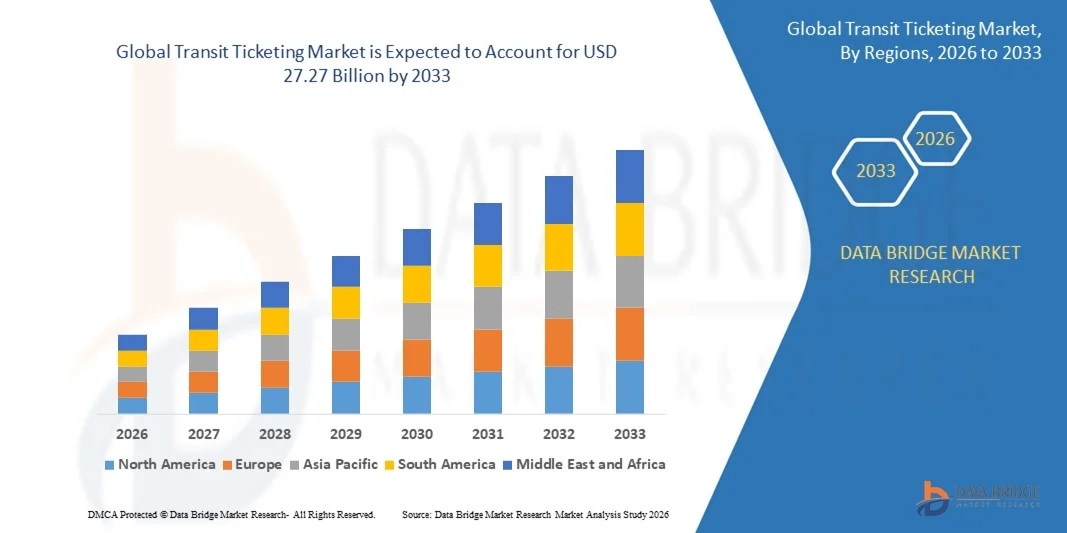
- The global transit ticketing market size was valued at USD 12.77 billion in 2025 and is expected to reach USD 27.27 billion by 2033, at a CAGR of 10% during the forecast period
- The market growth is largely fueled by the rapid digitalization of public transportation systems and the increasing shift toward contactless and cashless fare collection methods, leading to widespread modernization of transit infrastructure across urban networks
- Furthermore, rising commuter expectations for seamless, fast, and mobile-based ticketing solutions are positioning transit ticketing platforms as essential components of smart mobility ecosystems. These converging factors are accelerating the deployment of automated fare collection and account-based ticketing systems, thereby significantly boosting the industry’s growth
Transit Ticketing Market Analysis
- Transit ticketing solutions, offering digital, contactless, and automated fare collection across railways, buses, and multimodal transport networks, are becoming critical to efficient urban mobility management due to their ability to enhance passenger convenience, reduce operational inefficiencies, and enable real-time data analytics
- The escalating demand for transit ticketing systems is primarily driven by expanding metro and rail projects, increasing smartphone penetration, and strong government investments in smart city initiatives aimed at improving public transport accessibility and operational transparency
- North America dominated the transit ticketing market with a share of 43.5% in 2025, due to early adoption of automated fare collection systems and strong investments in intelligent transportation infrastructure
- Asia-Pacific is expected to be the fastest growing region in the transit ticketing market during the forecast period due to rapid urbanization, expanding metro rail projects, and increasing smartphone penetration
- Smart card segment dominated the market with a market share of 57.7% in 2025, due to its widespread deployment in established metro and bus networks worldwide. Smart cards offer secure, rechargeable, and reusable ticketing options that ensure fast passenger throughput at entry and exit gates. Transit authorities prefer smart cards for their reliability, data encryption capabilities, and compatibility with existing automated fare collection infrastructure
Report Scope and Transit Ticketing Market Segmentation
|
Attributes |
Transit Ticketing Key Market Insights |
|
Segments Covered |
|
|
Countries Covered |
North America
Europe
Asia-Pacific
Middle East and Africa
South America
|
|
Key Market Players |
|
|
Market Opportunities |
|
|
Value Added Data Infosets |
In addition to the market insights such as market value, growth rate, market segments, geographical coverage, market players, and market scenario, the market report curated by the Data Bridge Market Research team includes in-depth expert analysis, import/export analysis, pricing analysis, production consumption analysis, and pestle analysis. |
Transit Ticketing Market Trends
Increasing Adoption of Account-Based and Contactless Ticketing Systems
- A significant trend in the transit ticketing market is the rising adoption of account-based and contactless ticketing systems, driven by the growing demand for seamless, cashless, and digitally integrated fare collection across urban transportation networks. These systems enable passengers to use bank cards, mobile wallets, and digital IDs, enhancing convenience while improving operational efficiency for transit authorities
- For instance, Transport for London has implemented contactless and account-based ticketing across its network, allowing commuters to pay using EMV cards and mobile payment platforms. This deployment has streamlined fare management, reduced queuing time, and strengthened revenue transparency across bus and rail services
- Transit agencies are increasingly transitioning from card-centric systems to account-based architectures where fare calculations are managed centrally rather than on physical cards. This shift is enabling flexible fare policies, real-time balance updates, and improved data analytics for passenger flow optimization
- The integration of mobile ticketing applications is expanding rapidly as smartphones become primary travel tools for commuters. Digital QR codes and NFC-enabled apps are simplifying ticket purchases while supporting multimodal transportation ecosystems
- Governments are emphasizing interoperable ticketing platforms that unify metro, bus, suburban rail, and regional transit under a single payment interface. This is strengthening regional connectivity and supporting integrated urban mobility frameworks
- The market is witnessing continuous modernization of legacy fare collection infrastructure to accommodate open-loop payments and cloud-based processing. This transition toward digital, account-driven ticketing is reinforcing the broader evolution of smart mobility ecosystems and enhancing long-term operational sustainability
Transit Ticketing Market Dynamics
Driver
Rapid Expansion of Smart City and Urban Mobility Infrastructure
- The rapid development of smart city initiatives and urban mobility infrastructure is driving demand for advanced transit ticketing systems that support integrated and technology-enabled transportation services. Cities are investing in digital platforms that connect buses, metros, trams, and shared mobility solutions through unified fare management systems
- For instance, Metropolitan Transportation Authority has introduced the OMNY contactless fare payment system to modernize transit access across New York’s subway and bus networks. This initiative supports digital payments and aligns with broader smart infrastructure upgrades across the city
- Urbanization is increasing passenger volumes in metropolitan areas, creating a need for scalable and automated ticketing solutions capable of handling high transaction frequencies. Advanced systems help reduce congestion at entry points and improve overall commuter experience
- Governments are promoting digital governance and intelligent transport systems to enhance operational visibility and data-driven planning. Transit ticketing platforms play a central role in capturing mobility data that supports infrastructure optimization and service scheduling
- The continued expansion of connected urban infrastructure is reinforcing investment in secure, interoperable, and cloud-enabled ticketing systems. This infrastructure-led growth is positioning digital transit ticketing as a foundational component of modern smart city ecosystems
Restraint/Challenge
High Initial Investment and Integration Complexity with Legacy Systems
- The transit ticketing market faces challenges due to the high capital expenditure required to upgrade existing fare collection infrastructure to digital and contactless platforms. Deploying validators, backend systems, and cybersecurity frameworks demands substantial financial commitment from transit authorities
- For instance, Chicago Transit Authority encountered phased modernization efforts while transitioning its Ventra fare system to support expanded contactless payments. Integrating new technologies with established hardware and operational processes required careful system alignment and investment planning
- Many transit agencies operate on legacy infrastructure built around closed-loop smart cards, making integration with open-loop and account-based systems technically complex. Ensuring compatibility without disrupting daily operations adds further implementation challenges
- Data security and payment compliance requirements increase system design complexity, particularly when integrating banking networks and cloud-based processing platforms. Maintaining passenger data protection while enabling seamless access requires advanced encryption and monitoring capabilities
- The need to balance modernization goals with financial sustainability continues to restrict rapid deployment in several regions. These integration and cost-related constraints collectively moderate the pace of digital transformation across transit ticketing ecosystems
Transit Ticketing Market Scope
The market is segmented on the basis of component, system, and application.
- By Component
On the basis of component, the transit ticketing market is segmented into ticket machine, e-ticket, e-kiosk, and e-toll. The e-ticket segment dominated the market with the largest revenue share in 2025, driven by the rapid digitalization of public transport services and the growing preference for contactless and paperless ticketing solutions. Commuters increasingly favor e-tickets due to their convenience, real-time booking confirmation, and easy storage on smartphones, which reduces dependency on physical infrastructure. Transport authorities benefit from reduced operational costs and improved passenger data analytics, supporting route optimization and service planning. The integration of e-ticketing platforms with mobile wallets and digital payment systems further strengthens its adoption across urban transit networks.
The e-toll segment is anticipated to witness the fastest growth rate from 2026 to 2033, fueled by expanding highway infrastructure and the increasing implementation of automated toll collection systems. Governments are prioritizing electronic tolling to reduce traffic congestion, minimize fuel consumption, and enhance toll revenue transparency. E-toll systems enable seamless vehicle movement through RFID and ANPR technologies, improving travel efficiency on expressways and urban corridors. The push toward smart city initiatives and intelligent transportation systems is further accelerating investments in advanced e-toll solutions across developing and developed regions.
- By System
On the basis of system, the transit ticketing market is segmented into smart card and smart phone. The smart card segment dominated the market with the largest revenue share of 57.7% in 2025, supported by its widespread deployment in established metro and bus networks worldwide. Smart cards offer secure, rechargeable, and reusable ticketing options that ensure fast passenger throughput at entry and exit gates. Transit authorities prefer smart cards for their reliability, data encryption capabilities, and compatibility with existing automated fare collection infrastructure. The familiarity of commuters with card-based systems and government-backed transit programs also contributes to their sustained market leadership.
The smart phone segment is projected to witness the fastest CAGR from 2026 to 2033, driven by increasing smartphone penetration and the rising adoption of mobile-based ticketing applications. Mobile ticketing systems enable QR code, NFC, and app-based access, eliminating the need for physical cards and enhancing user convenience. Transport operators are integrating ticketing apps with journey planners and real-time updates to provide a seamless travel experience. Growing consumer inclination toward digital payments and on-demand services is further accelerating the transition toward smartphone-based transit systems.
- By Application
On the basis of application, the transit ticketing market is segmented into railways and metros, buses, personal vehicles, airlines, and ships. The railways and metros segment dominated the market with the largest revenue share in 2025, driven by high daily passenger volumes and the early adoption of automated fare collection systems in urban transit networks. Metro systems require efficient ticket validation and crowd management solutions, making advanced ticketing technologies essential for operational efficiency. Government investments in expanding metro rail infrastructure and upgrading existing railway networks continue to strengthen demand for integrated ticketing platforms. The need for seamless multimodal connectivity in metropolitan areas further supports the dominance of this segment.
The buses segment is expected to witness the fastest growth rate from 2026 to 2033, fueled by the modernization of public bus fleets and the integration of digital ticketing in city and intercity transport services. Authorities are implementing mobile ticketing and contactless payment systems in buses to improve accessibility and reduce boarding times. The expansion of smart city projects and rural connectivity programs is increasing the deployment of electronic fare systems in bus networks. Rising focus on efficient public transport management and enhanced commuter convenience is driving strong growth in this segment.
Transit Ticketing Market Regional Analysis
- North America dominated the transit ticketing market with the largest revenue share of 43.5% in 2025, driven by early adoption of automated fare collection systems and strong investments in intelligent transportation infrastructure
- Transit agencies in the region emphasize contactless payments, open-loop ticketing, and seamless multimodal integration, enhancing passenger convenience and operational efficiency
- This growth is further supported by high digital payment penetration, robust public transport networks, and continuous modernization initiatives, positioning advanced ticketing solutions as a core component of smart mobility strategies across major cities
U.S. Transit Ticketing Market Insight
The U.S. transit ticketing market captured the largest revenue share in 2025 within North America, fueled by widespread deployment of contactless fare systems across metro, bus, and commuter rail networks. Public transportation authorities are increasingly integrating mobile ticketing, QR-based validation, and account-based ticketing platforms to streamline passenger flow. The expansion of smart city programs and partnerships with digital payment providers further accelerate adoption. In addition, strong federal and state funding for transportation upgrades continues to strengthen the implementation of next-generation ticketing technologies.
Europe Transit Ticketing Market Insight
The Europe transit ticketing market is projected to expand at a substantial CAGR throughout the forecast period, primarily driven by stringent regulatory frameworks supporting digital payments and sustainable urban mobility. Increasing cross-border travel and the demand for interoperable ticketing systems are encouraging the deployment of unified fare platforms. European cities are investing in integrated transport management systems to enhance efficiency and reduce congestion. The growing shift toward environmentally sustainable public transport further promotes the adoption of paperless and contactless ticketing solutions.
U.K. Transit Ticketing Market Insight
The U.K. transit ticketing market is anticipated to grow at a noteworthy CAGR during the forecast period, supported by the extensive use of contactless bank card payments and mobile ticketing across rail and bus services. Commuters increasingly prefer tap-and-go systems for their speed and convenience. The government’s focus on modernizing rail infrastructure and expanding digital fare initiatives strengthens market growth. Integration with national payment systems and urban mobility apps further enhances passenger experience and drives continued expansion.
Germany Transit Ticketing Market Insight
The Germany transit ticketing market is expected to expand at a considerable CAGR during the forecast period, fueled by rising investments in smart transport infrastructure and digital mobility platforms. Germany’s well-established public transportation network encourages the adoption of integrated and subscription-based ticketing systems. Increasing urban population density and sustainability goals are promoting digital fare management solutions. The focus on secure data management and efficient transit operations further supports the uptake of advanced ticketing technologies.
Asia-Pacific Transit Ticketing Market Insight
The Asia-Pacific transit ticketing market is poised to grow at the fastest CAGR during the forecast period of 2026 to 2033, driven by rapid urbanization, expanding metro rail projects, and increasing smartphone penetration. Governments across the region are implementing smart city initiatives that prioritize digital payment integration within public transport systems. Large-scale investments in new rail corridors and bus rapid transit networks accelerate deployment of automated fare collection systems. The expanding middle-class population and rising preference for convenient mobility solutions further contribute to strong regional growth.
Japan Transit Ticketing Market Insight
The Japan transit ticketing market is gaining momentum due to its advanced rail infrastructure and widespread adoption of IC card and mobile payment systems. High passenger volumes in urban centers necessitate efficient and reliable automated fare collection technologies. Integration of ticketing platforms with retail payments and commuter services enhances system utility. Continuous technological innovation and a strong emphasis on punctuality and operational precision further drive the market in Japan.
China Transit Ticketing Market Insight
The China transit ticketing market accounted for the largest market revenue share in Asia Pacific in 2025, attributed to extensive metro network expansion and high digital payment adoption rates. Urban transit authorities are rapidly implementing QR code and smartphone-based ticketing systems to manage large commuter populations. Government-led smart city projects and investments in high-speed rail infrastructure significantly boost demand. The presence of strong domestic technology providers and a digitally engaged consumer base continues to propel market expansion across major metropolitan regions.
Transit Ticketing Market Share
The transit ticketing industry is primarily led by well-established companies, including:
- Rambus Inc. (U.S.)
- Infineon Technologies AG (Germany)
- AEP Ticketing Solutions S.r.l (Italy)
- NXP Semiconductors (Netherlands)
- HID Global Corporation (U.S.)
- CPI Card Group Inc. (U.S.)
- Cubic Corporation (U.S.)
- Indra Sistemas (Spain)
- Xerox Corporation (U.S.)
- Giesecke & Devrient GmbH (Germany)
- Paragon Group Limited (U.K.)
- Confidex (Finland)
- Oberthur Technologies (France)
- Vix Technology (Australia)
- Scheidt & Bachmann GmbH (Germany)
- Masabi Ltd (U.K.)
- Xminnov (China)
- Inside Secure (France)
Latest Developments in Global Transit Ticketing Market
- In January 2026, Siemens Mobility announced the expansion of its account-based ticketing platform across multiple European metropolitan transit networks to support open-loop payments and multimodal integration. This development strengthens Siemens Mobility’s competitive positioning in the transit ticketing market by accelerating the shift toward interoperable and cloud-enabled fare systems. The initiative enhances passenger flexibility through seamless transfers between buses, metros, and regional rail while enabling operators to access centralized data analytics for improved service planning. Its impact on the market lies in promoting scalable, future-ready ticketing infrastructure aligned with smart city mobility goals
- In November 2025, INIT GmbH introduced a next-generation contactless fare collection system integrated with real-time passenger information and mobile validation features for urban bus networks. This launch reinforces INIT’s strategic emphasis on digital transformation and strengthens its footprint in integrated transport solutions. The system improves boarding efficiency, reduces cash handling, and enhances commuter convenience through synchronized app-based services. Its market impact is reflected in accelerating the modernization of legacy fare systems and driving wider adoption of unified digital ticketing ecosystems
- In September 2025, Cubic Corporation launched a new mobile ticketing application designed to integrate with existing transit systems across major cities in the U.S. This initiative underscores Cubic’s focus on digital transformation and its response to growing consumer demand for mobile-first travel solutions. By enabling seamless payment, real-time ticket validation, and integration with urban mobility apps, the company strengthens its competitive advantage. The move contributes to expanding mobile ticketing penetration and encourages sustainable, contactless travel across metropolitan regions
- In August 2025, Thales Group announced a partnership with Transport for London to implement a new digital ticketing system aimed at enhancing user convenience and operational efficiency. This collaboration reinforces Thales’ leadership in smart transport technologies and deepens its presence in the European market. The initiative is expected to streamline fare processing, improve transaction speed, and strengthen data-driven transport management. Its broader market impact includes setting a benchmark for large-scale digital ticketing upgrades across developed urban transit systems
- In July 2025, Conduent secured a contract with a major metropolitan transit authority to implement an advanced fare collection system leveraging AI-based real-time analytics. This development enhances operational performance by enabling predictive maintenance, passenger flow analysis, and demand forecasting. Conduent’s integration of AI capabilities positions it competitively within the evolving intelligent ticketing landscape. The initiative supports data-driven transit planning and accelerates the adoption of smart fare management technologies globally

- Interactive Data Analysis Dashboard
- Company Analysis Dashboard for high growth potential opportunities
- Research Analyst Access for customization & queries
- Competitor Analysis with Interactive dashboard
- Latest News, Updates & Trend analysis
- Harness the Power of Benchmark Analysis for Comprehensive Competitor Tracking
Data collection and base year analysis are done using data collection modules with large sample sizes. The stage includes obtaining market information or related data through various sources and strategies. It includes examining and planning all the data acquired from the past in advance. It likewise envelops the examination of information inconsistencies seen across different information sources. The market data is analysed and estimated using market statistical and coherent models. Also, market share analysis and key trend analysis are the major success factors in the market report. To know more, please request an analyst call or drop down your inquiry.
The key research methodology used by DBMR research team is data triangulation which involves data mining, analysis of the impact of data variables on the market and primary (industry expert) validation. Data models include Vendor Positioning Grid, Market Time Line Analysis, Market Overview and Guide, Company Positioning Grid, Patent Analysis, Pricing Analysis, Company Market Share Analysis, Standards of Measurement, Global versus Regional and Vendor Share Analysis. To know more about the research methodology, drop in an inquiry to speak to our industry experts.
Data Bridge Market Research is a leader in advanced formative research. We take pride in servicing our existing and new customers with data and analysis that match and suits their goal. The report can be customized to include price trend analysis of target brands understanding the market for additional countries (ask for the list of countries), clinical trial results data, literature review, refurbished market and product base analysis. Market analysis of target competitors can be analyzed from technology-based analysis to market portfolio strategies. We can add as many competitors that you require data about in the format and data style you are looking for. Our team of analysts can also provide you data in crude raw excel files pivot tables (Fact book) or can assist you in creating presentations from the data sets available in the report.













