


Transradial Access Market Size
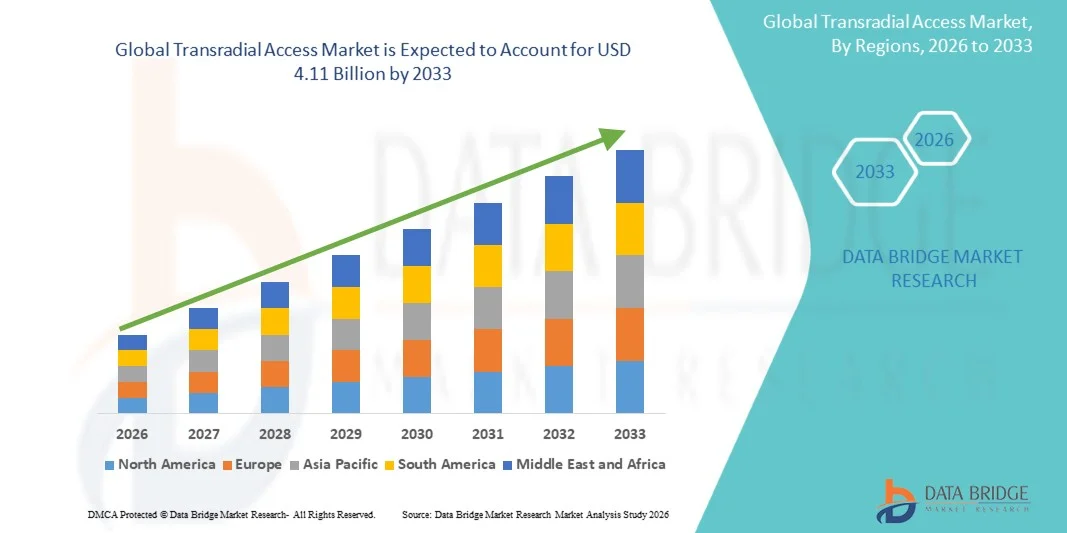
- The global transradial access market size was valued at USD 2.02 billion in 2025 and is expected to reach USD 4.11 billion by 2033, at a CAGR of 9.3% during the forecast period
- The market growth is primarily driven by the increasing preference for minimally invasive cardiovascular procedures, which reduce patient recovery time, lower complication risks, and improve procedural efficiency
- Moreover, advancements in catheterization devices, rising prevalence of cardiovascular diseases, and growing awareness among healthcare professionals regarding the benefits of transradial access are fueling the adoption of these procedures in hospitals and cardiac centers worldwide. These factors are collectively supporting the market’s steady expansion over the forecast period
Transradial Access Market Analysis
- Transradial access, enabling percutaneous entry through the radial artery for coronary and peripheral interventions, is increasingly preferred in cardiac catheterization and interventional cardiology due to reduced bleeding risks, shorter hospital stays, and improved patient comfort compared to transfemoral access
- The rising adoption of transradial procedures is primarily driven by growing awareness among cardiologists of its clinical benefits, technological advancements in catheters and guidewires, and an increasing prevalence of cardiovascular diseases worldwide
- North America dominated the transradial access market with the largest revenue share of 38.5% in 2025, supported by well-established healthcare infrastructure, high procedural volumes, favorable reimbursement policies, and a strong presence of leading device manufacturers, with the U.S. witnessing widespread adoption of radial interventions in major cardiac centers
- Asia-Pacific is expected to be the fastest growing region in the transradial access market during the forecast period, driven by expanding healthcare facilities, rising cardiovascular disease burden, and increasing training and awareness programs for radial access techniques among clinicians
- Catheter segment dominated the transradial access market with a market share of 45.7% in 2025, owing to their critical role in procedural success, improved designs for ease of use, and compatibility with advanced interventional devices
Report Scope and Transradial Access Market Segmentation
|
Attributes |
Transradial Access Key Market Insights |
|
Segments Covered |
|
|
Countries Covered |
North America
Europe
Asia-Pacific
Middle East and Africa
South America
|
|
Key Market Players |
|
|
Market Opportunities |
|
|
Value Added Data Infosets |
In addition to the insights on market scenarios such as market value, growth rate, segmentation, geographical coverage, and major players, the market reports curated by the Data Bridge Market Research also include in-depth expert analysis, patient epidemiology, pipeline analysis, pricing analysis, and regulatory framework |
Transradial Access Market Trends
“Increasing Adoption of Radial-Access Techniques in Complex Interventions”
- A notable trend in the global transradial access market is the expanding use of radial-entry techniques in complex percutaneous coronary and peripheral interventions, driven by procedural safety and patient comfort benefits
- For instance, the use of distal radial access in chronic total occlusion procedures is gaining traction, allowing interventional cardiologists to reduce bleeding complications while maintaining procedural efficiency
- Technological advancements in sheath and catheter designs are enhancing the success rates of radial procedures and facilitating adoption among cardiologists previously reliant on femoral access
- Furthermore, integration with imaging modalities such as intravascular ultrasound (IVUS) and optical coherence tomography (OCT) provides real-time guidance, improving procedural precision and outcomes
- This trend toward more efficient, patient-friendly, and safer radial procedures is reshaping cardiologists’ procedural preferences, leading manufacturers such as Terumo and Boston Scientific to develop specialized radial access kits for complex interventions
- Growing collaborations between device manufacturers and healthcare institutions are fostering innovation in radial-access technology, including smaller-profile catheters and integrated hemostasis devices
- The emergence of radial-access-focused training programs and simulation-based education for interventional cardiologists is accelerating adoption and improving procedural outcomes globally
Transradial Access Market Dynamics
Driver
“Rising Preference for Minimally Invasive Cardiac Procedures”
- The growing preference for minimally invasive cardiac procedures, which reduce hospital stay, bleeding risk, and patient discomfort, is a major driver for transradial access adoption
- For instance, in March 2025, Terumo Medical Corporation introduced a new slender radial catheter designed to facilitate complex interventions with lower complication rates, further boosting market uptake
- Increasing awareness among cardiologists regarding the clinical advantages of radial access over femoral access is driving procedural shifts in hospitals and cardiac centers worldwide
- The rising prevalence of cardiovascular diseases, including coronary artery disease, is expanding the patient pool for transradial procedures, contributing to consistent market growth
- Furthermore, the adoption of advanced devices and training programs for radial access techniques is encouraging hospitals to transition from traditional femoral access to transradial approaches
- The trend toward safer, faster, and patient-preferred access methods is creating robust growth opportunities for device manufacturers and healthcare providers
- Expansion of radial-access adoption in outpatient and day-care cardiac centers is increasing procedural volumes and overall market demand
- Regulatory approvals for innovative radial-access devices in multiple regions are facilitating faster commercialization and market penetration
Restraint/Challenge
“Technical Complexity and Limited Operator Experience”
- Challenges in the transradial access market stem from the technical complexity of radial procedures and limited operator experience in certain regions, which may affect procedural success rates
- For instance, reports indicate that radial artery spasm or access failure can occur in patients with smaller vessel diameter, making operator skill critical for procedural outcomes
- Lack of standardized training and familiarity with distal radial techniques may discourage adoption in smaller hospitals or emerging markets
- Furthermore, the higher upfront cost of specialized radial access catheters and sheaths compared to conventional femoral equipment can limit uptake in cost-sensitive healthcare settings
- Patient anatomical variability and the need for specialized imaging guidance during complex interventions add additional operational challenges
- Overcoming these hurdles through comprehensive operator training, improved device design, and cost-effective solutions is essential for accelerating market growth globally
- Limited awareness and adoption in rural or underserved regions restrict the market’s full potential, particularly in emerging economies
- Potential complications such as radial artery occlusion or procedural delays during crossover to femoral access may create hesitation among new operators, impacting overall adoption rates
Transradial Access Market Scope
The market is segmented on the basis of application, product, and end users.
- By Application
On the basis of application, the transradial access market is segmented into fluid and nutrition administration, drug administration, blood transfusion, diagnostics and testing. The drug administration segment dominated the market with the largest market revenue share of 41.5% in 2025, driven by the extensive use of radial access for delivering medications during percutaneous coronary interventions (PCI) and other cardiovascular procedures. Hospitals and cardiac centers prefer transradial routes for drug administration due to reduced bleeding risks, faster patient recovery, and lower post-procedural complications compared to femoral access. The widespread adoption of antiplatelet and anticoagulant therapies during cardiac procedures further contributes to the segment’s dominance. In addition, the precision and safety offered by radial access for drug delivery are boosting clinician confidence, making it the preferred choice in both emergency and planned interventions. The availability of specialized catheters and training programs also supports the high adoption rate of radial access for drug administration.
The diagnostics and testing segment is expected to witness the fastest growth rate of 23.4% from 2026 to 2033, fueled by the increasing use of radial access for coronary angiography, pressure measurements, and blood sampling during interventional procedures. Radial access allows for quicker patient mobilization and minimal discomfort, making it ideal for frequent or outpatient diagnostic procedures. Growing awareness among cardiologists regarding the procedural benefits and safety of radial-based diagnostics is further driving adoption. Technological innovations in imaging catheters and point-of-care testing devices also enhance the segment’s attractiveness. Emerging markets are witnessing rapid growth as hospitals and ambulatory centers expand diagnostic capabilities using radial access.
- By Product
On the basis of product, the market is segmented into guidewires, catheters, sheaths and sheath introducers, and accessories. The catheter segment dominated the market with the largest market revenue share of 45.7% in 2025, owing to its essential role in navigating radial arteries during complex cardiovascular procedures. Catheters designed specifically for transradial interventions reduce vascular trauma and improve procedural efficiency, making them highly preferred by interventional cardiologists. The availability of a wide range of diagnostic and therapeutic catheters enhances procedural versatility. Technological improvements in catheter flexibility, miniaturization, and compatibility with adjunct devices support their dominance. Leading manufacturers focus on continuous innovation to improve safety, success rates, and patient outcomes, which further drives market adoption.
The sheaths and sheath introducers segment is expected to witness the fastest growth rate of 22.6% from 2026 to 2033, driven by innovations in slender and hydrophilic sheaths that reduce radial artery spasm and access complications. Sheath introducers facilitate smoother catheter insertion and better hemostasis, improving operator confidence and patient comfort. Increased training in radial techniques and growing awareness of sheath benefits among healthcare providers contribute to rapid adoption. Emerging healthcare facilities and high-volume cardiac centers are increasingly incorporating advanced sheath systems to optimize procedural outcomes. Cost-effective and reusable sheath designs are also expanding their uptake across diverse clinical settings.
- By End Users
On the basis of end users, the market is segmented into hospitals, ambulatory centers, clinics, community healthcare, and others. The hospitals segment dominated the market with the largest market revenue share of 50.3% in 2025, driven by the concentration of high-volume cardiac procedures and availability of specialized interventional cardiology units. Hospitals benefit from radial access through shorter hospital stays, reduced complications, and enhanced patient throughput, making it the preferred procedural route. Advanced imaging facilities, trained staff, and access to specialized catheters and sheaths further strengthen hospital dominance. The growing trend of integrating minimally invasive procedures into standard hospital protocols also supports the market share.
The ambulatory centers segment is expected to witness the fastest growth rate of 24.1% from 2026 to 2033, fueled by the rising number of outpatient cardiac procedures and preference for minimally invasive approaches. Radial access allows same-day discharge, improving operational efficiency and patient convenience in ambulatory settings. Expansion of day-care cardiac centers in emerging regions and increased awareness among cardiologists regarding radial benefits are accelerating adoption. The cost-effectiveness and patient-friendly nature of radial interventions make ambulatory centers an attractive growth segment for device manufacturers.
Transradial Access Market Regional Analysis
- North America dominated the transradial access market with the largest revenue share of 38.5% in 2025, supported by well-established healthcare infrastructure, high procedural volumes, favorable reimbursement policies, and a strong presence of leading device manufacturers
- Hospitals and cardiac centers in the region prioritize radial access due to its lower bleeding risk, shorter patient recovery time, and reduced post-procedural complications compared to femoral access
- This widespread adoption is further supported by favorable reimbursement policies, strong presence of key device manufacturers, and extensive training programs for interventional cardiologists, establishing transradial access as the preferred procedural route in major cardiac care facilities
U.S. Transradial Access Market Insight
The U.S. transradial access market captured the largest revenue share of 82% in 2025 within North America, driven by the widespread adoption of minimally invasive cardiac procedures and advanced interventional cardiology techniques. Hospitals and cardiac centers increasingly prefer radial access due to reduced bleeding risk, shorter patient recovery times, and improved procedural outcomes. The growing availability of specialized radial-access devices, coupled with extensive training programs for cardiologists, further strengthens market penetration. Moreover, favorable reimbursement policies and a strong presence of leading device manufacturers support rapid adoption. Increasing awareness among patients about the benefits of radial access is also contributing to market expansion.
Europe Transradial Access Market Insight
The Europe transradial access market is projected to expand at a substantial CAGR throughout the forecast period, primarily driven by rising cardiovascular disease prevalence and the need for safer, minimally invasive procedures. The adoption of radial access is being supported by well-established healthcare infrastructure, advanced catheterization labs, and growing physician awareness of clinical benefits over femoral access. Countries such as France, Germany, and Italy are witnessing increased adoption in both hospitals and specialized cardiac centers. Technological innovations in guidewires, catheters, and sheath systems are further fostering adoption across diagnostic and interventional procedures. The trend towards same-day discharge and outpatient interventions is also fueling market growth.
U.K. Transradial Access Market Insight
The U.K. transradial access market is anticipated to grow at a noteworthy CAGR during the forecast period, driven by increasing preference for minimally invasive cardiac interventions and enhanced patient safety. Hospitals and cardiac centers in the U.K. are adopting radial procedures to reduce complications and optimize procedural efficiency. Government initiatives promoting cardiovascular health and clinical guidelines recommending radial access are supporting adoption. Moreover, the growing number of interventional cardiologists trained in radial techniques is boosting procedural uptake. Awareness of lower recovery times and patient comfort further encourages hospitals and clinics to favor transradial interventions over femoral access.
Germany Transradial Access Market Insight
The Germany transradial access market is expected to expand at a considerable CAGR during the forecast period, fueled by rising cardiovascular disease prevalence and a focus on advanced, patient-friendly interventional procedures. Germany’s robust healthcare infrastructure, coupled with the presence of specialized cardiac centers and interventional cardiologists, supports widespread radial-access adoption. Hospitals are increasingly implementing radial access in routine PCI procedures due to its clinical benefits, including reduced bleeding complications. Technological advancements in catheters, guidewires, and sheath systems further enhance procedural success. Increased physician training and awareness programs are also key factors promoting growth in Germany.
Asia-Pacific Transradial Access Market Insight
The Asia-Pacific transradial access market is poised to grow at the fastest CAGR of 25% during the forecast period of 2026 to 2033, driven by rising cardiovascular disease burden, increasing healthcare investments, and expanding access to minimally invasive procedures in countries such as China, Japan, and India. Growing numbers of hospitals and ambulatory centers are adopting radial procedures to reduce complications and improve patient recovery times. Government initiatives promoting advanced cardiac care and training of interventional cardiologists are accelerating market penetration. Moreover, the availability of cost-effective radial-access devices and increasing awareness among clinicians about procedural advantages are boosting adoption.
Japan Transradial Access Market Insight
The Japan transradial access market is gaining momentum due to the country’s advanced healthcare system, aging population, and preference for minimally invasive procedures. Radial access is widely adopted in cardiac centers to reduce procedural risks and shorten hospital stays. Integration with advanced imaging systems and specialized catheters enhances procedural precision, supporting adoption. Extensive physician training programs and awareness campaigns about radial-access benefits further accelerate market growth. Japan’s focus on patient-centered care and safety is encouraging hospitals and clinics to prioritize transradial interventions for both routine and complex cardiac procedures.
India Transradial Access Market Insight
The India transradial access market accounted for the largest market revenue share in Asia-Pacific in 2025, attributed to the increasing prevalence of cardiovascular diseases, rapid urbanization, and growing adoption of minimally invasive cardiac procedures. Indian hospitals and cardiac centers are increasingly implementing radial-access interventions due to lower bleeding risks and reduced hospital stays. The push towards advanced cardiac care, availability of cost-effective devices, and training programs for interventional cardiologists are driving market growth. Awareness among patients regarding safer and faster recovery procedures is further contributing to the adoption of radial-access techniques across residential, commercial, and specialized healthcare facilities.
Transradial Access Market Share
The Transradial Access industry is primarily led by well-established companies, including:
- Medtronic (Ireland)
- Boston Scientific Corporation (U.S.)
- BD (U.S.)
- Abbott (U.S.)
- B. Braun SE (Germany)
- Teleflex Incorporated (U.S.)
- Merit Medical Systems, Inc. (U.S.)
- Cardinal Health, Inc. (U.S.)
- Asahi Intecc Co., Ltd. (Japan)
- Cook (U.S.)
- AngioDynamics, Inc. (U.S.)
- NIPRO MEDICAL CORPORATION (Japan)
- Smiths Medical (U.K.)
- Oscor Inc. (U.S.)
- Cordis, Corp. (U.S.)
- Biotronik SE & Co. KG (Germany)
- Shanghai Kindly Medical Instruments Co., Ltd. (China)
- SCW Medicath Ltd. (Israel)
- Terumo Corporation (Japan)
- Beijing Demax Medical Technology Co., Ltd. (China)
What are the Recent Developments in Global Transradial Access Market?
- In August 2025, Merit Medical Systems, Inc. announced the U.S. commercial release of its Prelude Wave™ Hydrophilic Sheath Introducer featuring SnapFix™ securement technology, which is designed to improve sheath retention and potentially reduce arterial spasm and occlusion during radial access procedures advancing procedural safety and performance
- In September 2023, MicroVention, a subsidiary of Terumo Corporation, announced that its SOFIA™ EX 5F 115 cm Intracranial Support Catheter received U.S. Food and Drug Administration (FDA) 510(k) clearance for use via transradial access, expanding its application beyond transfemoral routes and marking the company’s entry into radial therapy devices. The device boasts enhanced trackability and support for neurointerventional procedures
- In December 2024, Terumo Interventional Systems expanded its radial access portfolio with the U.S. launch of the R2P™ NaviCross® Peripheral Support Catheter, a long‑length support catheter tailored for radial‑to‑peripheral (R2P) procedures, enhancing the ability to cross complex lesions during radial‑based peripheral interventions
- In January 2024, AngioDynamics, Inc. received FDA 510(k) clearance for its Auryon XL Radial Access Catheter, a 225 cm device designed for use in peripheral arterial disease (PAD) procedures via radial access. Following clearance, the company initiated a limited U.S. market release, improving access and mobility for patients with complex PAD cases via radial entry
- In September 2021, Medtronic plc announced that its Rist™ Radial Access Guide Catheter and associated radial access portfolio received CE Mark approval in European countries including the U.K., Italy, Spain, Germany, and France, broadening the availability of radial access devices for neurovascular and cardiovascular interventions outside the U.S.

- Interactive Data Analysis Dashboard
- Company Analysis Dashboard for high growth potential opportunities
- Research Analyst Access for customization & queries
- Competitor Analysis with Interactive dashboard
- Latest News, Updates & Trend analysis
- Harness the Power of Benchmark Analysis for Comprehensive Competitor Tracking
Data collection and base year analysis are done using data collection modules with large sample sizes. The stage includes obtaining market information or related data through various sources and strategies. It includes examining and planning all the data acquired from the past in advance. It likewise envelops the examination of information inconsistencies seen across different information sources. The market data is analysed and estimated using market statistical and coherent models. Also, market share analysis and key trend analysis are the major success factors in the market report. To know more, please request an analyst call or drop down your inquiry.
The key research methodology used by DBMR research team is data triangulation which involves data mining, analysis of the impact of data variables on the market and primary (industry expert) validation. Data models include Vendor Positioning Grid, Market Time Line Analysis, Market Overview and Guide, Company Positioning Grid, Patent Analysis, Pricing Analysis, Company Market Share Analysis, Standards of Measurement, Global versus Regional and Vendor Share Analysis. To know more about the research methodology, drop in an inquiry to speak to our industry experts.
Data Bridge Market Research is a leader in advanced formative research. We take pride in servicing our existing and new customers with data and analysis that match and suits their goal. The report can be customized to include price trend analysis of target brands understanding the market for additional countries (ask for the list of countries), clinical trial results data, literature review, refurbished market and product base analysis. Market analysis of target competitors can be analyzed from technology-based analysis to market portfolio strategies. We can add as many competitors that you require data about in the format and data style you are looking for. Our team of analysts can also provide you data in crude raw excel files pivot tables (Fact book) or can assist you in creating presentations from the data sets available in the report.













