


Trimethlyaminuria Market Overview
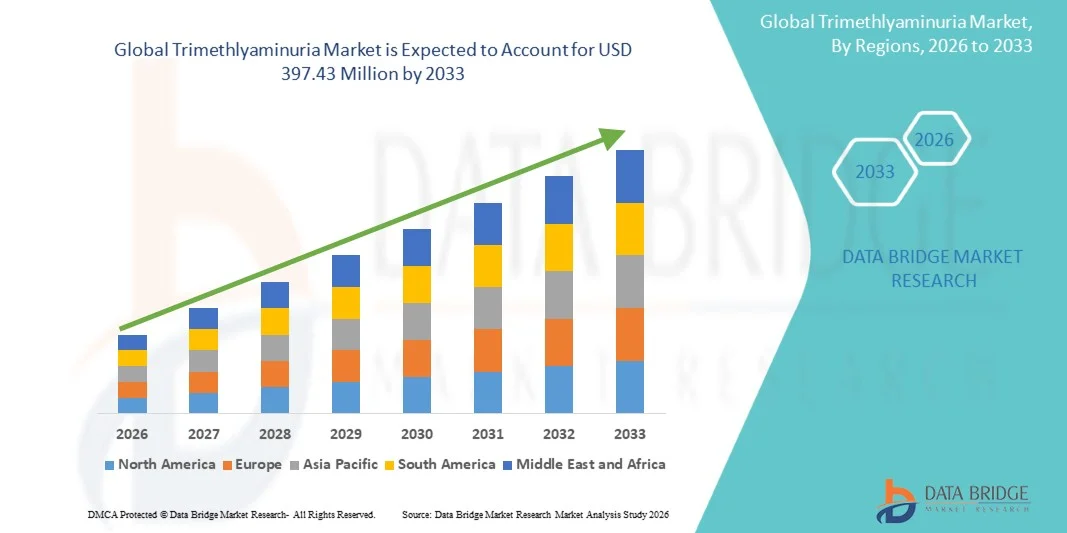
The global Trimethlyaminuria market was valued at USD 269 Million in 2025 and is projected to reach USD 397.43 Million by 2033, growing at a CAGR of 5.00% from 2026 to 2033. The Trimethylaminuria (TMAU) market is experiencing gradual but steady growth driven by rising awareness of rare metabolic disorders, increasing genetic testing adoption, and expanding clinical recognition of undiagnosed body odor syndromes. Improved diagnostic capabilities in metabolic and genetic screening laboratories are enabling earlier identification of flavin-containing monooxygenase 3 (FMO3) enzyme deficiency, which is the primary cause of trimethylaminuria. In addition, growing patient awareness, increasing access to specialty metabolic clinics, and rising focus on personalized medicine and rare disease management are supporting market expansion across developed healthcare systems.
The increasing prevalence of rare genetic metabolic conditions, combined with advancements in next-generation sequencing and biochemical urine testing, is encouraging hospitals, diagnostic laboratories, and research institutions to improve early detection of trimethylamine accumulation disorders. Clinical adoption of dietary management protocols, activated charcoal therapy, and riboflavin supplementation is improving symptom control in affected patients. Furthermore, expanding investments in rare disease research programs and increasing collaboration between genetic research institutes and pharmaceutical companies are strengthening diagnostic and therapeutic pathways. Growing emphasis on patient-centric care and improved access to metabolic disorder screening in both pediatric and adult populations are further driving market development globally.
Key Market Trends & Insights
- North America dominated the global Trimethylaminuria market with the largest revenue share of 36.12% in 2025, supported by advanced genetic testing infrastructure, strong rare disease awareness programs, and well-established metabolic disorder diagnostic networks across specialized hospitals and research centers. The region also benefits from early adoption of precision medicine approaches and improved access to biochemical and FMO3 enzyme deficiency testing, strengthening its leadership in the global market.
- The Oral segment dominated the market with a share of 78.35% in 2025 due to its convenience, patient compliance, and widespread use of antibiotics and supplements in tablet or capsule form
- Asia-Pacific is expected to be the fastest-growing region at a CAGR of 7.3% from 2026 to 2033, fueled by improving healthcare infrastructure, rising awareness of rare genetic disorders, and expanding access to diagnostic testing services across China, India, and Japan. Increasing investment in genetic screening programs and growing penetration of online and hospital pharmacy networks are further accelerating regional market growth.
- The Vitamin B12 Supplements segment is the fastest-growing drug type, projected to register a CAGR of 6.9% from 2026 to 2033, driven by increasing clinical use in reducing symptom severity and improving metabolic breakdown of trimethylamine in affected patients. Rising adoption of dietary management-based therapies and growing preference for non-invasive treatment approaches are supporting strong segment expansion globally.
- The Hospital Pharmacies segment dominated the distribution channel with a 44.28% revenue share in 2025, due to high patient dependency on physician-guided treatment, strong availability of prescription-based therapies, and direct integration with diagnostic and metabolic disorder treatment pathways. Hospital pharmacies remain the primary access point for antibiotics and vitamin supplementation therapies used in trimethylaminuria management.
- The Online Pharmacies segment is the fastest-growing distribution channel, expected to register a CAGR of 7.1% from 2026 to 2033, driven by increasing digital healthcare adoption, rising demand for convenient home delivery of chronic condition therapies, and growing availability of dietary supplements and prescription fulfillment services through regulated e-pharmacy platforms.
Market Size & Forecast
- Global Market Value (2025): USD 269 Million
- Expected Market Value (2033): USD 397.43 Million
- Forecast CAGR (2026–2033): 5.00%
- Leading Region in 2025: North America
- Fastest Growing Region: Asia-Pacific
Report Scope and Global Trimethlyaminuria Market Segmentation
|
Attributes |
Trimethlyaminuria Key Market Insights |
|
Segments Covered |
|
|
Countries Covered |
North America · U.S. · Canada · Mexico Europe · Germany · France · U.K. · Netherlands · Switzerland · Belgium · Russia · Italy · Spain · Turkey · Rest of Europe Asia-Pacific · China · Japan · India · South Korea · Singapore · Malaysia · Australia · Thailand · Indonesia · Philippines · Rest of Asia-Pacific Middle East and Africa · Saudi Arabia · U.A.E. · South Africa · Egypt · Israel · Rest of Middle East and Africa South America · Brazil · Argentina · Rest of South America |
|
Key Market Players |
• Sanofi (France) |
|
Market Opportunities |
· Rising awareness and improved diagnosis of rare metabolic disorders · Growing demand for personalized medicine and dietary-based management solutions · Expansion of rare disease research funding and orphan drug development incentives |
|
Value Added Data Infosets |
In addition to the insights on market scenarios such as market value, growth rate, segmentation, geographical coverage, and major players, the market reports curated by the Data Bridge Market Research also include in-depth expert analysis, geographically represented company-wise production and capacity, network layouts of distributors and partners, detailed and updated price trend analysis and deficit analysis of supply chain and demand. |
Global Trimethlyaminuria Market Trends
Trend: Growth in Rare Disease Awareness & Early Diagnosis
The global Trimethylaminuria market is witnessing a significant shift driven by increasing awareness of rare metabolic disorders and improving early diagnostic capabilities. Enhanced adoption of genetic screening, metabolomic testing, and biochemical urine analysis is enabling earlier and more accurate identification of Trimethylaminuria cases, reducing long-standing misdiagnosis issues. Expanded newborn screening programs and the growing use of next-generation sequencing (NGS) in clinical diagnostics are improving detection rates of rare genetic disorders by approximately 25–30% in advanced healthcare systems. In addition, patient advocacy groups and rare disease foundations are playing a crucial role in awareness generation, particularly across North America and Europe, where structured awareness campaigns are improving clinical recognition of symptoms such as body odour changes linked to trimethylamine accumulation. Increasing integration of precision medicine approaches in metabolic disorder clinics is further supporting personalized treatment strategies, strengthening long-term market development and improving patient management outcomes globally.
Global Trimethlyaminuria Market Dynamics
Key Market Driver: Rising Adoption of Microbiome-Targeted and Personalized Therapies
The global Trimethylaminuria market is witnessing strong growth driven by increasing understanding of gut microbiota involvement and FMO3 enzyme deficiency in disease progression. Growing adoption of microbiome-targeted therapies, dietary management strategies, and personalized supplementation approaches is significantly improving patient outcomes. Clinicians are increasingly prescribing antibiotics such as metronidazole and rifaximin in controlled cycles to suppress intestinal bacteria responsible for trimethylamine production, with clinical studies reporting symptom improvement in approximately 50–60% of treated patients. In addition, expanding use of precision medicine and nutrigenomics is enabling development of individualized dietary and therapeutic plans in specialized metabolic disorder clinics across North America, Europe, and Japan. The increasing availability of advanced genetic screening and metabolomic testing is further strengthening early diagnosis and treatment adoption globally.
Key Restraint/Challenge: Extremely Low Disease Prevalence and High Diagnostic Uncertainty
A major challenge in the global Trimethylaminuria market is its extremely low prevalence, estimated at fewer than 1 in 200,000 individuals globally, which significantly limits commercial viability for large-scale therapeutic development. The condition is frequently underdiagnosed or misdiagnosed as psychological, dermatological, or hygiene-related issues due to overlapping symptoms, resulting in delayed treatment initiation. Limited physician awareness and lack of standardized diagnostic protocols further restrict accurate identification, particularly in low- and middle-income regions. Additionally, pharmaceutical companies face weak financial incentives for large-scale drug development due to small patient populations, despite orphan drug regulatory support in the U.S. and Europe. Although genetic testing availability is improving, access remains uneven, slowing timely diagnosis and consistent treatment adoption across emerging markets.
Key Market Opportunity: Expansion of Orphan Drug Development and AI-Enabled Rare Disease Diagnostics
The Trimethylaminuria market presents significant opportunities through growing investment in orphan drug development and digital diagnostic platforms. Regulatory incentives such as FDA Orphan Drug Designation and European Medicines Agency (EMA) rare disease frameworks are encouraging pharmaceutical and biotech companies to explore enzyme-targeted therapies, gene-based interventions focusing on FMO3 mutations, and probiotic-based microbiome modulation strategies. In parallel, advancements in AI-driven diagnostic platforms and telemedicine are improving early detection and expanding access to metabolic specialists. Rare disease digital health networks have increased specialist accessibility by more than 30–35% in underserved and remote regions, enabling faster diagnosis and improved long-term disease management. Additionally, expanding use of next-generation sequencing (NGS) and metabolomic profiling is accelerating precision diagnosis, creating strong future growth potential for targeted therapeutic development globally.
Global Trimethlyaminuria Market Scope
The Trimethylaminuria market is segmented on the basis of drug type, route of administration, and distribution channel.
By Drug Type
On the basis of drug type, the global Trimethylaminuria market is segmented into antibiotics, vitamin B12 supplements, and others. The Antibiotics segment dominated the market with a share of 44.62% in 2025 due to its strong clinical effectiveness in reducing gut bacterial overgrowth responsible for excessive trimethylamine production. antibiotics such as metronidazole and neomycin are widely used in short treatment cycles to suppress intestinal microbial activity, thereby significantly reducing symptom severity, particularly the characteristic fish-like body odor. their strong availability, low cost, and established role in metabolic and gastrointestinal disorder management further reinforce their dominance across hospitals and specialty clinics. additionally, physician preference for rapid symptomatic relief and inclusion in standard treatment protocols continue to support strong global demand.
The Vitamin B12 Supplements segment is expected to register the fastest CAGR of 6.9% from 2026 to 2033, driven by increasing adoption of nutritional and metabolic correction therapies for long-term management of Trimethylaminuria. vitamin B12 plays an important role in supporting enzymatic pathways involved in trimethylamine breakdown, thereby helping reduce odor intensity and improving metabolic balance. growing patient preference for safer, non-antibiotic treatment approaches, rising awareness of dietary management strategies, and expanding use of personalized nutrition programs are accelerating segment growth. furthermore, increasing focus on preventive healthcare and nutrigenomics-based interventions is supporting broader adoption globally.
By Route of Administration
On the basis of route of administration, the global Trimethylaminuria market is segmented into oral and injectable. The Oral segment dominated the market with a share of 78.35% in 2025 due to its ease of administration, high patient compliance, and widespread use in both acute and long-term management of metabolic symptoms. most antibiotics, vitamin supplements, and supportive therapies are available in oral formulations, making this route the most practical and cost-effective option for outpatient care. oral administration is widely preferred by physicians for its non-invasive nature and suitability for repeated dosing over extended treatment periods. additionally, strong product availability across hospital and retail settings further strengthens segment dominance globally.
The Injectable segment is expected to register the fastest CAGR of 6.7% from 2026 to 2033, driven by increasing use in severe or acute cases requiring rapid therapeutic response and improved bioavailability. injectable formulations are particularly important in hospital settings where immediate symptom control and metabolic stabilization are required. rising hospitalization rates for severe symptomatic cases, growing use of parenteral vitamin and supportive therapies, and advancements in injectable drug delivery systems are further supporting segment expansion. additionally, increasing clinical emphasis on faster onset of action is accelerating adoption of injectable treatments worldwide.
By Distribution Channel
On the basis of distribution channel, the global Trimethylaminuria market is segmented into hospital pharmacies, retail pharmacies, drugstores, and online pharmacies. The Hospital Pharmacy segment dominated the market with a share of 42.18% in 2025 due to its direct integration with emergency care and inpatient treatment services. hospital pharmacies ensure immediate availability of antibiotics, vitamin supplements, and supportive medications required for rapid management of metabolic imbalance. centralized procurement systems, strict regulatory oversight, and physician-led dispensing practices further reinforce their dominance. additionally, high patient inflow in hospitals for rare disease diagnosis and treatment continues to drive consistent demand across this channel.
The Online Pharmacy segment is expected to register the fastest CAGR of 7.4% from 2026 to 2033, driven by rapid digital transformation in healthcare and increasing adoption of telemedicine services. patients are increasingly shifting toward online platforms for purchasing maintenance medications, vitamin supplements, and repeat prescriptions due to convenience and affordability. expanding internet penetration, improved last-mile delivery infrastructure, and growing awareness of rare metabolic disorder management are further supporting growth. additionally, integration of e-prescription systems and digital consultation platforms is significantly enhancing accessibility and driving strong global expansion of online pharmacy channels.
Global Trimethlyaminuria Market Regional Analysis
North America dominated the global Trimethylaminuria market with the largest revenue share of 36.12% in 2025, supported by advanced genetic testing infrastructure, strong rare disease awareness programs, and well-established metabolic disorder diagnostic networks across specialized hospitals and research centers. The region also benefits from early adoption of precision medicine approaches, including FMO3 enzyme deficiency testing and next-generation sequencing for metabolic disorder identification. Increasing availability of specialized metabolic clinics, strong insurance coverage for rare disease diagnostics, and growing physician awareness of trimethylamine metabolism disorders are further strengthening North America’s leadership position in the global market.
U.S. Trimethlyaminuria Market Insight
The U.S. Trimethylaminuria market is witnessing strong growth due to advanced rare disease screening programs, high adoption of genetic sequencing technologies, and well-established metabolic disorder treatment infrastructure. The country benefits from strong clinical research activity in genomics, increasing integration of personalized medicine approaches, and widespread availability of specialized diagnostic laboratories. In addition, rising awareness among healthcare professionals regarding trimethylaminuria and improved insurance coverage for rare disease testing are accelerating early diagnosis and long-term disease management across the U.S.
Europe Trimethlyaminuria Market Insight
The Europe Trimethylaminuria market remains a major contributor to global revenue, driven by strong healthcare system integration, advanced rare disease screening programs, and increasing adoption of genomic diagnostics across hospital networks. The region benefits from structured rare disease registries, government-supported metabolic disorder research initiatives, and expanding access to specialized biochemical testing services. In addition, rising investment in precision medicine, strong collaboration between academic institutions and diagnostic companies, and improved awareness of enzyme deficiency disorders are supporting early diagnosis and long-term disease management across Europe.
U.K. Trimethlyaminuria Market Insight
The U.K. Trimethylaminuria market is witnessing steady growth, supported by increasing adoption of rare disease diagnostic pathways within the National Health Service (NHS) and expanding genomic screening initiatives. Strong focus on personalized medicine, combined with investment in metabolic disorder research and improved access to genetic counseling services, is driving market expansion. Integration of next-generation sequencing technologies and growing clinician awareness of FMO3 enzyme deficiency are further improving diagnostic accuracy and patient outcomes.
Germany Trimethlyaminuria Market Insight
The Germany Trimethylaminuria market is expanding steadily due to strong diagnostic infrastructure, advanced laboratory capabilities, and increasing adoption of molecular genetic testing for rare metabolic disorders. Healthcare institutions are increasingly integrating biochemical and genomic testing tools for early identification of trimethylamine metabolism abnormalities. Government support for rare disease research, combined with strong biotech collaboration and innovation in precision diagnostics, is enhancing treatment accessibility and clinical awareness in Germany.
Asia-Pacific Trimethlyaminuria Market Insight
The Asia-Pacific Trimethylaminuria market is expected to witness rapid growth, driven by improving healthcare infrastructure, rising awareness of rare genetic disorders, and expanding access to diagnostic testing services across China, India, and Japan. Increasing adoption of genetic screening programs, expansion of hospital laboratories, and growing availability of biochemical metabolic testing are supporting early disease detection. Rising penetration of hospital and online pharmacy networks and increasing focus on personalized medicine are further accelerating regional market growth.
Japan Trimethlyaminuria Market Insight
The Japan Trimethylaminuria market is witnessing consistent growth due to advanced healthcare infrastructure, strong adoption of precision medicine, and increasing integration of genomic testing in clinical practice. Hospitals and research institutions are increasingly using metabolic profiling and genetic screening for early diagnosis of rare disorders. Government focus on rare disease management and continued investment in biotechnology innovation are strengthening diagnostic accuracy and patient care outcomes.
China Trimethlyaminuria Market Insight
The China Trimethylaminuria market is growing rapidly, driven by expanding healthcare infrastructure, rising awareness of rare genetic disorders, and increasing adoption of advanced diagnostic technologies. Growth is supported by expanding genetic screening programs, improving laboratory capabilities, and wider access to biochemical testing in urban hospitals. Increasing focus on precision medicine and collaboration between domestic and global biotech companies is further accelerating market expansion.
Global Trimethlyaminuria Market Share
The Trimethlyaminuria industry is primarily led by well-established companies, including:
- Sanofi (France)
- Pfizer Inc. (U.S.)
- Novartis AG (Switzerland)
- Roche Holding AG (Switzerland)
- Merck & Co., Inc. (U.S.)
- GlaxoSmithKline plc (U.K.)
- AstraZeneca plc (U.K.)
- Johnson & Johnson (U.S.)
- Bristol Myers Squibb (U.S.)
- AbbVie Inc. (U.S.)
- Takeda Pharmaceutical Company Limited (Japan)
- Eli Lilly and Company (U.S.)
- Bayer AG (Germany)
- Teva Pharmaceutical Industries Ltd. (Israel)
- Viatris Inc. (U.S.)
- Sun Pharmaceutical Industries Ltd. (India)
- Cipla Ltd. (India)
- Lupin Limited (India)
- Dr. Reddy’s Laboratories Ltd. (India)
- Aurobindo Pharma Ltd. (India)
- Alnylam Pharmaceuticals, Inc. (U.S.)
- Ionis Pharmaceuticals, Inc. (U.S.)
- Recordati Rare Diseases (Italy)
- Orphan Europe (Recordati Group) (France)
- Amgen Inc. (U.S.)
- Kyowa Kirin Co., Ltd. (Japan)
- Eisai Co., Ltd. (Japan)
- Horizon Therapeutics (U.S.)
- Bausch Health Companies Inc. (Canada)
- Mylan N.V. (now part of Viatris) (U.S.)
- F. Hoffmann-La Roche Ltd. (Switzerland)
- Pfizer Rare Disease Division (U.S.)
Latest Developments in Global Trimethlyaminuria Market
- In November 2020, University of Warwick researchers published findings identifying key gut bacterial enzyme pathways (CntA/B system) responsible for converting dietary choline and carnitine into trimethylamine (TMA), the compound responsible for Trimethylaminuria symptoms. The study highlighted early-stage potential for microbiome-targeted therapies using enzyme inhibition strategies to reduce TMA production at the source. This development strengthened global research focus on gut microbiome modulation as a future therapeutic direction for Trimethylaminuria management
- In March 2021, clinical reference updates published through the U.S. National Library of Medicine (StatPearls/NCBI) reinforced standardized management approaches for Trimethylaminuria, including dietary choline restriction, use of non-absorbable antibiotics such as metronidazole to suppress gut TMA-producing bacteria, and activated charcoal supplementation. The update emphasized that treatment remains symptomatic, with no FDA-approved curative therapy available, reinforcing demand for novel enzyme-targeting and microbiome-based approaches
- In June 2022, expanded clinical review publications in metabolic disorder literature emphasized the increasing use of genetic testing for FMO3 gene mutations in suspected Trimethylaminuria cases. The review highlighted improved diagnostic accuracy through next-generation sequencing panels used in rare metabolic disease screening programs across Europe and North America, supporting earlier identification and better disease classification
- In September 2023, updated NIH-supported clinical guidance reinforced a multi-modal management approach combining dietary control, microbial suppression therapy, and psychological support due to the significant psychosocial burden of Trimethylaminuria. The update also noted growing clinical interest in precision medicine approaches targeting FMO3 enzyme activity modulation, though such therapies remain in preclinical research stages
- In February 2024, molecular genetics research published in peer-reviewed literature further confirmed that FMO3 gene polymorphisms play a key role in disease severity variation, even among heterozygous carriers. The study strengthened the role of genetic screening in diagnostic workflows and supported increased adoption of rare disease panels in metabolic disorder testing laboratories
- In August 2024, the National Organization for Rare Disorders (NORD) updated its Trimethylaminuria disease profile, highlighting improved recognition of symptoms in clinical practice and increased awareness among healthcare providers regarding differential diagnosis challenges. The update emphasized the importance of early dietary intervention and avoidance of misdiagnosis as psychiatric or dermatological conditions
- In January 2025, rare disease market research reports indicated growing investment interest in microbiome-based therapeutics and enzyme inhibition strategies for Trimethylaminuria, driven by advances in gut microbiota science and precision nutrition approaches. The market outlook highlighted increasing adoption of genetic testing and metabolic screening programs, particularly in North America and Europe

- Interactive Data Analysis Dashboard
- Company Analysis Dashboard for high growth potential opportunities
- Research Analyst Access for customization & queries
- Competitor Analysis with Interactive dashboard
- Latest News, Updates & Trend analysis
- Harness the Power of Benchmark Analysis for Comprehensive Competitor Tracking
Data collection and base year analysis are done using data collection modules with large sample sizes. The stage includes obtaining market information or related data through various sources and strategies. It includes examining and planning all the data acquired from the past in advance. It likewise envelops the examination of information inconsistencies seen across different information sources. The market data is analysed and estimated using market statistical and coherent models. Also, market share analysis and key trend analysis are the major success factors in the market report. To know more, please request an analyst call or drop down your inquiry.
The key research methodology used by DBMR research team is data triangulation which involves data mining, analysis of the impact of data variables on the market and primary (industry expert) validation. Data models include Vendor Positioning Grid, Market Time Line Analysis, Market Overview and Guide, Company Positioning Grid, Patent Analysis, Pricing Analysis, Company Market Share Analysis, Standards of Measurement, Global versus Regional and Vendor Share Analysis. To know more about the research methodology, drop in an inquiry to speak to our industry experts.
Data Bridge Market Research is a leader in advanced formative research. We take pride in servicing our existing and new customers with data and analysis that match and suits their goal. The report can be customized to include price trend analysis of target brands understanding the market for additional countries (ask for the list of countries), clinical trial results data, literature review, refurbished market and product base analysis. Market analysis of target competitors can be analyzed from technology-based analysis to market portfolio strategies. We can add as many competitors that you require data about in the format and data style you are looking for. Our team of analysts can also provide you data in crude raw excel files pivot tables (Fact book) or can assist you in creating presentations from the data sets available in the report.












