


Tritanopia Treatment Market Size
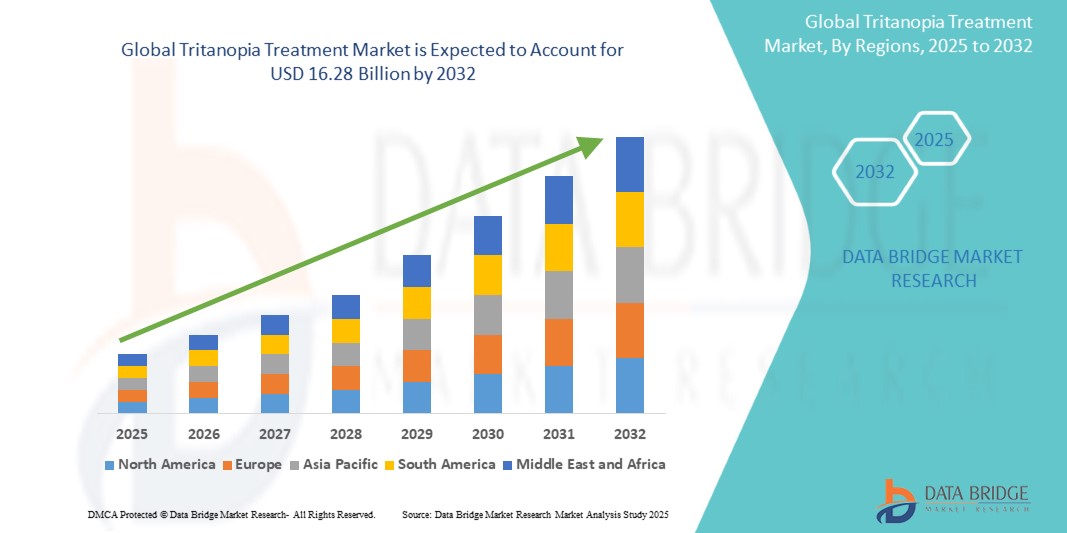
- The global Tritanopia treatment market size was valued at USD 11.02 billion in 2024 and is expected to reach USD 16.28 billion by 2032, at a CAGR of 5.00% during the forecast period
- The market growth is primarily driven by increasing awareness and diagnosis rates of color vision deficiencies, coupled with advancements in assistive technologies such as AR/VR-based vision aids and gene therapies targeting cone cell deficiencies
- In addition, rising demand for personalized visual enhancement tools and accessible digital solutions is positioning tritanopia treatment as a growing segment in the broader ophthalmology and neuro-ophthalmology space.
Tritanopia Treatment Market Analysis
- Tritanopia treatment solutions, aimed at addressing blue-yellow color blindness through wearable aids, digital filters, and emerging gene therapy approaches, are gaining traction as awareness of colour vision deficiencies rises globally across both clinical and consumer domains
- The growing demand for tritanopia treatment is primarily fueled by advancements in vision correction technologies, increasing accessibility of diagnostic tools, and a rising inclination toward inclusive design in educational, occupational, and digital environments
- North America dominated the tritanopia treatment market with the largest revenue share of 38.9% in 2024, supported by strong healthcare infrastructure, active research initiatives in genetic therapies, and the presence of specialized assistive technology firms, particularly in the U.S. where consumer adoption of color-corrective eyewear and digital solutions has increased
- Asia-Pacific is expected to be the fastest growing region in the tritanopia treatment market during the forecast period, driven by increasing investments in vision healthcare, improved access to optometric services, and growing public health initiatives targeting visual impairments
- Screening colour blindness test segment dominated the tritanopia treatment market with a market share of 49% in 2024, driven by its widespread use in early detection and school-level screening programs, along with growing incorporation in digital health platforms
Report Scope and Tritanopia Treatment Market Segmentation
|
Attributes |
Tritanopia Treatment Key Market Insights |
|
Segments Covered |
|
|
Countries Covered |
North America
Europe
Asia-Pacific
Middle East and Africa
South America
|
|
Key Market Players |
|
|
Market Opportunities |
|
|
Value Added Data Infosets |
In addition to the insights on market scenarios such as market value, growth rate, segmentation, geographical coverage, and major players, the market reports curated by the Data Bridge Market Research also include in-depth expert analysis, pricing analysis, brand share analysis, consumer survey, demography analysis, supply chain analysis, value chain analysis, raw material/consumables overview, vendor selection criteria, PESTLE Analysis, Porter Analysis, and regulatory framework. |
Tritanopia Treatment Market Trends
“Technological Advancement in Digital Aids and Gene Therapy Research”
- A notable and accelerating trend in the global tritanopia treatment market is the advancement of digital assistive technologies and the emergence of gene therapy as a potential long-term solution for congenital color blindness, including tritanopia. These innovations are significantly improving the quality of life for affected individuals by enabling better color discrimination and visual functionality
- For instance, mobile applications such as Color Blind Pal and Chromatic Vision Simulator offer real-time color adjustments through smartphones and wearable devices, helping users interpret color-coded information more accurately. AR/VR technologies are also being integrated into eyewear to provide live color corrections tailored to the user’s deficiency
- On the medical front, research into gene therapy is progressing, with clinical trials focused on restoring or enhancing cone function in the retina. Though still in early stages, these developments show promise for potentially correcting tritanopia at the genetic leve
- In addition, adaptive lenses with embedded filters or electrochromic materials are being developed to dynamically adjust the color spectrum, offering a more responsive and user-centric experience compared to static tinted glasses
- These technological trends are fundamentally shifting treatment approaches from static aids to dynamic, personalized interventions, driving innovation in the sector. Companies and research institutions are increasingly collaborating to combine digital interfaces with neurological and visual sciences to offer integrated color correction tools
- The growing demand for these advanced solutions is reshaping expectations for color vision correction, not only among individual consumers but also in workplaces and educational institutions seeking to support visual accessibility
Tritanopia Treatment Market Dynamics
Driver
“Rising Awareness and Diagnostic Rates of Color Vision Deficiency”
- The increasing global awareness of color vision deficiency (CVD), particularly tritanopia, along with improved screening programs and access to diagnostic tools, is a key driver of market growth. Greater societal recognition of the functional limitations caused by color blindness is translating into higher demand for corrective technologies
- For instance, public and private institutions across North America and Europe have begun implementing routine color vision testing in schools and workplaces, identifying tritanopia cases early and enabling proactive intervention
- As color differentiation becomes increasingly critical in modern digital and safety-driven environments—such as navigation, design, and engineering—affected individuals are seeking solutions that restore their ability to interpret colors accurately
- The rising penetration of smartphones and wearable technologies also supports this growth, as they serve as platforms for deploying cost-effective and user-friendly digital aids. Increasing investments in vision-related biotech research are expected to further fuel innovation in the tritanopia treatment space
- These factors collectively foster a more inclusive approach toward vision health and propel the adoption of advanced treatment modalities, both clinical and consumer-facing
Restraint/Challenge
“Limited Awareness and High Cost of Advanced Treatment Options”
- Despite progress, one of the major restraints in the global tritanopia treatment market is the limited public awareness in developing regions and the relatively high cost associated with advanced treatment options such as custom optical devices and experimental therapies
- Many individuals remain undiagnosed due to the absence of routine vision testing in low- and middle-income countries. Moreover, misconceptions that color blindness cannot be managed or treated contribute to low adoption rates of available solutions
- High-quality corrective lenses with color filters, digital AR-based devices, and potential gene therapies often remain financially inaccessible for many, especially where insurance coverage is limited or nonexistent
- For instance, electrochromic smart glasses and personalized digital aids may cost hundreds of dollars per device, while early-stage gene therapies are still costly and not commercially available
- Overcoming these barriers will require targeted awareness campaigns, broader implementation of school and workplace screenings, and cost reductions through mass production and innovation
- Strategic collaborations between technology firms, healthcare providers, and government programs can accelerate affordability and accessibility, ensuring that tritanopia treatments reach a wider global population
Tritanopia Treatment Market Scope
The market is segmented on the basis of type, treatment, and end-user
- By Type
On the basis of type, the tritanopia treatment market is segmented into screening colour blindness test, quantitative colour blindness test, and others. The screening colour blindness test segment dominated the market with the largest revenue share of 49% in 2024, primarily due to its widespread use in initial diagnosis and school-level screenings. These tests, often administered through Ishihara plates or digital equivalents, are easy to deploy and help identify individuals with tritanopia early, prompting timely intervention or support.
The quantitative colour blindness test segment is expected to witness the fastest growth rate from 2025 to 2032, driven by rising demand for accurate color vision profiling in professional fields such as design, aviation, and electrical work. These tests, often administered via advanced digital platforms, enable detailed assessment of the severity and type of deficiency, facilitating personalized treatment solutions and greater workplace inclusivity.
- By Treatment
On the basis of treatment, the tritanopia treatment market is segmented into glasses, contact lens, and others. The glasses segment held the largest market share of 52.3% in 2024, owing to the increasing availability and affordability of specialized tinted lenses that enhance color perception for tritanopia patients. These corrective glasses are non-invasive, accessible through online platforms, and widely accepted by consumers for their simplicity and convenience.
The contact lens segment is projected to grow at the fastest CAGR of 18.6% from 2025 to 2032, fueled by innovations in embedded filter technology and rising preference for discreet vision aids. Customized contact lenses for color correction are gaining attention for their aesthetic appeal and improved accuracy in correcting specific wavelength sensitivities.
- By End User
On the basis of end-user, the tritanopia treatment market is segmented into hospitals, eye clinics, ambulatory surgical centers, and others. The eye clinics segment dominated the market with a revenue share of 41.7% in 2024, as they serve as primary centers for vision screening, diagnosis, and treatment of color vision deficiencies. Eye clinics are often the first point of contact for patients seeking corrective solutions, and their specialized staff and diagnostic tools make them well-suited to provide tailored interventions.
The ambulatory surgical centers segment is expected to experience the fastest growth during the forecast period, driven by their growing role in administering advanced treatments such as gene therapy injections or minor corrective procedures, offering a cost-effective and convenient alternative to hospital-based treatments.
Tritanopia Treatment Market Regional Analysis
- North America dominated the tritanopia treatment market with the largest revenue share of 38.9% in 2024, supported by strong healthcare infrastructure, active research initiatives in genetic therapies, and the presence of specialized assistive technology firms, particularly in the U.S. where consumer adoption of color-corrective eyewear and digital solutions has increased
- Consumers in the region show a strong preference for innovative vision aids, including digital applications and specialized eyewear, due to their accessibility, ease of use, and compatibility with daily activities
- This widespread adoption is further supported by robust healthcare infrastructure, high optometric service penetration, and active research in gene therapy, positioning North America as a leading market for both consumer and clinical tritanopia treatments
U.S. Tritanopia Treatment Market Insight
The U.S. tritanopia treatment market captured the largest revenue share of 79% in 2024 within North America, driven by widespread awareness of color vision deficiencies and a proactive approach to vision care. Consumers are increasingly turning to advanced diagnostic tools and corrective eyewear to manage tritanopia, supported by the country's robust optometric services and insurance coverage. In addition, the U.S. is home to key innovators in digital vision aids and gene therapy research, which further propels the market’s expansion.
Europe Tritanopia Treatment Market Insight
The Europe tritanopia treatment market is projected to expand at a substantial CAGR throughout the forecast period, supported by strong public health systems and growing recognition of color blindness as a quality-of-life issue. Educational institutions and workplaces are increasingly incorporating vision screening and adaptive tools, boosting demand for diagnostic and corrective solutions. The region also benefits from regulatory support for accessibility and innovation in medical devices.
U.K. Tritanopia Treatment Market Insight
The U.K. tritanopia treatment market is anticipated to grow at a noteworthy CAGR during the forecast period, fueled by increased public awareness and the integration of vision care into occupational health programs. The U.K.'s National Health Service (NHS) and private sector are driving access to screening tools and corrective eyewear. Consumer interest in inclusive technology and rising adoption of vision-enhancing mobile applications are key contributors to market growth.
Germany Tritanopia Treatment Market Insight
The Germany tritanopia treatment market is expected to expand at a considerable CAGR during the forecast period, supported by the country’s strong healthcare infrastructure and emphasis on medical innovation. German consumers prioritize high-precision solutions, including adaptive glasses and digital aids. Increased funding for ophthalmic research and vision therapy technologies is further encouraging advancements in the diagnosis and treatment of tritanopia.
Asia-Pacific Tritanopia Treatment Market Insight
The Asia-Pacific tritanopia treatment market is poised to grow at the fastest CAGR of 23.5% from 2025 to 2032, driven by rising awareness of visual health, expanding access to eye care, and increasing investment in assistive technologies across countries such as China, Japan, and India. Government-led health initiatives and growing adoption of smartphone-based diagnostic tools are making tritanopia treatment more accessible to the region’s diverse population.
Japan Tritanopia Treatment Market Insight
The Japan tritanopia treatment market is gaining momentum due to the country’s strong focus on digital healthcare, aging population, and demand for personalized medical solutions. High adoption of smart devices and AR-enabled tools for vision correction is spurring interest in tritanopia aids. Japan’s emphasis on innovation and universal health coverage further supports growth in both clinical and consumer segments.
India Tritanopia Treatment Market Insight
The India tritanopia treatment market accounted for the largest market revenue share in Asia Pacific in 2024, fueled by a rapidly growing middle class, improving eye care infrastructure, and high smartphone penetration. Increased government focus on school health screening and digital health access is boosting early diagnosis and treatment of color vision deficiencies. The presence of local manufacturers offering cost-effective solutions supports widespread adoption in both rural and urban areas.
Tritanopia Treatment Market Share
The tritanopia Treatment industry is primarily led by well-established companies, including:
- EnChroma, Inc. (U.S.)
- Pilestone Vision (U.S.)
- Colorlite GmbH (Germany)
- Chromagen Vision (Israel)
- Vino Optics LLC (U.S.)
- Ocushield Ltd. (U.K.)
- Bionic Vision Technologies Pty Ltd. (Australia)
- Gene Signal International SA (Switzerland)
- ColorMax Technologies, Inc. (U.S.)
- GlassesUSA.com (U.S.)
- Essilor International SAS (France)
- Hoya Corporation (Japan)
- Luxottica Group S.p.A. (Italy)
- iGene Therapeutics Inc. (U.S.)
- Nidek Co., Ltd. (Japan)
- SmartOptics GmbH (Germany)
- Voptica S.L. (Spain)
- Chromaplex Technologies Ltd. (U.K.)
What are the Recent Developments in Global Tritanopia Treatment Market?
- In April 2023, EnChroma, Inc., a key innovator in color blindness solutions, expanded its international outreach by partnering with optometry clinics in Southeast Asia to distribute its patented glasses designed for individuals with tritanopia. This move reflects EnChroma’s commitment to increasing global access to vision enhancement technologies and addressing underserved populations affected by color vision deficiencies. The collaboration underscores the growing demand for non-invasive, corrective solutions tailored for specific types of color blindness, including tritanopia
- In March 2023, researchers at the University of California, Berkeley initiated a pre-clinical study on a gene therapy approach targeting S-cone functionality—critical for blue-yellow color discrimination in tritanopia. The therapy uses viral vectors to deliver a corrected gene sequence into retinal cells. This promising research signals a shift toward long-term medical interventions for inherited color blindness, offering potential for a functional cure. The development marks a significant step in ophthalmic gene therapy innovation and highlights increasing investment in color vision correction at the molecular level
- In March 2023, Colorlite GmbH, a European leader in optical filter technology, launched its next-generation lens line designed for tritanopia and other rare color vision deficiencies. These lenses utilize advanced spectral filtering techniques to enhance blue-yellow contrast, offering improved clarity for users in both daylight and digital environments. The launch demonstrates Colorlite’s commitment to refining precision optics and expanding treatment options for niche patient segments
- In February 2023, Chromaplex Technologies, a U.K.-based medtech startup, introduced a beta version of its AI-powered mobile app “HueAlign,” designed to help tritanopia users interpret real-time color data through smartphone cameras. The app adjusts color tones in augmented reality, allowing users to distinguish hues otherwise indistinguishable to the tritanopic eye. This innovation illustrates the rising trend of integrating AI and AR into affordable, user-friendly vision aids for individuals with color blindness
- In January 2023, Pilestone Vision launched a global e-commerce platform with a dedicated segment for tritanopia-specific corrective glasses, offering detailed customization options and tele-optometry consultations. This expansion increases accessibility and personalizes the consumer experience, catering to rising demand for online vision solutions. The platform’s success reflects the growing consumer preference for direct-to-door, digitally-enabled corrective care tailored to individual visual needs

- Interactive Data Analysis Dashboard
- Company Analysis Dashboard for high growth potential opportunities
- Research Analyst Access for customization & queries
- Competitor Analysis with Interactive dashboard
- Latest News, Updates & Trend analysis
- Harness the Power of Benchmark Analysis for Comprehensive Competitor Tracking
Data collection and base year analysis are done using data collection modules with large sample sizes. The stage includes obtaining market information or related data through various sources and strategies. It includes examining and planning all the data acquired from the past in advance. It likewise envelops the examination of information inconsistencies seen across different information sources. The market data is analysed and estimated using market statistical and coherent models. Also, market share analysis and key trend analysis are the major success factors in the market report. To know more, please request an analyst call or drop down your inquiry.
The key research methodology used by DBMR research team is data triangulation which involves data mining, analysis of the impact of data variables on the market and primary (industry expert) validation. Data models include Vendor Positioning Grid, Market Time Line Analysis, Market Overview and Guide, Company Positioning Grid, Patent Analysis, Pricing Analysis, Company Market Share Analysis, Standards of Measurement, Global versus Regional and Vendor Share Analysis. To know more about the research methodology, drop in an inquiry to speak to our industry experts.
Data Bridge Market Research is a leader in advanced formative research. We take pride in servicing our existing and new customers with data and analysis that match and suits their goal. The report can be customized to include price trend analysis of target brands understanding the market for additional countries (ask for the list of countries), clinical trial results data, literature review, refurbished market and product base analysis. Market analysis of target competitors can be analyzed from technology-based analysis to market portfolio strategies. We can add as many competitors that you require data about in the format and data style you are looking for. Our team of analysts can also provide you data in crude raw excel files pivot tables (Fact book) or can assist you in creating presentations from the data sets available in the report.












