


Tropical Pyomyositis Treatment Market Size
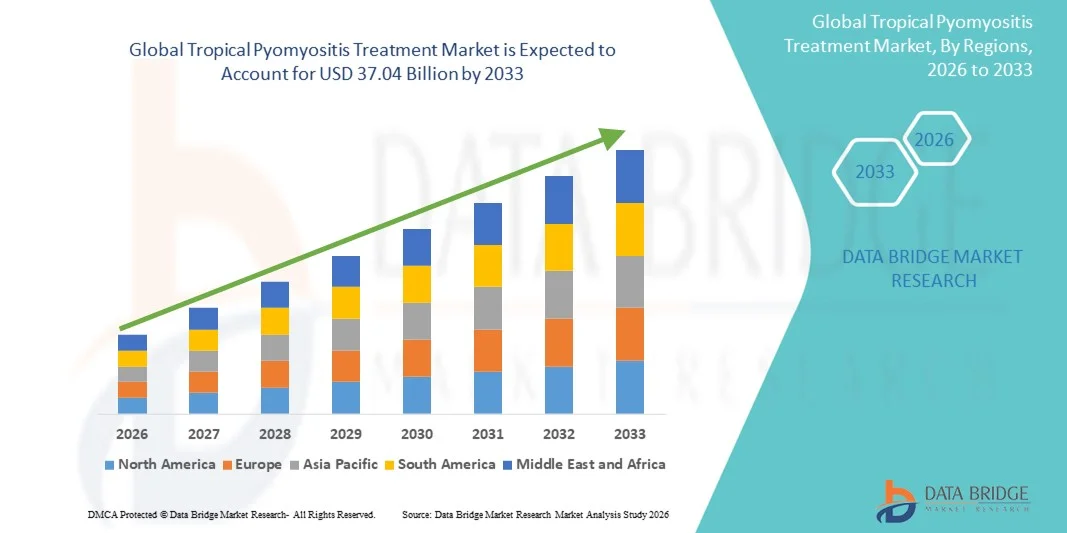
- The global tropical pyomyositis treatment market size was valued at USD 27.07 billion in 2025 and is expected to reach USD 37.04 billion by 2033, at a CAGR of 4.00% during the forecast period
- The market growth is largely fueled by rising incidence of pyomyositis in tropical and subtropical regions, increasing numbers of immunocompromised patients, and the prevalence of antibiotic-resistant bacterial infections, leading to higher demand for effective treatment options
- Furthermore, improvements in early diagnosis, advanced imaging technologies, and adoption of integrated treatment protocols are establishing modern pyomyositis therapies as the preferred standard of care. These converging factors are accelerating the uptake of tropical pyomyositis treatment solutions, thereby significantly boosting the industry's growth
Tropical Pyomyositis Treatment Market Analysis
- Tropical pyomyositis treatment, involving surgery, antibiotics, and supportive care, is increasingly vital in managing bacterial skeletal muscle infections in tropical and subtropical regions due to its effectiveness in preventing complications and promoting faster recovery
- The escalating demand for tropical pyomyositis treatment is primarily fueled by rising incidence of pyomyositis, growing prevalence of immunocompromised patients and increasing cases of antibiotic-resistant bacterial infections, driving the need for timely and effective therapeutic interventions
- North America dominated the tropical pyomyositis treatment market with the largest revenue share of 38.9% in 2025, characterized by advanced healthcare infrastructure, high awareness levels, and a strong presence of leading pharmaceutical and biotech companies, with the U.S. experiencing substantial growth in pyomyositis treatment adoption, driven by innovations in surgical techniques and antibiotic therapies
- Asia-Pacific is expected to be the fastest growing region in the tropical pyomyositis treatment market during the forecast period due to increasing healthcare access, rising awareness of infectious diseases, and growing investments in healthcare infrastructure
- Antibiotics segment dominated the tropical pyomyositis treatment market with a market share of 46.8% in 2025, driven by its established efficacy, widespread availability, and adaptability as a first-line treatment across diverse healthcare settings
Report Scope and Tropical Pyomyositis Treatment Market Segmentation
|
Attributes |
Tropical Pyomyositis Treatment Key Market Insights |
|
Segments Covered |
|
|
Countries Covered |
North America
Europe
Asia-Pacific
Middle East and Africa
South America
|
|
Key Market Players |
|
|
Market Opportunities |
|
|
Value Added Data Infosets |
In addition to the insights on market scenarios such as market value, growth rate, segmentation, geographical coverage, and major players, the market reports curated by the Data Bridge Market Research also include in-depth expert analysis, patient epidemiology, pipeline analysis, pricing analysis, and regulatory framework |
Tropical Pyomyositis Treatment Market Trends
Advancements in Rapid Diagnostic and Imaging Technologies
- A significant and accelerating trend in the global tropical pyomyositis treatment market is the increasing adoption of rapid diagnostic tools such as MRI, ultrasound, and advanced blood culture techniques, which enable faster and more accurate detection of infections
- For instance, portable ultrasound devices are now being utilized in clinics across Southeast Asia to quickly identify abscess formation in skeletal muscles, improving treatment outcomes and reducing hospital stays
- Integration of AI-assisted imaging and laboratory diagnostics allows clinicians to detect pyomyositis at earlier stages and assess severity more accurately, enabling personalized antibiotic regimens and surgical planning
- The seamless adoption of these diagnostic technologies in hospitals and specialty clinics facilitates timely intervention, reducing complications and improving patient recovery rates
- This trend towards more precise, rapid, and accessible diagnostic solutions is fundamentally reshaping treatment protocols, with companies such as Siemens Healthineers and GE Healthcare developing AI-enabled imaging platforms for infectious disease management
- The demand for advanced diagnostics and imaging solutions is growing rapidly across both emerging and developed regions, as healthcare providers prioritize early detection, treatment efficacy, and improved patient outcomes
- Increased telemedicine adoption in tropical regions is enabling remote consultations and monitoring for pyomyositis patients, improving access to specialist care and follow-up treatments
- Integration of mobile health applications for symptom tracking and early alerts is enhancing patient engagement and adherence to treatment regimens, creating opportunities for digital healthcare solutions
Tropical Pyomyositis Treatment Market Dynamics
Driver
Rising Incidence and Awareness of Tropical Infections
- The increasing prevalence of tropical pyomyositis in tropical and subtropical regions, coupled with rising awareness of bacterial skeletal muscle infections, is a significant driver for heightened demand for effective treatment solution
- For instance, in March 2025, Cipla Ltd. announced an awareness campaign in India promoting early diagnosis and proper antibiotic therapy for pyomyositis, highlighting the importance of timely treatment
- As healthcare providers and patients become more aware of infection risks and potential complications, demand for targeted antibiotic therapies, surgical interventions, and supportive care is increasing
- Furthermore, growing healthcare infrastructure and government initiatives to combat infectious diseases are making pyomyositis treatment more accessible in both rural and urban regions
- Availability of combination therapies, hospital protocols, and training programs for early detection and intervention are key factors propelling the adoption of pyomyositis treatment, improving patient outcomes in endemic regions
- Rising medical tourism in tropical countries is boosting demand for advanced treatment options and specialized care for pyomyositis patients
- Expansion of health insurance coverage for infectious disease treatments in emerging markets is encouraging timely hospital visits and adherence to recommended therapies
Restraint/Challenge
Antibiotic Resistance and Limited Healthcare Access
- The rising prevalence of antibiotic-resistant bacterial strains and limited access to advanced healthcare facilities in certain tropical regions pose significant challenges to market growth
- For instance, reports of methicillin-resistant Staphylococcus aureus (MRSA) infections complicating pyomyositis cases have made some physicians cautious in selecting effective first-line antibiotics
- Addressing antibiotic resistance through development of novel drugs, updated treatment guidelines, and stewardship programs is crucial for improving therapeutic outcomes. In addition, in remote or underdeveloped regions, delays in diagnosis and lack of surgical infrastructure can hinder timely treatment
- While awareness and accessibility are gradually improving, resource constraints in certain areas still impact the reach of effective pyomyositis therapy
- Overcoming these challenges through innovation in antibiotics, mobile diagnostic units, and healthcare education initiatives will be vital for sustaining market growth and reducing complications
- High cost of advanced imaging and surgical interventions in low-income regions can restrict treatment adoption, limiting overall market expansion
- Shortage of trained healthcare professionals and specialists in endemic areas further challenges timely diagnosis and effective management of tropical pyomyositis cases
Tropical Pyomyositis Treatment Market Scope
The market is segmented on the basis of treatment, diagnosis, dosage, route of administration, demographic, end-users, and distribution channel.
- By Treatment
On the basis of treatment, the tropical pyomyositis treatment market is segmented into surgery, antibiotics, and others. The antibiotics segment dominated the market with the largest revenue share of 46.8% in 2025, driven by its established efficacy as the first-line treatment for bacterial muscle infections. Clinicians prefer antibiotics due to their ability to effectively target Staphylococcus aureus, the most common causative pathogen. The segment benefits from widespread availability, multiple formulations, and adaptability across hospital, clinic, and home care settings. Rising awareness of early-stage treatment and increasing adoption in both pediatric and adult patients further bolster its dominance. Combination therapies and standardized protocols make antibiotics a reliable, preferred treatment choice globally. Continuous research and development to address antibiotic resistance also reinforce its market leadership.
The surgery segment is anticipated to witness the fastest growth from 2026 to 2033, fueled by the increasing adoption of surgical drainage procedures for advanced pyomyositis cases with abscess formation. Surgical interventions are critical for patients unresponsive to antibiotic therapy, especially in severe infections. Improved surgical techniques, minimally invasive procedures, and growing access to specialty hospitals in emerging markets are driving adoption. Early diagnosis through advanced imaging further supports timely surgical treatment, reducing complications. Hospitals increasingly integrate surgical interventions with antibiotic therapy, enhancing overall treatment effectiveness. Rising medical tourism and better-trained surgeons in tropical regions are accelerating market growth.
- By Diagnosis
On the basis of diagnosis, the market is segmented into blood cultures, CT scan, MRI, ultrasound, biopsy, and others. The blood culture segment dominated the market with the largest revenue share of 39.8% in 2025, as it remains the gold standard for identifying causative bacteria. Blood cultures guide antibiotic selection and help monitor treatment efficacy. Their widespread use in hospitals and clinics ensures early detection and reduces the risk of complications. Increasing awareness among healthcare providers and improvements in rapid blood culture techniques enhance reliability and speed. Adoption in both adult and pediatric populations contributes to its dominance. Ongoing advancements in automated culture systems further strengthen its market position.
The ultrasound segment is expected to witness the fastest growth from 2026 to 2033, driven by its non-invasive nature, portability, and ability to detect muscle abscesses quickly. Ultrasound is increasingly used in remote or resource-limited settings where MRI or CT may be unavailable. AI-assisted ultrasound imaging improves diagnostic accuracy and guides real-time interventions. Rising adoption in clinics and smaller hospitals enhances early treatment decisions. Continuous technological improvements, including 3D imaging and higher resolution probes, contribute to rapid market growth. Its cost-effectiveness compared to MRI and CT further supports adoption in emerging markets.
- By Dosage
On the basis of dosage, the market is segmented into tablet, injection, and others. The injection segment dominated the market with the largest revenue share of 44.5% in 2025, due to its effectiveness in delivering high bioavailability of antibiotics and immediate therapeutic action. Intravenous and intramuscular injections are essential for severe cases where rapid drug delivery is critical. Hospitals and clinics prefer injections for inpatient care and acute infections. Injection therapy supports combination treatment regimens with surgery or supportive care. Rising prevalence of resistant infections requiring higher dosages further reinforces its dominance. Technological improvements in pre-filled syringes and safer administration methods enhance adoption.
The tablet segment is expected to witness the fastest growth from 2026 to 2033, fueled by increasing outpatient treatments and patient preference for oral medications. Tablets offer convenience for home-based care, especially in mild-to-moderate cases. Their ease of administration, better compliance, and lower cost support growing demand. Rising awareness and availability of oral antibiotic regimens across clinics and pharmacies enhance market penetration. Tablets are often combined with follow-up diagnostics to ensure treatment efficacy. Increasing pharmaceutical launches and generic options contribute to rapid adoption in emerging regions.
- By Route of Administration
On the basis of route of administration, the market is segmented into intramuscular, intravenous, and oral. The intravenous segment dominated the market with the largest revenue share of 41.2% in 2025, as it allows rapid delivery of antibiotics directly into the bloodstream for severe infections. IV administration ensures consistent drug levels, critical for treating advanced pyomyositis cases. Hospitals widely use this route for inpatient care, emergency interventions, and critical patients. IV therapy is often combined with surgical procedures for optimal outcomes. Continuous development of infusion devices and monitoring systems supports clinical adoption. Training of healthcare professionals in IV administration further enhances reliability and safety.
The oral segment is expected to witness the fastest growth from 2026 to 2033, driven by outpatient treatment expansion and increased patient preference for non-invasive administration. Oral medications enable continued therapy after hospital discharge, supporting home-based care. Growing awareness of oral antibiotic efficacy and availability of combination regimens enhance adoption. Tablets and capsules are convenient for children and adult patients, improving adherence. Telemedicine follow-ups support oral therapy, further accelerating market growth. Pharmaceutical innovations in sustained-release formulations also contribute to adoption.
- By Demographic
On the basis of demographic, the market is segmented into children and adults. The adults segment dominated the market with the largest revenue share of 55.4% in 2025, due to higher prevalence of tropical pyomyositis among adults in endemic regions. Adults are more such asly to present with delayed or severe infections, increasing demand for hospital-based treatment. Rising awareness, better healthcare access, and early diagnosis contribute to higher treatment rates. Adults also account for a larger portion of healthcare spending, supporting adoption of advanced therapies. Training of healthcare providers and government initiatives further enhance treatment uptake. Chronic conditions in adults, such as diabetes or HIV, increase susceptibility, reinforcing market dominance.
The children segment is expected to witness the fastest growth from 2026 to 2033, fueled by increasing awareness of pediatric infections and improved diagnostic capabilities. Early detection and timely antibiotic therapy in children reduce long-term complications. Pediatric-specific formulations and dosages are becoming more widely available. Schools and community health programs are increasing screening efforts in endemic regions. Growing parental awareness and government vaccination and infection-control initiatives further drive market growth. Telemedicine and mobile healthcare solutions are expanding access for pediatric patients.
- By End-Users
On the basis of end-users, the market is segmented into clinics, hospitals, and others. The hospitals segment dominated the market with the largest revenue share of 58.1% in 2025, as hospitals provide advanced diagnostic facilities, surgical capabilities, and inpatient care required for complex pyomyositis cases. Hospitals also offer integrated treatment protocols combining antibiotics and surgical interventions. Availability of trained specialists and advanced imaging technologies reinforces hospital dominance. Hospitals manage severe or complicated cases and ensure adherence to treatment guidelines. Rising patient preference for hospital-based care in endemic regions supports market share. Public and private hospital expansions further contribute to growth.
The clinics segment is expected to witness the fastest growth from 2026 to 2033, driven by increasing availability of outpatient care, telemedicine consultations, and point-of-care diagnostics. Clinics provide convenient access to antibiotics and basic imaging, reducing burden on hospitals. Rising awareness campaigns and community-level healthcare initiatives support clinic adoption. Clinics are increasingly equipped with portable ultrasound and laboratory facilities for early detection. Outpatient treatment programs and home-based follow-ups enhance convenience and accessibility. Expansion of private and mobile clinics in remote areas contributes to rapid growth.
- By Distribution Channel
On the basis of distribution channel, the market is segmented into hospital pharmacy, retail pharmacy, and online pharmacy. The hospital pharmacy segment dominated the market with the largest revenue share of 52.7% in 2025, as hospitals dispense antibiotics and other therapies directly to inpatients and post-surgical patients. Hospital pharmacies ensure proper dosage, adherence, and controlled administration. Integration with hospital treatment protocols supports effective therapy. Hospitals also provide patient counseling and monitoring, improving outcomes. Rising hospital infrastructure in endemic regions strengthens market dominance. Partnerships between pharmaceutical companies and hospitals enhance drug availability.
The online pharmacy segment is expected to witness the fastest growth from 2026 to 2033, fueled by rising e-commerce adoption, telemedicine services, and demand for home delivery of antibiotics. Online pharmacies improve access for remote or mobility-constrained patients. Increased digital literacy and smartphone penetration facilitate online ordering. Integration with prescription verification and teleconsultation platforms enhances safety. Cost-effectiveness and convenience drive consumer adoption. Expanding logistics networks and growing awareness of online healthcare services further accelerate growth.
Tropical Pyomyositis Treatment Market Regional Analysis
- North America dominated the tropical pyomyositis treatment market with the largest revenue share of 38.9% in 2025, characterized by advanced healthcare infrastructure, high awareness levels, and a strong presence of leading pharmaceutical and biotech companies
- Patients and healthcare providers in the region highly value timely diagnosis, effective antibiotic therapy, and access to advanced surgical interventions for pyomyositis management
- This widespread adoption is further supported by well-established hospital networks, availability of trained medical professionals, and rising healthcare expenditure, establishing tropical pyomyositis treatment as a preferred solution for both pediatric and adult patients in residential and hospital settings
U.S. Tropical Pyomyositis Treatment Market Insight
The U.S. tropical pyomyositis treatment market captured the largest revenue share of 82% in 2025 within North America, fueled by advanced healthcare infrastructure, high awareness of infectious diseases, and early adoption of diagnostic and treatment protocols. Patients and providers increasingly prioritize timely antibiotic therapy and surgical interventions to prevent complications. The growing preference for outpatient care, combined with telemedicine adoption and advanced imaging solutions, further propels market growth. Moreover, integration of electronic health records (EHR) and hospital-based treatment protocols is significantly enhancing accessibility and efficiency of pyomyositis management.
Europe Tropical Pyomyositis Treatment Market Insight
The Europe tropical pyomyositis treatment market is projected to expand at a substantial CAGR throughout the forecast period, primarily driven by increasing healthcare investments, stringent infectious disease regulations, and rising awareness of early diagnosis. Growing urbanization and accessibility to diagnostic tools such as MRI, CT, and ultrasound are fostering adoption of effective treatment. European patients and clinicians also value comprehensive treatment options combining antibiotics and surgery. The region is witnessing significant growth across hospitals, specialty clinics, and diagnostic centers, with pyomyositis treatment being integrated into both routine care and specialized infectious disease programs.
U.K. Tropical Pyomyositis Treatment Market Insight
The U.K. tropical pyomyositis treatment market is anticipated to grow at a noteworthy CAGR during the forecast period, driven by rising awareness of bacterial skeletal muscle infections and enhanced healthcare infrastructure. Concerns regarding delayed diagnosis and severe complications are encouraging timely treatment initiation in both adults and children. The U.K.’s robust hospital and clinic networks, alongside its digital health infrastructure and e-prescription systems, are expected to stimulate market growth. In addition, availability of combination therapies and rapid diagnostics supports adoption in both urban and semi-urban regions.
Germany Tropical Pyomyositis Treatment Market Insight
The Germany tropical pyomyositis treatment market is expected to expand at a considerable CAGR during the forecast period, fueled by high healthcare standards, technologically advanced hospitals, and increasing focus on infectious disease management. Germany’s emphasis on early detection, patient safety, and integration of diagnostics with therapeutic interventions promotes the adoption of pyomyositis treatment. Growing patient awareness, rising number of hospital-based treatment programs, and adoption of evidence-based antibiotic protocols strengthen market growth. The preference for precision medicine and advanced imaging solutions also supports market expansion in residential and commercial healthcare settings.
Asia-Pacific Tropical Pyomyositis Treatment Market Insight
The Asia-Pacific tropical pyomyositis treatment market is poised to grow at the fastest CAGR of 23% during the forecast period of 2026 to 2033, driven by increasing healthcare access, rapid urbanization, and rising awareness of infectious diseases in countries such as China, India, and Japan. Government initiatives promoting early diagnosis and availability of antibiotics in rural and urban clinics are driving adoption. Furthermore, as APAC emerges as a hub for diagnostic devices and healthcare solutions, affordability and accessibility of pyomyositis treatments are expanding to a wider patient population. Rising telemedicine adoption and mobile diagnostic units further facilitate early intervention.
Japan Tropical Pyomyositis Treatment Market Insight
The Japan tropical pyomyositis treatment market is gaining momentum due to advanced healthcare infrastructure, high technological adoption, and the growing focus on infectious disease management. Patients prioritize timely diagnosis and effective treatment, particularly in urban hospitals and specialty clinics. Integration of imaging diagnostics, telemedicine consultations, and outpatient follow-up programs is fueling market growth. Moreover, Japan’s aging population increases demand for convenient and rapid treatment options for both adults and elderly patients, enhancing overall adoption.
India Tropical Pyomyositis Treatment Market Insight
The India tropical pyomyositis treatment market accounted for the largest revenue share in Asia-Pacific in 2025, attributed to rapid urbanization, growing healthcare access, and rising awareness of tropical infections. India stands as a key market for diagnostic services and antibiotic therapy, with treatments increasingly available across hospitals, clinics, and rural health centers. Government initiatives promoting infectious disease management, alongside availability of affordable diagnostic and treatment options, are key factors propelling market growth. The expanding middle class, increasing medical tourism, and rise of telemedicine solutions further enhance adoption of pyomyositis treatment in the country. The push towards smart cities and the availability of affordable Tropical Pyomyositis Treatment options, alongside strong domestic manufacturers, are key factors propelling the market in India.
Tropical Pyomyositis Treatment Market Share
The Tropical Pyomyositis Treatment industry is primarily led by well-established companies, including:
- Pfizer Inc. (U.S.)
- Merck & Co., Inc. (U.S.)
- GSK plc. (U.K.)
- Sanofi (France)
- Johnson & Johnson Services, Inc. (U.S.)
- Bayer AG (Germany)
- Novartis AG (Switzerland)
- F. Hoffmann-La Roche Ltd (Switzerland)
- AbbVie Inc. (U.S.)
- AstraZeneca (U.K.)
- Cipla Ltd. (India)
- Dr. Reddy’s Laboratories Ltd. (India)
- Sun Pharmaceutical Industries Ltd. (India)
- Takeda Pharmaceutical Company Limited (Japan)
- Viatris Inc. (U.S.)
- Thermo Fisher Scientific Inc. (U.S.)
- BIOMÉRIEUX (France)
- Siemens Healthineers AG (Germany)
- GE HealthCare. (U.S.)
- Koninklijke Philips N.V. (Netherlands)
What are the Recent Developments in Global Tropical Pyomyositis Treatment Market?
- In October 2025, a 15-year retrospective pediatric study published in The Pediatric Infectious Disease Journal found that many children with pyomyositis can be successfully treated without surgical drainage, using intravenous flucloxacillin + clindamycin, with good recovery and no functional impairment at 6-month follow-up
- In July 2025, a case report described multifocal MRSA (methicillin-resistant Staph. aureus) pyomyositis in a 64-year-old patient with diabetes, highlighting diagnostic and therapeutic challenges due to the severity and spread; the case emphasises the need for aggressive antimicrobial therapy and careful monitoring
- In September 2024, a rare case of tuberculous pyomyositis was reported in İstanbul, Turkey, suggesting that clinicians should consider TB in the differential diagnosis of pyomyositis, especially in atypical or non‑staphylococcal presentations
- In July 2024, a case report documented emphysematous pyomyositis (gas-forming abscess) in a patient with diabetic myonecrosis, caused by Escherichia coli. This highlights emerging complexity in pyomyositis infections, including newer bacterial etiologies and more severe presentations, underlining the importance of tailored antimicrobial regimens
- In January 2024, a case series from India reported pyomyositis in immunocompetent hosts, not just in immunocompromised individuals. The patients were managed with cephalosporin + teicoplanin for several weeks, underlining that tropical pyomyositis can affect healthy persons too and may require prolonged antibiotic therapy

- Interactive Data Analysis Dashboard
- Company Analysis Dashboard for high growth potential opportunities
- Research Analyst Access for customization & queries
- Competitor Analysis with Interactive dashboard
- Latest News, Updates & Trend analysis
- Harness the Power of Benchmark Analysis for Comprehensive Competitor Tracking
Data collection and base year analysis are done using data collection modules with large sample sizes. The stage includes obtaining market information or related data through various sources and strategies. It includes examining and planning all the data acquired from the past in advance. It likewise envelops the examination of information inconsistencies seen across different information sources. The market data is analysed and estimated using market statistical and coherent models. Also, market share analysis and key trend analysis are the major success factors in the market report. To know more, please request an analyst call or drop down your inquiry.
The key research methodology used by DBMR research team is data triangulation which involves data mining, analysis of the impact of data variables on the market and primary (industry expert) validation. Data models include Vendor Positioning Grid, Market Time Line Analysis, Market Overview and Guide, Company Positioning Grid, Patent Analysis, Pricing Analysis, Company Market Share Analysis, Standards of Measurement, Global versus Regional and Vendor Share Analysis. To know more about the research methodology, drop in an inquiry to speak to our industry experts.
Data Bridge Market Research is a leader in advanced formative research. We take pride in servicing our existing and new customers with data and analysis that match and suits their goal. The report can be customized to include price trend analysis of target brands understanding the market for additional countries (ask for the list of countries), clinical trial results data, literature review, refurbished market and product base analysis. Market analysis of target competitors can be analyzed from technology-based analysis to market portfolio strategies. We can add as many competitors that you require data about in the format and data style you are looking for. Our team of analysts can also provide you data in crude raw excel files pivot tables (Fact book) or can assist you in creating presentations from the data sets available in the report.












