


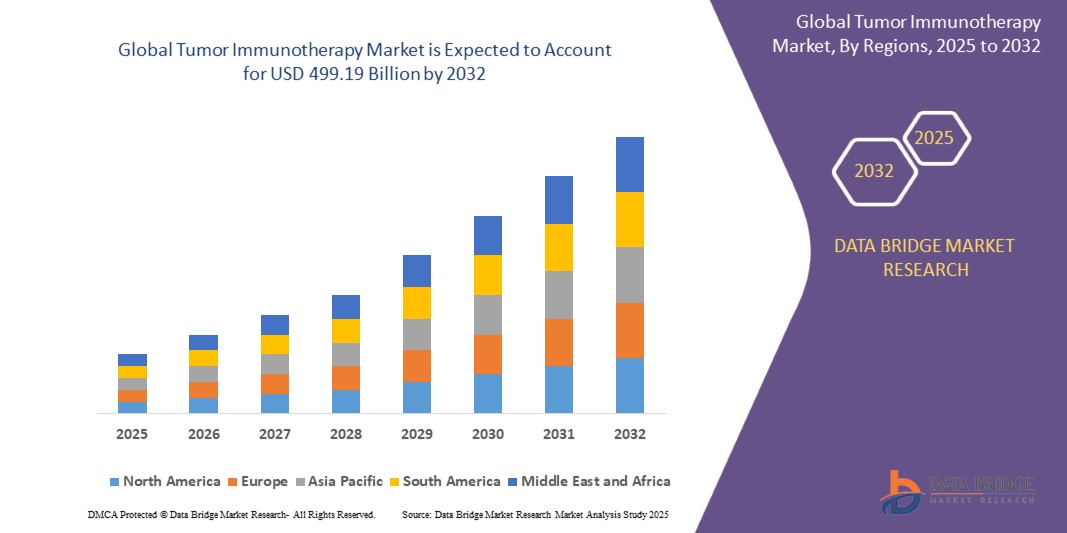
Tumor Immunotherapy Market Size
- The Global Tumor Immunotherapy Market size was valued at USD 230.35 billion in 2024 and is expected to reach USD 499.19 billion by 2032, at a CAGR of 10.15% during the forecast period
- The market growth is primarily driven by the increasing adoption of advanced biologics and rapid innovations in immuno-oncology technologies, fostering the development of more effective and targeted tumor immunotherapy treatments.
- Additionally, the rising global burden of cancer and growing patient demand for minimally invasive, personalized therapies are positioning tumor immunotherapy as a preferred treatment option. These converging factors are significantly accelerating the uptake of tumor immunotherapy solutions, thereby propelling the market’s expansion.
Tumor Immunotherapy Market Analysis
- Tumor immunotherapies are becoming critical components in modern cancer treatment strategies due to their ability to precisely target and enhance the immune system’s response to tumors. Their growing role in both first-line and adjunct cancer therapies reflects advancements in biologics and personalized medicine.
- The rising demand for tumor immunotherapy is driven by increasing cancer incidence, patient preference for targeted and less invasive treatments, and growing awareness of immuno-oncology breakthroughs among healthcare providers and patients.
- North America is expected to lead the global tumor immunotherapy market with the largest revenue share of 40.01% in 2025, driven by early adoption of novel therapies, strong R&D infrastructure, high healthcare expenditure, and the presence of major biopharmaceutical players. The U.S. continues to see robust growth, fueled by favorable regulatory support and rapid innovation in immune checkpoint inhibitors and CAR-T cell therapies.
- Asia-Pacific is projected to be the fastest-growing region in the tumor immunotherapy market over the forecast period. This growth is attributed to expanding healthcare infrastructure, increasing government investment in cancer care, rising disposable incomes, and a growing patient population.
- The Immunomodulatory Drugs Targeting Immune Cells segment is projected to dominate the Tumor Immunotherapy market with a market share of 43.2% in 2025. This dominance is driven by the segment’s proven clinical efficacy, broad applicability across cancer types, and its critical role in enhancing immune response by modulating T-cell activity.
Report Scope and Tumor Immunotherapy Market Segmentation
|
Attributes |
Tumor Immunotherapy Key Market Insights |
|
Segments Covered |
|
|
Countries Covered |
North America
Europe
Asia-Pacific
Middle East and Africa
South America
|
|
Key Market Players |
|
|
Market Opportunities |
|
|
Value Added Data Infosets |
In addition to the insights on market scenarios such as market value, growth rate, segmentation, geographical coverage, and major players, the market reports curated by the Data Bridge Market Research also include in-depth expert analysis, pricing analysis, brand share analysis, consumer survey, demography analysis, supply chain analysis, value chain analysis, raw material/consumables overview, vendor selection criteria, PESTLE Analysis, Porter Analysis, and regulatory framework. |
Tumor Immunotherapy Market Trends
“Rising Adoption of Combination Therapies to Enhance Treatment Efficacy”
- A significant and accelerating trend in the Global Tumor Immunotherapy Market is the rising adoption of combination therapies to enhance overall treatment efficacy and patient outcomes. This approach involves using tumor immunotherapies alongside other modalities such as chemotherapy, targeted therapy, or radiation, to overcome resistance and maximize therapeutic benefits.
- For instance, the combination of nivolumab (an immune checkpoint inhibitor) with ipilimumab has shown improved survival rates in advanced melanoma patients compared to monotherapy. This synergistic effect leverages different immune pathways to generate a more potent anti-tumor response
- Combination therapy in tumor immunotherapy enables multifaceted immune activation, often leading to better clinical responses, particularly in tumors that are less responsive to immunotherapy alone. For example, certain regimens combine PD-1/PD-L1 inhibitors with chemotherapy to increase tumor antigen presentation, thereby boosting immune system recognition and response.
- The evolving landscape of cancer treatment is increasingly embracing combination regimens tailored to tumor type, genetic profile, and patient-specific factors. This personalized strategy aligns with the broader shift toward precision medicine, where therapeutic decisions are based on individual biological data.
- Pharmaceutical companies such as Bristol-Myers Squibb and Merck & Co. are heavily investing in clinical trials that test various tumor immunotherapy combinations, aiming to expand their indications and improve response rates in challenging cancer types.
- The demand for combination immunotherapy treatments is rapidly increasing across oncology sectors, as clinicians and researchers seek comprehensive solutions that offer higher efficacy, lower resistance, and longer-lasting remission in cancer patients.
Tumor Immunotherapy Market Dynamics
Driver
“Increasing Global Cancer Incidence Driving Demand for Innovative Immunotherapy Solutions”
- The increasing global incidence of cancer, driven by aging populations, lifestyle changes, and environmental factors, is a significant driver of demand for innovative tumor immunotherapy treatments. As cancer becomes one of the leading causes of death worldwide, there is a growing need for more effective, targeted, and personalized treatment options.
- For instance, in October 2023, Merck & Co., Inc. announced the expansion of its immuno-oncology portfolio through new clinical trials of Keytruda® (pembrolizumab) in combination with novel agents for hard-to-treat cancers like pancreatic and triple-negative breast cancer. These developments reflect the industry's response to rising cancer burdens by accelerating innovation.
- As healthcare systems face increasing pressure to improve outcomes and reduce recurrence rates, tumor immunotherapies offer a promising solution due to their ability to harness the patient’s immune system for long-term cancer control with fewer side effects compared to traditional chemotherapy.
- Moreover, the growing availability of diagnostic tools and biomarkers for early detection and patient stratification is making immunotherapy a more viable first-line treatment option, especially for aggressive and previously untreatable tumors.
- The demand for tumor immunotherapies is further supported by favorable regulatory environments, increased research funding, and global awareness campaigns promoting immuno-oncology. As a result, pharmaceutical companies are investing heavily in R&D to expand indications and develop next-generation therapies.
- The widespread recognition of immunotherapy's potential to transform cancer care is driving its rapid adoption across both developed and emerging healthcare markets, significantly contributing to the growth of the Global Tumor Immunotherapy Market.
Restraint/Challenge
“High Treatment Costs and Complex Regulatory Approval Processes Limiting Market Growth”
- High treatment costs and complex regulatory approval processes pose significant restraints to the growth of the Global Tumor Immunotherapy Market. These therapies often require extensive clinical trials and regulatory scrutiny, leading to prolonged timelines and increased expenses that can limit patient access and market penetration.
- For instance, the development and approval of CAR-T cell therapies like Kymriah® (tisagenlecleucel) by Novartis involved multi-phase clinical trials and significant regulatory oversight, resulting in high launch prices that restrict their availability to only certain healthcare systems and patients
- The costly manufacturing processes, personalized nature of some immunotherapies, and the need for specialized healthcare infrastructure contribute to these financial and logistical barriers. Additionally, varied regulatory requirements across countries can delay market entry and complicate global commercialization strategies.
- While some companies are working to optimize production methods and seek regulatory fast-tracking options, the high price point remains a challenge, especially in low- and middle-income regions where healthcare budgets are limited.
- Overcoming these restraints will require collaborative efforts to streamline regulatory pathways, implement cost-reduction technologies, and increase patient assistance programs. Enhancing affordability and accessibility is essential for broader adoption and sustained growth in the tumor immunotherapy sector.
Tumor Immunotherapy Market Scope
The market is segmented on the basis of type, technology, application, and end user.
- By Type
On the basis of type, the Tumor Immunotherapy market is segmented into immunomodulatory drugs targeting immune cells, other immunomodulators, oncolytic viruses, cancer vaccines, adoptive cellular immunotherapy, and bispecific antibodies targeting CD3. The immunomodulatory drugs targeting immune cells segment is expected to dominate the market with the largest revenue share of 43.2% in 2025, driven by its proven clinical efficacy and broad application across various cancer types.
The immunomodulatory drugs targeting immune cells segment is anticipated to witness the fastest growth rate of 21.7% from 2025 to 2032, fueled by the widespread use of immune checkpoint inhibitors and other modulators that enhance the immune response against tumors. The segment is also anticipated to witness the fastest growth rate of 21.7% from 2025 to 2032, fueled by increasing adoption across commercial healthcare settings and expanding indications.
- By technology
On the basis of technology, the Tumor Immunotherapy market is segmented into Monoclonal Antibodies, Cytokines and Immunomodulators, Vaccines, Checkpoint Inhibitors, Cell Therapies, Adoptive Cell Transfer, and Others. The Monoclonal Antibodies segment is projected to hold the largest market revenue share in 2025, driven by their well-established role in targeting specific cancer antigens, high efficacy across various tumor types, and widespread clinical use in oncology.
The Adoptive Cell Transfer segment is expected to witness the fastest compound annual growth rate (CAGR) from 2025 to 2032. This growth is fueled by advancements in CAR-T and TCR therapies, increased investment in cell therapy research, and successful clinical outcomes in treating hematologic malignancies and solid tumors. As manufacturing technologies improve and regulatory pathways become more streamlined, the adoption of these highly personalized therapies is accelerating.
- By Application
On the basis of application, the Tumor Immunotherapy market is segmented into Blood Cancer, Liver Cancer, Lung Cancer, Breast Cancer, Colorectal Cancer, Melanoma, Prostate Cancer, Head and Neck Cancer, Ovarian Cancer, and Others. The Blood Cancer segment is projected to hold the largest market revenue share in 2025, driven by the high prevalence of hematologic malignancies such as leukemia, lymphoma, and multiple myeloma, and the proven effectiveness of immunotherapies like CAR-T cell therapy and monoclonal antibodies in treating these conditions.
Immunotherapies have revolutionized blood cancer treatment, offering improved survival outcomes and reduced relapse rates, particularly in patients resistant to conventional therapies. Their success has led to broader clinical adoption and expanded research investments in this segment.
- By End User
On the basis of end user, the Tumor Immunotherapy market is segmented into Hospitals, Cancer Research Centers, Clinics, Others. The Hospitals segment accounted for the largest market revenue share in 2024, driven by the increasing adoption of smart home ecosystems, rising awareness about home security, and the convenience of remote locking/unlocking. Real estate developments and the boom in short-term rentals also encourage adoption.
The Hospitals segment is also expected to witness the fastest compound annual growth rate (CAGR) from 2025 to 2032. This growth is fueled by the rising global cancer burden, expanded immunotherapy approvals, and increased funding for hospital-based oncology programs. The demand for integrated cancer care and the centralization of treatment in well-equipped healthcare settings further bolster this trend.
Tumor Immunotherapy Market Regional Analysis
- North America dominates the Tumor Immunotherapy market with the largest revenue share of 40.01% in 2024, driven by high cancer incidence rates, strong healthcare infrastructure, and early adoption of advanced treatment modalities, including immunotherapy.
- The region benefits from significant R&D investment, widespread clinical use of immune checkpoint inhibitors, and robust regulatory support for innovative cancer therapies. Patients and providers in North America increasingly prefer immunotherapy due to its potential for long-term remission and reduced side effects compared to traditional treatments.
- This leadership position is further supported by high healthcare expenditure, a well-established biopharmaceutical industry, and the presence of leading market players such as Merck & Co., Bristol-Myers Squibb, and Pfizer. The U.S. particularly demonstrates rapid adoption of next-generation therapies, positioning North America as a key hub in the global tumor immunotherapy landscape.
U.S. Tumor Immunotherapy Market Insight
The U.S. Tumor Immunotherapy market captured the largest revenue share of 81% within North America in 2025, driven by the high prevalence of cancer, strong healthcare infrastructure, and early adoption of cutting-edge immunotherapy treatments. The country leads in the development and commercialization of immune checkpoint inhibitors, CAR-T cell therapies, and monoclonal antibodies. The rapid uptake of these therapies is supported by significant R&D investments, extensive clinical trial activity, and favorable regulatory frameworks, including fast-track approvals from the FDA. Additionally, major pharmaceutical companies headquartered in the U.S.—such as Merck & Co., Bristol-Myers Squibb, and Pfizer—continue to launch new and innovative immunotherapies, further accelerating market growth.
Europe Tumor Immunotherapy Market Insight
The European Tumor Immunotherapy market is projected to expand at a substantial CAGR throughout the forecast period, primarily driven by the increasing prevalence of cancer and advancements in immunotherapy treatments. Supportive government initiatives and rising healthcare expenditure across the region are further propelling market growth. The growth is also fueled by heightened awareness among patients and healthcare providers about the benefits of immunotherapy, including fewer side effects and improved outcomes compared to traditional treatments. Immunotherapies are being increasingly adopted in hospitals, specialty clinics, and research institutions across both urban and rural settings, integrated into cancer treatment plans for various tumor types
U.K. Tumor Immunotherapy Market Insight
The U.K. Tumor Immunotherapy market is anticipated to grow at a noteworthy CAGR during the forecast period, driven by rising cancer incidence and increasing investments in innovative immunotherapy research. The presence of leading academic institutions and biotechnology firms is fostering the development and clinical adoption of cutting-edge therapies. Additionally, growing public awareness and government support for advanced cancer treatments are encouraging broader use of immunotherapies. The UK’s well-established healthcare infrastructure, combined with expanding access to personalized medicine, is expected to continue stimulating market growth..
Germany Tumor Immunotherapy Market Insight
The German Tumor Immunotherapy market is expected to expand at a considerable CAGR during the forecast period, driven by increasing cancer prevalence and significant investments in advanced immunotherapy research and development. Germany’s strong healthcare system and focus on innovative medical technologies support the rapid adoption of novel cancer treatments. Additionally, rising awareness among patients and healthcare providers about the benefits of immunotherapy, along with government initiatives promoting personalized medicine, are boosting market growth. The integration of immunotherapies into standard cancer care protocols across hospitals and clinics further accelerates demand.
Asia-Pacific Tumor Immunotherapy Market Insight
The Asia-Pacific Tumor Immunotherapy market is poised to grow at the fastest CAGR of over 24% by 2025, driven by the rising incidence of cancer, expanding healthcare infrastructure, and increased government funding for innovative cancer treatments in countries like China, Japan, and India. Rapid urbanization, growing disposable incomes, and greater awareness of advanced therapies are fueling demand. Additionally, the region’s emergence as a manufacturing hub for immunotherapy drugs and technologies is enhancing affordability and accessibility, enabling wider patient access to cutting-edge cancer care solutions.
Japan Tumor Immunotherapy Market Insight
The Japan Tumor Immunotherapy market is gaining momentum due to the country’s advanced healthcare infrastructure, growing cancer prevalence, and strong focus on medical innovation. Increasing investments in immunotherapy research and development are driving market expansion. Additionally, Japan’s aging population and rising patient awareness are boosting demand for effective, targeted cancer treatments with fewer side effects. The integration of immunotherapies into personalized medicine and hospital protocols is accelerating adoption across both residential and commercial healthcare settings.
China Tumor Immunotherapy Market Insight
The China Tumor Immunotherapy market accounted for the largest revenue share in the Asia-Pacific region in 2025, driven by the country’s rapidly growing cancer patient population, expanding healthcare infrastructure, and substantial government support for innovative cancer therapies. China’s increasing investments in immunotherapy research, along with rising patient awareness and affordability of treatments, are fueling market growth. Additionally, strong domestic pharmaceutical manufacturing capabilities and strategic partnerships with global biotech firms are accelerating the availability and adoption of advanced immunotherapy options across healthcare settings.
Tumor Immunotherapy Market Share
The Tumor Immunotherapy industry is primarily led by well-established companies, including:
- Bristol-Myers Squibb Company (U.S.)
- Merck & Co., Inc. (U.S.)
- F. Hoffmann-La Roche Ltd (Switzerland)
- Pfizer Inc (U.S.)
- AstraZeneca (United Kingdom)
- Novartis AG (Switzerland)
- Sumitomo Dainippon Pharma Co., Ltd (Japan)
- 3M (U.S.)
- Hepalink Group (China)
- Quest PharmaTech Inc (Canada)
- Zydus Cadila (India)
- Merck KGaA (Germany)
- GlaxoSmithKline plc (United Kingdom)
- TORAY INDUSTRIES, INC. (Japan)
- Otsuka Holdings Co., Ltd. (Japan)
- SERVIER LABORATORIES (France)
- Sanofi (France)
- Dendreon Pharmaceuticals LLC (U.S.)
- Gilead Sciences, Inc. (U.S.)

- Interactive Data Analysis Dashboard
- Company Analysis Dashboard for high growth potential opportunities
- Research Analyst Access for customization & queries
- Competitor Analysis with Interactive dashboard
- Latest News, Updates & Trend analysis
- Harness the Power of Benchmark Analysis for Comprehensive Competitor Tracking
Data collection and base year analysis are done using data collection modules with large sample sizes. The stage includes obtaining market information or related data through various sources and strategies. It includes examining and planning all the data acquired from the past in advance. It likewise envelops the examination of information inconsistencies seen across different information sources. The market data is analysed and estimated using market statistical and coherent models. Also, market share analysis and key trend analysis are the major success factors in the market report. To know more, please request an analyst call or drop down your inquiry.
The key research methodology used by DBMR research team is data triangulation which involves data mining, analysis of the impact of data variables on the market and primary (industry expert) validation. Data models include Vendor Positioning Grid, Market Time Line Analysis, Market Overview and Guide, Company Positioning Grid, Patent Analysis, Pricing Analysis, Company Market Share Analysis, Standards of Measurement, Global versus Regional and Vendor Share Analysis. To know more about the research methodology, drop in an inquiry to speak to our industry experts.
Data Bridge Market Research is a leader in advanced formative research. We take pride in servicing our existing and new customers with data and analysis that match and suits their goal. The report can be customized to include price trend analysis of target brands understanding the market for additional countries (ask for the list of countries), clinical trial results data, literature review, refurbished market and product base analysis. Market analysis of target competitors can be analyzed from technology-based analysis to market portfolio strategies. We can add as many competitors that you require data about in the format and data style you are looking for. Our team of analysts can also provide you data in crude raw excel files pivot tables (Fact book) or can assist you in creating presentations from the data sets available in the report.













