


Tumor Microenvironment Modulating Drug Market Overview
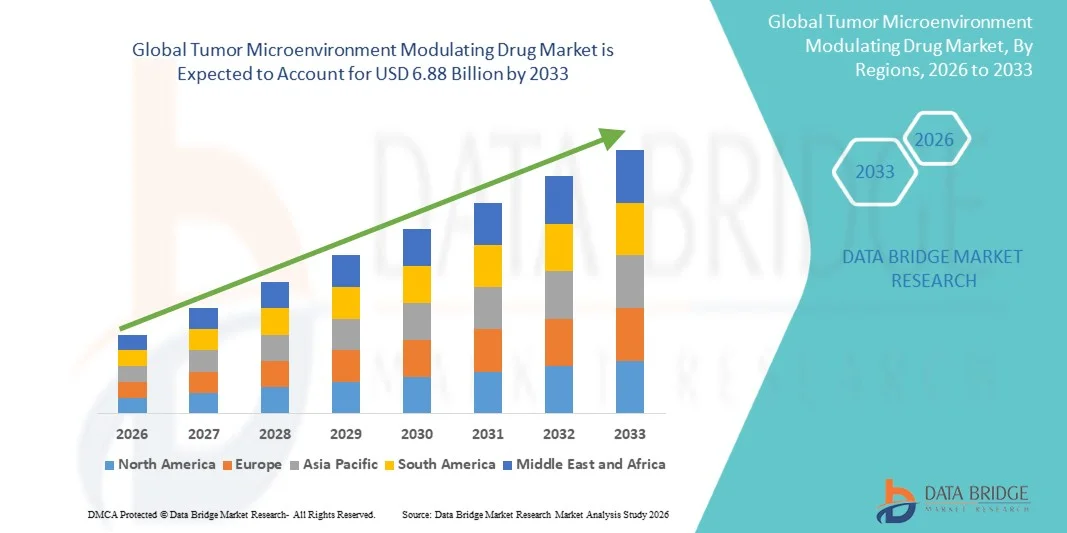
The Tumor Microenvironment Modulating Drug Market was valued at USD 1.95 billion in 2025 and is projected to reach USD 6.88 billion by 2033, growing at a CAGR of 17.10% from 2026 to 2033. Market growth is supported by the rising prevalence of cancer worldwide, increasing recognition of the tumor microenvironment (TME) as a critical therapeutic target, and growing investments in immuno-oncology research and drug development.
The tumor microenvironment encompasses the surrounding cellular ecosystem in which a tumor exists, including immune cells, stromal cells, blood vessels, extracellular matrix components, and signaling molecules. The TME plays a significant role in tumor progression, immune evasion, metastasis, and therapeutic resistance. Drugs targeting the TME aim to reprogram the immunosuppressive microenvironment, enhance antitumor immunity, and improve responses to existing cancer therapies.
Key drivers include the expanding pipeline of TME-targeting agents, technological advancements in biomarker discovery and tissue imaging, and the integration of TME modulators with immune checkpoint inhibitors and targeted therapies. The growing understanding of the complex interplay between tumor cells and their microenvironment is enabling the development of novel therapeutic strategies across multiple tumor types. In addition, rising government funding for cancer research, increasing clinical trial activity, and the emergence of combination immunotherapy regimens are creating significant opportunities for stakeholders across the forecast period.
Key Market Trends & Insights
- North America dominated the Tumor Microenvironment Modulating Drug Market with the largest revenue share of 42.8% in 2025, supported by robust oncology research infrastructure, high healthcare expenditure, and the presence of leading biopharmaceutical companies.
- Asia-Pacific is expected to be the fastest-growing region at a CAGR of 19.45% from 2026 to 2033, driven by expanding oncology clinical trial activity, increasing cancer incidence, and growing healthcare investments.
- The Immune Modulators segment led the market with a 34.2% market share in 2025, reflecting strong clinical adoption of agents targeting immune checkpoints, cytokines, and immune cell populations within the TME.
- The Tumor-Associated Macrophage (TAM) Modulation segment is anticipated to be the fastest-growing mechanism of action category, driven by emerging clinical data supporting TAM-targeting agents and their combination with checkpoint inhibitors.
- The Hospitals segment dominated the end-user category with a 48.5% market share in 2025, supported by access to advanced oncology treatment protocols, multidisciplinary care teams, and comprehensive diagnostic infrastructure.
- The Combination with Immune Checkpoint Inhibitors segment is expected to witness strong growth during the forecast period, driven by synergistic efficacy data and expanding regulatory approvals for combination regimens.
Market Size & Forecast
- Global Market Value (2025): USD 1.95 Billion
- Expected Market Value (2033): USD 6.88 Billion
- Forecast CAGR (2026–2033): 17.10%
- Leading Region in 2025: North America
- Fastest Growing Region: Asia-Pacific
Report Scope and Tumor Microenvironment Modulating Drug Market Segmentation
|
Attributes |
Tumor Microenvironment Modulating Drug Key Market Insights |
|
Segments Covered |
|
|
Countries Covered |
North America · U.S. · Canada · Mexico Europe · Germany · France · U.K. · Netherlands · Switzerland · Belgium · Russia · Italy · Spain · Turkey · Rest of Europe Asia-Pacific · China · Japan · India · South Korea · Singapore · Malaysia · Australia · Thailand · Indonesia · Philippines · Rest of Asia-Pacific Middle East and Africa · Saudi Arabia · U.A.E. · South Africa · Egypt · Israel · Rest of Middle East and Africa South America · Brazil · Argentina · Rest of South America |
|
Key Market Players |
· Bristol-Myers Squibb Company (U.S.) · Merck & Co., Inc. (U.S.) · F. Hoffmann-La Roche Ltd (Switzerland) · AstraZeneca plc (U.K.) · Pfizer Inc. (U.S.) · Novartis AG (Switzerland) · Lilly USA, LLC. (U.S.) · Gilead Sciences, Inc. (U.S.) · Regeneron Pharmaceuticals, Inc. (U.S.) · Amgen Inc. (U.S.) · Incyte Corporation (U.S.) · Surface Oncology, Inc. (U.S.) |
|
Market Opportunities |
· Development of novel combination therapies integrating TME modulators with immune checkpoint inhibitors, targeted agents, and cell-based therapies · Expansion of biomarker-driven patient selection strategies to optimize TME-targeting drug efficacy across solid tumor indications |
|
Value Added Data Infosets |
In addition to the insights on market scenarios such as market value, growth rate, segmentation, geographical coverage, and major players, the market reports curated by the Data Bridge Market Research also include depth expert analysis, patient epidemiology, pipeline analysis, pricing analysis, and regulatory framework. |
Tumor Microenvironment Modulating Drug Market Trends
Trend: Multiplex Gene Silencing and TME Reprogramming Technologies
The development of multiplex gene silencing platforms is emerging as a transformative trend in the tumor microenvironment modulating drug market. Researchers are leveraging CRISPR-Cas13 and related technologies to simultaneously target multiple immunosuppressive genes within the TME, enabling comprehensive microenvironment remodeling and enhanced antitumor immunity. These approaches address the limitations of single-target therapies by disrupting redundant immunosuppressive pathways that contribute to therapeutic resistance.
For instance,
A research team from Yale School of Medicine developed multiplex universal combinatorial immunotherapy via gene silencing (MUCIG), which uses CRISPR-Cas13d to silence multiple endogenous immunosuppressive genes in the TME. The approach demonstrated reduced tumor growth across breast cancer, melanoma, pancreatic cancer, and colon cancer models, representing a universal method to silence multiple immune genes in vivo in a programmable manner.
In addition, advances in single-cell sequencing, spatial transcriptomics, and high-dimensional tissue imaging are enabling deeper characterization of TME heterogeneity and informing the design of next-generation TME-targeting therapeutics. These technological innovations are expected to accelerate biomarker discovery, patient stratification, and personalized treatment approaches across the forecast period.
Tumor Microenvironment Modulating Drug Market Dynamics
Key Market Driver: Rising Prevalence of Cancer and Expanding Immuno-Oncology Pipeline
The increasing global burden of cancer is a primary driver of market growth. According to the World Health Organization, cancer accounts for nearly 10 million deaths annually, with rising incidence across major tumor types including lung, breast, colorectal, pancreatic, and liver cancers. The recognition that the TME plays a central role in immune evasion and therapeutic resistance has intensified research efforts to develop drugs targeting key TME components.
For instance,
The National Cancer Institute invested over USD 6.2 billion toward cancer research in 2021, with a significant portion directed toward understanding and targeting the tumor microenvironment. This sustained investment has fueled the expansion of clinical pipelines focused on immune cell reprogramming, TAM modulation, and metabolic pathway targeting.
The expanding pipeline of TME-modulating agents, combined with increasing clinical evidence supporting their efficacy in combination with checkpoint inhibitors, is expected to strengthen market growth throughout the forecast period.
Key Restraint/Challenge: Complex TME Biology and Limited Predictive Biomarkers
The inherent complexity of the tumor microenvironment presents significant challenges for drug development and clinical translation. The TME comprises diverse cell populations and signaling networks that vary across tumor types, stages, and individual patients. This heterogeneity complicates the identification of universal therapeutic targets and predictive biomarkers for patient selection.
For instance,
Traditional immunotherapies targeting single molecules in the TME benefit only 20 to 30% of patients, often due to compensatory pathways, redundant immunosuppressive mechanisms, or lack of relevant target expression in individual tumors. The development of reliable companion diagnostics and biomarker-driven patient stratification strategies remains an ongoing challenge.
Limited predictive biomarkers and the need for extensive translational research may constrain the pace of clinical development and regulatory approval for novel TME-targeting therapies.
Key Market Opportunity: Combination Therapy Development and Biomarker-Guided Treatment
The integration of TME modulators with established cancer therapies presents substantial market opportunities. Combination regimens pairing TME-targeting agents with immune checkpoint inhibitors, targeted therapies, chemotherapy, and radiotherapy are demonstrating synergistic efficacy across multiple tumor types. Biomarker-guided treatment selection is enabling more precise identification of patients likely to benefit from specific TME-modulating interventions.
For instance,
Emerging clinical trial data support the combination of adenosine pathway inhibitors, TAM-targeting antibodies, and TGF-β pathway inhibitors with PD-1/PD-L1 checkpoint blockade, demonstrating improved response rates and durable disease control in solid tumors. The ongoing expansion of combination immunotherapy regimens is expected to drive significant market growth.
Advances in liquid biopsy, circulating tumor DNA analysis, and real-time TME profiling are supporting the development of adaptive treatment strategies and expanding the addressable patient population for TME-modulating drugs.
Tumor Microenvironment Modulating Drug Market Scope
The tumor microenvironment modulating drug market is segmented on the basis of drug class, mechanism of action, therapy modality, treatment strategy, cancer type, and end user.
By Drug Class
On the basis of drug class, the Tumor Microenvironment Modulating Drug Market is segmented into immune modulators, angiogenesis modulators, stromal & fibrosis modulators, metabolic pathway modulators, cytokine & chemokine modulators, hypoxia-targeting modulators, and adenosine pathway modulators. The immune modulators segment dominated the market with a 34.2% market share in 2025, driven by the established clinical utility of agents targeting immune checkpoints, cytokines, and immune cell populations within the TME. Immune modulators enhance antitumor immunity by reprogramming immunosuppressive cells, blocking inhibitory signaling pathways, and promoting effector T cell activity. Strong clinical evidence from pivotal trials and regulatory approvals for combination regimens contribute to segment leadership.
The adenosine pathway modulators segment is expected to witness the fastest growth from 2026 to 2033, driven by increasing clinical trial activity targeting CD39, CD73, and adenosine receptors (A2AR/A2BR), along with promising combination data with checkpoint inhibitors. The immunosuppressive role of adenosine in the TME has positioned this pathway as a high-priority target for next-generation immuno-oncology drug development.
By Mechanism of Action
On the basis of mechanism of action, the Tumor Microenvironment Modulating Drug Market is segmented into immune cell reprogramming, tumor-associated macrophage (TAM) modulation, myeloid-derived suppressor cell (MDSC) targeting, regulatory T cell (Treg) modulation, TGF-β pathway inhibition, and others. The immune cell reprogramming segment led the market with a 28.5% market share in 2025, reflecting the broad clinical applicability of therapies designed to enhance anti-tumor immune responses. These agents work by modulating the activity of key immune cells, including T cells, natural killer (NK) cells, and dendritic cells, to overcome immune suppression within the TME. Growing adoption of immunotherapy-based treatment strategies, expanding clinical evidence supporting immune cell-targeted approaches, and increasing investment in next-generation immuno-oncology drug development have further strengthened the segment’s market position and growth potential.
The tumor-associated macrophage (TAM) modulation segment is anticipated to be the fastest-growing mechanism of action category from 2026 to 2033, driven by accumulating clinical evidence supporting CSF-1R inhibitors, CD47-SIRPα blockers, and novel TAM-repolarizing agents. TAMs represent a dominant immunosuppressive population in many solid tumors, and targeting this population in combination with checkpoint inhibitors has demonstrated improved response rates in early-phase trials.
By Therapy Modality
On the basis of therapy modality, the Tumor Microenvironment Modulating Drug Market is segmented into small molecules, monoclonal antibodies, bispecific antibodies/fusion proteins, cytokine-based therapies, cell-based therapies, oncolytic viruses, cancer vaccines, and gene & RNA-based therapies. The monoclonal antibodies segment dominated the market, accounting for a 32.5% market share in 2025. This leadership is largely attributed to the strong clinical success and widespread adoption of checkpoint inhibitors, tumor-associated macrophage (TAM)-targeting antibodies, and cytokine-neutralizing agents across multiple cancer indications. These therapies play a critical role in overcoming immunosuppressive mechanisms within the TME and enhancing anti-tumor immune responses. Continued expansion of immuno-oncology pipelines, growing clinical evidence, and increasing regulatory approvals are further reinforcing the segment’s dominant position in the market.
The bispecific antibodies/fusion proteins segment is expected to witness the fastest growth from 2026 to 2033, driven by expanding clinical pipelines, innovative molecular designs, and promising efficacy data in combination with TME modulators. Bispecific constructs offer the potential to simultaneously engage tumor cells and immune effectors, enhancing antitumor activity within the immunosuppressive TME.
By Treatment Strategy
On the basis of treatment strategy, the Tumor Microenvironment Modulating Drug Market is segmented into monotherapy, combination with immune checkpoint inhibitors, combination with targeted therapy, combination with chemotherapy, combination with radiotherapy, and combination with antibody-drug conjugates (ADCs). The combination with immune checkpoint inhibitors segment led the global tumor microenvironment (TME) modulating drug market, accounting for a 38.5% market share in 2025. This dominance reflects the strong synergistic efficacy achieved when TME-modulating therapies are used alongside PD-1/PD-L1 and CTLA-4 inhibitors. By enhancing immune cell infiltration, reducing immunosuppressive signals, and improving tumor recognition, these combinations help overcome resistance mechanisms and improve treatment outcomes across multiple tumor types. Growing clinical evidence, expanding combination therapy trials, and increasing regulatory approvals continue to drive adoption and reinforce the segment’s leadership in the market.
The combination with immune checkpoint inhibitors segment is expected to remain the dominant and fastest-growing treatment strategy from 2026 to 2033, driven by ongoing clinical trials evaluating novel TME modulators in combination with established checkpoint blockade. The rationale for combination approaches is supported by the ability of TME-targeting agents to overcome resistance mechanisms, enhance immune cell infiltration, and potentiate checkpoint inhibitor efficacy.
By Cancer Type
On the basis of cancer type, the Tumor Microenvironment Modulating Drug Market is segmented into lung cancer, breast cancer, colorectal cancer, pancreatic cancer, liver cancer, and other. The lung cancer segment dominated the market with a 28.5% market share in 2025, driven by the high global burden of lung cancer and the widespread integration of immunotherapy into treatment protocols. The complex and highly immunosuppressive tumor microenvironment associated with lung cancer has made it a primary focus for TME-targeting therapies. In addition, extensive clinical research evaluating immune-modulating agents, combination regimens, and novel TME-directed approaches has accelerated therapeutic adoption. Growing investments in lung cancer drug development and favorable clinical outcomes continue to strengthen the segment’s market leadership.
The pancreatic cancer segment is anticipated to be the fastest-growing cancer type category from 2026 to 2033, driven by the highly immunosuppressive and desmoplastic TME characteristic of pancreatic tumors, which has spurred intensive research into stromal and fibrosis modulators, TAM-targeting agents, and combination immunotherapy approaches. The unmet medical need in pancreatic cancer is accelerating clinical trial activity and novel drug development.
By End User
On the basis of end user, the Tumor Microenvironment Modulating Drug Market is segmented into hospitals, oncology centers, specialty cancer clinics, and research institutes. The hospitals segment dominated the market with a 48.5% market share in 2025, driven by access to advanced oncology treatment protocols, multidisciplinary care teams, and comprehensive diagnostic and imaging infrastructure. Hospitals serve as primary centers for the administration of TME-modulating therapies, often in combination with other modalities requiring inpatient monitoring and specialized supportive care.
The oncology centers segment is expected to witness the fastest growth from 2026 to 2033, driven by the expansion of outpatient infusion capabilities, increasing adoption of combination immunotherapy regimens, and the growing role of community oncology practices in delivering cutting-edge cancer care. The shift toward decentralized treatment delivery is supporting the expansion of TME-modulating drug utilization beyond academic medical centers.
Tumor Microenvironment Modulating Drug Market Regional Analysis
North America dominated the tumor microenvironment modulating drug market with a revenue share of 42.8% in 2025, supported by robust oncology research infrastructure, high healthcare expenditure, favorable regulatory pathways, and the presence of leading biopharmaceutical companies including Bristol-Myers Squibb, Merck, and Gilead Sciences. Extensive clinical trial activity, strong reimbursement frameworks, and advanced biomarker diagnostics contribute to regional market leadership.
U.S. Tumor Microenvironment Modulating Drug Market Insight
The U.S. tumor microenvironment modulating drug market benefits from the highest concentration of immuno-oncology clinical trials globally, extensive surgeon and oncologist training programs, and strong clinical evidence supporting TME-targeting approaches. Academic medical centers, NCI-designated cancer centers, and large health systems continue to expand immuno-oncology programs integrating TME modulators with checkpoint inhibitors and targeted therapies. Favorable FDA regulatory pathways, including breakthrough therapy and accelerated approval designations, support rapid clinical translation of novel TME-targeting agents. The U.S. accounted for 38.5% of the global market share in 2025.
Europe Tumor Microenvironment Modulating Drug Market Insight
The Europe tumor microenvironment modulating drug market remains a major contributor, with strong hospital-based oncology programs across Germany, the U.K., France, Switzerland, and Italy. Growing adoption of combination immunotherapy regimens and expanding clinical trial infrastructure are supporting market growth. Cross-disciplinary guidelines, structured training pathways, and collaborative research networks are improving clinical outcomes and standardizing care delivery across European markets.
U.K. Tumor Microenvironment Modulating Drug Market Insight
The U.K. tumor microenvironment modulating drug market is characterized by expanding immuno-oncology research programs within NHS hospitals, academic centers, and private healthcare facilities. Investment in translational oncology research and biomarker-driven treatment selection is improving access to TME-targeting therapies and supporting clinical trial recruitment.
Germany Tumor Microenvironment Modulating Drug Market Insight
Germany's robust hospital infrastructure and advanced oncology capabilities support comprehensive TME-modulating drug programs across lung, breast, and gastrointestinal cancers. Strong clinical training networks, favorable reimbursement frameworks, and collaborations between academic and industry partners contribute to high clinical adoption rates.
Asia-Pacific Tumor Microenvironment Modulating Drug Market Insight
The Asia-Pacific tumor microenvironment modulating drug market is poised for rapid growth with a CAGR of 19.45% during the forecast period, driven by expanding oncology clinical trial activity, increasing cancer incidence, rising healthcare expenditure, and growing government investment in cancer research. Private and public healthcare systems in China, Japan, India, and South Korea are investing in immuno-oncology infrastructure to meet growing patient demand and improve clinical outcomes.
Japan Tumor Microenvironment Modulating Drug Market Insight
The Japan tumor microenvironment modulating drug market benefits from advanced healthcare infrastructure, strong oncology research expertise, and favorable reimbursement for immuno-oncology therapies. Clinical adoption of combination immunotherapy regimens and TME-targeting agents is expanding across major cancer centers. Japan accounted for 12.5% of the Asia-Pacific market share in 2025.
China Tumor Microenvironment Modulating Drug Market Insight
The China tumor microenvironment modulating drug market is experiencing rapid growth driven by healthcare modernization initiatives, expanding private hospital networks, increasing clinical trial activity, and rising patient demand for advanced cancer therapies. Domestic biopharmaceutical companies are increasingly developing TME-targeting agents, complementing imported therapies and improving market accessibility. China is expected to be the fastest-growing national market in Asia-Pacific, with a CAGR of 21.2% from 2026 to 2033.
Tumor Microenvironment Modulating Drug Market Share
The tumor microenvironment modulating drug industry is primarily led by well-established companies, including:
- Bristol-Myers Squibb Company (U.S.)
- Merck & Co., Inc. (U.S.)
- F. Hoffmann-La Roche Ltd (Switzerland)
- AstraZeneca plc (U.K.)
- Pfizer Inc. (U.S.)
- Novartis AG (Switzerland)
- Lilly USA, LLC. (U.S.)
- Gilead Sciences, Inc. (U.S.)
- Regeneron Pharmaceuticals, Inc. (U.S.)
- Amgen Inc. (U.S.)
- Incyte Corporation (U.S.)
- Surface Oncology, Inc. (U.S.)
Latest Developments in Tumor Microenvironment Modulating Drug Market
- In March 2026, Bristol-Myers Squibb announced positive Phase 3 results for its novel CD73 inhibitor in combination with nivolumab for advanced non-small cell lung cancer. The trial demonstrated significantly improved progression-free survival compared to nivolumab monotherapy, supporting regulatory submissions in the U.S. and Europe.
- In January 2026, Gilead Sciences received FDA approval for its first-in-class anti-CCR2 antibody for the treatment of advanced pancreatic cancer in combination with gemcitabine-based chemotherapy. The approval marked a significant advance in targeting myeloid-derived suppressor cells within the tumor microenvironment.
- In November 2025, AstraZeneca presented pivotal clinical data at the Society for Immunotherapy of Cancer (SITC) annual meeting demonstrating that its TGF-β pathway inhibitor in combination with durvalumab improved overall survival in patients with metastatic colorectal cancer.
- In September 2025, Merck & Co. announced the initiation of a global Phase 3 trial evaluating its novel adenosine A2A receptor antagonist in combination with pembrolizumab for first-line treatment of advanced hepatocellular carcinoma.
- In June 2025, F. Hoffmann-La Roche Ltd reported positive Phase 2 data for its bispecific antibody targeting CD47 and PD-L1 in relapsed/refractory triple-negative breast cancer, demonstrating durable responses and a manageable safety profile.
- In April 2025, Novartis AG announced a strategic collaboration with a leading academic medical center to advance multiplex gene silencing technologies for tumor microenvironment reprogramming, leveraging CRISPR-Cas13 platforms for clinical translation.

- Interactive Data Analysis Dashboard
- Company Analysis Dashboard for high growth potential opportunities
- Research Analyst Access for customization & queries
- Competitor Analysis with Interactive dashboard
- Latest News, Updates & Trend analysis
- Harness the Power of Benchmark Analysis for Comprehensive Competitor Tracking
Data collection and base year analysis are done using data collection modules with large sample sizes. The stage includes obtaining market information or related data through various sources and strategies. It includes examining and planning all the data acquired from the past in advance. It likewise envelops the examination of information inconsistencies seen across different information sources. The market data is analysed and estimated using market statistical and coherent models. Also, market share analysis and key trend analysis are the major success factors in the market report. To know more, please request an analyst call or drop down your inquiry.
The key research methodology used by DBMR research team is data triangulation which involves data mining, analysis of the impact of data variables on the market and primary (industry expert) validation. Data models include Vendor Positioning Grid, Market Time Line Analysis, Market Overview and Guide, Company Positioning Grid, Patent Analysis, Pricing Analysis, Company Market Share Analysis, Standards of Measurement, Global versus Regional and Vendor Share Analysis. To know more about the research methodology, drop in an inquiry to speak to our industry experts.
Data Bridge Market Research is a leader in advanced formative research. We take pride in servicing our existing and new customers with data and analysis that match and suits their goal. The report can be customized to include price trend analysis of target brands understanding the market for additional countries (ask for the list of countries), clinical trial results data, literature review, refurbished market and product base analysis. Market analysis of target competitors can be analyzed from technology-based analysis to market portfolio strategies. We can add as many competitors that you require data about in the format and data style you are looking for. Our team of analysts can also provide you data in crude raw excel files pivot tables (Fact book) or can assist you in creating presentations from the data sets available in the report.












