


Underfloor Heating Market Size
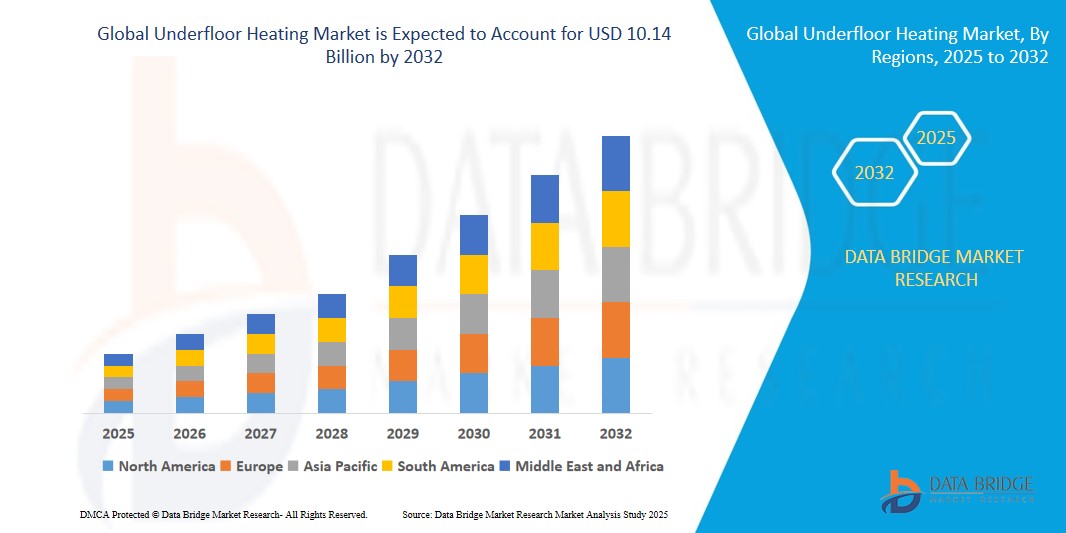
- The global Underfloor Heating market size was valued at USD 5.40 billion in 2024 and is expected to reach USD 10.14 billion by 2032, at a CAGR of 8.2% during the forecast period
- This growth is driven by factors such as the aging population, increasing prevalence of eye diseases, and advancements in ophthalmic technology
Underfloor Heating Market Analysis
- Underfloor heating is defined as a central heating and cooling which ensures the indoor temperature. It forms radiant heating that helps in enabling heat to pass from the hot element and also makes the indoor climate hot providing comfort also provides thermal comfort using conduction, radiation and convention.
- It is extensively applicable in residential and commercial buildings and it also helps to save power being consumed by the heaters.
- North America dominates the underfloor heating market due to increase in the introduction of energy efficiency standards, rise in the standard of living, increase in the strict government regulations, increase in the extreme climatic conditions and rise in the demand for space heating in this region. This region is further expected to witness a firm share of growth in the respective market.
- Asia-Pacific is expected to be the fastest growing region in the Underfloor Heating market during the forecast period due to rapid urbanization, rising construction of residential and commercial buildings
- Electric System Components segment is expected to dominate the market with a market share of 51.80% due to its ease of installation, lower upfront cost, and suitability for both renovations and new constructions.
Report Scope and Underfloor Heating Market Segmentation
|
Attributes |
Underfloor Heating Key Market Insights |
|
Segments Covered |
|
|
Countries Covered |
North America
Europe
Asia-Pacific
Middle East and Africa
South America
|
|
Key Market Players |
|
|
Market Opportunities |
|
|
Value Added Data Infosets |
In addition to the insights on market scenarios such as market value, growth rate, segmentation, geographical coverage, and major players, the market reports curated by the Data Bridge Market Research also include import export analysis, production capacity overview, production consumption analysis, price trend analysis, climate change scenario, supply chain analysis, value chain analysis, raw material/consumables overview, vendor selection criteria, PESTLE Analysis, Porter Analysis, and regulatory framework. |
Underfloor Heating Market Trends
“Integration with Renewable Energy Sources”
- One of the most noticeable shifts in the underfloor heating market is the integration of systems with renewable energy sources such as solar panels and heat pumps. As more buildings aim for net-zero emissions, combining underfloor heating with clean energy allows for sustainable temperature regulation with lower operational costs.
- Homeowners and commercial property developers are increasingly adopting this pairing to maximize energy efficiency and reduce their carbon footprint. This trend aligns with global decarbonization efforts and is particularly gaining traction in eco-friendly housing developments. Manufacturers are now designing heating systems that easily connect with renewable energy infrastructure.
- Government subsidies and tax incentives for solar heating installations further encourage adoption. As the cost of renewables continues to fall, more regions are seeing this as the new standard. This move also supports long-term savings for consumers and compliance with future energy regulations.
- For instance, In February 2025, a sustainable housing initiative in the Netherlands completed 300 homes equipped with solar-powered underfloor heating systems. The homes used rooftop panels to generate energy and heat pumps to maintain floor temperature. Residents reported both environmental benefits and lower monthly energy bills. The project received national recognition for innovation in green construction. It has since inspired other European housing projects to adopt similar models.
Underfloor Heating Market Dynamics
Driver
“Rising Demand for Energy-Efficient Heating Systems”
- Energy efficiency has become a central concern in both residential and commercial sectors due to rising energy prices and climate change awareness. Underfloor heating systems are more efficient than traditional radiators because they use lower temperatures to heat spaces evenly. This means lower energy consumption and reduced utility bills for users, which is driving interest among both homeowners and developers.
- Governments and green building certifications are also pushing for heating technologies that reduce carbon emissions. These efficiency benefits are making underfloor systems a preferred solution in both new constructions and renovations.
- As utility costs rise and sustainability becomes a key building requirement, this trend is expected to strengthen further. Companies investing in innovative energy-saving features are likely to gain a competitive edge in the market. The move towards net-zero energy buildings will only accelerate the adoption of such systems.
For instance,
- In March 2025, the UK’s Department for Energy Security launched a new campaign promoting energy-efficient home heating systems. Underfloor heating was spotlighted as a key solution for lowering household carbon footprints. The government offered incentives and grants for installations in both new homes and retrofits. This policy drove greater demand among developers and homeowners focused on cost savings and environmental responsibility. As a result, several builders reported a notable increase in underfloor heating adoption across major projects.
Opportunity
“Growing Green Building Initiatives”
- As sustainability becomes a global priority, the demand for energy-efficient heating systems is rising. Underfloor heating, known for reducing energy consumption and improving heat distribution, is becoming a preferred option in green building projects.
- Builders and architects are incorporating these systems into environmentally certified homes and commercial buildings to meet modern energy codes and green building standards like LEED and BREEAM. The market stands to benefit from governments offering tax incentives or subsidies for using eco-friendly technologies.
- This growing push toward sustainable construction is opening doors for wider adoption of underfloor heating systems worldwide. It also aligns with global climate goals to cut carbon emissions from residential and commercial spaces.
For instance,
- In April 2025, several housing projects in the Netherlands integrated underfloor heating systems to meet stricter green building standards. The move supported the country’s energy transition goals and reduced reliance on fossil fuels. Local governments offered rebates to homeowners installing energy-efficient heating systems. This initiative led to a noticeable rise in underfloor heating installations across new eco-friendly developments. Builders cited it as a win-win for both comfort and environmental compliance.
Restraint/Challenge
“High Initial Installation Costs”
- One of the biggest challenges holding back the adoption of underfloor heating is the high upfront cost of installation, especially for retrofitting in existing buildings. While the system is energy-efficient in the long term, the immediate expense of materials and labor can be a financial hurdle for homeowners and builders. In older properties, the process may also require removing existing flooring, which adds to both time and expense.
- This cost barrier can discourage customers, particularly in price-sensitive markets. As a result, many opt for cheaper conventional heating systems, despite the potential energy savings from underfloor heating in the long run.
For instance,
- In March 2025, housing developers in the UK highlighted that the cost of installing underfloor heating in retrofitted homes can be nearly double that of traditional radiators. This has made it less appealing for mid-range housing projects. Developers reported hesitancy from homeowners due to additional labor and flooring replacement costs. As a result, many projects continue to use conventional heating methods. The initial investment is still a major deterrent for broader adoption.
Underfloor Heating Market Scope
The market is segmented on the basis component, type, installation, application and facility.
|
Segmentation |
Sub-Segmentation |
|
Component |
|
|
Type |
|
|
Installation |
|
|
Application |
|
|
Facility |
|
In 2025, the Electric System Components is projected to dominate the market with a largest share in segment
In 2025, the Electric System Components segment is expected to take the lead in the underfloor heating market, holding the largest share of 51.80%. This dominance is driven by growing demand for energy-efficient heating in residential and commercial buildings, especially in regions with colder climates. Electric systems are easier to install, cost-effective for small-scale applications, and suitable for both renovations and new constructions. Their compatibility with smart thermostats and renewable energy sources further boosts their appeal. As technology advances, these systems are becoming more user-friendly and efficient, strengthening their market position.
The Hydronic System Components is expected to account for the largest share during the forecast period in market
The Hydronic System Components segment is expected to hold the largest market share of 46.31% during the forecast period. This is largely because hydronic systems are highly energy-efficient and provide consistent, even heating, making them popular in both residential and commercial buildings. These systems use water to transfer heat, which is more efficient than air-based systems, leading to lower energy costs over time. Additionally, growing awareness of sustainability and the push for eco-friendly heating solutions are driving the adoption of hydronic components. Their quiet operation and compatibility with renewable energy sources like solar thermal systems also contribute to their rising market share.
Underfloor Heating Market Regional Analysis
“North America Holds the Largest Share in the Underfloor Heating Market”
-
North America holds the largest share in the underfloor heating market due to strong demand for energy-efficient heating systems and modern home upgrades. Consumers in the region are increasingly adopting underfloor heating for comfort, energy savings, and aesthetics.
- Rising construction of smart homes and green buildings supports this trend. Cold climatic conditions in parts of the U.S. and Canada further fuel the need for efficient indoor heating solutions.
- Government incentives for energy-saving technologies also drive adoption. Key market players in the region continuously invest in innovations and product development. Renovation of older buildings with upgraded heating systems adds to the demand. As a result, North America remains a dominant player in this growing market.
“Asia-Pacific is Projected to Register the Highest CAGR in the Underfloor Heating Market”
-
Asia-Pacific is projected to register the highest CAGR in the underfloor heating market due to rapid urbanization and increasing construction activities. The growing middle-class population, particularly in countries like China and India, is driving demand for modern home solutions. Rising disposable incomes and changing consumer preferences toward luxury and comfort also contribute to the growth.
- Additionally, the region's focus on energy-efficient and sustainable building practices boosts the adoption of underfloor heating systems. The growing popularity of smart homes and green buildings further supports this trend.
- Government initiatives promoting energy-saving technologies also play a significant role. Technological advancements and affordable options make underfloor heating more accessible to a broader population. This rapid growth positions Asia-Pacific as a key region in the market.
Underfloor Heating Market Share
The market competitive landscape provides details by competitor. Details included are company overview, company financials, revenue generated, market potential, investment in research and development, new market initiatives, global presence, production sites and facilities, production capacities, company strengths and weaknesses, product launch, product width and breadth, application dominance. The above data points provided are only related to the companies' focus related to market.
The Major Market Leaders Operating in the Market Are:
- Siemens,
- Mitsubishi Electric Corporation,
- WARMUP Plc,
- Pentair plc,
- NEXANS,
- Danfoss,
- Honeywell International Inc.,
- Uponor Corporation,
- Robert Bosch GmbH,
- Robot uk ltd,
- Schneider Electric,
- Emersion Electric Co.,
- The Underfloor Heating Company London,
- Flexel International Ltd. ,
- Jupiter Heating Systems Ltd.,
- Rehau,
- Toshiba Corporation,
- Speedheat (Pty) Ltd,
- Uheat,
- Pergo,
- ZingyHomes
- ThermoSphere
Latest Developments in Global Underfloor Heating Market
- In March 2025, Danfoss unveiled the Icon2™ hydronic floor heating system at ISH 2025 in Frankfurt. This system offers both wired and wireless thermostat compatibility, enabling flexible installation and control. It integrates seamlessly with the Danfoss Ally™ platform, allowing homeowners to manage heating remotely via a smartphone app. The Icon2™ is designed for energy efficiency and rapid installation, making it suitable for both new builds and renovations. This launch highlights Danfoss's commitment to providing smart, sustainable heating solutions
- At ISH 2025, Uponor introduced the Siccus 16 dry underfloor heating system. This system features a low installation height of just 20 mm and allows direct flooring on EPS boards, eliminating several steps in the installation process. Its lightweight construction makes it ideal for renovations where floor load restrictions are a concern. The Siccus 16 provides optimal heating performance within only 20 minutes and is compatible with low-temperature heat sources such as heat pumps. This innovation addresses key challenges in the renovation sector, offering a faster and more efficient heating solution.
- In February 2025, Siemens launched a new line of digital thermostats designed specifically for hydronic underfloor heating systems. These thermostats feature advanced algorithms that adapt to user behavior and external weather conditions, optimizing energy consumption. They can be integrated with smart home systems, allowing users to control their heating remotely via mobile apps. The user-friendly interface and sleek design make them an attractive option for modern homes seeking efficient and customizable heating solutions.
- In January 2025, Mitsubishi Electric unveiled its new hybrid heating solutions that combine underfloor heating with air source heat pumps. These systems are designed to provide efficient heating by utilizing renewable energy sources, reducing carbon footprints. The integration of underfloor heating ensures even heat distribution, enhancing comfort levels in residential and commercial spaces. The hybrid systems are equipped with smart controls, allowing users to monitor and adjust settings remotely for optimal performance.
- In March 2025, WARMUP Plc launched its latest smart thermostat compatible with underfloor heating systems. The thermostat features a touchscreen interface and can be controlled via a mobile app, offering users flexibility and convenience. It includes energy-saving features such as adaptive learning and geofencing, which adjust heating based on occupancy and location. The sleek design and intuitive controls make it an appealing choice for homeowners seeking modern heating solutions.

- Interactive Data Analysis Dashboard
- Company Analysis Dashboard for high growth potential opportunities
- Research Analyst Access for customization & queries
- Competitor Analysis with Interactive dashboard
- Latest News, Updates & Trend analysis
- Harness the Power of Benchmark Analysis for Comprehensive Competitor Tracking
Global Underfloor Heating Market, Supply Chain Analysis and Ecosystem Framework
To support market growth and help clients navigate the impact of geopolitical shifts, DBMR has integrated in-depth supply chain analysis into its Global Underfloor Heating Market research reports. This addition empowers clients to respond effectively to global changes affecting their industries. The supply chain analysis section includes detailed insights such as Global Underfloor Heating Market consumption and production by country, price trend analysis, the impact of tariffs and geopolitical developments, and import and export trends by country and HSN code. It also highlights major suppliers with data on production capacity and company profiles, as well as key importers and exporters. In addition to research, DBMR offers specialized supply chain consulting services backed by over a decade of experience, providing solutions like supplier discovery, supplier risk assessment, price trend analysis, impact evaluation of inflation and trade route changes, and comprehensive market trend analysis.
Data collection and base year analysis are done using data collection modules with large sample sizes. The stage includes obtaining market information or related data through various sources and strategies. It includes examining and planning all the data acquired from the past in advance. It likewise envelops the examination of information inconsistencies seen across different information sources. The market data is analysed and estimated using market statistical and coherent models. Also, market share analysis and key trend analysis are the major success factors in the market report. To know more, please request an analyst call or drop down your inquiry.
The key research methodology used by DBMR research team is data triangulation which involves data mining, analysis of the impact of data variables on the market and primary (industry expert) validation. Data models include Vendor Positioning Grid, Market Time Line Analysis, Market Overview and Guide, Company Positioning Grid, Patent Analysis, Pricing Analysis, Company Market Share Analysis, Standards of Measurement, Global versus Regional and Vendor Share Analysis. To know more about the research methodology, drop in an inquiry to speak to our industry experts.
Data Bridge Market Research is a leader in advanced formative research. We take pride in servicing our existing and new customers with data and analysis that match and suits their goal. The report can be customized to include price trend analysis of target brands understanding the market for additional countries (ask for the list of countries), clinical trial results data, literature review, refurbished market and product base analysis. Market analysis of target competitors can be analyzed from technology-based analysis to market portfolio strategies. We can add as many competitors that you require data about in the format and data style you are looking for. Our team of analysts can also provide you data in crude raw excel files pivot tables (Fact book) or can assist you in creating presentations from the data sets available in the report.













