Global Ureteral Stents Market
Market Size in USD Million
CAGR :
% 
 USD
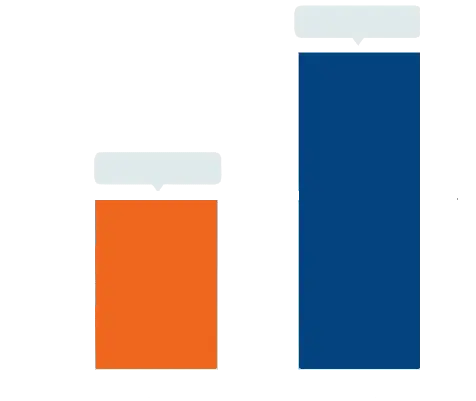
455.44 Million
USD
726.99 Million
2025
2033
USD
455.44 Million
USD
726.99 Million
2025
2033
 Forecast Period Forecast Period |
2026 –2033 |
 Market Size (Base Year) Market Size (Base Year) |
USD 455.44 Million |
 Market Size (Forecast Year) Market Size (Forecast Year) |
USD 726.99 Million |
 CAGR CAGR |
% |
| Major Markets Players |
|
Ureteral Stents Market Size
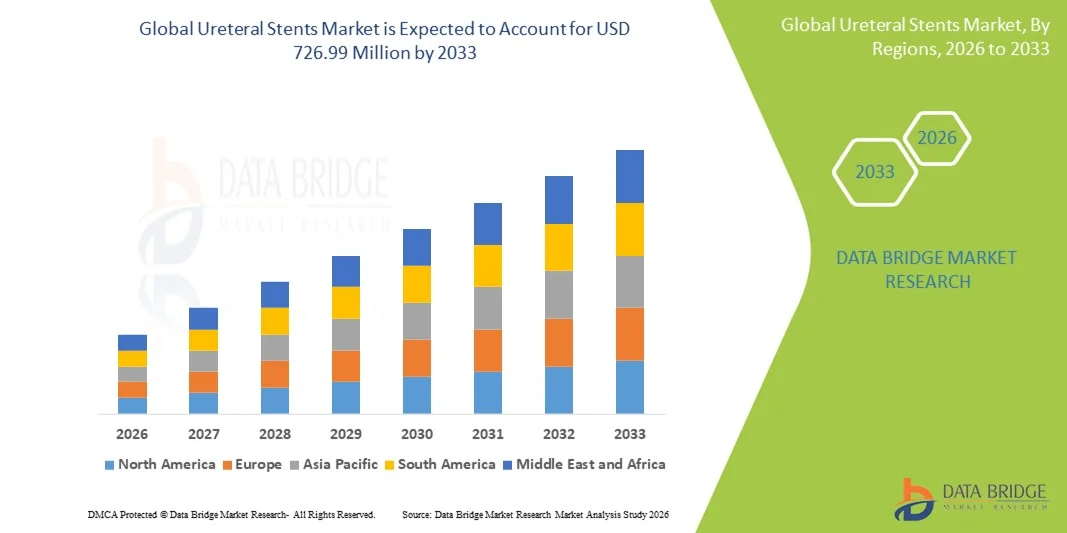
- The global ureteral stents market size was valued at USD 455.44 million in 2025 and is expected to reach USD 726.99 million by 2033, at a CAGR of 6.02% during the forecast period
- The market growth is primarily driven by the rising prevalence of urological disorders such as kidney stones, ureteral strictures, and urinary obstructions, along with increasing volumes of minimally invasive urological procedures worldwide
- Additionally, growing demand for advanced, biocompatible, and patient-friendly stent designs, coupled with technological advancements in materials and coatings, is positioning ureteral stents as a critical solution in modern urology care. These combined factors are accelerating adoption across hospitals and ambulatory surgical centers, thereby significantly supporting overall market growth
Ureteral Stents Market Analysis
- Ureteral stents, used to maintain ureteral patency and facilitate urine flow from the kidneys to the bladder, are critical medical devices in urological care, widely utilized across hospitals and ambulatory surgical centers for the management of urinary obstructions, kidney stones, and post-procedural drainage
- The rising demand for ureteral stents is primarily driven by the increasing incidence of kidney stone disease and other urological disorders, a growing aging population, and the expanding use of minimally invasive urological procedures worldwide
- North America dominated the global ureteral stents market with the largest revenue share of 40.2% in 2025, supported by advanced healthcare infrastructure, high urology procedure volumes, and strong adoption of technologically advanced stent materials and designs, with the U.S. showing sustained demand due to high disease prevalence and favorable reimbursement frameworks
- Asia-Pacific is expected to be the fastest-growing region in the global ureteral stents market during the forecast period due to improving healthcare infrastructure, rising awareness of urological conditions, increasing surgical volumes, and growing healthcare expenditure across emerging economies
- Double pigtail stents segment dominated the global ureteral stents market with a market share of 45.9% in 2025, driven by their widespread clinical acceptance, effective anchoring at both ends to minimize migration, and broad applicability across treatments such as kidney stones, ureteroscopy, and lithotripsy
Report Scope and Ureteral Stents Market Segmentation
|
Attributes |
Ureteral Stents Key Market Insights |
|
Segments Covered |
|
|
Countries Covered |
North America
Europe
Asia-Pacific
Middle East and Africa
South America
|
|
Key Market Players |
|
|
Market Opportunities |
|
|
Value Added Data Infosets |
In addition to the insights on market scenarios such as market value, growth rate, segmentation, geographical coverage, and major players, the market reports curated by the Data Bridge Market Research also include in-depth expert analysis, patient epidemiology, pipeline analysis, pricing analysis, and regulatory framework |
Ureteral Stents Market Trends
Advancements in Biocompatible Materials and Coating Technologies
- A significant and accelerating trend in the global ureteral stents market is the increasing focus on advanced biocompatible materials and surface coatings aimed at reducing stent-related complications such as encrustation, infection, and patient discomfort
- For instance, manufacturers are increasingly adopting silicone and hybrid polymer materials with hydrophilic or antimicrobial coatings to improve patient tolerance and extend indwelling time, thereby enhancing clinical outcomes
- Technological innovation in coating technologies enables ureteral stents to resist bacterial adhesion and mineral buildup, which are major causes of stent failure and secondary interventions. For instance, some polymer-based stents incorporate drug-eluting or anti-fouling coatings to minimize post-operative complications
- The growing emphasis on patient-centric design has led to the development of stents with improved flexibility, reduced friction, and optimized lumen design, allowing easier placement and removal while improving patient comfort
- This trend toward more durable, comfortable, and clinically efficient ureteral stents is reshaping expectations among urologists and healthcare providers, prompting increased adoption of premium and technologically advanced products
- Consequently, companies such as Boston Scientific and Cook Medical are investing in next-generation ureteral stents with enhanced material science and coating innovations to address unmet clinical needs and differentiate their product portfolios
- Increasing research into biodegradable and temporary ureteral stents is emerging as a notable trend, aiming to eliminate the need for secondary removal procedures and reduce overall patient burden
Ureteral Stents Market Dynamics
Driver
Rising Prevalence of Urological Disorders and Minimally Invasive Procedures
- The increasing incidence of urological conditions such as kidney stones, ureteral obstructions, and post-surgical urinary complications, along with the growing adoption of minimally invasive procedures, is a major driver of demand for ureteral stents
- For instance, the rising global burden of urolithiasis has led to higher volumes of ureteroscopy and lithotripsy procedures, where ureteral stents are routinely used to maintain urinary drainage and prevent complications
- As healthcare systems increasingly favor minimally invasive techniques due to shorter hospital stays and faster recovery times, the use of ureteral stents has become integral to modern urological practice
- Furthermore, aging populations across developed and emerging regions are more susceptible to chronic urological conditions, thereby increasing the need for interventional treatments supported by ureteral stent placement
- The expanding availability of advanced urology services in hospitals and ambulatory surgical centers, combined with improved physician awareness and training, continues to propel the global ureteral stents market
- Growing healthcare expenditure and investments in specialized urology departments are further supporting increased procedural volumes requiring ureteral stent usage
- For instance, the expansion of ambulatory surgical centers globally has increased access to cost-effective urological interventions, directly contributing to rising demand for ureteral stents
Restraint/Challenge
Stent-Related Complications and Regulatory Compliance Barriers
- Concerns related to stent-associated complications such as pain, infection, encrustation, and migration present a significant challenge to widespread and prolonged use of ureteral stents, particularly for long-term placements
- For instance, patient discomfort and the need for secondary procedures to remove or replace stents can negatively impact patient satisfaction and increase overall treatment costs
- Addressing these clinical challenges requires continuous innovation in materials, coatings, and design, which can increase development costs and extend product approval timelines. Companies must also navigate stringent regulatory requirements for medical devices across different regions
- Additionally, variations in regulatory standards and approval processes across countries can delay market entry for new products, limiting timely access to advanced stent technologies in certain regions
- Overcoming these challenges through improved stent design, robust clinical evidence, streamlined regulatory strategies, and increased focus on patient-centric solutions will be critical for sustaining long-term growth in the global ureteral stents market
- Limited patient compliance related to stent discomfort and post-placement symptoms can lead to premature removals, impacting treatment effectiveness and outcomes
- For instance, inconsistent follow-up care in resource-limited settings may exacerbate stent-related risks, creating additional challenges for healthcare providers and manufacturers alike
Ureteral Stents Market Scope
The market is segmented on the basis of type, material, treatment, and end-user.
- By Type
On the basis of type, the global ureteral stents market is segmented into open end stents, closed end stents, double pigtail stents, and multiloop stents. The double pigtail stents segment dominated the market with the largest revenue share of 45.9% in 2025, driven by its widespread clinical acceptance and proven effectiveness in preventing stent migration. Double pigtail stents feature curls at both ends, which help anchor the stent securely in the kidney and bladder, making them suitable for a wide range of urological procedures. These stents are extensively used in kidney stone management, ureteroscopy, and post-operative drainage due to their reliability and ease of placement. Their compatibility with minimally invasive procedures and availability in multiple materials and sizes further strengthen their dominance. Additionally, strong physician familiarity and standardized clinical protocols support continued preference for double pigtail stents.
The multiloop stents segment is expected to witness the fastest growth during the forecast period, fueled by increasing demand for enhanced anchoring and reduced patient discomfort. Multiloop designs provide improved stability and minimize irritation within the urinary tract, making them suitable for longer indwelling durations. Growing awareness among urologists regarding patient-centric stent designs is driving adoption of multiloop stents. These stents are increasingly used in complex urological cases where migration risk is high. Technological advancements and improved manufacturing capabilities are also supporting segment growth. Expanding usage in advanced urology centers further contributes to the rapid growth trajectory.
- By Material
On the basis of material, the market is segmented into metal stents, polymer stents, silicone stents, hybrid stents, and polyurethane stents. The polymer stents segment dominated the market in 2025, primarily due to their widespread availability, cost-effectiveness, and versatility across multiple urological applications. Polymer-based stents offer a balanced combination of flexibility and strength, making them suitable for short- to medium-term placement. Their compatibility with various coatings, including hydrophilic and antimicrobial layers, enhances clinical performance. Polymer stents are commonly used in routine procedures such as ureteroscopy and lithotripsy. High physician familiarity and broad regulatory approvals further support their dominant position. Additionally, continuous improvements in polymer formulations are reinforcing their market leadership.
The silicone stents segment is anticipated to be the fastest growing during the forecast period, driven by increasing preference for superior biocompatibility and reduced patient discomfort. Silicone stents exhibit lower encrustation rates and better tolerance during prolonged indwelling periods. Growing emphasis on patient comfort and long-term outcomes is pushing demand for silicone-based solutions. These stents are particularly favored in chronic urological conditions requiring extended use. Advancements in silicone processing and design flexibility further enhance adoption. Rising awareness of stent-related complications is accelerating the shift toward silicone materials.
- By Treatment
On the basis of treatment, the ureteral stents market is segmented into kidney stones, ureteroscopy, lithotripsy, percutaneous nephrolithotomy, kidney transplantation, tumors, urinary incontinence, and others. The kidney stones segment dominated the market with the largest share in 2025, owing to the high global prevalence of urolithiasis. Ureteral stents are routinely used in kidney stone management to relieve obstruction and facilitate urine flow before and after stone removal procedures. Rising incidence of lifestyle-related risk factors such as dehydration and dietary habits contributes to increasing stone cases. The widespread use of minimally invasive stone removal techniques further supports stent demand. Hospitals and surgical centers rely heavily on stents for post-procedural care. This consistent procedural volume sustains the segment’s dominance.
The ureteroscopy segment is expected to grow at the fastest rate during the forecast period, supported by increasing adoption of minimally invasive urological interventions. Ureteroscopy is increasingly preferred due to shorter recovery times and reduced hospital stays. Ureteral stents play a crucial role in preventing post-operative complications associated with this procedure. Technological advancements in endoscopic equipment are increasing procedural success rates. Rising surgeon expertise and training are also contributing to growth. Expanding access to advanced urology care in emerging markets further accelerates this segment.
- By End-User
On the basis of end-user, the market is segmented into hospitals, nephrological centers, and ambulatory surgical centers. The hospitals segment dominated the global ureteral stents market in 2025, driven by high patient inflow and the availability of comprehensive urology services. Hospitals handle a large volume of complex and emergency urological cases requiring stent placement. Advanced diagnostic infrastructure and skilled urologists support consistent demand. Hospitals are also early adopters of technologically advanced stents. Favorable reimbursement structures in developed regions further strengthen hospital dominance. The presence of specialized surgical units sustains long-term growth in this segment.
The ambulatory surgical centers segment is projected to be the fastest growing during the forecast period, fueled by the increasing shift toward outpatient urological procedures. These centers offer cost-effective care with shorter procedural times and faster patient discharge. Growing preference for minimally invasive surgeries supports stent usage in ambulatory settings. Expansion of day-care surgery facilities in developed and emerging markets is accelerating adoption. Improved regulatory support and insurance coverage for outpatient procedures further enhance growth. This trend is reshaping end-user dynamics within the ureteral stents market.
Ureteral Stents Market Regional Analysis
- North America dominated the global ureteral stents market with the largest revenue share of 40.2% in 2025, supported by advanced healthcare infrastructure, high urology procedure volumes, and strong adoption of technologically advanced stent materials and designs, with the U.S. showing sustained demand due to high disease prevalence and favorable reimbursement frameworks
- Healthcare providers in the region place strong emphasis on clinical efficacy, patient safety, and the use of technologically advanced ureteral stents incorporating improved materials and coatings to reduce complications and enhance treatment outcomes
- This strong adoption is further supported by high healthcare expenditure, favorable reimbursement policies, and the presence of leading medical device manufacturers, positioning ureteral stents as a standard component of urological care across hospitals and ambulatory surgical centers
U.S. Ureteral Stents Market Insight
The U.S. ureteral stents market captured the largest revenue share within North America in 2025, driven by a high prevalence of kidney stone disease and other urological disorders, along with widespread adoption of minimally invasive urological procedures. Healthcare providers increasingly prioritize advanced ureteral stent designs that improve patient comfort and reduce complication rates. The strong presence of leading medical device manufacturers and continuous product innovation further support market growth. Moreover, favorable reimbursement frameworks and high healthcare spending significantly contribute to sustained demand for ureteral stents across hospitals and ambulatory surgical centers.
Europe Ureteral Stents Market Insight
The Europe ureteral stents market is projected to expand at a notable CAGR during the forecast period, primarily driven by a growing aging population and rising incidence of urological conditions. Increasing adoption of minimally invasive surgical techniques across European healthcare systems is fueling demand for ureteral stents. The region’s strong regulatory focus on patient safety and clinical efficacy encourages the use of high-quality stent materials and designs. Growth is evident across hospitals and specialized urology centers, supported by continuous improvements in healthcare infrastructure and access to advanced treatments.
U.K. Ureteral Stents Market Insight
The U.K. ureteral stents market is anticipated to grow at a steady CAGR over the forecast period, driven by rising awareness of urological health and increasing procedural volumes for kidney stone management. The National Health Service’s emphasis on minimally invasive interventions supports consistent demand for ureteral stents. Additionally, the growing burden of age-related urological disorders is encouraging adoption of reliable stent solutions. Technological advancements and standardized clinical guidelines further contribute to stable market expansion in the U.K.
Germany Ureteral Stents Market Insight
The Germany ureteral stents market is expected to expand at a considerable CAGR, supported by the country’s advanced healthcare system and strong focus on medical innovation. Increasing utilization of minimally invasive urology procedures is driving demand for high-performance ureteral stents. German healthcare providers emphasize precision, quality, and patient outcomes, leading to higher adoption of advanced materials such as silicone and hybrid stents. The presence of well-established hospitals and specialized urology centers further reinforces market growth.
Asia-Pacific Ureteral Stents Market Insight
The Asia-Pacific ureteral stents market is poised to grow at the fastest CAGR during the forecast period, driven by improving healthcare infrastructure, rising awareness of urological conditions, and increasing surgical volumes. Rapid urbanization and growing healthcare expenditure in countries such as China, Japan, and India are supporting broader access to urology care. The expansion of minimally invasive procedures across the region is significantly boosting ureteral stent adoption. Additionally, the increasing presence of regional and global manufacturers is improving product availability and affordability.
Japan Ureteral Stents Market Insight
The Japan ureteral stents market is gaining momentum due to the country’s advanced medical technology landscape and aging population. A high prevalence of age-related urological disorders is driving consistent demand for ureteral stents. Japanese healthcare providers place strong emphasis on patient comfort and procedural efficiency, supporting the adoption of high-quality stent materials and designs. The widespread use of minimally invasive techniques and strong clinical expertise further contribute to market growth in Japan.
India Ureteral Stents Market Insight
The India ureteral stents market accounted for the largest revenue share in Asia Pacific in 2025, driven by rapid urbanization, a growing patient pool, and increasing access to urological care. Rising incidence of kidney stones and improving diagnostic capabilities are key contributors to market expansion. The growth of private hospitals and ambulatory surgical centers is accelerating the adoption of ureteral stents across the country. Additionally, the presence of cost-effective domestic manufacturers and increasing awareness of minimally invasive treatments are propelling market growth in India.
Ureteral Stents Market Share
The Ureteral Stents industry is primarily led by well-established companies, including:
- Boston Scientific Corporation (U.S.)
- Cook (U.S.)
- Coloplast A/S (Denmark)
- B. Braun SE (Germany)
- BD (U.S.)
- Teleflex Incorporated (U.S.)
- Olympus Corporation (Japan)
- Allium Medical Solutions Ltd. (Israel)
- Medline Industries, LP (U.S.)
- Merit Medical Systems, Inc. (U.S.)
- Pnn Medical A/S (Denmark)
- EndoMed Systems GmbH (Germany)
- Gohar Shafa (Iran)
- Medical Engineering Corporation (U.S.)
- MicroPort Scientific Corporation (China)
- OptiMed Medizinische Instrumente GmbH (Germany)
- Rocamed (Monaco)
- Amecath Medical Technologies (Egypt)
- Medi-Globe GmbH (Germany)
- Volkmann MedizinTechnik GmbH (Germany)
What are the Recent Developments in Global Ureteral Stents Market?
- In June 2025, developers of the UroMonitor wireless sensor reported anticipated human trial results for the UroMonitor system a wireless, sensor-enabled monitoring solution for urine flow and bladder pressure representing a potential future adjunct technology to ureteral stents and urinary tract management by enabling continuous, non-invasive monitoring of lower urinary tract function
- In February 2025, industry publication Medical Product Outsourcing reported that the RELIEF ureteral stent was cleared by the FDA not only for kidney stone management but also for the prevention of vesicoureteral reflux, strengthening its clinical positioning and differentiation from conventional stents
- In January 2025, the U.S. Food and Drug Administration granted 510(k) clearance to the RELIEF ureteral stent, making it the first stent approved in the U.S. specifically to prevent vesicoureteral reflux, a key source of patient discomfort associated with standard stents. This clearance builds on the device’s prior 2022 approval for treating obstructions like kidney stones, and marks a notable advancement in patient-centric stent technology
- In July 2022, Boston Scientific announced the approval of its Tria™ Firm ureteral stent by China’s National Medical Products Administration, enhancing deposit-resistant performance through proprietary PercuShield™ technology to reduce encrustation, marking a notable regulatory and product milestone for ureteral stents in Asia markets
- In January 2022, a large clinical cohort study reported that cystoscopy-based removal of ureteral stents using extraction strings was safe and economical, showing that many patients did not experience higher complication rates a finding that may influence post-ureteroscopy stent management protocols
SKU-
Get online access to the report on the World's First Market Intelligence Cloud

- Interactive Data Analysis Dashboard
- Company Analysis Dashboard for high growth potential opportunities
- Research Analyst Access for customization & queries
- Competitor Analysis with Interactive dashboard
- Latest News, Updates & Trend analysis
- Harness the Power of Benchmark Analysis for Comprehensive Competitor Tracking
Research Methodology
Data collection and base year analysis are done using data collection modules with large sample sizes. The stage includes obtaining market information or related data through various sources and strategies. It includes examining and planning all the data acquired from the past in advance. It likewise envelops the examination of information inconsistencies seen across different information sources. The market data is analysed and estimated using market statistical and coherent models. Also, market share analysis and key trend analysis are the major success factors in the market report. To know more, please request an analyst call or drop down your inquiry.
The key research methodology used by DBMR research team is data triangulation which involves data mining, analysis of the impact of data variables on the market and primary (industry expert) validation. Data models include Vendor Positioning Grid, Market Time Line Analysis, Market Overview and Guide, Company Positioning Grid, Patent Analysis, Pricing Analysis, Company Market Share Analysis, Standards of Measurement, Global versus Regional and Vendor Share Analysis. To know more about the research methodology, drop in an inquiry to speak to our industry experts.
Customization Available
Data Bridge Market Research is a leader in advanced formative research. We take pride in servicing our existing and new customers with data and analysis that match and suits their goal. The report can be customized to include price trend analysis of target brands understanding the market for additional countries (ask for the list of countries), clinical trial results data, literature review, refurbished market and product base analysis. Market analysis of target competitors can be analyzed from technology-based analysis to market portfolio strategies. We can add as many competitors that you require data about in the format and data style you are looking for. Our team of analysts can also provide you data in crude raw excel files pivot tables (Fact book) or can assist you in creating presentations from the data sets available in the report.