


Usher Syndrome Market Size
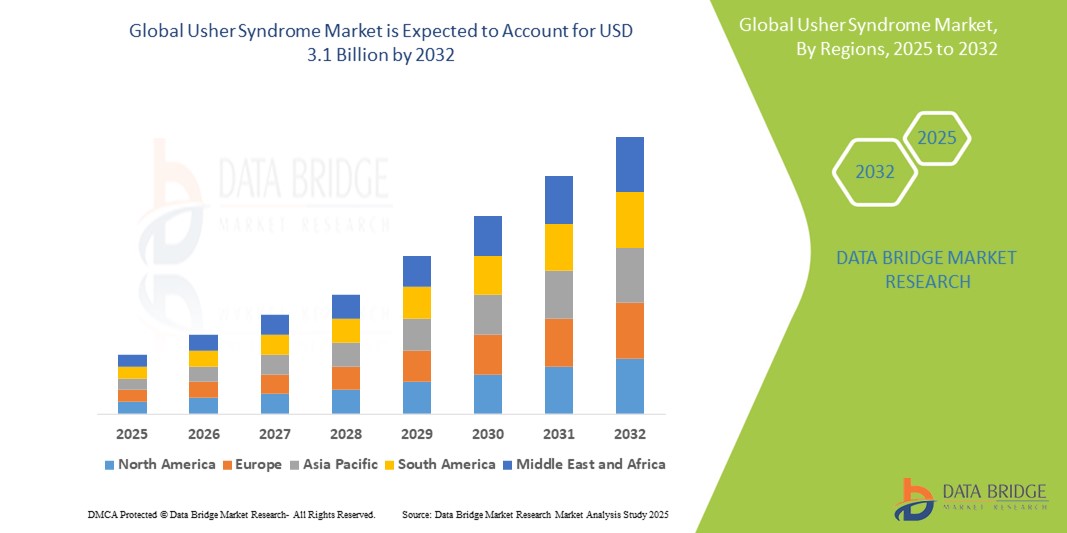
- The Global Usher Syndrome Market size was valued at USD 2.23 billion in 2024 and is expected to reach USD 3.1 billion by 2032, at a CAGR of 4.2% during the forecast period
- The market growth is primarily driven by the increasing prevalence of genetic disorders, rising awareness regarding early diagnosis and treatment options, and the advancement in diagnostic technologies such as electroretinogram, optical coherence tomography, and genetic testing
- Additionally, growing investments in rare disease research, expanding availability of therapies and assistive devices, and enhanced healthcare infrastructure across emerging economies are contributing to market expansion. These combined dynamics are supporting the wider adoption of personalized treatment strategies and comprehensive care models, thereby driving steady growth in the Usher syndrome market
Usher Syndrome Market Analysis
- Usher syndrome, a rare genetic disorder affecting both hearing and vision, is gaining clinical attention due to its progressive nature and the lifelong impact it has on patients. Diagnostic advancements such as genetic testing, electroretinogram (ERG), and optical coherence tomography (OCT) are playing a crucial role in early detection and precision-based treatment planning, enabling better long-term outcomes.
- The rising demand for comprehensive diagnostic tools and personalized treatment approaches is primarily driven by increased awareness of rare diseases, government support for genetic research, and advancements in audiology and vision care technologies. Additionally, assistive devices and emerging gene therapies are enhancing patient quality of life and supporting market growth.
- North America dominates the Usher syndrome market with the largest revenue share of over 40.0% in 2025, supported by early adoption of advanced diagnostic technologies, robust research funding, and the presence of leading biotech and academic institutions focused on rare disease management.
- The Asia-Pacific Usher syndrome market is projected to grow at the fastest CAGR of over 6.2% in 2025, driven by rising healthcare expenditure, urbanization, and growing awareness of genetic diseases across countries like China, Japan, and India.
- The Genetic Testing segment is expected to dominate the diagnostic category with the largest market revenue share of approximately 35.6% in 2025, owing to its critical role in confirming Usher syndrome subtypes and guiding personalized treatment strategies. Increasing availability of advanced sequencing technologies, reduced cost of genetic panels, and rising awareness around early detection have contributed significantly to its dominance
Report Scope and Usher Syndrome Market Segmentation
|
Attributes |
Usher Syndrome Key Market Insights |
|
Segments Covered |
|
|
Countries Covered |
North America
Europe
Asia-Pacific
Middle East and Africa
South America
|
|
Key Market Players |
|
|
Market Opportunities |
|
|
Value Added Data Infosets |
In addition to the insights on market scenarios such as market value, growth rate, segmentation, geographical coverage, and major players, the market reports curated by the Data Bridge Market Research also include in-depth expert analysis, pricing analysis, brand share analysis, consumer survey, demography analysis, supply chain analysis, value chain analysis, raw material/consumables overview, vendor selection criteria, PESTLE Analysis, Porter Analysis, and regulatory framework. |
Usher Syndrome Market Trends
“Rising Focus on Gene Therapy and Precision Medicine”
- A significant and emerging trend in the global Usher syndrome market is the increasing focus on gene therapy, RNA-based treatments, and personalized medicine aimed at correcting the genetic mutations responsible for the disorder. This trend is reshaping the treatment landscape, moving away from symptom management toward disease-modifying approaches.
- For instance, MeiraGTx, in collaboration with Janssen (Johnson & Johnson), is actively developing gene therapies targeting USH2A mutations, which are among the most common causes of Usher Syndrome Type 2. Similarly, companies like ProQR Therapeutics are exploring RNA-based interventions to restore functional protein production in affected patients.
- Precision diagnostics—such as genetic testing and advanced imaging modalities like optical coherence tomography (OCT) and electroretinograms (ERG)—are gaining widespread adoption in clinical workflows. These tools allow early subtype identification, guide treatment planning, and enhance patient eligibility for clinical trials.
- The integration of genetic counseling into patient care has become a key aspect of this trend, supporting at-risk families with informed reproductive decisions and lifelong disease planning. Governments and research organizations are increasingly funding newborn genetic screening programs, further driving early intervention and better long-term outcomes.
- As a result, leading healthcare providers and research institutions are investing in biobank collaborations, rare disease registries, and gene delivery platforms, fostering a robust pipeline of investigational therapies. These initiatives are helping to shift Usher syndrome from an underdiagnosed condition to a key target in the rare disease treatment landscape.
Usher Syndrome Market Dynamics
Driver
“Growing Awareness, Diagnostic Advancements, and R&D in Rare Genetic Disorders”
- The rising global awareness of rare genetic disorders, combined with significant advances in diagnostic technologies and expanding research in inherited retinal and hearing conditions, is a major driver of Usher syndrome market growth.
- For instance, initiatives such as the Global Genes Project and Rare Disease Day have contributed to patient advocacy and increased funding for conditions like Usher syndrome. Additionally, organizations like the Foundation Fighting Blindness support ongoing trials for genetic therapies and promote diagnostic access globally.
- Diagnostic improvements—especially genetic sequencing, ERG, and OCT—have enabled early and accurate subtype diagnosis, which is essential for clinical management and eligibility for emerging treatments.
- Furthermore, pharmaceutical and biotech companies are increasingly engaging in collaborative research with academic institutions and rare disease foundations, accelerating the development of therapies targeting the underlying pathophysiology of Usher syndrome.
- The increasing availability of cochlear implants, hearing aids, and low-vision assistive devices, alongside growing healthcare investments in both developed and emerging economies, is contributing to better patient quality of life and market expansion.
Restraint/Challenge
“Lack of Curative Treatment and High Cost of Genetic Testing”
- One of the key challenges in the Usher syndrome market is the absence of a fully curative treatment, with most interventions focused on managing symptoms rather than addressing the root cause. While gene therapy holds promise, most are still in early or mid-stage clinical trials, delaying widespread clinical availability.
- Additionally, the high cost of genetic testing and sequencing technologies remains a barrier to widespread diagnosis, especially in low- and middle-income countries. Limited reimbursement policies and lack of awareness among general practitioners can further delay diagnosis and referral to specialists.
- Despite growing awareness campaigns, Usher syndrome remains underdiagnosed, and many patients are only identified when symptoms become significantly debilitating. This late diagnosis limits the potential benefits of early intervention and genetic counseling.
- As with many rare diseases, limited patient populations can restrict the commercial viability of drug development, resulting in insufficient funding and delayed therapeutic innovation.
- Addressing these challenges will require a multipronged approach—increased investment in R&D, public-private collaborations, broader insurance coverage for genetic testing, and enhanced clinician education to promote early detection and referral.
Usher Syndrome Market Scope
The market is segmented on the basis of diagnosis, treatment, end users, and distribution channel.
• By Diagnosis
On the basis of diagnosis, the Usher syndrome market is segmented into Electroretinogram (ERG), Optical Coherence Tomography (OCT), Videonystagmography, Audiology, Genetic Testing, and Others. The Genetic Testing segment is expected to dominate the diagnostic category with the largest market revenue share of approximately 35.6% in 2025, owing to its critical role in confirming Usher syndrome subtypes and guiding personalized treatment strategies. Increasing availability of advanced sequencing technologies, reduced cost of genetic panels, and rising awareness around early detection have contributed significantly to its dominance.
The Optical Coherence Tomography (OCT) segment is anticipated to witness the fastest growth rate of 5.01% from 2025 to 2032, driven by its non-invasive nature and ability to detect retinal changes in early stages. OCT imaging is increasingly being adopted in ophthalmology clinics and research centers for monitoring disease progression and assessing treatment efficacy.
• By Treatment
On the basis of treatment, the Usher syndrome market is segmented into Devices, Drugs, Therapy, and Others. The Devices segment holds the largest market revenue share in 2025, driven by the widespread use of cochlear implants, hearing aids, and low-vision assistive technologies that significantly improve the quality of life for patients. Technological advances in wearable hearing and visual aids, coupled with supportive insurance policies in developed regions, contribute to this segment’s growth.
The Therapy segment, which includes gene therapy, speech therapy, and behavioral therapy, is expected to grow at the fastest CAGR from 2025 to 2032, as emerging gene and RNA-based interventions gain clinical traction. With ongoing trials and increasing investments from biotech firms, therapy is poised to become a transformative segment in long-term disease management.
• By End Users
On the basis of end users, the market is segmented into Hospitals, Specialty Clinics, and Others. The Hospitals segment accounted for the largest revenue share in 2025, supported by the presence of multidisciplinary care facilities, access to advanced diagnostics, and higher patient footfall for integrated care. Hospitals are often the first point of contact for diagnosis and referral, making them a dominant channel for both testing and treatment initiation.
The Specialty Clinics segment is projected to witness the fastest CAGR during the forecast period, as patients seek personalized care through audiology and ophthalmology-focused centers. These clinics offer targeted services, genetic counseling, and follow-up care, which enhances patient satisfaction and clinical outcomes.
• By Distribution Channel
On the basis of distribution channel, the market is segmented into Hospital Pharmacy, Retail Pharmacy, and Others. The Hospital Pharmacy segment held the largest market share in 2025, primarily due to the centralized dispensing of treatment devices and medications during inpatient or outpatient visits. These pharmacies often coordinate directly with specialists for continuity of care.
The Retail Pharmacy segment is expected to register the fastest growth from 2025 to 2032, driven by growing consumer access to assistive hearing devices, prescription medications, and supplements. Retail channels are expanding to offer diagnostic services and support tools, especially in urban and semi-urban areas, boosting overall accessibility.
Usher Syndrome Market Regional Analysis
- North America dominates the Usher syndrome market with the largest revenue share of over 40.0% in 2024, driven by a high prevalence of diagnosed genetic disorders, advanced healthcare infrastructure, and strong investment in rare disease research.
- Consumers and patients in the region benefit from early access to advanced diagnostic technologies such as genetic testing, optical coherence tomography (OCT), and electroretinogram (ERG), as well as cutting-edge treatment approaches including gene therapies and cochlear implants.
- The widespread adoption of personalized medicine, strong government and private research funding, and growing availability of multidisciplinary specialty clinics further support the market’s growth. The presence of leading biotechnology companies and academic institutions engaged in Usher syndrome research has also positioned North America as a global hub for innovation and clinical advancement in the field.
U.S. Usher Syndrome Market Insight
The U.S. Usher syndrome market captured the largest revenue share of over 78% within North America in 2025, driven by the country’s advanced healthcare infrastructure, active rare disease advocacy networks, and early adoption of precision diagnostics. A strong presence of leading biotech firms, academic research institutions, and government initiatives such as the Rare Diseases Clinical Research Network (RDCRN) further support the development and access to innovative therapies. Additionally, the expansion of genetic screening programs, insurance coverage for genetic testing, and investment in gene therapy research are boosting diagnosis and treatment rates across the U.S.
Europe Usher Syndrome Market Insight
The European Usher syndrome market is projected to grow at a steady CAGR throughout the forecast period, supported by strong regulatory backing for orphan drugs, public health initiatives for genetic disease screening, and increasing awareness around sensory impairments. Countries across the EU are investing in integrated care models that combine audiological and ophthalmological services for earlier diagnosis and long-term disease management. Europe’s emphasis on universal healthcare, patient-centric research collaborations, and cross-border clinical trials is fostering steady market growth.
U.K. Usher Syndrome Market Insight
The U.K. Usher syndrome market is anticipated to expand at a noteworthy CAGR, propelled by the National Health Service’s (NHS) support for genomic medicine and rare disease programs. Increased funding through initiatives such as Genomics England has enabled wider access to genetic testing and early diagnosis. Rising patient advocacy, improved clinical training, and the development of rare disease centers are also contributing to improved management and referral pathways for individuals with Usher syndrome in the U.K.
Germany Usher Syndrome Market Insight
The German Usher syndrome market is expected to experience considerable growth during the forecast period, backed by the country’s advanced healthcare system, commitment to rare disease research, and a strong network of specialized care centers. Germany's robust biotech ecosystem is promoting collaborative innovation in gene therapy and diagnostics. The government’s focus on digital health integration, coupled with public insurance schemes that support access to genetic services and devices, is further boosting market growth.
Asia-Pacific Usher Syndrome Market Insight
The Asia-Pacific Usher syndrome market is projected to grow at the fastest CAGR of over 6.2% in 2025, driven by rising healthcare expenditure, urbanization, and growing awareness of genetic diseases across countries like China, Japan, and India. Government support for newborn screening programs, increased availability of audiology and ophthalmology services, and efforts to improve access to assistive technologies are contributing to market expansion. The region also benefits from international collaborations that promote research and clinical trials focused on rare inherited disorders.
Japan Usher Syndrome Market Insight
The Japan Usher syndrome market is gaining momentum owing to the country’s strong emphasis on genetic research, aging population, and national policies that support early disease detection and assistive care. Japan’s integration of genomic testing into national healthcare, along with a tech-savvy medical ecosystem, is fostering the development of targeted interventions and telemedicine support. The presence of specialized centers for inherited retinal diseases and sensory impairments is also enhancing patient outcomes.
China Usher Syndrome Market Insight
The China Usher syndrome market accounted for the largest market revenue share in Asia-Pacific in 2025, driven by rapid healthcare modernization, government-backed rare disease initiatives, and an expanding middle-class population seeking access to specialized care. China’s participation in international clinical trials, along with the development of domestic gene therapy startups, is enhancing the treatment landscape. The growing integration of genetic screening in urban hospitals and increased availability of affordable hearing and vision aids are contributing to early diagnosis and broader treatment adoption.
Usher Syndrome Market Share
The Usher Syndrome industry is primarily led by well-established companies, including:
- Audina Hearing Instruments Inc. (U.S.)
- Starkey (U.S.)
- Zounds Hearing (U.S.)
- Sivantos Pte. Ltd (Singapore)
- Century Hearing Aids (U.S.)
- MeiraGTx (U.K.)
- Johnson & Johnson Services, Inc. (U.S.)
- Ionis Pharmaceuticals, Inc. (U.S.)
- Amgen Inc. (U.S.)
- Sanofi (France)

- Interactive Data Analysis Dashboard
- Company Analysis Dashboard for high growth potential opportunities
- Research Analyst Access for customization & queries
- Competitor Analysis with Interactive dashboard
- Latest News, Updates & Trend analysis
- Harness the Power of Benchmark Analysis for Comprehensive Competitor Tracking
Data collection and base year analysis are done using data collection modules with large sample sizes. The stage includes obtaining market information or related data through various sources and strategies. It includes examining and planning all the data acquired from the past in advance. It likewise envelops the examination of information inconsistencies seen across different information sources. The market data is analysed and estimated using market statistical and coherent models. Also, market share analysis and key trend analysis are the major success factors in the market report. To know more, please request an analyst call or drop down your inquiry.
The key research methodology used by DBMR research team is data triangulation which involves data mining, analysis of the impact of data variables on the market and primary (industry expert) validation. Data models include Vendor Positioning Grid, Market Time Line Analysis, Market Overview and Guide, Company Positioning Grid, Patent Analysis, Pricing Analysis, Company Market Share Analysis, Standards of Measurement, Global versus Regional and Vendor Share Analysis. To know more about the research methodology, drop in an inquiry to speak to our industry experts.
Data Bridge Market Research is a leader in advanced formative research. We take pride in servicing our existing and new customers with data and analysis that match and suits their goal. The report can be customized to include price trend analysis of target brands understanding the market for additional countries (ask for the list of countries), clinical trial results data, literature review, refurbished market and product base analysis. Market analysis of target competitors can be analyzed from technology-based analysis to market portfolio strategies. We can add as many competitors that you require data about in the format and data style you are looking for. Our team of analysts can also provide you data in crude raw excel files pivot tables (Fact book) or can assist you in creating presentations from the data sets available in the report.












