Ultraviolet Disinfection Equipment Market Size
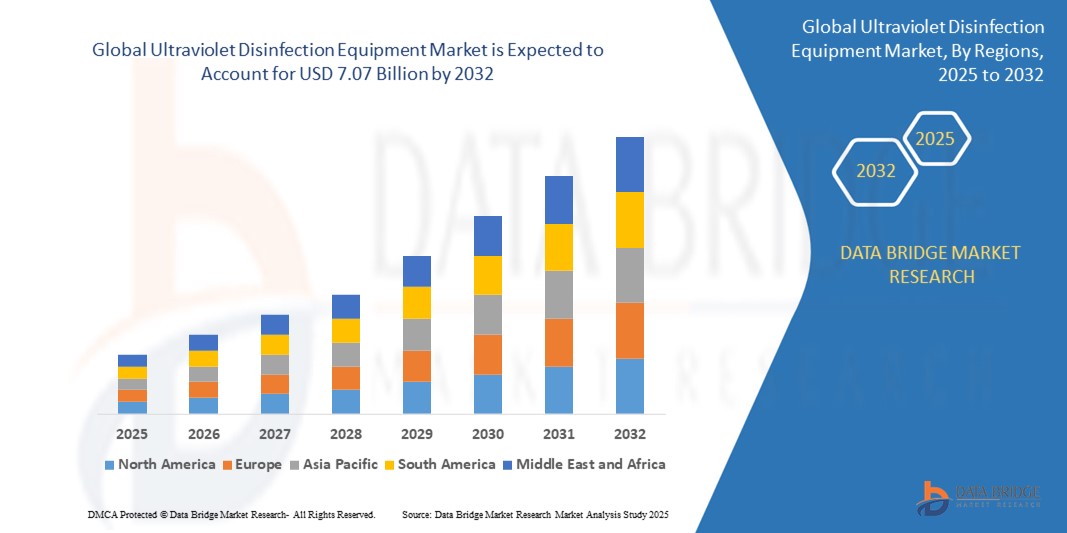
- The global ultraviolet disinfection equipment market size was valued at USD 2.49 billion in 2024 and is expected to reach USD 7.07 billion by 2032, at a CAGR of 13.95% during the forecast period
- The market growth is largely fueled by increasing global awareness of hygiene and sanitation, along with the rising prevalence of waterborne and airborne diseases, prompting a surge in demand for chemical-free disinfection solutions across residential, commercial, and municipal applications
- Furthermore, stringent environmental regulations and growing investments in water and wastewater treatment infrastructure are positioning ultraviolet disinfection equipment as a sustainable and effective sterilization method. These converging factors are accelerating the adoption of UV technology, thereby significantly boosting the industry's growth
Ultraviolet Disinfection Equipment Market Analysis
- Ultraviolet disinfection equipment, utilizing UV-C light to inactivate harmful microorganisms, is becoming an increasingly essential solution for water, air, and surface sterilization across residential, commercial, industrial, and municipal applications due to its high efficacy, eco-friendliness, and chemical-free operation
- The escalating demand for UV disinfection systems is primarily fueled by rising health and safety concerns, growing awareness of water and airborne pathogens, and the tightening of regulatory standards for sanitation, making UV technology a preferred choice for effective and sustainable disinfection
- North America dominated the ultraviolet disinfection equipment market with a share of 32.7% in 2024, due to rising awareness of waterborne and airborne pathogens and stringent government regulations promoting advanced disinfection technologies
- Asia-Pacific is expected to be the fastest growing region in the ultraviolet disinfection equipment market during the forecast period due to rapid urbanization, industrialization, and increasing investments in water and air quality improvement across China, India, Japan, and Southeast Asia
- Waste water treatment dominated the market with a market share of 48.4% in 2024, due to rising demand for safe drinking water and stringent government regulations to prevent waterborne diseases
Report Scope and Ultraviolet Disinfection Equipment Market Segmentation
|
Attributes |
Ultraviolet Disinfection Equipment Key Market Insights |
|
Segments Covered |
|
|
Countries Covered |
North America
Europe
Asia-Pacific
Middle East and Africa
South America
|
|
Key Market Players |
|
|
Market Opportunities |
|
|
Value Added Data Infosets |
In addition to the market insights such as market value, growth rate, market segments, geographical coverage, market players, and market scenario, the market report curated by the Data Bridge Market Research team includes in-depth expert analysis, import/export analysis, pricing analysis, production consumption analysis, and pestle analysis. |
Ultraviolet Disinfection Equipment Market Trends
“Increasing Concerns about Water and Air Quality”
- A significant and accelerating trend in the global ultraviolet disinfection equipment market is the heightened concern over water and air quality, which is prompting increased adoption of UV-based sterilization technologies across various sectors including municipal, healthcare, industrial, and residential. This shift is driven by the need for reliable, chemical-free disinfection methods amid rising awareness of pathogens, pollution, and environmental sustainability
- For instance, Xylem Inc. has expanded its UV portfolio to support municipal water utilities facing stricter contamination regulations, while Trojan Technologies offers UV systems tailored for wastewater and drinking water treatment with minimal environmental impact
- Major players such as Halma plc and Atlantic Ultraviolet Corporation have developed UV-C air disinfection systems that are increasingly deployed in hospitals, schools, and commercial buildings to ensure clean indoor environments by neutralizing airborne viruses and bacteria. For example, Halma’s UV products are now widely used in HVAC systems to address growing air quality concerns, particularly post-COVID
- UV disinfection is also gaining traction in household applications, with companies such as Signify (formerly Philips Lighting) launching UV-C lamps and air purifiers designed for residential use. These products are aimed at consumers seeking extra protection from airborne and surface pathogens within their homes
- This growing concern around health, safety, and environmental sustainability is reshaping industry standards and driving demand for UV equipment that can effectively meet sanitation needs without harmful byproducts
- Consequently, the ultraviolet disinfection equipment market is witnessing rapid technological advancements and product diversification, as companies compete to deliver efficient, eco-friendly, and scalable disinfection solutions that cater to both mass consumers and institutional clients alike
Ultraviolet Disinfection Equipment Market Dynamics
Driver
“Rising Awareness and Adoption of UV Technology”
- The rising awareness of hygiene, health safety, and environmental sustainability, along with the growing preference for chemical-free disinfection, is a significant driver for the expanding demand for ultraviolet disinfection equipment
- For instance, in March 2024, Signify launched an advanced line of UV-C disinfection systems for surface and air sterilization in public and residential spaces, targeting growing consumer interest in safe, eco-conscious disinfection methods. Similarly, Trojan Technologies introduced enhanced municipal UV water treatment systems designed to meet stricter global regulatory standards
- As consumers and industries become more informed about the harmful effects of pathogens and the limitations of chemical disinfectants, UV technology is gaining traction as a proven, non-toxic, and highly effective solution for air, water, and surface purification
- Furthermore, the demand for sustainable solutions across industries is fueling investment in UV disinfection systems, particularly in healthcare facilities, municipal water treatment plants, and HVAC-integrated building management systems
- The appeal of low-maintenance, automated UV equipment that offers immediate microbial inactivation without generating harmful byproducts is accelerating its adoption. The expansion of public health initiatives and green building certifications is also contributing to the widespread implementation of UV systems across residential, commercial, and municipal settings
Restraint/Challenge
“Limited UV-C Effectiveness in Turbid or Shaded Conditions”
- Limited UV-C effectiveness in turbid or shaded conditions poses a significant challenge to the broader adoption of ultraviolet disinfection equipment. UV-C light requires direct exposure to pathogens to effectively neutralize them, and its performance can be severely reduced in environments where suspended particles or shadows obstruct the light path, particularly in water or air treatment applications
- For instance, in water disinfection, the presence of high turbidity can shield microorganisms from UV exposure, reducing treatment efficacy. Companies such as Trojan Technologies and Xylem Inc. have developed systems with integrated pre-filtration to improve UV performance, but these added components increase system complexity and cost
- Addressing this challenge requires a combination of better system design, real-time water quality monitoring, and the integration of multi-stage treatment solutions. However, the need for consistent water clarity, especially in decentralized or resource-limited settings, continues to be a technical and economic barrier
- The performance limitations of UV systems in non-ideal conditions also raise concerns for users expecting universal effectiveness. Without proper education and guidance, users may overestimate the system’s capabilities, leading to potential health risks
- Overcoming these obstacles will depend on the continued innovation of more resilient UV technologies, broader awareness campaigns about system requirements, and tailored solutions for low-resource settings to ensure consistent disinfection across diverse environmental conditions
Ultraviolet Disinfection Equipment Market Scope
The market is segmented on the basis of component, application, marketing channel, and end-user vertical.
- By Component
On the basis of component, the ultraviolet disinfection equipment market is segmented into UV lamps, quartz sleeve, reactor chamber, controller unit, and others. The UV lamps segment dominates the largest market revenue share of 37.7% in 2024, driven by its essential function as the primary source of germicidal UV radiation that effectively inactivates microorganisms. Continuous technological advancements have improved the efficiency, lifespan, and energy consumption of UV lamps, making them indispensable in various disinfection applications across industries.
The quartz sleeve segment is expected to witness the fastest growth rate from 2025 to 2032, fueled by its critical role in protecting UV lamps from water impurities and chemical corrosion while maintaining high UV light transmission. This protection ensures optimal performance and durability of the equipment, increasing its adoption in water and air disinfection systems.
- By Application
On the basis of application, the ultraviolet disinfection equipment market is segmented into water treatment, wastewater treatment, air treatment, food and beverage disinfection, and surface disinfection. The wastewater treatment segment accounted for the largest market revenue share of 48.4% in 2024, supported by rising demand for safe drinking water and stringent government regulations to prevent waterborne diseases.
Wastewater treatment is expected to witness the fastest CAGR from 2025 to 2032, driven by increasing investments in industrial and municipal effluent treatment plants aimed at reducing environmental pollution and enhancing public health safety. The food and beverage disinfection segment is also growing steadily due to rising consumer preference for chemical-free sterilization methods and increased use of UV technology to ensure hygiene during food processing and packaging.
- By Marketing Channel
On the basis of marketing channel, the ultraviolet disinfection equipment market is segmented into direct marketing and indirect marketing. Direct marketing held the largest market revenue share in 2024, favored by manufacturers’ focus on establishing close relationships with large institutional clients and providing tailored solutions, technical support, and maintenance services.
Indirect marketing is anticipated to witness the fastest growth from 2025 to 2032, driven by the expanding presence of distributors and dealers in residential and small commercial markets, especially in emerging economies where third-party channels improve product accessibility and customer reach.
- By End-user Vertical
On the basis of end-user vertical, the ultraviolet disinfection equipment market is segmented into residential, commercial, industrial, and municipal. The residential segment dominated the largest market revenue share in 2024, propelled by increasing consumer awareness regarding water and air quality, along with the growing adoption of compact and user-friendly UV disinfection devices for household use.
The commercial segment is projected to witness the fastest CAGR from 2025 to 2032, driven by rising implementation of UV disinfection systems in offices, hotels, healthcare facilities, and educational institutions seeking to comply with hygiene standards and enhance occupant safety. Municipal applications are growing steadily due to government initiatives focused on upgrading urban water and wastewater infrastructure to improve sanitation and public health.
Ultraviolet Disinfection Equipment Market Regional Analysis
- North America dominated the ultraviolet disinfection equipment market with the largest revenue share of 32.7% in 2024, driven by rising awareness of waterborne and airborne pathogens and stringent government regulations promoting advanced disinfection technologies
- Consumers and industries in the region highly prioritize effective, chemical-free sterilization solutions to ensure water safety and indoor air quality in residential, commercial, and municipal sectors
- This widespread adoption is further supported by strong infrastructure development, high environmental standards, and significant investments in upgrading water treatment and healthcare facilities, establishing ultraviolet disinfection as a preferred technology for various applications
U.S. Ultraviolet Disinfection Equipment Market Insight
U.S. ultraviolet disinfection equipment market captured the largest revenue share in North America in 2024, fueled by government mandates on water quality, growing public health concerns, and increased adoption in municipal water and wastewater treatment plants. The healthcare sector’s rising focus on air disinfection and sterilization further propels demand. In addition, technological innovations and the integration of UV systems with smart monitoring enhance market growth. Consumer preference for safe drinking water and clean indoor environments continues to drive residential adoption.
Europe Ultraviolet Disinfection Equipment Market Insight
Europe ultraviolet disinfection equipment market is projected to expand at a robust CAGR throughout the forecast period, driven by strict regulatory frameworks and increased environmental awareness. Rising urbanization and the need for sustainable water and air treatment solutions boost demand for UV technology. The region sees significant deployment in municipal wastewater treatment, industrial effluent management, and food & beverage sterilization sectors, supported by government incentives promoting chemical-free disinfection alternatives.
U.K. Ultraviolet Disinfection Equipment Market Insight
U.K. ultraviolet disinfection equipment market is expected to grow steadily, driven by growing government initiatives for clean water infrastructure and rising adoption in commercial and residential sectors. Concerns over waterborne diseases and indoor air quality motivate end users to adopt UV disinfection. The strong presence of water utilities and industrial sectors also fuels demand, alongside increased investment in upgrading existing water treatment facilities.
Germany Ultraviolet Disinfection Equipment Market Insight
Germany market is forecast to expand at a significant CAGR, supported by rising demand for eco-friendly water and air treatment solutions and advancements in UV technology. Germany’s emphasis on sustainability and environmental protection encourages the adoption of UV disinfection in residential, commercial, and municipal sectors. Integration with digital monitoring systems and growing industrial hygiene standards contribute to the market’s growth.
Asia-Pacific Ultraviolet Disinfection Equipment Market Insight
The Asia-Pacific ultraviolet disinfection equipment market is poised to grow at the fastest CAGR from 2025 to 2032, driven by rapid urbanization, industrialization, and increasing investments in water and air quality improvement across China, India, Japan, and Southeast Asia. Government initiatives promoting smart city projects and environmental safety amplify demand. The region’s expanding manufacturing capabilities and cost-effective production further support market penetration, making UV disinfection increasingly accessible to residential and commercial users.
Japan Ultraviolet Disinfection Equipment Market Insight
The Japan market is gaining momentum due to the country’s focus on advanced technology adoption, stringent hygiene standards, and rapid urban development. The demand for UV disinfection in healthcare, food processing, and residential air purification is growing steadily. Japan’s aging population and heightened health awareness encourage adoption of user-friendly, efficient UV disinfection systems in both private and public sectors.
China Ultraviolet Disinfection Equipment Market Insight
China accounted for the largest market revenue share in the Asia-Pacific region in 2024, driven by rising government investments in water infrastructure, rapid urban growth, and growing environmental regulations. The country’s push towards smart cities and clean technology adoption propels demand across municipal water treatment, industrial wastewater management, and residential disinfection segments. Domestic manufacturing capacity and increasing consumer awareness contribute significantly to the market expansion.
Ultraviolet Disinfection Equipment Market Share
The ultraviolet disinfection equipment industry is primarily led by well-established companies, including:
- Aquionics (U.S.)
- Atlantic Ultraviolet Corporation (U.S.)
- First Light Technologies (Canada)
- Evoqua Water Technologies LLC (U.S.)
- Greenway Technologies (U.S.)
- Xenex (U.S.)
- Advanced UV, Inc. (U.S.)
- ENAQUA (Germany)
- Signify Holding (Netherlands)
- American Ultraviolet (U.S.)
- Severn Trent Services (U.S.)
- Calgon Carbon Corporation (U.S.)
- Trojan Technologies (Canada)
- Xylem (U.S.)
- Atlantium Technologies Ltd. (Israel)
- STERIPEN BY HYDRO-PHOTON INC. (U.S.)
- STERIS plc. (U.K.)
- uvdi.com/international (U.S.)
- Evergreen UV and ABIOTEC (Germany)
- S.I.T.A. srl (Italy)
Latest Developments in Global Ultraviolet Disinfection Equipment Market
- In September 2024, Industrie De Nora, an Italian multinational listed on Euronext Milan, announced major enhancements to its Sentinel UV disinfection system, aimed at significantly lowering operational costs and improving overall system efficiency. With over 30 years of UV expertise, the company’s new electronic ballast design offers the most compact footprint available and enables lamp turndown to 30%, delivering substantial energy savings. This innovation is expected to set a new industry benchmark for advanced contaminant treatment, strengthening De Nora’s competitive position in the ultraviolet disinfection equipment market and appealing to utilities seeking both performance and sustainability
- In January 2024, during Arab Health 2024, Ultraviolet Devices, Inc. (UVDI) unveiled the UVDI-GO UV LED Surface Sanitizer and the next-generation UVDI-360 Room Sanitizer featuring UV Smart Connect cloud integration. These no-touch disinfection innovations are designed to simplify and accelerate surface sanitization in healthcare environments. By enhancing both ease of use and data connectivity, UVDI is reinforcing its leadership in the UV disinfection market, particularly in healthcare, where demand for efficient, connected, and high-performance surface disinfection solutions continues to rise
- In April 2022, Rossari Biotech Limited introduced Dr. Nanoxa, an innovative antimicrobial surface coating incorporating nanotechnology. This coating offers bio-security by protecting against residual infections caused by bacteria and viruses, including SARS-CoV, for a duration of 30 days
- In March 2022, WellAir launched an advanced air cleaning device in Europe that has been independently tested to be highly effective, with a 99.9% efficiency against airborne pathogens. This launch signifies WellAir's commitment to improving indoor air quality, a critical focus area in today's environment

- Interactive Data Analysis Dashboard
- Company Analysis Dashboard for high growth potential opportunities
- Research Analyst Access for customization & queries
- Competitor Analysis with Interactive dashboard
- Latest News, Updates & Trend analysis
- Harness the Power of Benchmark Analysis for Comprehensive Competitor Tracking
Data collection and base year analysis are done using data collection modules with large sample sizes. The stage includes obtaining market information or related data through various sources and strategies. It includes examining and planning all the data acquired from the past in advance. It likewise envelops the examination of information inconsistencies seen across different information sources. The market data is analysed and estimated using market statistical and coherent models. Also, market share analysis and key trend analysis are the major success factors in the market report. To know more, please request an analyst call or drop down your inquiry.
The key research methodology used by DBMR research team is data triangulation which involves data mining, analysis of the impact of data variables on the market and primary (industry expert) validation. Data models include Vendor Positioning Grid, Market Time Line Analysis, Market Overview and Guide, Company Positioning Grid, Patent Analysis, Pricing Analysis, Company Market Share Analysis, Standards of Measurement, Global versus Regional and Vendor Share Analysis. To know more about the research methodology, drop in an inquiry to speak to our industry experts.
Data Bridge Market Research is a leader in advanced formative research. We take pride in servicing our existing and new customers with data and analysis that match and suits their goal. The report can be customized to include price trend analysis of target brands understanding the market for additional countries (ask for the list of countries), clinical trial results data, literature review, refurbished market and product base analysis. Market analysis of target competitors can be analyzed from technology-based analysis to market portfolio strategies. We can add as many competitors that you require data about in the format and data style you are looking for. Our team of analysts can also provide you data in crude raw excel files pivot tables (Fact book) or can assist you in creating presentations from the data sets available in the report.