


Vaginal Discharge Syndrome Market Size
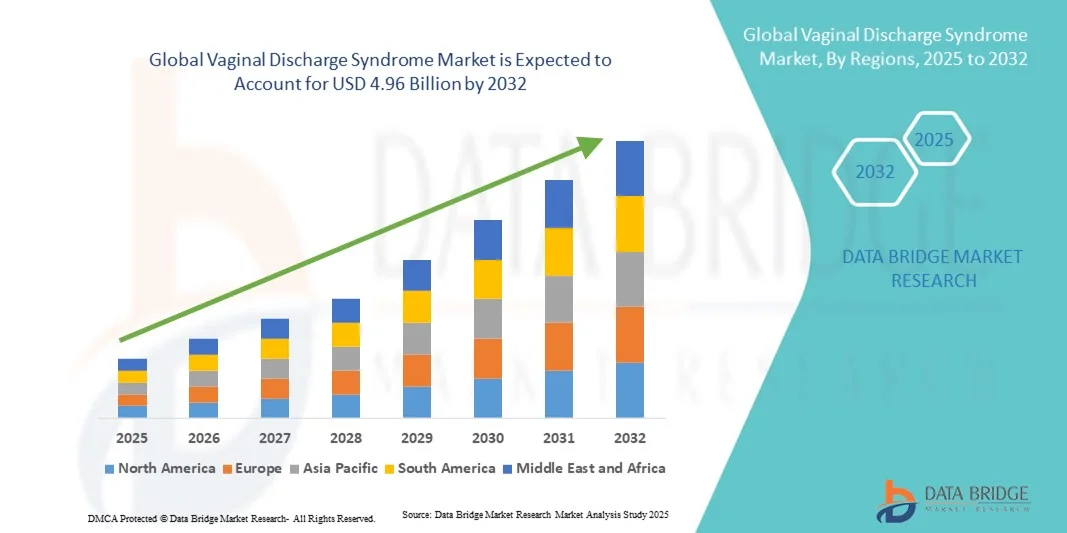
- The global vaginal discharge syndrome market size was valued at USD 3.14 billion in 2024 and is expected to reach USD 4.96 billion by 2032, at a CAGR of 5.90% during the forecast period
- The market growth is largely fueled by the rising prevalence of sexually transmitted infections (STIs), bacterial vaginosis, and fungal infections, alongside growing awareness about women’s reproductive health and access to advanced diagnostic methods
- Furthermore, the expansion of healthcare infrastructure, increasing availability of over-the-counter treatments, and ongoing innovation in rapid diagnostic kits are driving adoption of effective management solutions. These converging factors are accelerating the uptake of diagnostic and therapeutic approaches for vaginal discharge syndrome, thereby significantly boosting the industry’s growth
Vaginal Discharge Syndrome Market Analysis
- Vaginal discharge syndrome, characterized by abnormal discharge ranging from white, yellow, green, to brown or bloody, is a key reproductive health concern, driving demand for timely diagnosis and effective treatment across both developed and emerging healthcare systems.
- The escalating demand for effective management is primarily fueled by the rising incidence of bacterial vaginosis, trichomoniasis, and candidiasis, increasing awareness of women’s health, and broader access to advanced diagnostic kits and prescription as well as over-the-counter therapies
- North America dominated the vaginal discharge syndrome market with the largest revenue share of 36.9% in 2024, supported by robust healthcare infrastructure, higher diagnosis rates, and the presence of leading diagnostic and pharmaceutical companies, with the U.S. showing substantial growth through government-backed screening programs and innovative rapid tests
- Asia-Pacific is expected to be the fastest growing region in the vaginal discharge syndrome market during the forecast period due to increasing STI prevention initiatives, improving healthcare access in rural areas, and growing awareness campaigns targeting reproductive health
- Antibiotics segment dominated the vaginal discharge syndrome market with a market share of 42.6% in 2024, driven by their extensive use in treating bacterial infections and their role as the most prescribed therapeutic option across hospitals, specialty clinics, and pharmacies
Report Scope and Vaginal Discharge Syndrome Market Segmentation
|
Attributes |
Vaginal Discharge Syndrome Key Market Insights |
|
Segments Covered |
|
|
Countries Covered |
North America
Europe
Asia-Pacific
Middle East and Africa
South America
|
|
Key Market Players |
|
|
Market Opportunities |
|
|
Value Added Data Infosets |
In addition to the insights on market scenarios such as market value, growth rate, segmentation, geographical coverage, and major players, the market reports curated by the Data Bridge Market Research also include in-depth expert analysis, pricing analysis, brand share analysis, consumer survey, demography analysis, supply chain analysis, value chain analysis, raw material/consumables overview, vendor selection criteria, PESTLE Analysis, Porter Analysis, and regulatory framework. |
Vaginal Discharge Syndrome Market Trends
Rising Demand for Rapid Diagnostic Kits and Self-Care Solutions
- A significant and accelerating trend in the global vaginal discharge syndrome market is the increasing adoption of rapid diagnostic kits and over-the-counter self-care treatments, enabling quicker detection and management of infections compared to traditional lab testing
- For instance, Abbott’s ID NOW platform offers rapid molecular diagnostic testing, helping clinicians detect common pathogens associated with vaginal discharge syndrome within minutes. Similarly, kits by bioMérieux provide point-of-care results for bacterial vaginosis and trichomoniasis
- The integration of advanced molecular diagnostics into clinical settings improves accuracy in identifying underlying causes such as bacterial vaginosis, candidiasis, or trichomoniasis, while empowering healthcare providers to recommend targeted therapies
- Furthermore, self-testing kits and mobile health applications allow women to monitor vaginal health at home, reducing stigma and encouraging earlier intervention. These innovations are fostering patient-centric care and expanding treatment access in underserved areas
- The seamless availability of treatments across hospital pharmacies, retail outlets, and online platforms facilitates faster adoption of both prescription and OTC products, especially in regions with limited healthcare infrastructure
- This trend toward rapid, accessible, and user-friendly solutions is fundamentally reshaping expectations for women’s reproductive health management. Consequently, companies such as Roche and Hologic are developing advanced diagnostic kits and treatment support tools tailored for both clinical and self-care settings
- The demand for convenient, accurate, and stigma-free diagnostic and treatment options is growing rapidly across both developed and emerging markets, as women increasingly prioritize proactive reproductive health management
Vaginal Discharge Syndrome Market Dynamics
Driver
Growing Burden of Infections and Expanding Awareness Campaigns
- The increasing prevalence of sexually transmitted infections (STIs), bacterial vaginosis, and recurrent candidiasis is a significant driver for the growing demand for vaginal discharge syndrome diagnostics and treatments
- For instance, in March 2024, the WHO reinforced its global STI awareness campaigns, encouraging early diagnosis and treatment adoption, while several governments launched programs to improve women’s reproductive healthcare. Such initiatives are expected to propel market growth during the forecast period
- As awareness campaigns continue to educate women about the importance of early detection and treatment, more patients are seeking consultations and purchasing therapies, fueling higher diagnosis and treatment rates globally
- Furthermore, the rising inclusion of women’s health in public health priorities, coupled with stronger investments in diagnostic innovation, is making vaginal discharge management more accessible and reliable
- The convenience of easily available antifungal medications, antibiotics, and diagnostic kits through hospitals, specialty clinics, and online pharmacies is propelling adoption across various patient segments. In addition, the increasing availability of awareness-driven screening camps contributes to early market expansion
Restraint/Challenge
Stigma, Misdiagnosis, and Access Barriers
- Social stigma associated with reproductive tract infections and vaginal health often prevents women from seeking timely care, posing a significant challenge to the growth of the vaginal discharge syndrome market
- For instance, studies published in 2023 highlighted that nearly 40% of women in low-resource settings avoid seeking treatment due to embarrassment, leading to worsening symptoms and delayed medical intervention
- Diagnostic challenges also persist, as overlapping symptoms of bacterial, fungal, or parasitic infections can lead to misdiagnosis or inappropriate treatments, reducing the overall effectiveness of existing therapies
- Furthermore, limited access to healthcare infrastructure, particularly in rural and underserved regions, restricts the availability of advanced diagnostic tools and standardized treatments, slowing down adoption
- The relatively high cost of molecular diagnostics compared to traditional methods, along with a lack of awareness about affordable over-the-counter options, can be barriers to early treatment adoption among low-income populations. While rapid diagnostic kits are becoming more affordable, cost and stigma continue to hinder broad usage
- Overcoming these challenges through stronger awareness campaigns, subsidized diagnostic programs, and community education initiatives will be vital for ensuring sustained growth and equitable access to vaginal discharge syndrome management worldwide
Vaginal Discharge Syndrome Market Scope
The market is segmented on the basis of type, treatment, form, end-users, and distribution channel.
- By Type
On the basis of type, the vaginal discharge syndrome market is segmented into white, clear and watery, clear and stretchy, brown and bloody, and yellow and green. The White discharge segment dominated the market with the largest revenue share in 2024, driven by its high prevalence in bacterial vaginosis and yeast infections. White discharge is frequently reported in clinical consultations, making it a key focus for diagnostic testing and treatment development. Healthcare providers prioritize solutions for this type due to high patient volume and consistent demand for antifungal and antibiotic therapies. Awareness campaigns and educational programs further reinforce early detection and treatment adoption. Pharmaceutical companies also focus on developing combination therapies and formulations to address this common type effectively. The segment benefits from a well-established supply chain across hospitals, retail, and online pharmacies.
The Clear and Stretchy discharge segment is expected to witness the fastest growth from 2025 to 2032, driven by increasing awareness about ovulatory and hormonal-related discharges. Clear and Stretchy discharge, often associated with normal physiological changes or mild infections, is increasingly monitored through self-care diagnostic kits and telemedicine consultations. Rising adoption of home-based care solutions, particularly among urban populations, is boosting segment growth. Educational initiatives emphasizing reproductive health further increase adoption. Pharmaceutical innovation in mild infection management also supports market expansion. The segment benefits from growing consumer preference for non-invasive monitoring and discreet care options.
- By Treatment
On the basis of treatment, the vaginal discharge syndrome market is segmented into antifungal medications and antibiotics. The Antibiotics segment dominated the market with the largest share of 42.6% in 2024, driven by the high incidence of bacterial infections such as bacterial vaginosis and trichomoniasis. Antibiotics are the first-line therapy in most healthcare systems due to their effectiveness and well-established treatment protocols. Hospitals and specialty clinics rely heavily on antibiotics to ensure accurate and rapid infection management. Supply chains through hospital and retail pharmacies facilitate steady availability. Government health programs promoting STI management also boost adoption. Physicians’ trust in antibiotics as a safe and effective treatment further strengthens the segment.
The Antifungal Medications segment is anticipated to witness the fastest growth from 2025 to 2032, driven by rising cases of candidiasis and increasing OTC treatment adoption. Creams, gels, and tablets offer localized relief and systemic management options, catering to diverse patient needs. Rising awareness about self-care and home-based treatment solutions accelerates growth. Product innovations, including combination therapies and faster-acting formulations, further support adoption. The segment also benefits from easier availability through online pharmacies. Consumer preference for non-invasive topical treatments contributes to its rapid expansion.
- By Form
On the basis of form, the vaginal discharge syndrome market is segmented into Tablet, Creams, Gel, and Others. The Tablet segment dominated in 2024 due to its systemic effectiveness and ease of administration for both bacterial and fungal infections. Tablets ensure consistent dosing and are widely recommended in hospitals, specialty clinics, and pharmacies. Clinical guidelines support tablet use as the primary therapy for moderate to severe infections. Awareness campaigns and physician trust in oral therapies drive patient adherence. Tablets are also preferred for cases requiring combination therapy. The segment benefits from strong distribution through retail and hospital channels.
The Creams segment is expected to witness the fastest growth from 2025 to 2032, driven by patient preference for localized treatment with minimal systemic effects. Creams are widely used for candidiasis and mild infections, offering faster relief at the site of infection. Accessibility through retail and online pharmacies enhances adoption. Innovations such as soothing, combination, and fast-acting formulations contribute to market growth. Patient awareness and education on topical care reinforce segment expansion. The increasing popularity of self-care solutions in urban populations further accelerates adoption.
- By End-Users
On the basis of end-users, the vaginal discharge syndrome market is segmented into dermatology clinics, specialty clinics, hospitals, ambulatory surgical centres, and others. The Hospitals segment dominated the market in 2024 due to high patient footfall and comprehensive diagnostic facilities. Hospitals provide both antibiotics and antifungal treatments under standardized care protocols. Awareness programs and counseling in hospitals drive early diagnosis and adherence. Hospitals also act as primary suppliers through their pharmacies. They play a key role in training clinicians for effective infection management. Government programs and insurance coverage further strengthen hospital-based treatment adoption.
The Specialty Clinics segment is expected to witness the fastest growth from 2025 to 2032, driven by rising awareness of women’s reproductive health and access to specialized care. Specialty clinics provide rapid diagnostics, targeted treatments, and patient counseling. Urban populations increasingly prefer clinics for privacy, convenience, and expert care. Clinics also support home-based care solutions and follow-up monitoring. Telemedicine integration and OTC treatment access further enhance adoption. Marketing and awareness initiatives by specialty clinics drive patient engagement and loyalty.
- By Distribution Channel
On the basis of distribution channel, the vaginal discharge syndrome market is segmented into direct tender, hospital pharmacy, retail pharmacy, online pharmacy, and others. The Hospital Pharmacy segment dominated in 2024 due to direct access for patients receiving prescriptions and the availability of essential medications. Hospital pharmacies ensure adherence to treatment protocols and provide both systemic and topical therapies. The integrated supply chain allows reliable access for both common and complex infections. Patient trust and hospital recommendations drive consistent usage. Availability of combination therapies in hospital pharmacies strengthens dominance. Public health programs utilizing hospitals further reinforce adoption.
The Online Pharmacy segment is expected to witness the fastest growth from 2025 to 2032, driven by consumer preference for convenience, privacy, and home delivery. Online platforms provide easy access to antifungal and antibiotic treatments without visiting a clinic. Integration with telemedicine supports prescription verification and treatment adherence. Urban and semi-urban populations are increasingly adopting e-commerce for healthcare needs. Digital marketing campaigns and app-based reminders boost engagement. Online pharmacies also expand availability to previously underserved areas, accelerating growth.
Vaginal Discharge Syndrome Market Regional Analysis
- North America dominated the vaginal discharge syndrome market with the largest revenue share of 36.9% in 2024, supported by robust healthcare infrastructure, higher diagnosis rates, and the presence of leading diagnostic and pharmaceutical companies, with the U.S. showing substantial growth through government-backed screening programs and innovative rapid tests
- Consumers in the region increasingly prioritize early diagnosis and effective treatment, benefiting from easy access to advanced diagnostic kits, prescription medications, and over-the-counter therapies
- This widespread adoption is further supported by government health programs, routine screening initiatives, and high disposable incomes, which enable women to seek timely medical care and follow-up treatment
U.S. Vaginal Discharge Syndrome Market Insight
The U.S. vaginal discharge syndrome market captured the largest revenue share of 82% in 2024 within North America, driven by high awareness of women’s reproductive health and advanced healthcare infrastructure. Consumers increasingly prioritize early diagnosis and effective treatment for bacterial and fungal infections, supported by widespread availability of diagnostic kits and prescription medications. The growing adoption of telemedicine and self-care solutions further propels market growth. In addition, government-led STI screening programs and public health campaigns enhance detection and treatment rates. Urban populations benefit from easy access to hospitals, specialty clinics, and online pharmacies. The U.S. market continues to expand through innovative diagnostic tools, combination therapies, and rapid point-of-care solutions.
Europe Vaginal Discharge Syndrome Market Insight
The Europe market is projected to expand at a substantial CAGR during the forecast period, driven by rising awareness of women’s health and the increasing prevalence of bacterial and fungal infections. Stringent healthcare regulations, coupled with better access to specialty clinics and hospitals, foster the adoption of diagnostic and treatment solutions. European consumers are also increasingly choosing over-the-counter antifungal and antibiotic medications for minor infections. Growth is supported across residential and clinical applications, with hospitals and clinics incorporating advanced diagnostic tools for timely detection. Awareness campaigns and educational programs on reproductive health further encourage adoption. The market benefits from well-established healthcare infrastructure and strong insurance coverage for treatments.
U.K. Vaginal Discharge Syndrome Market Insight
The U.K. market is anticipated to grow at a noteworthy CAGR during the forecast period, driven by increasing awareness of vaginal infections and preventive reproductive healthcare. Concerns regarding bacterial and fungal infections encourage women to seek timely consultations and treatment. The U.K.’s robust healthcare system, combined with widespread access to online and retail pharmacies, supports the market. Telemedicine integration and self-care kits further boost adoption, particularly in urban populations. Public health initiatives and campaigns on STI prevention enhance early diagnosis and treatment uptake. The U.K. also benefits from high penetration of combination therapy and rapid point-of-care diagnostics.
Germany Vaginal Discharge Syndrome Market Insight
The Germany market is expected to expand at a considerable CAGR during the forecast period, fueled by increasing awareness about reproductive health and the growing prevalence of infections. Germany’s well-developed healthcare infrastructure, focus on preventive care, and access to advanced diagnostics promote the adoption of treatment solutions. Hospitals, specialty clinics, and dermatology clinics play a key role in providing timely management. Patients increasingly rely on combination therapies and over-the-counter antifungal treatments. Awareness campaigns targeting women’s health drive early diagnosis. The integration of telemedicine and digital health platforms is also contributing to faster adoption across urban and semi-urban regions.
Asia-Pacific Vaginal Discharge Syndrome Market Insight
The Asia-Pacific market is poised to grow at the fastest CAGR during the forecast period of 2025 to 2032, driven by rising awareness of reproductive health, improving healthcare infrastructure, and increasing urbanization in countries such as China, India, and Japan. The region’s growing inclination towards preventive care and self-diagnosis is driving adoption of diagnostic kits and over-the-counter treatments. Government initiatives promoting women’s health and digital healthcare access support market growth. The affordability and accessibility of treatments, combined with expanding online pharmacy networks, are accelerating adoption. Emerging telemedicine platforms also enhance reach in rural areas. Pharmaceutical companies are actively innovating to introduce localized and systemic treatment options tailored for diverse populations.
Japan Vaginal Discharge Syndrome Market Insight
The Japan market is gaining momentum due to increasing awareness of reproductive health, urbanization, and a growing emphasis on preventive care. The adoption of diagnostic kits, telemedicine consultations, and self-care solutions is rising. Japanese consumers prioritize convenience, privacy, and accurate diagnosis for bacterial and fungal infections. Hospitals and specialty clinics continue to lead in providing advanced treatments and point-of-care diagnostics. An aging population further drives demand for easy-to-use, safe treatment options. Integration of digital health solutions with traditional care enhances early detection and treatment adherence.
India Vaginal Discharge Syndrome Market Insight
The India market accounted for the largest revenue share in Asia-Pacific in 2024, attributed to rapid urbanization, expanding middle-class population, and increasing awareness of reproductive health. India is witnessing rising adoption of diagnostic kits, over-the-counter antifungal and antibiotic treatments, and telemedicine services. The push towards digital healthcare platforms, smart clinics, and affordable treatment options is propelling market growth. Rural and semi-urban populations are increasingly accessing care through government health programs. Strong domestic pharmaceutical manufacturing ensures reliable supply of medications. Public awareness campaigns on STI prevention and reproductive health further drive early diagnosis and treatment.
Vaginal Discharge Syndrome Market Share
The vaginal discharge syndrome industry is primarily led by well-established companies, including:
- Sanofi (France)
- Pfizer Inc. (U.S.)
- Bayer AG (Germany)
- Merck & Co., Inc. (U.S.)
- AbbVie Inc. (U.S.)
- AstraZeneca (U.K.)
- GSK plc (U.K.)
- Johnson & Johnson and its affiliates (U.S.)
- Novartis AG (Switzerland)
- Bristol-Myers Squibb Company (U.S.)
- Gilead Sciences, Inc. (U.S.)
- Teva Pharmaceutical Industries Ltd. (Israel)
- Sandoz International GmbH (Switzerland)
- Hikma Pharmaceuticals PLC (U.K.)
- Dr. Reddy's Laboratories Ltd. (India)
- Cipla Limited (India)
- Lupin (U.S.)
What are the Recent Developments in Global Vaginal Discharge Syndrome Market?
- In September 2025, researchers from Lund University in Sweden announced the development of a gentler, antibiotic-free alternative for treating bacterial vaginosis (BV). This innovation was a chance discovery and has been authorized for sale in the EU. Each year, one in four women suffers from BV, which is currently treated with antibiotics. The new treatment aims to provide a safer option for managing this common infection
- In May 2025, A study published presented real-world outcomes of remote BV diagnosis and management through self-collected vaginal microbiome testing and telemedicine visits. Among 1,159 study participants, 75.5% experienced symptom resolution at four weeks when managed with an algorithm-guided treatment protocol. This approach offers a convenient and effective alternative for individuals facing barriers to in-person care
- In October 2024, women's health startup Daye introduced a "vaginal microbiome test" in the form of a tampon that users wear and then mail back for screening. This diagnostic tampon can identify various infections, including bacterial vaginosis, yeast infections, and mycoplasma, which can affect fertility. Soon, it will also test for STIs such as chlamydia, gonorrhea, herpes, HPV, and trichomoniasis
- In October 2024, Quest Diagnostics introduced a specimen self-collection option for common genital tract infections (GTIs) at its nationwide network of patient service centers. This initiative allows patients experiencing vaginitis and similar symptoms to self-collect a swab specimen, supporting patient care and empowering individuals in healthcare decisions. Quest is the first laboratory provider to offer this service on a national scale
- In May 2022, the U.S. Food and Drug Administration (FDA) approved Vivjoa, the first oral antifungal medication specifically for treating recurrent vaginal yeast infections (RVVC) in individuals who are not of reproductive potential. Vivjoa aims to prevent RVVC, which affects around 5% of people with vaginas, causing discomfort and disruptions due to symptoms such as itching, burning, and pain

- Interactive Data Analysis Dashboard
- Company Analysis Dashboard for high growth potential opportunities
- Research Analyst Access for customization & queries
- Competitor Analysis with Interactive dashboard
- Latest News, Updates & Trend analysis
- Harness the Power of Benchmark Analysis for Comprehensive Competitor Tracking
Data collection and base year analysis are done using data collection modules with large sample sizes. The stage includes obtaining market information or related data through various sources and strategies. It includes examining and planning all the data acquired from the past in advance. It likewise envelops the examination of information inconsistencies seen across different information sources. The market data is analysed and estimated using market statistical and coherent models. Also, market share analysis and key trend analysis are the major success factors in the market report. To know more, please request an analyst call or drop down your inquiry.
The key research methodology used by DBMR research team is data triangulation which involves data mining, analysis of the impact of data variables on the market and primary (industry expert) validation. Data models include Vendor Positioning Grid, Market Time Line Analysis, Market Overview and Guide, Company Positioning Grid, Patent Analysis, Pricing Analysis, Company Market Share Analysis, Standards of Measurement, Global versus Regional and Vendor Share Analysis. To know more about the research methodology, drop in an inquiry to speak to our industry experts.
Data Bridge Market Research is a leader in advanced formative research. We take pride in servicing our existing and new customers with data and analysis that match and suits their goal. The report can be customized to include price trend analysis of target brands understanding the market for additional countries (ask for the list of countries), clinical trial results data, literature review, refurbished market and product base analysis. Market analysis of target competitors can be analyzed from technology-based analysis to market portfolio strategies. We can add as many competitors that you require data about in the format and data style you are looking for. Our team of analysts can also provide you data in crude raw excel files pivot tables (Fact book) or can assist you in creating presentations from the data sets available in the report.












