


Vagus Nerve Stimulation Market Overview
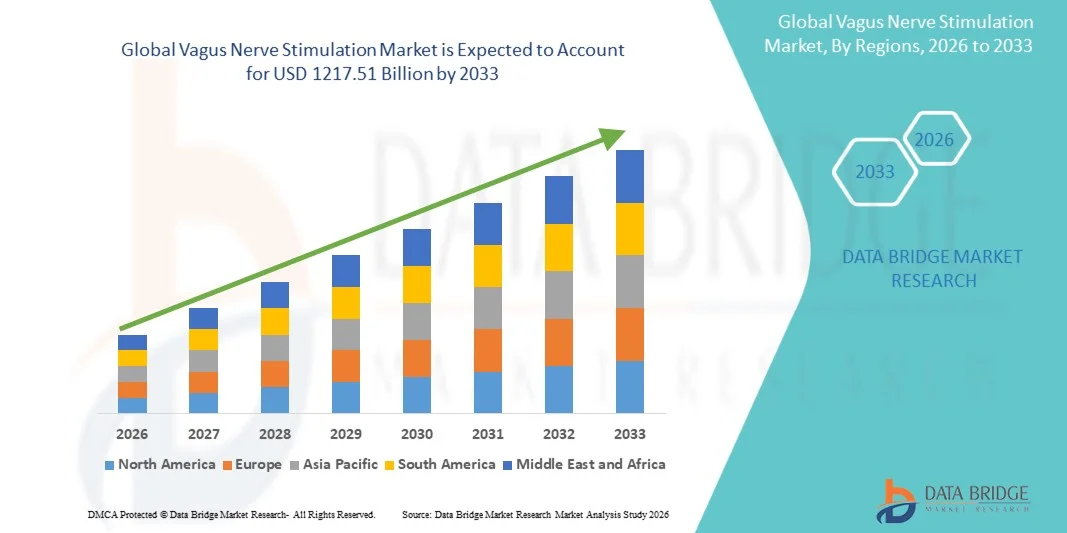
The Vagus Nerve Stimulation Market was valued at USD 576.31 billion in 2025 and is projected to reach USD 1217.51 billion by 2033, growing at a CAGR of 9.80% from 2026 to 2033. The Vagus Nerve Stimulation Market is experiencing consistent growth driven by increasing prevalence of neurological disorders, rising adoption of neuromodulation therapies, advancements in implantable and non-invasive stimulation technologies, and expanding applications across epilepsy, depression, migraine, and other neurological conditions.
The growing burden of treatment-resistant epilepsy, major depressive disorder, and other neurological disorders, combined with increasing demand for alternative therapeutic options, is encouraging healthcare providers to adopt vagus nerve stimulation technologies. Implantable and non-invasive vagus nerve stimulation devices are gaining traction as effective treatment approaches that can improve patient outcomes, reduce dependence on conventional therapies, and provide long-term symptom management. Furthermore, continuous advancements in personalized neuromodulation, wearable stimulation devices, and minimally invasive technologies are expanding clinical applications and supporting market growth across developed and emerging healthcare markets.
Key Market Trends & Insights
- North America dominated the Vagus Nerve Stimulation Market with the largest revenue share of 38.2% in 2025, supported by the strong presence of leading neuromodulation device manufacturers, advanced healthcare infrastructure, high adoption of implantable neurostimulation therapies, and increasing use of VNS for epilepsy and treatment-resistant depression. The region also benefits from favorable reimbursement frameworks, rising neurological disorder prevalence, and continuous investments in advanced neurotechnology research.
- The implantable VNS devices segment dominated the market with a 78.6% share in 2025, owing to their extensive clinical adoption for the treatment of drug-resistant epilepsy and treatment-resistant depression.
- Asia-Pacific is expected to be the fastest-growing region at a CAGR of 8.1% from 2026 to 2033, fueled by increasing prevalence of neurological disorders, improving access to advanced healthcare technologies, rising healthcare expenditure, and growing adoption of neuromodulation therapies in countries such as China, India, Japan, and South Korea. Expansion of specialty hospitals and increasing awareness of alternative neurological treatments are further accelerating market growth.
- External VNS devices are projected to be the fastest-growing product type, registering a CAGR of 9.2% from 2026 to 2033, driven by increasing demand for non-invasive neuromodulation therapies, easier patient adoption, lower procedural requirements, and growing research applications in depression, pain management, and migraine treatment. The development of portable and user-friendly external stimulation devices is further supporting segment expansion.
- The epileptic seizures application segment dominated the Vagus Nerve Stimulation market with a 45.7% revenue share in 2025, owing to the long-established use of VNS therapy for patients with drug-resistant epilepsy. Rising epilepsy prevalence, increasing awareness of adjunctive therapies, and growing adoption of implantable VNS systems among patients who do not respond adequately to anti-seizure medications are driving market growth.
Market Size & Forecast
- Global Market Value (2025): USD 576.31 Billion
- Expected Market Value (2033): USD 1217.51 Billion
- Forecast CAGR (2026–2033): 9.80%
- Leading Region in 2025: North America
- Fastest Growing Region: Asia-Pacific
Report Scope and Vagus Nerve Stimulation Market Segmentation
|
Attributes |
Vagus Nerve Stimulation Key Market Insights |
|
Segments Covered |
|
|
Countries Covered |
North America · U.S. · Canada · Mexico Europe · Germany · France · U.K. · Netherlands · Switzerland · Belgium · Russia · Italy · Spain · Turkey · Rest of Europe Asia-Pacific · China · Japan · India · South Korea · Singapore · Malaysia · Australia · Thailand · Indonesia · Philippines · Rest of Asia-Pacific Middle East and Africa · Saudi Arabia · U.A.E. · South Africa · Egypt · Israel · Rest of Middle East and Africa South America · Brazil · Argentina · Rest of South America |
|
Key Market Players |
• LivaNova PLC (U.K.) |
|
Market Opportunities |
· Increasing Adoption of Non-Invasive Vagus Nerve Stimulation Technologies · Expansion of Applications Beyond Epilepsy and Depression · Growth Opportunities in Emerging Healthcare Markets |
|
Value Added Data Infosets |
In addition to the insights on market scenarios such as market value, growth rate, segmentation, geographical coverage, and major players, the market reports curated by the Data Bridge Market Research also include in-depth expert analysis, geographically represented company-wise production and capacity, network layouts of distributors and partners, detailed and updated price trend analysis and deficit analysis of supply chain and demand. |
Vagus Nerve Stimulation Market Trends
Trend: Rising Adoption of Non-Invasive Neuromodulation Technologies
The global vagus nerve stimulation (VNS) market is witnessing a growing shift toward advanced neuromodulation solutions, particularly non-invasive and patient-friendly stimulation technologies. Healthcare providers and researchers are increasingly exploring VNS applications beyond epilepsy, including depression, anxiety, pain management, inflammation control, and obesity management. The development of external VNS devices, including transcutaneous vagus nerve stimulation (tVNS) systems, is expanding treatment accessibility by reducing the need for surgical implantation. Increasing clinical research activity and growing interest in bioelectronic medicine are further accelerating innovation in vagus nerve stimulation technologies. For instance, companies such as ElectroCore have expanded research and commercialization efforts around non-invasive vagus nerve stimulation platforms for neurological and inflammatory conditions, supporting broader adoption of VNS-based therapies.
Vagus Nerve Stimulation Market Dynamics
Key Market Driver: Increasing Prevalence of Neurological and Psychiatric Disorders
The rising global burden of neurological disorders, including epilepsy, depression, and chronic pain conditions, is a major factor driving demand for vagus nerve stimulation therapies. VNS has established clinical applications for patients with drug-resistant epilepsy and treatment-resistant depression, where conventional therapies may provide limited benefits. According to the World Health Organization, neurological disorders represent one of the leading causes of disability worldwide, increasing the need for advanced therapeutic solutions. The growing adoption of implantable VNS devices in epilepsy management and expanding clinical evidence supporting VNS in mental health applications are encouraging healthcare providers to integrate neuromodulation therapies into treatment pathways. In addition, advancements in device programming, stimulation accuracy, battery efficiency, and minimally invasive implantation techniques are improving patient outcomes and supporting market growth.
Key Restraint/Challenge: High Cost of Implantable VNS Devices and Limited Patient Access
A significant challenge for the Vagus Nerve Stimulation Market is the high cost associated with implantable VNS systems, surgical implantation procedures, and long-term patient monitoring. Implantable devices require specialized surgical expertise, follow-up programming, and healthcare infrastructure, which can limit adoption in cost-sensitive markets and regions with limited access to advanced neurological care. In addition, reimbursement limitations in certain countries and the need for specialized neurologists and neurosurgeons create barriers to widespread adoption. Although VNS has demonstrated clinical benefits, the requirement for invasive implantation and higher treatment costs compared with conventional therapies remains a key factor affecting market penetration, particularly in emerging economies.
Key Market Opportunity: Expansion of VNS Applications Beyond Epilepsy and Integration of Advanced Digital Health Technologies
The expansion of vagus nerve stimulation applications beyond traditional epilepsy treatment presents a significant growth opportunity for market participants. Increasing research into VNS for depression, anxiety, obesity management, inflammatory diseases, and pain disorders is broadening the therapeutic scope of these devices. The development of external VNS devices, wearable stimulation technologies, and digital monitoring platforms is creating opportunities for more accessible and personalized treatment approaches. For instance, clinical studies have explored non-invasive VNS approaches for migraine and mental health conditions, supporting continued innovation in the field. Furthermore, integration with artificial intelligence, remote patient monitoring, and personalized stimulation algorithms could improve therapy optimization and enable wider adoption across hospitals, specialty centers, and home-based care settings.
Vagus Nerve Stimulation Market Scope
The vagus nerve stimulation market is segmented on the basis of product type, biomaterial, application, patient type, end user, and distribution channel.
- By Product Type
On the basis of product type, the Vagus Nerve Stimulation Market is segmented into implantable VNS devices and external VNS devices. The implantable VNS devices segment dominated the market with a 78.6% share in 2025, owing to their extensive clinical adoption for the treatment of drug-resistant epilepsy and treatment-resistant depression. These devices provide continuous electrical stimulation through surgically implanted systems, enabling long-term disease management and personalized therapy adjustment. The segment benefits from strong clinical evidence, regulatory approvals, and widespread acceptance among neurologists and neurosurgeons. Increasing prevalence of neurological disorders, rising healthcare expenditure, and growing adoption of advanced neuromodulation therapies are supporting market expansion. In addition, technological improvements in battery performance, programming capabilities, and device miniaturization are enhancing patient outcomes and improving long-term device reliability. The growing availability of specialized neurological care centers and increasing awareness regarding VNS therapy are further strengthening the dominance of implantable devices globally.
The external VNS devices segment is expected to witness the fastest growth at a CAGR of 9.2% from 2026 to 2033, driven by increasing demand for non-invasive neuromodulation therapies and growing preference for patient-friendly treatment alternatives. External VNS devices eliminate the need for surgical implantation, making them more accessible for patients seeking safer and convenient stimulation-based therapies. The segment is gaining traction in applications such as pain management, depression, anxiety, migraine treatment, and obesity management. Advancements in wearable technology, portable device development, and home-based healthcare solutions are accelerating adoption. Increasing research activities evaluating transcutaneous vagus nerve stimulation (tVNS) are expanding potential clinical applications. Furthermore, lower procedural costs, improved patient compliance, and increasing focus on personalized digital healthcare solutions are expected to drive rapid segment growth during the forecast period.
- By Biomaterial
On the basis of biomaterial, the Vagus Nerve Stimulation Market is segmented into ceramics, metallic, and polymeric. The polymeric segment dominated the market with a 42.3% share in 2025, due to its extensive utilization in insulation layers, protective coatings, and flexible components of VNS devices. Polymeric materials are widely preferred because of their excellent biocompatibility, lightweight characteristics, flexibility, and ability to withstand long-term implantation conditions. These materials help reduce tissue irritation and improve patient comfort during chronic stimulation therapy. Increasing demand for durable and patient-safe implantable devices is encouraging manufacturers to focus on advanced polymer technologies. The segment also benefits from continuous innovation in medical-grade polymers that enhance device longevity and reliability. Growing adoption of implantable neuromodulation systems for epilepsy, depression, and chronic neurological disorders is further supporting the leading position of polymeric biomaterials.
The Ceramics segment is expected to register the fastest growth at a CAGR of 8.6% from 2026 to 2033, supported by increasing demand for highly durable, corrosion-resistant, and biocompatible materials in advanced implantable medical devices. Ceramic materials offer excellent mechanical strength, chemical stability, and compatibility with biological environments, making them suitable for next-generation neuromodulation technologies. Rising investments in biomaterial research and development are encouraging the use of advanced ceramics in medical implants. In addition, improvements in ceramic manufacturing techniques are enhancing material performance and expanding their applications in implantable stimulation systems. Growing focus on improving implant safety, reducing adverse tissue reactions, and extending device lifespan is expected to create new growth opportunities for ceramic-based VNS components.
- By Application
On the basis of application, the Vagus Nerve Stimulation Market is segmented into pain management, epileptic seizures, obesity management, depression and anxiety, and others. The Epileptic Seizures segment dominated the market with a 45.7% share in 2025, driven by the established clinical application of VNS therapy for patients suffering from drug-resistant epilepsy. VNS has been widely adopted as an adjunctive therapy for patients who do not achieve sufficient control through anti-seizure medications. Increasing global epilepsy prevalence, rising awareness regarding alternative neurological treatment options, and strong clinical evidence supporting VNS effectiveness are driving segment growth. Healthcare providers are increasingly integrating VNS devices into epilepsy management strategies due to their ability to provide continuous stimulation and improve seizure control. Expansion of specialized epilepsy centers and advancements in implantable stimulation technology are further supporting adoption worldwide.
The depression and anxiety segment is expected to witness the fastest growth at a CAGR of 9.0% from 2026 to 2033, driven by the increasing prevalence of mental health disorders and rising demand for alternative treatment options for treatment-resistant depression. Growing clinical research evaluating VNS therapy for psychiatric conditions is expanding the application scope of these devices. Increasing limitations associated with conventional antidepressant therapies are encouraging interest in neuromodulation-based solutions. Advancements in stimulation techniques, personalized therapy programming, and non-invasive VNS approaches are improving treatment accessibility. Rising mental health awareness, increasing healthcare investments, and expanding adoption of innovative neurological therapies are expected to accelerate growth in this segment.
- By Patient Type
On the basis of patient type, the Vagus Nerve Stimulation Market is segmented into Adults, Pediatric, and Geriatric. The Adults segment dominated the market with a 67.4% share in 2025, owing to the higher prevalence of epilepsy, depression, and chronic neurological disorders among adult populations. Adult patients represent the largest user base for VNS therapy due to greater diagnosis rates, availability of specialized treatment facilities, and higher adoption of implantable neuromodulation devices. Increasing awareness among healthcare providers regarding VNS benefits is improving treatment adoption. The availability of long-term clinical data supporting therapy effectiveness further strengthens physician confidence. In addition, rising healthcare spending and expansion of neurological care infrastructure are supporting continued growth of adult patient adoption.
The Geriatric segment is projected to grow at a CAGR of 8.4% from 2026 to 2033, driven by the increasing aging population and rising incidence of neurological and psychiatric disorders among elderly individuals. Older adults are experiencing higher rates of conditions such as epilepsy, depression, and chronic pain, creating greater demand for advanced therapeutic solutions. Improvements in healthcare access and increased focus on age-related disease management are supporting adoption. The development of safer and more patient-friendly VNS technologies is improving suitability for elderly patients. Growing emphasis on improving quality of life and managing chronic neurological conditions is expected to drive segment expansion.
- By End User
On the basis of end user, the Vagus Nerve Stimulation Market is segmented into hospitals, ambulatory surgery centres, specialty centers, and others. The Hospitals segment dominated the market with a 52.9% share in 2025, supported by the availability of advanced surgical infrastructure, specialized neurological departments, and trained healthcare professionals. Hospitals remain the primary locations for VNS implantation procedures, patient evaluation, device programming, and long-term monitoring. The segment benefits from increasing investments in advanced neurology and neurosurgery facilities. Growing adoption of implantable VNS devices for epilepsy and depression treatment is further increasing hospital demand. In addition, strong reimbursement support and availability of multidisciplinary care teams are reinforcing hospital dominance.
The ambulatory surgery centres segment is expected to witness the fastest growth at a CAGR of 8.7% from 2026 to 2033, driven by the increasing shift toward outpatient procedures and cost-effective healthcare delivery models. Ambulatory centers are gaining importance due to shorter procedure durations, reduced hospitalization requirements, and improved patient convenience. Growing adoption of minimally invasive implantation procedures is supporting expansion of these facilities. Increasing investments in specialty outpatient centers and improvements in surgical technologies are accelerating adoption. The segment is expected to benefit from healthcare systems focusing on reducing treatment costs while maintaining quality patient outcomes.
- By Distribution Channel
On the basis of distribution channel, the Vagus Nerve Stimulation Market is segmented into Direct Tender, Retail Sales, and Others. The Direct Tender segment dominated the market with a 48.6% share in 2025, owing to strong procurement activities by hospitals, government healthcare systems, and specialty medical institutions. Direct tender purchasing enables healthcare organizations to acquire advanced VNS devices through established supplier relationships and bulk agreements. The segment benefits from structured procurement processes, long-term contracts, and increasing adoption of advanced neuromodulation technologies in healthcare facilities. Expansion of healthcare infrastructure and rising government investments in neurological care are further supporting segment growth. In addition, direct procurement channels help ensure reliable device availability and technical support.
The retail sales segment is projected to register the fastest growth at a CAGR of 8.5% from 2026 to 2033, driven by increasing availability of external VNS devices and rising adoption of home-based neuromodulation solutions. Growing consumer awareness and increasing demand for non-invasive therapies are expanding retail opportunities. The growth of online healthcare platforms and specialty medical device distributors is improving accessibility for patients. In addition, increasing adoption of portable stimulation devices for pain management and wellness applications is supporting retail expansion. The shift toward patient-centered healthcare models and personalized treatment solutions is expected to further accelerate growth in this distribution channel.
Vagus Nerve Stimulation Market Regional Analysis
North America dominated the vagus nerve stimulation market and accounted for the largest revenue share of 38.2% in 2025, supported by the strong presence of leading neuromodulation device manufacturers, advanced healthcare infrastructure, high adoption of implantable neurostimulation therapies, and increasing utilization of VNS technologies for epilepsy and treatment-resistant depression. The region benefits from favorable reimbursement frameworks, rising prevalence of neurological disorders, and continuous investments in advanced neurotechnology. Growing clinical adoption of vagus nerve stimulation devices, along with increasing research activities focused on expanding therapeutic applications, continues to strengthen North America’s leadership position in the global market.
U.S. Vagus Nerve Stimulation Market Insight
The U.S. vagus nerve stimulation market is witnessing strong growth due to increasing demand for advanced neuromodulation therapies, rising prevalence of epilepsy and treatment-resistant depression, and widespread adoption of implantable VNS devices. The country’s well-established healthcare system, presence of major medical device companies, and strong focus on neurological research are driving market expansion. In addition, increasing investments in innovative stimulation technologies, clinical studies, and personalized treatment approaches are supporting the adoption of VNS across hospitals and specialty centers.
Europe Vagus Nerve Stimulation Market Insight
The Europe vagus nerve stimulation market remains a significant contributor to global revenue, driven by advanced healthcare systems, increasing adoption of neuromodulation therapies, and growing demand for alternative treatment options for neurological disorders. The region benefits from strong research capabilities, rising awareness of VNS therapies, and increasing healthcare investments aimed at improving neurological disease management. Expanding use of vagus nerve stimulation for epilepsy, depression, and other emerging applications is supporting market growth across European countries.
U.K. Vagus Nerve Stimulation Market Insight
The U.K. vagus nerve stimulation market is experiencing steady growth, supported by increasing adoption of advanced neurological treatment solutions, rising healthcare investments, and growing demand for minimally invasive neuromodulation therapies. The country’s focus on improving neurological care, expanding access to innovative medical technologies, and increasing clinical research activities is contributing to market development. Furthermore, growing awareness regarding the benefits of VNS therapies among healthcare providers and patients is supporting adoption across specialty centers and hospitals.
Germany Vagus Nerve Stimulation Market Insight
The Germany vagus nerve stimulation market is expanding steadily due to its advanced healthcare infrastructure, strong medical technology sector, and increasing adoption of innovative neurostimulation therapies. Rising cases of neurological disorders, growing demand for effective treatment alternatives, and increasing investments in healthcare innovation are driving market growth. In addition, Germany’s focus on advanced clinical research and adoption of cutting-edge medical devices is supporting the integration of VNS technologies into neurological treatment pathways.
Asia-Pacific Vagus Nerve Stimulation Market Insight
The Asia-Pacific vagus nerve stimulation market is expected to witness the fastest growth, expanding at a CAGR of 8.1% from 2026 to 2033, driven by increasing prevalence of neurological disorders, improving access to advanced healthcare technologies, rising healthcare expenditure, and growing adoption of neuromodulation therapies. Countries such as China, India, Japan, and South Korea are experiencing increased demand for innovative neurological treatment solutions due to expanding healthcare infrastructure and rising awareness of alternative therapies. In addition, the growth of specialty hospitals, increasing availability of advanced medical devices, and rising investments in healthcare modernization are accelerating regional market expansion.
Japan Vagus Nerve Stimulation Market Insight
The Japan vagus nerve stimulation market is witnessing consistent growth due to the country’s advanced healthcare system, aging population, increasing neurological disease burden, and strong focus on medical innovation. Healthcare providers are increasingly adopting neuromodulation technologies for epilepsy, depression, and other neurological conditions. Furthermore, Japan’s emphasis on precision medicine, advanced medical device development, and improved patient care solutions is contributing to the growing adoption of VNS therapies.
China Vagus Nerve Stimulation Market Insight
The China vagus nerve stimulation market is growing rapidly, driven by increasing prevalence of neurological disorders, expanding healthcare infrastructure, rising healthcare spending, and growing adoption of advanced neuromodulation technologies. Government initiatives to improve healthcare access, increasing investments in medical technology, and expanding specialty care facilities are supporting market growth. In addition, rising awareness of advanced neurological treatments and increasing availability of innovative medical devices are positioning China as one of the fastest-growing markets for vagus nerve stimulation technologies globally.
Vagus Nerve Stimulation Market Share
The Vagus Nerve Stimulation industry is primarily led by well-established companies, including:
- LivaNova PLC (U.K.)
- Medtronic plc (Ireland)
- Boston Scientific Corporation (U.S.)
- Abbott Laboratories (U.S.)
- Nevro Corp. (U.S.)
- electroCore, Inc. (U.S.)
- SetPoint Medical Corporation (U.S.)
- Inspire Medical Systems, Inc. (U.S.)
- BioControl Medical (Israel)
- MicroTransponder Inc. (U.S.)
- Cerbomed GmbH (Germany)
- Parasym Ltd. (U.K.)
- Nalu Medical, Inc. (U.S.)
- NeurAxis, Inc. (U.S.)
- Vagus Nerve Stimulation Therapy (U.S.)
- Innovative Health Solutions (U.S.)
- NeuroSigma, Inc. (U.S.)
- ReShape Lifesciences Inc. (U.S.)
- Cyberonics, Inc. (U.S.)
- Stimwave Technologies Incorporated (U.S.)
- Synapse Biomedical Inc. (U.S.)
- GTX Medical (Netherlands)
- NeuroPace, Inc. (U.S.)
- Axonics, Inc. (U.S.)
- Saluda Medical Pty Ltd (Australia)
- Beijing PINS Medical Co., Ltd. (China)
- Jiangsu Ocens Medical Technology Co., Ltd. (China)
Latest Developments in Vagus Nerve Stimulation Market
- In February 2021, electroCore, Inc. announced that its gammaCore non-invasive vagus nerve stimulation (nVNS) device received FDA 510(k) clearance for expanded use in adolescents aged 12–17 years for the acute and preventive treatment of migraine. The approval expanded the clinical application of gammaCore beyond adult patients and strengthened the adoption of non-invasive VNS technology as an alternative therapeutic option for migraine management
- In September 2021, MicroTransponder, Inc.’s Vivistim® Paired VNS System received FDA approval for chronic ischemic stroke rehabilitation. The system became the first FDA-approved vagus nerve stimulation-based rehabilitation technology designed to improve upper extremity motor function in stroke patients when combined with rehabilitation therapy. This milestone expanded the role of VNS technology beyond traditional neurological applications such as epilepsy and depression
- In September 2021, electroCore, Inc. announced FDA 510(k) clearance for gammaCore nVNS for the treatment of paroxysmal hemicrania and hemicrania continua in adults. The expanded indication increased the device’s application in rare headache disorders and supported broader adoption of non-invasive vagus nerve stimulation solutions in pain management
- In February 2023, LivaNova PLC launched SenTiva DUO, an implantable pulse generator designed for VNS Therapy in patients with drug-resistant epilepsy. The new device introduced a dual-pin header configuration, allowing patients with existing dual-pin VNS leads to access updated VNS Therapy technology without replacing legacy leads, improving treatment accessibility and device compatibility
- In June 2024, researchers advanced computational modeling approaches for vagus nerve stimulation to improve understanding of stimulation mechanisms and optimize treatment strategies. New predictive modeling research explored how computational frameworks could support patient response prediction and personalized VNS parameter optimization, highlighting the growing role of digital technologies in neuromodulation development
- In January 2025, research developments continued to explore the therapeutic potential of vagus nerve stimulation across neurological and psychiatric conditions, including epilepsy, depression, and stroke rehabilitation. Emerging scientific studies focused on understanding neural pathways and mechanisms of VNS action, supporting future advancements in targeted and personalized neuromodulation therapies

- Interactive Data Analysis Dashboard
- Company Analysis Dashboard for high growth potential opportunities
- Research Analyst Access for customization & queries
- Competitor Analysis with Interactive dashboard
- Latest News, Updates & Trend analysis
- Harness the Power of Benchmark Analysis for Comprehensive Competitor Tracking
Data collection and base year analysis are done using data collection modules with large sample sizes. The stage includes obtaining market information or related data through various sources and strategies. It includes examining and planning all the data acquired from the past in advance. It likewise envelops the examination of information inconsistencies seen across different information sources. The market data is analysed and estimated using market statistical and coherent models. Also, market share analysis and key trend analysis are the major success factors in the market report. To know more, please request an analyst call or drop down your inquiry.
The key research methodology used by DBMR research team is data triangulation which involves data mining, analysis of the impact of data variables on the market and primary (industry expert) validation. Data models include Vendor Positioning Grid, Market Time Line Analysis, Market Overview and Guide, Company Positioning Grid, Patent Analysis, Pricing Analysis, Company Market Share Analysis, Standards of Measurement, Global versus Regional and Vendor Share Analysis. To know more about the research methodology, drop in an inquiry to speak to our industry experts.
Data Bridge Market Research is a leader in advanced formative research. We take pride in servicing our existing and new customers with data and analysis that match and suits their goal. The report can be customized to include price trend analysis of target brands understanding the market for additional countries (ask for the list of countries), clinical trial results data, literature review, refurbished market and product base analysis. Market analysis of target competitors can be analyzed from technology-based analysis to market portfolio strategies. We can add as many competitors that you require data about in the format and data style you are looking for. Our team of analysts can also provide you data in crude raw excel files pivot tables (Fact book) or can assist you in creating presentations from the data sets available in the report.













