


Variant Creutzfeldt-Jakob Disease Treatment Market Overview
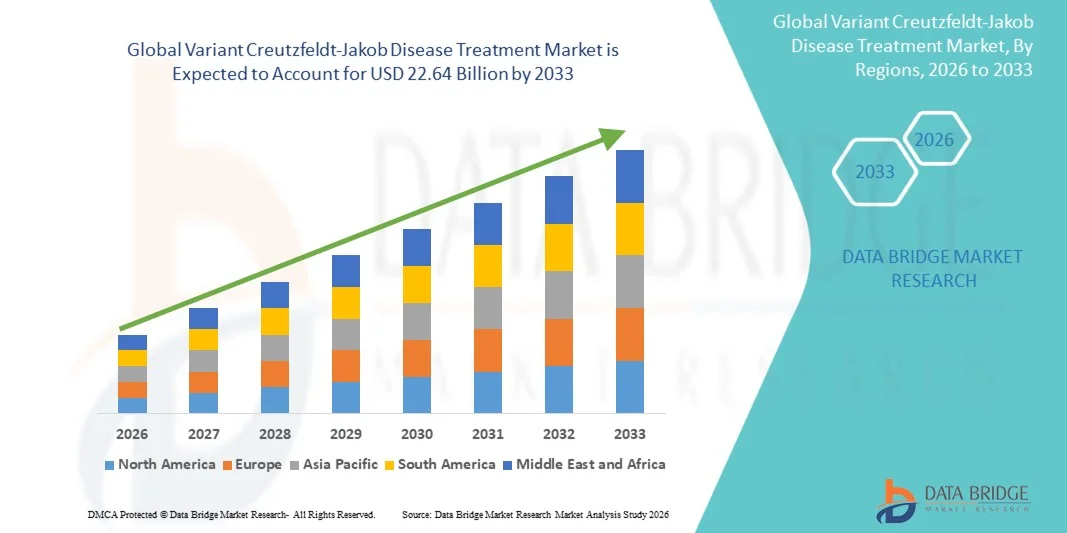
The Variant Creutzfeldt-Jakob Disease Treatment Market was valued at USD 13.18 billion in 2025 and is projected to reach USD 22.64 billion by 2033, growing at a CAGR of 7.0% from 2026 to 2033. The market is witnessing gradual growth driven by increasing focus on rare neurodegenerative disorder research, rising government funding for prion disease surveillance programs, and ongoing clinical investigations into disease-modifying therapies targeting abnormal prion protein accumulation.
The extremely low prevalence but high fatality rate of vCJD continues to push regulatory agencies and research institutions to prioritize orphan drug development and advanced diagnostic approaches for early detection. Growing investment in neurology-focused biotech pipelines, expansion of rare disease treatment frameworks, and improved understanding of prion pathophysiology are further supporting market development. However, the absence of approved curative therapies and the highly complex nature of prion protein misfolding remain major challenges limiting commercial treatment availability.
Key Market Trends & Insights
- North America dominated the Variant Creutzfeldt-Jakob Disease Treatment Market with the largest revenue share of 38.62% in 2025, supported by advanced rare disease research funding, strong neurology infrastructure, and active prion disease surveillance systems.
- The Sporadic Creutzfeldt-Jakob Disease segment led the market with a 52.4% share in 2025, driven by its relatively higher incidence and consistent reporting across global neurological surveillance systems.
- Asia-Pacific is expected to be the fastest-growing region at a CAGR of 9.0% from 2026 to 2033, fueled by increasing healthcare investments, expanding neurology research capabilities, and improving rare disease diagnostic awareness in countries such as China, India, and Japan.
- Acquired Creutzfeldt-Jakob Disease are the fastest-growing type, projected to register a CAGR of 7.8%, reflecting the surge in awareness of prion contamination risks in medical and biological exposure pathways.
- The Sporadically segment dominated the transmission category with a 57.1% revenue share in 2025, led by the naturally occurring and most frequently diagnosed form of Creutzfeldt-Jakob disease cases globally.
- Painkillers accounted for 48.9% of the market, preferred by hospitals and neurology care providers as the primary option for managing severe neurological pain, muscle rigidity, and palliative symptom relief in vCJD patients where no curative therapy is available.
- The PMCA segment is the fastest-growing diagnosis category, with a CAGR of 8.7%, driven by its ultra-sensitive ability to detect trace levels of misfolded prion proteins at very early disease stages, enabling pre-symptomatic diagnosis and supporting advanced biomarker-based research.
Market Size & Forecast
- Global Market Value (2025): USD 13.18 Billion
- Expected Market Value (2033): USD 22.64 Billion
- Forecast CAGR (2026–2033): 7.0%
- Leading Region in 2025: North America
- Fastest Growing Region: Asia Pacific
Report Scope and Variant Creutzfeldt-Jakob Disease Treatment Market Segmentation
|
Attributes |
Variant Creutzfeldt-Jakob Disease Treatment Key Market Insights |
|
Segments Covered |
|
|
Countries Covered |
North America · U.S. · Canada · Mexico Europe · Germany · France · U.K. · Netherlands · Switzerland · Belgium · Russia · Italy · Spain · Turkey · Rest of Europe Asia-Pacific · China · Japan · India · South Korea · Singapore · Malaysia · Australia · Thailand · Indonesia · Philippines · Rest of Asia-Pacific Middle East and Africa · Saudi Arabia · U.A.E. · South Africa · Egypt · Israel · Rest of Middle East and Africa South America · Brazil · Argentina · Rest of South America |
|
Key Market Players |
· Ionis Pharmaceuticals (U.S.) · Biogen Inc. (U.S.) · Roche Holding AG (Switzerland) · Novartis AG (Switzerland) · Pfizer Inc. (U.S.) · Johnson & Johnson Services, Inc. (U.S.) · Takeda Pharmaceutical Company Limited (Japan) · Eli Lilly and Company (U.S.) · Sanofi (France) · GSK plc (U.K.) · Amgen Inc. (U.S.) · AbbVie Inc. (U.S.) · Bristol Myers Squibb Company (U.S.) · Merck & Co., Inc. (U.S.) · F. Hoffmann-La Roche Ltd (Switzerland) · Vertex Pharmaceuticals Incorporated (U.S.) · Regeneron Pharmaceuticals, Inc. (U.S.) · Moderna, Inc. (U.S.) · Alnylam Pharmaceuticals, Inc. (U.S.) · UCB S.A. (Belgium) |
|
Market Opportunities |
· Development of prion-protein–targeting disease-modifying therapies · Expansion of advanced biomarker-based early diagnostic platforms · Growth in orphan drug incentives and rare disease funding programs |
|
Value Added Data Infosets |
In addition to the insights on market scenarios such as market value, growth rate, segmentation, geographical coverage, and major players, the market reports curated by the Data Bridge Market Research also include in-depth expert analysis, patient epidemiology, pipeline analysis, pricing analysis, and regulatory framework. |
Variant Creutzfeldt-Jakob Disease Treatment Market Trends
Trend: Expansion of Rare Neurodegenerative Disease Research Collaboration
Global research institutions, neurology centers, and public health agencies are increasingly forming cross-border collaborations to study prion diseases such as variant Creutzfeldt-Jakob disease (vCJD), aiming to overcome the limitations posed by its extreme rarity. These partnerships combine clinical neurology, molecular biology, and computational neuroscience to better understand prion protein misfolding mechanisms and disease transmission pathways. Shared patient registries, brain tissue banks, and genomic databases are enabling researchers to identify patterns that were previously impossible to detect in isolated studies. For instance, international prion surveillance programs and academic consortia in Europe and North America are jointly analyzing case histories and molecular markers to improve early diagnostic accuracy and accelerate preclinical research for potential therapeutic candidates targeting prion propagation
Variant Creutzfeldt-Jakob Disease Treatment Market Dynamics
Key Market Driver: Rising Focus on Orphan Drug Development and Funding Support
The growing classification of vCJD under rare and fatal neurodegenerative disorders has significantly increased regulatory and financial incentives for orphan drug development. Governments and health authorities are actively encouraging biotech firms to pursue research in prion diseases by offering benefits such as fast-track approvals, market exclusivity, and tax credits. This supportive regulatory environment is especially important given the historically low commercial attractiveness of ultra-rare disease markets. For instance, FDA and EMA orphan drug designation programs are enabling early-stage biotech companies to secure funding and advance experimental therapies targeting abnormal prion protein accumulation, while global rare disease initiatives are also channeling grants into neurodegenerative disease research hubs to stimulate innovation in disease-modifying treatment approaches.
Key Restraint/Challenge: Extremely Low Patient Pool and Lack of Approved Therapies
One of the most significant constraints in the vCJD treatment market is the extremely small global patient population, which severely limits the feasibility of large-scale clinical trials and reduces commercial returns for pharmaceutical developers. The absence of approved curative or disease-modifying therapies further complicates the treatment landscape, leaving only supportive and palliative care options available in clinical practice. Because confirmed cases are sporadic and geographically dispersed, most available data comes from retrospective case reports and small observational studies rather than controlled clinical trials. For instance, historical case registries from Europe and the United Kingdom show only a limited number of confirmed vCJD cases over multiple decades, making it extremely challenging to validate new therapeutic interventions using standard regulatory trial pathways.
Key Market Opportunity: Advancements in Biomarker-Based Early Detection and Diagnostics
The development of advanced biomarker and diagnostic technologies represents a major growth opportunity in the vCJD treatment landscape, as early detection is critical for any potential therapeutic success. Emerging assays capable of detecting misfolded prion proteins in cerebrospinal fluid, blood, and other biological samples are improving diagnostic sensitivity and enabling earlier disease identification before severe neurological damage occurs. This is particularly important because clinical symptoms typically appear only after extensive and irreversible brain pathology. For instance, techniques such as real-time quaking-induced conversion (RT-QuIC) assays and next-generation neuroimaging tools are being evaluated in specialized neurological research centers to detect prion activity at pre-symptomatic stages, thereby supporting earlier clinical intervention, improved patient monitoring, and more effective recruitment for experimental drug trials.
Variant Creutzfeldt-Jakob Disease Treatment Market Scope
The Variant Creutzfeldt-Jakob disease treatment market is segmented on the basis of type, transmission, treatment, diagnosis, symptoms, dosage, route of administration, end-users, and distribution channel.
- By Type
On the basis of type, the market is segmented into sporadic Creutzfeldt-Jakob disease, familial Creutzfeldt-Jakob disease, and acquired Creutzfeldt-Jakob disease. The Sporadic Creutzfeldt-Jakob Disease segment dominated the market with a 52.4% share in 2025, due to its relatively higher incidence and consistent reporting across global neurological surveillance systems. It represents the most commonly diagnosed form in clinical practice. Hospitals rely on sporadic case data for diagnostic standardization and disease progression tracking. Increasing adoption of MRI and CSF biomarker testing is improving detection accuracy. It forms the backbone of most research datasets in prion disease studies. However, treatment remains limited to symptomatic management due to lack of curative therapies.
The Acquired Creutzfeldt-Jakob Disease segment is projected to be the fastest-growing with a CAGR of 7.8% from 2026 to 2033, driven by rising awareness of prion contamination risks in medical and biological exposure pathways. Strengthened infection control protocols are improving case detection rates. Regulatory agencies are increasing surveillance of iatrogenic transmission. Blood safety and surgical sterilization standards are becoming stricter globally. Improved diagnostic technologies are enhancing identification of rare exposure cases. For instance, hospital decontamination improvements are supporting earlier detection of contamination-linked prion infections.
- By Transmission
On the basis of transmission, the market is segmented into by contamination, by inheritance, and sporadically. The Sporadically segment dominated the market with a 57.1% share in 2025, as most vCJD cases occur without identifiable genetic or external causes. It accounts for the majority of confirmed global diagnoses. Hospitals frequently identify these cases during rapid neurodegenerative evaluations. MRI and biomarker tools are improving classification accuracy. It is the most extensively studied transmission category in neurology. However, differentiation from other dementia disorders remains challenging.
The Contamination-based transmission segment is projected to be the fastest-growing with a CAGR of 8.3% from 2026 to 2033, driven by increasing monitoring of prion exposure through healthcare and biological systems. Infection control policies are becoming more stringent across hospitals. Blood transfusion screening programs are expanding globally. Surgical sterilization protocols are improving surveillance systems. Awareness of prion transmission pathways is increasing. For instance, enhanced hospital infection tracking systems are enabling earlier identification of contamination-linked cases.
- By Treatment
On the basis of treatment, the market is segmented into painkillers, antidepressants, and others (supportive care therapies). The Painkillers segment dominated the market with a 48.9% share in 2025, due to severe neurological pain, motor dysfunction, and progressive neurodegeneration in vCJD patients. Symptomatic relief remains the primary clinical approach. Hospitals widely depend on analgesics for palliative care. These drugs are easily accessible and form first-line management. Rising hospitalization of advanced patients further supports demand. However, they do not alter disease progression.
The Antidepressants segment is projected to be the fastest-growing with a CAGR of 8.9% from 2026 to 2033, driven by the increasing recognition of psychiatric and behavioral symptoms such as depression, anxiety, mood instability, and personality changes in vCJD patients. As neurodegeneration progresses, psychological complications significantly impact patient quality of life, increasing reliance on antidepressant therapies. Neurologists and psychiatrists are increasingly integrating mental health management into prion disease care pathways. Growing awareness of neuropsychiatric symptom burden is improving prescription rates
- By Diagnosis
On the basis of diagnosis, the market is segmented into EEG, MRI, lumbar puncture tests, PMCA, and others. The Brain MRI segment dominated the market with a 44.6% share in 2025, due to its widespread clinical use and strong ability to detect characteristic brain abnormalities in vCJD patients. It is widely used as the first-line imaging method. MRI identifies spongiform brain changes. Hospitals prefer it for non-invasive diagnosis. Advanced imaging systems are improving accuracy. However, it cannot confirm definitive diagnosis alone.
The PMCA segment is projected to be the fastest-growing with a CAGR of 8.7% from 2026 to 2033, due to its ultra-sensitive detection of abnormal prion proteins at very early stages. It enables diagnosis before severe neurological damage occurs. It is widely used in specialized laboratories. Biomarker-based diagnostic innovation is driving adoption. Molecular amplification technologies are improving sensitivity. For instance, PMCA is being integrated into experimental prion surveillance programs.
- By Symptoms
On the basis of symptoms, the market is segmented into personality changes, memory loss, impaired thinking, blurred vision, insomnia, incoordination, difficulty speaking, difficulty swallowing, jerky movements, and others. The Memory Loss segment dominated the market with a 41.2% share in 2025, as it is one of the earliest and most prominent symptoms of vCJD. It often triggers clinical evaluation and neurological assessment. Hospitals use it as a key diagnostic indicator. It correlates strongly with disease progression. Imaging findings often align with cognitive decline. However, it is not specific to vCJD alone.
The Incoordination segment is projected to be the fastest-growing with a CAGR of 7.9% from 2026 to 2033, driven by increasing recognition of motor dysfunction in early diagnosis. It reflects cerebellar damage and neurological pathway disruption. Clinical assessment tools are improving detection accuracy. Patients increasingly present with gait instability. Digital movement tracking systems are enhancing diagnosis. For instance, gait analysis technologies are supporting early identification of coordination impairment.
- By Dosage
On the basis of dosage, the market is segmented into injection, tablets, and others. The Injection segment dominated the market with a 55.6% share in 2025, due to hospital-based administration in severe neurological cases requiring rapid symptomatic relief. Intravenous delivery ensures controlled dosing. It is widely used in inpatient care settings. Hospitals prefer it for advanced disease management. Monitoring is easier in clinical environments. However, it remains supportive rather than curative.
The Others segment is projected to be the fastest-growing with a CAGR of 6.8% from 2026 to 2033, driven by experimental dosage forms and novel drug delivery systems. Research institutions are exploring alternative formulations. Neurological drug delivery innovation is expanding rapidly. Clinical trials are testing new administration methods. Drug development pipelines are diversifying dosage approaches. For instance, experimental neuroprotective agents are being evaluated in non-traditional delivery formats.
- By Route of Administration
On the basis of route of administration, the market is segmented into oral, intravenous, and others. The Intravenous segment dominated the market with a 58.1% share in 2025, due to hospital-based management of severe neurological conditions requiring rapid drug action. IV administration ensures immediate effect and controlled dosing. It is widely used in inpatient neurology units. Hospitals rely on it for advanced-stage care. Monitoring systems support safe administration. However, it does not provide curative outcomes.
The Others segment is projected to be the fastest-growing with a CAGR of 7.2% from 2026 to 2033, driven by innovation in CNS-targeted and experimental drug delivery systems. This includes intrathecal and advanced brain-targeting methods. Neurological drug delivery research is expanding. Clinical trials are evaluating precision delivery techniques. Pharmaceutical innovation is improving therapeutic targeting. For instance, intrathecal experimental therapies are being studied in prion disease research programs.
- By End-Users
On the basis of end-users, the market is segmented into clinics, hospitals, and others (research institutes and specialty centers). The Hospital segment dominated the market with a 61.3% share in 2025, due to centralized diagnosis, imaging infrastructure, and palliative care management. Hospitals serve as primary treatment centers for vCJD. Multidisciplinary teams manage neurological decline. Advanced diagnostic systems support clinical decisions. Increasing rare disease referrals strengthen dominance. However, care remains largely symptomatic.
The Research Institutes & Specialty Centers segment is projected to be the fastest-growing with a CAGR of 8.5% from 2026 to 2033, driven by increasing investment in prion disease research and biomarker development. These centers focus on experimental therapies and disease mechanisms. Funding for rare neurodegenerative disorders is increasing. Collaboration with biotech firms is expanding. Neuroscience research facilities are growing globally. For instance, prion propagation studies are advancing early diagnostic innovation.
- By Distribution Channel
On the basis of distribution channel, the market is segmented into hospital pharmacies, retail pharmacies, and online pharmacies. The Hospital Pharmacies segment dominated the market with a 54.8% share in 2025, as treatment is primarily administered in controlled hospital environments under specialist supervision. Drug dispensing is tightly regulated. Hospitals ensure accurate dosing and monitoring. Integration with inpatient systems improves coordination. Rising hospitalization supports dominance. However, treatment remains supportive only.
The Online Pharmacies segment is projected to be the fastest-growing with a CAGR of 7.5% from 2026 to 2033, driven by digital healthcare expansion and telemedicine adoption. E-pharmacy platforms are improving access to supportive medications. Regulatory frameworks are strengthening online drug safety. Digital prescriptions are streamlining access. Remote healthcare adoption is increasing globally. For instance, online neurology prescription systems are improving accessibility in emerging markets.
Variant Creutzfeldt-Jakob Disease Treatment Market Regional Analysis
North America dominated the Variant Creutzfeldt-Jakob Disease Treatment Market with the largest revenue share of 38.62% in 2025, supported by advanced rare disease research funding, strong neurology infrastructure, and active prion disease surveillance systems. The region benefits from early adoption of advanced diagnostic tools such as MRI and biomarker-based testing, along with active participation in orphan drug development programs. High concentration of specialized neuroscience centers and biotech companies further strengthens clinical research and experimental therapy development. Increasing government and institutional focus on neurodegenerative disease management continues to reinforce North America’s leadership position in the global market.
U.S. Variant Creutzfeldt-Jakob Disease Treatment Market Insight
The U.S. variant Creutzfeldt-Jakob disease (vCJD) treatment market is witnessing steady growth due to strong rare disease research funding, advanced neurology infrastructure, and well-established prion disease surveillance systems. The country benefits from early adoption of advanced diagnostic technologies such as MRI, EEG, and biomarker-based assays that enhance detection accuracy and case identification. A highly developed biotechnology ecosystem and strong presence of academic research institutions are accelerating experimental therapy development and orphan drug pipelines. In addition, increasing government support for neurodegenerative disease research and rare disease frameworks is strengthening overall market expansion across the country.
Europe Variant Creutzfeldt-Jakob Disease Treatment Market Insight
The Europe variant Creutzfeldt-Jakob disease treatment market remains a significant contributor globally, driven by strong public healthcare systems, established neurological research networks, and active participation in prion disease monitoring programs. The region emphasizes standardized diagnostic protocols and early detection using advanced imaging and molecular testing techniques. Collaborative research initiatives across countries are enhancing understanding of prion biology and disease progression. In addition, increasing orphan drug incentives and government funding for rare neurological disorders are supporting innovation and clinical research activities across Europe.
U.K. Variant Creutzfeldt-Jakob Disease Treatment Market Insight
The U.K. variant Creutzfeldt-Jakob disease treatment market is shaped by historical exposure to vCJD cases and a highly developed national surveillance framework for prion diseases. The country has specialized neurology centers dedicated to diagnosis, monitoring, and research of prion-related disorders. Continuous investment in biomarker development and advanced neuroimaging technologies is improving early detection capabilities. Strong collaboration between academic institutions and public health agencies is further supporting clinical trials and experimental therapy development in the region.
Germany Variant Creutzfeldt-Jakob Disease Treatment Market Insight
The Germany variant Creutzfeldt-Jakob disease treatment market is expanding due to advanced healthcare infrastructure, strong neuroscience research capabilities, and well-established hospital networks. The country is actively engaged in prion disease research through universities and specialized neurology institutes. Increasing adoption of MRI, EEG, and molecular diagnostic tools is improving disease detection rates. In addition, government support for rare disease research and growing focus on innovative diagnostic technologies are further strengthening market development in Germany.
Asia-Pacific Variant Creutzfeldt-Jakob Disease Treatment Market Insight
The Asia-Pacific variant Creutzfeldt-Jakob disease treatment market is expected to witness rapid growth, driven by improving healthcare infrastructure, rising awareness of rare neurological disorders, and increasing investment in diagnostic capabilities. Countries such as China, India, and Japan are strengthening neurology research and hospital-based diagnostic services. Expanding biotechnology sectors and growing focus on rare disease frameworks are supporting market development. In addition, increasing government initiatives for healthcare modernization are further accelerating regional growth.
Japan Variant Creutzfeldt-Jakob Disease Treatment Market Insight
The Japan variant Creutzfeldt-Jakob disease treatment market is driven by advanced healthcare systems, strong neuroscience research programs, and early adoption of precision diagnostic technologies. The country places strong emphasis on early detection of neurodegenerative diseases using MRI and biomarker-based testing. Increasing investment in aging-related neurological research is further supporting demand for advanced diagnostic tools. Collaboration between universities, hospitals, and research institutions is enhancing prion disease studies and experimental treatment development.
China Variant Creutzfeldt-Jakob Disease Treatment Market Insight
The China variant Creutzfeldt-Jakob disease treatment market is growing rapidly due to expanding healthcare infrastructure, increasing government focus on rare disease management, and rising investment in neurological research. Growing awareness of neurodegenerative disorders is improving early diagnosis rates. Strengthening hospital networks and diagnostic capabilities are supporting better disease identification. In addition, increasing R&D investment in biotechnology and public health surveillance systems is positioning China as a key emerging market for vCJD treatment globally.
Variant Creutzfeldt-Jakob Disease Treatment Market Share
The Variant Creutzfeldt-Jakob disease treatment industry is primarily led by well-established companies, including:
- Ionis Pharmaceuticals (U.S.)
- Biogen Inc. (U.S.)
- Roche Holding AG (Switzerland)
- Novartis AG (Switzerland)
- Pfizer Inc. (U.S.)
- Johnson & Johnson Services, Inc. (U.S.)
- Takeda Pharmaceutical Company Limited (Japan)
- Eli Lilly and Company (U.S.)
- Sanofi (France)
- GSK plc (U.K.)
- Amgen Inc. (U.S.)
- AbbVie Inc. (U.S.)
- Bristol Myers Squibb Company (U.S.)
- Merck & Co., Inc. (U.S.)
- Hoffmann-La Roche Ltd (Switzerland)
- Vertex Pharmaceuticals Incorporated (U.S.)
- Regeneron Pharmaceuticals, Inc. (U.S.)
- Moderna, Inc. (U.S.)
- Alnylam Pharmaceuticals, Inc. (U.S.)
- UCB S.A. (Belgium)
Latest Developments in Variant Creutzfeldt-Jakob Disease Treatment Market
- In April 2025, Harvard-affiliated neuroscience researchers reported a major advancement in gene-editing and gene-silencing approaches targeting prion protein (PrP) expression, demonstrating strong preclinical reduction in disease progression markers for prion diseases including vCJD. The study highlights CRISPR-based strategies aimed at suppressing toxic prion protein accumulation in neuronal cells, marking a shift toward disease-modifying therapeutic development. This strengthens the pipeline for precision medicine approaches in rare neurodegenerative disorders and supports long-term innovation in prion disease treatment
- In April 2025, researchers demonstrated the drug repurposing potential of efavirenz (an FDA-approved HIV medication), showing that it can reduce prion protein misfolding and improve survival outcomes in experimental disease models. The study found measurable reductions in pathogenic prion accumulation in neuronal systems, supporting a fast-track therapeutic strategy for vCJD. This approach is significant because it leverages already-approved drugs, reducing both development time and regulatory barriers
- In December 2024, Ionis Pharmaceuticals completed enrollment of its ION717 antisense oligonucleotide clinical trial (PrP-lowering therapy) for prion disease patients. The therapy is designed to reduce production of normal prion protein in the brain, thereby limiting disease progression. The program represents one of the most advanced disease-modifying approaches currently under clinical investigation for prion disorders. It reflects growing momentum in RNA-targeted therapeutics for rare neurodegenerative diseases
- In August 2024, Ionis Pharmaceuticals announced the resumption of recruitment in its PrProfile (ION717) clinical trial after a planned pause for data review and dose evaluation. The restart followed completion of initial enrollment phases and safety monitoring of earlier cohorts. The trial evaluates intrathecal antisense oligonucleotide therapy aimed at lowering prion protein levels in the central nervous system. This marked continued progress in the first-in-human therapeutic program for prion diseases
- In July 2024, NIH-supported researchers reported development of a novel method to suppress prion protein production in animal models, showing potential to slow or prevent prion disease progression. The study demonstrated that turning off prion protein expression significantly reduces neurodegeneration in preclinical systems. This finding supports the central therapeutic hypothesis that lowering PrP levels can halt disease development. It provides an important foundation for ongoing clinical translation efforts in vCJD research

- Interactive Data Analysis Dashboard
- Company Analysis Dashboard for high growth potential opportunities
- Research Analyst Access for customization & queries
- Competitor Analysis with Interactive dashboard
- Latest News, Updates & Trend analysis
- Harness the Power of Benchmark Analysis for Comprehensive Competitor Tracking
Data collection and base year analysis are done using data collection modules with large sample sizes. The stage includes obtaining market information or related data through various sources and strategies. It includes examining and planning all the data acquired from the past in advance. It likewise envelops the examination of information inconsistencies seen across different information sources. The market data is analysed and estimated using market statistical and coherent models. Also, market share analysis and key trend analysis are the major success factors in the market report. To know more, please request an analyst call or drop down your inquiry.
The key research methodology used by DBMR research team is data triangulation which involves data mining, analysis of the impact of data variables on the market and primary (industry expert) validation. Data models include Vendor Positioning Grid, Market Time Line Analysis, Market Overview and Guide, Company Positioning Grid, Patent Analysis, Pricing Analysis, Company Market Share Analysis, Standards of Measurement, Global versus Regional and Vendor Share Analysis. To know more about the research methodology, drop in an inquiry to speak to our industry experts.
Data Bridge Market Research is a leader in advanced formative research. We take pride in servicing our existing and new customers with data and analysis that match and suits their goal. The report can be customized to include price trend analysis of target brands understanding the market for additional countries (ask for the list of countries), clinical trial results data, literature review, refurbished market and product base analysis. Market analysis of target competitors can be analyzed from technology-based analysis to market portfolio strategies. We can add as many competitors that you require data about in the format and data style you are looking for. Our team of analysts can also provide you data in crude raw excel files pivot tables (Fact book) or can assist you in creating presentations from the data sets available in the report.












