


Vasoactive Intestinal Peptide Tumors Market Size
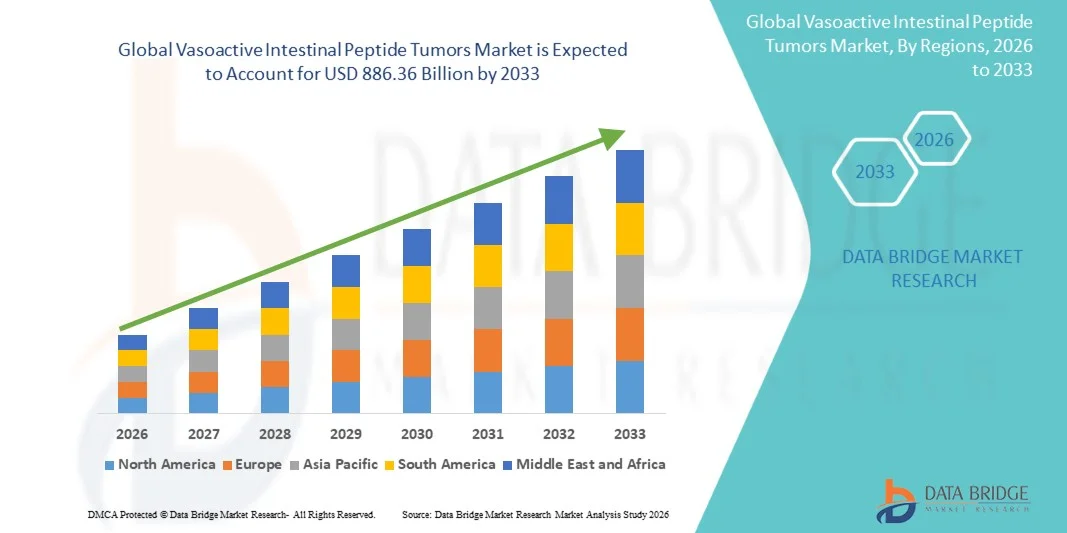
- The global Vasoactive Intestinal Peptide Tumors market size was valued at USD 410.50 billion in 2025and is expected to reach USD 886.36 billion by 2033, at a CAGR of 10.10% during the forecast period
- The market growth is largely fueled by the rising awareness of rare neuroendocrine neoplasms among oncologists and endocrinologists, growing adoption of advanced diagnostic imaging technologies including 68Ga-labelled somatostatin analog PET-CT for improved VIPoma localization and staging, and the expanding clinical adoption of targeted somatostatin analog therapies and peptide receptor radionuclide therapy
- Furthermore, increasing research funding directed toward rare pancreatic neuroendocrine tumors, the emergence of new targeted pharmacological interventions including mTOR inhibitors and tyrosine kinase inhibitors for metastatic VIPoma, and improvements in specialized cancer care infrastructure are establishing more effective and personalized management pathways. These converging factors are accelerating the uptake of vasoactive intestinal peptide tumor treatment solutions, thereby significantly boosting the industry's growth
Vasoactive Intestinal Peptide Tumors Market Analysis
- Vasoactive intestinal peptide tumors, also known as VIPomas or Verner-Morrison syndrome, are rare and predominantly malignant functional pancreatic neuroendocrine neoplasms characterized by unregulated hypersecretion of vasoactive intestinal peptide leading to the classic WDHA syndrome of watery diarrhea, hypokalemia, and achlorhydria, and are increasingly receiving focused clinical and pharmaceutical attention as the rare disease research landscape expands
- The escalating demand for VIPoma management solutions is primarily fueled by improvements in early diagnostic detection through advanced somatostatin receptor imaging, growing awareness of rare endocrine tumor presentations among primary care physicians and gastroenterologists, rising investment in targeted neuroendocrine tumor therapies, and expanding access to peptide receptor radionuclide therapy centers globally
- North America dominated the vasoactive intestinal peptide tumors market with the largest revenue share of 38.40% in 2025, characterized by the presence of major neuroendocrine tumor treatment centers, established somatostatin analog reimbursement frameworks, and leading pharmaceutical companies including Novartis and Ipsen Biopharmaceuticals actively developing next-generation neuroendocrine tumor therapies including lutetium Lu-177 dotatate and lanreotide-based treatment protocols
- Asia-Pacific is expected to be the fastest growing region in the vasoactive intestinal peptide tumors market during the forecast period due to improving rare disease diagnostic capabilities, growing neuroendocrine tumor clinical research activity, and increasing healthcare investment in advanced oncology infrastructure
- The Parenteral segment held the largest market revenue share of 64.1% in 2025, driven by the widespread use of injectable somatostatin analogs that require intramuscular or subcutaneous administration
Report Scope and Vasoactive Intestinal Peptide Tumors Market Segmentation
|
Attributes |
Vasoactive Intestinal Peptide Tumors Key Market Insights |
|
Segments Covered |
|
|
Countries Covered |
North America · U.S. · Canada · Mexico Europe · Germany · France · U.K. · Netherlands · Switzerland · Belgium · Russia · Italy · Spain · Turkey · Rest of Europe Asia-Pacific · China · Japan · India · South Korea · Singapore · Malaysia · Australia · Thailand · Indonesia · Philippines · Rest of Asia-Pacific Middle East and Africa · Saudi Arabia · U.A.E. · South Africa · Egypt · Israel · Rest of Middle East and Africa South America · Brazil · Argentina · Rest of South America |
|
Key Market Players |
· Novartis AG (Switzerland) · Ipsen Biopharmaceuticals (France) · Pfizer Inc. (U.S.) · Bristol-Myers Squibb (U.S.) · Sanofi (France) · Johnson and Johnson (U.S.) · GlaxoSmithKline plc (U.K.) · Merck and Co. (U.S.) · Eli Lilly and Company (U.S.) · AstraZeneca (U.K.) · Hoffman-La Roche (Switzerland) · Amgen (U.S.) · AbbVie (U.S.) · Regeneron Pharmaceuticals (U.S.) · Crinetics Pharmaceuticals Inc. (U.S.) · POINT Biopharma (U.S.) · Advanced Accelerator Applications/Novartis (Switzerland) · Camurus (Sweden) · ITM Solucin (Germany) · Exelixis (U.S.) |
|
Market Opportunities |
· Expanding Adoption of Peptide Receptor Radionuclide Therapy · Growing Precision Medicine Approaches for Rare Neuroendocrine Tumors |
|
Value Added Data Infosets |
In addition to the insights on market scenarios such as market value, growth rate, segmentation, geographical coverage, and major players, the market reports curated by the Data Bridge Market Research also include in-depth expert analysis, patient epidemiology, pipeline analysis, pricing analysis, and regulatory framework. |
Vasoactive Intestinal Peptide Tumors Market Trends
“Advancing Theranostics and Peptide Receptor Radionuclide Therapy Adoption”
- A significant and accelerating trend in the global vasoactive intestinal peptide tumors market is the growing adoption of theranostic approaches combining 68Ga-labelled somatostatin analog PET-CT imaging for precise tumor localization and staging with 177Lu-DOTATATE (LUTATHERA) peptide receptor radionuclide therapy for targeted treatment of somatostatin receptor-positive VIPomas and other neuroendocrine neoplasms
- For instance, ENETS guidelines published in 2023 provided updated consensus recommendations on the use of molecular imaging and theranostics in neuroendocrine neoplasms, identifying peptide receptor radionuclide therapy as a validated treatment option for advanced somatostatin receptor-positive neuroendocrine tumors including VIPomas, significantly expanding the evidence-based framework supporting broader clinical adoption
- The theranostic approach enables features such as precise patient selection based on somatostatin receptor expression profiling, individualized dosimetry to optimize therapeutic radioligand delivery to tumor sites while sparing healthy tissue, and real-time monitoring of treatment response through sequential imaging. In addition, the demonstrated efficacy of LUTATHERA in improving progression-free survival in advanced neuroendocrine tumors is directly driving physician adoption of PRRT protocols for metastatic VIPoma patients who have exhausted first-line somatostatin analog options
- The seamless integration of theranostic imaging and radionuclide therapy within specialized neuroendocrine tumor centers is facilitating multidisciplinary management approaches that combine somatostatin analog symptom control, surgical debulking, and PRRT within coordinated treatment algorithms. Through unified neuroendocrine oncology programs, patients can access comprehensive diagnostic and therapeutic capabilities under one institutional framework
- This trend toward more precise, individualized, and evidence-based VIPoma management is fundamentally reshaping clinical practice paradigms for rare pancreatic neuroendocrine tumors. Consequently, companies such as Advanced Accelerator Applications (Novartis), POINT Biopharma, and ITM Solucin are developing next-generation radiolabeled somatostatin analogs and targeted alpha particle therapy programs for neuroendocrine tumors
- The demand for theranostic solutions and advanced molecular imaging tools in VIPoma management is growing rapidly across specialized neuroendocrine tumor centers globally, as oncologists increasingly prioritize precision medicine approaches that optimize treatment selection based on individual tumor biology
Vasoactive Intestinal Peptide Tumors Market Dynamics
Driver
“Rising Rare Disease Awareness and Expanding Targeted Therapy Approvals”
- The increasing awareness of vasoactive intestinal peptide tumors among clinicians and patients, combined with the approval and clinical adoption of targeted neuroendocrine tumor therapies offering improved disease control and quality of life, is a primary driver for the heightened demand for VIPoma treatment and diagnostic solutions
- For instance, in 2023, ENETS published updated guidelines identifying sunitinib as a validated second-line therapy for refractory advanced VIPoma in cases of disease progression, expanding the evidence-based treatment algorithm beyond first-line somatostatin analogs and providing clinicians with clearer guidance for managing treatment-resistant metastatic VIPoma. Such guideline developments by key medical societies are expected to drive vasoactive intestinal peptide tumor market growth in the forecast period
- As the rare disease research landscape expands and government and philanthropic funding for neuroendocrine tumor research increases, pharmaceutical companies and academic centers are investing in larger patient registries, improved diagnostic algorithms based on plasma VIP levels above 250 pg/mL combined with multiphase contrast CT and somatostatin receptor scintigraphy, and novel therapeutic approaches that are improving clinical outcomes for VIPoma patients
- Furthermore, the growing body of evidence supporting PRRT with 177Lu-DOTATATE and the expanding use of everolimus and sunitinib in progressive VIPoma, combined with improving surgical techniques for curative resection in locoregionally confined disease, is providing a more comprehensive and effective toolkit for VIPoma management that is generating sustained demand for specialized treatment products and services
- The trend toward centralization of rare neuroendocrine tumor care at dedicated centers of excellence with multidisciplinary teams comprising endocrinologists, oncologists, radiologists, and surgeons, alongside improvements in rare disease patient identification and referral pathways, is expanding the treated patient population and driving market growth across both developed and emerging healthcare markets
Restraint/Challenge
“Ultra-Rare Prevalence and Delayed Diagnosis Limiting Market Penetration”
- The extremely low incidence of VIPomas, estimated at approximately one in ten million individuals per year, represents a fundamental challenge to market growth, as the small addressable patient population limits commercial incentives for pharmaceutical investment in VIPoma-specific drug development and constrains the scale of clinical trial programs required to generate robust efficacy data for regulatory approval
- For instance, the rarity of VIPoma frequently results in delayed diagnosis due to symptom overlap with more common gastrointestinal conditions including inflammatory bowel disease, laxative abuse, colitis, and malabsorption syndromes. Since plasma VIP levels exceeding 250 pg/mL are required for diagnostic confirmation, and clinicians in non-specialist settings may not routinely order VIP assays, many patients experience prolonged diagnostic odysseys lasting months to years before receiving appropriate treatment
- The fact that approximately 60% of VIPomas have already metastasized at the time of initial diagnosis, primarily to the liver and regional lymph nodes, underscores the critical need for improved early detection strategies. Late-stage presentation limits the proportion of patients eligible for curative surgical resection, the only potentially curative treatment, and increases the requirement for systemic therapies with more limited long-term disease control
- Companies such as Crinetics Pharmaceuticals are developing novel somatostatin analog formulations with improved receptor subtype selectivity that may offer enhanced VIP secretion suppression and tumor growth inhibition in VIPoma and other pancreatic neuroendocrine tumors, aiming to address the therapeutic limitations of current first-generation somatostatin analog therapies
- Overcoming these challenges through physician education programs focused on rare neuroendocrine tumor recognition, the development of improved biomarker-based diagnostic algorithms, expansion of specialized neuroendocrine tumor centers, and investment in rare disease regulatory pathways including orphan drug designation will be vital for sustained growth of the vasoactive intestinal peptide tumors market
Vasoactive Intestinal Peptide Tumors Market Scope
The market is segmented on the basis of treatment type, route of administration, end-users, and distribution channel.
- By Treatment Type
On the basis of treatment type, the Vasoactive Intestinal Peptide Tumors market is segmented into Somatostatin Therapy, Chemotherapy, and Others. The Somatostatin Therapy segment dominated the largest market revenue share of 52.4% in 2025, driven by its strong clinical effectiveness in controlling hormone secretion, tumor growth, and associated symptoms in vasoactive intestinal peptide-secreting tumors (VIPomas). These therapies are widely preferred due to their ability to reduce severe watery diarrhea and electrolyte imbalance, which are hallmark symptoms of the disease. Increasing diagnosis of neuroendocrine tumors is significantly boosting treatment demand. Physicians favor somatostatin analogs as first-line therapy due to improved patient outcomes. Expanding availability of long-acting formulations supports better compliance. Rising awareness of rare gastrointestinal neuroendocrine tumors further drives adoption. Strong hospital procurement and specialty oncology usage reinforce segment leadership. Ongoing clinical advancements in analog formulations enhance efficacy. Improved reimbursement coverage in developed markets also supports growth. These factors collectively ensure dominance of Somatostatin Therapy.
The Chemotherapy segment is expected to witness the fastest growth rate of 7.9% CAGR from 2026 to 2033, driven by increasing use in advanced, metastatic, or treatment-resistant vasoactive intestinal peptide tumors. Chemotherapy is often utilized when somatostatin therapy becomes insufficient. Rising incidence of late-stage diagnosis is contributing to demand. Growing adoption of combination treatment regimens in oncology practice supports expansion. Improved supportive care is enhancing tolerability of chemotherapy. Increasing research into targeted cytotoxic combinations further strengthens market growth. Expanding cancer care infrastructure in emerging economies is improving access. Physicians are increasingly using chemotherapy for aggressive tumor control. Clinical trials exploring novel regimens are adding momentum. These factors position Chemotherapy as the fastest-growing treatment segment.
- By Route of Administration
On the basis of route of administration, the Vasoactive Intestinal Peptide Tumors market is segmented into Oral, Parenteral, and Others. The Parenteral segment held the largest market revenue share of 64.1% in 2025, driven by the widespread use of injectable somatostatin analogs that require intramuscular or subcutaneous administration. Long-acting injectable formulations are commonly used for sustained symptom control in VIPoma patients. Parenteral delivery ensures better bioavailability and prolonged therapeutic action. Hospitals and specialty centers frequently administer these injections under clinical supervision. Rising preference for monthly or long-acting injectable therapies supports demand. Strong physician reliance on injectable somatostatin analogs further reinforces dominance. Improved patient adherence compared with daily oral dosing is another key driver. Expanding oncology infusion infrastructure enhances accessibility. Increasing diagnosis rates of neuroendocrine tumors also support usage. These factors ensure Parenteral segment leadership.
The Oral segment is expected to witness the fastest growth rate of 8.2% CAGR from 2026 to 2033, driven by ongoing development of oral formulations and supportive therapies for symptom management. Patients prefer oral medications due to convenience and ease of administration. Growing research into oral somatostatin analogs is supporting future expansion. Rising demand for home-based treatment options is boosting adoption. Improved drug delivery technologies are enhancing oral bioavailability. Increasing outpatient management of neuroendocrine tumors supports usage. Pharmaceutical companies are investing in oral pipeline innovations. Better patient compliance in chronic therapy settings is another driver. Expanding availability through retail and online pharmacies further aids growth. These factors make Oral the fastest-growing route of administration segment.
- By End-Users
On the basis of end-users, the Vasoactive Intestinal Peptide Tumors market is segmented into Hospitals, Homecare, Specialty Centres, and Others. The Hospitals segment accounted for the largest market revenue share of 49.6% in 2025, driven by the complex nature of VIP tumor diagnosis and treatment, which requires multidisciplinary care, advanced imaging, and hormone monitoring. Hospitals remain the primary centers for administering injectable somatostatin therapy and chemotherapy. Patients with severe dehydration and electrolyte imbalance are frequently managed in inpatient settings. Availability of oncology specialists and diagnostic infrastructure supports segment dominance. Increasing referrals from primary care centers further boosts hospital visits. Strong reimbursement frameworks in developed regions enhance treatment access. Growing prevalence of rare neuroendocrine tumors contributes to demand. Hospitals also manage complications and emergency stabilization. Expansion of tertiary care centers globally supports growth. These factors ensure Hospitals remain the dominant end-user segment.
The Specialty Centres segment is expected to witness the fastest growth rate of 9.4% CAGR from 2026 to 2033, driven by rising demand for focused neuroendocrine tumor care and personalized treatment approaches. Patients increasingly prefer specialty oncology and gastroenterology clinics for expert management. These centers provide advanced diagnostic testing and targeted therapies. Growing awareness of rare tumor management is supporting clinic visits. Improved access to outpatient infusion services enhances adoption. Expansion of private specialty healthcare networks is accelerating growth. Tele-oncology and digital monitoring tools are improving patient engagement. Faster appointment access compared to hospitals further drives preference. Increasing physician referrals to specialized centers supports expansion. These factors position Specialty Centres as the fastest-growing end-user segment.
- By Distribution Channel
On the basis of distribution channel, the Vasoactive Intestinal Peptide Tumors market is segmented into Hospital Pharmacy, Online Pharmacy, and Retail Pharmacy. The Hospital Pharmacy segment dominated the largest market revenue share of 55.8% in 2025, driven by the requirement for specialized dispensing of high-cost injectable therapies such as somatostatin analogs and chemotherapy agents. Hospital pharmacies ensure proper handling, storage, and administration of critical oncology drugs. Most VIP tumor treatments are initiated and monitored in hospital settings. Strong integration with oncology departments supports high prescription volumes. Reimbursement-linked drug distribution further strengthens hospital pharmacy dominance. Availability of controlled and specialty medications is another key factor. Increasing hospitalization rates for rare neuroendocrine tumors boosts demand. Expanding tertiary care infrastructure supports growth in this channel. Physician-led prescribing patterns reinforce hospital-based dispensing. These factors ensure Hospital Pharmacy remains the dominant distribution channel.
The Online Pharmacy segment is expected to witness the fastest growth rate of 10.1% CAGR from 2026 to 2033, driven by increasing digitalization of healthcare and growing demand for convenient medication delivery services. Patients on long-term maintenance therapy prefer home delivery of oral and supportive medications. Telemedicine integration is enabling seamless prescription fulfillment. Rising smartphone penetration and internet access are accelerating adoption. Competitive pricing and subscription refill services are attracting users. Expanding logistics networks are improving access in remote regions. Chronic care patients benefit from reduced hospital visits. Improved regulatory acceptance of e-pharmacy platforms supports growth. Growing trust in digital healthcare ecosystems further boosts adoption. These factors collectively make Online Pharmacy the fastest-growing distribution channel segment.
Vasoactive Intestinal Peptide Tumors Market Regional Analysis
- North America dominated the vasoactive intestinal peptide tumors market with the largest revenue share of 38.40% in 2025, driven by the presence of advanced neuroendocrine tumor centers at major academic medical institutions, established reimbursement frameworks for somatostatin analog therapies and LUTATHERA, and the leadership of major pharmaceutical companies including Novartis, Ipsen, and Crinetics Pharmaceuticals in developing next-generation neuroendocrine tumor treatments
- Consumers in the region benefit from comprehensive rare disease support infrastructure including the North American Neuroendocrine Tumor Society (NANETS) guidelines supporting standardized VIPoma management, growing availability of 68Ga-DOTATATE PET imaging at major oncology centers, and FDA orphan drug designations facilitating specialized neuroendocrine tumor drug development
- This widespread adoption is further supported by high levels of awareness among oncologists and endocrinologists regarding rare endocrine tumor presentations, a technologically advanced diagnostic imaging infrastructure, and the growing preference for multidisciplinary neuroendocrine tumor team management, establishing North America as the dominant VIPoma treatment market globally
U.S. Vasoactive Intestinal Peptide Tumors Market Insight
The U.S. vasoactive intestinal peptide tumors market captured the largest revenue share within North America in 2025, fueled by the presence of leading neuroendocrine tumor centers at institutions including Mayo Clinic, MD Anderson Cancer Center, and Memorial Sloan Kettering, strong clinical research activity in pancreatic neuroendocrine tumors, and the established FDA approval of LUTATHERA for somatostatin receptor-positive neuroendocrine tumors supporting PRRT reimbursement. The U.S. market benefits from broad access to advanced 68Ga-DOTATATE PET imaging for VIPoma staging and treatment response assessment, supporting more personalized and effective disease management.
Europe Vasoactive Intestinal Peptide Tumors Market Insight
The Europe vasoactive intestinal peptide tumors market is projected to expand at a substantial CAGR throughout the forecast period, primarily driven by the ENETS guideline framework providing comprehensive evidence-based guidance for neuroendocrine tumor management, the established availability of PRRT with 177Lu-DOTATATE at specialized European nuclear medicine centers, and growing investment by Ipsen, Novartis, and ITM Solucin in next-generation neuroendocrine tumor therapies. European countries including Germany, France, and the Netherlands have well-established neuroendocrine tumor center networks that provide specialized VIPoma diagnosis, treatment, and long-term follow-up capabilities. In addition, the European Reference Networks facilitating cross-border collaboration on rare endocrine tumor management are strengthening the regional knowledge base and clinical care standards for VIPoma.
U.K. Vasoactive Intestinal Peptide Tumors Market Insight
The U.K. vasoactive intestinal peptide tumors market is anticipated to grow at a noteworthy CAGR during the forecast period, driven by the NHS England specialized neuroendocrine tumor service network providing access to expert multidisciplinary care, the availability of LUTATHERA through NHS England commissioning, and growing clinical research activity at centers including the Royal Free Hospital and Christie Hospital in rare neuroendocrine tumor management. In addition, Cancer Research UK's growing investment in neuroendocrine tumor research is supporting translational studies that may identify new therapeutic targets for VIPoma.
Germany Vasoactive Intestinal Peptide Tumors Market Insight
The Germany vasoactive intestinal peptide tumors market is expected to expand at a considerable CAGR during the forecast period, fueled by the presence of leading European neuroendocrine tumor centers, strong statutory health insurance coverage for somatostatin analog therapies and PRRT, and the headquarters of ITM Solucin, a specialist developer of targeted radionuclide therapies for neuroendocrine tumors. Germany's well-developed nuclear medicine infrastructure and emphasis on evidence-based rare cancer management promote the adoption of advanced theranostic approaches for VIPoma treatment.
Asia-Pacific Vasoactive Intestinal Peptide Tumors Market Insight
The Asia-Pacific vasoactive intestinal peptide tumors market is poised to grow at the fastest CAGR of 8.1% during the forecast period of 2026 to 2033, driven by rapidly improving rare disease awareness, expanding neuroendocrine tumor center capabilities, and growing availability of 68Ga-DOTATATE PET imaging in China, Japan, South Korea, and Australia. For instance, a 2022 single-center clinical analysis of functioning pancreatic neuroendocrine tumors including VIPomas published by Murakami and others in the Endocrine Journal demonstrated increasing diagnostic precision and clinical management capabilities at Japanese neuroendocrine tumor centers, reflecting the region's improving capacity for VIPoma care. In addition, government initiatives supporting rare disease drug access and health insurance coverage expansion in China and India are expected to drive increasing VIPoma treatment adoption across the region.
Japan Vasoactive Intestinal Peptide Tumors Market Insight
The Japan vasoactive intestinal peptide tumors market is gaining momentum due to the country's strong focus on rare endocrine disease research, well-developed gastroenterology and endocrine oncology infrastructure, and growing adoption of somatostatin analog imaging and PRRT at specialized nuclear medicine centers. Japan's aging population and increasing prevalence of pancreatic conditions, combined with the country's high-quality academic medical research culture, are expected to support clinical advancements in VIPoma diagnosis and management.
China Vasoactive Intestinal Peptide Tumors Market Insight
The China vasoactive intestinal peptide tumors market accounted for the largest market revenue share in Asia-Pacific in 2025, attributed to the large patient population, growing awareness of pancreatic neuroendocrine tumors among Chinese gastroenterologists and endocrinologists, and rapidly expanding access to advanced diagnostic imaging and oncology treatment infrastructure in tier-one and tier-two cities. Chinese academic publications documenting VIPoma clinical management, including a review of 31 VIPoma cases published in the journal Pancreas, reflect the country's growing clinical research activity in this rare tumor entity.
Vasoactive Intestinal Peptide Tumors Market Share
The Vasoactive Intestinal Peptide Tumors industry is primarily led by well-established companies, including:
- Novartis AG (Switzerland)
- Ipsen Biopharmaceuticals (France)
- Pfizer Inc. (U.S.)
- Bristol-Myers Squibb (U.S.)
- Sanofi (France)
- Johnson and Johnson (U.S.)
- GlaxoSmithKline plc (U.K.)
- Merck and Co. (U.S.)
- Eli Lilly and Company (U.S.)
- AstraZeneca (U.K.)
- Hoffman-La Roche (Switzerland)
- Amgen (U.S.)
- AbbVie (U.S.)
- Regeneron Pharmaceuticals (U.S.)
- Crinetics Pharmaceuticals Inc. (U.S.)
- POINT Biopharma (U.S.)
- Advanced Accelerator Applications/Novartis (Switzerland)
- Camurus (Sweden)
- ITM Solucin (Germany)
- Exelixis (U.S.)
Latest Developments in Global Vasoactive Intestinal Peptide Tumors Market
- In October 2021, Shahid et al. reported a pediatric case linking BRAF V600E mutation with vasoactive intestinal peptide–secreting syndrome in MYCN-amplified neuroblastoma, highlighting a genetic association that expanded understanding of VIP-secreting tumor biology and supported molecular-targeted research directions in neuroendocrine tumors
- In February 2022, Langer et al. published a detailed review on VIP and PACAP receptor signaling, providing new insights into signal transduction pathways involved in VIPoma pathophysiology and supporting development of receptor-targeted therapies for neuroendocrine tumors
- In May 2023, Karele et al. (review article published in the Journal of Clinical Medicine) updated clinical evidence showing that elevated vasoactive intestinal peptide (VIP) levels remain a consistent biomarker in all confirmed VIPoma cases, reinforcing its diagnostic reliability and supporting earlier detection strategies using biochemical testing and imaging
- In February 2025, StatPearls clinical update confirmed that VIPomas are rare pancreatic neuroendocrine tumors associated with severe watery diarrhea and electrolyte imbalance, and emphasized increasing use of somatostatin analogs (such as octreotide) alongside surgical resection and targeted radionuclide therapy in advanced cases

- Interactive Data Analysis Dashboard
- Company Analysis Dashboard for high growth potential opportunities
- Research Analyst Access for customization & queries
- Competitor Analysis with Interactive dashboard
- Latest News, Updates & Trend analysis
- Harness the Power of Benchmark Analysis for Comprehensive Competitor Tracking
Data collection and base year analysis are done using data collection modules with large sample sizes. The stage includes obtaining market information or related data through various sources and strategies. It includes examining and planning all the data acquired from the past in advance. It likewise envelops the examination of information inconsistencies seen across different information sources. The market data is analysed and estimated using market statistical and coherent models. Also, market share analysis and key trend analysis are the major success factors in the market report. To know more, please request an analyst call or drop down your inquiry.
The key research methodology used by DBMR research team is data triangulation which involves data mining, analysis of the impact of data variables on the market and primary (industry expert) validation. Data models include Vendor Positioning Grid, Market Time Line Analysis, Market Overview and Guide, Company Positioning Grid, Patent Analysis, Pricing Analysis, Company Market Share Analysis, Standards of Measurement, Global versus Regional and Vendor Share Analysis. To know more about the research methodology, drop in an inquiry to speak to our industry experts.
Data Bridge Market Research is a leader in advanced formative research. We take pride in servicing our existing and new customers with data and analysis that match and suits their goal. The report can be customized to include price trend analysis of target brands understanding the market for additional countries (ask for the list of countries), clinical trial results data, literature review, refurbished market and product base analysis. Market analysis of target competitors can be analyzed from technology-based analysis to market portfolio strategies. We can add as many competitors that you require data about in the format and data style you are looking for. Our team of analysts can also provide you data in crude raw excel files pivot tables (Fact book) or can assist you in creating presentations from the data sets available in the report.












