


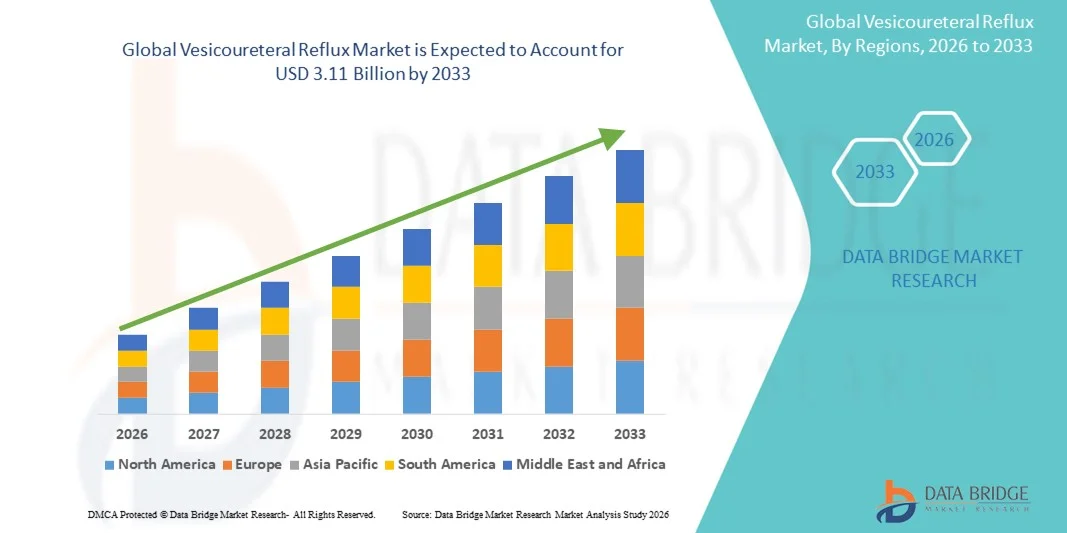
Vesicoureteral Reflux Market Size
- The global vesicoureteral reflux market size was valued at USD 2.19 billion in 2025 and is expected to reach USD 3.11 billion by 2033, at a CAGR of 4.50% during the forecast period
- The market growth is largely fueled by the increasing prevalence of urinary tract disorders, rising awareness about pediatric and adult urological health, and advancements in diagnostic and therapeutic solutions for vesicoureteral reflux
- Furthermore, growing adoption of minimally invasive treatments, increasing investment in healthcare infrastructure, and rising demand for early diagnosis and effective management of urinary tract infections are accelerating the uptake of Vesicoureteral Reflux solutions, thereby significantly boosting the industry's growth
Vesicoureteral Reflux Market Analysis
- Vesicoureteral reflux, involving the backward flow of urine from the bladder into the ureters and kidneys, is increasingly recognized as a critical pediatric and adult urological disorder due to its prevalence, potential complications, and impact on patient quality of life
- The escalating demand for vesicoureteral reflux solutions is primarily fueled by rising awareness of early diagnosis, advancements in minimally invasive treatments, and growing adoption of effective therapeutic interventions among healthcare providers
- North America dominated the vesicoureteral reflux market with the largest revenue share of 36.5% in 2025, supported by advanced healthcare infrastructure, strong presence of key urology specialists, and high adoption of diagnostic and therapeutic interventions, with the U.S. experiencing substantial growth due to proactive screening programs and rising awareness about early intervention
- Asia-Pacific is expected to be the fastest growing region in the vesicoureteral reflux market during the forecast period, driven by increasing healthcare expenditure, rising prevalence of urinary tract infections, growing awareness about pediatric urological health, and improving access to advanced diagnostic and treatment options in countries such as China, India, and Japan
- The Medication segment dominated the largest market revenue share of 65.2% in 2025, as conservative management remains the first-line approach for mild-to-moderate reflux
Report Scope and Vesicoureteral Reflux Market Segmentation
|
Attributes |
Vesicoureteral Reflux Key Market Insights |
|
Segments Covered |
|
|
Countries Covered |
North America
Europe
Asia-Pacific
Middle East and Africa
South America
|
|
Key Market Players |
|
|
Market Opportunities |
|
|
Value Added Data Infosets |
In addition to the insights on market scenarios such as market value, growth rate, segmentation, geographical coverage, and major players, the market reports curated by the Data Bridge Market Research also include in-depth expert analysis, patient epidemiology, pipeline analysis, pricing analysis, and regulatory framework. |
Vesicoureteral Reflux Market Trends
Rising Focus on Early Diagnosis and Minimally Invasive Treatments
- A significant trend in the global vesicoureteral reflux market is the increasing focus on early diagnosis through advanced imaging techniques and non-invasive procedures. Early detection allows for timely interventions, reducing the risk of kidney damage and recurrent urinary tract infections in pediatric patients
- For instance, in March 2023, a leading pediatric hospital in the U.S. adopted contrast-enhanced voiding ultrasonography for routine screening of high-risk children, resulting in earlier detection and reduced need for invasive procedures
- Technological advancements in diagnostic imaging, including ultrasonography and voiding cystourethrography, are enabling more accurate and faster detection of reflux severity, guiding treatment decisions effectively
- Minimally invasive surgical techniques, such as endoscopic injection therapy, are gaining traction due to reduced hospital stays, lower post-operative complications, and faster recovery
- There is growing adoption of evidence-based treatment protocols and personalized management plans, tailoring therapy to the severity and frequency of reflux episodes
- Preventive strategies, including prophylactic antibiotics and routine monitoring, are increasingly emphasized, especially in high-risk pediatric populations. Healthcare providers are integrating multidisciplinary care, combining pediatric nephrology, urology, and radiology for better patient outcomes
- The trend is further supported by increasing awareness among parents and caregivers about potential long-term complications of untreated Vesicoureteral Reflux. Research initiatives and clinical studies focusing on improved drug formulations and novel treatment strategies continue to drive innovation in the field
- Minimally invasive interventions are gradually replacing more invasive surgical options, enhancing patient satisfaction and compliance. Healthcare policies in developed regions are encouraging the adoption of early screening programs, further boosting market growth
- Insurance coverage for less invasive treatment options is improving accessibility and adoption rates. Overall, these combined trends reflect a paradigm shift toward patient-centric, early intervention strategies in Vesicoureteral Reflux management
Vesicoureteral Reflux Market Dynamics
Driver
Increasing Prevalence of Pediatric Urinary Disorders
- The rising prevalence of pediatric urinary tract infections and associated conditions is a key driver for the growth of the Vesicoureteral Reflux market. Early intervention is critical to prevent kidney damage and long-term complications
- For instance, epidemiological studies indicate that 30–40% of children with urinary tract infections may present with reflux, emphasizing the need for timely diagnosis and management
- Increasing parental awareness about urinary health and the long-term impact of reflux is contributing to higher treatment uptake. Technological improvements in diagnostic procedures are enabling accurate and rapid detection, supporting early intervention strategies
- The development of safer and more effective minimally invasive therapies enhances patient compliance and broadens the treatment adoption base. Government initiatives and healthcare programs promoting child health monitoring contribute to market expansion
- Training programs for healthcare professionals on modern diagnostic and treatment techniques support standardized care delivery. Clinical guidelines recommending prophylactic antibiotics or selective surgical intervention are driving structured treatment approaches
- Investments in pediatric nephrology and urology infrastructure are expanding access to care in emerging markets. Partnerships between hospitals, clinics, and pharmaceutical companies are ensuring consistent supply of therapeutic agents and treatment options
- Patient-centric innovations, such as customized drug formulations and non-invasive procedures, further enhance market growth. Overall, the growing burden of pediatric urinary disorders is significantly propelling Vesicoureteral Reflux market development
Restraint/Challenge
Concerns Regarding High Treatment Costs and Limited Awareness in Emerging Regions
- High treatment costs, especially for advanced surgical interventions and long-term medication, remain a significant barrier to widespread adoption of Vesicoureteral Reflux management options in developing regions. Limited awareness among caregivers about the importance of early diagnosis and intervention further restricts timely treatment initiation
- Insurance coverage gaps and high out-of-pocket expenses can delay or prevent access to effective care. Variability in treatment protocols and availability of trained pediatric specialists creates disparities in care quality across regions
- Addressing these challenges requires targeted educational campaigns, improved reimbursement policies, and capacity-building in healthcare infrastructure
- For instance, studies in rural or underdeveloped areas show that lack of early screening leads to delayed diagnosis and higher complication rates, highlighting the need for awareness programs
- Healthcare systems must invest in diagnostic tools and minimally invasive therapy training to expand access. Cost-effective, scalable solutions such as telemedicine consultations and remote monitoring can mitigate some barriers to care
- Strategies aimed at reducing procedural costs and improving medication availability are essential to increase adoption. Collaboration between public and private sectors can strengthen treatment accessibility and affordability
- Enhancing caregiver education about the risks of untreated Vesicoureteral Reflux is critical for improving early intervention rates. Overall, addressing financial, infrastructural, and awareness-related challenges is key to sustaining market growth globally
Vesicoureteral Reflux Market Scope
The market is segmented on the basis of type, drug, treatment, diagnosis, end-users, and distribution channel.
- By Type
On the basis of type, the Vesicoureteral Reflux market is segmented into Primary Vesicoureteral Reflux and Secondary Vesicoureteral Reflux. The Primary Vesicoureteral Reflux segment dominated the largest market revenue share of 62.3% in 2025, driven by its higher prevalence in pediatric populations and the increased focus on early diagnosis and intervention. This segment benefits from standardized screening programs in children with recurrent urinary tract infections and routine pediatric check-ups. Healthcare providers emphasize preventive care and timely management, which has led to higher adoption of recommended treatment protocols. Hospitals and specialized pediatric clinics play a key role in managing primary cases, contributing to the segment’s leadership. Moreover, growing awareness among parents about kidney health and reflux complications is fueling early treatment adoption. Technological improvements in non-invasive diagnostics have further reinforced this dominance. Government and private health initiatives are increasingly focusing on early-stage detection, thereby boosting market penetration. Availability of a range of drug therapies specifically approved for primary reflux supports consistent revenue growth. Pediatric urology guidelines are regularly updated, which promotes adherence to treatment, further consolidating market share. Insurance coverage for children with recurrent infections also enhances accessibility. Centralized procurement of medicines and treatment kits by hospitals ensures consistent supply for primary cases. Clinical research continues to focus on primary reflux, resulting in improved treatment outcomes.
The Secondary Vesicoureteral Reflux segment is expected to witness the fastest CAGR of 7.8% from 2026 to 2033, driven by rising cases associated with underlying conditions such as obstruction, posterior urethral valves, or neurogenic bladder. Increasing adult diagnoses due to secondary reflux, especially in regions with improved healthcare access, support the growth. Patients with comorbidities are receiving targeted management combining surgical and medical interventions. Technological advancements in imaging and nuclear scans have improved detection accuracy in secondary cases, contributing to faster adoption. Rising awareness among adult patients about the risks of untreated reflux, including renal scarring, has led to increased hospital visits. Treatment protocols for secondary reflux are becoming more personalized, enhancing outcomes. Hospitals and specialty clinics are expanding capacity for complex case management, further boosting the segment. Pharmaceutical companies are developing drugs that specifically address secondary reflux complications. Early intervention programs and guidelines issued by nephrology associations also support growth. The segment benefits from higher reimbursement for complex cases, improving accessibility. Multidisciplinary care approaches are increasingly common, integrating urology, nephrology, and radiology. Research studies focusing on adult and secondary cases are on the rise, supporting clinical adoption. Clinical awareness campaigns highlight the importance of diagnosis and timely treatment for secondary reflux.
- By Drug
On the basis of drug, the market is segmented into Aminoglycosides, Quinolones, Beta-lactam, Azoles, and Others. The Beta-lactam segment dominated the largest market revenue share of 48.7% in 2025, primarily due to their effectiveness in preventing urinary tract infections associated with reflux. Beta-lactams are widely prescribed in pediatric and adult patients for prophylaxis and active infection management. Their safety profile, availability in oral and injectable forms, and inclusion in standard treatment protocols contribute to dominance. Hospitals, clinics, and pharmacies stock Beta-lactams extensively, ensuring accessibility. Prescriber familiarity, supported by extensive clinical data, promotes continued use. This segment also benefits from pediatric dosing options, enabling broader adoption. Integration with combination therapy regimens in recurrent infections further strengthens market share. Beta-lactams are cost-effective relative to newer antibiotics, improving adoption in emerging regions. Regulatory approvals for pediatric and adult use enhance trust and utilization. Continuous clinical monitoring ensures safety and adherence, reinforcing dominance. Strong supply chains and hospital procurement strategies ensure availability. The segment benefits from government guidelines recommending Beta-lactams as first-line therapy.
The Aminoglycosides segment is expected to witness the fastest CAGR of 8.1% from 2026 to 2033, driven by their potency in severe or resistant infections. Hospitals treating complicated reflux cases increasingly adopt Aminoglycosides due to high efficacy against Gram-negative pathogens. Advances in formulation reduce nephrotoxicity, encouraging wider use. Rising cases of antibiotic-resistant UTIs associated with reflux necessitate targeted therapy. Hospital formularies are prioritizing Aminoglycosides for severe infections, supporting revenue growth. Clinicians rely on Aminoglycosides for inpatient care, particularly when IV administration is required. Combination therapies with Beta-lactams enhance effectiveness. Regional awareness campaigns about resistance patterns support adoption. Multidose protocols and improved monitoring ensure safe administration. Uptake in developing regions is improving due to better access to hospital-grade antibiotics. Clinical guidelines highlight Aminoglycosides as critical for complicated infections. Research and clinical trials are expanding their indications for reflux-related infections.
- By Treatment
On the basis of treatment, the market is segmented into Medication, Surgery, and Others. The Medication segment dominated the largest market revenue share of 65.2% in 2025, as conservative management remains the first-line approach for mild-to-moderate reflux. Medication offers non-invasive options for both pediatric and adult patients, reducing hospital stays and recovery time. Standardized antibiotic prophylaxis regimens are widely implemented in clinical practice. Long-term follow-up with medication allows monitoring for spontaneous resolution, especially in children. Hospitals and clinics stock essential drugs and maintain treatment protocols. Insurance coverage supports accessibility. Early diagnosis programs promote medication-based management. Clinical studies demonstrate high success rates with tailored drug therapy. Patient adherence programs further reinforce medication efficacy. Treatment guidelines prioritize drug management for uncomplicated cases. Education programs for caregivers enhance compliance.
The Surgery segment is expected to witness the fastest CAGR of 7.5% from 2026 to 2033, driven by increasing adoption of minimally invasive and robotic-assisted surgical interventions for severe or persistent reflux. Surgical procedures, including ureteral reimplantation, are preferred when medication fails or in high-grade reflux. Advancements in endoscopic injection techniques reduce complications and recovery time. Hospitals are investing in surgical infrastructure and training for urologists. Rising awareness among parents and adult patients about surgical options supports adoption. Insurance coverage for surgery enhances accessibility. Early intervention in complex cases reduces long-term renal damage. Minimally invasive techniques improve patient satisfaction and recovery outcomes. Surgeons increasingly adopt evidence-based protocols. Clinical guidelines recommend surgery for refractory cases. Increasing adult patient population drives demand. Research and innovation in surgical techniques further fuel growth.
- By Diagnosis
On the basis of diagnosis, the market is segmented into Urinalysis, Ultrasound, X-ray, Cystography, Nuclear Scan, and Others. The Ultrasound segment dominated the largest market revenue share of 52.1% in 2025, due to its non-invasive nature, accessibility, and cost-effectiveness in detecting kidney and bladder anomalies. Ultrasound is widely used for initial screening, especially in pediatric populations, and is frequently recommended for follow-up. Its safety profile makes it suitable for repeated use. Hospitals and diagnostic centers maintain high adoption due to minimal operational requirements. Ultrasound results guide treatment decisions effectively. Widespread availability in clinics enhances penetration. Standardized protocols improve diagnostic accuracy. Ultrasound is compatible with telemedicine consultations. Government initiatives encourage imaging for early detection. Radiologists are trained extensively in pediatric urology imaging. Ongoing technological improvements enhance resolution and diagnostic confidence.
The Cystography segment is expected to witness the fastest CAGR of 8.4% from 2026 to 2033, as it provides accurate grading of reflux severity. Increasing use of voiding cystourethrography in high-risk pediatric and adult populations drives adoption. Hospitals and specialized clinics are investing in equipment. Enhanced imaging techniques reduce radiation exposure. Clinical guidelines recommend cystography for confirmation of high-grade reflux. Awareness among parents and clinicians boosts uptake. Insurance coverage for diagnostic imaging improves accessibility. Integration with nuclear scans for complex cases supports growth. Technological advancements enhance image clarity. Multidisciplinary care relies on cystography for treatment planning. Training programs for radiologists improve utilization. Increasing prevalence of complicated reflux cases drives demand.
- By End-Users
On the basis of end-users, the market is segmented into Clinic, Hospital, and Others. The Hospital segment dominated the largest market revenue share of 59.8% in 2025, as hospitals provide comprehensive diagnosis, medication, and surgical interventions. Hospitals cater to both inpatient and outpatient care, ensuring consistent treatment continuity. Pediatric and adult urology departments play a central role in patient management. Availability of multidisciplinary teams supports effective treatment. Hospitals maintain standardized protocols for antibiotic prophylaxis and surgical intervention. They also provide patient monitoring and follow-up. Centralized procurement ensures consistent drug supply. Insurance coverage is more prevalent in hospital settings. Hospitals are increasingly adopting minimally invasive surgical techniques. Clinical research initiatives are often hospital-based. Awareness campaigns often originate from hospitals. Hospital adoption drives overall market growth.
The Clinic segment is expected to witness the fastest CAGR of 7.9% from 2026 to 2033, driven by the expansion of specialized pediatric and adult urology clinics. Clinics are increasingly providing non-invasive diagnostics, medication management, and patient follow-up. Rising number of outpatient clinics in urban and semi-urban areas enhances accessibility. Adoption of telemedicine consultations facilitates early diagnosis and routine monitoring. Clinics increasingly implement preventive care and early intervention programs. Clinic-based services reduce the burden on hospitals. Specialized clinics focus on patient education and adherence programs. Integration of imaging facilities within clinics supports comprehensive care. Clinics are leveraging digital health records for better patient management. Awareness initiatives encourage early visits to clinics. Insurance coverage for clinic visits is expanding. Clinic networks are growing in emerging regions.
- By Distribution Channel
On the basis of distribution channel, the market is segmented into Hospital Pharmacy, Retail Pharmacy, and Online Pharmacy. The Hospital Pharmacy segment dominated the largest market revenue share of 57.4% in 2025, as hospitals procure both oral and injectable therapies in bulk for inpatient and outpatient care. Centralized procurement, regulatory compliance, and quality assurance reinforce leadership. Strategic partnerships with pharmaceutical companies ensure consistent supply. Bulk purchasing reduces costs and ensures uninterrupted availability of essential drugs. Hospital pharmacies maintain specialized drug inventories for pediatric and adult reflux cases. Collaborative programs with clinics support follow-up treatments. Hospital pharmacies provide on-site counseling and patient education. Insurance reimbursement policies enhance adoption through hospital pharmacies. Government initiatives encourage hospital-based distribution for quality control. Training programs for pharmacy staff improve dispensing accuracy. Hospital pharmacy dominance ensures adherence to treatment protocols.
The Retail Pharmacy segment is expected to witness the fastest CAGR of 8.0% from 2026 to 2033, driven by the growing accessibility of prescription drugs for outpatient care and home-based treatment management. Increasing urban retail networks and rising awareness about VUR management encourage consumer preference for retail pharmacies. Retail pharmacies provide convenient access to medications for mild to moderate cases. Expansion of pharmacy chains enhances geographic reach. Collaborative programs with physicians facilitate prescription adherence. Online ordering and home delivery services complement retail access. Patient counseling and guidance improve medication adherence. Marketing campaigns raise awareness about preventive care. Insurance coverage for retail pharmacy purchases supports affordability. Increasing preference for self-managed outpatient therapy drives adoption. Retail pharmacies stock specialized pediatric and adult formulations. Digital health platforms partner with retail pharmacies to track adherence. Retail pharmacy growth aligns with the trend toward decentralized healthcare access.
Vesicoureteral Reflux Market Regional Analysis
- North America dominated the vesicoureteral reflux market with the largest revenue share of 36.5% in 2025
- Supported by advanced healthcare infrastructure, strong presence of key urology specialists, and high adoption of diagnostic and therapeutic interventions
- The market experiencing substantial growth due to proactive screening programs and rising awareness about early intervention
U.S. Vesicoureteral Reflux Market Insight
The U.S. vesicoureteral reflux market captured the largest revenue share in North America in 2025, fueled by rising awareness of early diagnosis and the growing adoption of effective treatment options. The increasing number of pediatric urology clinics, government-led screening programs, and proactive infection management initiatives are significantly contributing to market growth.
Europe Vesicoureteral Reflux Market Insight
The Europe vesicoureteral reflux market is projected to expand at a substantial CAGR during the forecast period, driven by rising prevalence of urinary tract infections among children, increasing healthcare expenditure, and growing adoption of advanced therapeutic interventions. Countries such as Germany, France, and the U.K. are witnessing notable growth due to well-established healthcare infrastructure and increasing awareness about pediatric urology.
U.K. Vesicoureteral Reflux Market Insight
The U.K. vesicoureteral reflux market is anticipated to grow at a steady CAGR during the forecast period, supported by increasing awareness among parents about pediatric urological health and rising adoption of diagnostic and minimally invasive treatment procedures. Enhanced healthcare policies and the presence of specialized urology centers are further driving growth.
Germany Vesicoureteral Reflux Market Insight
The Germany vesicoureteral reflux market is expected to expand at a considerable CAGR during the forecast period, fueled by high awareness levels regarding early intervention, strong healthcare infrastructure, and availability of specialized pediatric urology services. The integration of advanced diagnostic techniques and treatment options is also contributing to market growth.
Asia-Pacific Vesicoureteral Reflux Market Insight
The Asia-Pacific vesicoureteral reflux market is poised to grow at the fastest CAGR during the forecast period, driven by rising healthcare expenditure, increasing prevalence of urinary tract infections, growing awareness about pediatric urological disorders, and improved access to advanced diagnostic and therapeutic options in countries such as China, India, and Japan.
Japan Vesicoureteral Reflux Market Insight
The Japan vesicoureteral reflux market is gaining momentum due to rising awareness of pediatric urological health, government initiatives promoting early diagnosis, and the increasing adoption of advanced treatment options. The presence of highly specialized healthcare facilities supports market expansion.
China Vesicoureteral Reflux Market Insight
The China vesicoureteral reflux market accounted for the largest market revenue share in Asia-Pacific in 2025, attributed to the country’s expanding healthcare infrastructure, increasing prevalence of urinary tract infections among children, and rising awareness about early diagnosis and treatment. The availability of advanced diagnostic and therapeutic solutions further propels market growth.
Vesicoureteral Reflux Market Share
The Vesicoureteral Reflux industry is primarily led by well-established companies, including:
- Pfizer (U.S.)
- Novartis (Switzerland)
- GlaxoSmithKline (U.K.)
- Merck & Co. (U.S.)
- AstraZeneca (U.K.)
- Sanofi (France)
- AbbVie (U.S.)
- Janssen Pharmaceuticals (Belgium)
- Bayer (Germany)
- Cipla (India)
- Sun Pharmaceutical Industries (India)
- Teva Pharmaceutical Industries (Israel)
- Shionogi & Co., Ltd. (Japan)
- Takeda Pharmaceutical Company (Japan)
Latest Developments in Global Vesicoureteral Reflux Market
- In January 2025, the U.S. FDA granted 510(k) clearance for the RELIEF ureteral stent by the Ureteral Stent Company, making it the first stent approved specifically to prevent vesicoureteral reflux. Its unique design includes a floating coil that helps minimize bladder spasms and keeps the ureteral orifice closed during voiding
- In June 2025, a study was published showing that machine-learning models can reliably classify VUR severity from voiding cystourethrogram (VCUG) images. These models used image‑based features to deliver highly accurate, objective grading — potentially reducing human subjectivity in diagnosis
- In March 2025, a clinical study compared artificial intelligence applications (such as ChatGPT-4, Google Bard, Bing AI) in VUR management, assessing compliance with established VUR guidelines. The study highlighted the growing role of AI in decision support and risk stratification
- In 2024, predictive risk-stratification models, including ones based on machine learning, gained traction in pediatric VUR care — helping clinicians more precisely identify which children are at higher risk for complications like renal scarring or recurrent infections

- Interactive Data Analysis Dashboard
- Company Analysis Dashboard for high growth potential opportunities
- Research Analyst Access for customization & queries
- Competitor Analysis with Interactive dashboard
- Latest News, Updates & Trend analysis
- Harness the Power of Benchmark Analysis for Comprehensive Competitor Tracking
Data collection and base year analysis are done using data collection modules with large sample sizes. The stage includes obtaining market information or related data through various sources and strategies. It includes examining and planning all the data acquired from the past in advance. It likewise envelops the examination of information inconsistencies seen across different information sources. The market data is analysed and estimated using market statistical and coherent models. Also, market share analysis and key trend analysis are the major success factors in the market report. To know more, please request an analyst call or drop down your inquiry.
The key research methodology used by DBMR research team is data triangulation which involves data mining, analysis of the impact of data variables on the market and primary (industry expert) validation. Data models include Vendor Positioning Grid, Market Time Line Analysis, Market Overview and Guide, Company Positioning Grid, Patent Analysis, Pricing Analysis, Company Market Share Analysis, Standards of Measurement, Global versus Regional and Vendor Share Analysis. To know more about the research methodology, drop in an inquiry to speak to our industry experts.
Data Bridge Market Research is a leader in advanced formative research. We take pride in servicing our existing and new customers with data and analysis that match and suits their goal. The report can be customized to include price trend analysis of target brands understanding the market for additional countries (ask for the list of countries), clinical trial results data, literature review, refurbished market and product base analysis. Market analysis of target competitors can be analyzed from technology-based analysis to market portfolio strategies. We can add as many competitors that you require data about in the format and data style you are looking for. Our team of analysts can also provide you data in crude raw excel files pivot tables (Fact book) or can assist you in creating presentations from the data sets available in the report.












