


Vitamin Deficiency Treatment Market Size
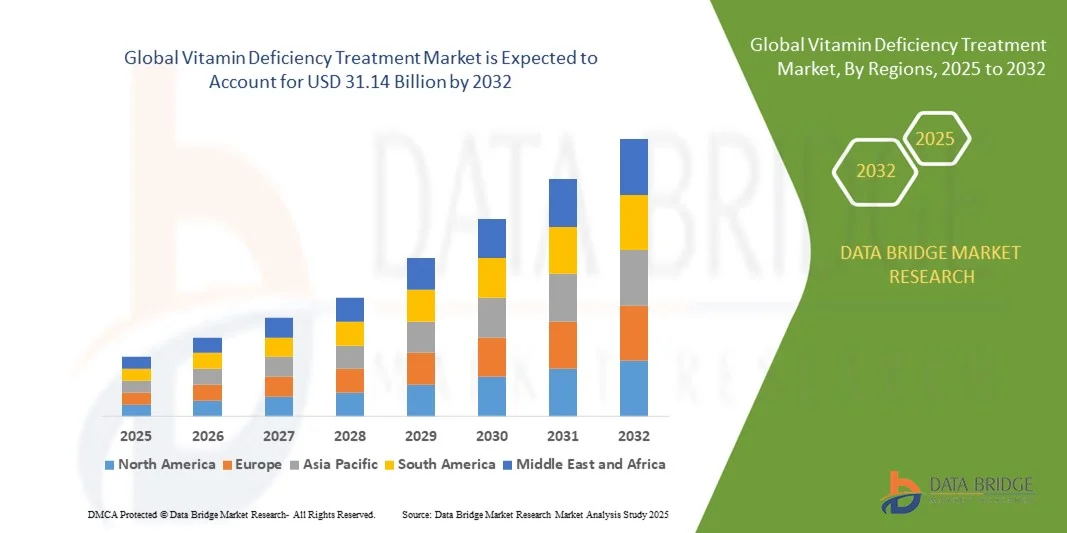
- The global vitamin deficiency treatment market size was valued at USD 18.82 billion in 2024 and is expected to reach USD 31.14 billion by 2032, at a CAGR of 6.5% during the forecast period
- The market growth is largely fuelled by the increasing prevalence of nutritional disorders, rising health awareness, and growing adoption of dietary supplements and fortified foods to combat micronutrient deficiencies
- In addition, the increasing demand for personalized nutrition, preventive healthcare, and over-the-counter (OTC) vitamin products is accelerating market expansion, as consumers seek convenient and effective ways to maintain optimal health
Vitamin Deficiency Treatment Market Analysis
- The market is witnessing a growing demand for tailored vitamin formulations targeting specific deficiencies such as Vitamin D, B12, and iron, driven by lifestyle changes, dietary imbalances, and ageing populations
- Technological advancements in nutraceutical manufacturing, such as microencapsulation and sustained-release formulations, are improving vitamin absorption, stability, and bioavailability
- North America dominated the vitamin deficiency treatment market with the largest revenue share in 2024, driven by strong healthcare infrastructure, rising consumer health consciousness, and increasing prevalence of vitamin D and B12 deficiencies
- Asia-Pacific region is expected to witness the highest growth rate in the global vitamin deficiency treatment market, driven by rapid urbanization, growing awareness of preventive healthcare, and expanding supplement availability
- The OTC Multivitamin Therapies segment held the largest market revenue share in 2024 driven by their widespread availability, affordability, and convenience for daily nutritional support. Consumers increasingly prefer multivitamin products that provide a balanced combination of essential nutrients to prevent multiple deficiencies simultaneously. In addition, growing health awareness and preventive supplementation trends have further fuelled demand across all age groups
Report Scope and Vitamin Deficiency Treatment Market Segmentation
|
Attributes |
Vitamin Deficiency Treatment Key Market Insights |
|
Segments Covered |
|
|
Countries Covered |
North America
Europe
Asia-Pacific
Middle East and Africa
South America
|
|
Key Market Players |
|
|
Market Opportunities |
|
|
Value Added Data Infosets |
In addition to the insights on market scenarios such as market value, growth rate, segmentation, geographical coverage, and major players, the market reports curated by the Data Bridge Market Research also include in-depth expert analysis, pricing analysis, brand share analysis, consumer survey, demography analysis, supply chain analysis, value chain analysis, raw material/consumables overview, vendor selection criteria, PESTLE Analysis, Porter Analysis, and regulatory framework. |
Vitamin Deficiency Treatment Market Trends
Growing Adoption of Personalized and Preventive Nutrition Solutions
- The increasing consumer focus on personalized nutrition and preventive healthcare is reshaping the vitamin deficiency treatment market. Advances in genetic testing, wearable health monitoring devices, and AI-driven nutrition planning are enabling individuals to identify specific deficiencies and adopt tailored supplement regimens. This shift toward proactive health management is reducing dependency on clinical interventions and promoting long-term wellness
- The growing trend toward fortified and functional foods is accelerating market growth, as food manufacturers increasingly add essential vitamins to beverages, dairy products, and cereals to meet daily nutritional requirements. This approach allows consumers to address nutrient gaps through regular diets, making vitamin intake more accessible and convenient for a wider population segment. It also supports public health initiatives aimed at combating malnutrition and lifestyle-related deficiencies
- The expansion of e-commerce and online pharmacies is facilitating easy access to OTC vitamins, boosting sales across both developed and emerging economies. Consumers benefit from product comparisons, transparent reviews, and personalized supplement subscriptions, which enhance engagement and convenience. In addition, online platforms allow brands to reach a broader audience while offering discounts and customized recommendations, fostering brand loyalty
- For instance, in 2023, several global nutraceutical companies introduced AI-based health apps offering personalized vitamin recommendations based on lifestyle, diet, and biomarker analysis, enhancing treatment adherence and efficacy. These digital tools integrate with wearable devices to track progress and optimize dosages, providing real-time insights into nutritional status. Such innovations are revolutionizing how individuals monitor and manage their micronutrient intake
- While personalized and technology-driven vitamin solutions enhance health outcomes and accessibility, success depends on data accuracy, consumer awareness, and regulatory compliance to ensure safety and efficacy. Ensuring the reliability of digital diagnostics and adherence to product quality standards remains a key focus for manufacturers. Continuous education and transparent labeling are also essential to prevent misinformation and promote responsible supplement use
Vitamin Deficiency Treatment Market Dynamics
Driver
Increasing Prevalence of Nutritional Disorders and Preventive Healthcare Awareness
- Rising global cases of vitamin deficiencies, particularly Vitamin D, B12, and iron, are driving demand for effective treatment options. Modern lifestyles characterized by sedentary behavior, limited sun exposure, and poor dietary diversity have amplified deficiency risks. In addition, ageing populations and vegan diets have contributed to nutrient insufficiencies, increasing the need for supplementation and fortified food options
- Consumers are increasingly adopting preventive healthcare practices, including routine nutritional testing and vitamin supplementation, to maintain immunity, bone health, and metabolic balance. The COVID-19 pandemic further accelerated this trend, as consumers became more aware of the link between micronutrients and immune resilience. This proactive health mindset is driving consistent sales of vitamins through both offline and online channels
- Governments and health organizations are launching awareness campaigns promoting fortified foods, supplements, and public health nutrition programs, further supporting market growth. International collaborations with organizations such as WHO and UNICEF are targeting micronutrient deficiencies among children and women. Such initiatives have strengthened supply chains and encouraged investment in mass fortification of staple foods
- For instance, in 2022, public health authorities in Asia and Africa initiated large-scale programs to reduce Vitamin A and iron deficiencies through fortified foods and supplementation, significantly expanding treatment access. These initiatives not only improved nutritional outcomes but also increased public confidence in fortified and supplement-based solutions. Continuous monitoring and policy support have made these programs sustainable in the long term
- While demand for vitamin deficiency treatments is rising, challenges such as dosage inconsistency, poor absorption, and counterfeit supplement availability must be addressed through regulatory enforcement and product standardization. The need for bioavailable formulations and scientifically backed efficacy claims is becoming more critical. Strengthening quality assurance systems and harmonizing global supplement regulations will play a vital role in ensuring market integrity
Restraint/Challenge
High Cost of Premium Supplements and Lack of Awareness in Developing Regions
- The high cost of premium vitamin supplements and personalized nutrition products limits accessibility, particularly in low-income populations across developing countries. Advanced formulations such as liposomal vitamins or plant-based capsules often carry higher price tags, creating affordability gaps. In addition, import duties, supply chain inefficiencies, and brand positioning contribute to the overall cost burden for end consumers
- Lack of awareness about deficiency symptoms, improper supplement usage, and limited access to diagnostic facilities hinder early detection and effective treatment. Many individuals remain unaware of the long-term consequences of vitamin deficiencies, such as fatigue, bone weakness, and cognitive decline. Educational programs and preventive screening are essential to promote early intervention and reduce the incidence of chronic deficiency-related conditions
- Inconsistent quality control and the presence of counterfeit or substandard products in unregulated markets further impact consumer trust and treatment outcomes. The proliferation of fake supplements on online platforms and informal retail channels undermines brand credibility. Strengthening inspection mechanisms, enforcing labeling standards, and implementing stricter import regulations can help ensure consumer safety and maintain product efficacy
- For instance, in 2023, several African and Southeast Asian markets reported low compliance rates for vitamin therapy due to inadequate healthcare infrastructure, poor availability of quality supplements, and high import costs. Limited local manufacturing capabilities and weak distribution networks exacerbate the accessibility issue. Encouraging domestic production and public-private partnerships could help stabilize supply and reduce dependency on imports
- To overcome these challenges, stakeholders must focus on affordable supplement production, awareness campaigns, robust distribution channels, and government-backed fortification initiatives to ensure equitable access to vitamin therapy. Collaborations between health agencies, NGOs, and private companies can accelerate large-scale nutrition improvement programs. Leveraging digital tools and local manufacturing can further enhance reach and affordability across underserved regions
Vitamin Deficiency Treatment Market Scope
The market is segmented on the basis of product and end user.
- By Product
On the basis of product, the vitamin deficiency treatment market is segmented into OTC Multivitamin Therapies, Single Vitamin Therapies, Vitamin A Supplements, Vitamin B Complex Supplements, Vitamin D Supplements, and Others. The OTC Multivitamin Therapies segment held the largest market revenue share in 2024 driven by their widespread availability, affordability, and convenience for daily nutritional support. Consumers increasingly prefer multivitamin products that provide a balanced combination of essential nutrients to prevent multiple deficiencies simultaneously. In addition, growing health awareness and preventive supplementation trends have further fuelled demand across all age groups.
The Vitamin D Supplements segment is expected to witness the fastest growth rate from 2025 to 2032, driven by the rising prevalence of Vitamin D deficiency caused by limited sun exposure, sedentary lifestyles, and dietary insufficiency. Increased awareness of Vitamin D’s role in immunity, bone health, and chronic disease prevention is propelling demand globally. The segment also benefits from expanding product innovation, including chewable tablets, fortified beverages, and soft gels designed for better absorption and compliance.
- By End User
On the basis of end user, the vitamin deficiency treatment market is segmented into Pharmacy and Drugstores, Hospital Pharmacy, Online Drug Stores or Email Prescription Stores, and Hypermarkets and Supermarkets. The Pharmacy and Drugstores segment accounted for the largest revenue share in 2024 driven by high product availability, professional consultation services, and strong consumer trust in retail pharmacy channels. These outlets serve as the primary point of purchase for OTC and prescription-based vitamin supplements, particularly in urban areas with well-established healthcare access.
The Online Drug Stores or Email Prescription Stores segment is expected to witness the fastest growth rate from 2025 to 2032 to the growing adoption of e-commerce platforms and digital healthcare solutions. Consumers are increasingly opting for online purchases due to convenience, competitive pricing, and doorstep delivery options. The availability of personalized supplement recommendations, subscription models, and easy comparison of formulations is further accelerating segment growth across developed and emerging markets.
Vitamin Deficiency Treatment Market Regional Analysis
- North America dominated the vitamin deficiency treatment market with the largest revenue share in 2024, driven by strong healthcare infrastructure, rising consumer health consciousness, and increasing prevalence of vitamin D and B12 deficiencies
- Companies in the region are investing heavily in clinical research, fortified food development, and direct-to-consumer supplement channels, enhancing accessibility and brand trust
- This strong market position is further supported by growing geriatric populations, high purchasing power, and established nutraceutical manufacturers
U.S. Vitamin Deficiency Treatment Market Insight
The U.S. market captured the largest revenue share in 2024 within North America, driven by growing awareness of preventive healthcare, high supplement usage rates, and government-backed health campaigns promoting nutrition. Increasing demand for plant-based and allergen-free supplements is also contributing to market expansion.
Europe Vitamin Deficiency Treatment Market Insight
The Europe vitamin deficiency treatment market is expected to witness the fastest growth rate from 2025 to 2032, driven by a rise in vegan and vegetarian populations, regulatory emphasis on nutrition labeling, and increasing prevalence of Vitamin D deficiency in northern regions. Companies are focusing on innovative formulations and eco-friendly packaging to attract health-conscious consumers.
U.K. Vitamin Deficiency Treatment Market Insight
The U.K. market is expected to witness the fastest growth rate from 2025 to 2032, driven by lifestyle-related nutritional deficiencies, awareness of preventive nutrition, and government initiatives promoting food fortification. The rising demand for OTC vitamin products through online pharmacies further supports market growth.
Germany Vitamin Deficiency Treatment Market Insight
Germany’s market is expected to witness the fastest growth rate from 2025 to 2032, supported by high healthcare expenditure, consumer preference for natural and plant-based supplements, and widespread adoption of Vitamin D and B complex formulations. The country’s emphasis on clinical-grade supplement quality enhances trust and compliance.
Asia-Pacific Vitamin Deficiency Treatment Market Insight
The Asia-Pacific market is expected to witness the fastest growth rate from 2025 to 2032, driven by urbanization, dietary shifts, and rising disposable incomes. Governments in countries such as India, China, and Indonesia are promoting food fortification programs and affordable supplement distribution to combat widespread deficiencies.
Japan Vitamin Deficiency Treatment Market Insight
The Japan market is expected to witness the fastest growth rate from 2025 to 2032 due to the ageing population, increasing prevalence of Vitamin D and B12 deficiencies, and strong focus on health maintenance through functional foods and supplements. Advanced R&D and consumer trust in quality formulations are driving market expansion.
China Vitamin Deficiency Treatment Market Insight
China accounted for the largest market share in Asia-Pacific in 2024, driven by large-scale food fortification programs, increasing supplement consumption, and growing awareness about the health benefits of vitamins. The government’s initiatives to strengthen nutrition policies and the booming e-commerce supplement sector are key growth drivers.
Vitamin Deficiency Treatment Market Share
The Vitamin Deficiency Treatment industry is primarily led by well-established companies, including:
• Abbott Laboratories (U.S.)
• Pfizer Inc. (U.S.)
• GlaxoSmithKline plc (U.K.)
• Bayer AG (Germany)
• Sanofi S.A. (France)
• DSM Nutritional Products (Netherlands)
• BASF SE (Germany)
• Novartis AG (Switzerland)
• Nature’s Bounty Co. (U.S.)
• Herbalife Nutrition Ltd. (U.S.)
• NOW Foods (U.S.)
• Amway Corporation (U.S.)
• Reckitt Benckiser Group plc (U.K.)
• NutraScience Labs (U.S.)
• Nestlé Health Science (Switzerland)
• Glanbia Nutritionals (Ireland)
• Pharmavite LLC (U.S.)
• Blackmores Limited (Australia)
• Kirkman Group (U.S.)
• Himalaya Wellness (India)

- Interactive Data Analysis Dashboard
- Company Analysis Dashboard for high growth potential opportunities
- Research Analyst Access for customization & queries
- Competitor Analysis with Interactive dashboard
- Latest News, Updates & Trend analysis
- Harness the Power of Benchmark Analysis for Comprehensive Competitor Tracking
Global Vitamin Deficiency Treatment Market, Supply Chain Analysis and Ecosystem Framework
To support market growth and help clients navigate the impact of geopolitical shifts, DBMR has integrated in-depth supply chain analysis into its Global Vitamin Deficiency Treatment Market research reports. This addition empowers clients to respond effectively to global changes affecting their industries. The supply chain analysis section includes detailed insights such as Global Vitamin Deficiency Treatment Market consumption and production by country, price trend analysis, the impact of tariffs and geopolitical developments, and import and export trends by country and HSN code. It also highlights major suppliers with data on production capacity and company profiles, as well as key importers and exporters. In addition to research, DBMR offers specialized supply chain consulting services backed by over a decade of experience, providing solutions like supplier discovery, supplier risk assessment, price trend analysis, impact evaluation of inflation and trade route changes, and comprehensive market trend analysis.
Data collection and base year analysis are done using data collection modules with large sample sizes. The stage includes obtaining market information or related data through various sources and strategies. It includes examining and planning all the data acquired from the past in advance. It likewise envelops the examination of information inconsistencies seen across different information sources. The market data is analysed and estimated using market statistical and coherent models. Also, market share analysis and key trend analysis are the major success factors in the market report. To know more, please request an analyst call or drop down your inquiry.
The key research methodology used by DBMR research team is data triangulation which involves data mining, analysis of the impact of data variables on the market and primary (industry expert) validation. Data models include Vendor Positioning Grid, Market Time Line Analysis, Market Overview and Guide, Company Positioning Grid, Patent Analysis, Pricing Analysis, Company Market Share Analysis, Standards of Measurement, Global versus Regional and Vendor Share Analysis. To know more about the research methodology, drop in an inquiry to speak to our industry experts.
Data Bridge Market Research is a leader in advanced formative research. We take pride in servicing our existing and new customers with data and analysis that match and suits their goal. The report can be customized to include price trend analysis of target brands understanding the market for additional countries (ask for the list of countries), clinical trial results data, literature review, refurbished market and product base analysis. Market analysis of target competitors can be analyzed from technology-based analysis to market portfolio strategies. We can add as many competitors that you require data about in the format and data style you are looking for. Our team of analysts can also provide you data in crude raw excel files pivot tables (Fact book) or can assist you in creating presentations from the data sets available in the report.













