What is the Global Vitamins for Infant Formula Market Size and Growth Rate?
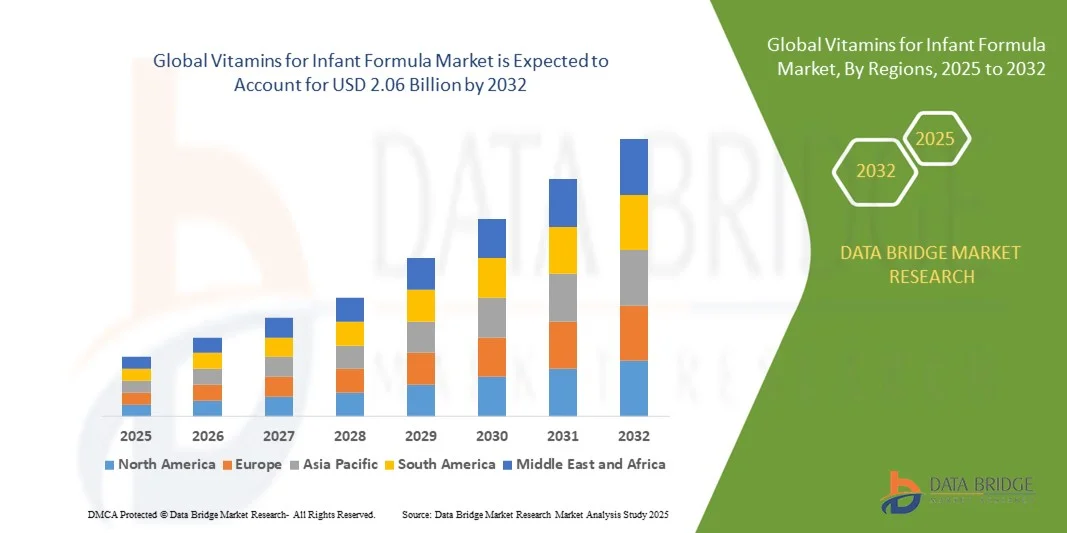
- As per Data Bridge Market Research Analysis the global Vitamins for Infant Formula Market size was valued at USD 1.17 billion in 2024 and is projected to reach USD 2.06 billion by 2032, growing at a CAGR of 7.30% during the forecast period
- The market expansion is primarily driven by rising awareness among parents regarding infant nutrition and increasing demand for fortified baby food products across emerging and developed economies
- Moreover, advancements in food science and formulation technologies, along with stringent regulatory standards ensuring product safety and efficacy, are fueling innovation and trust in vitamin-enriched infant formulas, thereby supporting rapid market growth
Market Size & Forecast
- Global Market Value (2024): USD 1.17 billion
- Expected Market Value (2032): USD 2.06 billion
- Forecast CAGR (2024–2032): 7.30%
What are the Major Takeaways of Global Vitamins for Infant Formula Market?
- Vitamins for infant formula, which supplement essential nutrients to support early childhood development, are becoming critical components in baby nutrition products across both developed and developing markets due to increasing health awareness and pediatric recommendations for balanced nutrition
- The growing demand for vitamins in infant formula is primarily driven by increasing parental focus on infant health, rising birth rates in emerging economies, and advancements in formulation technologies ensuring better nutrient bioavailability
- North America dominated the Global Vitamins for Infant Formula Market with the largest revenue share of 35.3% in 2024, supported by high consumer awareness, strong healthcare infrastructure, and widespread availability of premium fortified infant products, with the U.S. leading due to strong market presence of global baby nutrition brands and continued investment in R&D
- Asia-Pacific is expected to be the fastest growing region in the Global Vitamins for Infant Formula Market during the forecast period due to increasing urbanization, rising disposable incomes, and a shift toward premium, health-focused infant nutrition options in countries like China and India
- The powder segment dominated the market with the largest revenue share of 56.4% in 2024, owing to its longer shelf life, ease of transportation, and cost-effectiveness.
Report Scope and Global Vitamins for Infant Formula Market Segmentation
|
Attributes |
Vitamins for Infant Formula Key Market Insights |
|
Segments Covered |
|
|
Countries Covered |
North America
Europe
Asia-Pacific
Middle East and Africa
South America
|
|
Key Market Players |
|
|
Market Opportunities |
|
|
Value Added Data Infosets |
|
What is the Key Trend in the Global Vitamins for Infant Formula Market?
Advanced Nutritional Formulations Driven by R&D and Innovation
- A significant and accelerating trend in the global Vitamins for Infant Formula Market is the ongoing investment in research and development to create more advanced and bioavailable nutritional formulations tailored to infant health needs. This trend is reshaping product development, with a focus on mimicking the nutritional profile of human breast milk more closely than ever before.
- For instance, companies like Nestlé and DSM are developing infant formulas enriched with human milk oligosaccharides (HMOs), which support immune function and gut health, bringing formula nutrition closer to natural breastfeeding benefits. Similarly, innovations in microencapsulation technology are enhancing the stability and absorption of key vitamins such as A, D, E, and K.
- R&D-driven advancements are enabling the inclusion of essential nutrients such as omega-3 fatty acids (DHA/ARA), choline, and nucleotides in precise concentrations, supporting brain development, vision, and cellular growth. These enhancements not only increase nutritional value but also improve digestibility and reduce allergenic potential, making formulas more suitable for sensitive infants.
- The integration of probiotics and prebiotics into infant formulas is another area of rapid development. These ingredients are increasingly included to support a healthy gut microbiome and reduce the risk of infections and allergies. Companies such as FrieslandCampina are introducing formula ranges with tailored microbiome-supporting properties based on clinical evidence.
- The trend toward science-backed, premium nutritional products is also driving partnerships between infant formula producers and biotech firms to incorporate cutting-edge discoveries from pediatric nutrition and genomics. For example, Glanbia is collaborating with biotechnology researchers to identify novel bioactives that can be used in next-generation formula blends.
- As parents become more informed and discerning about what goes into infant nutrition products, demand for scientifically validated, high-performance vitamin-enriched formulas is growing across global markets, particularly in regions with rising income levels and increased healthcare awareness.
Global Vitamins for Infant Formula Market Dynamics
Driver
Growing Demand Due to Infant Health Awareness and Rising Birth Rates
- The increasing awareness among parents about the importance of balanced and complete nutrition during early development stages is a major driver of growth in the global Vitamins for Infant Formula Market. This trend is further supported by rising global birth rates, particularly in emerging economies, where improved access to healthcare and growing middle-class populations are creating a larger consumer base for fortified infant nutrition products.
- For Instance, governments in countries such as India and China have launched national programs focused on improving maternal and child health, which include the promotion of fortified infant formula products. In response, companies like Nestlé and Lactalis are expanding their product portfolios and production capacities in these high-growth regions.
- As urbanization increases and more women join the workforce, demand for convenient, ready-to-use, and nutritionally complete infant formula has surged. Vitamin-enriched formulas offer a practical solution for working parents seeking reliable alternatives to breastfeeding without compromising on essential nutrients needed for cognitive, immune, and physical development.
- Moreover, pediatricians and health organizations are increasingly recommending specific vitamin supplements—such as Vitamin D and Iron—to support optimal infant development, reinforcing consumer trust in fortified formulas. This is leading to higher adoption rates across both developed and developing markets.
- Innovation in formulation, including the inclusion of HMOs, DHA/ARA, and probiotics, is further propelling demand as parents seek formulas that closely replicate the benefits of breast milk. The growing availability of such products through online and retail channels also ensures better market penetration.
Restraint/Challenge
High Cost of Fortified Formulas and Regulatory Complexities
- Despite strong market growth, the high cost of premium, vitamin-fortified infant formula remains a significant barrier, particularly in price-sensitive markets. Fortified formulas often come at a higher price point due to the use of specialized ingredients, advanced processing technologies, and stringent safety testing, making them less accessible to lower-income families.
- For instance, while major players such as Glanbia and FrieslandCampina offer high-quality fortified formulas, their premium pricing limits consumption in rural and low-income regions, where affordability remains a key concern.
- In addition to pricing issues, the industry faces challenges related to complex and varying regulatory standards across different countries. Regulations governing the inclusion and labeling of vitamins in infant formula differ by region, creating barriers for companies looking to expand internationally. Compliance with these standards can be time-consuming and costly, especially for smaller manufacturers.
- Consumer concerns regarding synthetic additives and allergens in some fortified formulas also pose a hurdle. Parents are becoming more selective, preferring organic or minimally processed products, putting pressure on manufacturers to strike a balance between nutrient density, natural ingredient sourcing, and product safety.
- To overcome these restraints, companies must focus on cost-effective production methods, transparency in labeling, and continuous collaboration with regulatory bodies to streamline compliance processes and ensure safe, affordable access to fortified nutrition for infants globally.
How is the Global Vitamins for Infant Formula Market Segmented?
The vitamins for infant formula market is segmented on the basis of form, source and application.
- By Form
On the basis of form, the Global Vitamins for Infant Formula Market is segmented into powder, liquid, and semi-liquid. The powder segment dominated the market with the largest revenue share of 56.4% in 2024, owing to its longer shelf life, ease of transportation, and cost-effectiveness. Powdered formulas are widely preferred by both manufacturers and consumers due to their stability and lower production and packaging costs. This form also offers flexibility in dosage and mixing, making it a convenient option for parents across both developed and developing regions.
The liquid segment is expected to witness the fastest CAGR from 2025 to 2032, driven by its ready-to-use convenience and time-saving attributes for busy parents. Liquid formulas are increasingly being adopted in urban areas, especially where premium and organic options are available. The growth of this segment is further supported by increased product offerings by major players targeting on-the-go consumption.
- By Source
On the basis of source, the Global Vitamins for Infant Formula Market is segmented into cow milk, soy, and others. The cow milk segment held the dominant market share of 68.9% in 2024, largely due to its nutritional similarity to human breast milk, widespread consumer acceptance, and the high protein and calcium content it provides. Most commercial infant formulas are based on cow milk, and continuous advancements in processing technologies have improved digestibility and reduced allergenicity, making it suitable for the majority of infants.
The soy segment is projected to grow at the fastest CAGR from 2025 to 2032, driven by increasing demand for plant-based alternatives, particularly among lactose-intolerant infants or those with cow milk allergies. Moreover, rising veganism and ethical consumerism are also contributing to the growing popularity of soy-based vitamin-enriched formulas, especially in developed markets with greater product variety and awareness.
- By Application
On the basis of application, the Global Vitamins for Infant Formula Market is segmented into growing-up milk, standard infant formula, follow-on formula, and specialty formula. The standard infant formula segment dominated the market in 2024 with a revenue share of 39.7%, due to its wide applicability for newborns (0–6 months) who are not breastfed or require additional nutrition. This segment benefits from widespread use, healthcare endorsements, and high availability across retail and hospital distribution channels.
The specialty formula segment is expected to grow at the fastest CAGR from 2025 to 2032. These formulas are tailored for infants with specific dietary needs, such as allergies, reflux, or metabolic disorders. Rising diagnosis rates of such conditions and increasing awareness among healthcare providers and parents are driving the demand for specialty formulas. Innovations in medical nutrition and clinical endorsements further support this segment’s rapid growth.
Which Region Holds the Largest Share of the Global Vitamins for Infant Formula Market?
- North America dominated the Global Vitamins for Infant Formula Market with the largest revenue share of 35.3% in 2024, driven by strong consumer awareness of infant nutrition, high healthcare spending, and widespread availability of fortified formula products
- Parents in the region place significant emphasis on providing optimal nutrition during early childhood, leading to increased adoption of vitamin-enriched infant formulas that support immune development, brain growth, and overall health
- The market growth is further supported by the presence of leading industry players, advanced R&D capabilities, and a robust regulatory framework ensuring product safety and quality. High purchasing power and demand for premium, organic, and specialty formulas contribute to North America’s leadership in the global market
U.S. Vitamins for Infant Formula Market Insight
The U.S. vitamins for infant formula market captured the largest revenue share of 76.8% in 2024 within North America, driven by high awareness of infant nutrition, strong healthcare infrastructure, and widespread use of fortified formulas. Increasing parental demand for formulas with added vitamins such as D, A, and iron—often recommended by pediatricians—is boosting growth. Moreover, innovations in product formulation and marketing by major players like Nestlé and Abbott Nutrition are supporting market expansion. The prevalence of working parents and a growing preference for convenient, ready-to-feed products further contribute to this trend, with organic and specialty formulas gaining notable traction.
Europe Vitamins for Infant Formula Market Insight
The Europe vitamins for infant formula market is projected to expand at a robust CAGR during the forecast period, driven by strict regulatory standards, a health-conscious population, and increasing birth rates in parts of Eastern Europe. Consumers are placing higher importance on clean-label, organic, and nutritionally balanced infant formulas, fueling the demand for vitamin-enriched options. The region also benefits from strong healthcare advisory systems and extensive retail networks. Growing demand in both public and private healthcare sectors for specialty and hypoallergenic formulas is contributing to the market’s growth across countries like France, Germany, and Spain.
U.K. Vitamins for Infant Formula Market Insight
The U.K. vitamins for infant formula market is expected to grow at a noteworthy CAGR through the forecast period, supported by increasing parental awareness around early childhood nutrition and growing trust in fortified infant formulas. Public health campaigns and pediatrician recommendations have encouraged parents to seek formulas enriched with vitamins critical for growth and immunity. Moreover, rising demand for lactose-free, plant-based, and organic alternatives is broadening the product landscape. The country’s well-established healthcare system and rising number of dual-income households are also creating favorable conditions for market growth.
Germany Vitamins for Infant Formula Market Insight
The Germany vitamins for infant formula market is anticipated to grow at a considerable CAGR through 2032, backed by strong regulatory oversight and a well-informed consumer base. German parents are increasingly opting for vitamin-fortified formulas with scientifically backed ingredients that support gut health, immunity, and cognitive development. The demand for organic and biodynamic formulas is particularly strong, reflecting the country's emphasis on sustainability and clean-label nutrition. In addition, Germany’s leading role in food science and manufacturing innovation makes it a hub for premium and specialty infant nutrition products.
Asia-Pacific Vitamins for Infant Formula Market Insight
The Asia-Pacific vitamins for infant formula market is projected to grow at the fastest CAGR of 23.6% during the forecast period of 2025 to 2032, driven by rapid urbanization, growing birth rates, and increasing awareness of infant health across major economies like China, India, and Southeast Asia. The region is witnessing strong demand for fortified and specialty formulas, especially in urban areas where access to healthcare and premium products is improving. Government nutrition programs, rising middle-class incomes, and expansion of retail and e-commerce channels are further fueling market growth in APAC.
Japan Vitamins for Infant Formula Market Insight
The Japan vitamins for infant formula market is gaining momentum due to the country’s aging population and focus on child welfare. Japanese consumers value high-quality, scientifically developed formulas, and there is growing demand for vitamin-enriched options that closely mimic breast milk. Technological innovation in food safety, traceability, and formula development contributes to strong consumer trust. Additionally, Japan’s declining birth rate has led to intensified competition among formula brands to offer superior nutritional value and added health benefits for a smaller but highly discerning consumer base.
China Vitamins for Infant Formula Market Insight
The China vitamins for infant formula market accounted for the largest revenue share in Asia-Pacific in 2024, driven by its growing urban middle class, increased awareness of infant health, and government initiatives supporting infant nutrition. China's strict safety regulations post-milk scandal have led consumers to prefer premium, vitamin-enriched formulas—often sourced from international or high-trust domestic brands. The rapid rise in dual-income families, expansion of online retail platforms, and the popularity of imported fortified products have positioned China as one of the fastest-growing and most dynamic infant formula markets globally.
Which are the Top Companies in Global Vitamins for Infant Formula Market?
The Vitamins for Infant Formula industry is primarily led by well-established companies, including:
- Fonterra Co-operative Group Limited (New Zealand)
- Vitablend Nederland BV (Netherlands)
- Glanbia PLC (Ireland)
- FrieslandCampina (Netherlands)
- BASF SE (Germany)
- DSM (Netherlands)
- Chr. Hansen Holding A/S (Denmark)
- Private Brands Consortium PBC Inc. (U.S.)
- Plum Organics (U.S.)
- Kerry (Ireland)
- Nestlé India Limited (India)
- LACTALIS Ingredients (France)
- Ritual (U.S.)
- Reckitt Benckiser Group plc (U.K.)
What are the Recent Developments in Global Vitamins for Infant Formula Market?
- In April 2023, Nestlé S.A. launched a new line of vitamin-fortified infant formulas under its NAN range in India, specifically designed to address regional micronutrient deficiencies. This product line includes enhanced levels of vitamins D, A, and iron, aimed at supporting immune development and preventing anemia in infants. The initiative reflects Nestlé’s commitment to advancing infant nutrition in emerging markets and strengthening its leadership in the global Vitamins for Infant Formula Market by delivering science-backed, locally relevant solutions.
- In March 2023, Danone S.A. announced the expansion of its Aptamil ProNutra+ range across several European markets, incorporating new vitamin-enriched formulations that mimic the natural benefits of breast milk more closely. The updated products include human milk oligosaccharides (HMOs), vitamin C, and DHA for brain and immune development. This innovation aligns with Danone’s strategy to meet growing consumer demand for premium infant nutrition solutions that are both scientifically validated and aligned with evolving health standards.
- In March 2023, FrieslandCampina introduced a reformulated version of its Friso Gold infant formula in China, fortified with higher concentrations of essential vitamins such as B-complex and vitamin E, tailored to support digestion and cognitive growth. This product launch responds to the increasing demand among Chinese parents for high-quality, fortified infant formulas backed by clinical research. FrieslandCampina continues to reinforce its competitive position in the Asia-Pacific market by integrating local consumer insights with advanced nutritional science.
- In February 2023, Abbott Laboratories announced a strategic partnership with the Ministry of Health in Vietnam to support maternal and infant nutrition programs. As part of this initiative, Abbott is supplying vitamin-fortified infant formulas to low-income communities, along with educational outreach programs. This move strengthens Abbott’s commitment to addressing malnutrition and health disparities through accessible, science-based nutrition products and reinforces its presence in high-growth Southeast Asian markets.
- In January 2023, Mead Johnson Nutrition (a Reckitt Benckiser brand) unveiled a new line of Enfagrow formulas in Latin America, enriched with an advanced vitamin profile including vitamins D, K, and B12, designed for toddlers aged 1–3 years. These formulas aim to support physical growth, immunity, and brain development during a critical stage of early childhood. The launch reflects Reckitt’s strategy to expand its reach in the growing follow-on and growing-up milk segment, particularly in regions where vitamin deficiencies remain a public health concern.

- Interactive Data Analysis Dashboard
- Company Analysis Dashboard for high growth potential opportunities
- Research Analyst Access for customization & queries
- Competitor Analysis with Interactive dashboard
- Latest News, Updates & Trend analysis
- Harness the Power of Benchmark Analysis for Comprehensive Competitor Tracking
Global Vitamins For Infant Formula Market, Supply Chain Analysis and Ecosystem Framework
To support market growth and help clients navigate the impact of geopolitical shifts, DBMR has integrated in-depth supply chain analysis into its Global Vitamins For Infant Formula Market research reports. This addition empowers clients to respond effectively to global changes affecting their industries. The supply chain analysis section includes detailed insights such as Global Vitamins For Infant Formula Market consumption and production by country, price trend analysis, the impact of tariffs and geopolitical developments, and import and export trends by country and HSN code. It also highlights major suppliers with data on production capacity and company profiles, as well as key importers and exporters. In addition to research, DBMR offers specialized supply chain consulting services backed by over a decade of experience, providing solutions like supplier discovery, supplier risk assessment, price trend analysis, impact evaluation of inflation and trade route changes, and comprehensive market trend analysis.
Data collection and base year analysis are done using data collection modules with large sample sizes. The stage includes obtaining market information or related data through various sources and strategies. It includes examining and planning all the data acquired from the past in advance. It likewise envelops the examination of information inconsistencies seen across different information sources. The market data is analysed and estimated using market statistical and coherent models. Also, market share analysis and key trend analysis are the major success factors in the market report. To know more, please request an analyst call or drop down your inquiry.
The key research methodology used by DBMR research team is data triangulation which involves data mining, analysis of the impact of data variables on the market and primary (industry expert) validation. Data models include Vendor Positioning Grid, Market Time Line Analysis, Market Overview and Guide, Company Positioning Grid, Patent Analysis, Pricing Analysis, Company Market Share Analysis, Standards of Measurement, Global versus Regional and Vendor Share Analysis. To know more about the research methodology, drop in an inquiry to speak to our industry experts.
Data Bridge Market Research is a leader in advanced formative research. We take pride in servicing our existing and new customers with data and analysis that match and suits their goal. The report can be customized to include price trend analysis of target brands understanding the market for additional countries (ask for the list of countries), clinical trial results data, literature review, refurbished market and product base analysis. Market analysis of target competitors can be analyzed from technology-based analysis to market portfolio strategies. We can add as many competitors that you require data about in the format and data style you are looking for. Our team of analysts can also provide you data in crude raw excel files pivot tables (Fact book) or can assist you in creating presentations from the data sets available in the report.