What is the Global Waterless Cosmetic Market Size and Growth Rate?
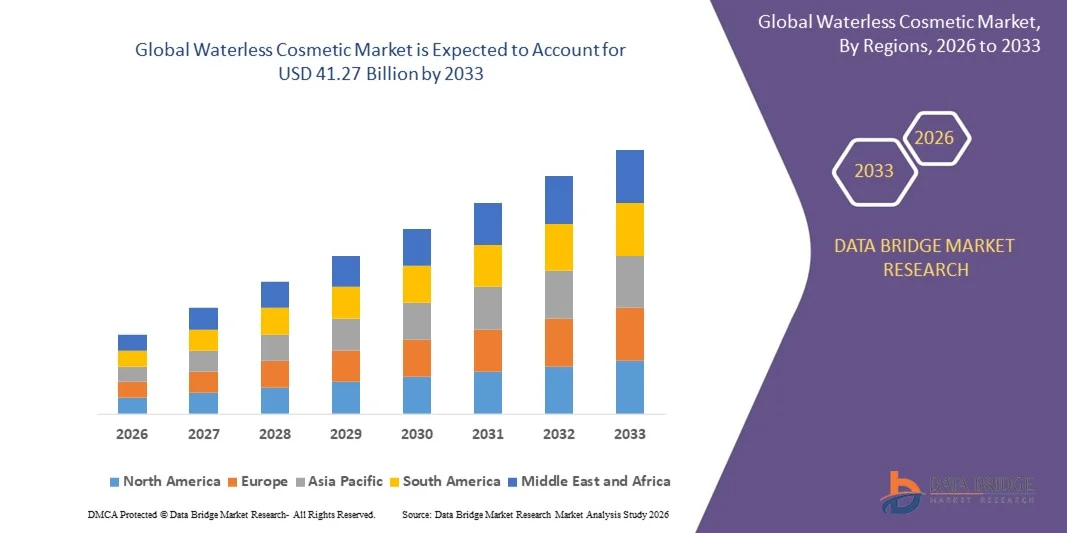
- As per Data Bridge Market Research analysis, the global waterless cosmetic market size was valued at USD 13.54 billion in 2025 and is expected to reach USD 41.27 billion by 2033, at a CAGR of14.95% during the forecast period
- Rise in the disposable income of the consumers acts as a vital factor responsible for the upliftment of the market growth, also increase of clean beauty has resulted in the desire for healthier, more sustainable alternatives to be asked for in the cosmetics industry, which in turn increases the demand for the products, increase in the interest towards maintaining a youthful look and improving lifestyles of the consumers are some of the prime factors among others driving the waterless cosmetic market
Market Size & Forecast
- Global Market Value (2025): USD 13.54 Billion
- Expected Market Value (2033): USD 41.27 Billion
- Forecast CAGR (2026-2033): 14.95%
What are the Major Takeaways of Waterless Cosmetic Market?
- Rise in the technological advancements and modernization in the production techniques, rise in the research and development activities in the market and rise in the demand from emerging economies will further create new opportunities for waterless cosmetic market
- However, rise in the cost of the products and rise in the cost of research and development activities in the market is the major factor among others which will obstruct the market growth, and will further challenge the growth of waterless cosmetic market
- Asia-Pacific dominated the Waterless Cosmetic market with a 37.15% revenue share in 2025, driven by rapid adoption of sustainable personal care products, strong manufacturing ecosystems, and rising consumer awareness of eco-friendly beauty solutions across China, Japan, India, South Korea, and Southeast Asia
- North America is projected to register the fastest CAGR of 11.78% from 2026 to 2033, driven by growing consumer awareness of sustainability, eco-friendly beauty trends, and rising demand for waterless personal care products across the U.S. and Canada
- The Women segment dominated the market with a 57.3% share in 2025, driven by strong adoption of waterless skincare, haircare, and makeup products that appeal to environmentally conscious female consumer
Report Scope and Waterless Cosmetic Market Segmentation
|
Attributes |
Waterless Cosmetic Key Market Insights |
|
Segments Covered |
|
|
Countries Covered |
North America
Europe
Asia-Pacific
Middle East and Africa
South America
|
|
Key Market Players |
|
|
Market Opportunities |
|
|
Value Added Data Infosets |
In addition to the insights on market scenarios such as market value, growth rate, segmentation, geographical coverage, and major players, the market reports curated by the Data Bridge Market Research also include in-depth expert analysis, pricing analysis, brand share analysis, consumer survey, demography analysis, supply chain analysis, value chain analysis, raw material/consumables overview, vendor selection criteria, PESTLE Analysis, Porter Analysis, and regulatory framework. |
What is the Key Trend in the Waterless Cosmetic Market?
Increasing Shift Toward Sustainable, Concentrated, and Zero-Waste Waterless Cosmetics
- The waterless cosmetic market is witnessing strong adoption of solid, concentrated, and powdered formulations that reduce packaging waste, water usage, and carbon footprint
- Manufacturers are introducing multi-functional, eco-friendly, and travel-friendly products such as shampoo bars, solid cleansers, and concentrated serums, designed to meet growing consumer demand for sustainable personal care
- Rising consumer preference for clean, vegan, and natural formulations drives innovation in waterless textures and preservative-free products
- For instance, companies such as Unilever, L’Oréal, Procter & Gamble, Kao Corporation, and Ethique have launched waterless product lines with enhanced efficacy, portability, and shelf-stability
- Increasing awareness of environmental impact, water scarcity, and sustainability initiatives is accelerating the shift toward waterless beauty formats
- As consumers prioritize eco-conscious consumption, Waterless Cosmetics remain critical for reducing environmental footprint while delivering premium skincare and haircare benefits
What are the Key Drivers of Waterless Cosmetic Market?
- Rising demand for sustainable, eco-friendly, and travel-ready personal care products is driving adoption globally
- For instance, in 2025, leading companies such as Ethique, Unilever, and L’Oréal expanded their waterless portfolios with shampoo bars, solid cleansers, and concentrated serums to meet consumer expectations
- Growing awareness of water conservation, climate change, and sustainable packaging boosts demand in Europe, North America, and Asia-Pacific
- Advancements in preservative-free, concentrated formulations, solid bars, and bio-based packaging strengthen product performance and shelf life
- Increasing adoption of zero-waste, refillable, and multifunctional beauty products creates opportunities for innovation across haircare, skincare, and cosmetics
- Supported by sustainability-focused investment, regulatory support, and consumer demand for clean beauty, the Waterless Cosmetic market is projected to witness strong long-term growth
Which Factor is Challenging the Growth of the Waterless Cosmetic Market?
- High production costs of concentrated, solid, and preservative-free formulations limit adoption among small brands and emerging markets
- During 2024–2025, fluctuations in raw material costs, natural extracts, and biodegradable packaging increased manufacturing expenses for several global vendors
- Formulation complexity for efficacy, texture, and consumer acceptance requires skilled R&D and innovation capabilities
- Limited consumer awareness in emerging markets about waterless products, usage techniques, and sustainability benefits slows adoption
- Competition from traditional liquid cosmetics, refill systems, and multi-use products creates pricing pressure and reduces differentiation
- Companies are focusing on innovative, cost-efficient, eco-conscious designs, consumer education, and marketing campaigns to drive global adoption of Waterless Cosmetics
How is the Waterless Cosmetic Market Segmented?
The market is segmented on the basis of gender, category, and sales channel.
- By Gender
On the basis of gender, the waterless cosmetic market is segmented into Men and Women. The Women segment dominated the market with a 57.3% share in 2025, driven by strong adoption of waterless skincare, haircare, and makeup products that appeal to environmentally conscious female consumers. Women increasingly prefer compact, travel-friendly, and zero-waste formulations that align with sustainability trends and clean beauty standards.
The Men segment is expected to grow at the fastest CAGR from 2026 to 2033, fueled by rising awareness of male grooming, expanding availability of waterless personal care solutions, and increasing adoption of eco-friendly shampoos, beard care, and skincare products. The growing emphasis on male self-care routines and sustainable consumption patterns will continue to accelerate product penetration in this segment.
- By Category
On the basis of category, the waterless cosmetic market is segmented into Skincare, Haircare, Fragrances, Makeup and Color Cosmetics, and Others. The Skincare segment dominated the market with a 42.6% share in 2025, as consumers increasingly seek waterless cleansers, serums, and creams that reduce environmental impact while delivering effective hydration and treatment.
The Haircare segment is projected to grow at the fastest CAGR from 2026 to 2033, driven by the rising popularity of shampoo bars, solid conditioners, and concentrated hair masks. Growing demand for sustainable hair solutions, travel-friendly formulations, and multifunctional products supports expansion in this category. Increasing awareness of water conservation, eco-friendly beauty, and zero-waste lifestyles will continue to drive product innovation and adoption.
- By Sales Channel
On the basis of sales channel, the waterless cosmetic market is segmented into Online Retailers, Specialty Stores, Supermarkets/Hypermarkets, and Other Sales Channels. The Online Retailers segment dominated the market with a 48.7% share in 2025, benefiting from the convenience of e-commerce, wide product variety, and targeted marketing campaigns promoting sustainable beauty.
The Specialty Stores segment is expected to grow at the fastest CAGR from 2026 to 2033, fueled by niche consumer demand for premium, eco-friendly, and high-performance waterless products. Specialty beauty retailers focus on curated selections, in-store experiences, and expert guidance, which enhance consumer trust and adoption. Increasing digital engagement, subscription-based beauty boxes, and influencer-driven marketing will further boost online and specialty retail channels.
Which Region Holds the Largest Share of the Waterless Cosmetic Market?
- Asia-Pacific dominated the Waterless Cosmetic market with a 37.15% revenue share in 2025, driven by rapid adoption of sustainable personal care products, strong manufacturing ecosystems, and rising consumer awareness of eco-friendly beauty solutions across China, Japan, India, South Korea, and Southeast Asia
- High-volume production of waterless skincare, haircare, and makeup products, along with government incentives for sustainable manufacturing and growing urban consumer bases, continues to accelerate market growth and product penetration
China Waterless Cosmetic Market Insight
China is the largest contributor to Asia-Pacific, supported by strong cosmetics manufacturing capacity, government-backed sustainability initiatives, and rising demand for eco-conscious products. Growth in e-commerce, skincare innovation, and zero-waste haircare drives adoption of waterless formulations. Local production capabilities and competitive pricing further enhance market expansion both domestically and for exports, reinforcing China’s leadership in the regional waterless cosmetic sector.
Japan Waterless Cosmetic Market Insight
Japan shows steady growth in waterless cosmetics, fueled by high consumer preference for innovative, travel-friendly, and premium personal care solutions. Advanced retail infrastructure, precision manufacturing, and a focus on high-quality, sustainable beauty products drive adoption. Increasing demand for zero-waste skincare, haircare, and makeup products, combined with strong brand presence and consumer awareness of environmental impact, supports long-term market growth.
India Waterless Cosmetic Market Insight
India is emerging as a key growth hub, supported by rising middle-class disposable income, expanding urban beauty retail, and government initiatives promoting sustainable manufacturing. Consumers increasingly adopt waterless skincare, haircare, and makeup products to reduce environmental impact. Growth of online retail, startup-led product innovation, and rising awareness of eco-friendly beauty solutions further accelerates market penetration and establishes India as a strategic regional market.
South Korea Waterless Cosmetic Market Insight
South Korea contributes significantly to regional growth due to strong consumer adoption of premium and innovative beauty products, particularly waterless skincare and haircare. Rapid expansion of online sales, rising global interest in K-beauty, and government support for sustainable production practices further boost market penetration. High product innovation, focus on eco-conscious packaging, and increasing digital marketing campaigns drive long-term growth in South Korea.
North America Waterless Cosmetic Market
North America is projected to register the fastest CAGR of 11.78% from 2026 to 2033, driven by growing consumer awareness of sustainability, eco-friendly beauty trends, and rising demand for waterless personal care products across the U.S. and Canada. Innovative product launches, digital retail expansion, and environmentally conscious consumer behavior fuel adoption. Investment in R&D, marketing campaigns, and premium formulations strengthens the market, positioning North America as a rapidly growing region.
U.S. Waterless Cosmetic Market Insight
The U.S. is the largest contributor in North America, supported by strong consumer demand for sustainable, clean beauty, waterless skincare, and haircare solutions. Rising adoption of eco-conscious brands, digital retail penetration, and innovation in zero-waste formulations drive market growth. The presence of major brands, advanced retail infrastructure, and increasing environmental awareness among consumers further accelerates product adoption and long-term market expansion.
Canada Waterless Cosmetic Market Insight
Canada contributes to regional growth due to increasing interest in sustainable and waterless cosmetic products, supported by eco-friendly initiatives and government-backed environmental awareness campaigns. Consumers are adopting waterless skincare, haircare, and cosmetic products to reduce water consumption and environmental impact. Digital sales, specialty retailers, and growing consumer preference for premium eco-conscious products further strengthen market adoption and expansion in Canada.
Which are the Top Companies in Waterless Cosmetic Market?
The waterless cosmetic industry is primarily led by well-established companies, including:
- Unilever Plc (U.K.)
- L’Oréal (France)
- Procter & Gamble (U.S.)
- Kao Corporation (Japan)
- Ethique, Inc (New Zealand)
- Allies Group Pte. Ltd. (Singapore)
- Azafran Innovacion (Spain)
- Carter + Jane (U.K.)
- Clensta (India)
- Ktein (India)
- Lavedo Cosmetics (Australia)
- Loli (U.S.)
- May Coop (South Korea)
- Niconi (India)
- No Cosmetics (U.K.)
- Pinch of Colour (Canada)
- Ruby’s Organics (Australia)
- Taiki USA (U.S.)
- The Waterless Beauty Company (U.K.)
- True Botanicals (U.S.)
- VAPOUR BEAUTY (U.S.)
What are the Recent Developments in Global Waterless Cosmetic Market?
- In March 2024, Mono Skincare, a renowned skincare brand, introduced the world's first waterless extemporaneous dermo-cosmetics, promoting a fully water-free daily skincare routine. This launch redefined sustainable beauty practices and emphasized the brand’s commitment to eco-friendly innovation, setting a new benchmark in waterless skincare products
- In August 2023, Vegreen, a Korean beauty company, launched its first Vitamin C ampoule featuring an oil-based ethyl ascorbyl formulation instead of water. This innovation improved potency and absorption while addressing oxidation and stability issues common in traditional Vitamin C products, reinforcing the brand’s focus on high-performance, waterless formulations
- In June 2023, DevaCurl, a hair care brand under Henkel, launched the Dry No-Poo dry shampoo, a dual-use, non-drying formula that refreshes roots, enhances curl shape, adds texture, and boosts volume. This product aimed to redefine curl care standards and demonstrated a new approach to waterless hair care solutions
- In November 2021, Forgo, an Indian pharmaceutical company, released a waterless body wash in a soap powder format, allowing consumers to mix it with water at home to create a gel wash. Enriched with Niacinamide and natural scents, this product showcased sustainable use of surplus natural resources while offering convenient waterless hygiene solutions
- In February 2020, SBTRC, a waterless brand by Ben Grace, introduced planet-based bar soaps and compostable skincare products designed to last twice as long as traditional formulations. This launch highlighted the brand’s commitment to sustainability and the growing demand for eco-friendly, waterless personal care alternatives

- Interactive Data Analysis Dashboard
- Company Analysis Dashboard for high growth potential opportunities
- Research Analyst Access for customization & queries
- Competitor Analysis with Interactive dashboard
- Latest News, Updates & Trend analysis
- Harness the Power of Benchmark Analysis for Comprehensive Competitor Tracking
Data collection and base year analysis are done using data collection modules with large sample sizes. The stage includes obtaining market information or related data through various sources and strategies. It includes examining and planning all the data acquired from the past in advance. It likewise envelops the examination of information inconsistencies seen across different information sources. The market data is analysed and estimated using market statistical and coherent models. Also, market share analysis and key trend analysis are the major success factors in the market report. To know more, please request an analyst call or drop down your inquiry.
The key research methodology used by DBMR research team is data triangulation which involves data mining, analysis of the impact of data variables on the market and primary (industry expert) validation. Data models include Vendor Positioning Grid, Market Time Line Analysis, Market Overview and Guide, Company Positioning Grid, Patent Analysis, Pricing Analysis, Company Market Share Analysis, Standards of Measurement, Global versus Regional and Vendor Share Analysis. To know more about the research methodology, drop in an inquiry to speak to our industry experts.
Data Bridge Market Research is a leader in advanced formative research. We take pride in servicing our existing and new customers with data and analysis that match and suits their goal. The report can be customized to include price trend analysis of target brands understanding the market for additional countries (ask for the list of countries), clinical trial results data, literature review, refurbished market and product base analysis. Market analysis of target competitors can be analyzed from technology-based analysis to market portfolio strategies. We can add as many competitors that you require data about in the format and data style you are looking for. Our team of analysts can also provide you data in crude raw excel files pivot tables (Fact book) or can assist you in creating presentations from the data sets available in the report.