


Wearable Fitness Trackers Market Overview
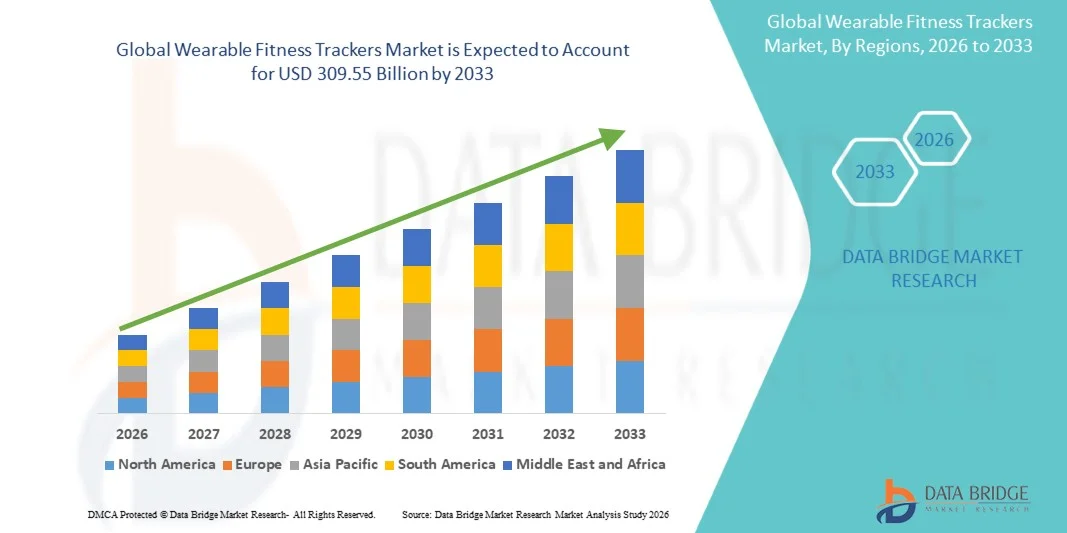
The Wearable Fitness Trackers Market was valued at USD 85.20 billion in 2025 and is projected to reach USD 309.55 billion by 2033, growing at a CAGR of 17.50% from 2026 to 2033. The Wearable Fitness Trackers Market is experiencing consistent growth driven by rising health awareness, increasing focus on preventive healthcare, and growing adoption of real-time fitness monitoring solutions across consumer and professional segments. Rapid advancements in wearable sensor technologies, AI-powered health analytics, and smartphone-integrated fitness ecosystems are significantly enhancing device accuracy and user engagement. Expanding applications across sports performance monitoring, chronic disease management, corporate wellness programs, and elderly care are further accelerating market demand.
The increasing prevalence of lifestyle-related disorders such as obesity, diabetes, and cardiovascular diseases is encouraging individuals to adopt wearable fitness trackers for continuous monitoring of physical activity, heart rate, sleep quality, and calorie expenditure. Growing participation in fitness activities, gym training, and outdoor sports is also contributing to strong product penetration. In addition, rising integration of fitness trackers with mobile health applications and cloud-based platforms is enabling personalized health insights and behavior tracking. Expanding adoption in professional sports and endurance training programs is further boosting demand for advanced fitness tracking devices.
Key Market Trends & Insights
- North America dominated the Wearable Fitness Trackers Market with the largest revenue share of 33.80% in 2025, supported by strong adoption of advanced wearable health ecosystems, high consumer awareness regarding preventive healthcare, and robust penetration of digital fitness platforms across the region.
- The Wrist Wear segment led the market with a 46.28% share in 2025, driven by high consumer preference for smartwatches and wrist-based fitness bands offering continuous heart rate, SpO₂, and activity tracking features.
- Asia-Pacific is expected to be the fastest-growing region at a CAGR of 7.4% from 2026 to 2033, fueled by rising health awareness, increasing smartphone penetration, expanding middle-class population, and rapid adoption of affordable fitness wearables in China, India, and Japan.
- The Smart Garments segment is expected to be the fastest-growing product type with a CAGR of 7.1%, supported by increasing use in professional sports training, rehabilitation monitoring, and advanced biomechanical tracking applications.
- The Wrist Wear category dominates the market with a 44.92% revenue share in 2025, driven by strong integration with mobile health apps, AI-based fitness coaching, and real-time biometric monitoring capabilities.
- The Sensor component segment led the market with a 38.67% share in 2025, owing to high demand for accurate biometric tracking including heart rate, motion, sleep, and blood oxygen monitoring in wearable devices.
- The Processor component segment is expected to be the fastest-growing with a CAGR of 6.9%, driven by increasing integration of AI-enabled analytics, edge computing capabilities, and real-time health data processing in next-generation wearables.
- The Heart Rate Tracking application dominated the market with a 41.15% revenue share in 2025, supported by widespread use in fitness monitoring, cardiovascular health tracking, and preventive healthcare management.
- The Sports, Running, and Cycling Tracking application is expected to witness the fastest growth at a CAGR of 7.3%, driven by rising adoption among athletes, fitness enthusiasts, and professional training programs.
- The Online Sales segment dominated the market with a 57.63% share in 2025, owing to increasing e-commerce penetration, consumer preference for digital purchasing, and availability of wide product variety at competitive pricing
Market Size & Forecast
- Global Market Value (2025): USD 85.20 Billion
- Expected Market Value (2033): USD 309.55 Billion
- Forecast CAGR (2026–2033): 17.50%
- Leading Region in 2025: North America
- Fastest Growing Region: Asia-Pacific
Report Scope and Wearable Fitness Trackers Market Segmentation
|
Attributes |
Wearable Fitness Trackers Key Market Insights |
|
Segments Covered |
|
|
Countries Covered |
North America · U.S. · Canada · Mexico Europe · Germany · France · U.K. · Netherlands · Switzerland · Belgium · Russia · Italy · Spain · Turkey · Rest of Europe Asia-Pacific · China · Japan · India · South Korea · Singapore · Malaysia · Australia · Thailand · Indonesia · Philippines · Rest of Asia-Pacific Middle East and Africa · Saudi Arabia · U.A.E. · South Africa · Egypt · Israel · Rest of Middle East and Africa South America · Brazil · Argentina · Rest of South America |
|
Key Market Players |
• Fitbit LLC (U.S.) |
|
Market Opportunities |
· AI-Powered Preventive Healthcare & Early Disease Detection Expansion · Growth in Sports Performance Optimization & Professional Fitness Ecosystems · Expansion of Remote Patient Monitoring (RPM) & Telehealth Integration |
|
Value Added Data Infosets |
In addition to the insights on market scenarios such as market value, growth rate, segmentation, geographical coverage, and major players, the market reports curated by the Data Bridge Market Research also include in-depth expert analysis, geographically represented company-wise production and capacity, network layouts of distributors and partners, detailed and updated price trend analysis and deficit analysis of supply chain and demand. |
Wearable Fitness Trackers Market Trends
Trend: Growth in AI-Enabled Fitness Monitoring & Sports Performance Optimization
Wearable Fitness Trackers are increasingly being adopted in professional sports, endurance training, and elite athletic programs to enhance performance monitoring and injury prevention. The integration of real-time biometric telemetry such as heart rate variability (HRV), SpO₂, sleep quality, and calorie expenditure is enabling coaches and sports scientists to make data-driven training decisions. Elite sports teams are increasingly using AI-powered wearables to optimize workload management and recovery cycles during high-intensity training sessions.
For instance, between 2023 and 2025, several European football clubs and professional cycling teams expanded the use of wearable fitness trackers to monitor player fatigue, recovery rates, and physiological stress during training camps and competitive matches. In endurance sports such as marathon running and triathlon events, wearable devices are being widely used to track real-time heart performance and prevent overtraining-related injuries. The growing integration of wearables with AI-based coaching platforms and mobile fitness applications is further enhancing personalized training and performance optimization.
Wearable Fitness Trackers Market Dynamics
Key Market Driver: Rising Burden of Chronic Diseases and Expansion of Digital Health Ecosystems
The increasing prevalence of lifestyle-related disorders such as cardiovascular diseases, diabetes, obesity, and hypertension is a major driver of wearable fitness tracker adoption. According to global health estimates, cardiovascular diseases alone account for nearly 17.9 million deaths annually, highlighting the need for continuous health monitoring and preventive care solutions. Wearable fitness trackers equipped with ECG, heart rate, SpO₂, and sleep monitoring capabilities are enabling early detection of health risks outside clinical environments.
Healthcare systems across the U.S., Europe, and Asia-Pacific are increasingly integrating wearable data into remote patient monitoring (RPM) programs and telehealth ecosystems. For example, large-scale digital health initiatives in the United States have expanded reimbursement frameworks for wearable-based monitoring in chronic disease management and post-discharge care. Integration with cloud platforms and mobile health applications is improving real-time data sharing between patients, physicians, and healthcare providers, reducing hospital readmission rates and improving long-term health outcomes.
Key Restraint/Challenge: Data Privacy Concerns, Device Costs, and Regulatory Compliance Barriers
A major challenge in the Wearable Fitness Trackers Market is the high cost of advanced devices and subscription-based health ecosystems. While basic fitness trackers are widely affordable, premium devices with medical-grade sensors, AI analytics, and ECG capabilities remain expensive, limiting adoption in price-sensitive markets.
In addition, growing concerns around data privacy, cybersecurity, and ownership of personal health data are becoming critical barriers. Wearable devices continuously collect sensitive biometric information, requiring strict compliance with regulations such as GDPR in Europe and HIPAA in the United States. Interoperability challenges with healthcare IT systems and lack of standardized clinical validation across regions further restrict seamless adoption. Rapid product innovation cycles also lead to shorter device lifespans, increasing replacement frequency and overall ownership cost burden for users.
Key Market Opportunity: AI-Driven Personalized Health Ecosystems and Remote Care Expansion
The integration of artificial intelligence and machine learning is creating significant opportunities for predictive healthcare and personalized wellness management in wearable fitness trackers. AI-enabled systems can analyze continuous biometric data to detect early warning signs of cardiovascular irregularities, sleep disorders, and metabolic imbalances. For instance, AI-based wearable platforms between 2022 and 2024 demonstrated improved detection accuracy for atrial fibrillation compared to traditional intermittent monitoring systems in multiple clinical evaluations.
Companies such as Apple Inc., Fitbit (Google), and Samsung Electronics Co., Ltd. are expanding connected health ecosystems that integrate wearables with cloud dashboards, telehealth platforms, and electronic medical records. The growing adoption of corporate wellness programs, insurance-linked fitness incentives, and remote patient monitoring solutions is further accelerating market penetration. Emerging economies in Asia-Pacific, Latin America, and the Middle East are witnessing rapid adoption due to increasing smartphone penetration, affordability of wearables, and rising focus on preventive healthcare.
Wearable Fitness Trackers Market Scope
The Wearable Fitness Trackers market is segmented on the basis of product type, category, component, application, sales channel, and end-users.
By Product Type
On the basis of product type, the Wearable Fitness Trackers Market is segmented into wrist wear, leg wear, smart garments, and others. The Wrist Wear segment dominated the market with a 42.36% share in 2025, owing to high consumer adoption, continuous health tracking capabilities, affordability, and strong compatibility with smartphones and digital health ecosystems. These devices are widely used for real-time monitoring of heart rate, sleep patterns, physical activity, and calorie expenditure. Growing demand for preventive healthcare and fitness awareness among urban populations is further supporting segment dominance. Increasing integration of AI-powered analytics and mobile applications enhances user experience and data accuracy.
Rising prevalence of lifestyle-related disorders such as obesity and cardiovascular diseases is also driving adoption. Wrist wear devices are preferred due to their compact design, ease of use, and long battery life. Expanding distribution through online and offline channels is strengthening market penetration. Integration with telehealth platforms is further increasing clinical utility. Continuous product innovation by companies such as Apple, Fitbit, and Garmin is accelerating adoption. Strong presence in both developed and emerging economies further reinforces dominance.
The Smart Garments segment is expected to register the fastest growth at a CAGR of 7.8% from 2026 to 2033, driven by rising demand for advanced textile-integrated wearable technologies that enable continuous biometric monitoring without discomfort. Increasing adoption in sports performance optimization, rehabilitation therapy, and military training is accelerating segment expansion. Smart garments embedded with flexible sensors allow real-time tracking of physiological parameters such as respiration, muscle activity, and posture. Growing advancements in e-textiles, nanotechnology, and flexible electronics are supporting innovation. Rising demand for non-invasive health monitoring solutions is boosting adoption. Integration with AI-based analytics platforms improves predictive health insights. Increasing investment in smart textile R&D is further accelerating growth. Expanding use in professional athletics and fitness programs enhances demand. Growing collaboration between healthcare and textile industries is supporting commercialization. Rising awareness of personalized healthcare is also contributing significantly. High comfort level compared to traditional wearables is driving consumer preference. Expanding use in chronic disease management further strengthens growth outlook.
By Category
On the basis of category, the Wearable Fitness Trackers Market is segmented into handwear, torsowear, legwear, and headwear. The Handwear segment dominated the market with a 38.91% share in 2025, supported by widespread adoption of wrist-based and finger-based devices for continuous health and fitness tracking applications. These devices provide accurate monitoring of heart rate, sleep quality, activity levels, and calorie consumption. Increasing consumer preference for compact, lightweight, and multifunctional wearables is strengthening segment leadership. Growing integration with smartphones and cloud-based health platforms is enhancing usability. Rising awareness of preventive healthcare is further driving demand. Strong adoption across fitness enthusiasts and healthcare users is supporting market expansion. Technological advancements in sensor accuracy are improving performance. Expanding availability through e-commerce channels is boosting accessibility. Increasing use in corporate wellness programs is also supporting growth. Continuous innovation in wearable design is strengthening adoption. High comfort and convenience compared to other wearable forms are key factors supporting dominance.
The Torsowear segment is expected to register the fastest growth at a CAGR of 7.5% from 2026 to 2033, driven by increasing demand for high-accuracy biometric monitoring systems used in sports science, rehabilitation, and clinical applications. Smart chest straps and wearable vests provide precise heart rate, respiration, and movement tracking. Rising adoption in professional sports training programs is accelerating segment growth. Increasing use in cardiac rehabilitation and post-surgical monitoring is expanding applications. Growing demand for real-time physiological data in athletic performance optimization is supporting adoption. Advancements in smart textile integration are improving comfort and functionality. Rising investment in sports analytics and biomechanics research is boosting demand. Integration with AI-powered performance monitoring platforms enhances analytical capabilities. Expanding use in military training environments is also supporting growth. Increasing awareness of injury prevention and fitness optimization is driving adoption. Strong adoption among professional athletes further strengthens growth trajectory.
By Component
On the basis of component, the Wearable Fitness Trackers Market is segmented into display, processor, memory, power, networking, interface, and sensor. The Sensor segment dominated the market with a 35.74% share in 2025, owing to its critical role in enabling continuous physiological monitoring such as heart rate, SpO₂, motion tracking, sleep analysis, and biometric data acquisition. Sensors form the core functional unit of wearable fitness devices, enabling real-time health insights and accurate data capture. Increasing demand for high-precision biosensors in consumer health and clinical applications is strengthening segment dominance. Rapid advancements in miniaturized, low-power, and multi-parameter sensing technologies are improving device efficiency. Growing adoption of AI-integrated wearable devices enhances sensor-driven analytics. Expanding use in remote patient monitoring and chronic disease management is boosting demand. Rising fitness awareness globally is accelerating adoption. Integration with mobile health ecosystems improves data usability. Strong R&D investments by leading manufacturers are driving innovation. Increasing demand for continuous monitoring devices is further supporting growth. Expanding healthcare digitization is reinforcing sensor dominance. High reliability and accuracy of modern sensors remain key growth drivers.
The Networking segment is expected to register the fastest growth at a CAGR of 8.1% from 2026 to 2033, driven by rising adoption of connected wearable ecosystems enabled by Bluetooth Low Energy, Wi-Fi, and cloud-based platforms. Increasing demand for real-time health monitoring and remote diagnostics is significantly boosting segment expansion. Networking components enable seamless data synchronization between wearable devices, smartphones, and healthcare platforms. Growing adoption of telehealth and remote patient monitoring systems is accelerating demand. Rising smartphone penetration and internet connectivity worldwide are supporting adoption. Integration of cloud computing and AI analytics enhances real-time insights. Expanding use of digital healthcare platforms is increasing connectivity requirements. Growing focus on predictive healthcare and preventive monitoring is supporting growth. Increasing demand for interoperable health ecosystems is driving innovation. Advancements in 5G connectivity are further enhancing performance. Rising adoption in home healthcare and ambulatory monitoring is boosting demand. Strong investment in digital health infrastructure is reinforcing segment growth.
By Application
On the basis of application, the Wearable Fitness Trackers Market is segmented into heart rate tracking, sleep measurement tracking, glucose measurement tracking, sports, running, and cycling tracking. The Heart Rate Tracking segment dominated the market with a 44.12% share in 2025, driven by increasing prevalence of cardiovascular diseases, rising fitness awareness, and growing adoption of continuous health monitoring devices. Heart rate tracking is a core functionality in most wearable fitness devices, enabling users to monitor real-time cardiac activity. Increasing demand for preventive healthcare solutions is supporting segment dominance. Integration with AI-based analytics enhances predictive health insights. Growing adoption in hospitals and homecare settings is expanding usage. Rising popularity of fitness apps is strengthening demand. Expanding use in sports performance optimization is supporting growth. Increasing consumer awareness of heart-related disorders is driving adoption. Continuous improvements in sensor accuracy are enhancing reliability. Strong penetration of smartwatches is further boosting the segment. Growing geriatric population globally is increasing demand. Integration with telehealth platforms is enhancing clinical utility.
The Glucose Measurement Tracking segment is expected to register the fastest growth at a CAGR of 8.6% from 2026 to 2033, driven by rising global diabetes prevalence and increasing demand for non-invasive continuous glucose monitoring (CGM) solutions. Growing adoption of wearable CGM-integrated devices is transforming diabetes management. Increasing shift toward preventive healthcare is boosting demand. Advancements in biosensor technology are improving measurement accuracy. Rising healthcare expenditure globally is supporting adoption. Growing awareness of early disease detection is accelerating usage. Integration with mobile apps and cloud platforms enhances real-time monitoring. Expanding use in remote patient monitoring programs is driving growth. Increasing focus on personalized healthcare solutions is supporting demand. Strong R&D investment in non-invasive glucose monitoring is accelerating innovation. Rising adoption in home healthcare settings is expanding market reach. Increasing collaborations between medtech companies and digital health firms are strengthening growth.
By Sales Channel
On the basis of sales channel, the Wearable Fitness Trackers Market is segmented into online sales and retail sales. The Online Sales segment dominated the market with a 57.63% share in 2025, owing to increasing e-commerce penetration, consumer preference for digital purchasing, and availability of wide product variety at competitive pricing. Online platforms offer convenience, doorstep delivery, and easy comparison of features, driving strong adoption. Growing smartphone usage is further boosting online purchases. Increasing presence of brand-owned websites and marketplaces is strengthening distribution. Digital marketing and promotional offers are enhancing sales. Rising adoption of omnichannel strategies is improving customer engagement. Availability of detailed product reviews supports informed decision-making. Expansion of global e-commerce platforms is increasing accessibility. Integration of AI-based recommendation systems improves user experience. Strong logistics infrastructure supports fast delivery. Growing trust in online payment systems is driving adoption. Increasing internet penetration globally is reinforcing dominance.
The Retail Sales segment is expected to register the fastest growth at a CAGR of 7.2% from 2026 to 2033, driven by increasing expansion of physical electronics stores, pharmacies, and fitness retail outlets. Consumers prefer in-store experience for product testing and personalized guidance. Rising demand for after-sales support is boosting retail adoption. Increasing presence of specialty health and fitness stores is supporting growth. Retail outlets offer product demonstrations, enhancing consumer confidence. Growing urbanization is expanding retail networks. Availability of trained sales staff improves product selection. Integration of digital kiosks and smart retail technologies is enhancing customer experience. Rising demand in emerging markets is supporting expansion. Increasing partnerships between manufacturers and retailers are boosting availability. Strong offline brand presence is reinforcing trust. Growing hybrid retail models are improving accessibility.
By End-Users
On the basis of end-users, the Wearable Fitness Trackers Market is segmented into hospitals, diagnosis centers, and others. The Hospitals segment dominated the market with a 39.58% share in 2025, driven by increasing adoption of wearable devices for patient monitoring, chronic disease management, and post-operative care. Hospitals are integrating wearable fitness trackers into remote patient monitoring systems for real-time health tracking. Rising prevalence of cardiovascular and metabolic disorders is boosting demand. Increasing focus on preventive healthcare is strengthening adoption. Integration with hospital information systems improves clinical efficiency. Growing use in elderly patient monitoring is supporting expansion. Advancements in digital health infrastructure are driving implementation. Increasing government support for telehealth is boosting adoption. Rising demand for continuous monitoring in ICUs and wards is strengthening usage. Growing partnerships between hospitals and medtech companies are supporting deployment. Expanding healthcare digitization is reinforcing dominance. Improved patient outcomes through continuous monitoring is a key driver.
The Diagnosis Center segment is expected to register the fastest growth at a CAGR of 8.3% from 2026 to 2033, driven by rising demand for early disease detection and continuous diagnostic monitoring services. Increasing integration of wearable data into diagnostic workflows is enhancing accuracy. Growing prevalence of lifestyle diseases is boosting demand for advanced monitoring solutions. Rising adoption of remote diagnostic services is supporting expansion. Increasing use of AI-powered diagnostic analytics is improving efficiency. Expanding outpatient care infrastructure is driving adoption. Growing awareness of preventive screening is supporting growth. Integration with cloud-based health platforms enhances data accessibility. Rising healthcare investments in emerging economies are accelerating expansion. Increasing demand for cost-effective diagnostic solutions is boosting uptake. Strong shift toward ambulatory care models is reinforcing growth. Expanding use in cardiovascular and metabolic disease diagnostics is further supporting the segment.
Wearable Fitness Trackers Market Regional Analysis
North America dominated the Wearable Fitness Trackers Market with the largest revenue share of 33.80% in 2025, supported by strong adoption of advanced wearable health ecosystems, high consumer awareness regarding preventive healthcare, widespread use of smartwatches and fitness bands, and robust penetration of digital fitness platforms across the region. The region also benefits from strong presence of leading technology companies, advanced healthcare infrastructure, and increasing integration of wearable data with telehealth and remote patient monitoring systems. Rising prevalence of lifestyle-related diseases and growing focus on personalized health management are further strengthening market dominance. Increasing adoption of AI-enabled health tracking, cloud-based analytics, and real-time biometric monitoring solutions is further accelerating demand across the region. Expanding corporate wellness programs and insurance-linked fitness initiatives are also supporting adoption. High smartphone penetration and strong internet connectivity are enabling seamless data synchronization.
U.S. Wearable Fitness Trackers Market Insight
The U.S. Wearable Fitness Trackers market is witnessing strong growth due to rising consumer focus on preventive healthcare, increasing prevalence of obesity, diabetes, and cardiovascular diseases, and growing adoption of digital health ecosystems. The country’s mature healthcare infrastructure, combined with widespread use of smartwatches and fitness bands, is driving demand across both consumer and clinical applications. Increasing integration of wearable devices with remote patient monitoring platforms is significantly improving chronic disease management. Rising investment in AI-powered health analytics and mobile health applications is further enhancing user engagement. Strong presence of leading companies such as Apple, Google Fitbit, and Garmin is accelerating innovation. Expanding corporate wellness programs and insurance-based fitness incentives are boosting adoption. High smartphone penetration and 5G connectivity are improving real-time health tracking capabilities.
Europe Wearable Fitness Trackers Market Insight
Europe Wearable Fitness Trackers market remains a major contributor to global revenue, driven by strong government support for digital health initiatives, high awareness of preventive healthcare, and increasing adoption of wearable technologies for chronic disease management. The region has a well-established healthcare system that supports integration of wearable data into clinical workflows. Growing prevalence of cardiovascular diseases and diabetes is increasing demand for continuous monitoring solutions. Rising adoption of fitness wearables in sports, rehabilitation, and elderly care is further supporting growth. Strong regulatory frameworks promoting digital health innovation are enhancing market development. Increasing collaboration between healthcare providers and technology companies is accelerating adoption. Expanding use of remote patient monitoring programs is improving healthcare efficiency.
U.K. Wearable Fitness Trackers Market Insight
The U.K. Wearable Fitness Trackers market is experiencing steady growth, supported by rising consumer adoption of digital health ecosystems, increasing focus on preventive healthcare, and strong penetration of fitness wearable devices. Growing awareness regarding cardiovascular health and lifestyle-related diseases is driving demand for continuous health monitoring solutions. Expanding use of smartwatches and fitness bands in corporate wellness programs is further supporting market growth. Increasing integration of AI, IoT, and cloud-based health platforms is enhancing real-time data tracking capabilities. Rising adoption of telehealth and remote patient monitoring solutions is strengthening demand. Strong presence of digital healthcare startups is accelerating innovation. Growing elderly population is increasing demand for health monitoring devices. Expanding sports and fitness culture is boosting wearable adoption. Increasing smartphone penetration and connectivity infrastructure is enabling seamless data synchronization. Government support for digital health transformation is further driving adoption. Rising consumer preference for personalized health insights is supporting market expansion. Overall, the U.K. represents a mature and innovation-driven wearable health market.
Germany Wearable Fitness Trackers Market Insight
The Germany Wearable Fitness Trackers market is expanding steadily due to strong healthcare infrastructure, high awareness of preventive healthcare, and increasing adoption of digital health monitoring solutions. Rising prevalence of cardiovascular diseases and diabetes is significantly driving demand for continuous monitoring devices. Growing integration of wearable data into clinical decision-making systems is enhancing healthcare efficiency. Increasing adoption of smartwatches and fitness trackers in sports and rehabilitation applications is supporting growth. Strong focus on healthy aging population is further boosting demand. Expanding digital health initiatives supported by government policies is accelerating adoption. High penetration of smartphones and connected devices is enabling real-time health tracking. Increasing collaboration between healthcare providers and technology companies is strengthening innovation. Rising use of AI-powered health analytics is improving predictive healthcare outcomes. Growing consumer preference for fitness and wellness tracking is expanding market reach. Strong presence of medtech companies is reinforcing market development. Germany remains a key European hub for wearable healthcare technologies.
Asia-Pacific Wearable Fitness Trackers Market Insight
The Asia-Pacific Wearable Fitness Trackers market is expected to witness rapid growth, driven by rising health awareness, increasing disposable income, expanding middle-class population, and rapid digital transformation across healthcare systems. Growing prevalence of lifestyle-related diseases such as obesity, diabetes, and hypertension is boosting demand for continuous health monitoring solutions. Increasing smartphone penetration and internet connectivity are enabling widespread adoption of wearable devices. Strong expansion of e-commerce platforms is improving product accessibility. Government initiatives promoting digital health and telemedicine are accelerating market growth. Rising adoption of affordable fitness trackers in emerging economies such as India and Southeast Asia is further supporting expansion. Increasing focus on preventive healthcare is strengthening demand. Rapid urbanization is contributing to sedentary lifestyles, increasing wearable adoption. Growing penetration of AI-enabled health platforms is improving data-driven insights. Expanding fitness and wellness culture is driving consumer engagement. Strong investments in healthcare infrastructure are supporting regional growth. Asia-Pacific is emerging as the fastest-growing wearable fitness market globally.
Japan Wearable Fitness Trackers Market Insight
The Japan Wearable Fitness Trackers market is witnessing steady growth due to rising elderly population, increasing focus on preventive healthcare, and strong adoption of advanced digital health technologies. Growing prevalence of chronic diseases such as cardiovascular disorders and diabetes is driving demand for continuous monitoring devices. High technological adoption rate among consumers is supporting wearable penetration. Increasing use of smartwatches and health bands for fitness and medical monitoring is expanding market scope. Strong integration of AI and IoT in healthcare systems is enhancing real-time data analytics. Government initiatives promoting healthy aging are boosting demand. Rising adoption of remote patient monitoring solutions is supporting healthcare efficiency. Expanding corporate wellness programs are increasing wearable usage. Strong presence of technology giants is accelerating innovation. Increasing focus on personalized healthcare solutions is driving adoption. Advanced connectivity infrastructure is enabling seamless data tracking. Japan remains a highly advanced and innovation-driven wearable health market.
China Wearable Fitness Trackers Market Insight
The China Wearable Fitness Trackers market is growing rapidly, driven by rising health awareness, increasing prevalence of chronic diseases, and strong government support for digital healthcare transformation. Expanding middle-class population and rising disposable income are boosting demand for fitness wearable devices. Increasing smartphone penetration and internet accessibility are enabling widespread adoption. Strong growth of e-commerce platforms is improving availability and affordability of wearable devices. Growing adoption of AI-enabled health monitoring systems is enhancing predictive healthcare capabilities. Rising investment in healthcare infrastructure is supporting market expansion. Increasing use of wearable devices in hospitals and homecare settings is strengthening demand. Expanding fitness and wellness culture is driving consumer adoption. Strong presence of domestic wearable manufacturers is accelerating innovation. Government initiatives promoting smart healthcare ecosystems are boosting growth. Rising demand for remote patient monitoring solutions is further supporting adoption. China is emerging as one of the largest and fastest-growing wearable fitness markets globally.
Wearable Fitness Trackers Market Share
The Wearable Fitness Trackers industry is primarily led by well-established companies, including:
- Fitbit LLC (U.S.)
- Apple Inc. (U.S.)
- Samsung Electronics Co., Ltd. (South Korea)
- Garmin Ltd. (Switzerland)
- Huawei Technologies Co., Ltd. (China)
- Xiaomi Corporation (China)
- Whoop Inc. (U.S.)
- Amazfit (Zepp Health Corporation) (China)
- Polar Electro Oy (Finland)
- Fossil Group, Inc. (U.S.)
- Jawbone Health Hub (U.S.)
- Withings (France)
- Noise (India)
- Boult Audio / Boult (India)
- Realme (China)
- Oppo Digital / OPPO Electronics (China)
- TicWatch (Mobvoi Inc.) (China)
- Lenovo Group Limited (China)
- Sony Corporation (Japan)
- Honor Device Co., Ltd. (China)
- Amazfit (Zepp Health) (China)
- Omron Healthcare Co., Ltd. (Japan)
- CardiacSense Ltd. (Israel)
- BioTelemetry Inc. (U.S.)
- AliveCor Inc. (U.S.)
- iRhythm Technologies, Inc. (U.S.)
- Mi (Xiaomi wearable division) (China)
- Huawei Health division (China)
- Google Fitbit ecosystem (U.S.)
- Under Armour Connected Fitness (U.S.)
Latest Developments in Wearable Fitness Trackers Market
- In September 2021, Fitbit (Google LLC) launched the Fitbit Charge 5, introducing a more advanced health-tracking ecosystem with features such as electrodermal activity (EDA) sensing for stress management, ECG app support for atrial fibrillation detection, and integrated GPS. The device strengthened Fitbit’s positioning in clinically relevant wearable health monitoring and reflected the growing convergence of consumer fitness trackers with medical-grade monitoring capabilities. This launch highlighted increasing demand for multi-parameter health tracking in compact wearable devices
- In September 2022, Apple Inc. introduced the Apple Watch Series 8 and Apple Watch Ultra, expanding wearable health tracking capabilities with temperature sensing for cycle tracking, enhanced heart rate monitoring, crash detection, and improved fitness analytics. The Apple Watch Ultra particularly targeted endurance athletes and outdoor users with advanced GPS and rugged design features. This launch reinforced Apple’s dominance in premium wearable fitness ecosystems and accelerated competition in high-performance fitness tracking devices
- In July 2023, Samsung Electronics unveiled the Galaxy Watch 6 series, integrating improved AI-driven health monitoring features including sleep coaching, heart rate variability tracking, and advanced sleep apnea detection capabilities in select markets. The release also emphasized deeper integration with Samsung Health ecosystem and smart device connectivity, strengthening its competitive positioning against Apple and Fitbit in the global smartwatch and fitness tracker segment
- In January 2024, OMRON Healthcare expanded its connected health ecosystem with enhanced wearable blood pressure monitoring devices integrated with mobile applications and cloud-based health platforms. These devices aimed to improve hypertension management through continuous monitoring and remote data sharing with healthcare providers, reflecting the broader trend of convergence between fitness wearables and remote patient monitoring (RPM) systems. This development supported rising demand for clinically validated wearable health tracking solutions
- In July 2024, Samsung introduced the Galaxy Ring, marking a major diversification in wearable fitness technology beyond wrist-based devices. The Galaxy Ring enabled continuous health tracking including heart rate, sleep quality, and stress monitoring while integrating with Samsung’s ecosystem for seamless health data synchronization. This launch represented a shift toward form-factor innovation in the wearable fitness tracker market and increased competition in next-generation compact health wearables

- Interactive Data Analysis Dashboard
- Company Analysis Dashboard for high growth potential opportunities
- Research Analyst Access for customization & queries
- Competitor Analysis with Interactive dashboard
- Latest News, Updates & Trend analysis
- Harness the Power of Benchmark Analysis for Comprehensive Competitor Tracking
Data collection and base year analysis are done using data collection modules with large sample sizes. The stage includes obtaining market information or related data through various sources and strategies. It includes examining and planning all the data acquired from the past in advance. It likewise envelops the examination of information inconsistencies seen across different information sources. The market data is analysed and estimated using market statistical and coherent models. Also, market share analysis and key trend analysis are the major success factors in the market report. To know more, please request an analyst call or drop down your inquiry.
The key research methodology used by DBMR research team is data triangulation which involves data mining, analysis of the impact of data variables on the market and primary (industry expert) validation. Data models include Vendor Positioning Grid, Market Time Line Analysis, Market Overview and Guide, Company Positioning Grid, Patent Analysis, Pricing Analysis, Company Market Share Analysis, Standards of Measurement, Global versus Regional and Vendor Share Analysis. To know more about the research methodology, drop in an inquiry to speak to our industry experts.
Data Bridge Market Research is a leader in advanced formative research. We take pride in servicing our existing and new customers with data and analysis that match and suits their goal. The report can be customized to include price trend analysis of target brands understanding the market for additional countries (ask for the list of countries), clinical trial results data, literature review, refurbished market and product base analysis. Market analysis of target competitors can be analyzed from technology-based analysis to market portfolio strategies. We can add as many competitors that you require data about in the format and data style you are looking for. Our team of analysts can also provide you data in crude raw excel files pivot tables (Fact book) or can assist you in creating presentations from the data sets available in the report.













