Global Wood Heating Stoves Market Size
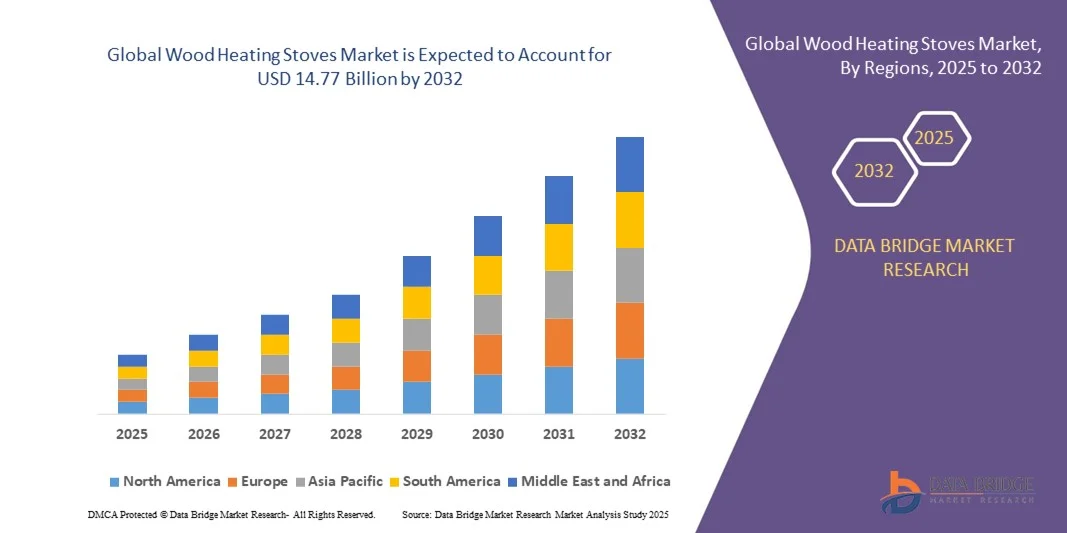
- The global Wood Heating Stoves Market size was valued at USD 9.13 billion in 2024 and is projected to reach USD 14.77 billion by 2032, growing at a CAGR of 6.20% during the forecast period.
- The market expansion is primarily driven by the increasing focus on sustainable and renewable heating solutions, coupled with rising awareness of carbon emission reduction and the growing popularity of biomass-based energy sources across residential and commercial sectors.
- Additionally, the advancement in stove efficiency, design innovations, and government incentives promoting eco-friendly heating alternatives are propelling the adoption of wood heating stoves, thereby accelerating the overall market growth globally.
Global Wood Heating Stoves Market Analysis
- Wood heating stoves, which utilize wood or biomass as fuel to provide efficient and sustainable heating, are becoming increasingly important in both residential and commercial applications due to their eco-friendly performance, cost-effectiveness, and ability to reduce dependence on fossil fuels.
- The rising demand for wood heating stoves is primarily driven by growing environmental awareness, increasing energy costs, and supportive government policies promoting renewable energy and carbon-neutral heating alternatives.
- Europe dominated the Global Wood Heating Stoves Market with the largest revenue share of 36.2% in 2024, supported by stringent emission regulations, widespread adoption of sustainable heating systems, and the presence of leading stove manufacturers. Countries such as Germany, Sweden, and Finland are experiencing significant growth, fueled by consumer preference for modern, efficient, and aesthetically designed wood stoves.
- Asia-Pacific is expected to be the fastest-growing region in the Global Wood Heating Stoves Market during the forecast period, driven by rapid urbanization, expanding rural electrification programs, and increasing investments in renewable heating solutions.
- The metal stove segment dominated the market with the largest revenue share of 46.7% in 2024, driven by its durability, high heat output, and affordability compared to other materials.
Report Scope and Global Wood Heating Stoves Market Segmentation
|
Attributes |
Wood Heating Stoves Key Market Insights |
|
Segments Covered |
|
|
Countries Covered |
North America
Europe
Asia-Pacific
Middle East and Africa
South America
|
|
Key Market Players |
|
|
Market Opportunities |
|
|
Value Added Data Infosets |
In addition to the insights on market scenarios such as market value, growth rate, segmentation, geographical coverage, and major players, the market reports curated by the Data Bridge Market Research also include in-depth expert analysis, pricing analysis, brand share analysis, consumer survey, demography analysis, supply chain analysis, value chain analysis, raw material/consumables overview, vendor selection criteria, PESTLE Analysis, Porter Analysis, and regulatory framework. |
Global Wood Heating Stoves Market Trends
Advancements in Clean-Burning and Smart Heating Technologies
- A significant and accelerating trend in the Global Wood Heating Stoves Market is the integration of smart controls, automation, and cleaner combustion technologies aimed at improving energy efficiency, convenience, and environmental sustainability. This convergence of innovation is transforming traditional wood stoves into intelligent, eco-conscious heating systems.
- For instance, Jøtul’s F 370 Advance series and Hearth & Home Technologies’ SmartBurn system feature automated air regulation and digital monitoring, enabling users to optimize burn efficiency and reduce emissions with minimal manual adjustment. Similarly, Morso’s i-Series stoves incorporate clean combustion technology that meets the latest European EcoDesign standards.
- Modern wood stoves now utilize sensors and microprocessor-based control systems that automatically adjust airflow based on real-time temperature and combustion conditions, resulting in higher fuel efficiency and reduced particulate emissions. Some advanced models also connect to mobile apps, allowing users to remotely monitor stove performance and temperature.
- The seamless integration of wood heating stoves with smart home energy systems enables centralized management of home heating, ventilation, and power consumption. Through a single interface, users can monitor fuel usage, track indoor temperature, and control heating intensity—creating a more connected and sustainable living environment.
- This trend toward intelligent, efficient, and environmentally responsible wood heating solutions is reshaping consumer expectations. Leading manufacturers such as Regency Fireplace Products and Stûv are focusing on digital innovation, low-emission designs, and automated operation to meet global energy efficiency and carbon reduction goals.
- The demand for smart, clean-burning wood stoves is growing rapidly across both residential and commercial sectors, as consumers increasingly prioritize energy independence, sustainability, and ease of operation in modern heating solutions.
Global Wood Heating Stoves Market Dynamics
Driver
Growing Demand Driven by Sustainability Goals and Energy Efficiency Needs
- The increasing global emphasis on sustainability, renewable energy adoption, and reduction of carbon emissions is a significant driver of demand in the Global Wood Heating Stoves Market. As governments and consumers prioritize eco-friendly heating alternatives, wood stoves are emerging as a preferred solution due to their renewable fuel source and improved combustion technologies.
- For instance, in March 2024, Hearth & Home Technologies introduced its next-generation EcoChoice series featuring advanced secondary combustion systems that maximize heat output while minimizing emissions—aligning with stringent environmental regulations across Europe and North America. Such innovations are expected to propel market expansion in the coming years.
- As consumers seek cost-effective and sustainable heating solutions, wood heating stoves offer a practical alternative to electric and gas-based systems, particularly in regions with abundant wood resources. Modern stoves provide high efficiency, low particulate emissions, and compatibility with carbon-neutral biomass fuels, making them an attractive choice for both rural and urban households.
- Furthermore, the rising popularity of off-grid living, renewable energy integration, and energy independence is reinforcing demand for wood stoves. Their ability to operate without electricity while providing consistent warmth positions them as a reliable heating source in areas prone to power outages or with limited grid access.
- The combination of environmental awareness, government incentives, and technological innovation is driving the widespread adoption of advanced wood heating stoves across residential, commercial, and hospitality sectors.
Restraint/Challenge
Emission Regulations and High Installation Costs
- Despite their growing appeal, the Global Wood Heating Stoves Market faces challenges stemming from stringent emission standards and high upfront installation costs. As countries implement tighter air quality regulations, manufacturers are under pressure to design cleaner, certified stoves that meet eco-label requirements such as EPA and EU EcoDesign 2022.
- For Instance, reports of older non-compliant stoves being banned or phased out in certain European regions have raised concerns among consumers about replacement costs and regulatory complexity. This has led some households to delay purchases or opt for lower-cost alternatives.
- Addressing these challenges requires continued innovation in combustion efficiency, particulate reduction technologies, and hybrid heating designs. Leading manufacturers such as Jøtul Group and Regency Fireplace Products are investing in research to develop ultra-low-emission models and simplify compliance through cleaner burn technology.
- Additionally, the initial investment cost of high-efficiency wood stoves—including installation, chimney setup, and ventilation systems—can deter price-sensitive buyers, particularly in developing markets. While government rebates and subsidies in regions such as Scandinavia and Canada have helped offset costs, broader affordability remains an issue.
- Overcoming these barriers through policy support, technological advancements, and consumer education about long-term cost savings and environmental benefits will be essential for ensuring sustained market growth and adoption of cleaner wood heating technologies worldwide.
Global Wood Heating Stoves Market Scope
The wood heating stoves market is segmented on the basis of types, application and sales channel.
- By Type
On the basis of type, the Global Wood Heating Stoves Market is segmented into metal stove, stone stove, ceramic stove, and others. The metal stove segment dominated the market with the largest revenue share of 46.7% in 2024, driven by its durability, high heat output, and affordability compared to other materials. Metal stoves, typically made from cast iron or steel, offer rapid heat transfer and are easy to install, making them the preferred choice for both residential and commercial users.
Their lightweight construction and compatibility with modern designs also enhance their appeal. The ceramic stove segment is anticipated to witness the fastest growth rate of 21.3% from 2025 to 2032, supported by the rising demand for aesthetically designed, energy-efficient, and heat-retentive solutions. Ceramic stoves are gaining traction among environmentally conscious consumers for their ability to retain warmth longer while complementing contemporary home interiors.
- By Application
On the basis of application, the Global Wood Heating Stoves Market is segmented into living room, family room, kitchen, home office, bedroom, and others. The living room segment accounted for the largest market revenue share of 41.5% in 2024, as living spaces remain the most common areas for wood stove installations due to their central location and ability to provide efficient, uniform heating. Aesthetic design trends and the integration of stoves as focal decor elements further drive adoption in living rooms.
The home office segment is expected to register the fastest CAGR of 20.8% from 2025 to 2032, fueled by the growing remote work trend and increasing need for efficient, localized heating. Compact, low-emission stoves are increasingly being chosen for home offices to provide sustainable warmth and reduce dependence on central heating systems, particularly in colder regions with high energy costs.
- By Sales Channel
On the basis of sales channel, the Global Wood Heating Stoves Market is segmented into direct sales and distributor. The distributor segment dominated the market with a revenue share of 57.9% in 2024, attributed to the widespread presence of retail and specialty stove dealers offering extensive product options, after-sales services, and installation support. Consumers prefer distributors for personalized recommendations and demonstrations, particularly in developed markets such as Europe and North America.
The direct sales segment is projected to record the fastest growth rate of 19.6% from 2025 to 2032, driven by the expansion of online platforms, manufacturer-owned stores, and e-commerce channels. Increasing consumer preference for direct-to-consumer purchasing and access to transparent pricing, virtual consultations, and digital customization tools are boosting direct sales, especially among tech-savvy and eco-conscious buyers seeking sustainable heating solutions.
Global Wood Heating Stoves Market Regional Analysis
- Europe dominated the Global Wood Heating Stoves Market with the largest revenue share of 36.2% in 2024, driven by increasing demand for energy-efficient and eco-friendly heating solutions and growing awareness of renewable energy alternatives.
- Consumers in the region highly value high-performance stoves, advanced combustion technologies, and designs that complement modern home interiors, which has accelerated the adoption of wood heating stoves in both urban and suburban households.
- This widespread adoption is further supported by high disposable incomes, established distribution networks, and government incentives for clean energy appliances, encouraging homeowners to invest in low-emission, high-efficiency wood stoves. The popularity of off-grid and hybrid heating solutions in North America also contributes to the region’s dominance, making wood stoves a preferred option for sustainable, reliable, and aesthetically appealing home heating.
U.S. Wood Heating Stoves Market Insight
The U.S. wood heating stoves market captured the largest revenue share of 82% in North America in 2024, driven by the increasing adoption of energy-efficient, low-emission heating solutions and growing interest in sustainable living. Consumers are prioritizing wood stoves for their ability to provide reliable warmth, reduce dependency on gas and electric heating, and align with eco-friendly lifestyles. The popularity of modern, high-efficiency stoves with advanced combustion technologies and aesthetic appeal further accelerates market growth. Additionally, government incentives for renewable energy appliances and increasing off-grid living trends contribute to higher adoption rates across both residential and commercial segments.
Europe Wood Heating Stoves Market Insight
The Europe wood heating stoves market is projected to expand at a substantial CAGR throughout the forecast period, primarily driven by strict environmental and emission regulations and rising demand for sustainable heating solutions in homes and offices. Urbanization, coupled with growing awareness of energy efficiency, is fostering adoption of modern wood stoves. Consumers across the region are increasingly selecting low-emission, high-efficiency models that comply with EcoDesign 2022 standards, while also offering aesthetic and functional benefits for residential, commercial, and hospitality applications.
U.K. Wood Heating Stoves Market Insight
The U.K. wood heating stoves market is anticipated to grow at a noteworthy CAGR during the forecast period, fueled by the increasing focus on home energy efficiency, renewable heating adoption, and environmental sustainability. Rising energy costs and the desire to reduce carbon footprints are encouraging homeowners to invest in modern wood stoves. Additionally, government incentives for clean heating solutions and the popularity of aesthetically pleasing, high-performance stoves in both new constructions and renovations are expected to continue driving market expansion.
Germany Wood Heating Stoves Market Insight
The Germany wood heating stoves market is expected to expand at a considerable CAGR, driven by stringent emission standards, technological innovation, and strong consumer awareness of sustainable heating solutions. The country’s focus on energy efficiency, coupled with well-developed infrastructure and environmental initiatives, supports the adoption of modern wood stoves in residential and commercial buildings. Integration with smart heating controls and hybrid renewable systems is becoming more prevalent, appealing to consumers seeking eco-friendly, high-performance heating options.
Asia-Pacific Wood Heating Stoves Market Insight
The Asia-Pacific wood heating stoves market is poised to grow at the fastest CAGR of 22% from 2025 to 2032, driven by rapid urbanization, rising disposable incomes, and increasing awareness of eco-friendly heating solutions. Countries such as China, Japan, and India are witnessing growing demand for wood stoves due to the popularity of off-grid living, renewable energy adoption, and technological innovations in stove design. Government initiatives promoting clean energy and smart home integration are further accelerating market growth, making wood heating solutions more accessible and affordable to a wider consumer base.
Japan Wood Heating Stoves Market Insight
The Japan wood heating stoves market is gaining momentum due to the country’s technologically advanced culture, high energy costs, and increasing preference for sustainable heating. Consumers are drawn to compact, low-emission stoves suitable for urban homes and small living spaces. Integration with smart energy management systems and eco-friendly features supports adoption in residential and commercial properties. Additionally, Japan’s aging population is driving demand for user-friendly stoves that are safe, reliable, and easy to operate.
China Wood Heating Stoves Market Insight
The China wood heating stoves market accounted for the largest revenue share in Asia-Pacific in 2024, fueled by rapid urbanization, a growing middle class, and increasing awareness of renewable energy. Wood stoves are gaining popularity in residential, commercial, and rural properties due to affordability, efficiency, and reduced dependence on conventional energy sources. Government initiatives promoting clean energy, coupled with domestic manufacturing capabilities and modern stove designs, are key factors supporting market growth in China.
Global Wood Heating Stoves Market Share
The Wood Heating Stoves industry is primarily led by well-established companies, including:
• Jøtul Group (Norway)
• HearthStone Stoves (U.S.)
• Travis Industries (U.S.)
• Hearth & Home Technologies (U.S.)
• Stûv (Belgium)
• Morso Jernstøberi (Denmark)
• Drolet (Canada)
• Regency Fireplace Products (Canada)
• Quadra-Fire (U.S.)
• Pacific Energy (Canada)
• RAIS (Denmark)
• Invicta (France)
• Skantherm (Germany)
• Dovre (Norway)
• Hwam (Denmark)
• Supreme Fireplaces (Canada)
• Arada Ltd (U.K.)
• Buck Stove (U.S.)
• Woodwarm Stoves (U.K.)
• Esse Engineering Ltd (U.K.)
What are the Recent Developments in Global Wood Heating Stoves Market?
- In April 2023, Vermont Castings, a leading global wood stove manufacturer, launched a new line of high-efficiency wood stoves in Europe aimed at reducing residential carbon emissions while improving heating performance. This initiative underscores the company’s dedication to sustainable heating solutions and highlights its expertise in delivering environmentally friendly, technologically advanced stoves tailored to regional energy efficiency standards. By combining modern design with advanced combustion technology, Vermont Castings is strengthening its position in the rapidly growing Global Wood Heating Stoves Market.
- In March 2023, Jotul ASA, a Norwegian manufacturer of premium wood stoves, introduced the F 305 ECO series, designed for urban homes and small apartments. The new stoves feature ultra-low emissions and optimized heat output, addressing both environmental regulations and consumer demand for compact, energy-efficient heating solutions. This advancement emphasizes Jotul’s commitment to innovation and sustainability in residential heating.
- In March 2023, Morso A/S successfully launched its Smart Stove Integration Project in Denmark, aimed at connecting wood stoves with smart home systems for real-time energy monitoring and control. This project leverages IoT technologies to improve energy efficiency, convenience, and environmental performance, reflecting Morso’s dedication to modernizing home heating solutions.
- In February 2023, HWAM A/S, a leading manufacturer of Danish wood stoves, announced a partnership with Scandinavian renewable energy associations to promote advanced pellet and wood stove adoption in residential areas. The collaboration is designed to enhance stove efficiency and safety while encouraging sustainable energy practices, highlighting HWAM’s commitment to innovation and environmental stewardship.
- In January 2023, Stûv, a Belgian wood stove manufacturer, unveiled its Stûv 30-compact series at the European Sustainable Living Expo. These stoves integrate high-efficiency combustion technology with modern design, allowing users to maintain warmth while minimizing emissions. The launch demonstrates Stûv’s focus on combining advanced technology with aesthetic appeal, providing homeowners with sustainable, high-performance heating solutions in the Global Wood Heating Stoves Market.

- Interactive Data Analysis Dashboard
- Company Analysis Dashboard for high growth potential opportunities
- Research Analyst Access for customization & queries
- Competitor Analysis with Interactive dashboard
- Latest News, Updates & Trend analysis
- Harness the Power of Benchmark Analysis for Comprehensive Competitor Tracking
Data collection and base year analysis are done using data collection modules with large sample sizes. The stage includes obtaining market information or related data through various sources and strategies. It includes examining and planning all the data acquired from the past in advance. It likewise envelops the examination of information inconsistencies seen across different information sources. The market data is analysed and estimated using market statistical and coherent models. Also, market share analysis and key trend analysis are the major success factors in the market report. To know more, please request an analyst call or drop down your inquiry.
The key research methodology used by DBMR research team is data triangulation which involves data mining, analysis of the impact of data variables on the market and primary (industry expert) validation. Data models include Vendor Positioning Grid, Market Time Line Analysis, Market Overview and Guide, Company Positioning Grid, Patent Analysis, Pricing Analysis, Company Market Share Analysis, Standards of Measurement, Global versus Regional and Vendor Share Analysis. To know more about the research methodology, drop in an inquiry to speak to our industry experts.
Data Bridge Market Research is a leader in advanced formative research. We take pride in servicing our existing and new customers with data and analysis that match and suits their goal. The report can be customized to include price trend analysis of target brands understanding the market for additional countries (ask for the list of countries), clinical trial results data, literature review, refurbished market and product base analysis. Market analysis of target competitors can be analyzed from technology-based analysis to market portfolio strategies. We can add as many competitors that you require data about in the format and data style you are looking for. Our team of analysts can also provide you data in crude raw excel files pivot tables (Fact book) or can assist you in creating presentations from the data sets available in the report.