


What is the Middle East and Africa Adalimumab Market Size and Overview?
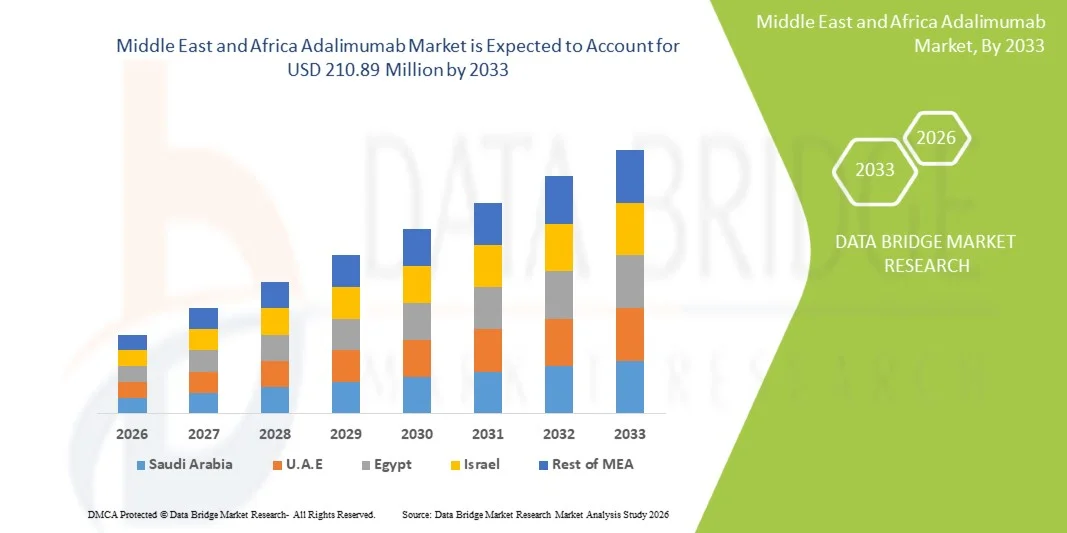
As per Data Bridge Market Research Analysis the Middle East and Africa Adalimumab market was valued at USD 156.49 Million in 2025 and is projected to reach USD 210.89 Million by 2033, growing at a CAGR of 3.80% from 2026 to 2033. The market is experiencing steady growth driven by the increasing prevalence of autoimmune and inflammatory diseases, rising adoption of biologic therapies, and continuous advancements in monoclonal antibody development and delivery technologies.
The growing burden of conditions such as rheumatoid arthritis, psoriasis, psoriatic arthritis, inflammatory bowel disease, and ankylosing spondylitis, combined with increasing awareness and diagnosis rates, is accelerating demand for Adalimumab-based therapies. The expansion of biosimilars following patent expiries, improved patient access to biologic treatments, and favorable reimbursement policies in several regions are further supporting market growth. Adalimumab continues to be widely adopted due to its proven clinical efficacy, targeted mechanism of action, and broad therapeutic applications, while pharmaceutical companies are focusing on next-generation formulations, self-administration technologies, and cost-effective alternatives to enhance accessibility.
Key Market Trends & Insights
- Saudi Arabia dominated the Middle East and Africa Adalimumab market with the largest revenue share of 36.42% in 2025, supported by rising healthcare expenditure, increasing prevalence of autoimmune disorders, expanding adoption of biologic therapies, and government-led healthcare transformation initiatives improving access to advanced treatments.
- The Biologics segment dominated the market with a 4% share in 2025, due to the strong clinical acceptance, established safety profile, and extensive adoption of original Adalimumab therapies.
- A.E. is expected to be the fastest-growing country in the Middle East and Africa Adalimumab market, registering a CAGR of 7.8% from 2026 to 2033, fueled by rapid healthcare infrastructure expansion, increasing private-sector healthcare investments, rising adoption of specialty medicines, and improved access to advanced biologic therapies.
- The Hospital Pharmacies segment dominated the distribution channel category with a 52.34% revenue share in 2025, supported by specialist-led treatment administration, prescription-based biologic therapies, and increasing preference for hospital and specialty care settings for autoimmune disease management.
- The Biosimilars segment is projected to be the fastest-growing product type, registering a CAGR of 8.1% from 2026 to 2033, driven by cost-containment initiatives, increasing regulatory approvals, and growing adoption of affordable biologic alternatives across Middle Eastern and African healthcare systems.
- The Inflammatory Bowel Disease (IBD) segment accounted for a 24.68% revenue share in 2025, supported by rising awareness, improving diagnostic capabilities, and increasing utilization of anti-TNF therapies for Crohn’s disease and ulcerative colitis management.
Market Size & Forecast
- Middle East and Africa Market Value (2025): USD 156.49 Million
- Expected Market Value (2033): USD 210.89 Million
- Forecast CAGR (2026–2033): 3.80%
- Leading Region in 2025: North America
- Fastest Growing Region: Asia-Pacific
Report Scope and Middle East and Africa Adalimumab Market Segmentation
|
Attributes |
Adalimumab Key Market Insights |
|
Segments Covered |
|
|
Countries Covered |
Middle East and Africa
|
|
Key Market Players |
• AbbVie Inc. (U.S.) |
|
Market Opportunities |
|
|
Value Added Data Infosets |
In addition to the insights on market scenarios such as market value, growth rate, segmentation, geographical coverage, and major players, the market reports curated by the Data Bridge Market Research also include in-depth expert analysis, geographically represented company-wise production and capacity, network layouts of distributors and partners, detailed and updated price trend analysis and deficit analysis of supply chain and demand. |
What is the Key Trend in the Middle East and Africa Adalimumab Market?
Trend: Rising Adoption of Biosimilars and Cost-Effective Biologic Therapies
Healthcare systems across the Middle East and Africa are increasingly focusing on the adoption of biosimilar versions of adalimumab to improve patient access to advanced immunology treatments while reducing overall treatment costs. With several adalimumab biosimilars receiving regulatory approvals globally, countries including Saudi Arabia and the U.A.E. are witnessing growing interest from healthcare providers and payers in cost-efficient biologic alternatives. The expansion of specialty pharmacies, improved reimbursement mechanisms, and increasing awareness among physicians regarding biosimilar efficacy are supporting broader adoption of anti-TNF therapies for autoimmune conditions such as rheumatoid arthritis, psoriasis, Crohn’s disease, and ulcerative colitis.
Middle East and Africa Adalimumab Market Dynamics
Key Market Driver: Increasing Prevalence of Autoimmune Diseases and Expanding Access to Biologic Therapies
The rising burden of autoimmune and inflammatory diseases across the Middle East and Africa is driving demand for advanced biologic treatments, including adalimumab. Conditions such as rheumatoid arthritis, inflammatory bowel disease, and psoriasis are witnessing increased diagnosis due to improved healthcare infrastructure, better disease awareness, and enhanced diagnostic capabilities. Saudi Arabia, the U.A.E., and other Gulf countries are investing significantly in healthcare modernization, specialty care centers, and reimbursement programs that improve access to biologic medicines.
For instance, under Saudi Arabia’s Vision 2030 healthcare transformation initiatives, the country has been expanding specialized healthcare services and improving access to innovative medicines, supporting the adoption of advanced therapies for chronic diseases. Similarly, the U.A.E. has strengthened its position as a regional healthcare hub by increasing investments in specialty hospitals and advanced treatment facilities.
Key Restraint/Challenge: High Cost of Biologic Therapies and Limited Patient Access in Emerging Markets
A major challenge affecting the Middle East and Africa adalimumab market is the high cost associated with biologic therapies compared with conventional treatments. Adalimumab requires long-term administration and continuous monitoring, creating affordability challenges for patients and healthcare systems, particularly in lower-income African markets where reimbursement coverage remains limited.
Although biosimilars are helping reduce treatment costs, barriers such as regulatory differences across countries, limited biologic manufacturing capabilities, and uneven healthcare infrastructure continue to restrict widespread adoption. According to industry trends, biologic medicines remain significantly more expensive than traditional small-molecule drugs, influencing treatment decisions in cost-sensitive healthcare environments.
Key Market Opportunity: Expansion of Biosimilar Manufacturing and Healthcare Localization Initiatives
The growing focus on local pharmaceutical production and biosimilar development represents a significant opportunity for the Middle East and Africa adalimumab market. Governments are encouraging domestic manufacturing partnerships to reduce dependence on imported biologics, improve medicine availability, and support healthcare sustainability.
For instance, Saudi Arabia has been promoting pharmaceutical investment through initiatives aimed at strengthening local drug manufacturing capabilities, while the U.A.E. continues to attract multinational pharmaceutical companies through healthcare innovation and life-science investment programs. The increasing availability of adalimumab biosimilars, combined with digital health platforms and specialty care expansion, is expected to improve accessibility and accelerate market growth across the region.
How is the Middle East and Africa Adalimumab Market Segmented?
The Adalimumab market is segmented on the basis of drug class, indication, type, dosage strength, drug type, route of administration, age group, dosage form, end users, and distribution channel.
- By Drug Class
On the basis of drug class, the Middle East and Africa Adalimumab market is segmented into Antirheumatics, TNF Alpha Inhibitors, and Others. The TNF Alpha Inhibitors segment dominated the market with a 33% share in 2025, owing to the extensive adoption of Adalimumab as one of the leading anti-TNF biologic therapies for managing autoimmune and inflammatory disorders. Adalimumab has gained significant acceptance due to its targeted mechanism of action, strong clinical efficacy, and approval across multiple therapeutic areas, including rheumatoid arthritis, psoriasis, Crohn’s disease, and ulcerative colitis. Increasing prevalence of autoimmune diseases, rising diagnosis rates, and growing awareness regarding advanced biologic therapies are driving demand for TNF Alpha Inhibitors across Middle Eastern and African countries. In addition, increasing healthcare investments, expansion of specialty clinics, and improved access to biologic treatments are strengthening segment growth. The availability of established branded therapies and increasing physician preference for anti-TNF treatments further support the dominance of this segment in the regional market.
The Biosimilar TNF Alpha Inhibitors segment is expected to witness the fastest growth with a CAGR of 8.1% from 2026 to 2033, driven by increasing demand for affordable biologic alternatives and rising healthcare cost-containment initiatives across the region. The expiration of patents for major biologic products has encouraged pharmaceutical companies to introduce cost-effective biosimilar versions of Adalimumab. Government initiatives promoting affordable healthcare access, improving regulatory frameworks, and increasing local manufacturing capabilities are accelerating biosimilar adoption. Furthermore, emerging markets in Africa and the Middle East are witnessing growing demand for lower-cost biologic therapies, creating significant opportunities for biosimilar manufacturers. Increasing acceptance among healthcare providers and patients is expected to further enhance market penetration during the forecast period.
- By Indication
On the basis of indication, the Middle East and Africa Adalimumab market is segmented into Rheumatoid Arthritis, Ankylosing Spondylitis, Chronic Plaque Psoriasis, Crohn’s Disease, Ulcerative Colitis, Psoriatic Arthritis, Juvenile Idiopathic Arthritis, Hidradenitis Suppurativa, Non-Infectious Intermediate Uveitis, and Others. The Rheumatoid Arthritis segment dominated the market with a 38.6% share in 2025, supported by the high prevalence of inflammatory arthritis conditions and extensive clinical utilization of Adalimumab therapy. Rheumatoid arthritis remains one of the primary indications for Adalimumab due to its ability to reduce inflammation, improve physical function, and slow disease progression. Increasing awareness among patients, improved diagnostic capabilities, and growing availability of rheumatology specialists are contributing to segment expansion. The increasing adoption of biologic disease-modifying antirheumatic drugs (bDMARDs) in advanced healthcare systems across Saudi Arabia, UAE, and South Africa is further supporting market growth. In addition, rising healthcare expenditure and increasing access to specialty treatments are reinforcing the leading position of this segment.
The Crohn’s Disease segment is expected to register the fastest growth with a CAGR of 8.40% from 2026 to 2033, driven by the increasing incidence of inflammatory bowel diseases and rising demand for targeted biologic therapies. Growing awareness regarding gastrointestinal autoimmune disorders and improved diagnosis rates are increasing the number of patients eligible for Adalimumab treatment. Expansion of gastroenterology services, increasing availability of advanced treatment options, and rising adoption of biologics in specialty clinics are supporting segment growth. Furthermore, healthcare modernization programs in Middle Eastern countries are improving access to innovative therapies. The increasing focus on personalized treatment approaches and long-term disease management is expected to create further growth opportunities for Adalimumab in Crohn’s disease treatment.
- By Type
On the basis of type, the Middle East and Africa Adalimumab market is segmented into Biologics and Biosimilars. The Biologics segment dominated the market with a 72.4% share in 2025, due to the strong clinical acceptance, established safety profile, and extensive adoption of original Adalimumab therapies. Biologic drugs continue to represent the preferred treatment option for moderate-to-severe autoimmune diseases due to their high therapeutic effectiveness compared with conventional therapies. The strong presence of leading pharmaceutical companies, extensive clinical evidence, and physician familiarity with branded biologics are supporting segment dominance. In addition, increasing demand for advanced therapies for chronic inflammatory conditions and improved reimbursement coverage in developed Middle Eastern markets are contributing to market expansion. Hospitals and specialty clinics continue to rely on biologic treatments due to their proven outcomes and long-term disease management benefits.
The Biosimilars segment is expected to witness the fastest growth with a CAGR of 8.1% from 2026 to 2033, driven by increasing healthcare cost pressures, rising demand for affordable biologic therapies, and growing regulatory approvals for biosimilar products. Biosimilars provide similar therapeutic benefits at reduced costs, improving accessibility among patients across emerging markets. Increasing government support for cost-effective medicines, expansion of domestic pharmaceutical manufacturing, and growing competition among biosimilar developers are accelerating adoption. In addition, healthcare providers are increasingly considering biosimilars as a viable alternative due to comparable efficacy and safety profiles. The growing need to reduce healthcare expenditure while improving patient access is expected to drive strong growth of biosimilar Adalimumab products.
- By Dosage Strength
On the basis of dosage strength, the Middle East and Africa Adalimumab market is segmented into 40mg/0.4ml, 80mg/0.8ml, 20mg/0.2ml, 10mg/0.1ml, and Others. The 40mg/0.4ml segment dominated the market with a 68.9%share in 2025, owing to its widespread prescription and established role as the standard maintenance dosage for multiple autoimmune indications. The formulation is extensively used among adult patients suffering from rheumatoid arthritis, psoriasis, psoriatic arthritis, Crohn’s disease, and ulcerative colitis. High physician familiarity, broad availability, and strong clinical adoption are major factors supporting segment dominance. In addition, the increasing adoption of self-administration therapies and homecare treatment models is boosting demand for convenient pre-filled injection formats. Hospitals, specialty clinics, and homecare providers continue to prefer this dosage strength due to its proven effectiveness and patient convenience.
The 80mg/0.8ml segment is expected to experience the fastest growth with a CAGR of 7.90% from 2026 to 2033, driven by increasing demand for high-concentration formulations that improve patient convenience and treatment adherence. Higher-strength formulations reduce injection frequency and improve patient experience, particularly among individuals requiring long-term biologic therapy. Growing adoption of home-based treatment, advancements in drug delivery technologies, and increasing preference for self-injection solutions are supporting segment expansion. Furthermore, pharmaceutical companies are focusing on developing patient-friendly formulations to improve compliance and reduce treatment burden. The increasing shift toward personalized and convenient biologic treatment approaches is expected to accelerate the growth of this segment.
- By End User
On the basis of end user, the Middle East and Africa Adalimumab market is segmented into Hospitals, Specialty Clinics, Homecare Settings, and Others. The Hospitals segment dominated the market with a 42.7% share in 2025, owing to the high adoption of biologic therapies in hospital-based treatment settings and the availability of advanced diagnostic and monitoring facilities. Hospitals remain the primary point of care for patients requiring initiation of Adalimumab therapy, especially for severe autoimmune and inflammatory conditions such as rheumatoid arthritis, Crohn’s disease, ulcerative colitis, and psoriasis. The presence of specialized departments including rheumatology, gastroenterology, and dermatology is supporting higher treatment adoption. Increasing healthcare infrastructure development, rising patient admissions, and improved access to biologic medicines across Middle Eastern and African countries are further strengthening segment growth. Additionally, hospitals benefit from established procurement systems and reimbursement support, making them a preferred channel for biologic drug administration and patient management.
The Homecare Settings segment is expected to witness the fastest growth with a CAGR of 8.7% from 2026 to 2033, driven by the increasing adoption of self-administered biologic therapies and growing preference for convenient treatment options. Adalimumab is suitable for home-based administration due to its subcutaneous injection route, enabling patients to manage long-term therapy outside clinical environments. Rising patient awareness, advancements in pre-filled injection devices, and increasing focus on reducing hospital visits are supporting the expansion of homecare treatment models. Additionally, healthcare systems are increasingly promoting remote patient monitoring and home-based chronic disease management to improve treatment efficiency and reduce healthcare costs. The growing acceptance of self-injection therapies and improved patient support programs are expected to accelerate the growth of this segment during the forecast period.
- By Distribution Channel
On the basis of distribution channel, the Middle East and Africa Adalimumab market is segmented into Hospital Pharmacies, Retail Pharmacies, Online Pharmacies, and Others. The Hospital Pharmacies segment dominated the market with a 46.3% share in 2025, due to the significant role of hospitals in prescribing, dispensing, and monitoring advanced biologic therapies. Hospital pharmacies are widely preferred for Adalimumab distribution because they ensure proper storage conditions, prescription management, and supervision by healthcare professionals. The increasing number of specialty hospitals, advanced treatment centers, and biologic therapy programs across Middle Eastern countries is supporting segment dominance. Additionally, hospital pharmacies maintain strong relationships with pharmaceutical manufacturers and healthcare providers, ensuring consistent availability of Adalimumab products. The requirement for specialist consultation before initiating biologic treatment further strengthens the importance of hospital-based distribution channels.
The Online Pharmacies segment is expected to register the fastest growth with a CAGR of 9.2% from 2026 to 2033, driven by increasing digital healthcare adoption, expansion of e-pharmacy platforms, and growing preference for convenient medicine delivery solutions. Online pharmacies are gaining importance due to their ability to improve accessibility, particularly for patients requiring long-term biologic treatments. Increasing internet penetration, digital prescription systems, and improved logistics networks are supporting the expansion of online pharmaceutical channels across the Middle East and Africa. Furthermore, rising demand for home delivery of chronic disease medications and increasing adoption of telemedicine services are creating new opportunities for online distribution. Enhanced digital healthcare infrastructure and growing patient preference for convenient access to specialty medicines are expected to drive strong growth of this segment during the forecast period.
Which Region Holds the Largest Share of the Middle East and Africa Adalimumab Market?
The Middle East and Africa Adalimumab market is witnessing steady growth, supported by increasing healthcare expenditure, rising prevalence of autoimmune and inflammatory diseases, and expanding access to advanced biologic therapies. The region is benefiting from healthcare modernization initiatives, improved diagnostic capabilities, and growing adoption of specialty medicines for conditions such as rheumatoid arthritis, psoriasis, Crohn’s disease, and ulcerative colitis. Saudi Arabia dominated the Middle East and Africa Adalimumab market with the largest revenue share of 36.42% in 2025, driven by strong government investments in healthcare infrastructure, increasing availability of biologic treatments, and initiatives under healthcare transformation programs to improve patient access. Additionally, the growing presence of specialty hospitals, advanced treatment centers, and pharmaceutical partnerships is supporting market expansion across the region.
Saudi Arabia Adalimumab Market Insight
The Saudi Arabia Adalimumab market represents the largest share of the Middle East and Africa region, supported by rising healthcare spending, increasing diagnosis of autoimmune disorders, and growing demand for targeted biologic therapies. The country’s focus on healthcare transformation under Saudi Vision 2030 is strengthening specialty care infrastructure, expanding access to innovative medicines, and encouraging pharmaceutical sector development. Increasing adoption of adalimumab for rheumatoid arthritis, inflammatory bowel disease, and psoriasis management is contributing to market growth. Furthermore, the growing emphasis on biosimilars and cost-effective biologic alternatives is expected to improve affordability and support wider patient access in the coming years.
U.A.E. Adalimumab Market Insight
The U.A.E. Adalimumab market is projected to be the fastest-growing country in the Middle East and Africa region, registering a CAGR of 7.8% from 2026 to 2033, driven by rapid healthcare infrastructure development, increasing private healthcare investments, and rising adoption of specialty medicines. The country’s position as a regional healthcare hub, supported by advanced hospitals, specialized clinics, and medical innovation initiatives, is accelerating the adoption of biologic therapies. Additionally, increasing awareness among healthcare professionals, improved reimbursement coverage, and the expansion of precision medicine and chronic disease management programs are creating significant growth opportunities for adalimumab adoption in the U.A.E.
Which are the Top Companies in Middle East and Africa Adalimumab Market?
The Adalimumab industry is primarily led by well-established companies, including:
- AbbVie Inc. (U.S.)
- Amgen Inc. (U.S.)
- Pfizer Inc. (U.S.)
- Samsung Bioepis Co., Ltd. (South Korea)
- Biogen Inc. (U.S.)
- Fresenius Kabi AG (Germany)
- Celltrion Inc. (South Korea)
- Sandoz International GmbH (Switzerland)
- Viatris Inc. (U.S.)
- Novartis AG (Switzerland)
- Merck & Co., Inc. (U.S.)
- Johnson & Johnson (U.S.)
- Roche Holding AG (Switzerland)
- Boehringer Ingelheim (Germany)
- Eli Lilly and Company (U.S.)
- Sanofi (France)
- Teva Pharmaceutical Industries Ltd. (Israel)
- Dr. Reddy's Laboratories Ltd. (India)
- Sun Pharmaceutical Industries Ltd. (India)
- Cipla Limited (India)
- Biocon Biologics Ltd. (India)
- Intas Pharmaceuticals Ltd. (India)
- Torrent Pharmaceuticals Ltd. (India)
- Aurobindo Pharma Limited (India)
- Hetero Labs Limited (India)
- Julphar (Gulf Pharmaceutical Industries) (UAE)
- Tabuk Pharmaceuticals (Saudi Arabia)
- Jamjoom Pharmaceuticals (Saudi Arabia)
- SPIMACO (Saudi Arabia)
- Eva Pharma (Egypt)
- Rameda (Egypt)
- Pharco Pharmaceuticals (Egypt)
- Aspen Pharmacare (South Africa)
- Adcock Ingram Holdings Limited (South Africa)
- Cipla South Africa (South Africa)
- Ferozsons Laboratories Limited (Pakistan)
What are Latest Developments in Middle East and Africa Adalimumab Market?
- In December 2021, the U.S. Food and Drug Administration (FDA) granted interchangeable biosimilar status to Boehringer Ingelheim’s Cyltezo (adalimumab-adbm), making it the first interchangeable biosimilar to AbbVie’s Humira. The approval strengthened the competitive landscape of the global Adalimumab market by supporting broader adoption of biosimilars and improving potential access to lower-cost biologic treatments for autoimmune diseases
- In January 2023, Amgen launched Amjevita (adalimumab-atto), becoming the first Humira biosimilar commercially available in the U.S. market. The launch marked a major milestone in the Adalimumab market following Humira’s long period of market exclusivity and introduced a cost-competitive alternative for patients suffering from rheumatoid arthritis, psoriasis, inflammatory bowel disease, and other autoimmune conditions
- In March 2023, Sandoz received FDA approval for Hyrimoz (adalimumab-adaz), a biosimilar to AbbVie’s Humira, including citrate-free and high-concentration formulations. The approval expanded treatment options for patients requiring TNF inhibitor therapies and supported the increasing shift toward biosimilar adoption in the global biologics market
- In July 2023, multiple Adalimumab biosimilars including Hadlima (Samsung Bioepis and Organon), Yuflyma (Celltrion), Idacio (Fresenius Kabi), Hulio (Biocon Biologics), Hyrimoz (Sandoz), Yusimry (Coherus Biosciences), and Cyltezo (Boehringer Ingelheim) entered the U.S. market. These launches significantly increased competition in the Adalimumab market, supporting price competition, improving accessibility, and accelerating the adoption of biosimilar therapies
- In July 2023, Boehringer Ingelheim commercially launched Cyltezo (adalimumab-adbm) as the first interchangeable Humira biosimilar available in the U.S. market. The launch enhanced substitution opportunities within pharmacy systems and represented a major advancement in expanding affordable biologic treatment availability for autoimmune disease patients
- In August 2024, Cigna announced changes to its reimbursement strategy by promoting selected Adalimumab biosimilars, including alternatives from Sandoz, Boehringer Ingelheim, and other manufacturers, over branded Humira in certain coverage lists. This development highlighted the growing influence of payer strategies in accelerating biosimilar adoption and reshaping the competitive dynamics of the Adalimumab market

- Interactive Data Analysis Dashboard
- Company Analysis Dashboard for high growth potential opportunities
- Research Analyst Access for customization & queries
- Competitor Analysis with Interactive dashboard
- Latest News, Updates & Trend analysis
- Harness the Power of Benchmark Analysis for Comprehensive Competitor Tracking
Data collection and base year analysis are done using data collection modules with large sample sizes. The stage includes obtaining market information or related data through various sources and strategies. It includes examining and planning all the data acquired from the past in advance. It likewise envelops the examination of information inconsistencies seen across different information sources. The market data is analysed and estimated using market statistical and coherent models. Also, market share analysis and key trend analysis are the major success factors in the market report. To know more, please request an analyst call or drop down your inquiry.
The key research methodology used by DBMR research team is data triangulation which involves data mining, analysis of the impact of data variables on the market and primary (industry expert) validation. Data models include Vendor Positioning Grid, Market Time Line Analysis, Market Overview and Guide, Company Positioning Grid, Patent Analysis, Pricing Analysis, Company Market Share Analysis, Standards of Measurement, Global versus Regional and Vendor Share Analysis. To know more about the research methodology, drop in an inquiry to speak to our industry experts.
Data Bridge Market Research is a leader in advanced formative research. We take pride in servicing our existing and new customers with data and analysis that match and suits their goal. The report can be customized to include price trend analysis of target brands understanding the market for additional countries (ask for the list of countries), clinical trial results data, literature review, refurbished market and product base analysis. Market analysis of target competitors can be analyzed from technology-based analysis to market portfolio strategies. We can add as many competitors that you require data about in the format and data style you are looking for. Our team of analysts can also provide you data in crude raw excel files pivot tables (Fact book) or can assist you in creating presentations from the data sets available in the report.












