


Middle East and Africa Medical Clothing Market Overview
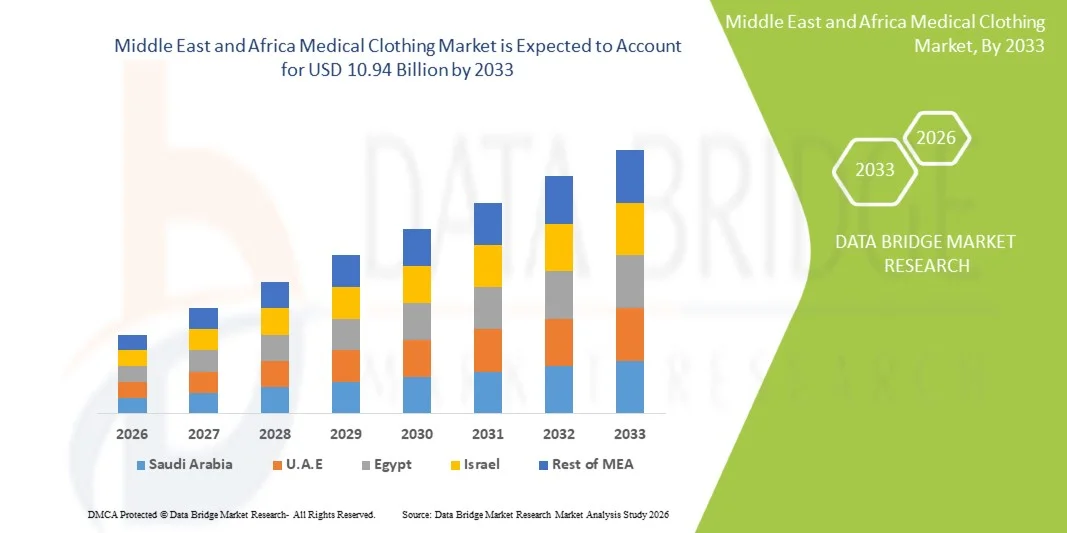
The Middle East and Africa medical clothing market was valued at USD 7.10 billion in 2025 and is projected to reach USD 10.94 billion by 2033, growing at a CAGR of 5.56% from 2026 to 2033. Market growth is supported by increasing healthcare infrastructure investments, rising awareness regarding hospital-acquired infections, and the growing demand for protective apparel among healthcare professionals across the region.
The excellent safety profiles associated with medical clothing, combined with the emphasis on hygiene standards and infection control in healthcare settings, are driving increased adoption among hospitals, clinics, and ambulatory centers. Ongoing technological advancements in medical textiles, including antimicrobial fabrics, moisture-wicking materials, and sustainable textiles, are expanding the clinical applicability of medical clothing across hospitals, specialty clinics, and research laboratories. In addition, growing healthcare expenditure in GCC countries and expanding ambulatory surgical centers are creating new opportunities for stakeholders across the forecast period.
Key Market Trends & Insights
- The GCC Countries (Saudi Arabia, UAE, Qatar) dominated the Middle East and Africa medical clothing market with the largest revenue share of 44.8% in 2025, supported by robust healthcare infrastructure, high adoption rates of advanced medical textiles, and significant government investments in healthcare modernization.
- Sub-Saharan Africa is expected to be the fastest-growing region at a CAGR of 7.12% from 2026 to 2033, driven by expanding healthcare infrastructure, rising demand for infection control measures, and increasing healthcare expenditure.
- The Professional Apparel segment led the market with a 38.5% market share in 2025, reflecting its established position as the primary category of medical clothing used by physicians, nurses, and healthcare staff across hospitals and clinical settings.
- The Disposable Usage segment is anticipated to be the fastest-growing usage category, driven by increasing awareness of infection prevention, rising surgical volumes, and stringent hygiene protocols in healthcare facilities.
- The Hospitals segment dominated the end-user category with a 52.6% market share in 2025, supported by high patient volumes, comprehensive surgical programs, and the need for standardized protective apparel across departments.
- The Third Party Distributor segment is expected to witness strong growth during the forecast period, driven by expanding distribution networks, cost-effective procurement options, and increasing penetration of medical clothing suppliers across emerging markets.
Market Size & Forecast
- Regional Market Value (2025): USD 7.10 Billion
- Expected Market Value (2033): USD 10.94 Billion
- Forecast CAGR (2026–2033): 5.56%
Report Scope and Middle East and Africa Medical Clothing Market Segmentation
|
Attributes |
Middle East and Africa Medical Clothing Key Market Insights |
|
Segments Covered |
|
|
Countries Covered |
Middle East and Africa · Saudi Arabia · U.A.E. · South Africa · Egypt · Israel · Rest of Middle East and Africa |
|
Key Market Players |
|
|
Market Opportunities |
· Expansion of healthcare infrastructure in emerging African markets with growing surgical volumes and infection control awareness · Development of sustainable, eco-friendly medical textiles enabling adoption in environmentally conscious healthcare systems |
|
Value Added Data Infosets |
In addition to the insights on market scenarios such as market value, growth rate, segmentation, geographical coverage, and major players, the market reports curated by the Data Bridge Market Research also include depth expert analysis, patient epidemiology, pipeline analysis, pricing analysis, and regulatory framework. |
Middle East and Africa Medical Clothing Market Trends
Trend: Adoption of Antimicrobial and Smart Textiles in Medical Apparel
Clinical adoption of advanced medical clothing continues to accelerate as technological innovations improve protection, comfort, and hygiene. Antimicrobial fabrics treated with silver ions, quaternary ammonium compounds, and bio-based agents are gaining significant traction across healthcare facilities in the Middle East and Africa. These textiles inhibit bacterial growth, reduce hospital-acquired infection risks, and extend garment lifespan. Additionally, smart medical textiles incorporating moisture-wicking properties, temperature regulation, and embedded sensors for health monitoring are emerging as key differentiators in the regional market.
For instance,
The adoption of antimicrobial curtains and medical clothing in intensive care units across GCC hospitals has demonstrated significant reductions in bacterial contamination rates, supporting broader clinical adoption of hygiene-focused fabrics.
In addition, research demonstrates that moisture-wicking and breathable textiles improve healthcare worker comfort during extended shifts, reducing fatigue and enhancing productivity. The integration of sustainable materials, including recycled polyester and organic cotton, aligns with growing environmental consciousness and regulatory pressures in the region, further supporting the transition toward eco-friendly medical apparel solutions.
Middle East and Africa Medical Clothing Market Dynamics
KeyMarket Driver: Rising Demand for Infection Control and Protective Apparel
The growing emphasis on infection prevention and control across healthcare facilities is a primary driver of market growth. Medical clothing provides essential protection for healthcare workers and patients against hospital-borne infections, blood-borne pathogens, and hazardous contaminants. The increasing prevalence of chronic diseases, rising surgical volumes, and heightened awareness of occupational health risks are expanding the demand for high-quality protective apparel across the region.
For instance,
A 2025 regional healthcare assessment indicated that hospitals implementing comprehensive medical clothing protocols experienced measurable reductions in nosocomial infection rates, demonstrating the clinical value of standardized protective apparel programs.
Rising demand for infection control measures is expected to strengthen adoption of medical clothing technologies across Middle East and Africa healthcare systems.
Key Restraint/Challenge: High Costs of Advanced Medical Textiles and Environmental Concerns
The substantial costs associated with advanced medical fabrics offering enhanced protection, antimicrobial properties, and durability present a significant barrier to adoption, particularly for smaller healthcare facilities and institutions in emerging African markets. Additionally, the widespread use of disposable medical clothing raises environmental concerns due to increased medical waste generation. Regulatory pressures regarding waste management and sustainability, along with fluctuating raw material prices, further constrain market growth.
For instance,
Healthcare systems across the Middle East and Africa evaluating advanced medical clothing adoption must balance clinical benefits against significant procurement expenditure, with premium antimicrobial textiles requiring substantial investment compared to conventional fabrics.
High acquisition and operating costs may constrain adoption, particularly among budget-sensitive healthcare providers in developing economies.
Key Market Opportunity: Expansion of Healthcare Infrastructure and Sustainable Textile Solutions
The ongoing expansion of healthcare infrastructure across the Middle East and Africa, including new hospital construction, ambulatory surgical center development, and specialty clinic growth, is creating significant opportunities for medical clothing suppliers. Simultaneously, the increasing emphasis on sustainability has created more opportunities for eco-friendly, reusable, and biodegradable medical clothing materials. Investments in recyclable fabrics and sustainable manufacturing processes are enabling market players to address both clinical and environmental requirements.
For instance,
The Middle East and Africa healthcare construction market is projected to witness significant growth through 2033, driven by government healthcare modernization initiatives, private sector investments, and expanding patient populations.
The development of sustainable medical textiles supports broader market accessibility and aligns with regional environmental goals, creating new growth opportunities for stakeholders.
Middle East and Africa Medical Clothing Market Scope
The Middle East and Africa medical clothing market is segmented on the basis of product, usage, end user, and distribution channel.
By Product
On the basis of product, the Middle East and Africa medical clothing market is segmented into professional apparel, patient apparel, specialty apparel, first aid clothing, wraps and towels, and others. The Professional Apparel segment dominated the market with a 38.5% market share in 2025, reflecting its established position as the primary category of medical clothing used by physicians, nurses, and healthcare staff across hospitals and clinical settings. The high demand for scrubs, lab coats, surgical gowns, and protective jackets among healthcare professionals, combined with stringent hygiene standards and uniform policies across healthcare institutions, contributes to segment leadership. Strong adoption across GCC hospitals and expanding healthcare workforces in African markets support continued segment dominance.
The Specialty Apparel segment is expected to witness the fastest growth at a CAGR of 6.85% from 2026 to 2033, driven by rising demand for specialized protective clothing in surgical suites, isolation units, and infectious disease wards. Increasing awareness of occupational health risks and the need for enhanced protection during high-risk procedures are expanding the specialty apparel market. Technological advancements in barrier fabrics and fluid-resistant materials further support segment expansion.
By Usage
On the basis of usage, the Middle East and Africa medical clothing market is segmented into reusable and disposable. The Disposable segment dominated the market with a market share of 58.8% in 2025, driven by increasing awareness of infection prevention, rising surgical volumes, and stringent hygiene protocols in healthcare facilities. Disposable medical clothing eliminates the risk of cross-contamination, reduces laundry and sterilization costs, and ensures consistent protection levels across procedures. The high prevalence of hospital-acquired infections and regulatory mandates for single-use protective apparel in surgical and isolation settings contribute to segment leadership.
The Reusable segment is expected to witness steady growth from 2026 to 2033, supported by sustainability initiatives, cost-effectiveness over extended use cycles, and advancements in durable, sterilizable medical textiles. Hospitals implementing comprehensive infection control programs are increasingly adopting reusable medical clothing with antimicrobial treatments, balancing clinical efficacy with environmental responsibility.
By End User
On the basis of end user, the Middle East and Africa medical clothing market is segmented into hospitals, specialty clinics, ambulatory centres, home care settings, research & clinical laboratories, and others. The Hospitals segment dominated the market with a market share of 52.6% in 2025, supported by high patient volumes, comprehensive surgical programs, and the need for standardized protective apparel across departments. Hospitals serve as primary centers for complex medical procedures requiring extensive medical clothing utilization, including surgical gowns, drapes, scrubs, and protective accessories. The concentration of healthcare professionals, multidisciplinary care teams, and infection control protocols within hospital systems contributes to high segment volumes and equipment utilization.
The Ambulatory Centres segment is expected to witness the fastest growth at a CAGR of 7.42% from 2026 to 2033, driven by the expansion of outpatient surgical facilities, cost-effective care delivery models, and increasing patient preference for same-day procedures. The development of ambulatory surgical centers across GCC countries and urban African markets is enabling broader access to medical clothing for outpatient procedures, reducing healthcare costs and improving patient convenience.
By Distribution Channel
On the basis of distribution channel, the Middle East and Africa medical clothing market is segmented into direct tender, retail sales, third party distributor, and others. The Third Party Distributor segment dominated the market with a market share of 38.2% in 2025, driven by expanding distribution networks, cost-effective procurement options, and increasing penetration of medical clothing suppliers across emerging markets. Third-party distributors provide healthcare facilities with access to diverse product portfolios, competitive pricing, and logistics support, enabling efficient procurement across geographically dispersed markets. Strong distributor relationships with international manufacturers and regional healthcare providers contribute to segment leadership.
The Direct Tender segment is expected to witness steady growth from 2026 to 2033, supported by government healthcare procurement programs, institutional purchasing agreements, and bulk ordering practices across public hospitals and healthcare systems. Direct tender processes enable healthcare institutions to secure competitive pricing, ensure supply chain reliability, and maintain quality standards for medical clothing procurement.
Middle East and Africa Medical Clothing Market Regional Analysis
The GCC Countries dominated the Middle East and Africa medical clothing market with a revenue share of 44.8% in 2025, supported by robust healthcare infrastructure, high adoption rates of advanced medical textiles, and significant government investments in healthcare modernization. Favorable regulatory environments, comprehensive healthcare coverage programs, and expanding private hospital networks contribute to regional market leadership.
Saudi Arabia Medical Clothing Market Insight
The Saudi Arabia medical clothing market held the largest country-level market share of 18.6% in 2025, benefiting from substantial healthcare infrastructure investments under Vision 2030 initiatives, expanding hospital capacity, and rising demand for infection control measures. Academic medical centers, private healthcare groups, and government hospital networks continue to expand medical clothing programs across surgical, clinical, and outpatient settings. Favorable healthcare expenditure growth and regulatory emphasis on healthcare worker safety support procurement volumes and technology adoption.
UAE Medical Clothing Market Insight
The UAE medical clothing market remains a significant contributor, with strong hospital-based medical clothing programs across Dubai, Abu Dhabi, and other emirates. Growing adoption of antimicrobial and sustainable medical textiles is providing healthcare facilities with advanced protective apparel options, expanding access to premium medical clothing in public and private healthcare systems. Cross-disciplinary infection control guidelines and structured procurement pathways are improving standardization and care delivery.
Middle East and Africa Medical Clothing Market Share
The Middle East and Africa medical clothing industry is primarily led by well-established companies, including:
- Cardinal Health, Inc. (U.S.)
- Mölnlycke Health Care AB (Sweden)
- 3M (U.S.)
- Smith+Nephew (U.K.)
- Ansell Ltd. (Australia)
- Superior Group of Companies (U.S.)
- Semperit AG Holding (Austria)
- Henry Schein, Inc. (U.S.)
- Narang Medical Ltd. (India)
- Healing Hands (U.S.)
- BARCO UNIFORMS (U.S.)
- CHEROKEE UNIFORMS (U.S.)
- Aramark Uniform & Career Apparel (U.S.)
- Carhartt, Inc. (U.S.)
- LynkTrac Technologies LLC (U.S.)
- Owens & Minor, Inc. (U.S.)
- Prestige Medical (U.S.)
- Landau Uniforms (U.S.)
- Medline Industries, Inc. (U.S.)
Latest Developments in Middle East and Africa Medical Clothing Market
- In March 2026, Medline Industries, Inc. announced the expansion of its medical clothing distribution network across the Middle East, establishing new partnerships with regional healthcare distributors in Saudi Arabia and the UAE. The expansion supports Medline's strategy to increase market penetration and provide healthcare facilities with comprehensive protective apparel solutions.
- In January 2026, Mölnlycke Health Care AB launched its next-generation antimicrobial surgical gowns in the GCC market, featuring enhanced barrier protection and sustainable manufacturing processes. The product launch addresses growing demand for infection control solutions and eco-friendly medical textiles across regional healthcare systems.
- In November 2025, 3M announced the introduction of its advanced protective apparel line for healthcare workers in the Middle East and Africa, incorporating moisture-wicking fabrics and improved breathability for enhanced comfort during extended shifts. The launch supports 3M's commitment to healthcare worker safety and comfort.
- In August 2025, Cardinal Health, Inc. expanded its medical clothing portfolio in the Middle East through a strategic partnership with a regional healthcare distributor, enabling broader access to surgical gowns, drapes, and protective apparel across hospital networks in Saudi Arabia, UAE, and Egypt.
- In May 2025, Ansell Ltd. announced the launch of its sustainable medical gloves and protective apparel line in the African market, featuring biodegradable materials and reduced environmental impact. The product introduction aligns with growing regional emphasis on sustainability and responsible healthcare practices.

- Interactive Data Analysis Dashboard
- Company Analysis Dashboard for high growth potential opportunities
- Research Analyst Access for customization & queries
- Competitor Analysis with Interactive dashboard
- Latest News, Updates & Trend analysis
- Harness the Power of Benchmark Analysis for Comprehensive Competitor Tracking
Data collection and base year analysis are done using data collection modules with large sample sizes. The stage includes obtaining market information or related data through various sources and strategies. It includes examining and planning all the data acquired from the past in advance. It likewise envelops the examination of information inconsistencies seen across different information sources. The market data is analysed and estimated using market statistical and coherent models. Also, market share analysis and key trend analysis are the major success factors in the market report. To know more, please request an analyst call or drop down your inquiry.
The key research methodology used by DBMR research team is data triangulation which involves data mining, analysis of the impact of data variables on the market and primary (industry expert) validation. Data models include Vendor Positioning Grid, Market Time Line Analysis, Market Overview and Guide, Company Positioning Grid, Patent Analysis, Pricing Analysis, Company Market Share Analysis, Standards of Measurement, Global versus Regional and Vendor Share Analysis. To know more about the research methodology, drop in an inquiry to speak to our industry experts.
Data Bridge Market Research is a leader in advanced formative research. We take pride in servicing our existing and new customers with data and analysis that match and suits their goal. The report can be customized to include price trend analysis of target brands understanding the market for additional countries (ask for the list of countries), clinical trial results data, literature review, refurbished market and product base analysis. Market analysis of target competitors can be analyzed from technology-based analysis to market portfolio strategies. We can add as many competitors that you require data about in the format and data style you are looking for. Our team of analysts can also provide you data in crude raw excel files pivot tables (Fact book) or can assist you in creating presentations from the data sets available in the report.













