


Middle East and Africa Surface Disinfectants Market Overview
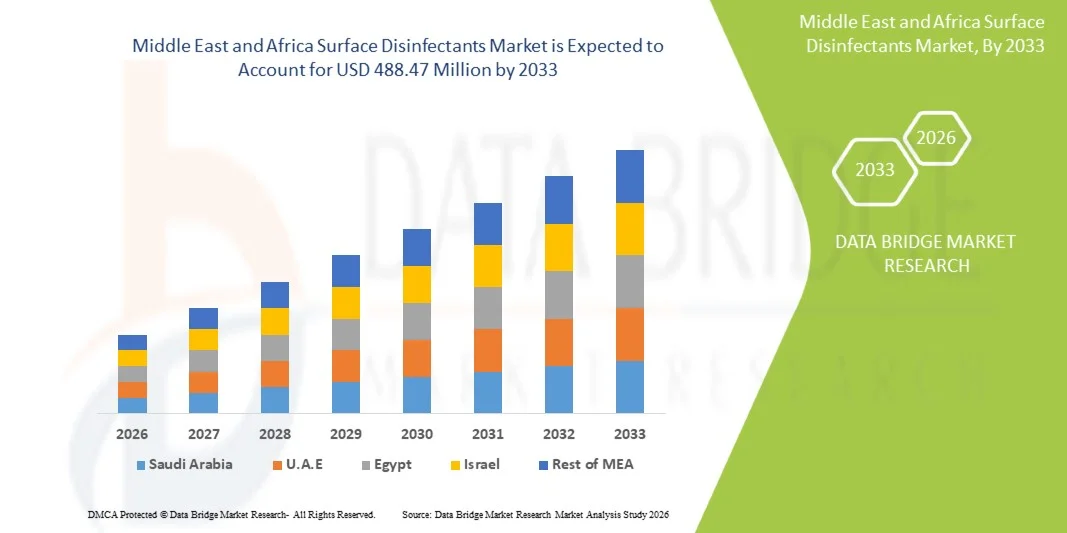
The Middle East and Africa Surface Disinfectants market was valued at USD 294.93 Million in 2025 and is projected to reach USD 488.47 Million by 2033, growing at a CAGR of 6.51% from 2026 to 2033. The Surface Disinfectants market is experiencing steady growth driven by rising awareness of healthcare-associated infections (HAIs), increasing demand for effective infection prevention and control solutions, and expanding applications across hospitals, clinics, laboratories, and residential settings. The growing emphasis on hygiene standards in healthcare infrastructure, food processing units, and public facilities is further accelerating market adoption of advanced disinfectant solutions.
The increasing incidence of infectious diseases globally, combined with stricter government regulations and hygiene compliance standards from healthcare authorities, is compelling hospitals, diagnostic centers, pharmaceutical companies, and commercial establishments to adopt high-performance surface disinfectants. Alcohol-based, quaternary ammonium compound (QAC)-based, and hydrogen peroxide-based disinfectants are increasingly replacing traditional cleaning agents, offering rapid action, broad-spectrum antimicrobial efficacy, and safer environmental profiles.
Key Market Trends & Insights
- Saudi Arabia dominated the Surface Disinfectants market with the largest revenue share of 34.18% in 2025, supported by expanding healthcare infrastructure, strong government initiatives for infection prevention, and increasing adoption of hospital-grade disinfectant solutions across hospitals, specialty clinics, diagnostic laboratories, and pharmaceutical facilities. The region also benefits from rising healthcare expenditure, strict hygiene compliance standards, and growing awareness regarding healthcare-associated infections (HAIs). In addition, increasing investments in healthcare modernization under Vision 2030 and widespread use of alcohol-based, quaternary ammonium compound (QAC)-based, and peroxide-based disinfectants continue to reinforce Saudi Arabia’s leading position in the regional market.
- The Surface Disinfection segment dominated the market with a share of 58.24% in 2025 due to increasing demand for routine cleaning of hospital environments, diagnostic facilities, and high-contact surfaces.
- A.E. is expected to be the fastest-growing region at a CAGR of 7.6% from 2026 to 2033, fueled by rapid healthcare infrastructure development, increasing focus on medical tourism, and rising adoption of advanced infection control solutions across hospitals, ambulatory care centers, and research laboratories. Growing government emphasis on international healthcare accreditation standards, expanding pharmaceutical and biotechnology sectors, and rising implementation of automated and eco-friendly disinfection technologies are further accelerating market growth in the U.A.E.
- The Peroxides segment is expected to be the fastest-growing composition segment with a CAGR of 7.0% from 2026 to 2033, driven by rising demand for high-level disinfection solutions with strong oxidizing properties and broad-spectrum antimicrobial effectiveness. Hydrogen peroxide-based disinfectants are increasingly adopted in hospitals and pharmaceutical cleanrooms due to their effectiveness against resistant pathogens and environmentally safer decomposition into water and oxygen. Expanding use in sterilization of critical healthcare environments and equipment further supports segment growth.
- The Wipes segment is expected to be the fastest-growing type segment with a CAGR of 6.8% from 2026 to 2033, driven by increasing demand for convenient, ready-to-use disinfection solutions in hospitals, laboratories, and residential settings. Disinfectant wipes are widely used for rapid surface cleaning in high-touch areas due to their ease of use, portability, and reduced risk of cross-contamination. Growing adoption in emergency care units, outpatient clinics, and home care settings is further accelerating segment expansion.
- The Surface Disinfection segment dominated the market with a 58.24% share in 2025, driven by increasing demand for routine cleaning of hospital surfaces, patient care areas, and high-contact environments such as ICU beds, operation theatres, and diagnostic rooms. Rising awareness regarding infection transmission through contaminated surfaces and strict regulatory compliance for hospital hygiene protocols are significantly supporting segment leadership. Expanding use in commercial spaces and public infrastructure is further strengthening demand.
- The Hospitals segment dominated the market with a 51.63% share in 2025, driven by high patient admission rates, strict infection prevention standards, and continuous need for sterilized environments in critical care and surgical units. Hospitals remain the largest consumers of surface disinfectants due to the high risk of healthcare-associated infections (HAIs) and mandatory sanitation protocols. Increasing investments in healthcare infrastructure modernization and infection control programs across developed and emerging markets continue to reinforce segment dominance.
Market Size & Forecast
- Middle East and Africa Market Value (2025): USD 294.93 Million
- Expected Market Value (2033): USD 488.47 Million
- Forecast CAGR (2026–2033): 6.51%
- Leading Region in 2025: North America
- Fastest Growing Region: Asia-Pacific
Report Scope and Middle East and Africa Surface Disinfectants Market Segmentation
|
Attributes |
Surface Disinfectants Key Market Insights |
|
Segments Covered |
|
|
Countries Covered |
Middle East and Africa · Saudi Arabia · U.A.E. · South Africa · Egypt · Israel · Rest of Middle East and Africa |
|
Key Market Players |
• 3M Company (U.S.) |
|
Market Opportunities |
· Rising demand from healthcare infrastructure expansion · Increasing adoption of eco-friendly and non-toxic disinfectants · Expansion of infection control in non-healthcare sectors |
|
Value Added Data Infosets |
In addition to the insights on market scenarios such as market value, growth rate, segmentation, geographical coverage, and major players, the market reports curated by the Data Bridge Market Research also include in-depth expert analysis, geographically represented company-wise production and capacity, network layouts of distributors and partners, detailed and updated price trend analysis and deficit analysis of supply chain and demand. |
Middle East and Africa Surface Disinfectants Market Trends
Trend: Increasing Demand for Infection Control & Healthcare Safety Standards
Professional healthcare systems are increasingly adopting high-efficacy Surface Disinfectants to reduce healthcare-associated infections (HAIs) and maintain sterile clinical environments across hospitals, ICUs, and surgical theatres. The integration of standardized cleaning protocols with real-time monitoring systems is enabling more effective infection control and compliance tracking. Hospitals and healthcare networks are similarly leveraging automated disinfection systems and UV-assisted cleaning technologies alongside chemical disinfectants to ensure consistent microbial reduction across high-touch surfaces.
For instance, according to global health studies, HAIs affect hundreds of millions of patients globally each year, contributing significantly to morbidity, extended hospital stays, and healthcare costs. In high-risk environments such as intensive care units, rigorous surface disinfection protocols have been shown to reduce pathogen transmission rates by up to 30–40%, reinforcing the importance of advanced disinfectant solutions in clinical workflows.
Middle East and Africa Surface Disinfectants Market Dynamics
Key Market Driver: Rising Burden of Healthcare-Associated Infections and Expanding Healthcare Infrastructure
The increasing prevalence of healthcare-associated infections (HAIs), coupled with rising patient admissions and expanding healthcare infrastructure across Europe, is significantly driving demand for surface disinfectants. Hospitals, diagnostic laboratories, and pharmaceutical manufacturing facilities are increasingly relying on alcohol-based, quaternary ammonium compound (QAC)-based, and peroxide-based disinfectants to maintain stringent hygiene standards.
According to the European Centre for Disease Prevention and Control (ECDC), HAIs affect an estimated 3.5–4 million patients annually in Europe, creating substantial demand for effective infection prevention and control solutions. Hospitals across Germany, France, and the U.K. are adopting advanced disinfection protocols, where surface disinfectants are used in nearly all critical care and surgical environments, ensuring compliance with strict EU healthcare hygiene regulations. The expansion of hospital infrastructure and increased focus on antimicrobial resistance (AMR) prevention are further accelerating market growth.
Key Restraint/Challenge: Chemical Exposure Risks and Regulatory Compliance Constraints
A major challenge in the Middle East and Africa surface disinfectants market is the potential health and environmental risks associated with prolonged exposure to chemical disinfectants, particularly chlorine-based and aldehyde-based formulations. Strict regulatory frameworks imposed by the European Chemicals Agency (ECHA) require manufacturers to comply with safety, toxicity, and environmental sustainability standards, increasing product development and approval complexity.
In addition, frequent use of strong disinfectants in healthcare environments can lead to surface material degradation and occupational exposure concerns among healthcare workers. Studies have shown that improper or excessive use of chemical disinfectants may increase respiratory irritation risks by 15–20% in high-exposure clinical environments, prompting hospitals to balance efficacy with safety. These regulatory and operational challenges limit rapid adoption in cost-sensitive healthcare facilities.
Key Market Opportunity: Expansion of Eco-Friendly, Smart, and Automated Disinfection Solutions
The integration of sustainable chemistry and automation technologies presents a significant growth opportunity in the surface disinfectants market. Manufacturers are increasingly developing biodegradable, peroxide-based, and low-toxicity disinfectant formulations to meet environmental compliance requirements and reduce chemical residue risks in hospitals and laboratories. In addition, automated disinfection systems, including electrostatic sprayers and hydrogen peroxide vapor (HPV) systems, are gaining traction in advanced healthcare facilities across Europe. Hospitals adopting automated surface disinfection technologies have reported up to 50% improvement in cleaning efficiency and reduction in manual labor dependency, enhancing operational productivity. The expansion of smart hospital infrastructure, integration of IoT-based hygiene monitoring systems, and rising adoption of infection-prevention-as-a-service (IPaaS) models are further democratizing access to advanced disinfection solutions. This is particularly evident in large healthcare networks in countries like the U.K. and Germany, where digital infection control systems are increasingly being deployed to ensure real-time compliance and monitoring across hospital environments
Middle East and Africa Surface Disinfectants Market Scope
The Surface Disinfectants market is segmented on the basis of composition, type, application, and end user.
By Composition
On the basis of composition, the Middle East and Africa Surface Disinfectants market is segmented into Alcohols, Chlorine, Quaternary Ammonium, Aldehydes, Peroxides, and Biodisinfectants. The Alcohols segment dominated the market with a share of 39.12% in 2025 due to its rapid antimicrobial action, broad-spectrum efficacy against bacteria and viruses, and widespread use in hospitals, laboratories, and clinical environments. Alcohol-based disinfectants are extensively preferred for surface sanitation in high-touch areas owing to their fast evaporation, residue-free nature, and strong effectiveness in infection prevention protocols. Increasing adoption in healthcare facilities and residential hygiene applications further strengthens segment dominance. In addition, rising awareness regarding healthcare-associated infections (HAIs) and strict hygiene compliance standards across Middle East and Africa continue to drive demand for alcohol-based formulations. The Quaternary Ammonium segment also holds significant adoption in non-critical healthcare and commercial cleaning applications due to its long-lasting antimicrobial effect and surface compatibility. Increasing demand for safe and efficient disinfectants across healthcare and public infrastructure further supports overall market growth.
The Peroxides segment is expected to register the fastest growth at a CAGR of 7.5% from 2026 to 2033, driven by rising demand for high-level disinfection solutions with strong oxidizing properties and broad-spectrum efficacy. Hydrogen peroxide-based disinfectants are increasingly used in hospitals, pharmaceutical cleanrooms, and diagnostic laboratories due to their effectiveness against resistant pathogens and environmentally safe decomposition into water and oxygen. Growing preference for eco-friendly and residue-free disinfectants is accelerating adoption across healthcare and industrial sectors. In addition, increasing use of vaporized hydrogen peroxide (VHP) systems in sterilization applications is enhancing segment growth. Rising investments in advanced infection control technologies across Middle East and Africa are further strengthening demand for peroxide-based disinfectants.
By Type
On the basis of type, the Middle East and Africa Surface Disinfectants market is segmented into Liquid, Sprays, and Wipes. The Liquid segment dominated the market with a share of 46.87% in 2025 due to its high versatility, cost-effectiveness, and wide usage in hospitals, laboratories, and pharmaceutical manufacturing facilities. Liquid disinfectants are extensively used for large-area surface cleaning and routine sanitation protocols in healthcare environments. Their compatibility with multiple application methods and effectiveness in high-volume cleaning operations make them the preferred choice across institutional settings. Increasing adoption in infection prevention programs and hospital hygiene maintenance further reinforces segment dominance.
The Wipes segment is expected to register the fastest growth at a CAGR of 6.9% from 2026 to 2033, driven by increasing demand for convenient, ready-to-use disinfection solutions in healthcare and residential environments. Disinfectant wipes are widely used for rapid cleaning of high-touch surfaces such as medical equipment, bed rails, and diagnostic tools due to their ease of use and reduced risk of cross-contamination. Growing awareness regarding hygiene in outpatient clinics, emergency care units, and home healthcare settings is accelerating adoption. In addition, rising demand for portable and single-use disinfecting solutions is further supporting segment expansion across Europe.
By Application
On the basis of application, the Middle East and Africa Surface Disinfectants market is segmented into Surface Disinfection, Instrument Disinfection, and Other Applications. The Surface Disinfection segment dominated the market with a share of 58.24% in 2025 due to increasing demand for routine cleaning of hospital environments, diagnostic facilities, and high-contact surfaces. Rising awareness regarding the transmission of infections through contaminated surfaces is significantly driving adoption of surface disinfectants across healthcare infrastructure. Hospitals and laboratories are implementing strict hygiene protocols to reduce healthcare-associated infections (HAIs), further strengthening segment leadership. Expanding use in public infrastructure, commercial buildings, and residential cleaning applications is also contributing to demand growth.
The Instrument Disinfection segment is expected to register the fastest growth at a CAGR of 7.1% from 2026 to 2033, driven by increasing use of reusable medical instruments and strict sterilization requirements in healthcare facilities. Growing surgical volumes and expansion of diagnostic procedures are driving demand for high-level disinfection solutions to ensure patient safety and regulatory compliance. Hospitals and laboratories are increasingly adopting advanced chemical disinfectants for sterilizing surgical tools and diagnostic equipment. In addition, rising focus on infection control in pharmaceutical and biotechnology industries is further accelerating segment growth across Europe.
By End User
On the basis of end user, the Middle East and Africa Surface Disinfectants market is segmented into Hospitals, Diagnostic and Research Laboratories, Pharmaceutical and Biotechnology Companies, Food & Beverage, and Residential. The Hospitals segment dominated the market with a share of 51.63% in 2025 due to high patient inflow, strict infection control regulations, and continuous need for sterilized environments in critical care units, operating theatres, and intensive care units. Hospitals are the largest consumers of surface disinfectants due to the high risk of healthcare-associated infections (HAIs), which affect millions of patients annually across Europe. Increasing investments in hospital infrastructure modernization and hygiene compliance systems further reinforce segment dominance.
The Diagnostic and Research Laboratories segment is expected to register the fastest growth at a CAGR of 7.0% from 2026 to 2033, driven by increasing testing volumes, rising R&D activities, and expansion of biomedical research facilities. Laboratories require stringent disinfection protocols to prevent contamination and ensure accurate test results, significantly increasing demand for high-performance disinfectants. Growing investment in pharmaceutical research, biotechnology innovation, and clinical diagnostics is further supporting segment expansion. In addition, increasing focus on biosafety standards and regulatory compliance is accelerating adoption of advanced surface disinfection solutions across laboratory environments.
Middle East and Africa Surface Disinfectants Market Regional Analysis
The Middle East and Africa Surface Disinfectants market remains an important contributor to global revenue, driven by expanding healthcare infrastructure, increasing awareness regarding infection prevention, and rising demand for advanced hygiene solutions across hospitals, diagnostic laboratories, pharmaceutical manufacturing facilities, and residential environments. The widespread use of alcohol-based, quaternary ammonium compound (QAC)-based, chlorine-based, and peroxide-based disinfectants is supporting market expansion across the region. Increasing investments in hospital modernization, growing focus on healthcare-associated infection (HAI) prevention, and improving regulatory standards for hygiene compliance continue to strengthen the adoption of surface disinfectants throughout the Middle East and Africa.
Saudi Arabia Surface Disinfectants Market Insight
Saudi Arabia dominated the Surface Disinfectants market with the largest revenue share of 34.18% in 2025, supported by expanding healthcare infrastructure, strong government initiatives for infection prevention, and increasing adoption of hospital-grade disinfectant solutions across hospitals, specialty clinics, diagnostic laboratories, and pharmaceutical facilities. The region also benefits from rising healthcare expenditure, strict hygiene compliance standards, and growing awareness regarding healthcare-associated infections (HAIs). In addition, increasing investments in healthcare modernization under Vision 2030 and widespread use of alcohol-based, quaternary ammonium compound (QAC)-based, and peroxide-based disinfectants continue to reinforce Saudi Arabia’s leading position in the regional market.
U.A.E. Surface Disinfectants Market Insight
U.A.E. is expected to be the fastest-growing region at a CAGR of 7.6% from 2026 to 2033, fueled by rapid healthcare infrastructure development, increasing focus on medical tourism, and rising adoption of advanced infection control solutions across hospitals, ambulatory care centers, and research laboratories. Growing government emphasis on international healthcare accreditation standards, expanding pharmaceutical and biotechnology sectors, and rising implementation of automated and eco-friendly disinfection technologies are further accelerating market growth in the U.A.E.
Middle East and Africa Surface Disinfectants Market Share
The Surface Disinfectants industry is primarily led by well-established companies, including:
- 3M Company (U.S.)
- Ecolab Inc. (U.S.)
- Solenis LLC (U.S.)
- Reckitt Benckiser Group plc (U.K.)
- The Clorox Company (U.S.)
- STERIS plc (Ireland)
- Getinge AB (Sweden)
- Becton, Dickinson and Company (U.S.)
- Sotera Health Company (U.S.)
- B. Braun Melsungen AG (Germany)
- Hartmann Group (Germany)
- Procter & Gamble Company (U.S.)
- Kimberly-Clark Corporation (U.S.)
- Diversey Holdings, Ltd. (U.S.)
- Whiteley Corporation (Australia)
- Medline Industries, LP (U.S.)
- Cantel Medical (U.S.)
- Sealed Air Corporation (U.S.)
- Lion Corporation (Japan)
- Mann+Hummel (Germany)
- Biosan (India)
- Microbac Laboratories, Inc. (U.S.)
- Zep Inc. (U.S.)
- Carroll Clean (U.S.)
- Halamid (LANXESS) (Germany)
- Gojo Industries, Inc. (U.S.)
- Kao Corporation (Japan)
- Sanit Technologies (India)
- Virox Technologies Inc. (Canada)
- Betco Corporation (U.S.)
- Lakeland Industries, Inc. (U.S.)
- Decon7 Systems LLC (U.S.)
- PDI Healthcare (U.S.)
Latest Developments in Middle East and Africa Surface Disinfectants Market
- In January 2021, Ecolab Inc. expanded its infection prevention portfolio by increasing production and global supply of EPA-registered surface disinfectants and sanitizing solutions in response to sustained COVID-19 demand. The company strengthened its hospital-grade disinfectant offerings across healthcare, foodservice, and industrial sectors, supporting enhanced surface hygiene and infection control practices in critical environments. This expansion reinforced Ecolab’s leadership in healthcare disinfection and hygiene solutions globally
- In March 2021, The Clorox Company announced continued scale-up of its Clorox Healthcare disinfecting wipes and sprays, widely used in hospitals and clinical environments for surface disinfection against bacteria and viruses. The company increased manufacturing capacity to meet elevated demand from healthcare facilities, schools, and public infrastructure, reflecting the ongoing global focus on infection prevention and surface hygiene compliance
- In July 2022, Reckitt Benckiser Group plc expanded its Dettol professional disinfectant portfolio, introducing enhanced surface cleaning solutions designed for healthcare and institutional use. The expansion focused on strengthening hospital infection control, improving efficacy against a broad spectrum of pathogens, and supporting hygiene protocols in both developed and emerging markets. This development reinforced Dettol’s strong position in hospital-grade disinfection solutions globally
- In November 2022, STERIS plc expanded its diverse infection prevention and sterilization product line, including surface disinfectants used in surgical and healthcare environments. The company strengthened its offerings for hospitals and life sciences facilities, focusing on high-level disinfection solutions for critical care areas and sterile processing departments, supporting global demand for infection control in surgical workflows
- In April 2023, Ecolab Inc. launched enhanced formulations under its hospital surface disinfection portfolio, including next-generation quaternary ammonium compound (QAC)-based disinfectants designed for improved efficacy and faster microbial kill times. These solutions were developed to support stricter infection prevention protocols in healthcare facilities, reflecting increasing regulatory emphasis on healthcare-associated infection (HAI) reduction
- In September 2023, Diversey Holdings (a Solenis company) expanded its Oxivir disinfectant range, which is based on accelerated hydrogen peroxide technology. The expansion focused on improving environmental safety and rapid-action surface disinfection across hospitals, schools, and commercial facilities. This launch supported growing demand for eco-friendly and residue-free disinfectant solutions globally
- In February 2024, The Clorox Company introduced updated formulations in its CloroxPro Healthcare disinfectant line, focusing on improved efficacy against emerging pathogens and faster surface disinfection times. These products were widely adopted across hospitals, long-term care facilities, and educational institutions, reinforcing demand for rapid and broad-spectrum disinfectant solutions
- In August 2024, Reckitt expanded its global Dettol Pro Solutions portfolio, strengthening its institutional-grade disinfectant offerings for healthcare and commercial use. The expansion emphasized improved surface compatibility, faster kill rates, and enhanced safety profiles, aligning with rising global hygiene compliance standards and increasing infection prevention requirements in healthcare systems
- In March 2025, STERIS plc announced continued expansion of its proprietary surface disinfectant and sterilization portfolio used in hospitals and pharmaceutical cleanrooms. The company focused on high-performance disinfectants designed for critical environments requiring strict microbial control, supporting increasing global demand for infection prevention in surgical and laboratory settings

- Interactive Data Analysis Dashboard
- Company Analysis Dashboard for high growth potential opportunities
- Research Analyst Access for customization & queries
- Competitor Analysis with Interactive dashboard
- Latest News, Updates & Trend analysis
- Harness the Power of Benchmark Analysis for Comprehensive Competitor Tracking
Data collection and base year analysis are done using data collection modules with large sample sizes. The stage includes obtaining market information or related data through various sources and strategies. It includes examining and planning all the data acquired from the past in advance. It likewise envelops the examination of information inconsistencies seen across different information sources. The market data is analysed and estimated using market statistical and coherent models. Also, market share analysis and key trend analysis are the major success factors in the market report. To know more, please request an analyst call or drop down your inquiry.
The key research methodology used by DBMR research team is data triangulation which involves data mining, analysis of the impact of data variables on the market and primary (industry expert) validation. Data models include Vendor Positioning Grid, Market Time Line Analysis, Market Overview and Guide, Company Positioning Grid, Patent Analysis, Pricing Analysis, Company Market Share Analysis, Standards of Measurement, Global versus Regional and Vendor Share Analysis. To know more about the research methodology, drop in an inquiry to speak to our industry experts.
Data Bridge Market Research is a leader in advanced formative research. We take pride in servicing our existing and new customers with data and analysis that match and suits their goal. The report can be customized to include price trend analysis of target brands understanding the market for additional countries (ask for the list of countries), clinical trial results data, literature review, refurbished market and product base analysis. Market analysis of target competitors can be analyzed from technology-based analysis to market portfolio strategies. We can add as many competitors that you require data about in the format and data style you are looking for. Our team of analysts can also provide you data in crude raw excel files pivot tables (Fact book) or can assist you in creating presentations from the data sets available in the report.













