


Middle East and Africa Waterproof Breathable Textiles (WBT) Market Overview
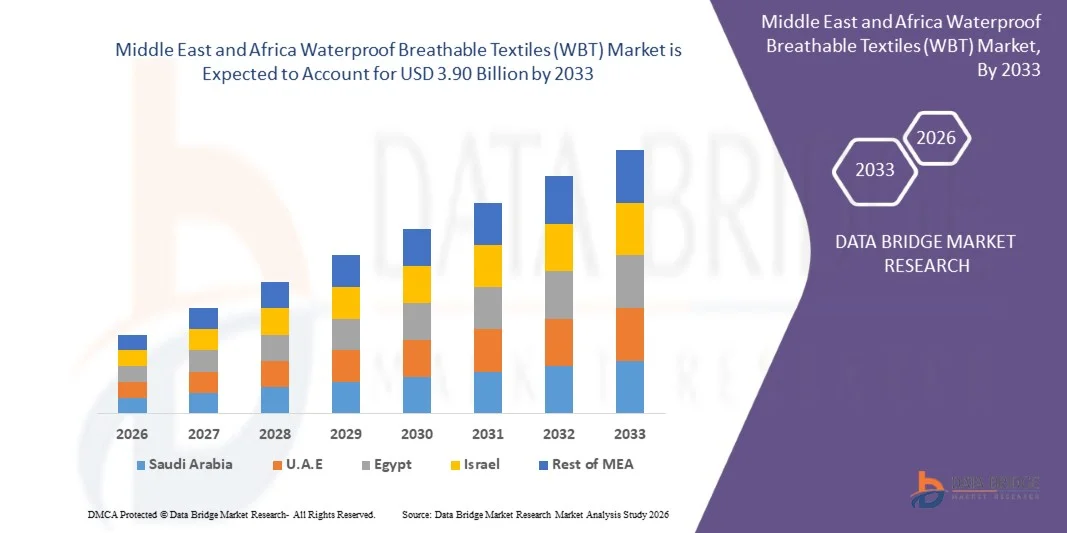
The Middle East and Africa Waterproof Breathable Textiles (WBT) market was valued at USD 2.49 Billion in 2025 and is projected to reach USD 3.90 Billion by 2033, growing at a CAGR of 5.8% from 2026 to 2033. The market is experiencing consistent growth driven by rising demand for high-performance outdoor apparel, increasing adoption of advanced membrane and coating technologies, and growing consumer preference for comfort-oriented protective clothing. Expanding applications across sportswear, military apparel, healthcare garments, and industrial protective clothing are further supporting market growth across developed and emerging economies.
The increasing global focus on functional and sustainable textile solutions, along with stringent environmental regulations on chemical usage in fabric finishing, is accelerating the shift toward eco-friendly and recyclable waterproof breathable materials. Advancements in microporous membranes, hydrophilic coatings, and bio-based textile technologies are enhancing product performance while improving durability and breathability. Growing investment by leading textile manufacturers in smart fabrics and next-generation performance textiles is further strengthening market expansion.
Key Market Trends & Insights
- South Africa dominated the Middle East and Africa Waterproof Breathable Textiles (WBT) market with the largest revenue share in 2025, supported by its expanding outdoor apparel industry, growing demand for protective workwear, and rising adoption of performance textiles in sports and industrial applications
- The laminated segment led the market with a 57.4% share in 2025, driven by its enhanced durability and superior multi-layer protection capabilities
- Saudi Arabia is expected to be the fastest-growing country at a CAGR of 4.9% from 2026 to 2033, fueled by rising demand for high-performance protective clothing, increasing outdoor lifestyle adoption, and expanding investments in technical textile applications under Vision 2030 initiatives
- Smart breathable fabrics are the fastest-growing type, projected to register a CAGR of 14.2% from 2026 to 2033, supported by rising demand for adaptive and performance-responsive textile systems
- The membrane segment dominated the fabric type category with a 46.8% revenue share in 2025, led by its high-performance moisture management and superior barrier properties
- Protective clothing accounted for 44.2% of the market in 2025, preferred by strong demand from industrial safety, military, and emergency response sectors
- The EPTFE segment is the fastest-growing raw material category, with a CAGR of 13.8% from 2026 to 2033, driven by its superior microporous structure enabling high breathability and waterproof performance
Market Size & Forecast
- Global Market Value (2025): USD 2.49 Billion
- Expected Market Value (2033): USD 3.90 Billion
- Forecast CAGR (2026–2033): 5.8%
- Leading Country in 2025: South Africa
- Fastest Growing Country: Saudi Arabia
Report Scope and Middle East and Africa Waterproof Breathable Textiles (WBT) Market Segmentation
|
Attributes |
Waterproof Breathable Textiles (WBT) Key Market Insights |
|
Segments Covered |
|
|
Countries Covered |
Middle East and Africa · Saudi Arabia · U.A.E. · South Africa · Egypt · Israel · Rest of Middle East and Africa |
|
Key Market Players |
|
|
Market Opportunities |
· Expansion of Smart Breathable Fabrics in Wearable Technology Applications · Growth of Sustainable Recycled Fiber-Based WBT Solution · Increasing Demand from Emerging Economies Driven by Rising Outdoor Lifestyle Adoption |
|
Value Added Data Infosets |
In addition to the insights on market scenarios such as market value, growth rate, segmentation, geographical coverage, and major players, the market reports curated by the Data Bridge Market Research also include in-depth expert analysis, pricing analysis, brand share analysis, consumer survey, demography analysis, supply chain analysis, value chain analysis, raw material/consumables overview, vendor selection criteria, PESTLE Analysis, Porter Analysis, and regulatory framework. |
Middle East and Africa Waterproof Breathable Textiles (WBT) Market Trends
Trend: Rising Adoption of Eco-Friendly Waterproof Breathable Textile
The Waterproof Breathable Textiles (WBT) market is witnessing a strong shift toward sustainable and bio-based materials, driven by increasing consumer demand for environmentally responsible performance apparel. Manufacturers are adopting recycled polyester, bio-based polyurethane coatings, and PFC-free finishing technologies to reduce environmental impact while maintaining durability and breathability. Growth in outdoor sportswear, military apparel, and healthcare protective garments is further accelerating adoption of eco-friendly WBT innovations across markets.
Companies such as W. L. Gore & Associates are advancing sustainable membrane technologies through expanded use of PFAS-free waterproof breathable solutions in GORE-TEX product lines, supporting reduced environmental footprint in high-performance apparel applications.
Middle East and Africa Waterproof Breathable Textiles (WBT) Market Dynamics
Key Market Driver: Growing Demand for High-Performance Protective Apparel
The growing demand for high-performance protective apparel across outdoor, sports, military, and industrial sectors is a major driver of the Waterproof Breathable Textiles (WBT) market. Consumers and institutional buyers are prioritizing fabrics that provide waterproof protection, moisture management, and long-term durability under extreme environmental conditions. Rising participation in outdoor recreation and stricter workplace safety standards are further supporting demand across developed and emerging regions.
Companies such as The North Face and Helly Hansen Group are expanding their advanced outerwear portfolios using high-performance breathable membrane technologies for extreme weather and occupational safety applications.
Key Restraint/Challenge: High Cost of Advanced Membrane Technologies
A key challenge in the Waterproof Breathable Textiles (WBT) market is the high production cost associated with advanced membrane systems such as ePTFE, hydrophilic coatings, and multi-layer laminated fabrics. Complex manufacturing processes, specialized raw materials, and energy-intensive production significantly increase overall product pricing, limiting penetration in price-sensitive markets. In addition, performance consistency and durability requirements further raise R&D and quality control costs for manufacturers.
Companies such as Sympatex and Schoeller Switzerland are continuously investing in process optimization and recyclable membrane technologies to balance performance efficiency with cost reduction in premium textile applications.
Key Market Opportunity: Growth of Sustainable Recycled Fiber-Based WBT Solution
The increasing integration of smart textile technologies and sustainable fiber systems presents a major growth opportunity in the Waterproof Breathable Textiles (WBT) market. Innovations such as sensor-integrated fabrics, temperature-regulating membranes, and fully recyclable textile structures are gaining traction across sportswear and healthcare applications. Rising investment in circular textile systems and advanced fiber engineering is enabling next-generation performance improvements while supporting sustainability goals.
Companies such as Polartec and HeiQ Materials AG are actively developing recycled fiber-based performance textiles and bioactive fabric treatments, strengthening the shift toward circular and high-functionality waterproof breathable textile solutions globally.
Middle East and Africa Waterproof Breathable Textiles (WBT) Market Scope
The Waterproof Breathable Textiles (WBT) market is segmented on the basis of type, raw material, form, fabric type, distribution channel, and application.
- By Type
On the basis of type, the Waterproof Breathable Textiles (WBT) market is segmented into closely woven fabrics, microporous membranes and coatings, hydrophilic membranes and coating, combination of microporous and hydrophilic membranes and coating, retroreflective microbeads, smart breathable fabrics, fabrics based on biomimetic, and others. The Microporous Membranes and Coatings segment dominated the market with a share of 38.6% in 2025, driven by its superior moisture vapor transmission performance and widespread use in outdoor apparel and protective wear. These structures enable effective water resistance while maintaining high breathability, making them suitable for extreme environmental conditions. Strong adoption across sportswear and military applications further reinforces segment leadership. Continuous material innovation and cost optimization strengthen its dominant position in large-scale manufacturing ecosystems.
The Smart Breathable Fabrics segment is projected to register the fastest growth at a CAGR of 14.2% from 2026 to 2033, driven by rising demand for adaptive and performance-responsive textile systems. Integration of sensor-enabled fibers and temperature-regulating materials is enhancing comfort in dynamic usage conditions. Increasing adoption in premium sportswear and healthcare garments is accelerating commercialization. Advancements in nanotechnology-based coatings and bio-inspired fabric structures are improving durability and breathability efficiency. Growing consumer preference for high-performance intelligent textiles is significantly supporting segment expansion.
- By Raw Material
On the basis of raw material, the Waterproof Breathable Textiles (WBT) market is segmented into polyurethane, EPTFE, polyester, polypropylene, nylon, silk, wool, cotton, viscose rayon, high-density fabrics, and others. The Polyurethane segment dominated the market with a share of 41.3% in 2025, supported by its excellent balance of flexibility, durability, and cost-effectiveness in coating and lamination applications. PU-based materials offer strong water resistance while maintaining comfort, making them widely used in sportswear and protective clothing. High compatibility with multilayer textile structures enhances production efficiency. Strong industrial scalability across apparel manufacturing further reinforces its leading position.
The EPTFE segment is projected to register the fastest growth at a CAGR of 13.8% from 2026 to 2033, driven by its superior microporous structure enabling high breathability and waterproof performance. Increasing demand from high-performance outdoor gear and military-grade apparel is accelerating adoption. Advancements in membrane engineering are improving mechanical strength and long-term stability. Rising investment in premium technical textiles across North America and Europe is further strengthening growth momentum.
- By Form
On the basis of form, the Waterproof Breathable Textiles (WBT) market is segmented into laminated and coated structures. The Laminated segment dominated the market with a share of 57.4% in 2025, driven by its enhanced durability and superior multi-layer protection capabilities. Lamination enables strong bonding between membranes and face fabrics, improving resistance to harsh weather conditions. It is widely adopted in outdoor apparel, industrial workwear, and military uniforms. Increasing demand for long-life performance textiles supports continued dominance. Manufacturing advancements in heat and adhesive lamination processes further strengthen scalability.
The Coated segment is projected to register the fastest growth at a CAGR of 12.9% from 2026 to 2033, driven by its cost efficiency and flexible application across mass-market clothing. Coating technologies allow controlled breathability while maintaining waterproof properties. Rising demand from casual sportswear and mid-range apparel segments is supporting adoption. Improvements in eco-friendly coating formulations are enhancing sustainability compliance. Expanding production in emerging textile manufacturing hubs is further accelerating growth.
- By Fabric Type
On the basis of fabric type, the Waterproof Breathable Textiles (WBT) market is segmented into densely woven, membrane, and coated fabrics. The Membrane segment dominated the market with a share of 46.8% in 2025, driven by its high-performance moisture management and superior barrier properties. Membrane-based fabrics are extensively used in extreme weather gear and professional outdoor equipment. Their ability to maintain breathability while blocking liquid penetration enhances functional reliability. Strong adoption in defense and expedition applications reinforces market leadership. Continuous improvements in membrane layering technologies further support dominance.
The Coated Fabric segment is projected to register the fastest growth at a CAGR of 13.5% from 2026 to 2033, driven by rising demand for lightweight and affordable waterproof solutions. Coated structures enable scalable production for mass-market apparel without compromising basic performance requirements. Increasing usage in casual wear and industrial protective clothing is accelerating adoption. Advancements in environmentally friendly coating materials are further enhancing market penetration.
- By Distribution Channel
On the basis of distribution channel, the Waterproof Breathable Textiles (WBT) market is segmented into offline and online channels. The Offline segment dominated the market with a share of 72.1% in 2025, driven by strong presence of textile distributors, specialty fabric suppliers, and industrial procurement networks. Buyers prefer offline channels for quality verification and bulk purchasing requirements. Established supplier relationships in apparel manufacturing ecosystems strengthen channel dominance. Long-standing procurement contracts across industrial users further reinforce stability.
The Online segment is projected to register the fastest growth at a CAGR of 15.1% from 2026 to 2033, driven by expanding digital textile marketplaces and growing B2B e-commerce penetration. Online platforms provide wider product accessibility and faster procurement cycles for small and mid-sized manufacturers. Increasing adoption of digital sourcing tools in apparel supply chains is accelerating growth. Integration of advanced product specification and comparison systems is improving purchasing efficiency.
- By Application
On the basis of application, the Waterproof Breathable Textiles (WBT) market is segmented into general clothing and accessories, sports goods, protective clothing, hometech, mobitech, healthcare, and others. The Protective Clothing segment dominated the market with a share of 44.2% in 2025, driven by strong demand from industrial safety, military, and emergency response sectors. These textiles provide critical protection against harsh weather, chemicals, and hazardous environments while ensuring breathability. Strict occupational safety regulations are reinforcing adoption across developed and emerging regions. Continuous innovation in multi-layer protective systems strengthens segment leadership.
The Healthcare segment is projected to register the fastest growth at a CAGR of 14.7% from 2026 to 2033, driven by increasing demand for breathable, waterproof medical garments and hygiene products. Rising focus on infection control and patient comfort is accelerating adoption in hospital apparel and surgical wear. Advancements in antimicrobial textile coatings are enhancing functional performance. Expanding healthcare infrastructure across Asia-Pacific is further supporting rapid segment expansion.
Middle East and Africa Waterproof Breathable Textiles (WBT) Market Regional Analysis
South Africa dominated the Waterproof Breathable Textiles (WBT) market and accounted for the largest revenue share in 2025, driven by its expanding outdoor apparel industry, growing demand for protective workwear, and rising adoption of performance textiles in sports and industrial applications. The country benefits from a relatively developed textile manufacturing base and strong retail penetration of branded outdoor and sportswear products. Increasing urbanization and growing participation in outdoor recreational activities are further supporting demand for waterproof and breathable fabrics. Presence of regional apparel manufacturers and rising focus on durable and functional clothing reinforce South Africa’s dominant position in the regional market.
Saudi Arabia Waterproof Breathable Textiles (WBT) Market Insight
The Saudi Arabia Waterproof Breathable Textiles (WBT) market is projected to register the fastest growth at a CAGR of 4.9% during 2026–2033, driven by rising demand for high-performance protective clothing, increasing outdoor lifestyle adoption, and expanding investments in technical textile applications under Vision 2030 initiatives. Growth in industrial safety standards and infrastructure development is further boosting demand for advanced waterproof breathable fabrics in workwear and protective gear. Expanding retail and e-commerce penetration is improving accessibility to premium outdoor apparel. Strong government focus on economic diversification continues to support long-term textile industry expansion in the country.
U.A.E. Waterproof Breathable Textiles (WBT) Market Insight
The U.A.E. Waterproof Breathable Textiles (WBT) market is witnessing steady growth from 2026 to 2033, supported by strong demand from the sportswear, tourism, and premium outdoor apparel segments. The country’s high exposure to extreme climatic conditions is driving adoption of lightweight, moisture-managing, and durable textile solutions. Expanding luxury retail infrastructure and strong presence of international apparel brands are further supporting market penetration. Increasing consumer preference for high-quality functional clothing continues to strengthen overall demand across the U.A.E. market.
Middle East and Africa Waterproof Breathable Textiles (WBT) Market Share
The Waterproof Breathable Textiles (WBT) industry is primarily led by well-established companies, including:
- Nike Inc. (U.S.)
- TORAY INDUSTRIES, INC. (Japan)
- JACK WOLFSKIN (Germany)
- Sympatex (Germany)
- L. Gore & Associates, Inc. (U.S.)
- Helly Hansen Group (Norway)
- Rudolf GmbH (Germany)
- HeiQ Materials AG (Switzerland)
- Schoeller Switzerland (Switzerland)
- Polartec (U.S.)
- Marmot Mountain LLC. (U.S.)
- ALPEX PROTECTION (France)
- Nextec Applications (U.S.)
- DEREKDUCK INDUSTRIES CORP. (Taiwan)
- Mountain Hardwear (U.S.)
Latest Developments in Middle East and Africa Waterproof Breathable Textiles (WBT) Market
- In January 2025, Polartec and Unifi expanded their partnership to scale production of REPREVE 100 fabrics made entirely from post-consumer recycled plastic bottles, strengthening the sustainability-driven segment of the waterproof breathable textiles (WBT) market. This collaboration significantly increased Polartec’s recycled product share to over 30% of total production, improving carbon efficiency and reducing overall energy consumption in manufacturing processes. The initiative enhances competitive positioning in eco-friendly performance textiles by aligning product innovation with circular economy principles. Growing demand for sustainable outdoor apparel and sportswear further amplifies the market impact of this development, reinforcing adoption of recycled fiber technologies across premium textile manufacturers
- In April 2024, HeiQ Materials AG introduced advanced proprietary textile treatments designed to enhance waterproofing, breathability, and durability, strengthening its innovation footprint in the waterproof breathable textiles (WBT) market. These solutions, developed through collaborations with academic and industry partners, target high-performance activewear and outdoor gear applications. The company’s showcase at Techtextil 2024 highlighted biobased technologies such as HeiQ Mint and HeiQ Cool, improving functional performance while supporting sustainability goals. This development reinforces market competition by accelerating the shift toward multifunctional, eco-efficient textile finishing solutions across global apparel brands
- In September 2021, Pertex launched Pertex Shield Resolve, a sustainable waterproof breathable fabric designed to improve recyclability and reduce environmental impact in the waterproof breathable textiles (WBT) market. The material focuses on enhancing end-of-life garment recovery while maintaining high-performance protection and comfort characteristics. This development supports industry-wide transition toward circular textile systems by minimizing resource wastage and improving lifecycle efficiency. Increasing regulatory and consumer pressure for sustainable textile solutions further strengthens the market relevance of this innovation across technical apparel applications.
- In January 2021, BenQ Materials launched Xpore, an advanced waterproof and breathable textile technology that strengthened its position in the performance textile segment of the waterproof breathable textiles (WBT) market. The product utilizes nanoporous membrane technology to deliver high water resistance while maintaining strong breathability and user comfort. This innovation aligns with rising consumer preference for eco-friendly and durable outdoor apparel, particularly in sportswear and adventure gear categories. The introduction of Xpore enhances material differentiation in the market and supports broader adoption of sustainable membrane-based textile solutions across global manufacturers
- In January 2021, The North Face introduced FUTURELIGHT, a next-generation breathable waterproof fabric developed using nanospinning technology, significantly influencing the premium segment of the waterproof breathable textiles (WBT) market. The material delivers enhanced airflow, waterproof protection, and long-term durability, addressing performance demands in extreme outdoor environments. This innovation strengthens the company’s leadership in sustainable and high-performance outerwear by integrating eco-conscious production methods. Growing consumer demand for advanced functional apparel accelerates adoption of FUTURELIGHT technology across global outdoor and sportswear markets

- Interactive Data Analysis Dashboard
- Company Analysis Dashboard for high growth potential opportunities
- Research Analyst Access for customization & queries
- Competitor Analysis with Interactive dashboard
- Latest News, Updates & Trend analysis
- Harness the Power of Benchmark Analysis for Comprehensive Competitor Tracking
Data collection and base year analysis are done using data collection modules with large sample sizes. The stage includes obtaining market information or related data through various sources and strategies. It includes examining and planning all the data acquired from the past in advance. It likewise envelops the examination of information inconsistencies seen across different information sources. The market data is analysed and estimated using market statistical and coherent models. Also, market share analysis and key trend analysis are the major success factors in the market report. To know more, please request an analyst call or drop down your inquiry.
The key research methodology used by DBMR research team is data triangulation which involves data mining, analysis of the impact of data variables on the market and primary (industry expert) validation. Data models include Vendor Positioning Grid, Market Time Line Analysis, Market Overview and Guide, Company Positioning Grid, Patent Analysis, Pricing Analysis, Company Market Share Analysis, Standards of Measurement, Global versus Regional and Vendor Share Analysis. To know more about the research methodology, drop in an inquiry to speak to our industry experts.
Data Bridge Market Research is a leader in advanced formative research. We take pride in servicing our existing and new customers with data and analysis that match and suits their goal. The report can be customized to include price trend analysis of target brands understanding the market for additional countries (ask for the list of countries), clinical trial results data, literature review, refurbished market and product base analysis. Market analysis of target competitors can be analyzed from technology-based analysis to market portfolio strategies. We can add as many competitors that you require data about in the format and data style you are looking for. Our team of analysts can also provide you data in crude raw excel files pivot tables (Fact book) or can assist you in creating presentations from the data sets available in the report.













