


What is the North America Acute Respiratory Distress Syndrome (ARDS) Market Size and Growth Rate ?
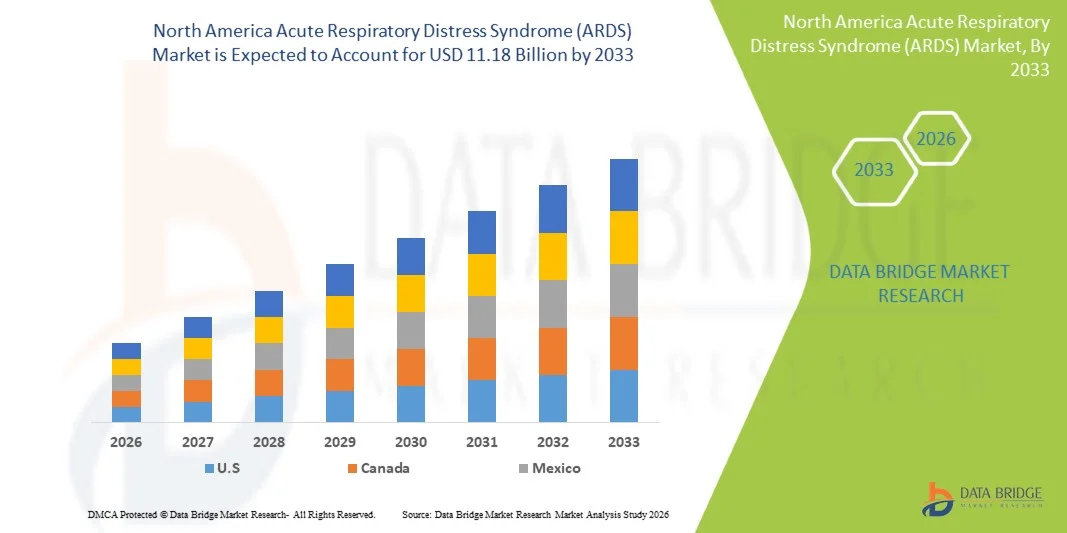
- As per Data Bridge Market Research Analysis the North America Acute Respiratory Distress Syndrome (ARDS) market size was valued at USD 5.03 billion in 2025and is expected to reach USD 11.18 billion by 2033, at a CAGR of 10.5% during the forecast period
- The market growth is largely driven by the rising prevalence of severe respiratory diseases, increasing incidence of pneumonia and sepsis, and the growing number of intensive care unit (ICU) admissions across the region
- Furthermore, ongoing advancements in critical care technologies, expanding adoption of advanced ventilatory support systems, and increasing focus on early diagnosis and effective management of acute lung injuries are positioning ARDS therapies and supportive care solutions as essential components of modern critical care treatment. These combined factors are significantly accelerating the growth of the North America ARDS market
Market Size & Forecast
- Global Market Value (2025): USD 5.03 billion
- Expected Market Value (2033): USD 11.18 billion
- Forecast CAGR (2026–2033): 10.5%
What are the Major Takeaways of North America Acute Respiratory Distress Syndrome (ARDS) Market?
- Acute respiratory distress syndrome (ARDS), a severe respiratory condition characterized by widespread inflammation in the lungs and acute breathing failure, is becoming an increasingly important focus area in critical care and pulmonary treatment across hospitals and intensive care units due to its high mortality rate, rising incidence of respiratory infections, and growing burden of critically ill patients
- The escalating demand for ARDS treatment and supportive care solutions in the North America Acute Respiratory Distress Syndrome (ARDS) Market is primarily fueled by the increasing prevalence of pneumonia, sepsis, trauma injuries, and chronic respiratory disorders, along with the growing need for advanced respiratory support systems and intensive care management
- The U.S. dominated the North America Acute Respiratory Distress Syndrome (ARDS) market with the largest revenue share of 78.4% in 2025, characterized by advanced healthcare infrastructure, high healthcare expenditure, and the strong presence of major pharmaceutical and medical device companies
- Canada is expected to witness significant growth in the North America Acute Respiratory Distress Syndrome (ARDS) market during the forecast period due to increasing investments in critical care infrastructure, rising awareness regarding respiratory disease management, and growing adoption of advanced pulmonary support technologies
- Treatment segment dominated the North America Acute Respiratory Distress Syndrome (ARDS) market with a market share of 61.3% in 2025, driven by the extensive use of mechanical ventilation, corticosteroids, extracorporeal membrane oxygenation (ECMO), and supportive intensive care therapies for improving oxygenation and patient survival outcomes
Report Scope and North America Acute Respiratory Distress Syndrome (ARDS) Market Segmentation
|
Attributes |
North America Acute Respiratory Distress Syndrome (ARDS) Key Market Insights |
|
Segments Covered |
|
|
Countries Covered |
North America · U.S. · Canada · Mexico |
|
Key Market Players |
|
|
Market Opportunities |
· The increasing adoption of extracorporeal membrane oxygenation (ECMO) systems · Rising investments by regional governments in expanding intensive care infrastructure and emergency preparedness following the COVID-19 pandemic |
|
Value Added Data Infosets |
In addition to the insights on market scenarios such as market value, growth rate, segmentation, geographical coverage, and major players, the market reports curated by the Data Bridge Market Research also include in-depth expert analysis, patient epidemiology, pipeline analysis, pricing analysis, and regulatory framework |
What is the Key Trend in the North America Acute Respiratory Distress Syndrome (ARDS) Market ?
“Advancements in Critical Care and Precision Respiratory Support”
- A significant and accelerating trend in the North America Acute Respiratory Distress Syndrome (ARDS) market is the increasing adoption of advanced critical care technologies, including precision ventilation systems, ECMO support, and data-driven ICU monitoring tools, aimed at improving patient survival outcomes and optimizing respiratory management in severe lung failure cases
- For instance, in March 2025, leading U.S. hospital systems expanded the use of AI-assisted ventilator management platforms to optimize oxygen delivery and reduce ventilator-associated complications in ARDS patients
- Integration of predictive analytics in ICU settings is enabling early detection of respiratory deterioration, allowing clinicians to adjust treatment strategies more effectively and improve response time in critical ARDS cases. For instance, some ICU monitoring systems are now capable of analyzing patient vitals in real time to predict respiratory failure progression and suggest intervention adjustments
- The increasing integration of ARDS management protocols with electronic health records (EHR) and digital ICU platforms is facilitating centralized patient monitoring, improving coordination among critical care teams, and enhancing treatment efficiency across hospitals
- This shift toward intelligent, protocol-driven, and technology-enabled ARDS management is reshaping expectations in critical care medicine, with companies and healthcare providers focusing on improving ventilator efficiency, oxygen therapy precision, and patient monitoring accuracy
- The demand for advanced ARDS treatment solutions is growing rapidly across intensive care units in the United States and Canada, as healthcare providers increasingly prioritize early intervention, improved survival rates, and reduction of long-term lung complications in critically ill patients
- Expansion of tele-ICU systems and remote critical care monitoring is also emerging as a key trend, enabling specialist oversight in real time and improving ARDS management in hospitals facing intensivist shortage
North America Acute Respiratory Distress Syndrome (ARDS) Market Dynamics
Driver
“Rising Critical Care Burden and Expanding ICU Infrastructure”
- The increasing incidence of severe respiratory infections, sepsis, and trauma-related lung injuries, coupled with the growing demand for intensive care services, is a significant driver for the heightened growth of the North America Acute Respiratory Distress Syndrome (ARDS) market
- For instance, in February 2025, major hospital networks in the U.S. expanded ICU capacity and upgraded respiratory support systems to manage rising cases of acute respiratory failure and ARDS-related complications
- As patient admissions in intensive care units continue to rise, ARDS management solutions such as mechanical ventilation and ECMO are becoming essential components of critical care treatment protocols, improving survival outcomes in severe cases
- Furthermore, the growing focus on early diagnosis and standardized ARDS treatment guidelines is encouraging hospitals to adopt advanced respiratory support technologies and improve treatment consistency across healthcare facilities
- The expansion of healthcare infrastructure and increasing investment in critical care modernization are further driving the adoption of advanced ARDS treatment solutions across both public and private healthcare systems
- The rising geriatric population, which is more vulnerable to respiratory failure and complications, is further contributing to the increasing ARDS case burden across North American hospitals
- Continuous clinical research and government-funded initiatives in respiratory disease management are accelerating innovation and improving treatment protocols for ARDS patients
Restraint/Challenge
“High Treatment Complexity and Limited Long-Term Outcomes”
- Complexity in managing ARDS patients, along with high dependency on intensive care resources and specialized clinical expertise, poses a significant challenge to broader treatment optimization in the North America Acute Respiratory Distress Syndrome (ARDS) market
- For instance, in May 2025, clinical reports from U.S. ICUs highlighted persistent challenges in improving long-term survival rates despite advancements in mechanical ventilation and ECMO therapies
- The absence of highly specific curative treatments for ARDS often results in reliance on supportive care, making treatment outcomes variable and heavily dependent on patient condition and underlying causes
- Furthermore, prolonged ICU stays and high treatment costs associated with ARDS management create financial strain on healthcare systems and limit accessibility in certain hospital settings
- Addressing these challenges through development of targeted pharmacological therapies, improved ventilation strategies, and cost-effective critical care solutions will be essential for sustained market growth and better patient outcomes
- The risk of ventilator-associated complications and secondary infections during prolonged hospitalization further complicates ARDS treatment management and recovery outcomes
- Limited availability of highly trained critical care specialists in some healthcare facilities also restricts optimal implementation of advanced ARDS treatment protocols
How is the North America Acute Respiratory Distress Syndrome (ARDS) Market Segmented ?
The market is segmented on the basis of cause, type, route of administration, end user, and distribution channel.
- By Cause
On the basis of cause, the North America Acute Respiratory Distress Syndrome (ARDS) market is segmented into Coronavirus Disease 2019 (COVID-19), sepsis, inhalation of harmful substances, severe pneumonia, and others. The Severe Pneumonia segment dominated the market with the largest revenue share of 34.6% in 2025, driven by its strong association with acute lung inflammation and high progression rate toward respiratory failure requiring intensive care support. Severe pneumonia remains one of the most common triggers of ARDS in hospitalized patients, especially among elderly and immunocompromised populations. Its high incidence rate across emergency care settings further strengthens demand for mechanical ventilation and ICU-based management. Increasing bacterial and viral respiratory infections also contribute to its dominance. Continuous improvement in early diagnosis and hospital admission protocols further supports its leading position in the ARDS market.
The Sepsis segment is expected to witness the fastest growth rate of 19.8% from 2026 to 2033, fueled by rising cases of bloodstream infections leading to multi-organ failure and acute lung injury. Sepsis-induced ARDS is increasingly recognized in ICU settings due to improved diagnostic capabilities and better clinical awareness. Growing hospitalization rates for infectious diseases and post-surgical complications further contribute to its rapid growth. Advancements in critical care monitoring and early sepsis detection systems are improving survival rates and driving treatment adoption. Increasing ICU admissions in the U.S. and Canada also significantly support this segment’s expansion.
- By Type
On the basis of type, the North America Acute Respiratory Distress Syndrome (ARDS) market is segmented into diagnosis and treatment. The Treatment segment dominated the market with the largest revenue share of 61.3% in 2025, driven by the critical need for life-support interventions such as mechanical ventilation, ECMO, corticosteroid therapy, and oxygen supplementation in managing severe respiratory failure. Treatment remains the core focus of ARDS management due to the absence of a definitive cure and the reliance on supportive care strategies. High ICU admission rates and prolonged hospitalization further strengthen demand for advanced treatment modalities. Continuous innovation in ventilator technology and respiratory support systems also contributes to segment dominance. Growing clinical emphasis on improving patient survival outcomes reinforces the leading position of this segment.
The Diagnosis segment is expected to witness the fastest growth rate of 18.5% from 2026 to 2033, driven by increasing adoption of imaging technologies, blood gas analysis, and biomarker-based testing for early detection of ARDS. Early diagnosis is becoming a key clinical priority to reduce mortality and improve treatment efficiency. Advancements in AI-based diagnostic tools and predictive analytics are enhancing accuracy and speed of ARDS identification. Rising awareness among healthcare professionals regarding early-stage lung injury detection further supports growth. Expanding ICU infrastructure and improved hospital diagnostic capabilities also contribute to this segment’s rapid expansion.
- By Route of Administration
On the basis of route of administration, the North America Acute Respiratory Distress Syndrome (ARDS) market is segmented into oral, parenteral, and others. The Parenteral segment dominated the market with the largest revenue share of 72.4% in 2025, driven by the urgent need for rapid drug delivery in critically ill ARDS patients requiring immediate therapeutic intervention. Intravenous administration is widely used for corticosteroids, sedatives, and antibiotics in ICU settings to ensure fast systemic action. The severity of ARDS cases necessitates controlled and efficient drug administration, making parenteral delivery the preferred route. High dependency on hospital-based care further strengthens its dominance. Increasing use of injectable supportive therapies in intensive care units also supports this segment’s leading position.
The Others segment is expected to witness the fastest growth rate of 17.9% from 2026 to 2033, driven by emerging drug delivery methods such as inhalation-based therapies and advanced pulmonary drug administration systems. These approaches are gaining attention for their targeted lung delivery and reduced systemic side effects. Innovation in aerosolized therapies for respiratory conditions is further supporting adoption. Increasing clinical research on non-invasive treatment options for ARDS is also contributing to growth. Rising demand for improved patient comfort and reduced ICU complications further accelerates this segment’s expansion.
- By End User
On the basis of end user, the North America Acute Respiratory Distress Syndrome (ARDS) market is segmented into hospitals, specialty clinics, home healthcare, and others. The Hospitals segment dominated the market with the largest revenue share of 78.9% in 2025, driven by the high concentration of ICU facilities, advanced ventilatory support systems, and availability of critical care specialists required for ARDS management. Hospitals remain the primary treatment centers due to the severity of ARDS cases requiring continuous monitoring and life-support interventions. High patient inflow for emergency respiratory conditions further strengthens this segment. Availability of ECMO and advanced ICU infrastructure also supports dominance. Strong presence of multidisciplinary care teams enhances treatment effectiveness in hospital settings.
The Home Healthcare segment is expected to witness the fastest growth rate of 20.3% from 2026 to 2033, driven by increasing demand for post-ICU respiratory care and long-term recovery support for ARDS survivors. Advancements in portable oxygen therapy devices and remote patient monitoring systems are enabling safer home-based care. Rising healthcare costs are encouraging early discharge and home rehabilitation programs. Increasing adoption of telehealth services further supports clinical supervision outside hospitals. Growing awareness of recovery-focused care models is also accelerating segment growth.
- By Distribution Channel
On the basis of distribution channel, the North America Acute Respiratory Distress Syndrome (ARDS) market is segmented into direct tender, hospital pharmacy, retail pharmacy, online pharmacy, and others. The Direct Tender segment dominated the market with the largest revenue share of 46.7% in 2025, driven by bulk procurement of critical care equipment, ventilators, and ICU drugs directly by hospitals and government healthcare systems. This channel ensures cost efficiency, steady supply, and standardized procurement of essential ARDS treatment products. Large-scale hospital networks and public healthcare programs further strengthen this segment. High dependency on institutional purchasing for critical care devices also supports dominance. Strong government involvement in healthcare procurement contributes to its leading position.
The Hospital Pharmacy segment is expected to witness the fastest growth rate of 18.9% from 2026 to 2033, driven by increasing ICU admissions and rising demand for immediate availability of ARDS-related medications within hospital settings. Hospital pharmacies play a key role in ensuring rapid drug dispensing for emergency and critical care patients. Expansion of hospital infrastructure and ICU capacity further supports growth. Increasing adoption of specialized respiratory drug protocols enhances operational efficiency. Growing integration of hospital pharmacy systems with electronic health records also contributes to segment expansion.
Which Region Holds the Largest Share of the North America Acute Respiratory Distress Syndrome (ARDS) Market?
- The U.S. dominated the North America Acute Respiratory Distress Syndrome (ARDS) market with the largest revenue share of 78.4% in 2025, characterized by advanced healthcare infrastructure, high healthcare expenditure, and the strong presence of major pharmaceutical and medical device companies
- Healthcare systems in the country highly prioritize advanced critical care infrastructure, including mechanical ventilation, extracorporeal membrane oxygenation (ECMO), and ICU monitoring systems, as ARDS management depends heavily on rapid intervention and continuous patient support
- This widespread dominance is further supported by high healthcare expenditure, strong presence of leading medical device and pharmaceutical companies, advanced hospital networks, and rapid adoption of innovative ICU technologies, establishing the U.S. as the primary contributor to ARDS treatment demand and clinical advancements in the North America Acute Respiratory Distress Syndrome (ARDS) market
U.S. Acute Respiratory Distress Syndrome (ARDS) Market Insight
The U.S. Acute Respiratory Distress Syndrome (ARDS) market captured the largest revenue share of 78.4% in 2025 within North America, driven by the high incidence of severe respiratory conditions such as sepsis, pneumonia, and viral infections requiring intensive care unit (ICU) admission and advanced life-support interventions. The growing burden of critically ill patients and frequent need for mechanical ventilation further strengthens market demand. The presence of advanced hospital infrastructure and strong critical care networks also supports market expansion. Moreover, increasing clinical research activities and rapid adoption of innovative respiratory support technologies, such as ECMO and AI-enabled ventilators, are significantly contributing to the market’s growth.
Canada Acute Respiratory Distress Syndrome (ARDS) Market Insight
The Canada Acute Respiratory Distress Syndrome (ARDS) Market is projected to grow at a steady CAGR during the forecast period, driven by increasing cases of severe respiratory infections, sepsis, and age-related pulmonary complications requiring intensive care support. The country’s universal healthcare system and strong emphasis on critical care accessibility are supporting adoption of advanced ARDS management solutions. Growing investments in ICU infrastructure and hospital modernization are further enhancing treatment capabilities across public healthcare facilities. In addition, rising awareness among healthcare professionals regarding early diagnosis and standardized ARDS treatment protocols is improving patient outcomes. The increasing integration of advanced ventilatory support systems and digital ICU monitoring technologies is also contributing to market growth in Canada.
Mexico Acute Respiratory Distress Syndrome (ARDS) Market Insight
The Mexico Acute Respiratory Distress Syndrome (ARDS) Market is expected to witness notable growth during the forecast period, driven by increasing burden of respiratory infections, pneumonia, and sepsis-related complications requiring intensive care intervention. Expanding healthcare infrastructure and gradual improvement in ICU facilities are supporting adoption of ARDS treatment solutions across the country. Rising government efforts to strengthen critical care services and improve hospital accessibility are further contributing to market development. In addition, growing private healthcare investments and increasing availability of advanced respiratory support equipment are enhancing treatment capacity. The gradual adoption of modern ventilatory technologies in urban hospitals is also playing a key role in market expansion in Mexico.
Which are the Top Companies in North America Acute Respiratory Distress Syndrome (ARDS) Market ?
The North America Acute Respiratory Distress Syndrome (ARDS) industry is primarily led by well-established companies, including:
- Merck & Co., Inc. (U.S.)
- Baxter (U.S.)
- Medtronic (Ireland)
- Drägerwerk AG & Co. KGaA (Germany)
- Getinge AB (Sweden)
- Fisher & Paykel Healthcare Limited (New Zealand)
- NIHON KOHDEN CORPORATION (Japan)
- Koninklijke Philips N.V. (Netherlands)
- ResMed (U.S.)
- Hamilton Medical AG (Switzerland)
- Aerogen (Ireland)
- Smiths Group plc (U.K.)
- Air Liquide Healthcare (France)
- Vyaire Medical, Inc. (U.S.)
- GE HealthCare (U.S.)
- Mindray DS USA, Inc. (U.S.)
- Noccarc (India)
- Zuventus Healthcare Ltd. (India)
- InflaRx N.V. (Germany)
- Healios K.K. (Japan)
What are the Recent Developments in North America Acute Respiratory Distress Syndrome (ARDS) Market?
- In January 2024, The U.S. Food and Drug Administration (FDA) approved expanded clinical use of advanced extracorporeal membrane oxygenation (ECMO) systems for prolonged respiratory support in patients with severe ARDS. The approval enabled hospitals to extend life-support treatment duration for critically ill patients unresponsive to mechanical ventilation
- In April 2023, Leading U.S. healthcare systems introduced AI-powered ventilator optimization platforms to improve ARDS patient management in ICU settings. These systems assist clinicians in adjusting oxygen levels and ventilation pressure based on real-time patient data
- In March 2023, increased ECMO adoption reported in North American ICUs for severe ARDS cases. Clinical reports from major North American hospitals indicated a rise in ECMO usage for patients with severe ARDS unresponsive to conventional ventilation. This trend was strongly influenced by post-COVID-19 critical care practices
- In May 2022, U.S. critical care guidelines updated for ARDS lung-protective ventilation strategies. Updated clinical guidelines emphasized early use of lung-protective ventilation strategies for ARDS patients in ICU settings. The recommendations focused on minimizing ventilator-induced lung injury and improving oxygenation efficiency
- In June 2021, During the COVID-19 pandemic recovery phase, ICUs in North America reported significant advancements in ARDS management approaches. Clinicians increasingly adopted prone positioning and advanced respiratory support strategies. The surge in severe respiratory failure cases accelerated ICU modernization efforts

- Interactive Data Analysis Dashboard
- Company Analysis Dashboard for high growth potential opportunities
- Research Analyst Access for customization & queries
- Competitor Analysis with Interactive dashboard
- Latest News, Updates & Trend analysis
- Harness the Power of Benchmark Analysis for Comprehensive Competitor Tracking
Data collection and base year analysis are done using data collection modules with large sample sizes. The stage includes obtaining market information or related data through various sources and strategies. It includes examining and planning all the data acquired from the past in advance. It likewise envelops the examination of information inconsistencies seen across different information sources. The market data is analysed and estimated using market statistical and coherent models. Also, market share analysis and key trend analysis are the major success factors in the market report. To know more, please request an analyst call or drop down your inquiry.
The key research methodology used by DBMR research team is data triangulation which involves data mining, analysis of the impact of data variables on the market and primary (industry expert) validation. Data models include Vendor Positioning Grid, Market Time Line Analysis, Market Overview and Guide, Company Positioning Grid, Patent Analysis, Pricing Analysis, Company Market Share Analysis, Standards of Measurement, Global versus Regional and Vendor Share Analysis. To know more about the research methodology, drop in an inquiry to speak to our industry experts.
Data Bridge Market Research is a leader in advanced formative research. We take pride in servicing our existing and new customers with data and analysis that match and suits their goal. The report can be customized to include price trend analysis of target brands understanding the market for additional countries (ask for the list of countries), clinical trial results data, literature review, refurbished market and product base analysis. Market analysis of target competitors can be analyzed from technology-based analysis to market portfolio strategies. We can add as many competitors that you require data about in the format and data style you are looking for. Our team of analysts can also provide you data in crude raw excel files pivot tables (Fact book) or can assist you in creating presentations from the data sets available in the report.












